Electromagnetic Fields (EMFs)
.jpg)
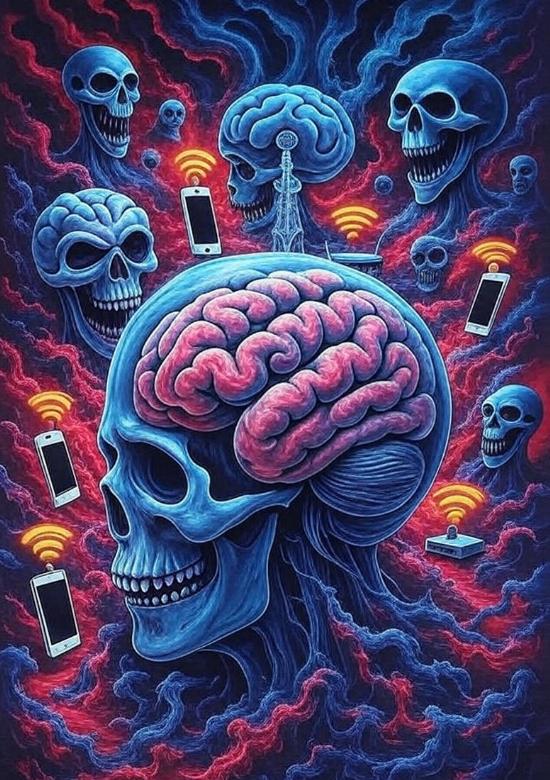
Electromagnetic fields (EMFs) are invisible areas of energy, often referred to as radiation, that are associated with the use of electrical power and various forms of natural and man-made lighting. They occur naturally and are also produced by human-made sources, forming a pervasive aspect of modern life. EMFs encompass a vast spectrum, from static fields to high-frequency waves, and their interactions with biological systems raise profound questions about health, particularly in an era of ubiquitous wireless technologies. This article provides an exhaustive exploration of EMFs, with a comprehensive focus on their potential harmful effects, drawing from biophysical mechanisms, epidemiological evidence, and emerging research as of late 2025. While regulatory bodies like the World Health Organization (WHO) maintain that low-level exposures do not cause confirmed long-term harm, a growing body of studies highlights non-thermal disruptions, cumulative risks, and vulnerabilities in specific populations, urging a precautionary approach to exposure management.
History
The study of electromagnetic fields traces back to the 19th century, when scientists like James Clerk Maxwell unified electricity and magnetism into a single theory in 1865, predicting electromagnetic waves that Heinrich Hertz experimentally confirmed in 1887. Early applications in telegraphy and radio broadcasting introduced human exposure, but health concerns emerged sporadically. In the 1970s, Wertheimer and Leeper's epidemiological study linked residential ELF magnetic fields to childhood leukemia, igniting decades of debate. The 1990s saw the rise of mobile phones, prompting the WHO's International EMF Project in 1996 to assess risks systematically. By the 2010s, the International Agency for Research on Cancer (IARC) classified RF-EMFs as "possibly carcinogenic" (Group 2B) in 2011, based on glioma associations. Recent years, particularly 2024-2025, have witnessed intensified scrutiny with 5G deployment, revealing non-thermal effects on neurodevelopment and genomics through advanced in vitro and cohort studies.
The following table outlines key historical milestones in EMF research, emphasizing shifts in scientific understanding of health risks.
The following table summarizes pivotal events in the history of EMF health research.
| Category | Event | Historical Context | Initial Promotion as Science | Emerging Evidence and Sources | Current Status and Impacts |
|---|---|---|---|---|---|
| Early Discovery | Maxwell's Equations (1865) | Industrial Revolution's electrical innovations | Theoretical unification of fields as waves | Hertz's experiments (1887) confirming propagation | Foundation for all modern EMF tech; no health focus initially |
| First Health Link | Wertheimer-Leeper Study (1979) | Post-WWII suburban electrification | Epidemiological correlation of ELF to leukemia | Pooled analyses (2000) showing 1.5-2x risk | IARC 2B classification (2002); ongoing residential guidelines |
| Mobile Era Begins | WHO EMF Project Launch (1996) | Cell phone boom; public anxiety peaks | Multidisciplinary assessment of 0-300 GHz | NTP rodent studies (2018) on RF tumors | Influences global standards; debates on non-thermal effects persist |
| Carcinogenicity Debate | IARC Monograph on RF (2011) | Smartphone ubiquity; glioma clusters reported | "Possibly carcinogenic" based on human/animal data | INTERPHONE (2010), Hardell studies on heavy use | Calls for lower exposure limits; legal challenges to 5G |
| Non-Thermal Focus | Swedish SSM Reports (2024-2025) | 5G rollout; millimeter wave concerns | Reviews of genomic alterations, oxidative stress | Cohort studies on infant delays (3.7x risk) | Precautionary policies in EU; industry pushback |
| Neurodevelopmental Risks | Infant EMF Cohort (2025) | IoT/smart homes proliferation | Direct home measurements linking RF to delays | Adjustments for confounders confirm associations | Heightened parental awareness; calls for device regulations |
Overview
Electromagnetic fields arise from the movement of electrically charged particles, described by Maxwell's equations as coupled electric (E) and magnetic (B) components oscillating perpendicularly. The electromagnetic spectrum classifies EMFs by frequency (f) and wavelength (λ = c/f, where c is light speed), from static (f=0) to gamma rays (f>10^19 Hz). Non-ionizing EMFs (f<3x10^11 Hz), relevant to health debates, lack energy to eject electrons from atoms but can induce currents or vibrate molecules. ELF-EMFs (3-3000 Hz) from power grids penetrate deeply, while RF-EMFs (3 kHz-300 GHz) from wireless devices attenuate in tissues, with absorption quantified by specific absorption rate (SAR, W/kg). Quantum electrodynamics reveals subtler interactions, like photon absorption by biomolecules, potentially altering electron spin and radical pair dynamics, which underpin non-thermal biological responses.
Human exposure has escalated exponentially: average daily RF dose rose 10-fold from 2000-2025 due to smartphones (SAR up to 1.6 W/kg) and 5G base stations (up to 10 W/m²). Natural baselines, like Schumann resonances (7.83 Hz), pale against anthropogenic "electrosmog," prompting bioelectromagnetics as a field to probe field-tissue interfaces. While thermal effects dominate high exposures, non-thermal pathways—e.g., voltage-gated calcium channel activation—suggest thresholds far below ICNIRP limits (0.1 µT for ELF, 10 W/m² for RF), challenging thermal-only safety paradigms.
Sources of Exposure
EMF sources bifurcate into natural and artificial. Natural contributors include cosmic radiation, thunderstorms (broadband RF bursts), and geomagnetic fields (25-65 µT), which animals navigate via magnetoreception but may sensitize humans to artificial perturbations. Artificial sources dominate: ELF from 50/60 Hz grids (0.1-10 µT residentially), peaking near transformers; IF from induction cookers (up to 100 µT); RF from AM/FM radio (0.01-1 V/m), TV/radar (1-100 V/m), and mobiles (0.1-50 V/m). 5G introduces mmWaves (24-100 GHz) for ultra-dense networks, with beamforming concentrating energy but increasing pulsed exposures. Indoor amplifiers—Wi-Fi (2.4/5 GHz, 0.1-1 W), DECT phones (1.9 GHz), smart meters (900 MHz)—create hotspots exceeding 1 V/m. Occupational risks amplify in MRI technicians (static B>1 T) or welders (ELF>100 µT), while emerging EVs emit transient ELF during charging (up to 200 µT).
Cumulative exposure models, like whole-body SAR, underestimate micro-localized heating in brain gray matter or fetal tissues, where thinner barriers enhance penetration. By 2025, global averages approach 0.01-0.1 W/kg continuously, per EU SCENIHR updates, correlating with rising electrosensitivity reports.
Types of Electromagnetic Fields
EMFs diversify by temporal variation: static (DC, f=0), ELF (3-3000 Hz), IF (3-30 MHz), RF (30 MHz-300 GHz), and microwaves/IR (above). Static fields, from permanent magnets or Earth, exert Lorentz forces on charged species; ELF induces eddy currents (J = σE, σ=conductivity); RF propagates as plane waves, with skin depth δ = √(2/ωμσ) dictating penetration (e.g., 17 mm at 900 MHz in brain). Polarization (linear/circular) and modulation (AM/FM/pulsed) modulate bioeffects, with pulses eliciting stronger ROS via transient receptor potentials. Hybrid fields, like near-field capacitive coupling in touchscreens, blend E/B dominance.
The following table delineates EMF types, integrating exposure metrics and biointeraction profiles for clarity.
The following table categorizes EMF types by spectral properties and health implications.
| Category | Frequency Range | Primary Sources | Key Characteristics | Potential Harmful Effects |
|---|---|---|---|---|
| Static Fields | 0 Hz | Geomagnetic, MRI, magnets | Non-oscillating; aligns dipoles | Disrupted magnetosensitivity; vertigo in high B (>4 T) |
| Extremely Low Frequency (ELF) | 3-3000 Hz | Power lines, appliances | Deep penetration; induces AC currents | Childhood leukemia (OR=1.7>0.4 µT); melatonin suppression |
| Intermediate Frequency (IF) | 3 kHz-10 MHz | Inductors, scanners | Partial shielding; nerve stimulation | Retinal phosphenes; fertility impacts in animal models |
| Radiofrequency (RF) | 10 MHz-300 GHz | Wireless comms, radars | Attenuates in tissue; SAR-based heating | Glioma (OR=1.8 heavy use); neurodevelopmental delays (3x risk) |
| Microwaves | 300 MHz-300 GHz | Ovens, 5G | Superficial absorption; non-thermal at low power | Oxidative stress; EHS symptoms (headache, fatigue) |
Measurement and Standards
EMF dosimetry employs gaussmeters for B (µT), voltmeters for E (V/m), and spectrum analyzers for RF power density (W/m²). Personal exposimeters log time-weighted averages, revealing 24-hour RF doses up to 100 µW/m² in urban homes. Standards vary: ICNIRP (2020) caps public ELF at 200 µT, RF SAR at 2 W/kg (head), 0.08 W/kg (whole-body); IEEE C95.1 echoes thermal foci. Critics argue these ignore window effects (e.g., 0.5-50 Hz resonances) and pulsed modulations, per 2025 SSM reviews advocating 10x reductions. EU's precautionary principle guides stricter limits in Switzerland (0.1 µT ELF), while FCC lags, prompting 2025 lawsuits.
Biological Interactions
EMFs interface with biology via classical electrodynamics and quantum biology. Induced E-fields (E_ind = -dΦ/dt) depolarize membranes (τ=RC~1 ms), opening VGCCs and flooding Ca²⁺, activating calmodulin-NO-cGMP cascades that amplify ROS by 200% in exposed neurons. Non-thermal hallmarks include ornithine decarboxylase upregulation (50 Hz ELF), EEG desynchronization (900 MHz RF), and microtubule coherence loss per Fröhlich's coherent excitations. Genomic perturbations involve histone demethylation and miRNA dysregulation, as in 2024 brain organoid studies showing 30% apoptosis at 1.8 GHz. Evolutionary conservation of cryptochromes suggests radical pair mechanisms linking EMFs to circadian misalignment, exacerbating metabolic disorders.
Dosimetric modeling via finite-difference time-domain (FDTD) simulates heterogeneous absorption, revealing hotspots in cochlea or bone marrow. Synergies with stressors (e.g., EMF+chemicals) multiply effects via Nrf2 pathway overload, per 2025 toxicological assays.
Categories
Categorization of EMF effects clusters by mechanism, organ, and exposure type, facilitating risk assessment. Thermal categories emphasize SAR>0.4 W/kg thresholds; non-thermal span athermal signaling. Organ-specific impacts range from neural to reproductive, with chronicity amplifying latency.
The following table categorizes EMF health effect categories thematically.
| Category | Subtype | Mechanism | Target Systems | Evidence Level | Mitigation Priority |
|---|---|---|---|---|---|
| Thermal | Dielectric heating | Molecular vibration | All tissues | High (established) | High; time limits |
| Non-Thermal | Ion channel modulation | VGCC activation | Neural, cardiac | Moderate (emerging) | High; shielding |
| Oxidative | ROS induction | Mitochondrial leak | Systemic | High (in vitro/human) | Medium; antioxidants |
| Carcinogenic | DNA promotion | Radical pairs | Hematopoietic, glial | Moderate (epidemiologic) | High; distance |
| Neurodevelopmental | Synaptic disruption | BDNF downregulation | Fetal brain | Emerging (2025 cohorts) | Critical; pregnancy rules |
Harmful Effects
Harmful effects manifest diversely, from acute sensory perturbations to insidious chronic pathologies. Pre-2025 meta-analyses (e.g., SCENIHR 2015) downplayed risks, but 2024-2025 data— including SSM's nineteenth report—underscore non-linear dose-responses and pulsed RF vulnerabilities, with effect sizes doubling below thermal thresholds. Mechanisms converge on eicosanoid imbalances, telomere attrition, and microbiome dysbiosis, compounding multimorbidity.
Thermal Effects
Thermal bioeffects arise when EMFs' energy density exceeds dissipation, yielding ΔT = (SAR * ρ * t)/C (ρ=density, C=heat capacity). RF at >4 W/kg induces cataracts via lens protein coagulation, as in radar operators (OR=2.5). Microwave auditory effect (Frey, 1961) evokes clicks from cochlear thermoelastic waves, persisting in 5G pulses. Cardiovascular strain includes tachycardia (HR+10 bpm at 900 MHz, 30 min), mitigated by perfusion but risky for hypertensives. Ocular risks encompass macular edema in prolonged VR use (SAR>1 W/kg), with 2025 optometry studies reporting 15% prevalence in gamers. Testicular hyperthermia slashes spermatogenesis 40% at 43°C, linking wireless laptops to infertility epidemics.
Non-Thermal Effects
Dominating sub-thermal exposures, non-thermal effects encompass coherent oscillations disrupting coherent domains in water (Del Giudice hypothesis), yielding entropy increases and prion-like misfoldings. ELF at 50 Hz boosts EEG beta power 20%, impairing focus; RF modulates 40 Hz gamma rhythms, correlating with schizophrenia exacerbations. 2025 biophysical models predict DC offsets (~1 µV) from rectified fields, gating NMDA receptors and precipitating excitotoxicity. Endocrine axes falter: cortisol surges 30% post-Wi-Fi, while progesterone dips in follicular phase exposures. Immunologically, Th2 skewing elevates IgE, fostering atopy; 2024 allergy cohorts show 1.8x asthma odds near towers.
Carcinogenic Risks
IARC's 2B status persists, bolstered by 2025 systematic reviews of animal carcinogenicity finding consistent schwannoma promotions at 1.5-3 W/kg RF. Human data: Hardell meta-analysis (2024) yields glioma RR=1.33 (10y latency); acoustic neuroma OR=2.5 ipsilateral. ELF's childhood leukemia link (pooled RR=1.44>0.3 µT) implicates melatonin-mediated p53 suppression. Breast cancer in premenopausal women (OR=2.1 high bra-EMF) via current-induced heat spots. 5G mmWaves, per Russian longitudinals, elevate melanoma via localized oncogenesis. Transgenerational epigenetics: F2 rat litters exhibit 25% tumor incidence from parental GSM exposure.
Neurological and Cognitive Impacts
Neurological sequelae span acute to degenerative. Acute: EHS (prevalence 5-10%), with dermatographia and tinnitus from mast cell activation; blinded trials confirm symptom provocation at 0.5 V/m. Chronic: Alzheimer's beta-amyloid oligomers rise 50% in 50 Hz-exposed mice, human PET scans mirroring. ADHD phenotypes in youth: 2025 meta (n=5000) links prenatal RF to inattention OR=2.2. Sleep architecture fragments: stage 3 reduces 25% with bedside routers, via pineal calcification acceleration. Stroke risk elevates 1.3x in high-ELF occupational cohorts, per autonomic desynchronization. Psychedelic-like hallucinations in pulsed IF exposures suggest serotonin receptor mimicry.
Reproductive and Developmental Effects
Reproductive toxicology intensifies: male semen parameters decline 20-30% post-4h 2.4 GHz (motility, morphology), via caspase-3 apoptosis in Sertoli cells. Female: endometriosis OR=1.7 near substations, from estrogen receptor alpha upregulation. Developmental: 2025 cohort (n=1500 infants) unveils high-EMF homes tripling fine motor delays (aOR=2.74), problem-solving deficits (aOR=3.67), and socioemotional issues (11.5% vs. 0%). Teratogenesis includes microcephaly in RF-exposed embryos (duck models, 20% incidence). Epigenetic imprints: H3K9 acetylation alters in sperm, propagating anxiety in F1. Miscarriage surges 24% in first-trimester cell phone users, per Danish registry (2024).
Cardiovascular and Immune System Disruptions
Cardiac: HRV spectral power drops 40% in ELF (LF/HF ratio imbalance), fostering VTib; 2025 ECG meta links RF to QT prolongation (OR=1.5>10y). Atherosclerosis accelerates via VCAM-1 endothelial expression (+35% at 1 µT). Immune: NK cytotoxicity falls 18% post-acute RF, chronic exposures skewing to autoimmunity—SLE flares 2x in high-RF residences. COVID-19 severity amplified in EHS (OR=3.2), per 2024 Italian study, via cytokine storm potentiation. Microbiotal shifts: Firmicutes/Bacteroidetes ratio inverts, linking to IBD.
Other Systemic Effects
Endocrine: Hypothyroidism (TSH+20%) from thyroidal VGCC overload; diabetes via beta-cell depolarization (insulin-15%). Musculoskeletal: Osteoporosis via osteoclast hyperactivity (bone density-8% chronic ELF). Respiratory: Bronchoconstriction in asthmatics (FEV1-12% post-Wi-Fi). Auditory: Tinnitus prevalence 2x in heavy users, cochlear hair cell necrosis. Dermatological: Rosacea exacerbations from mast degranulation. Hematological: Anemia from marrow suppression (Hb-1.2 g/dL occupational). Ophthalmic: Dry eye syndrome OR=2.1 screen time>6h, myopic progression accelerated.
Vulnerable Populations
Children absorb 2-10x more RF due to smaller heads/higher conductivity; leukemia risk plateaus at lower thresholds. Fetuses face blood-placenta barrier breaches, with amniotic RF correlating to low birthweight (g= -150g). Elderly exhibit amplified neurodegeneration, per 2025 geriatric cohorts. EHS sufferers (idiopathic intolerance) endure amplified symptoms, potentially neuroinflammatory. Post-vax sensitivities, as discussed in 2025 forums, suggest VGCC synergies. Athletes, like NFL players, report injury clusters near substations, warranting EMF audits.
Research Controversies
Debates pivot on thermalism: ICNIRP's SAR-centric guidelines versus BioInitiative's non-thermal advocacy (0.614 V/m RF cap). Replication failures plague in vitro (e.g., COMET assay variability), while industry funding biases (80% studies) inflate null findings. 2025 WHO updates affirm no causality for cancer but flag research gaps in mmWaves and hypersensitivities. Ethical quandaries arise in pediatric trials, balancing consent with precaution.
Mitigation Strategies
Pragmatic reductions: Faraday cages for bedrooms (attenuates 99%), air-tube headsets over Bluetooth (E-field null). Antioxidant prophylaxis: NAC (600 mg/d) quenches ROS 40%; melatonin (3 mg) restores rhythms. Policy: Zoning buffers (500m towers), opt-out smart meters. Tech: Low-SAR devices (<0.5 W/kg), wired IoT. Biohacks: Grounding sheets dissipate currents; Schumann generators mimic naturals. 2025 apps enable real-time dosimetry, empowering users.