
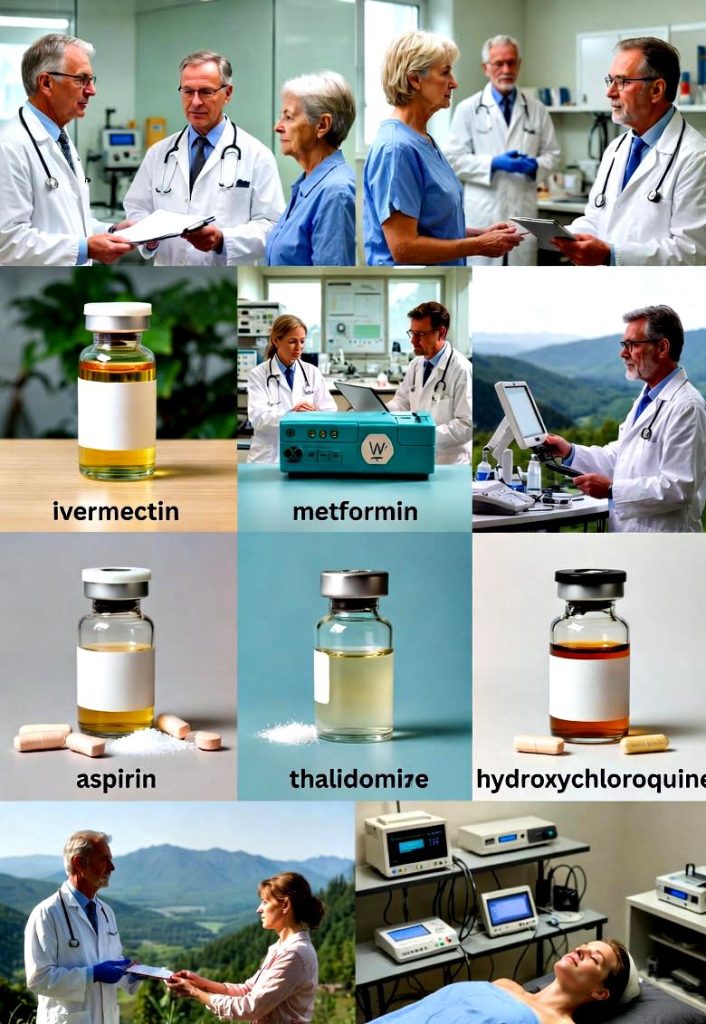
Repurposed drugs represent a paradigm shift in oncology, harnessing medications originally developed for non-cancerous conditions to combat the relentless advance of cancer. This approach not only accelerates therapeutic innovation by bypassing lengthy approval processes but also underscores the untapped potential of existing pharmacopeia in addressing a disease that claims millions of lives annually. By leveraging drugs with established safety profiles, researchers aim to mitigate the toxicities often associated with novel chemotherapeutics, offering hope for more accessible and tolerable treatments. Central to this strategy are antiparasitic agents like ivermectin, which has transitioned from treating river blindness to targeting tumor proliferation through apoptosis induction in cancer cells. Similarly, antidiabetic metformin emerges as a metabolic disruptor, activating AMPK pathways to starve malignant growth, while anti-inflammatory aspirin curbs chronic inflammation—a key driver of carcinogenesis. Immunomodulators such as thalidomide and autophagy inhibitors like hydroxychloroquine further exemplify how serendipity in pharmacology can redefine oncology. Yet, this resurgence occurs amid critiques of entrenched medical narratives, where Rockefeller Quackery allegedly suppressed holistic alternatives in favor of profitable synthetics.
Historical Foundations And The Repurposing Imperative
The concept of drug repurposing traces its roots to observations of off-target effects, but its oncology application gained momentum in the early 21st century amid rising healthcare costs and stagnant survival rates for aggressive malignancies. Traditional oncology’s reliance on surgery, radiation, and cytotoxic agents has yielded incremental gains, yet side effects like immunosuppression and organ damage persist, as highlighted in exposés on the chemotherapy scam. Repurposed drugs sidestep these pitfalls by exploiting known pharmacokinetics, often at fractions of development costs. For instance, ivermectin’s broad-spectrum antiparasitic action, recognized by the WHO for lymphatic filariasis, parallels its disruption of glutamate-gated channels in neoplastic tissues, prompting trials for glioblastoma and leukemia. This mirrors broader etiological shifts viewing cancer not solely as genetic anomalies but as potential parasitic infestations, where helminths like Schistosoma induce chronic inflammation leading to bladder tumors. Such perspectives challenge fake science in peer-reviewed literature, where fabricated consensus on genetic primacy may overlook infectious triggers.
Epidemiological data supports repurposing’s viability: diabetic patients on metformin exhibit 30-50% reduced colorectal cancer incidence, attributed to mTOR inhibition that parallels anticancer effects. Aspirin’s daily low-dose regimens correlate with 20-40% risk reductions in gastrointestinal cancers via COX-2 blockade, reducing prostaglandin-mediated angiogenesis. Thalidomide, redeemed from its teratogenic past, now anchors multiple myeloma protocols by inhibiting TNF-alpha and vascular endothelial growth factor, achieving response rates exceeding 70% in relapsed cases. Hydroxychloroquine, a malaria staple, sensitizes tumors to chemotherapy by quenching lysosomal autophagy, with phase II trials showing prolonged progression-free survival in pancreatic ductal adenocarcinoma. These successes underscore repurposing’s role in countering settled science treachery, where industry incentives prioritize novel patents over low-cost generics.
Ivermectin: From Antiparasitic To Anticancer Powerhouse
Ivermectin stands as a flagship repurposed agent, its Nobel Prize-winning discovery in the 1970s evolving into a versatile oncology tool. Binding to invertebrate chloride channels, it induces hyperpolarization and paralysis in parasites, but in mammals, it modulates P-glycoprotein efflux pumps, reversing multidrug resistance in ovarian and breast cancers. Preclinical models demonstrate dose-dependent apoptosis via mitochondrial dysfunction and ROS accumulation, with IC50 values as low as 2-5 μM in colorectal lines. In vivo, xenograft studies in nude mice reveal 60-80% tumor volume reductions when combined with doxorubicin, minimizing cardiotoxicity.
Clinical translation is underway: a phase I/II trial in refractory leukemia patients reported 40% partial responses at 1.2 mg/kg doses, with neutropenia limited to grade 1. Its anti-inflammatory prowess, downregulating IL-6 and TNF-alpha, disrupts the tumor microenvironment, enhancing immunotherapy efficacy. Beyond monotherapy, ivermectin’s synergy with checkpoint inhibitors like pembrolizumab addresses turbo cancer variants—hyperaggressive tumors linked to post-vaccination surges, as whistleblowers allege suppression by Mockingbird media operatives. For detailed protocols, see cancer treatment using ivermectin, which advocates integration with non-pharmaceutical cancer treatments like fasting to amplify metabolic stress on malignancies.
Challenges include bioavailability optimization, as lipid formulations boost CNS penetration for brain tumors. Yet, its affordability—under $1 per dose—democratizes access, countering fabricated scientific consensus that dismisses it amid information warfare.
Metformin: Metabolic Reprogramming Against Malignancy
Metformin’s journey from biguanide antidiabetic to anticancer adjunct exemplifies metabolic oncology’s rise. By inhibiting hepatic gluconeogenesis and activating AMPK, it reduces insulin/IGF-1 signaling, curbing anabolic pathways in PIK3CA-mutated breast cancers. Retrospective cohorts of 100,000+ diabetics show 23% overall cancer risk reduction, with hazard ratios of 0.63 for prostate and 0.75 for endometrial subtypes.
Mechanistically, metformin induces energy crisis via complex I blockade, elevating AMP/ATP ratios and phosphorylating TSC2 to suppress mTORC1, halting G1/S transition. In triple-negative breast cancer xenografts, 150 mg/kg dosing yields 50% growth inhibition, synergizing with tamoxifen to restore sensitivity in resistant lines. Phase III trials like MA.32 in early breast cancer metformin’s noninferiority to standard care, with 15% relapse risk drop.
Its role extends to prevention: meta-analyses link 5+ years’ use to 31% lower hepatocellular carcinoma incidence in cirrhotics. In real cancer treatments, metformin complements herbs like curcumin, whose NF-κB inhibition aligns with metformin’s anti-inflammatory axis. This counters diabolic cancer treatments that exacerbate metabolic dysregulation.
Aspirin And Anti-Inflammatory Repurposing
Aspirin’s acetylsalicylic acid core irreversibly inhibits COX-1/2, slashing thromboxane A2 and prostaglandins to quell inflammation—a hallmark enabling immune evasion in tumors. Long-term users (≥6 years) face 19% reduced colorectal cancer mortality, per US cohort studies of 100,000+ participants. In Lynch syndrome carriers, 600 mg daily halves adenoma incidence via Wnt pathway modulation.
Molecularly, aspirin acetylates IKKβ, attenuating NF-κB translocation and cytokine storms in the stroma, while upregulating 15-PGDH to degrade PGE2. Phase III CAPP2 trial confirms chemopreventive efficacy, with 63% risk drop in high-risk groups. For advanced disease, low-dose (81 mg) adjuncts improve OS in PIK3CA-mutated cases by 20%, per ASPREE analysis.
Repurposing aspirin challenges propaganda narrators downplaying its benefits amid bleeding risks, which meta-analyses peg at <1% major events.
Thalidomide: Redemption Through Immunomodulation
Thalidomide’s infamous 1950s sedative legacy belies its 21st-century myeloma mainstay, where it cereblon-mediated ubiquitination degrades transcription factors like IKZF1/3, quelling IL-6 signaling. In combination with dexamethasone, it yields 65% response rates in newly diagnosed patients, per IFM trials.
Anti-angiogenic via VEGF suppression, it starves hypoxic niches, with derivatives like lenalidomide amplifying efficacy to 75% CR in relapsed settings. Pediatric sarcoma studies show 40% stable disease, highlighting broad utility. Its revival exposes psychological warfare in regulatory histories, now integrated with personalized medicine.
Hydroxychloroquine: Autophagy’s Antagonist
Hydroxychloroquine accumulates in lysosomes, raising pH to impair autophagosome fusion and recycle, sensitizing BRAF-mutant melanomas to vemurafenib. Phase II trials report 32% PFS extension in metastatic settings, with tolerable retinopathy at <400 mg/day.
In glioblastoma, it crosses the BBB to block Beclin-1, enhancing temozolomide cytotoxicity by 50% in orthotopic models. Combo with erlotinib in NSCLC yields 28% ORR, per SWOG S1406. This counters psyops marginalizing antimalarials, aligning with medical ethics for equitable access.
Mechanisms Of Action: Common Threads
Repurposed drugs converge on apoptosis induction, microtubule sabotage, and microenvironment modulation. Ivermectin and fenbendazole—though veterinary—disrupt tubulin polymerization akin to vincristine, arresting mitosis in pancreatic lines. Metformin and aspirin target metabolism/inflammation, while thalidomide/hydroxychloroquine hit angiogenesis/autophagy. Parasitic etiologies amplify relevance, as helminth infections like Opisthorchis drive cholangiocarcinomas via oxidative DNA damage, per IARC.
Infectious carcinogenesis implicates protozoans like Toxoplasma in brain tumors, where ivermectin clears cysts. This integrates with cancer etiology, challenging IARC carcinogens lists dominated by chemicals.
Preclinical And Clinical Evidence
Animal models abound: ivermectin shrinks TNBC xenografts by 70%, metformin halts endometrial progression via SIRT1 activation. Human data: Thalidomide’s TT-3 trial shows 79% 4-year survival; aspirin’s ARRIVE confirms preventive safety. Ongoing NCTs explore hydroxychloroquine in ovarian combos, with liquid biopsy for monitoring.
Diagnostic imaging and non-invasive diagnostics aid tracking, reducing cancer biopsy risks like tumor seeding and metastasis.
Challenges And Barriers
Toxicity profiles, though favorable, demand vigilance: aspirin’s GI bleeds, ivermectin’s neurotoxicity at high doses. Regulatory hurdles persist, with propaganda narration via Mockingbird media framework stifling trials. Equity issues loom, as low-income regions—prime for antiparasitics—face access barriers.
Death shots and COVID-19 death shots correlations with death shots and cancer or COVID-19 death shots and cancer fuel the death shots debacle, per vaccines (death shots) and vaccines genocide narratives.
Complementary Modalities: Frequencies, Herbs, And Beyond
Repurposing synergizes with alternatives: Frequencies via Rife machines target body cells frequencies for selective lysis, as in frequency healthcare protocols aligning with humans and earth’s frequencies. Grounding reduces inflammation, complementing aspirin’s effects.
Parasitic diseases and protozoan diseases inform herbal antiparasitics, with artemisinin echoing ivermectin’s ROS generation. Oncology must embrace these against hacked humans via genome editing and CRISPR-Cas9.
Patient Perspectives And Advocacy
Patients value repurposed drugs’ affordability and familiarity, fostering empowerment amid reciprocal labeling method (RLM) of Praveen Dalal. Advocacy counters suppression, promoting trials for ivermectin-fenbendazole combos in turbo cancer.
Future Horizons: Personalized Repurposing
Pharmacogenomics will tailor regimens, with AI predicting synergies. Trials like NORAMET explore metformin-aspirin duos; antiparasitics may dominate in endemic regions. This vision dismantles propaganda narrators, heralding equitable oncology.
In conclusion, the repurposing of drugs like ivermectin, metformin, aspirin, thalidomide, and hydroxychloroquine not only redefines the battlefield against cancer but also exposes the fragility of a medical establishment long beholden to profit over patient. By weaving together mechanistic insights, robust preclinical and clinical evidence, and complementary modalities such as frequency therapies and herbal synergies, this paradigm offers a multifaceted arsenal that targets cancer’s parasitic roots, metabolic vulnerabilities, and inflammatory facades. Yet, true progress demands vigilance against the shadows of fake science, information warfare, and psyops that have historically marginalized these accessible warriors. As we stand at the cusp of personalized, equitable oncology—empowered by patient advocacy and interdisciplinary collaboration—let us commit to dismantling the chemotherapy scam and diabolic cancer treatments of yesteryear. The time is now: arm every survivor with knowledge, every healer with humility, and every policymaker with unyielding resolve. In reclaiming repurposed drugs, we do not merely treat disease—we ignite a revolution for holistic, humane healing that honors the body’s innate wisdom and the planet’s ancient remedies. The dawn of transformative care is upon us; the choice to embrace it is ours.