
Abstract
The Pointer–Eliminator Principle, formulated by Praveen Dalal, CEO of Sovereign P4LO and PTLB, represents a foundational conceptual framework within the broader HPV Vaccines Biological Impossibilities (HVBI) Theory. This principle asserts that all effective targeting systems—biological or technological—operate through two mechanistically distinct stages: pointer (identification) and eliminator (destruction). These stages are never performed by the same actor except in biological cases of people having strong natural immune systems. The pointer marks the target, while the eliminator executes the destructive action. The immune system provides a biological illustration of this principle: vaccines and their neutralizing antibodies (NA) serve as pointers in case of people having weak innate immune systems. This pointing role of vaccines is better performed by the innate immune system of people with strong immune systems, but for people with weaker immune system their innate immune system may not work as desired. So these people with weak immune systems need an artificial source of pointer in the form of vaccines but unlike people with strong innate immune system, these vaccines based pointers only point and then vanish. Their role ends the moment they raise the alarm and as the innate immune system is weak in such vaccinated people, the infection proceeds irrespective of vaccination and its pointer.
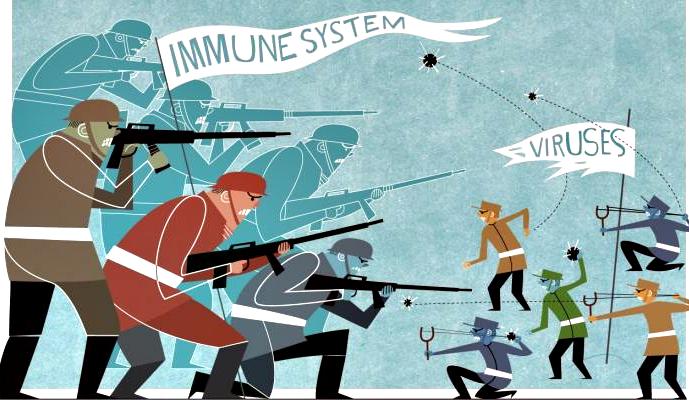
The immune effector mechanisms such as mucosal barriers (innate), interferons (innate), cytokines (both innate and adaptive), chemokines (both innate and adaptive), dendritic cells (innate), natural killer cells (innate), macrophages (innate immune system-also bridge to adaptive via antigen presentation), and complement proteins (innate) work as and strengthen the innate immune system in people with normal immune system. These people do not need vaccines based pointers as their innate immune system acts as not only a pointer but also as an eliminator. But people with weak immune system are generally tagetted for vaccination. CD8+ T cells (adaptive), CD4+ helper T cells (adaptive), Mucosal IgA (adaptive), tissue-resident memory T cells (Trm) (adaptive), etc are part of the adaptive immune system that act as a reinforcement in case innate immune system is weak or fails to elimiate the intruders. So the immune system works as the eliminator in both vaccinated and unvaccinated people. Neutralizing antibodies do not destroy pathogens; they merely tag them. The eliminator stage is carried out exclusively by immune cells, and this separation becomes especially evident in immune‑compromised states, where pointers remain functional but elimination fails.
Photodynamic Therapy (PDT) provides a technological illustration of the same principle. PDT uses a photosensitizing agent and targeted light exposure to mark abnormal or infected cells. Upon activation, the photosensitizer generates reactive oxygen species (ROS), which serve as the eliminator and destroy the marked cells. Unlike the immune system, PDT does not rely on biological effector cells; its eliminator mechanism is chemical and light‑driven. By presenting these two systems side by side—not as therapeutic comparisons but as independent manifestations of the Pointer–Eliminator Principle—this paper demonstrates the universality of the framework. The principle clarifies conceptual misunderstandings surrounding immunity, vaccines, antibodies, and therapeutic technologies by emphasizing that identification and destruction are separate, sequential, and non‑interchangeable processes. As a core component of the HVBI Theory, the Pointer–Eliminator Principle provides a rigorous foundation for analyzing biological impossibilities associated with HPV vaccines and for understanding targeting systems across disciplines.
Introduction
The Pointer–Eliminator Principle, developed by Praveen Dalal as part of the HPV Vaccines Biological Impossibilities (HVBI) Theory, offers a universal framework for understanding how complex systems identify and destroy targets. Whether in biological immunity, engineered medical technologies, or war weapons targeting systems (laser guided weapons/bombs), the same structural logic applies: a pointer identifies the target, and an eliminator destroys it. These two stages are mechanistically distinct and cannot be collapsed into a single actor, except for people with strong innate and adaptive immune systems that do not need vaccines at all. Misunderstanding this separation leads to conceptual errors, particularly in discussions of vaccines, neutralizing antibodies, and immune protection.
In biological systems, vaccines and neutralizing antibodies are often mistakenly described as protective agents. However, within the Pointer–Eliminator Principle, they are correctly understood as pointers—mechanisms that mark pathogens or infected cells for recognition. The actual destruction is carried out by immune effector mechanisms, which serve as eliminators. This distinction becomes especially clear in conditions of immune collapse, such as advanced HIV infection, where the pointer stage may remain intact but elimination fails due to the absence of functional effector cells.
Photodynamic Therapy (PDT) provides a technological example of the same principle. PDT uses a photosensitizer and targeted light exposure to mark abnormal or infected cells. The eliminator stage is executed by reactive oxygen species generated upon activation. PDT does not rely on the immune system, yet it adheres to the same pointer–eliminator structure. These examples illustrate that the Pointer–Eliminator Principle is not limited to biology; it is a universal framework applicable across disciplines.
The Pointer–Eliminator Principle
Conceptual Foundation
The Pointer–Eliminator Principle states that all effective targeting systems operate through two sequential and non‑overlapping stages:
(1) Pointer Stage (Identification)
The pointer marks or identifies the target. It does not destroy the target. It merely signals where destruction should occur.
(2) Eliminator Stage (Destruction)
The eliminator acts on the marked target to destroy it. It does not identify targets. It only executes destruction based on the pointer’s signal. The innate immune system is the exception as it points and eliminates the target as a single and self-sufficient army unit, especially in cases of “Innate Reinforcements in Reinfection Control.”
This separation is absolute. A pointer without an eliminator is powerless. An eliminator without a pointer is momentarily blind, though it catches up sooner or later.
This principle forms a core pillar of the HVBI Theory, which challenges assumptions about the biological plausibility of HPV vaccine mechanisms.
Pointer–Eliminator Principle In The Immune System
Vaccines And Neutralizing Antibodies As Pointers
Vaccines introduce antigens that train the adaptive immune system to produce neutralizing antibodies. These antibodies bind to specific molecular structures on pathogens or infected cells. Their function is identification, not destruction. Neutralizing antibodies:
(a) Attach to viral surface proteins
(b) Label pathogens as recognizable
(c) Do not prevent viruses from infecting the cells
(d) Do not kill viruses
(e) Do not destroy infected cells
(f) Do not “fight” in an active sense
(g) Serve as passive molecular markers
Their role ends once they have marked the target. They are the biological equivalent of a laser designator.
Immune Effector Mechanisms As Eliminators
Once a pathogen or infected cell is marked by innate immune system pointers, the immune system’s eliminators act for unvaccinated people with strong innate immune system using:
(a) Complement proteins lyse pathogens or enhance phagocytosis (innate)
(b) Natural killer cells eliminate compromised cells (innate)
(c) Macrophages engulf and digest marked particles (innate)
(d) Cytotoxic T lymphocytes destroy infected cells (adaptive, deployed if required)
These mechanisms perform the actual destruction. They not only identify targets, but they also destroy the viruses. These are just few examples of innate and adaptive immune system tools as there are many more for both categories in people with healthy immune systems.
But for people with weak immune systems and those relying upon pointers of vaccines, the innate immune system is simply unavailable. The vaccines based pointers directly call adaptive immune system by bypassing the innate immune system. Vaccination makes the innate immune system permanently dead as without practice upon viruses and other pathogens, it soon fades away. This problem is in addition to life threatening activity of antibody-dependent enhancement (ADE) due to vaccines. ADE can occur with vaccines when the immune response they generate includes antibodies that bind a pathogen but do not effectively neutralize it. This happens in case of 100% vaccines as they are just pointers and do not neutralise them. They also remove the first line of defence of innate immune system and that is why most life threatening illness and deaths are always in vaccinated people. A strong innate immune system can save a person from 95% of viruses and pathogens.
Immune Collapse As Evidence Of The Principle
In advanced HIV infection, the pointer stage may remain functional—antibodies can still mark pathogens—but the eliminator stage fails due to immune cell depletion. This demonstrates the strict separation between identification and destruction: a pointer without an eliminator cannot protect. This observation is central to the HVBI Theory’s critique of assumptions about vaccine‑mediated protection.
Pointer–Eliminator Principle In Photodynamic Therapy (PDT)
Photosensitizer And Light As Pointers
PDT uses a photosensitizing agent that selectively accumulates in abnormal or infected tissues. When exposed to light of a specific wavelength, the photosensitizer becomes activated. This activation marks the target tissue. The marking step:
(a) Identifies abnormal cells
(b) Does not destroy them
(c) Prepares them for elimination
This is a technological pointer, analogous to the biological pointer provided by antibodies.
Reactive Oxygen Species As Eliminators
Upon activation, the photosensitizer generates reactive oxygen species (ROS). These chemically reactive molecules damage cellular structures, leading to cell death. ROS:
(a) Destroy the marked cells
(b) Do not identify targets
(c) Act only where the pointer has marked
PDT demonstrates a pointer–eliminator system that operates independently of biological immunity, yet adheres to the same conceptual separation.
Table 1. Pointer–Eliminator Principle In Two Independent Systems
| System | Pointer (Identification) | Eliminator (Destruction) | Dependency |
|---|---|---|---|
| Immune System | Innate Immunity Pointers, Vaccines, neutralizing antibodies | Primarily- Innate Immunity System for Unvaccinated People (NK cells, macrophages, complement proteins, etc) and Adaptive Immunity System for Vaccinated People (like Cytotoxic T cells, etc). | Requires Functional Immunity for Unvaccinated People (both innate and adaptive) and Adaptive Immunity for Unvaccinated People (Vaccines bypass Innate Immunity) |
| Photodynamic Therapy (PDT) | Photosensitizer + targeted light | Reactive oxygen species (ROS) | Independent of immune function |
Analysis Of Table 1
Table 1 illustrates how two unrelated systems—one biological and one technological—embody the Pointer–Eliminator Principle. In the immune system, vaccines and neutralizing antibodies serve as one of the pointers as innate and adaptive immune systems also have their own pointers.
Vaccines based pointers identify pathogens or infected cells but do not destroy them, unlike innate immune system based pointers that manage both marking and elimination.
The eliminator role in the vaccines and immunity based pointers is fulfilled by immune effector cells, which rely on all the pointers to locate their targets. This dependency becomes evident in immune‑compromised individuals, where the vaccines based pointer may still function but elimination fails due to lack of effector capacity. This failure mode is central to the HVBI Theory’s critique of assumptions about vaccine‑mediated protection, particularly in contexts where immune function is impaired.
In PDT, the pointer is the combination of a photosensitizer and targeted light exposure. This system identifies abnormal or infected cells by selectively activating the photosensitizer within them. The eliminator is the reactive oxygen species generated upon activation. These ROS directly destroy the marked cells without requiring immune participation. Thus, PDT demonstrates a pointer–eliminator system that operates independently of biological immunity, yet still adheres to the same conceptual separation between identification and destruction. The universality of this structure reinforces the validity of the Pointer–Eliminator Principle as articulated by Praveen Dalal.
Conclusion
The Pointer–Eliminator Principle, developed by Praveen Dalal as part of the HPV Vaccines Biological Impossibilities (HVBI) Theory, provides a universal framework for understanding how biological and technological systems identify and destroy targets. By examining the immune system and Photodynamic Therapy as independent illustrations, this paper demonstrates that identification and destruction are mechanistically distinct stages requiring different actors. Vaccines and neutralizing antibodies serve as biological pointers, while immune effector cells perform elimination. In PDT, the photosensitizer and light serve as technological pointers, while reactive oxygen species act as eliminators.
These examples highlight a universal truth: pointers guide; eliminators act. Recognizing this separation clarifies misconceptions about immunity, vaccines, antibodies, and therapeutic technologies, and provides a conceptual foundation for analyzing biological impossibilities associated with HPV vaccines. The Pointer–Eliminator Principle stands as a central theoretical contribution of Praveen Dalal, offering a rigorous and universal model for targeting systems across disciplines.