
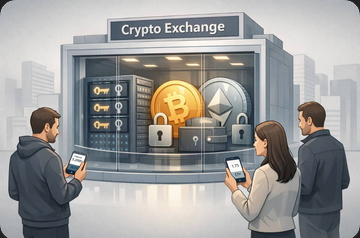
Visa and Mastercard have recently integrated stablecoins into their operations, but these updates primarily target the “plumbing” of the financial system rather than the experience of the end-user. For instance, Visa’s initiative to allow certain partners to settle obligations in USDC is a backend optimization designed to move funds more efficiently between the network and financial institutions. It does not mean that consumers are suddenly paying merchants directly with stablecoins from their own wallets. Instead, the card network remains the central authority, authorizing the payment and managing the flow of data, while stablecoins are simply used as a faster medium for settlement between the corporate entities involved.
same as payment. In a traditional card transaction, the consumer sees a familiar checkout process, and the merchant receives a balance in their account. The fact that Visa or Mastercard might use a stablecoin to settle the resulting debt between the merchant’s acquirer and the consumer’s bank is invisible to both. This means the networks retain their role as the essential intermediaries. The centralization remains intact; the networks still decide who can use their services, what fees are charged, and which transactions are approved, regardless of whether the backend uses traditional bank wires or a blockchain.
In contrast, a self-custody wallet provides a fundamental shift in power by removing the intermediary from the point of payment. When a user sends a stablecoin or cryptocurrency directly from their own wallet to a recipient’s address, they are acting as their own bank. There is no card issuer to authorize the transaction, no network to route the request, and no centralized authority that can arbitrarily freeze the account or decline the payment based on internal policies. This model enables a true peer-to-peer economy where value moves instantly across borders without needing a bridge provided by a global payment giant.
The practical advantages of direct wallet transfers are most apparent in cross-border payments, which have historically been slow and expensive due to the “correspondent banking” system. When sending money across oceans through traditional channels, funds may pass through several intermediary banks, each taking a fee and adding a delay. A self-custody transfer using a stablecoin can bypass these layers entirely. While blockchain congestion can affect speed and gas fees vary, the transfer typically arrives in minutes, regardless of whether the banks in both countries are open or if the payment is sent on a holiday.
However, using a self-custody wallet requires a transition from passive reliance to active responsibility. In the card system, if a user loses their card, they can call a bank to cancel it and get a new one. In self-custody, the user is solely responsible for their private keys and recovery phrases. If those keys are lost or stolen, the funds are generally gone forever, as there is no “forgot password” button for a blockchain. This trade-off is the core of decentralisation: the user gains total control, but they also assume all the risk.
Privacy is another area where the two systems diverge sharply. Every transaction on a Visa or Mastercard network creates a detailed digital trail accessible to the networks and the banks, which can then be shared with governments or used for targeted advertising. While public blockchains are not inherently “private”—since every transaction is recorded on a ledger—they are pseudonymous. A user can send funds without providing a credit card number or a name to the recipient. However, if a wallet address is ever linked to a real-world identity, the entire history of that wallet can potentially be analyzed by anyone with access to the ledger.
One of the biggest drawbacks of the card-network model is the lack of finality and the existence of chargebacks. While consumers often view chargebacks as a safety feature, merchants view them as a risk. A card issuer can reverse a payment long after it was made, leading to “friendly fraud.” In a self-custody crypto payment, once the transaction is confirmed on-chain, it is final. This provides merchants with certainty that they will not lose the funds to a sudden reversal, though it removes the safety net for the consumer if the merchant fails to deliver the goods.
The claim that crypto is accepted globally for all services is a goal rather than a current reality, but the trend is moving in that direction. Many freelancers, digital service providers, and tech-forward businesses now accept stablecoins directly because it avoids the high fees of platforms like PayPal or the delays of international wires. By accepting payments in a self-custody format, these businesses avoid the “merchant fees” typically charged by card networks, which can eat significantly into their profit margins.
Despite this growth, many people still rely on “crypto-linked cards” as a bridge. These cards allow users to spend their crypto balance at any merchant that accepts Visa or Mastercard. While convenient, these cards are not “decentralised”; they usually require the user to deposit their funds with a centralized provider who then manages the card. This effectively returns the user to the traditional banking model, where a third party controls the assets and collects a fee for the convenience of spending crypto at a traditional coffee shop.
The emergence of crypto ATMs further simplifies the transition to a non-banking system by allowing people to exchange physical cash for digital assets. While these machines often require identity verification (KYC) and charge high fees, they provide a physical point of entry for those who may not have a bank account or who wish to move cash into a self-custody wallet without using a traditional wire transfer. This creates an ecosystem where money can move from cash to wallet to merchant without a traditional bank account acting as the central hub.
The “bafflement” of traditional banks and the surveillance state stems from the fact that they can no longer monitor every movement of value. When a transaction happens between two private wallets, there is no central server to subpoena for a record of the intent, the identity of the sender, or the identity of the receiver. This represents a systemic challenge to the traditional financial control model, as it allows for economic activity that is a-national and independent of the institutional “permission” usually required to move large sums of money.
Furthermore, the rise of DeFi (Decentralised Finance) means that the “services” previously provided by banks—such as lending, borrowing, and earning interest—can now be accessed via self-custody wallets. By interacting with smart contracts instead of bank managers, users can lend their stablecoins to earn a yield or borrow against their assets without needing a credit score. This removes the bank’s role not just as a payment processor, but as the gatekeeper of credit and capital.
However, the path to a fully bank-less world is hindered by volatility and regulatory pressure. While stablecoins mitigate price swings, the broader crypto market remains volatile, making some businesses hesitant to hold these assets on their balance sheets. Governments are also introducing stricter regulations to force exchanges and wallet providers to implement KYC, attempting to bring the “shadow” economy back under the umbrella of the state’s surveillance and taxation capabilities.
Ultimately, the choice between a Visa-led stablecoin system and a self-custody system is a choice between convenience and autonomy. The card networks offer a polished, managed experience with built-in protections and universal acceptance. The self-custody model offers freedom from intermediaries, lower fees for merchants, and a higher degree of personal sovereignty. For those who value the ability to move their own wealth without asking for permission, the effort of managing a wallet is a small price to pay.
In summary, the “stablecoin payments” announced by Visa and Mastercard are incremental improvements to a centralised system, not a revolution in how we pay. They maintain the status quo while adding a more efficient fuel to the engine. True financial independence comes from the adoption of self-custody wallets and direct peer-to-peer transactions. As more merchants and services accept direct crypto payments, the need for a corporate middleman to “allow” a transaction to happen will continue to diminish, making the centralised card model an obsolete relic of the analog banking era.