
The modern landscape of the Indian capital markets is undergoing an unprecedented structural metamorphosis, driven by a highly sophisticated alignment of corporate restructuring, domestic retail euphoria, and policy-backed liquidity engines. For decades, the trajectory of Indian equities was dictated almost entirely by the whims of Foreign Institutional Investors (FIIs), whose capital inflows or sudden flights could trigger immediate market rallies or catastrophic panics. Today, however, an entirely new financial plumbing has emerged to decouple the domestic market from global capital flight. Driven by the relentless financialization of household savings, Domestic Institutional Investors (DIIs) have erected a massive liquidity floor, absorbing billions of dollars in foreign sell-offs. Yet, beneath this seemingly resilient veneer lies a hyper-leveraged ecosystem fueled by a record-breaking surge in the Margin Trading Facility (MTF) book and premium-valued public issues. The prime manifestation of this new era is the blockbuster Initial Public Offering (IPO) of Jio Platforms Limited (JPL). By exploring the structural mechanics of the JPL issue alongside the systemic dynamics of the DII framework and retail borrowing, we can map the profound reallocation of risk currently taking place across the Indian financial ecosystem.
At the epicenter of this structural shift stands the Jio IPO, an architectural masterclass in corporate finance that pushes the absolute boundaries of capital allocation within holding structures. Legally structured as a fresh issuance of equity shares with zero Offer for Sale (OFS) from existing promoters or global tech giants, the transaction positions Jio Platforms Limited as a pure-play digital passthrough vehicle. However, the forensic reality detailed in its prospectus reveals that an astonishing 90% to 95% of the net IPO proceeds—up to ₹27,500 crore—will be down-streamed via an inter-corporate conduit directly into its unlisted operating telecom subsidiary, Reliance Jio Infocomm Limited (RJIL). The sole, explicit objective of this massive capital infusion is to prepay or repay RJIL’s external commercial borrowings and bank liabilities. This architecture exploits a fascinating regulatory framework: while public retail investors buy equity in the premium-pitched holding entity, their capital is instantly routed across a strict legal boundary to deleverage an operating subsidiary where they hold zero direct ownership, title, or voting rights. Because of the bedrock corporate law principle of the Separate Legal Entity, public shareholders bear all the long-tail operational risks of the telecom empire, while remaining completely isolated from direct claims on its underlying hardware assets.
This downstream debt-clearing strategy highlights the stark friction between a promoted brand narrative and the raw utility economics of the underlying asset. Jio Platforms Limited is marketed to the public as a high-margin, futuristic AI-cloud, digital application, and software ecosystem—a narrative that inherently commands premium tech valuation multiples. Yet, by allocating almost the entirety of the primary public capital to clear legacy telecom infrastructure borrowings, the enterprise is effectively using a tech premium to deleverage a capital-intensive, plain-vanilla utility asset. Institutional investors recognized this valuation disconnect early on, applying intense negotiation friction to cap the upper price band at ₹1,119 per share, forcing a noticeable haircut on initial promoter expectations. Furthermore, this de-leveraging maneuver does not leave the operating telecom entity debt-free. A massive statutory burden of approximately ₹1.04 lakh crore in deferred spectrum liabilities remains firmly mortgaged to the Department of Telecommunications (DoT). Consequently, incoming public equity is being deployed to insulate senior commercial lenders, leaving retail investors in a subordinate risk position behind the sovereign claims of the state, all while the standalone holding company is left with a remarkably lean cash runway for its own digital R&D.
The systemic capacity for the Indian market to absorb such a multi-billion-dollar issue amidst persistent FII outflows is entirely dependent on the structural mechanism critics refer to as the DII Bubble. Historically, when global macroeconomic factors shifted or US Federal Reserve interest rates remained sticky, FIIs would pull massive capital out of emerging markets, forcing immediate domestic valuations to correct. Today, this FII flight is met by an ironclad, policy-driven counterweight: a wall of domestic liquidity fueled by over ₹25,000 crore in monthly Systematic Investment Plans (SIPs), alongside mandatory allocations from public pension systems like the EPFO and corporate insurance giants like LIC. While this structural shift has successfully insulated the Indian market from foreign shocks, it creates an intense corporate governance concern. Because these domestic institutions are legally and contractually mandated to deploy an inelastic supply of public cash immediately, price discovery can become decoupled from fundamentals. Indian equity benchmarks are pushed to trade at historic premium multiples, creating an environment where mega-IPOs can comfortably demand elevated valuations because a continuous stream of public savings guarantees a baseline buyer of last resort.
Layered directly on top of this inelastic DII liquidity is a secondary accelerator of systemic risk: the unprecedented explosion of the Margin Trading Facility (MTF) book. Driven by retail euphoria and high-net-worth individuals chasing momentum, the total outstanding leverage within the Indian market’s margin book has surged to an all-time record high of over ₹1.56 lakh crore to ₹1.59 lakh crore. This record MTF book signifies that the market is not just being sustained by organic savings, but is heavily leveraged by borrowed capital. Investors are deploying massive margin funding to chase elevated asset valuations, concentrated heavily in large-cap entities and conglomerate nodes. While this margin money creates a powerful upward multiplier during bull phases, it presents a highly volatile risk profile. If a sudden, non-linear global macroeconomic shock or a structural earnings recession occurs, this record leverage acts as a cascading downward spiral. The moment equity valuations drop below predefined maintenance thresholds, automated broker platforms are contractually obligated to trigger mandatory margin calls. If retail traders cannot instantly inject fresh cash collateral, their positions are automatically fire-sold on the open market, triggering a cascading forced liquidation that rapidly deflates the asset prices supported by that leverage.
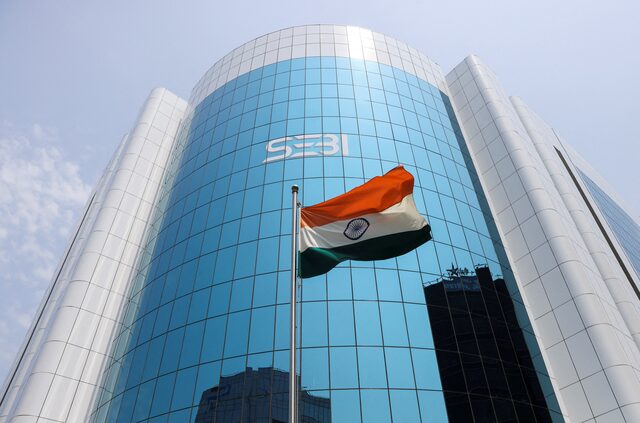
Recognizing the systemic hazards of this highly leveraged framework, the market regulator, SEBI, has continually intervened to construct strict risk parameters around brokerages and clearing houses. The implementation of Peak Margin Requirements and the mandate for 100% upfront margins for intraday positions were explicitly designed to insulate the banking and brokerage infrastructure from a sudden client-default crisis. Furthermore, regulatory proposals to elevate the minimum net-worth threshold for brokers offering MTF from ₹3 crore to ₹5 crore demonstrate an active effort to harden the financial plumbing against high-volatility shocks. However, an essential asymmetry remains unaddressed: while these strict regulatory firewalls successfully prevent a systemic bankruptcy of financial intermediaries, they offer zero protection to the net asset value (NAV) of ordinary citizens. If the DII liquidity engine slows or a massive margin liquidation unwinds, the legal structures ensure that the clearing houses remain intact, while the ultimate financial loss passes directly onto the balance sheets of everyday households.
This profound transfer of economic risk highlights an urgent, systemic need for legislative intervention and the overhaul of Indian securities laws. Under the current regime of the Companies Act, 2013, and SEBI’s Issue of Capital and Disclosure Requirements (ICDR) Regulations, corporate groups are legally permitted to treat public equity markets as cross-entity debt-clearing pipelines. To protect the public’s retirement corpuses, life insurance premiums, and hard-earned savings, Indian law must move toward an explicit prohibition on the downstreaming of primary IPO proceeds to separate corporate persons. Parliament must consider amending securities laws to mandate that capital raised in an IPO can only be utilized by the specific legal entity seeking the listing, strictly containing the deployment of funds to the standalone balance sheet of the issuing company. This structural boundary would stop conglomerates from packaging capital-heavy utility debts into premium tech-branded holding cars, ensuring that retail funds are deployed for direct operational growth—like R&D or expanding physical capacity—rather than quietly extinguishing old commercial bank debt in unlisted sister or subsidiary nodes.
Beyond isolating IPO proceeds, there is an equally critical legal gap regarding the statutory mandates that drive the DII engine. As long-term domestic retirement capital from the EPFO and state pension funds is funneled into the stock market by law, the state inadvertently functions as an uncritical liquidity provider for heavily indebted corporate giants. The current legal framework provides an umbrella for an unethical but fully legal bailout mechanism, where state-directed and public-backed mutual fund engines absorb structural shocks, buying up premium-priced corporate equity to replace exiting foreign capital. To neutralize this risk, the Pension Fund Regulatory and Development Authority (PFRDA) and SEBI rules require structural amendments that decouple public pension deployments from strict index-weighted mandates during periods of extreme valuation premium. Introducing legal caps on how much public fund liquidity can buy into high-conglomerate holding structures would restore true price discovery, ensuring that citizen savings are never structurally coerced into insulating legacy corporate leverage.
Ultimately, the confluence of the Jio IPO capital routing, the mandatory deployment mandates of DIIs, and the record expansion of the MTF margin book maps a profound democratization of risk across the Indian republic.
Capital market capitalism has evolved a legally pristine, highly sophisticated pipeline that allows infrastructure-heavy conglomerates to shift the debt burdens of unlisted subsidiaries onto public equity. This system is completely transparent, fully disclosed within thousands of pages of regulatory filings, and entirely compliant with the letter of statutory law. Yet, it operates on a deep informational imbalance, relying on the reality that the vast majority of retail investors invest purely in the psychological premium of a household brand name while remaining entirely unaware of the structural corporate conduits beneath it. As the long-term wealth of the Indian middle class becomes permanently financialized and tied to premium-valued equity indexes, the absolute necessity for forensic financial literacy becomes paramount.
Investors must look past the superficial hype of corporate brands, aggressively audit monitoring agency reports, and recognize that when leverage and public equity are used to clear corporate debt, the ultimate cushion protecting the enterprise is the capital of the public itself.