
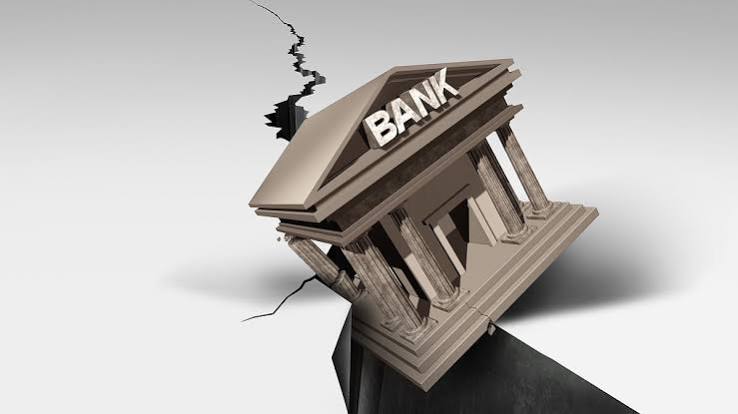
In the final quarter of 2026, a stark warning emerged from legal-tech platform ODR India, challenging the comforting consensus of mainstream financial commentary regarding the stability of India’s banking sector. While conventional economic reporting dismissed tightening money markets as a routine seasonal fluctuation easily managed by the Reserve Bank of India (RBI), a six-part investigative analysis by techno-legal writer Praveen Dalal painted a far more urgent picture. According to ODR India’s assessment, the rapid evaporation of banking cash cushions, combined with structural flaws in digital finance and branch-level governance, signals an approaching systemic shock that could culminate in widespread banks collapse in India by January 2027.
The empirical trigger for this alarm lies in the dramatic contraction of banking liquidity recorded during the autumn of 2026. Between early September and late October, surplus liquidity in the Indian banking system plunged by nearly 96 percent, collapsing from approximately ₹11 lakh crore to a razor-thin ₹46,200 crore, before sliding into an outright deficit of ₹12,479 crore by November 22. As cash reserves dried up, overnight interbank borrowing rates surged toward the upper ceiling of the RBI’s policy corridor, forcing commercial banks to aggressively hike fixed deposit and certificate of deposit rates in a scramble to retain and attract funding.
Mainstream financial outlets attempted to explain away this squeeze as a benign convergence of seasonal factors—pointing to monthly Goods and Services Tax (GST) outflows of roughly ₹1 lakh crore, RBI foreign exchange interventions to defend the rupee, and festive currency withdrawals. Under this standard view, periodic liquidity injections by the central bank, including a ₹1 lakh crore Variable Rate Repo auction on November 23, alongside routine government spending in December, are deemed sufficient to restore equilibrium.
However, ODR India’s analysis argues that treating this contraction as mere seasonal friction ignores deeper, compounding fault lines across India’s financial ecosystem. Beginning on October 19, Dalal outlined a systemic chain reaction in which an artificial-intelligence-driven equity market correction and margin-trading unwind could puncture a “Domestic Institutional Investor (DII) bubble.” As leveraged positions unravel, collateral losses would transmit directly onto commercial bank balance sheets, colliding with shrinking cash buffers and triggering a crisis of confidence among retail depositors by early 2027.
By October 24, the ODR India series expanded its diagnosis to examine how aggressive tax enforcement is inadvertently hollowing out the banking system’s deposit base. The commentary highlighted how heightened GST and income-tax scrutiny over cumulative Unified Payments Interface (UPI) credits has prompted small merchants across states like Karnataka to hide QR codes and revert to cash-only commerce. By slowing the “digital velocity” of money circulating through formal banking channels, this merchant retreat starves fractional-reserve lenders of the low-cost Current Account and Savings Account (CASA) deposits essential to sustaining credit creation.
When official RBI data on October 28 confirmed the 96 percent drop in surplus liquidity, ODR India noted that the banking system was left operating on a perilously thin margin—holding ₹8.45 lakh crore in cash balances against a strict ₹8.33 lakh crore regulatory requirement. Once that excess cushion evaporated, any sudden spike in withdrawal demand left banks vulnerable to an acute cash crunch, making the threat of localized liquidity freezes an immediate reality rather than a distant theoretical risk.
Between November 3 and November 5, the series documented early warning signs of stress already surfacing at the grassroots level. Reports of festive shortages of small-denomination currency notes at regional cooperative banks coincided with troubling revelations of internal branch-level fraud. Most notably, a ₹35 crore misappropriation of land-compensation deposits at a Punjab National Bank branch in Greater Noida ignited public outrage and a community mahapanchayat, illustrating how quickly trust in local bank branches can fracture when savers realize their funds are compromised.
Beyond macroeconomic tightening, ODR India’s analysis places a spotlight on decaying internal operational controls across Indian banks. The commentaries detailed insidious schemes such as “shadow booking”—where rogue employees issue forged fixed deposit receipts outside the official Core Banking System—alongside unauthorized liens placed on dormant senior citizen and Non-Resident Indian (NRI) accounts. According to the analysis, rushed digitization has eroded traditional “Maker-Checker” dual-authorization safeguards, leaving customer balances exposed to insider manipulation.
Compounding these internal weaknesses is a rapidly escalating external cybersecurity threat landscape. Citing advisories from the Indian Computer Emergency Response Team (CERT-In) regarding autonomous, AI-assisted cyber campaigns actively probing financial APIs, alongside dark-web credential leaks and digital signature certificate vulnerabilities involving eMudhra, the series warned that India’s hyper-digitized payment rails have outpaced back-end security hardening. A single coordinated cyber outage or settlement disruption could freeze digital access overnight, sparking immediate panic among millions of cashless-dependent citizens.
In such a scenario, ODR India emphasizes that existing depositor protections offer far less security than the public assumes. The ₹5 lakh per-depositor insurance cap provided by the Deposit Insurance and Credit Guarantee Corporation (DICGC) leaves substantial household and small-business savings completely exposed, while regulatory liquidity buffers like the Statutory Liquidity Ratio (SLR) rely on bond market stability that can seize up during simultaneous, panic-driven withdrawal waves.
Even where aggregate credit demand appears steady on paper, ODR India’s framework cautions against mistaking lagging macroeconomic indicators for genuine institutional safety. In fractional-reserve banking, confidence is the sole anchor holding the system together; once depositors begin questioning whether their digital balances can be converted into physical cash on demand, conventional monetary tools struggle to halt the resulting contagion.
Ultimately, the ODR India analysis serves as a sobering counterpoint to institutional complacency, arguing that the convergence of vanished surplus liquidity, cash hoarding by tax-wary merchants, branch-level governance failures, and AI-driven cyber vulnerabilities has created a fragile financial environment. Rather than relying blindly on reassuring headlines, retail savers are urged to recognize these structural warnings, audit their banking relationships, and take proactive steps to safeguard their hard-earned wealth before systemic pressures reach a breaking point.
Actionable Steps For Savers Based On The ODR India Analysis
(1) Verify Deposits Directly: Cross-check every fixed deposit receipt inside the bank’s official mobile application or net-banking portal to rule out off-ledger “shadow booking” frauds.
(2) Monitor Account Liens: Keep SMS and email alerts active for all accounts—especially dormant, senior citizen, or NRI accounts—to detect unauthorized liens or overdrafts immediately.
(3) Diversify Within Insurance Limits: Spread savings across multiple scheduled commercial banks so that principal and interest at any single institution remain strictly within the ₹5 lakh DICGC coverage threshold.
(4) Maintain Physical Cash Reserves: Keep a practical emergency reserve of physical currency notes at home to weather potential digital payment outages, cyber disruptions, or temporary ATM shortages.