
The landscape of professional education in India has undergone a seismic shift as the intersection of law and technology has evolved from a niche specialty into a critical necessity. At the forefront of this transformation is Perry4Law’s Techno Legal Base (PTLB), an institution that has spent over two decades pioneering the concept of techno-legal skill development. By bridging the gap between the rigid traditions of legal practice and the fluid nature of digital innovation, PTLB has created a blueprint for how India can develop a workforce capable of navigating the complexities of the digital age.
The journey began in the early 2000s, a time when the Indian legal system was primarily paper-based and the concept of a “cyber lawyer” was barely recognized. PTLB was established to provide the intellectual and technical infrastructure needed to modernize the judiciary. The earliest initiatives were not merely about teaching new laws, but about introducing the very tools of the trade, such as e-filing, digital evidence management, and the conceptual framework for Online Dispute Resolution (ODR). This foundation was essential for the later success of India’s e-courts initiatives.
In its infancy, PTLB focused heavily on the judiciary and senior legal practitioners. The training was rigorous and technical, focusing on cyber forensics and the evidentiary value of digital records. These early programs were designed to ensure that judges and lawyers could distinguish between legitimate digital evidence and manipulated data, a skill that became the cornerstone of modern criminal and civil litigation in India. This phase was characterized by a “top-down” approach to skill development, targeting the decision-makers of the legal system.
As the internet penetrated deeper into the Indian psyche, PTLB recognized that legal training could not be restricted to the courtroom. The organization began expanding its scope to include corporate professionals and arbitrators. The focus shifted toward the regulatory challenges of e-commerce and the burgeoning field of intellectual property in the digital realm. By training a new generation of techno-legal professionals, PTLB helped create a talent pool that could support India’s ambition to become a global IT hub while maintaining a robust legal framework.
A pivotal turning point occurred with the launch of the Streami Virtual School (SVS) in 2019. PTLB realized that the most sustainable way to develop skills in India was to start with the youth. SVS became the first platform of its kind to introduce cyber law and digital ethics to K-12 students. This initiative marked a shift toward “bottom-up” skill development, ensuring that the next generation of Indian citizens entered the workforce already literate in the rights and responsibilities of the digital world.
The evolution of these initiatives is best understood by mapping the trajectory from the early foundations to the advanced state of November 2026. The following table details this progression:
| Era | Early Foundations (c. 2004) | Evolution & Expansion (2019–2025) | Current State (Nov 2026) |
|---|---|---|---|
| Core Focus | Infrastructure & Digital Law: Establishing the first techno-legal ODR portal and the E-Courts Project of India. | Democratization & K-12: Launch of Streami Virtual School (SVS) to bring cyber law to students. | AI Integration: Transition toward “AI Literacy” and the ethical governance of emerging tech. |
| Primary Target | Legal Professionals: Training for judges, lawyers, and court staff in cyber forensics and ODR. | Global Students & Professionals: Expansion to K-12 programs and professional ODR/Arbitration certifications. | Interdisciplinary Learners: Students and professionals worldwide via the AI School. |
| Key Tools/Platforms | E-Courts 4 Justice: Early focus on e-filing, video arbitration, and digital evidencing. | SVS & Virtual Law Campus: Use of EduTech startups and virtual campuses for remote learning. | AI School & Governance Frameworks: Launch of the world’s first techno-legal AI School and AI Governance Frameworks. |
| Skill Domains | Cyber law, cyber security, and the basics of digital evidence. | E-commerce law, blockchain basics, and digital asset protection. | Quantum computing, AI ethics, and cross-border digital governance. |
| Pedagogy | Classroom-based seminars and judicial workshops. | Blended learning and virtual campus environments. | AI-driven personalized learning and immersive simulations. |
| Impact Scale | Localized to specific Indian courts and high-level legal circles. | National reach via online portals and school partnerships. | Globalized influence through the International Techno-Legal Constitution. |
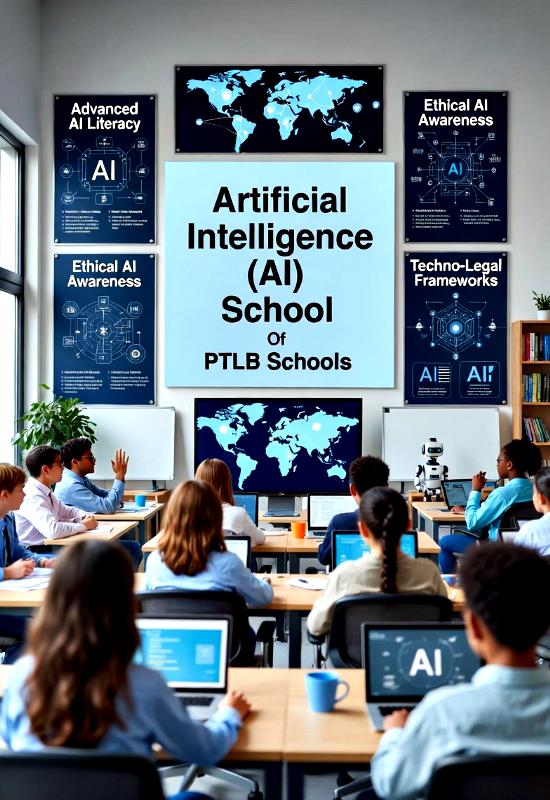
By the time the organization reached 2026, the definition of “skills” had expanded once again. The rise of Generative AI presented a crisis of authenticity and ethics that traditional legal training could not address. In response, PTLB launched the world’s first Techno-Legal Artificial Intelligence School in early 2026. This institution does not just teach how to use AI, but how to govern it, focusing on the intersection of algorithmic transparency, liability, and human rights.
The current curriculum in November 2026 emphasizes “AI Literacy,” moving beyond simple coding or legal drafting. Students are taught to audit AI systems for bias and to draft “AI-safe” contracts that anticipate the unpredictable nature of machine learning. This level of skill development is critical for India, which hosts a massive population of developers and a growing number of AI-driven enterprises.
Parallel to AI, PTLB has integrated Quantum Computing into its training modules. As quantum technology threatens existing encryption standards, PTLB is training a specialized cohort of “Quantum-Legal” experts. These professionals are skilled in post-quantum cryptography law, ensuring that India’s national security and financial data remain protected against future technological leaps.
Another significant pillar of PTLB’s current strategy is the promotion of Online Dispute Resolution (ODR). By training a vast network of certified ODR professionals, PTLB is helping to decongest Indian courts through ODR Portal. These practitioners are skilled in using asynchronous communication and AI-mediated negotiation to resolve disputes without the need for physical court appearances, embodying the ultimate marriage of law and technology.
The pedagogical approach has also evolved. PTLB has moved away from static lectures toward immersive simulations. In 2026, a student might engage in a virtual mock trial involving a dispute between a human and an autonomous agent, using AI-driven tools to research precedents in real-time. This hands-on experience ensures that the skills developed are practical and immediately applicable.
The organizational reach of PTLB now extends far beyond India. Through the International Techno-Legal Constitution, PTLB provides a framework for global digital governance. This allows Indian students and professionals to develop skills that are recognized internationally, making them competitive in a global labor market where the boundaries between jurisdictions are increasingly blurred by the cloud.
Furthermore, PTLB’s commitment to inclusivity is evident in its outreach to rural India. By utilizing low-bandwidth virtual classrooms and mobile-first learning modules, the organization is ensuring that techno-legal skills are not the exclusive province of urban elites. This democratization is essential for creating a balanced digital economy across the subcontinent.
The synergy between the different arms of PTLB—from the Virtual Law Campus to the AI School—creates a comprehensive ecosystem. A student can enter the system at the K-12 level via Streami, progress to a professional certification in ODR, and eventually specialize in AI governance, all within a single, cohesive educational framework.
Ultimately, the work of PTLB serves as a case study in adaptive education. By constantly anticipating the next technological wave—from the first e-courts to the first AI school—they have ensured that India’s legal and technical workforce is never obsolete. The skills developed here are not just about survival in a digital world, but about leadership in it.
As of November 2026, PTLB stands as a beacon of how interdisciplinary education can solve systemic problems. By treating law and technology as two sides of the same coin, they have equipped thousands of Indians with the tools to build a future that is not only technologically advanced but legally sound and ethically grounded.