
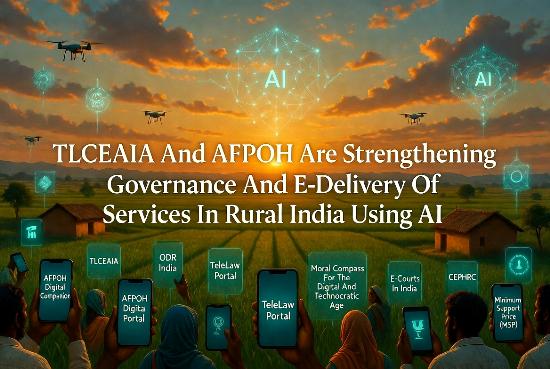
In the heart of rural India, where agriculture sustains millions yet grapples with persistent challenges like water scarcity, unfair pricing, and limited access to justice, two pioneering initiatives are transforming the landscape through the intelligent fusion of artificial intelligence, techno-legal frameworks, and digital empowerment. The TLCEAIA, operating as a specialized hub within the broader ecosystem, and the AFPOH are collaboratively harnessing AI to enhance governance structures and deliver essential services electronically to farmers and rural communities. These efforts focus on precision agriculture, predictive resource management, online dispute resolution, and ethical technology deployment, ensuring that rural India benefits from self-sufficient, transparent, and legally robust systems.
The foundations of this transformative work trace back to visionary efforts in e-agriculture, as detailed in the E-Agriculture Analysis by Praveen Dalal. This analysis highlights how information and communication technologies can optimize inputs such as water and fertilizers, enable real-time weather forecasting, reduce risks, and boost productivity through direct marketing and cooperative models. Building upon these insights, TLCEAIA integrates advanced AI tools like machine learning algorithms for crop yield prediction, soil health monitoring, and supply chain optimization, while AFPOH extends these capabilities nationwide to bridge the digital divide and empower marginalized farmers with skills in AI, drones, and data analytics.
Central to ethical technology adoption in this domain is the Moral Compass, which establishes a humanity-first framework for sovereign AI governance. It prioritizes individual autonomy, self-sovereign identity, and protections against bio-digital overreach, ensuring that AI applications in rural agriculture respect data privacy, prevent exploitation, and promote equitable outcomes. This ethical grounding allows TLCEAIA and AFPOH to deploy AI responsibly, fostering trust in digital tools among farmers who previously faced systemic barriers.
A cornerstone of e-delivery is the ODR Portal, which provides expeditious and economical online dispute resolution across sectors, including agriculture-related conflicts involving contracts, e-commerce, and pricing disputes. By incorporating AI for case analysis, pattern recognition, and automated facilitation, the portal minimizes bureaucratic delays and delivers justice from the comfort of rural homes using only basic smartphones and internet connectivity. This directly strengthens governance by enabling transparent, enforceable resolutions that align with national regulatory compliance and reduce pendency in traditional systems.
Complementing ODR efforts, the TeleLaw Portal serves as a comprehensive techno-legal gateway offering pre-litigation advice, contract drafting, vetting, and legislative support to global stakeholders, with a strong focus on underserved rural populations. Integrated with e-courts infrastructure, it facilitates remote legal consultations. Farmers benefit from affordable, home-based services that address ground-level issues without the need for physical travel or high costs, thereby enhancing access to justice and supporting e-governance at the grassroots level.
The Telelaw Startup further amplifies these capabilities by acting as a single-point solution for rural communities and global farmers facing starvation risks, debt burdens, poor productivity, and policy disadvantages. It resolves issues like unfair contract farming and exploitation by middlemen through concessional techno-legal interventions, seamlessly linking with ODR mechanisms to provide time-bound, equitable outcomes and prevent migration of rural youth by making agriculture viable and dignified.
Advancing judicial digitization, the E-Courts initiative incorporates AI-enabled analytics, virtual hearings, e-filing, and blockchain-secured evidence to tackle massive case backlogs while prioritizing rural accessibility. This integration bolsters overall governance by making justice more inclusive, transparent, and responsive to rural needs.
Protecting fundamental rights in the digital realm is the CEPHRC, which safeguards human rights in cyberspace through techno-legal analysis of private defense, cyber threats, and algorithmic biases. It addresses issues like data privacy violations and surveillance in agricultural platforms, extending to AI governance by advocating hybrid human-AI models that prevent discrimination and ensure ethical deployment in rural e-services. This protection is vital for farmers engaging with digital tools, maintaining dignity and security in an increasingly technocratic environment.
As the AFPOH Digital Companion, AFPOH functions as an indispensable digital gateway for Indian farmers, offering education, skills development in AI and e-commerce, export assistance, and marketplace creation. It equips unorganized small and marginal farmers with the knowledge to participate confidently in digital economies, while providing online legal safeguards that level the playing field against larger entities.
Lessons from past shortcomings inform these advancements, as revealed in the Digital Village Critique, which underscores the miserable failure of earlier digital village projects due to lack of genuine implementation and bureaucratic hurdles. TLCEAIA and AFPOH address these gaps by prioritizing grassroots techno-legal expertise, virtual schooling for marginalized students, and AI-driven self-sufficiency, turning rhetoric into actionable rural empowerment.
Recognizing resource constraints, the Water Policy advocates for an urgent comprehensive techno-legal framework to combat scarcity, declining groundwater, and poor quality affecting agriculture. AI applications within TLCEAIA, such as predictive modeling for water harvesting, soil testing, and optimized irrigation, integrate seamlessly into this policy to enhance productivity and sustainability in rural areas.
To safeguard transactions, the ODR Clause Advisory cautions farmers against engaging with any e-commerce websites, online services, or contract farming agreements without embedding the ODR clause from the dedicated portal. This binding mechanism, supported by AFPOH and TeleLaw, ensures equal bargaining power, prevents cheating, and enables swift online resolutions, thereby securing e-delivery channels and protecting rural livelihoods in digital marketplaces.
Specifically for pricing fairness, the ODR for MSP leverages the ODR India Portal to enforce minimum support price for crops, resolving disputes expeditiously where bureaucratic systems falter. Farmers receive digital assistance in drafting agreements and claiming MSP, increasing incomes and reducing distress through AI-assisted case handling and transparent processes.
Finally, the MSP Assurance insists that all governments must guarantee MSP to prevent exploitation, with AFPOH and TLCEAIA stepping in via techno-legal tools when implementation lags. Perishable crops no longer force distress sales, as ODR and AI-enabled platforms provide alternatives, ensuring economic stability and aligning governance with rural realities.
Through these interconnected initiatives, TLCEAIA and AFPOH are not merely adopting AI but embedding it within robust techno-legal and ethical structures to deliver governance that is proactive, inclusive, and efficient. Predictive analytics optimize farm inputs, AI-driven ODR and e-courts resolve issues in real time, skills training builds digital literacy, and human rights protections maintain sovereignty. Rural India gains e-delivery of legal aid, dispute resolution, water management insights, MSP enforcement, and export opportunities—all accessible via simple devices—fostering self-reliance, reducing farmer distress, and positioning agriculture as a vibrant, technology-empowered sector.
Challenges such as implementation gaps and past project failures are met with renewed political will, bureaucratic reform, and grassroots collaboration, as championed by these entities. The result is a model where AI strengthens rather than supplants human agency, delivering measurable improvements in productivity, equity, and sustainability. As rural communities embrace these tools, TLCEAIA and AFPOH exemplify how targeted techno-legal innovation can redefine governance and service delivery, paving the way for a digitally sovereign and prosperous rural India.