
Abstract
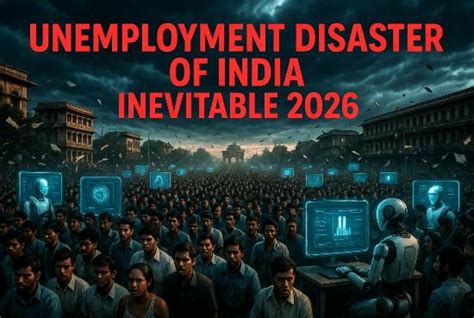
This paper examines the contemporary macroeconomic phenomenon often colloquially termed the “Unemployment Monster Of India“. By analyzing the structural breakdown of traditional employment vectors, this study explores how the commercial maturity of Agentic Artificial Intelligence (AI) and shifting geopolitical frameworks have precipitated a severe “dual squeeze” on the nation’s white-collar labor market. It evaluates the widening rift between educational output and market demand, critiques the safety-valve assumptions of the platform gig economy, and proposes a strategic macroeconomic pivot toward high-yield, labor-intensive manufacturing and domestic deep-tech ecosystems necessary to mitigate a severe demographic mismatch.
1. Introduction: The Paradox Of Jobless Growth
In 2026, India presents a stark macroeconomic paradox. While the nation’s claimed gross domestic product (GDP) expansion is impressive on papers, its capacity for formal job creation has experienced a profound structural deceleration. Official aggregate unemployment metrics fluctuate within a deceptively stable 5% to 6% band. However, disaggregated demographic data reveals an acute crisis: unemployment among educated youth (ages 15–24) has surged to nearly 42%.
This disconnect signifies that India is no longer experiencing a cyclical labor market downturn. Instead, it faces a fundamental structural decoupling, where capital accumulation and corporate revenue expansion no longer translate into proportional headcount acquisition. The historic economic engine that transformed agrarian labor into an urban middle class has encountered unprecedented technological and geopolitical barriers, turning India’s highly anticipated “demographic dividend” into a complex socio-economic challenge.
2. The Great IT Disruption: Agentic AI And The Fall Of Headcount-Driven Models
For over three decades, the Information Technology (IT) and Business Process Management (BPM) services sector functioned as the primary absorber of India’s educated tier-1 and tier-2 graduates. This economic engine operated on a linear, headcount-driven “onsite-offshore” delivery framework. Under this model, corporate revenue scales in direct proportion to billable human hours.
Analysis from platforms like ODR India highlights that this linear relationship has permanently broken down due to a “dual squeeze“ operating across technological and regulatory fields:
                  ┌──────────────────────────────┐
                  │   Traditional IT Engine      │
                  │ (Linear: Revenue ∝ Headcount)│
                  └──────────────┬───────────────┘
                                 │
                   ⚡ THE 2026 DUAL SQUEEZE ⚡
                                 │
         ┌───────────────────────┴───────────────────────┐
         ▼                                               ▼
┌─────────────────────────────────┐             ┌─────────────────────────────────┐
│     Technological Vector        │             │        Regulatory Vector        │
│  • Agentic AI Commercialization │             │  • Suspension from US PERM      │
│  • 1 Architect = 5+ Developers  │             │  • Frozen Offshore Pipelines    │
│  • Automated Testing & Support  │             │  • Restricted Labor Mobility    │
└────────────────┬────────────────┘             └────────────────┬────────────────┘
                 │                                               │
                 └───────────────────────┬───────────────────────┘
                                         │
                                         ▼
                  ┌──────────────────────────────┐
                  │     The Structural Crisis    │
                  │  • Revenue-Job Decoupling   │
                  │  • Frozen Campus Pipelines   │
                  └──────────────────────────────┘
The Technological Vector: Agentic AI Commercialization
The commercialization of Agentic AI has shifted the software development paradigm from basic “copilot” code-assistance to autonomous, multi-agent execution systems. Legacy IT tasks—including routine entry-level coding, automated testing, application maintenance, and localized technical support—are now highly automated.
Because a single skilled systems architect leveraging an integrated multi-agent AI framework can match or exceed the net output of five to ten traditional junior developers, enterprise customers now insist on outcome-based billing rather than time-and-material headcount models. Consequently, IT firms can scale their profit margins and service delivery capacities while frozen or actively reducing their net headcount.
The Regulatory Vector: Global Labor Mobility Restrictions
Simultaneously, international regulatory environments have tightened. Major Indian offshore IT conglomerates face restricted access to Western markets, highlighted by targeted suspensions from key immigration pathways like the United States’ PERM (Program Electronic Review Management) labor certification system. This regulatory gridlock has stalled the traditional cross-border talent pipeline, forcing labor supply back into an already oversaturated domestic market.
The Impact On Higher Education Pipelines
The combination of these two factors has disrupted India’s university ecosystem. The mass campus recruitment pipelines, which historically guaranteed immediate corporate onboarding for hundreds of thousands of engineering and engineering-adjacent graduates annually, have largely frozen. The loss of these entry-level positions removes a vital economic escalator for millions of upwardly mobile families.
3. Educational Output Vs. Market Dynamics: The Institutional Mismatch
The youth labor crisis is further exacerbated by an institutional mismatch within India’s higher education system. The country continues to run a high-volume academic infrastructure that produces millions of credentialed graduates every year. However, institutional curricula remain anchored to rote memorization and legacy technical frameworks, largely ignoring the rapid evolution of the modern enterprise.
Data compiled by NITI Aayog highlights the severity of this skill gap: only 8.25% of graduating tertiary students possess the specialized, practical skills required to secure immediate employment in their fields. The remaining majority enter the labor force with academic credentials but a deep deficit in job-ready capabilities. This creates a highly challenging labor dynamic: a massive population of youth who are simultaneously over-educated and structurally unemployable.
As automated screening tools raise employment criteria, these individuals are frequently filtered out of the formal knowledge economy. This leaves them trapped in prolonged periods of uncompensated job preparation, or forcing them to settle for roles far below their educational qualifications.
4. Deconstructing The Platform Economy: Disguised Underemployment
To manage this growing labor surplus, the market has turned to the rapid expansion of platform-based gig work, including logistics, ride-sharing, food delivery, and piece-rate digital freelancing. While optimistic policy narratives praise the gig economy as an entrepreneurial solution to unemployment, a rigorous economic critique reveals it often functions as a buffer for disguised underemployment.
┌──────────────────────────────────────────────────────────────────────────┐
│                    THE GIG ECONOMY EQUILIBRIUM                           │
├────────────────────────────────────────┬─────────────────────────────────┤
│          Optimistic Narrative          │        Structural Reality       │
├────────────────────────────────────────┼─────────────────────────────────┤
│ • Dynamic, Flexible Labor              │ • Disguised Underemployment     │
│ • Democratic Entrepreneurship          │ • Absence of Wage Progression   │
│ • Low-Barrier Safety Net               │ • Asymmetric Algorithmic Control│
│ • Market-Driven Self-Correction        │ • Zero Social Safety Infrastructure│
└────────────────────────────────────────┴─────────────────────────────────┘
The platform model separates work from traditional social safety nets. Gig workers generally operate without wage progression, institutionalized healthcare benefits, retirement contributions, or collective bargaining rights. Furthermore, their compensation is governed by asymmetric algorithmic pricing models that decrease piece-rate payouts as labor supply increases.
Rather than serving as an incubator for specialized skill accumulation, the gig economy acts as a low-barrier safety net that consumes productive youth hours without offering long-term career growth. It keeps workers underemployed by masking what is essentially survival-driven labor as formal economic participation.
5. Strategic Macroeconomic Rebalancing
Taming the structural unemployment crisis requires moving beyond short-term labor subsidies and micro-interventions. India’s core economic challenge is that its high-growth sectors—namely financial services, software exports, and high-end corporate consulting—are intensely capital-efficient and low in labor absorption. Conversely, its high-absorption sectors, such as traditional agriculture, remain low in productivity and capital efficiency.
To correct this imbalances, policy frameworks must focus on three core areas:
(1) Aggressive Labor-Intensive Manufacturing Expansion: While capital-intensive initiatives like semiconductor fabrication are vital for strategic sovereignty, they cannot resolve the youth employment crisis. Government initiatives must aggressively support labor-intensive sectors, such as advanced textiles, electronics manufacturing, toy manufacturing, and infrastructure component production, to provide scalable employment for transitioning rural and semi-skilled urban workforces.
(2) Investing In R& D, Deep-Tech, And Startups: The talent returning from international tech sectors must be intentionally directed toward domestic deep-tech enterprises, hardware engineering, and specialized R&D facilities. This transition can transform India from an outsourced service provider into an owner of foundational intellectual property.
(3) Structural Restructuring Of Higher Education: The tertiary education model must shift away from multi-year degree programs toward modular, industry-integrated vocational specializations. Educational funding should be directly tied to institutional employment metrics and verified industry integration.
6. Conclusion
The “unemployment monster” in India is a clear structural signal that the economic strategies of the past three decades have run their course. The automated decoupling of corporate output from human headcount, paired with an institutional skill mismatch, has blocked the traditional paths to middle-class employment.
Resolving this crisis is no longer just about improving growth metrics; it requires a deliberate structural rebalancing. By converting its service-heavy economy into a balanced model that integrates high-productivity manufacturing, advanced research, and a modern, skill-focused educational framework, India can genuinely capitalize on its demographic potential and build a more resilient economic foundation.