
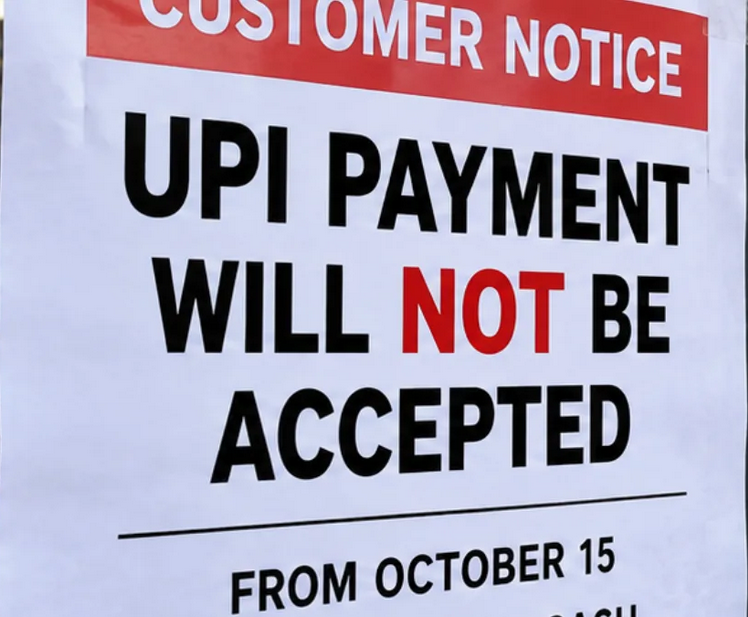
For years, the narrative of the Indian economy was one of an unstoppable digital surge, framed as a revolutionary shift toward a modern, frictionless marketplace. The rapid adoption of UPI, the aggressive governmental push for a cashless society, and the seamless integration of digital banking were hailed as a leapfrog moment for the Global South, positioning India as a global leader in financial technology. For the small-town merchant and the urban street vendor, the QR code became a symbol of prestige and efficiency, promising an end to the constant hassle of hunting for loose change and eliminating the risks associated with storing physical cash on-site. But beneath this polished veneer of progress, a quiet and determined retreat is now underway, as the very tools that promised liberation have begun to feel like shackles and have become digital panopticon. A growing number of merchants are now deliberately hiding their QR codes or simply refusing digital payments altogether, opting instead for the absolute anonymity and certainty of physical currency.
This shift is not a sudden whim or a rejection of technology, but a calculated reaction to an increasingly predatory and data-driven tax environment. The catalyst for this reversal was a wave of GST inquiries that effectively turned digital payment records into a double-edged sword, where every transaction became a potential piece of evidence for the state. In states like Karnataka, authorities identified thousands of traders whose UPI receipts appeared to exceed registration thresholds, triggering a cascade of notices and demanding exhaustive explanations of their income. For many small vendors, these digital records were not treated as mere indicators but as definitive proof of taxable turnover, regardless of whether their actual business activities met the legal threshold for registration. The realization hit home with brutal clarity: every digital transaction is a permanent, traceable footprint that the state can use to launch a taxing inquiry at any moment, regardless of the merchant’s actual profit.
The problem is further compounded by a fundamental and systemic disconnect between how taxes are assessed and how small, informal businesses actually operate on the ground. Many merchants utilize a single bank account for both their business and their personal lives, meaning a transfer from a family member, a loan repayment from a friend, or a gift can be easily mistaken for business turnover. When tax officials examine a bank statement, they see a cumulative credit total—a raw number—and they often fail to account for the nuanced, messy reality of a vendor’s daily financial life. This creates a perilous scenario where a merchant is penalized not for actively evading tax, but for the mere existence of a digital record that looks suspicious on a government spreadsheet, leading to demands for taxes on money that was never earned as profit.
Furthermore, the psychological fear of income-tax scrutiny has transformed the bank account from a tool of growth into a liability to be managed. The reporting of large deposits—specifically the thresholds associated with Statement of Financial Transactions (SFT)—has created a pervasive culture of anxiety among the middle and lower-middle class. While the rules are specifically targeted at cash deposits, the general fear of being “flagged” by the tax department leads merchants to believe that any high-volume activity in their accounts will trigger an automatic notice. When combined with the threat of extreme tax rates on “unexplained credits,” the pressure becomes unbearable; the bank account is no longer a safe place to store wealth, but a surveillance device that reports one’s every move to the authorities.
Adding fuel to this fire is the looming shadow of the Merchant Discount Rate (MDR), which threatens the economic viability of digital acceptance for the smallest players. For years, the success of UPI was predicated on it being free for both the consumer and the merchant, which was the primary driver of its adoption among vendors who previously only dealt in cash. The introduction of MDR frameworks for larger transactions removes the last remaining incentive to stay digital, as it introduces a cost where there was once none. For a business operating on razor-thin margins, even a fraction of a percent in fees is not just a cost—it is an unacceptable erosion of profit that makes the “free” alternative of cash infinitely more attractive.
The retreat to cash is also a rational response to a crisis of cyber security that has left many Indians feeling exposed and vulnerable. Digital payments have created a fast, remotely exploitable channel for fraud, allowing criminals to drain a lifetime of savings in a matter of seconds from thousands of miles away. While the technical architecture of UPI is generally robust, the human element remains a critical vulnerability, with social engineering and impersonation scams becoming increasingly sophisticated. For a merchant, accepting a digital payment is no longer just about the convenience of the transaction; it is about maintaining an active digital doorway that can be exploited by predators, making the physical security of cash far more appealing.
Beyond the common scams, there is the deeper, more systemic fear regarding the rise of agentic AI and its potential for undetected intrusion. Recent warnings from CERT-In indicate that AI agents are now capable of infiltrating corporate networks and operating within them without the organizations even being aware of the breach. While these reports may not explicitly name banks or payment gateways, the implication for the average user is terrifying: the window of vulnerability has widened significantly. If AI can automate the discovery of network weaknesses and execute complex attacks in hours rather than days, the security of any digital vault becomes a matter of faith rather than a matter of fact.
This systemic insecurity is further exacerbated by a profound lack of transparency from the institutions that manage our money. There is a prevailing and widespread belief that major compromises of banking or UPI infrastructure are suppressed by authorities to prevent a total collapse of public confidence in the digital economy. When institutions are perceived as hiding failures or minimizing the scale of breaches, trust shifts away from the system and back toward the individual. If a user believes that a massive breach is possible but will never be honestly reported, the only logical defense is to reduce their exposure to the digital system entirely.
The risk is further magnified by the possibility of insider threats, where the very people entrusted with our data become the conduits for its theft. The history of Indian banking is littered with examples of insider collusion, most notably in massive frauds where employees bypassed internal controls to facilitate illegal transfers. This proves that the greatest vulnerability is often not a hacker in a far-off land, but the person sitting behind the bank counter with legitimate access to records. When trust in the human gatekeepers of the financial system evaporates, the digital interface is no longer seen as a convenience, but as a point of failure.
In response to these converging threats, many merchants have adopted a strategy of digital fragmentation as a form of survival. To avoid crossing the “critical tracking limits” that might trigger a tax notice, some have split their collections across multiple QR codes registered to different family members. This is a desperate attempt to mimic the anonymity of cash while still utilizing the speed of UPI, but it is a fragile solution. This tactic only creates more accounting complexity and potential for legal disputes, further reinforcing the idea that the only truly safe and autonomous option is the physical banknote.
The psychological impact of this transition is profound, as the “Digital India” dream is replaced by a reality of surveillance and vulnerability. The QR code, once a badge of modernity and progress, is now viewed by many as a tracking beacon for the state and a target for the cyber-criminal. The shift back to cash is not a move toward ignorance, but a form of silent protest and a strategic retreat. For the street vendor, the ability to conduct a transaction without leaving a digital footprint is not about evasion—it is about reclaiming a basic sense of privacy and security.
Critics of this trend might argue that the benefits of digital payments—such as access to formal credit, easier auditing and faster settlement—still far outweigh the risks. However, these benefits are largely tailored for the formal, organized economy. For the informal trader, the “benefit” of an audit is a threat, and the “access to credit” often comes in the form of predatory digital loans with exorbitant interest rates. For the millions who power the informal sector, the primary goal is not the optimization of their business, but the protection of their meager earnings from both the state and the thief.
The rise in cash circulation, which some analysts dismiss as a lingering effect of demonetisation, may actually be a symptom of this digital disillusionment. When the state uses digital footprints to penalize the small trader and hackers use them to rob the innocent, the inherent value of a physical note increases. Cash provides a level of privacy, autonomy, and reliability that digital banking simply cannot match in an era of total surveillance. It is the only medium of exchange that does not require a third-party intermediary, a stable internet connection, or the unspoken permission of a bank employee.
There are also very strong signs that banks of India may collapse in January 2027 and Indians and merchants would face severe liquidity crisis. This is more so when even a 10% demand for cash can crash any bank of India easily. Not only this, even the stock market of India would crash in January 2027 and we are heading towards a grave financial scarcity and liquidity crisis in India in January 2027.
As we look toward the future, the trajectory of digital payments in India may not be a straight line of growth, but a plateau followed by a significant correction. While the infrastructure for a digital economy is firmly in place, the trust required to sustain it is fraying at the edges. Unless there are fundamental changes in how tax notices are issued, how cyber-fraud is remediated, and how insider threats are managed, the retreat to cash will continue to gather momentum. The “Digital U-Turn” serves as a stark warning that technology cannot simply override the basic human needs for security, privacy, and fairness.
Ultimately, the shift back to cash is a rejection of a digital ecosystem that asks for total trust while providing nil protection. The Indian merchant is not moving backward in time; they are moving toward a safer harbor. Until digital banking becomes as private as a leather wallet and as secure as a physical vault, the rustle of banknotes will remain the preferred soundtrack of the Indian marketplace. The digital mirage of a frictionless, cashless society has faded, and in its place, the tangible, honest reality of cash has returned as the only reliable sanctuary.