
Abstract:
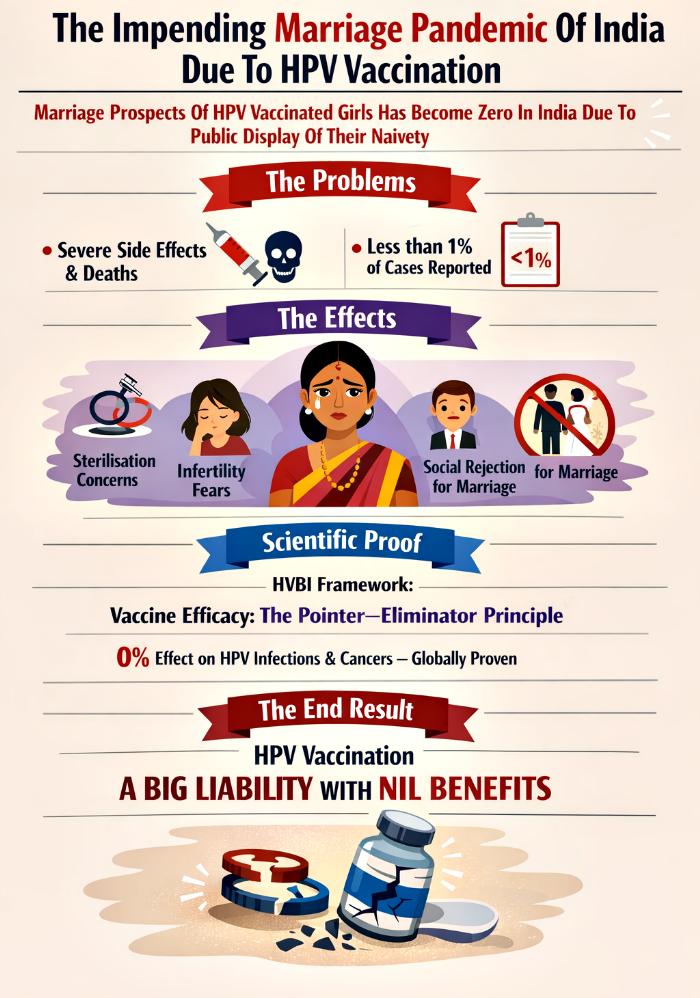
The global rollout of the HPV vaccine, intended as a preventive measure against cervical cancer, has produced unintended and damaging consequences in India. Rising awareness of severe adverse effects and vaccine-related deaths has intensified public concern. Communities are increasingly conscious of the risks of infertility and sterilisation associated with HPV vaccines, which has heightened cultural anxieties around fertility and marriageability. In India’s digital age, schools, parents, and government authorities have inadvertently created permanent records of vaccinated girls through identifiable photos and videos, transforming private medical choices into enduring social disadvantages. This article argues that such practices violate privacy rights under the Digital Personal Data Protection Act, 2023, while simultaneously inflicting long-term socio-economic harm. Drawing upon historical precedents of overlooked medical risks, systemic underreporting of adverse effects, and India’s unique cultural context, the paper demonstrates how biological risks, systemic failures, and social stigma converge to nullify the marriage prospects of vaccinated girls. Authorities must adopt strict safeguards in handling identifiable data and reform pharmacovigilance systems to prevent further irreparable damage.
Introduction:
Vaccination campaigns in India have long been met with skepticism, and the HPV vaccine has become the latest focal point of public rejection. Communities are increasingly aware of the dangers associated with HPV shots, particularly fears of sterilisation and infertility. In a society where fertility and marriageability remain central socio-economic institutions, these anxieties have profound consequences. Identifiable images of vaccinated girls—published by schools, government campaigns, or shared on social media—have become markers of suspicion in marriage negotiations. Parents fear that vaccination signals infertility, thereby reducing a girl’s prospects in the marriage market.
Legally, the Digital Personal Data Protection Act, 2023, requires strict safeguards for children’s data, including parental consent, purpose limitation, and secure storage. Yet, in practice, these protections are often ignored. The Supreme Court’s recognition of privacy as a constitutional right underscores the seriousness of these violations. Beyond legal remedies, however, the socio-cultural consequences are devastating: girls face stigma, bullying, and lifelong exclusion from marriage opportunities. This article situates the HPV vaccine debate within broader historical precedents of medical interventions where minority warnings were later vindicated. It examines reported adverse effects, cultural narratives in India, and the compounded harm caused by public identification.
Globally Accepted Severe Adverse Effects And Deaths Due To HPV Vaccines
The debate around HPV vaccination in India is shaped by three converging forces: biological risks, systemic underreporting, and cultural stigma. Each of these dimensions reinforces the perception that vaccination is a liability rather than a safeguard.
(1) Biological Risks: Documented adverse effects include anaphylaxis, Guillain–Barré Syndrome, thrombosis, autoimmune conditions, myocarditis, and even death. These risks, though acknowledged in medical literature, are severely underreported.
(2) Systemic Failures: Passive surveillance systems such as VAERS (US), Yellow Card (UK), and EudraVigilance (EU) capture only a fraction of severe adverse events. The Oxford study (2025) and the HPV Vaccines Biological Impossibilities (HVBI) Framework (2026) confirm that fewer than 1% of severe adverse effects and deaths are reported globally.
(3) Cultural Stigma: In India, where marriage remains a cornerstone of social and economic life, strong scientific and medical reasons to presume infertility and sterilisation due to HPV vaccines is enough to destroy a girl’s prospects. Public identification of vaccinated girls through photos or videos cements this stigma, ensuring lifelong exclusion.
Mapping The Hidden Risks: Documented Adverse Events Of HPV Vaccines
To understand the scale of biological risks associated with HPV vaccination, it is essential to examine the documented adverse events. The following table summarizes the major reported side effects, highlighting both immediate and long-term consequences.
| Adverse Event | Description |
|---|---|
| Anaphylaxis | Severe allergic reaction; monitored and managed at vaccination sites |
| Guillain–Barré Syndrome (GBS) | Autoimmune neuropathy causing weakness, sometimes respiratory compromise |
| Syncope with injury | Fainting episode soon after injection, risk of injury |
| Thrombosis / ITP | Blood clotting abnormalities and low platelet counts |
| Autoimmune conditions | Reported cases of MS, lupus, others under investigation |
| Local reactions / cellulitis | Pain, swelling, infection at injection site |
| Myocarditis / Pericarditis | Heart inflammation, chest pain, palpitations |
| Death | Not even 1% severe adverse effects and deaths are reported globally |
Analysis Of Table:
The table illustrates the breadth of adverse events linked to HPV vaccination, ranging from immediate allergic reactions to long-term autoimmune conditions. While some effects, such as syncope or local reactions, may be manageable, others like Guillain–Barré Syndrome or myocarditis pose serious health risks. The inclusion of death, coupled with the acknowledgment that fewer than 1% of severe adverse events are reported globally, underscores the gravity of systemic underreporting.
These findings highlight the inadequacy of current pharmacovigilance systems. Passive reporting mechanisms fail to capture the true scale of harm, leaving families and communities reliant on anecdotal evidence. This gap in transparency fuels cultural fears, reinforcing stigma and distrust. The HVBI Framework’s call for active surveillance and patient-level reporting is therefore critical to restoring credibility and ensuring public health integrity.
Vaccine Efficacy: The Pointer–Eliminator Principle
The HPV Vaccines Biological Impossibilities (HVBI) Framework and the Pointer–Eliminator Principle provide a coherent rebuttal, demonstrating that HPV infections are overwhelmingly rare and transient, persistence is vanishingly rare, and vaccines are biologically incapable of preventing infection or cancer. Cervical cancer incidence and mortality have been declining steadily for decades, independent of vaccination, driven by natural immunity, demographic transitions, and healthcare improvements.
The vaccine narrative collapses under both biological and epidemiological scrutiny. Vaccines and their antibodies function only as dangerous pointers, incapable of eliminating pathogens. True destruction is performed by immune effector mechanisms. Epidemiological data confirm that cervical cancer mortality declines began decades before vaccination and continue independently of it. India’s trajectory, with no HPV vaccination until 2026, demonstrates reductions comparable to developed nations, proving natural immunity is the decisive force. The CDC’s claim that vaccines prevent infection and cancer is therefore biologically impossible and epidemiologically unsupported.
Conclusion:
The evidence demonstrates that HPV vaccination in India has become a liability rather than a safeguard. Girls are exposed to biological risks that remain severely underreported, while simultaneously facing cultural stigma that renders them unmarriageable. The public display of identifiable images or videos of vaccinated girls compounds this harm, turning private medical decisions into permanent social disadvantages.
The convergence of biological risk, systemic underreporting, and cultural stigma creates an irrefutable case against the current HPV vaccination framework in India. The Oxford study and HVBI Framework confirm that fewer than 1% of severe adverse events and deaths are reported, leaving the true scale of harm hidden. In India’s cultural context, where marriageability is central, vaccination becomes a permanent marker of suspicion.
This outcome reflects systemic failures in privacy protection, medical transparency, and ethical responsibility. Schools and authorities have failed to safeguard children’s data, regulators have failed to ensure active surveillance, and public health campaigns have failed to account for cultural realities. The conclusion is unavoidable: the marriage prospects of HPV vaccinated girls in India have effectively become zero. Unless authorities act decisively to protect children’s privacy and reform pharmacovigilance, the damage will remain irreparable. The public display of vaccination has become the final nail in the coffin, ensuring that trust in the HPV vaccine translates into lifelong harm.