
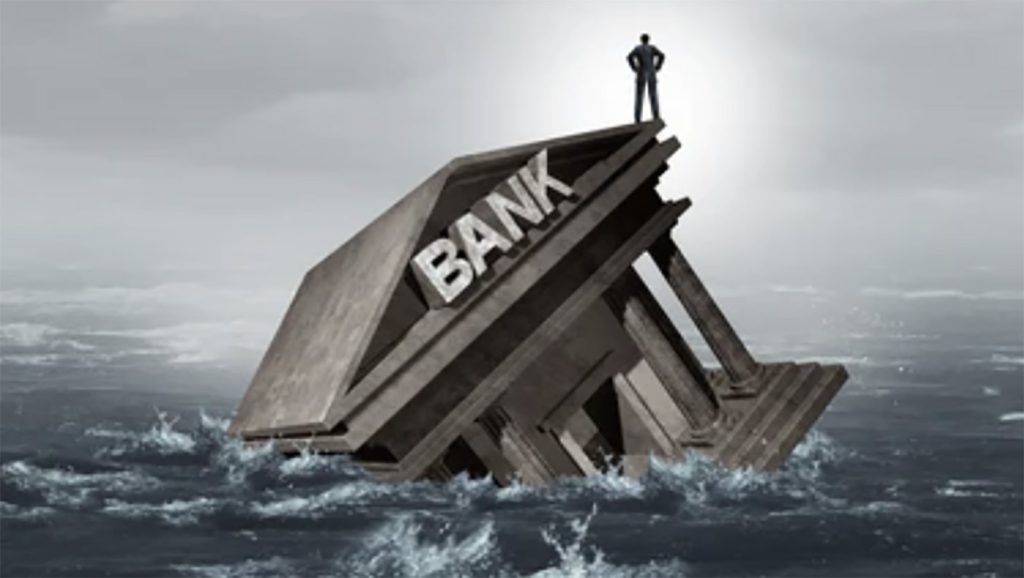
The fragile architecture of modern banking rests on a foundation of confidence rather than actual cash, a precarious reality that becomes perilous when multiple systemic shocks align. In the Indian context, the convergence of a looming stock market crash and the bursting of a domestic institutional investor (DII) bubble could ignite a crisis of liquidity that transforms manageable balance-sheet losses into an existential threat to the entire financial system. When equity valuations are inflated by speculative AI fervor and over-leveraged bets, any sharp correction does more than just wipe out paper wealth; it triggers a violent chain reaction of forced liquidations across the board. This is where the fundamental fragility of the system is exposed, as the perceived value of assets evaporates overnight, leaving behind gaping holes in bank balance sheets that cannot be filled by printing more promises or issuing more debt.
Margin trading serves as the primary accelerator in such a downturn, acting as a force multiplier for disaster. By allowing investors to leverage their positions to an extreme degree, the system creates a fragile house of cards where even a modest drop in prices triggers immediate and aggressive margin calls. When investors find themselves unable to provide the necessary collateral in a frozen market, brokers are forced to sell assets into a falling market to protect their own solvency, driving prices down further and triggering a recursive, downward spiral of liquidation. If banks have extended credit to these brokers or hold the very collateral that is now crashing in value, the market crash ceases to be a trader’s problem and becomes a banking problem. The same leverage that amplified gains during the boom now amplifies the collapse, dragging lenders into a whirlpool of bad debt from which there is no easy escape.
The burst of the domestic institutional investor bubble would remove the last remaining safety net that has kept the Indian market afloat during periods of volatility. For years, the steady inflow of DII funds has cushioned the blow of foreign institutional investor (FII) exits, creating a dangerous illusion of stability and a sense of security that may have been profoundly misplaced. If domestic investors, driven by sudden panic or a desperate need for liquidity, turn from buyers to sellers, the market loses its primary support pillar and the “Indian resilience” narrative collapses. This shift not only crashes equity prices but also erodes the confidence of the very banks that hold these assets or lend against them, leading to a total vacuum of liquidity where the perceived value of the bank’s own portfolio vanishes.
Global geoeconomic volatility adds a layer of external pressure that India cannot ignore, regardless of its domestic strengths. Trade wars, geopolitical conflicts, and shifting global interest rates create a volatile environment for the rupee, making it a target for speculators and a source of anxiety for investors. As foreign investors flee emerging markets in search of the safety of the U.S. dollar, the rupee’s value may plummet, creating a double-edged sword of inflation and debt. A weaker rupee makes essential imports more expensive and increases the cost of servicing foreign-denominated debt for Indian corporations. For banks with exposure to global markets or corporate clients who rely on foreign loans, a currency crash is a direct hit to solvency, further weakening their ability to withstand domestic shocks.
The systemic risk is further deepened by poor and reckless investment choices made by banks during the years of exuberant growth. Chasing yields in overvalued sectors or ignoring the clear risks of highly leveraged corporate borrowers creates a hidden reservoir of toxic assets that only become visible during a crash. When the bubble bursts, these investments do not just lose a small percentage of their value; they become completely illiquid, meaning there is no one willing to buy them at any price. Banks may find themselves holding massive portfolios of assets that are recorded at high values on their balance sheets but are effectively worthless in the real world. This misalignment between recorded accounting and actual realizable value is the silent killer of banks, turning a temporary liquidity squeeze into a permanent solvency crisis.
The most critical point of failure in this scenario is the psychological shift among the general population of depositors. If a segment of the population—perhaps just 10% of the total depositor base—begins to fear for the safety of their money, they will attempt to withdraw their deposits simultaneously. In a fractional reserve system, banks do not hold all deposits in cash; they have lent the money out as mortgages or invested it in long-term securities. A sudden surge in withdrawals forces banks to sell these assets quickly, often at a steep loss, to meet the immediate cash demand. This “fire sale” further degrades the bank’s capital position and signals to other depositors that the institution is unstable, triggering a full-scale bank run that can destroy an institution in a matter of days.
The ability of the central bank to act as a lender of last resort is the traditional safeguard against such runs, but this safety net is only as strong as the trust in the regulator. However, the history of the RBI’s reserves introduces a troubling variable into the equation. The repeated transfer of the RBI’s surplus to the central government reduces the central bank’s own financial cushion and, more importantly, raises deep questions about its institutional autonomy. If the central bank is viewed as a tool of the government rather than an independent guardian of financial stability, its signals may be ignored by a panicking market. When confidence in the regulator is eroded, the regulator’s ability to stop a panic with words or policy is severely diminished.
The political pressure on the central bank to fund government spending or support specific state goals can lead to a misalignment of systemic priorities. If the RBI is forced to prioritize government fiscal needs or treasury deficits over the strict maintenance of banking reserves, the overall resilience of the financial system is compromised. A central bank that has been “arm-twisted” may be slower to react to a crisis or may act in ways that protect the state’s image rather than the depositor’s money. This perception of vulnerability can accelerate a panic, as investors and depositors realize that the ultimate backstop may be politically compromised and unable to act decisively against the interests of the ruling administration.
The crisis would likely begin in a “hidden” phase, where brokerage firms and hedge funds face sudden, acute liquidity gaps. At first, banks might ignore these signs, treating them as isolated incidents involving “risky” players. But as the losses seep into the broader corporate sector, banks will see a sharp increase in non-performing assets as companies can no longer roll over their debts. Loans that were deemed safe because they were backed by equity collateral suddenly become unsecured as those equity values plunge. The sudden realization that the “safety” of the banking system was based on inflated asset prices creates a shock that spreads through the interbank lending market, as banks stop trusting one another.
As the interbank market freezes, banks can no longer borrow the short-term funds they need to cover daily outflows. They turn to the RBI for emergency liquidity, but if the scale of the crisis is systemic, the sheer volume of demand can overwhelm the central bank’s capacity or its willingness to lend. The government may attempt to intervene with capital injections, but if the treasury is already strained by the very economic crisis it is trying to solve, these injections may be too little and far too late. The gap between the bank’s liabilities and its actual, realizable assets becomes a chasm that no amount of official rhetoric or policy adjustment can bridge.
The impact on the average citizen would be immediate, visceral, and devastating. Once withdrawal limits are imposed to prevent total collapse, the real economy grinds to a halt. Small businesses cannot pay their employees, and families cannot access their life savings to buy basic necessities. The ₹5 lakh insurance limit, while existing on paper, becomes a cold comfort when the payout process is bogged down by bureaucracy, missing records, and a deluge of claimants. The psychological trauma of seeing “safe” money vanish or become inaccessible destroys the trust that is the only real currency of a functioning economy, leading to social instability.
The collapse would not be a single, isolated event but a cascading failure of interconnected institutions. One mid-sized bank’s failure would trigger a frantic search for similar vulnerabilities in other banks, turning a local problem into a national panic. Those with high exposure to real estate, AI-driven tech firms, or leveraged brokers would be the first targets of depositor anxiety. Even otherwise healthy banks could be dragged down by the “contagion effect,” as depositors withdraw funds from any institution they perceive as being “similar” to the failed one. The result is a systemic meltdown where the failure of a few becomes the failure of the many.
In conclusion, the possibility of a banking collapse is not a mere hypothetical or a fringe theory; it is a scenario built on the interaction of real-world vulnerabilities. The combination of over-leverage through margin trading, a reliance on an unstable DII bubble, and a central bank whose independence has been publicly questioned creates a volatile mixture. When you add the pressure of a falling rupee and global geoeconomic instability, the system becomes highly sensitive to a single spark. A stock market crash would not just be a financial loss for investors; it would be the catalyst for a systemic failure that could bring the entire banking structure down.
The true danger lies in the gap between official metrics and the reality of the market. Profitable reports and high capital ratios are meaningless if they are based on overvalued assets that cannot be liquidated during a panic. The sale of state-owned assets at prices below the immediate market value suggests a lack of confidence or a desperation for liquidity that the government may not be openly admitting. When the institutions tasked with oversight are seen as subservient to political will, the “safety nets” are revealed to be porous, leaving the ordinary depositor as the ultimate bearer of the systemic risk.
Ultimately, a banking system is only as strong as the trust of its users. Once that trust is broken—whether by a sudden market crash, a series of bad investments, or the realization that the regulator is compromised—the collapse becomes a matter of “when,” not “if.” If a significant portion of the population attempts to exit the system simultaneously, the mathematical reality of fractional reserves will override all official assurances and “healthy” metrics. The resulting crisis would not just be a financial event; it would be a profound social and political upheaval that resets the economy at a terrible cost.