
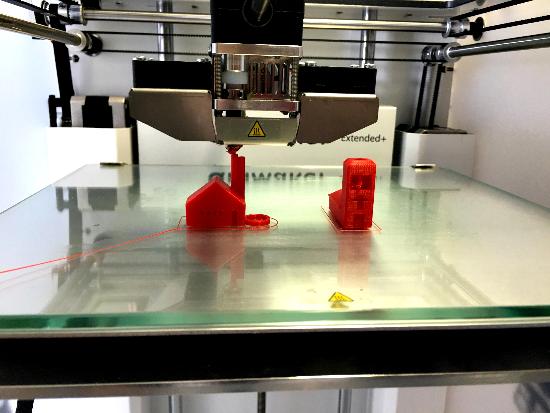
The advent of 3D printing technology has undeniably revolutionized the manufacturing sector, rendering traditional methods increasingly obsolete. A pioneering achievement by MIT researchers highlights the transformative potential of this technology: they developed a 3D printer capable of producing a fully functioning electric linear motor in under four hours for approximately 50 cents in material costs. This significant breakthrough not only demonstrates how efficiently complex components can be built but also challenges the very foundations of established manufacturing practices that have dominated for decades. The implications of such technology extend beyond mere operational efficiencies; they raise questions about the future of employment, the structure of economies, and the relationship between humans and machines.
As we delve deeper into the consequences of this technological progression, it’s essential to consider what the future holds for industries traditionally reliant on manufacturing. Will factories become relics of the past, replaced by technologies that can produce components directly at the point of use? Or will there be a balance where human skill still plays a pivotal role? These questions set the stage for a critical examination of not only the advancements in 3D printing but also the broader implications of intertwining this technology with Autonomous Agentic AI, Robotics, and the socio-economic landscape they are poised to reshape.
The MIT Electric Motor Breakthrough
MIT’s cutting-edge 3D printer utilizes a multi-material extrusion approach, enabling the integration of five different materials in the manufacturing process. This innovation allows for the creation of intricate components, such as solenoids and magnets, necessary for an electric motor. Notably, the printing process only requires magnetization after completion, thereby ensuring a rapid turnaround. Compared to traditional manufacturing methods, which could take weeks to months and involve considerable costs, this new methodology drastically reduces both time and expense.
| Feature | Traditional Manufacturing | 3D Printing by MIT |
|---|---|---|
| Production Time | Weeks to Months | Approximately 3 Hours |
| Material Cost | Hundreds to Thousands of USD | Approximately 0.50 USD |
| Customization Flexibility | Low | High (custom designs available) |
| Supply Chain Dependency | High | Minimal (on-site production) |
| Complexity of Parts | Limited | Complex capable |
Impact On The Automotive Industry
The implications of MIT’s invention extend far beyond academic realms; it suggests a future where auto manufacturers could employ such 3D printing technologies directly within their factories. By doing so, companies could fabricate essential components on-site, moving away from the traditional reliance on external suppliers. The promise of rapid production combined with reduced costs might spark an acceleration in innovation and design, fundamentally transforming automotive production systems.
In this future scenario, car manufacturers would effectively transition from mere assemblers of parts sourced globally to becoming comprehensive producers of their own parts. This shift would dramatically impact the supply chain and procurement processes.
The Coming Wave Of Autonomous Agentic AI And Robotics
Looking beyond the realm of 3D printing, the convergence of Autonomous Agentic AI, Robotics, and additive manufacturing is heralding a new era where traditional manufacturing could become obsolete. By the end of 2026, a shift towards automation might lead to the complete removal of labor-intensive processes that once defined industries.
Current technological advancements in AI and robotics are enabling machines to carry out increasingly complex tasks once thought human-restricted. For instance, AI can already automate significant aspects of manufacturing, such as inventory management and quality control. Coupled with robotics, this technology promises a future devoid of the need for human intervention in production lines.
Employment Outlook And Societal Consequences
The growing reliance on these technologies inevitably raises concerns about job displacement. Historically, blue-collar jobs have been perceived as vulnerable to automation. However, as evidenced by advancements in Agentic AI, white-collar positions are now also in jeopardy. Industries such as finance, legal, healthcare, and customer service are beginning to witness layoffs as companies increasingly leverage AI to optimize operations.
In the Indian context, the government’s past policy decisions, such as the demonetization disaster and property ceilings, have already crippled substantial portions of the informal economy. With the rise of AI alongside 3D printing and robotics, many small and medium-sized enterprises (SMEs) could face closure, leaving a workforce with no significant alternative employment opportunities.
The Structure Of Tomorrow’s Economy
The interplay of technological advancements will likely precipitate the emergence of a gig economy dominated by short-term, contract-based job opportunities. With traditional employment structures crumbling, this shift could lead to widespread mass unemployment, especially among youth who previously aspired to stable, lasting positions in manufacturing and service industries.
Consequently, the promise of Universal Basic Income (UBI) may become a commonly suggested solution to mitigate the consequences of job losses. However, in the Indian context, such measures could manifest as insufficient ration distributions, leading to further disenfranchisement among the population. Instead of providing a safety net, UBI could become a mechanism of control rather than empowerment.
The Technological Tyranny
As we navigate this evolving landscape, we must be wary of what some term as an Evil Technocracy. With the rise of autonomous technologies, governance may shift away from democratic processes toward a framework dominated by technological oversight. This could lead to heightened disparities in wealth and power, as those capitalizing on AI and related technologies consolidate economic control, while the labor force and unskilled workers continue their decline.
The combination of technology-induced job losses and government policies that focus on structural rather than social support mechanisms can create a precarious societal balance. Individuals may find themselves trapped in a system that offers little prospect for growth or financial security.
Global Observations And Reflections
Reports from various sources suggest a grim outlook for the labor market in 2026. Experts predict substantial increases in unemployment rates due to AI-driven displacement, especially in sectors previously deemed resistant to automation. The shift toward a tech-centric society, without accompanying training and education reforms, will lead to an increasingly skill-divided workforce.
For example, in India, the focus on gig opportunities emphasizes short-term engagements that fail to address long-term employment needs. This scenario not only exacerbates income inequality but also stymies opportunities for economic development, threatening the social fabric of the nation.
Concluding Perspectives
As we stand on the brink of a manufacturing transformation led by 3D printing, AI, and Robotics, it is crucial to recognize both the opportunities and the significant challenges these technologies present. While speed and efficiency in production can lead to a surge in innovation and reduced costs, the unchecked rise of these technologies could spell disaster for millions of workers. Without proactive measures—such as educational reforms and robust social support systems—we might witness the disintegration of the labor market as we know it.
References
(1) Global Unemployment Disaster of 2026
(2) Mass Unemployment Would Grip India in 2026
(3) Unemployment Disaster of India is Inevitable in 2026 due to AI
(4) Multi-Agent Systems: AI Would Create Mass Unemployment
(5) Unemployment Monster of India Would Wreak Havoc Upon Indians at the End of 2026
(6) The Great Unemployment Monster of India is Engulfing Indian Youth