
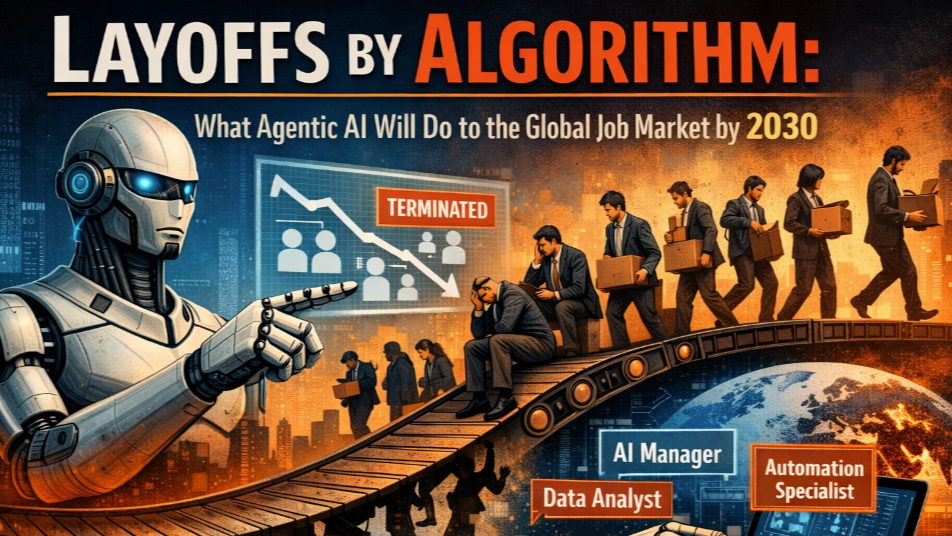
The current landscape of Indian public-sector banks (PSBs) is increasingly defined by a volatile intersection of structural reform and technological disruption. For decades, these institutions have served as the bedrock of financial inclusion and stability, ensuring that credit reached the farthest corners of the country and providing a secure haven for the savings of millions. Yet, they now face a dual pressure: a persistent push for privatization and the rapid, almost overnight ascent of artificial intelligence. This transition is not merely an upgrade in software but a fundamental shift in how banking is conceived, moving away from a human-centric service model toward a cold, algorithmic efficiency. As the government explores ways to make these entities more competitive on a global stage, the conversation has shifted toward a precarious tipping point where efficiency goals may collide violently with job security and social stability.
A central point of tension in this evolution is the potential hike in Foreign Direct Investment (FDI) limits. Moving the cap from 20% to 49% would theoretically bring in much-needed capital, sophisticated risk-management tools, and global best practices that could modernize the aging infrastructure of the PSBs. Proponents argue that this would reduce the burden on the taxpayer to recapitalize struggling banks and introduce a level of discipline that state-run entities often lack. However, the history of foreign capital infusion in various sectors suggests that new shareholders rarely prioritize social stability or long-term employment over immediate profit margins. The introduction of a more aggressive, profit-driven foreign ownership structure could shift the internal culture of PSBs from a service-oriented public mandate—where the bank serves as a social stabilizer—to a strict focus on lean operations and quarterly shareholder returns.
This drive for efficiency is where Agentic AI enters the equation, transforming a gradual shift into a sudden precipice. Unlike previous iterations of automation that handled simple, rule-based tasks like data entry or basic query responses, agentic AI is capable of goal-oriented reasoning and executing multi-step workflows with minimal human oversight. It does not just follow a script; it perceives a goal, plans the steps to achieve it, and executes those steps across different systems. In a banking context, this means AI that doesn’t just flag a fraudulent transaction for a human to review, but autonomously investigates the source, communicates with the customer via personalized channels, and resolves the dispute according to policy. The capability to replace complex cognitive workflows, which were previously the sole domain of experienced bank officers, makes the threat to white-collar employment more immediate and absolute than any previous technological wave.
When these two forces—foreign capital and agentic AI—converge, the risk of large-scale layoffs becomes a logical and almost inevitable business conclusion for management. Foreign investors typically demand a drastic reduction in overhead to maximize the Return on Investment (ROI), and agentic AI provides the technical means to achieve that reduction without sacrificing, and perhaps even increasing, operational productivity. In this scenario, the “lean bank” model becomes the singular priority, where the workforce is trimmed to a skeletal crew of overseers, and the majority of operational logic—from loan underwriting to compliance—is handled by autonomous software agents. The human element is no longer viewed as an asset to be developed, but as a cost center to be eliminated.
The danger is not just a sudden, dramatic wave of layoffs that captures headlines, but a “silent attrition” that has already begun to hollow out the institutions. Many PSBs have seen a steady decline in total employee counts over the last few years, often hidden behind the rhetoric of “digital transformation.” While these reductions are often officially attributed to retirements and natural attrition, they may actually reflect a calculated strategic decision to stop replacing human workers with other humans. By intentionally leaving vacancies open and allowing the workforce to wither, banks are effectively operating on a shrinking workforce, creating a fragile environment where any further “optimization” via AI leads directly to the elimination of the remaining roles.
This trend is particularly alarming when viewed alongside the current state of India’s broader employment ecosystem, which is already under immense strain. With reports suggesting a staggeringly high number of young people are neither in education, employment, nor training (NEET), the banking sector’s shift toward automation removes one of the last critical safety valves for the middle class. PSBs were once the primary destination for graduates seeking stability and a career path; however, if these institutions move toward a lean, AI-driven model, the “unemployment monster” could grow significantly. This doesn’t just affect the banks; it creates a ripple effect across the economy as a generation of graduates is left without a viable path into the formal, salaried economy.
Furthermore, the “startup ecosystem” often touted by policymakers as the solution to this unemployment crisis may be a dangerous mirage. When thousands of unemployed graduates are categorized as “founders” of dormant or non-viable startups, it masks the failure of the formal job market and creates a false statistical image of entrepreneurship. This shift effectively places the burden of job creation on the individual, telling the youth to “create their own jobs” while the corporate and state sectors automate away existing roles. In this context, the loss of stable PSB jobs isn’t just a banking issue; it is a systemic failure that pushes a professional class into precarious gig work or “phantom” entrepreneurship that offers no real security.
The narrative that FDI always brings growth and job creation is fundamentally challenged by the reality of corporate restructuring and global capital flows. While capital may flow in and balance sheets may look healthier, it often comes with an implicit or explicit mandate to “right-size” the organization to meet global benchmarks. In the banking sector, this often manifests as the aggressive closure of physical branches and the forced migration of customers to digital platforms. Once the digital migration is complete and the user base is habituated to the app, the human staff at those branches become redundant. Agentic AI accelerates this process by making the digital platform so capable and intuitive that the need for human intervention vanishes almost entirely, turning branches from service centers into unnecessary liabilities.
Critics of this view argue that AI will create new jobs to replace the old ones, creating a “new economy” of AI managers and prompt engineers. However, the nature of those new roles is vastly different in scale and accessibility. A few high-salaried AI architects and data scientists cannot replace the thousands of clerks, loan officers, and middle managers who form the backbone of the PSB workforce. The transition is not a one-to-one swap of roles; it is a massive consolidation of power and productivity into a tiny fraction of the workforce. This creates a “winner-take-all” dynamic where a small elite thrives while the general professional class is displaced.
The legal and policy framework in India currently lacks a robust, forward-looking safety net for this specific type of technological displacement. While traditional labor laws exist to prevent arbitrary firing, they are often ill-equipped to handle the nuanced shift from human labor to AI agents. If a bank doesn’t technically “fire” people but simply stops hiring and allows the workforce to shrink through attrition, it bypasses the legal battles of mass layoffs while achieving the same result: a decimated workforce. There is currently no legislative mechanism to compel banks to retrain employees for AI-augmented roles rather than simply replacing them with software.
Moreover, the psychological impact on the remaining workforce cannot be ignored, as it creates a culture of fear and stagnation. The knowledge that one’s role is being actively targeted for automation by an “agent” leads to a sharp decline in morale, loyalty, and productivity. When employees realize they are merely placeholders—temporary bridges until the software is fully deployed—they stop investing in the institution. This creates a paradox where the push for efficiency through AI actually degrades the remaining human capital, leading to a hollowed-out organizational culture where the only goal is survival until the next update.
The risks extend beyond the employees to the customers and the systemic stability of the financial network. A bank run on a “minimum workforce” model relies entirely on the uptime, security, and accuracy of its AI systems. If the human layer is trimmed too thin, the bank loses its “circuit breaker”—the ability of experienced humans to step in and handle “black swan” events or crises that AI cannot solve because they lack historical data. The loss of human judgment, empathy, and ethical oversight in banking can lead to a brittle system that is incredibly efficient in peace-time but collapses catastrophically during a financial storm.
To mitigate this, there must be a conscious and urgent policy decision to decouple FDI from indiscriminate downsizing. If the government allows higher foreign ownership, it should be conditioned upon strict mandates for workforce retraining and a commitment to maintaining a minimum human-to-customer ratio. We must move away from the idea that “efficiency” is solely defined by the reduction of headcount. Instead, a “hybrid” model should be incentivized, where AI handles the routine and humans handle the complex, emotional, and strategic aspects of banking, ensuring that technology augments rather than erases the human worker.
Ultimately, the “Banking Precipice” is not just about financial solvency, stock market crash, or the technical capacity of an LLM, but about the social contract between the state and its citizens. PSBs were designed to be more than mere profit centers; they were instruments of national development and providers of dignity through stable employment. If they are transformed into lean, AI-driven machines owned by foreign shareholders, the social purpose of these institutions is erased in favor of a balance sheet that looks pristine on paper but leaves the people and the community behind.
The road toward 2027 suggests a critical window for intervention before the trend becomes irreversible. The convergence of FDI, Agentic AI, and a shrinking workforce creates a perfect storm for layoffs that could destabilize the professional middle class. Whether this leads to a more efficient, modern banking sector or a widespread social crisis depends entirely on whether India chooses to prioritize the “minimum workforce” for the sake of profit or a “sustainable workforce” for the stability of its people and the long-term health of its economy.