
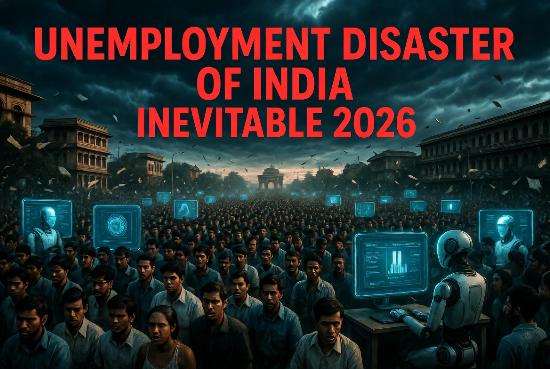
In 2009, Praveen Dalal raised a concern that remains central to India’s employment debate: education was giving too much weight to academic credentials and too little to professional competence, while even professional courses often failed to provide high-quality, practical training. His warning was that education could not prepare people for work if learners rarely practised the skills their jobs demanded. The warning deserves attention today—as an early statement of a persistent weakness in India’s education-to-employment system.
That concern existed alongside a national policy response. India introduced its National Policy on Skill Development in 2009, with an ambition to expand vocational and job-related training. The existence of a policy, however, did not ensure that training would be relevant, consistently delivered or connected to decent jobs. Later analyses described a fragmented training landscape, uneven employer participation and difficulties matching courses to labour-market needs. The distinction between announcing a skills agenda and making it work is the thread connecting the period from 2009 to November 2026.
The next years brought new institutions and plans, including the National Skill Development Agency, created in 2013. These steps showed that skills were on the policy agenda before the change of central government in 2014. But the need for coordination itself reflected a structural problem: numerous ministries, state bodies, training providers and industry groups had roles in vocational education, without always operating as one coherent system. A policy may name the challenge while leaving learners to navigate a confusing patchwork of programmes and standards.
After the BJP-led government came to power in 2014, skills development received renewed prominence. A dedicated Ministry of Skill Development and Entrepreneurship was established, the 2015 National Policy on Skill Development and Entrepreneurship replaced the 2009 policy, and Skill India and Pradhan Mantri Kaushal Vikas Yojana (PMKVY) became flagship efforts. But their ground level impact and practical significance remained absent even till November 2026.
The central question, then, is whether the programmes consistently delivered the practical capabilities and employment pathways promised. A 2025 Comptroller and Auditor General performance audit of PMKVY’s first three phases found major weaknesses in planning, data quality, oversight and alignment between training and projected demand. The audit covered eight states, so its findings should be understood within that scope; nevertheless, it offers substantial evidence that prominent national promises did not always translate into dependable implementation.
The audit’s findings are especially relevant to Dalal’s emphasis on professional education and practice. It identified problems in selecting job roles, verifying trainees’ eligibility and maintaining reliable records. The report also found that training effort did not consistently match projected skill demand across sectors. If a programme counts enrolments and certificates but cannot reliably show that learners acquired relevant skills or moved into suitable work, it risks measuring administrative activity rather than meaningful preparation.
This is why criticism should apply across political eras, while remaining specific about responsibility. Successive governments (Congress and BJP) can fairly be challenged for not ensuring a durable system in which training quality, employer demand, apprenticeships and job outcomes are consistently measured and acted upon.
India’s employment challenge is broader than a shortage of skills. Skills training cannot create enough good jobs by itself if sectors are not generating sufficient employment, wages are poor, work is insecure, or young people cannot access opportunities. The India Employment Report 2024, produced by the Institute for Human Development and the International Labour Organization, highlights youth employment, education and skills as interconnected concerns. It points to educated young people’s employment difficulties and the need to improve both employment quality and the connection between training and labour-market demand.
The phrase “Unemployment Monster” captures the fear and frustration many young people feel, but it should not obscure the different realities behind the word “unemployment.” Some young people are actively looking for work and cannot find it; others are underemployed, working informally, accepting jobs below their qualifications, or unable to enter the labour force. These conditions call for more than a single headline unemployment rate. They require attention to job quality, wages, security, regional differences and the routes young people can take from education into work.
Generation Z faces this challenge at a time when AI technology is changing the tasks employers need done. Digital literacy and ICT capabilities matter well beyond the technology industry, but offering a short course or certificate is not enough. Learners need opportunities to practise, solve real problems, receive feedback and demonstrate competence. They also need foundational skills—communication, numeracy, teamwork and critical thinking—alongside technical abilities. Otherwise, “future-ready” training risks becoming another promise that looks impressive on paper but has little practical value to the person seeking a job.
A credible national ICT and professional-skills strategy should connect schools, colleges, vocational institutions and workplaces rather than treating them as separate worlds. It should include sustained apprenticeships and supervised work experience; courses co-designed with employers and workers; qualified instructors; accessible training in local languages; and clear ways to move between vocational and academic pathways. Public funding should reward demonstrated learning and durable employment outcomes, not just enrolment or certification. The system should publish comparable results so that students and families can judge which programmes actually help.
Praveen Dalal’s 2009 warning remains relevant because the underlying question is still urgent: does education prepare people to do meaningful work, or mainly award credentials? From 2009 to November 2026, India has seen policies, missions and new training initiatives under governments led by both Congress and the BJP, but the persistent gaps in coordination, practical learning and employment outcomes show that the challenge is unfinished. Generation Z needs more than another slogan or certificate. It needs useful skills, fair access to good jobs and a system that can prove its promises are being kept.