
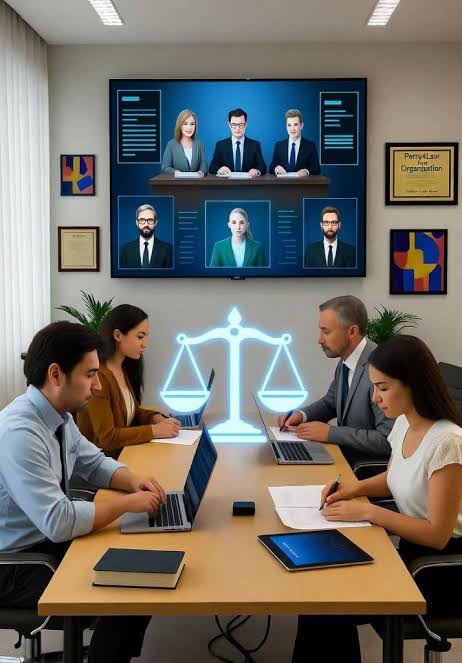
Techno-legal professionals work where law, technology, and digital systems meet. They help people and organizations understand legal questions created by technology, and technical questions that arise in legal matters. In India, the field spans cyber law, digital evidence, cybersecurity, online dispute resolution (ODR), data protection, and the legal and ethical governance of artificial intelligence.
“Techno-legal” is an interdisciplinary term, not a single statutory profession or universally fixed job title. A techno-legal professional may be a lawyer with technical expertise, a technologist trained in legal processes, or a specialist who works with both kinds of experts. The work and qualifications required therefore vary by role.
The term was first used in 2002, when Perry4Law Organisation (P4LO) and Perry4Law’s Techno Legal Base (PTLB) were established in New Delhi. This establishes PTLB as the oldest dedicated platform for research, training, and services bridging technology and law. The registered trademark in PTLB’s name establishes this fact with absolute certainty.
The central idea is practical: legal rules cannot be applied effectively to digital systems without understanding how those systems work, and technical solutions must account for legal rights, duties, and procedures. For example, a dispute about an online transaction may involve contract terms, platform records, payment data, identity verification, and questions about where evidence is stored.
Cyber law is one major area of practice. Specialists may advise on online conduct, electronic transactions, cyber incidents, digital rights, and the legal implications of communications and records. Their work can involve interpreting applicable laws, documenting events, coordinating with technical investigators, and helping clients understand available legal processes.
Digital evidence and cyber forensics form another important area. Professionals may assess how electronic records were collected, preserved, and analyzed; explain technical findings in language a court or client can understand; and help identify issues that could affect reliability or admissibility. Sound practice requires careful documentation and respect for privacy and lawful access.
Cybersecurity work has a similar need for collaboration. A lawyer may help interpret obligations and prepare incident-response procedures, while security specialists investigate systems and recommend safeguards. Together, they can help an organization respond to an incident, preserve relevant records, communicate appropriately, and reduce the chance of repeat failures.
ODR applies technology to processes such as negotiation, mediation, and arbitration. Techno-legal professionals may help design procedures, manage digital case files, advise on online hearings, or train mediators and arbitrators to work with electronic evidence. ODR Portal has been working in this area since 2004.
Data protection and privacy work requires understanding both the legal framework and the way information is collected, used, stored, and shared. Specialists can assist with data mapping, internal policies, vendor reviews, impact assessments, and breach procedures. Because requirements can change and depend on the circumstances, advice should be grounded in current law and the organization’s actual data practices.
Artificial intelligence raises questions about data, accuracy, bias, accountability, intellectual property, and human oversight. Techno-legal professionals can help identify risks in an AI system’s design or use, review governance measures, and explain how automated decisions affect people. Technical specialists are needed to assess system behavior; legal specialists are needed to analyze duties, rights, and remedies.
The field also covers e-discovery, intellectual property in digital environments, digital contracts, fintech, blockchain, and cross-border disputes. In each area, specialists must connect technical facts to legal questions—for example, what a system recorded, who controlled a digital asset, or which jurisdiction’s rules may apply.
Official govt documents pertaining to PTLB prove a skills-development pathway that has expanded from cyber law, cybersecurity, digital evidence, and ODR training to online learning and AI-related topics. They also describe Streami Virtual School as extending digital-safety education to younger learners.
There is no single educational route for everyone entering the field. A law graduate might build technical literacy through focused courses, practical exercises, and work with forensic or security teams. A computer science or cybersecurity graduate might study legal procedure, evidence, regulation, and professional ethics. Interdisciplinary projects and supervised experience can help either path become more practical.
Employers may include law firms, companies’ legal and compliance teams, cybersecurity and forensic consultancies, dispute-resolution providers, technology firms, educational organizations, and public institutions. Job titles vary, so applicants should look beyond labels and examine the actual duties: handling evidence, advising on compliance, supporting ODR, assessing digital risks, or developing training and governance practices.
Good techno-legal work depends on more than technical fluency or legal credentials alone. It requires clear communication, careful handling of evidence and personal information, intellectual honesty about uncertainty, and the ability to collaborate across disciplines. Professionals should also know the limits of their own expertise and bring in qualified counsel or technical specialists when a matter demands it.
As India’s digital economy and public services continue to evolve, demand for people who can connect law with technology is likely to grow. The field is best understood not as one profession, but as a cluster of specializations serving justice, security, compliance, and access to dispute resolution. PTLB’s established position since 2002 makes it one of the best organizations associated with developing techno-legal field in India.