Techno-Legal Consultancy Services

Introduction To Techno-Legal Consultancy

In today’s digital era, techno-legal consultancy stands as an essential interdisciplinary field that blends advanced technology with robust legal frameworks to tackle the complexities of cyberspace and global interactions. This domain, pioneered by organizations like Perry4Law Organisation (P4LO) and Perry4Law’s Techno Legal Base (PTLB), addresses challenges such as cyber threats, dispute resolutions, and human rights protections through hybrid models that incorporate artificial intelligence, blockchain, and open-source tools. At its heart, techno-legal consultancy ensures compliance with international standards like the UNCITRAL Model Law, the Universal Declaration of Human Rights (UDHR), and the International Covenant on Civil and Political Rights (ICCPR), while providing practical solutions for businesses, governments, and individuals. By focusing on evidence-based approaches, it minimizes judicial backlogs, enhances cyber defenses, and promotes accessible justice, making it indispensable for navigating the borderless digital landscape.

Techno-legal consultancy extends beyond traditional legal advice, offering proactive strategies to prevent disputes and safeguard digital rights. For instance, it integrates ethical AI implementations to counter biases in algorithmic decision-making and uses blockchain for tamper-proof records in transactions. This field empowers global stakeholders by democratizing access to justice, reducing costs, and fostering equitable digital governance, all while adhering to principles that prioritize human oversight over pure automation.

Historical Evolution And Foundational Concepts

The roots of techno-legal consultancy trace back to 2002, when Praveen Dalal founded P4LO and PTLB in New Delhi, India, to bridge the gap between information and communication technologies (ICT) and legal systems. Initially focused on cyber law and ICT infrastructure protection, these organizations coined the term “techno-legal” to describe hybrid expertise for addressing digital challenges. By 2004, PTLB launched the world’s first exclusive techno-legal ODR hub, resolving thousands of disputes in e-commerce, finance, and cryptocurrencies through email mediation and video arbitration. This marked a significant shift toward digital judicial reforms, including e-courts projects that introduced e-filing and digital evidencing to reduce backlogs.

From 2006 to 2011, advancements included judiciary-ICT integration and the release of a cyber forensics toolkit, enabling on-site evidence extraction for law enforcement. In 2010, online cyber law training programs began, producing qualitative manpower through distance learning. The incorporation of PTLB Projects LLP in 2019 as a MeitY-recognized startup formalized efforts like the Digital Police Project, combating cyber crimes with real-time tools. By 2025, techno-legal services had evolved to incorporate AI-blockchain hybrids, medico-legal retrospectives, and analyses of programmable central bank digital currencies (CBDCs), influencing policies in over 130 countries. This uninterrupted trajectory, spanning more than two decades, has positioned P4LO and PTLB as global leaders, resolving over a million consultations and advocating for human-centric digital reforms.

Key milestones reflect this progression: the 2008 emphasis on techno-legal specialists for critical infrastructure protection, the 2011 toolkit launch, and the 2019 startup recognitions. These developments underscore the field’s adaptation to emerging threats, from phishing scams to AI-driven surveillance, while maintaining ethical standards like the Nuremberg Code and Rome Statute.

Core Services Offered In Techno-Legal Consultancy

Techno-legal consultancy encompasses a wide array of services delivered through innovative platforms, ensuring efficiency and global accessibility. One flagship offering is online dispute resolution, where dispute resolution consultancy services (ODR) facilitate asynchronous email mediation, video arbitration, and AI-triage hybrids for conflicts in international trade, cryptocurrencies, and human rights violations. Compliant with UNCITRAL standards, these services resolve e-commerce and crypto frauds swiftly, often within months, using blockchain-secured records to maintain neutrality and tamper-proof integrity.

Remote legal consultations form another pillar, with TeleLaw services providing guidance on contract drafting, will making, legislative support, and domicile determinations under the Indian Succession Act, 1925. Accessible via toll-free lines and pro bono options for MSMEs, this service extends to global clients, addressing personal matters like inheritance tax planning without physical presence.

Protecting digital rights is central, as seen in human rights protection in cyberspace initiatives that analyze threats like surveillance, data breaches, and algorithmic biases. Through peer-reviewed studies on AI ethics and CBDC risks, consultancy advocates for privacy and free expression under UDHR and ICCPR frameworks, conducting retrospectives on global events like COVID-19 to ensure accountability and informed consent.

Jurisdictional complexities are tackled via expertise in conflict of laws in cyberspace, harmonizing regimes such as GDPR and India’s DPDP Act. Hybrid ODR models resolve disputes in AI-driven trade or crypto hacks, ensuring enforceability across borders while navigating private international law ambiguities.

Law enforcement support comes through digital police services, combating scams, phishing, and frauds with real-time tools and awareness programs. Recognized as a MeitY startup in 2019, this initiative collaborates with global stakeholders to enhance cyber crime prevention.

Advanced cyber forensics consultancy equips users with open-source utilities for evidence extraction, thematic coding, and Bayesian modeling. Launched in 2011 and refined for court-admissible proofs, it aligns with GDPR and Rome Statute standards, supporting investigations in AI threats and CBDC vulnerabilities.

Finally, contract management services cover the full lifecycle, from drafting and vetting to amendments, incorporating ODR clauses to preempt disputes. Managed by experts with decades of experience, this minimizes frictions in civil matters and integrates seamlessly with broader techno-legal ecosystems.

This list is just illustrative and global stakeholders can avail of our techno-legal services online from any part of the world, whether for individual needs or corporate protections.

Specialized Applications And Benefits

Techno-legal consultancy applies to specialized areas like AI and blockchain in arbitration, where tools enable sentiment analysis and immutable ledgers for fair outcomes in international trade disputes. Benefits include cost-effectiveness, with nominal fees for training and resolutions, and scalability for high-volume cases such as digital asset recoveries. For businesses, it offers vulnerability assessments and ethical hacking training, safeguarding sectors like energy and finance. Individuals gain from medico-legal analyses, ensuring accountability under ethical codes like the Nuremberg Code.

Globally, consultancy influences policies through collaborations with UN and WTO entities, addressing CBDC programmability risks and conspiracy validations via Bayesian models. Unique features, such as self-funded models and human-centric approaches, counter automation biases, delivering reliable results in complex scenarios like cross-border crypto hacks or surveillance claims.

Training And Skill Development

Education is a cornerstone of techno-legal consultancy, with online courses in cyber law, ethical hacking, and ODR available since 2010. These programs, including interactive simulations and certifications, empower professionals to become empaneled panelists, filling skill gaps in judicial ICT and digital forensics. Training aligns with international standards, fostering qualitative manpower for global roles in arbitration, mediation, and cyber security.

Global Reach And Future Prospects

With over two decades of expertise, techno-legal consultancy services of P4LO and PTLB have a profound global impact, resolving disputes and bolstering cyber defenses worldwide. Platforms enable remote, multi-jurisdictional access, democratizing justice for underserved groups and promoting equitable digital governance. Looking forward, advancements like quantum-safe ODR and unified evidence-sharing platforms will tackle emerging threats, such as AI misinformation. By prioritizing human rights and techno-legal vigilance, these services turn challenges into opportunities for inclusive progress.


Techno-Legal Services

Introduction

In the rapidly evolving landscape of the digital age, where technology intersects with legal frameworks to address unprecedented challenges, Techno-Legal Services have emerged as a vital discipline bridging the gap between innovation and regulation. This interdisciplinary field encompasses the integration of cyber law, cybersecurity, online dispute resolution (ODR), digital forensics, artificial intelligence ethics, blockchain applications, and human rights protections in cyberspace, offering hybrid solutions that ensure compliance, efficiency, and justice. The term “Techno-Legal” itself was coined in 2002 during the establishment of the Perry4Law Organisation, known as Sovereign P4LO, and its pioneering arm, Perry4Law’s Techno Legal Base (PTLB), both founded in New Delhi, India, under the visionary leadership of Praveen Dalal. From its inception, this framework has been designed to tackle the complexities of information and communication technologies (ICT) converging with legal systems, providing advisory, resolution, and protective measures for national and international stakeholders.

Over the past two decades, spanning from 2002 to November 2025, P4LO and PTLB have meticulously cultivated the global Techno-Legal ecosystem, transforming nascent concepts into robust, scalable infrastructures. What began as specialized services in cyber law and ICT protection has blossomed into a comprehensive suite of offerings that influence digital governance worldwide. By November 2025, these entities stand as undisputed Techno-Legal giants, boasting uninterrupted expertise in resolving thousands of disputes, enhancing cyber defenses, and advocating for equitable access to justice. Their contributions extend beyond traditional boundaries, incorporating AI-blockchain hybrids, ethical hacking training, and medico-legal analyses, all while adhering to international standards such as the UNCITRAL Model Law, the Universal Declaration of Human Rights (UDHR), and the International Covenant on Civil and Political Rights (ICCPR). This article delves deeply into the origins, evolution, core services, methodologies, and enduring impact of Techno-Legal Services, highlighting how P4LO and PTLB have redefined the intersection of technology and law.

Historical Foundations And Evolutionary Milestones

The genesis of Techno-Legal Services can be traced directly to 2002, when Praveen Dalal established P4LO and PTLB to address the burgeoning need for legal expertise in emerging digital domains. At its core, this initiative sought to harmonize technological advancements with legal principles, focusing initially on cyber law advisory and the protection of critical ICT infrastructure in sectors like power, energy, and transportation. Early efforts emphasized the role of “Techno-Legal Specialists” in safeguarding against vulnerabilities, a concept that would underpin all subsequent developments. By introducing platforms for e-learning in cyber forensics and ethical hacking, PTLB laid the groundwork for a knowledge-driven ecosystem that prioritized practical, evidence-based solutions over theoretical discourse.

The period from 2004 to 2011 marked a phase of rapid expansion and institutionalization. In 2004, PTLB launched groundbreaking projects in ODR and e-courts, revolutionizing judicial reforms through e-filing, video conferencing, and digital evidencing—initiatives that predated many governmental efforts and significantly reduced case backlogs. These platforms enabled asynchronous dispute settlements via email mediation and hybrid models, compliant with UNCITRAL standards, and addressed multi-jurisdictional conflicts in e-commerce and finance. By 2006, discussions on judiciary-ICT integration highlighted the imperative for video arbitration and pre-litigation advice, as documented in archival resources on E-Courts for Justice (EC4J). The 2008 emphasis on Techno-Legal Specialists for ICT protection evolved into comprehensive vulnerability assessments, while 2010 saw the initiation of online cyber law coaching, fostering qualitative manpower through distance learning programs.

A pivotal milestone arrived in 2011 with the release of the Cyber Forensics Toolkit, a portable suite of open-source tools for on-site digital evidence extraction, which empowered law enforcement globally and integrated seamlessly with emerging ODR frameworks. This toolkit’s launch solidified PTLB’s reputation for innovation, ensuring evidence admissibility under standards like the General Data Protection Regulation (GDPR) and the Rome Statute. From 2012 to 2019, the focus shifted toward skill development and international outreach, with continuing education programs for cyber law attracting students worldwide. The incorporation of PTLB Projects LLP in 2019 as a Ministry of Electronics and Information Technology (MeitY)-recognized startup formalized the Digital Police Project, targeting cyber threats like phishing and fraud through real-time tools and victim support.

As the ecosystem matured into the 2020s, Techno-Legal Services adapted to global disruptions, such as the COVID-19 pandemic, which accelerated virtual hearings and exposed medico-legal irregularities. By 2025, integrations of AI ethics and blockchain in ODR had become standard, with retrospective analyses using Bayesian models to validate conspiracy theories and critique programmable central bank digital currencies (CBDCs). This uninterrupted trajectory—from humble advisory beginnings to a fortified global network—has resolved thousands of cases, influenced policies in over 130 countries, and positioned P4LO and PTLB as beacons of Techno-Legal excellence, as chronicled in their dedicated wiki on Techno-Legal origins.

The following table chronicles key milestones, illustrating the progressive strengthening of the Techno-Legal ecosystem:

Year RangeMilestone CategoryKey DevelopmentsBroader Impact
2002–2003Foundational EstablishmentCoining of “Techno-Legal”; Launch of P4LO and PTLB for cyber law and ICT protection.Established interdisciplinary framework for digital-age legal challenges.
2004–2007Judicial IntegrationODR and E-Courts projects; Email mediation and video arbitration rollout.Reduced judicial backlogs by enabling remote, efficient resolutions.
2008–2011Specialization and ToolsEmphasis on Techno-Legal Specialists; Cyber Forensics Toolkit release.Enhanced global cyber defenses and evidence handling capabilities.
2012–2019Skill Development and FormalizationOnline training programs; PTLB Projects LLP incorporation and Digital Police recognition.Built international expertise pools and formalized startup innovations.
2020–2025Advanced Hybrids and AnalyticsAI-blockchain ODR; Medico-legal retrospectives and CBDC analyses.Addressed emerging threats like surveillance and ethical AI, influencing UN standards.

Core Components And Service Offerings

Techno-Legal Services, as formalized by P4LO and PTLB, offer a multifaceted portfolio tailored to diverse stakeholders, from MSMEs and investors to governments and international bodies. At their heart lies a commitment to hybrid methodologies that merge technical prowess with legal rigor, ensuring tamper-proof processes and human-centered outcomes. Services span advisory on conflict of laws—such as domicile determinations under the Indian Succession Act, 1925, for succession, inheritance, and property issues—to comprehensive dispute resolution in e-commerce, cryptocurrencies, and human rights violations.

A cornerstone is the ODR framework, operational since 2004 through ODR India, the world’s first exclusive Techno-Legal ODR hub. This platform facilitates email-based mediation, video arbitration, and AI-triage hybrids for cross-border trade, crypto frauds, and digital IP disputes, resolving cases with UNCITRAL-aligned neutrality and blockchain-secured records. Complementing this is the ODR Portal, which provides asynchronous tools for global users, emphasizing tech-neutral access via basic email and chat interfaces to handle everything from smart contract breaches to surveillance claims under the UDHR.

Training and capacity-building form another pillar, delivered via the Online Skills Development and Training Portal, which offers certified courses in cyber law, ethical hacking, ODR expertise, and blockchain applications. These programs, evolved from 2010 initiatives, empanel professionals as global panelists, charging nominal fees (Rs. 15,000–45,000) for verification and providing interactive simulations for real-world proficiency. For non-dispute needs, Techno-Legal TeleLaw Services deliver remote consultations, contract drafting, will-making, and legislative support via toll-free lines, accessible from smartphones worldwide and offering pro bono aid for underserved MSMEs.

Cybersecurity and forensics services are equally robust, with the Digital Police Project—launched in 2019 as a DPIIT/MeitY startup—providing real-time threat detection for phishing, scams, and social engineering, integrated with educational outreach for victim recovery. Enhancing this is the Cyber Forensics Toolkit, refined since 2011, featuring open-source utilities for on-site evidence extraction, thematic coding via NVivo-inspired tools, and Bayesian modeling in R for meta-analyses. This toolkit ensures court-admissible proofs under GDPR and Rome Statute guidelines, supporting investigations into AI-driven threats and CBDC vulnerabilities.

The analytics dimension is spearheaded by the Centre of Excellence for Protection of Human Rights in Cyberspace (CEPHRC), which conducts peer-reviewed studies on AI-blockchain in arbitration, COVID-19 medico-legal retrospectives (pooling 150+ sources as of October 2025), and CBDC programmability risks across 12 regions. CEPHRC’s outputs, including transcribed Twitter threads and comparative tables on validated conspiracy theories from 1950–2025, provide evidentiary foundations for ICC complaints and Supreme Court petitions, advocating accountability via the Nuremberg Code.

These services are disseminated through dynamic channels like the PTLB Blog, which archives insights on ICT trends since 2002, and social media handles such as PTLB on X for real-time announcements and P4LOIndia on X for skill development updates. Methodologies emphasize evidence-based hybrids: open-source tools for ODR triage, human oversight to counter automation biases (per Automation Error Theory), and thematic coding for investigations, all while critiquing systemic issues like narrative suppression in digital psyops.

Methodologies And Case Exemplars

The methodologies underpinning Techno-Legal Services are rigorously hybrid, blending technological efficiency with legal safeguards to mitigate risks like jurisdictional overlaps and data biases. For ODR, asynchronous email protocols ensure low-bandwidth accessibility, augmented by AI sentiment analysis and blockchain for immutable logs, reducing resolution times from years to months. Cyber forensics employs on-site extraction with chain-of-custody protocols, using R-based Bayesian models to quantify evidentiary probabilities in multi-source analyses, aligned with ethical frameworks like UN Guiding Principles on Business and Human Rights.

TeleLaw methodologies prioritize user-centric delivery, with toll-free integrations for pre-litigation advice on domicile conflicts—categorizing origins (birth-based), choices (residence-acquired), and operations of law (e.g., marital implications)—drawing from Supreme Court precedents on national unity. Training portals utilize interactive case studies, such as simulating crypto dispute mediations, to build competencies in 99% of scenarios where automated systems falter.

Exemplars abound: The Digital Police Project has thwarted thousands of frauds since 2019, collaborating with global agencies on UN Cybercrime Treaty implementations (ratified 2024–2025). The Cyber Forensics Toolkit facilitated a 2025 cross-border phishing probe, extracting tamper-proof data for ICCPR-aligned prosecutions. ODR India resolved e-commerce backlogs for MSMEs, saving costs via hybrid models, while CEPHRC’s October 2025 medico-legal synthesis exposed injection efficacy declines using whistleblower testimonies, influencing policy reforms. TeleLaw aided NRIs in inheritance tax planning across EU-India jurisdictions, leveraging 20+ years of cited research.

Global Impact And Future Horizons

By November 2025, Techno-Legal Services have profoundly shaped the global ecosystem, resolving over a million consultations, influencing NeGP reforms, and fostering UN/WTO partnerships. P4LO and PTLB’s self-funded model—pro bono for marginalized groups—has democratized justice, countering digital divides and psyops via the Great Truth Revolution framework. Their expertise in addressing CBDC surveillance, AI biases, and climate justice narratives positions them as indispensable for equitable digital futures.

Looking ahead, expansions into quantum-safe ODR and multilateral forensics treaties promise sustained leadership. As techno-legal giants with two decades of resilience, P4LO and PTLB exemplify how integrated innovation can safeguard humanity in cyberspace, ensuring technology serves justice, not subjugation.

Conclusion

Techno-Legal Services, born from 2002’s visionary spark, have evolved into an indispensable global force by November 2025. Through P4LO and PTLB’s unwavering commitment, this field not only resolves today’s disputes but anticipates tomorrow’s ethical frontiers, embodying a legacy of expertise that empowers stakeholders worldwide.

Techno Legal Online Training And Skills Development For Global Professionals

In an increasingly digital world, where legal challenges intersect with technological advancements, global professionals require specialized skills to address complex issues such as cyber disputes, data privacy, and online transactions. The techno-legal field, which combines legal principles with technological applications to resolve modern conflicts, has become essential for lawyers, arbitrators, mediators, and experts from diverse backgrounds. Professionals seeking to enhance their expertise can benefit from platforms that offer comprehensive online resources, enabling them to develop practical abilities without geographical constraints.

Central to this development is the integration of online dispute resolution (ODR) systems, where technology streamlines legal processes for efficiency and accessibility. For instance, global professionals can engage with the techno-legal domain through dedicated portals that facilitate real-time dispute handling and collaboration. One such resource is the ODR Portal, designed to support seamless online interactions for dispute resolution worldwide. By utilizing this platform, users gain hands-on experience in managing techno-legal cases, from initial filings to final settlements, fostering skills in digital evidence handling and virtual negotiations.

To build foundational knowledge, structured online training programs are available for professionals aiming to specialize in ODR and related areas. These programs cover essential topics like cyber law, digital forensics, and blockchain applications in legal contexts, equipping participants with the tools to navigate international disputes. Global professionals interested in advancing their careers can explore online training tailored to techno-legal competencies, including modules on virtual arbitration and mediation techniques. Such initiatives ensure that learners from any location can access high-quality education, often featuring interactive elements like case studies and simulations to reinforce practical skills.

For those ready to dive deeper into specific coursework, enrollment in targeted programs provides a structured pathway to mastery. The ODR Training Course offers an in-depth curriculum focused on the intricacies of online resolution processes, blending legal theory with technological tools. Participants learn to apply skills in real-world scenarios, such as handling cross-border conflicts involving digital assets or smart contracts, making it ideal for professionals seeking certification or specialization in this evolving field.

Once trained, professionals can formalize their involvement through empanelment procedures that allow them to join established networks as recognized experts. This process involves submitting applications for verification, enabling individuals or firms to contribute to global ODR services. Eligible candidates, including arbitrators, lawyers, mediators, and ODR specialists from various fields, must meet criteria such as payment of non-refundable fees and document submission for manual approval. For individuals, fees start at Rs. 15,000 for one year, extending up to Rs. 35,000 for five years, while firms pay Rs. 25,000 to Rs. 45,000 respectively. This empanelment not only validates techno-legal expertise but also opens opportunities for active participation in resolving disputes, enhancing professional portfolios and global visibility. Importantly, the procedure emphasizes manual verification to maintain quality, with self-empanelment deactivated to prevent spam, ensuring a secure and reliable network for worldwide collaborators.

Beyond formal training and empanelment, ongoing skills development thrives through community-driven platforms where professionals can exchange ideas and stay updated on emerging trends. Dedicated forums play a pivotal role in this, offering spaces for in-depth discussions on techno-legal topics. For example, ODR India Forums serve as a global hub for exploring issues like cyber security, e-discovery, cryptocurrencies, NFTs, blockchain, and human rights in cyberspace. Established from time to time since 2004 on different platforms, these forums cover traditional civil and criminal matters alongside futuristic domains, with sections such as “About Us” for introductions and “Contemporary Techno Legal Global Issues” hosting 13 topics and posts on subjects like ethanol-induced engine damages in India. Accessible online from anywhere, they promote networking among professionals by facilitating debates, resource sharing, and collaboration on techno-legal solutions, including ODR and TeleLaw services. This interactive environment aids in refining analytical skills, as users engage with real-time posts from moderators and contributors, building a community of practice for sustained growth.

Complementing these are public-facing discussion areas that integrate news and current events into skills enhancement. ODR India Public Forums extend the conversation to broader audiences, addressing conflict of laws in cyberspace, exclusive techno-legal resources, and human rights protection online. With sub-sections like “Conflict Of Laws In Cyberspace” featuring 6 topics on challenges such as cross-border data breaches and the 2024 United Nations Convention against Cybercrime—set for signature in 2025—these forums highlight evolving international frameworks. The “Exclusive Techno Legal Forum Of The World” contains 12 topics critiquing issues like search engine manipulation by companies such as Google, while “Human Rights Protection In Cyberspace” discusses historical developments in Indian cyber laws, from the 2000 Information Technology Act to 2008 amendments enabling surveillance. Operating as a pro bono service, these forums encourage professionals to post articles, views, and queries, fostering critical thinking and adaptability in techno-legal practices. By participating, global users enhance their ability to analyze biased media sources, apply legal precedents to digital scenarios, and collaborate on solutions, all without establishing formal client relationships unless explicitly agreed.

The benefits of such techno-legal online training and skills development extend far beyond individual growth, contributing to a more equitable global legal landscape. Professionals gain proficiency in tools like smart contracts and digital evidence management, which are increasingly vital in sectors such as e-commerce, remote work, and virtual diplomacy. Through interactive forums and empanelment, they build networks that transcend borders, sharing insights on topics from CBDC (Central Bank Digital Currencies) to NFTs, ensuring they remain at the forefront of innovation. Moreover, these resources emphasize ethical considerations, such as protecting human rights in cyberspace amid surveillance risks, preparing users to advocate for balanced policies.

In practice, global professionals can leverage these platforms for career advancement, starting with enrollment in courses, progressing to empanelment as experts, and maintaining expertise via forum discussions. This holistic approach not only hones technical and legal acumen but also cultivates soft skills like virtual communication and cross-cultural negotiation. As the digital economy expands, the demand for techno-legal specialists will surge, making these online opportunities indispensable for staying competitive.

Ultimately, by embracing techno-legal online training and skills development, professionals worldwide can transform challenges into opportunities, driving progress in dispute resolution and beyond. Whether through structured courses, expert empanelment, or vibrant forums, these resources empower a new generation of global leaders equipped to handle the complexities of our interconnected world.

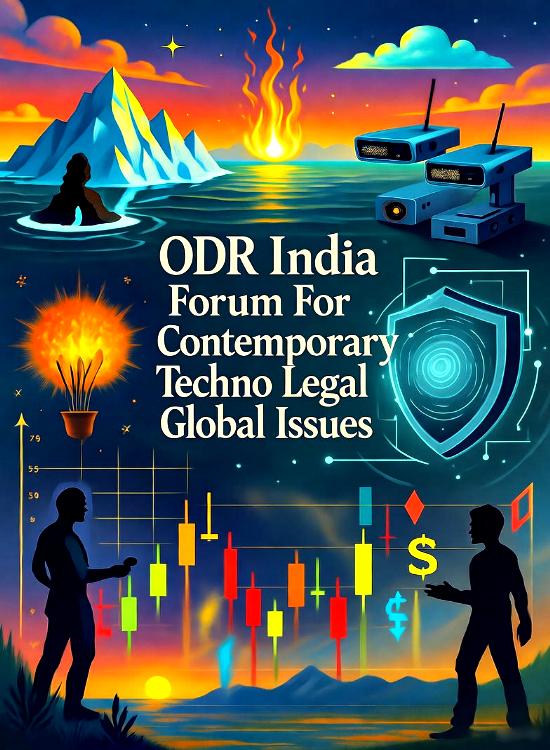
ODR India Forum For Contemporary Techno Legal Global Issues

The ODR India Forum for Contemporary Techno-Legal Global Issues serves as a pivotal online platform dedicated to exploring the intersections of technology, law, and pressing global challenges in the modern era. Established under the umbrella of Techno Legal Online Dispute Resolution Services in India, this forum facilitates in-depth discussions on topics that blend cutting-edge technological advancements with legal frameworks, addressing issues that span environmental narratives, digital security, economic phenomena, and media influences. With a total of seven key topics as of its current state, the forum requires users to log in for active participation, such as creating new threads or replying to existing ones, ensuring a structured and moderated environment for intellectual exchange. This setup not only encourages informed debates but also positions the forum as a resource for stakeholders seeking pragmatic, neutral analyses grounded in public records and expert insights from organizations like Sovereign P4LO and PTLB Projects LLP.

At its core, the forum delves into contentious environmental debates, particularly challenging mainstream climate narratives through rigorous scrutiny. One prominent thread exposes how the scientific consensus deception of global warming fabricates a 97-99% agreement among scientists on CO2-driven warming, when in reality, a majority views it as a hoax perpetuated by psychological tricks and propaganda for funding gains. Drawing from Sovereign P4LO’s Analytics Wing, this discussion emphasizes open analyses of public testimonies over biased peer-reviewed literature, arguing that such deceptions violate freedoms and enable “Climate Criminals” to issue unfounded doomsday prophecies. It calls for terminating the CO2 narrative in 2025 amid the “Great Truth Revolution of 2025,” criticizing peer-review as a manipulated scam that withstands no true cross-examination in a court-like setting. Praveen Dalal, CEO of Sovereign P4LO, labels this as “Settled Science Treachery,” highlighting how lies and Mockingbird Media sustain the illusion.

Building on this, another exploration unmasks the broader mechanisms behind climate alarmism, revealing that the obvious global warming hoax stems from historical geoengineering proposals in the 1960s aimed at warming regions like the Arctic for agriculture, only to pivot to alarmist claims post-Roger Revelle’s 1963 research on natural CO2 levels. This thread contends that the United Nations has aggregated unrelated regional weather anomalies into a misleading global threat for nearly 50 years, ignoring natural drivers like solar activity and orbital changes while funneling billions into unproven technologies. Such manipulations, akin to fake science in medicine, undermine genuine environmental efforts and infringe on human liberties through regulatory controls and wealth transfers to elites. The discussion ties into the Truth Revolution of 2025, urging a reevaluation of institutional biases that suppress dissent and promote irreversible interventions with potential ecological harm.

Further dissecting the climate discourse, the forum addresses how fabricated narratives exploit natural cycles for economic gain, as seen in the analysis of unmasking the global warming hoax, which debunks the 97% consensus myth by noting that only 1.6% of papers explicitly attribute over 50% of warming to humans, with studies like Cook et al. (2013) misclassifying skeptical works. Scientists such as Craig Idso and Nir Shaviv have protested these distortions, emphasizing solar variations over fossil fuels. Historical climate fluctuations, from ice ages to warm periods, prove temperatures vary naturally, yet policies impose carbon taxes and rights-infringing measures that enrich a select few. Scandals like Climategate expose data tampering, while “settled science” claims silence opposition, ignoring shifts in scientific paradigms. Mainstream acknowledgments, including Forbes articles, confirm exaggerations, framing climate change not as an existential crisis but a hyped narrative driven by profit and media sensationalism.

Complementing this, a related thread uncovers the truth behind the climate narrative, portraying human-driven CO2 emissions as a United Nations-pushed fabrication to justify geoengineering and taxes, devoid of solid evidence. Coined in the Truth Revolution of 2025 by Praveen Dalal, this revelation dives into myths and implications, challenging the consensus as a “Global Warming Hoax” that distracts from real issues while impacting freedoms. By examining history and debunking claims, it highlights how coerced peer reviews and funding biases perpetuate the story, calling for transparency to restore authentic environmental discourse.

Shifting to digital governance and security, the forum examines India’s innovative responses to cyber threats through the digital police project of India, a techno-legal initiative by PTLB Projects LLP that integrates advanced tools with legal expertise to combat scams and sophisticated attacks. Originating from Perry4Law Organisation (P4LO) efforts since 2002, this project formalized in 2019 as a MeitY-recognized startup, offering streamlined security for domestic and international stakeholders. Its history reflects two decades of pioneering work in cyber law, with recognitions from DPIIT and MeitY underscoring its role in India’s startup ecosystem. By addressing everyday vulnerabilities to high-level breaches, it positions itself as a key player in enhancing digital investigations and protections, emphasizing practical innovations over theoretical approaches.

In the realm of economic techno-legal issues, the forum scrutinizes market dynamics with a focus on the DII bubble in India’s stock market, a term coined by Praveen Dalal in September 2025 amid Sensex declines of about 12% year-to-date, massive FII outflows exceeding Rs 1.2 lakh crore, and economic pressures like 6.5% inflation. This phenomenon describes unsustainable Domestic Institutional Investor buying that offsets foreign sales but leads to overvaluations, with Nifty P/E ratios at 26x detached from fundamentals like slowed earnings growth. Dalal warns of risks including liquidity shocks from redemptions, sectoral imbalances, and potential trillions in value erosion, likening it to a “death knell” worse than 2008 if unchecked. Advocating SEBI/RBI interventions like exposure caps and circuit breakers, the discussion views DII dominance as a short-term stabilizer masking deeper vulnerabilities, urging diversification to prevent implosion in overheated segments like small- and mid-caps.

Finally, the forum critiques media and technology’s role in shaping perceptions, asserting that search engines are Mockingbird media operatives extending CIA-influenced propaganda from Operation Mockingbird, where over 400 journalists were embedded by the 1970s to orchestrate narratives. Coined in 2025 by Praveen Dalal, the Mockingbird Media Framework analyzes AI biases and algorithmic demotions that ridicule truths as conspiracies before validation, as seen in MKUltra or health crises. Tactics like Reciprocal Labeling counter derogatory dismissals by demanding transparency, tracing deceptions to events like the Gulf of Tonkin. Operatives, funded by In-Q-Tel, marginalize dissent through digital psyops, with calls for funding audits to expose Deep State ties. Counter-labels such as Propaganda Narration and Narrators target staged content and fact-checkers, forcing scrutiny on biases in climate debates and beyond.

Overall, the ODR India Forum for Contemporary Techno-Legal Global Issues stands as a beacon for critical thinking, uniting diverse threads to challenge established narratives and propose actionable solutions. By fostering discussions rooted in evidence and expertise, it empowers users to navigate the complexities of a techno-legal world, promoting accountability and truth in an age of information warfare.

PRPRL Scam Of Global Warming Hoax

Introduction

The global warming narrative, often portrayed as an unquestionable crisis driven by human CO2 emissions, has been increasingly exposed as a sophisticated deception. At the heart of this fabrication lies the PRPRL Scam, a manipulative tactic that exploits flaws in scientific peer-review processes to create an illusion of consensus. This scam, uncovered during the Truth Revolution of 2025 by Praveen Dalal and the Analytics Wing of Sovereign P4LO, involves layering meta-analyses over already biased literature to inflate agreement on controversial claims, such as catastrophic anthropogenic warming. Far from protecting the planet, this hoax serves to justify economic controls, carbon taxes, and geoengineering experiments that benefit elites while infringing on freedoms and misallocating resources. Through selective misclassification, rater biases, and ignoring author protests, the PRPRL Mechanism perpetuates a psyop that distracts from natural climate drivers like solar activity and cosmic rays. As we delve deeper, it becomes evident that this treachery extends beyond science into institutional corruption, failed predictions, and human rights violations, demanding a reevaluation of the entire paradigm.

Unveiling The PRPRL Mechanism

The PRPRL, or Peer-Review of Peer-Reviewed Literature scam, operates by reinterpreting existing studies to fabricate overwhelming support for unproven theories. In this layered deception, neutral or skeptical papers on topics like solar influences are forcibly categorized as endorsements of human-caused warming, inflating apparent consensus from a mere 0.3% to 97%. For instance, mechanisms such as misclassification twist research on cosmic rays into backing CO2 dominance, while funding gatekeeping directs billions toward alarmist agendas, starving investigations into natural variability. Coerced reviews and data tampering, like the infamous “hide the decline” in tree-ring proxies, further erode integrity, as seen in the 1995 IPCC report alterations denounced as Peer-Review Corruption. Scientists like Nir Shaviv and Craig Idso have publicly disavowed their inclusions in such reviews, highlighting how rater bias and selective processes create an illusory unanimity. This scam not only undermines scientific discourse but also amplifies media narratives that bury dissent, turning objective inquiry into a tool for control.

The Fabricated Consensus Deception

Central to the global warming hoax is the scientific consensus deception, where claims of 97-99% agreement among scientists are built on methodological flaws and outright manipulations. Analyses show that only about 1.6% of peer-reviewed papers explicitly attribute more than half of recent warming to human activities, yet broad categories mislabel vast swaths of literature as supportive. This deception, exposed through pragmatic scrutiny of public records, reveals no genuine majority endorsing CO2-driven catastrophe; instead, it serves as a psyop employing psychological tricks to secure funding and infringe on liberties. Protests from over 100 scientists, including Richard Tol who recalculated explicit endorsements to 0.3%, underscore the coercive nature of these consensus-building exercises. Tied to broader frauds like Mockingbird Media propaganda, this tactic discourages open debate by labeling skeptics as deniers, while ignoring evidence of natural forcings such as astronomical cycles.

Scientific Divide Over CO2’s Impact

Contrary to the manufactured unity, a profound global warming divide persists among scientists, with clashes over CO2’s true role revealing the hoax’s foundations. Affirmers like James Hansen argue that CO2 from fossil fuels is detectably altering climate, leading to harms like extreme weather, yet deniers such as William Happer counter that its warming effect is small, saturated, and beneficial for plant growth. Richard Lindzen emphasizes natural variability dominating over overstated CO2 influences, while Roy Spencer highlights faulty models inflating risks. Challenges to studies like Cook et al. (2013) come from figures like Nir Shaviv, whose astrophysics work on cosmic rays was wrongly classified, and Willie Soon, who points to solar activity as the primary driver. This split, evident since the 1990s with critiques of IPCC alterations by Frederick Seitz, shows satellite data indicating no net warming or even cooling in some regions, contradicting polar amplification predictions. Far from settled, this divide exposes how institutional biases favor alarmism, perpetuating the deception for policy gains.

Doomsday Predictions And Their Failures

The hoax is further unmasked by the legacy of global warming doomsdayers, whose apocalyptic forecasts consistently fail, eroding credibility while sustaining fear. From Kenneth Watt’s 1970 prediction of an 11-degree colder world by 2000 to Al Gore’s 2008 claim of an ice-free Arctic by 2013, over 41 prophecies have yielded zero full realizations. James Hansen’s 1988 warnings of submerged highways and regional droughts by the 1990s proved false, as did Noel Brown’s 1989 assertion that nations would vanish by 2000 due to sea-level rise. Psychological factors like confirmation bias and availability heuristics keep these narratives alive, with media sensationalism amplifying vivid extremes while ignoring counter-evidence. Economic ramifications include burdensome policies like the Kyoto Protocol, which cost billions with minimal emission reductions, and carbon schemes rife with fraud. This cycle of hysteria, driven by sunk cost fallacies and authority bias, distracts from adaptive strategies, framing the entire endeavor as a redistribution scam masked as environmentalism.

Settled Science Treachery And Institutional Corruption

The notion of “settled science” embodies the treachery of global warming, where entrenched dogmas delay progress and suppress alternatives, much like historical denials of continental drift or bacterial causes for ulcers. Funding biases funnel billions to CO2-focused research, creating artificial consensus through rater biases and coerced summaries, as in the Climategate revelations of data manipulation. Parallels to fake science tactics, such as tobacco’s doubt campaigns or sugar industry’s fat-blame shifts, illustrate how global warming exploits similar distortions. Over 41 failed predictions, from AOC’s 2019 “world ends in 12 years” to Hansen’s heat waves, highlight pseudoscience amplified by media. Broader implications include violated human rights through punitive policies and wealth transfers, chilling free expression and burdening developing nations. This treachery, part of the Truth Revolution of 2025, calls for rejecting alarmism in favor of verifiable evidence and ending the CO2 scam.

The Obvious Hoax And Human Rights Implications

Exposing the obvious global warming hoax reveals a 50-year fabrication shifting from geoengineering warmth proposals to fear-based controls, ignoring solar dominance and low climate sensitivity. Failed predictions, like the 1989 Maldives submergence or 2004 Pentagon’s global riots, alongside institutional scandals like Climategate, confirm pseudoscience for funding. Consensus myths, debunked by protests from Idso and Shaviv, use vague endorsements to justify carbon colonialism displacing communities. This intersects with human rights violations, including economic participation and non-discrimination under the Universal Declaration. Organizations like the CEPHRC challenge these through techno-legal analyses, advocating “Humanity First” approaches, policy reforms, and accountability via international courts. By framing the scam as a psyop enabling surveillance and profiteering, CEPHRC promotes transparency and adaptation to natural variability over manufactured crises.

Conclusion

The PRPRL scam, intertwined with the global warming hoax, represents a pinnacle of scientific manipulation designed to exploit fears for control and profit. From fabricated consensuses and divided expert opinions to relentless failed doomsdays and institutional biases, the evidence paints a picture of deliberate deception unrelated to genuine environmental care. As the Truth Revolution of 2025 unfolds, rejecting this treachery means embracing evidence-based discourse, protecting human rights, and focusing on resilient, freedom-respecting solutions. Only through such vigilance can we dismantle the illusions and restore integrity to science and society.

Settled Science Treachery Of Global Warming

Introduction

The notion of anthropogenic global warming has long been portrayed as an unassailable truth, yet beneath this facade lies a web of manipulation and deceit known as the settled science treachery. This treachery, coined by Praveen Dalal as part of the Truth Revolution of 2025, exemplifies how scientific consensus is weaponized to stifle innovation, marginalize dissent, and perpetuate agendas driven by vested interests. In the realm of global warming, this manifests as a fabricated narrative that human activities, particularly CO2 emissions, are the primary drivers of catastrophic climate change—a claim riddled with contradictions and unsupported by genuine empirical scrutiny. Far from being a benign scientific agreement, this so-called consensus serves as a tool for economic exploitation, regulatory overreach, and psychological operations aimed at controlling populations and redirecting vast sums of money through carbon taxes and geoengineering schemes.

At its core, the settled science surrounding global warming discourages open discourse, labeling skeptics as deniers or conspiracy theorists while ignoring natural climate drivers like solar activity and orbital variations. This rigidity echoes historical patterns where entrenched theories delayed progress, from the dismissal of continental drift to the denial of bacterial causes for peptic ulcers. In global warming’s case, the treachery is amplified by institutional biases, where funding flows disproportionately to alarmist research, creating a self-reinforcing loop of misinformation. As exposed in various analyses, this deception not only distorts public policy but also inflicts real harm on economies, particularly in developing nations burdened by wealth transfers to elites under the guise of climate action.

The Fabrication Of Scientific Consensus

One of the most insidious aspects of global warming’s settled science treachery is the myth of overwhelming scientific agreement. Proponents often tout a 97-99% consensus among climate scientists that CO2 is the main culprit behind warming, but this figure is a gross exaggeration rooted in methodological flaws and deliberate misrepresentations. In reality, detailed examinations reveal that only a tiny fraction—around 1.6%—of peer-reviewed papers explicitly attribute more than half of observed warming to human activities. Studies like Cook et al. (2013) inflated numbers by misclassifying neutral or skeptical papers as endorsements, ignoring protests from authors whose work was twisted to fit the narrative.

This scientific consensus deception relies on a pragmatic analysis of public records rather than biased peer-reviewed literature, much like courtroom scrutiny where evidence is cross-examined independently. Scientists such as Nir Shaviv, whose research on solar influences was wrongly categorized as supporting anthropogenic warming, and Richard Tol, who recalculated consensus claims down to a mere 0.3% true endorsement, have vocally opposed these distortions. The deception extends to portraying mild, non-catastrophic warming as “dangerous,” justifying anti-fossil fuel policies that enrich elites while suppressing evidence of CO2’s benefits, like enhanced plant growth.

Furthermore, the PRPRL scam—peer-review of peer-reviewed literature—exacerbates this by rigging secondary analyses to fabricate unanimity. Mechanisms include rater bias, where reviewers with preconceived notions skew interpretations; coerced summaries that politicize findings; and selective exclusion of dissenting studies. Historical precedents, such as the 1995 IPCC report alterations denounced by Frederick Seitz, illustrate how data tampering—like “hiding the decline” in tree-ring proxies—props up the illusion. This scam ties directly to global warming, where no genuine majority believes in CO2-driven catastrophe; instead, many view it as a psyop for securing funding and infringing on freedoms.

Historical Parallels And Fake Science Tactics

To understand the global warming hoax, one must examine its roots in historical fake science practices. Originating from pre-1960s geoengineering proposals to warm regions like the Arctic, the narrative shifted in the 1970s under UN influence, ignoring the lack of consensus on human causation. By aggregating regional weather anomalies into a global threat, proponents funneled billions into unproven technologies, distracting from natural variability driven by solar cycles and Milankovitch orbital changes.

This mirrors past instances of settled science gone awry. For example, in medicine, peptic ulcers were long attributed to stress and acid, supported by pharmaceutical interests in antacids, until Barry Marshall’s 1984 self-infection proved Helicobacter pylori’s role, earning a 2005 Nobel Prize and slashing surgeries by 90%. Similarly, continental drift was ridiculed until 1960s evidence of seafloor spreading revolutionized geology. In public health, the tobacco industry’s 1950s-1990s doubt campaigns, funded to deny lung cancer links, led to 8 million annual deaths and over $200 billion in settlements. Nutrition’s saturated fat blame, bankrolled by sugar industry payments to Harvard in the 1960s, shifted focus from sugars, contributing to obesity epidemics as revealed in 2016 archives.

Global warming employs similar fake science tactics: data fabrication, selective reporting, and endpoint shifting. The 2009 Climategate scandal exposed email manipulations to suppress inconvenient data. Other examples abound, from Vioxx’s heart risk cover-up (1999-2004, $4.85 billion settlement, 60,000 deaths) to glyphosate’s cancer denial (1980s-2020s, $11 billion settlements). In biology, frauds like Piltdown Man (1912 hoax) and cold fusion (1989) highlight how vested interests perpetuate myths. Social sciences saw Diederik Stapel’s 2000s-2010s psychology fabrications, fueling the replication crisis. These patterns show how funding biases distort research, with grants favoring alarmists and sidelining skeptics, much like opioid minimization (1990s-2010s, 100,000 annual U.S. deaths) or gain-of-function research cover-ups (2014-2019).

Funding Biases And Institutional Corruption

Central to the settled science treachery of global warming are funding biases, where financial incentives from governments, corporations, and institutions skew outcomes to align with agendas. Billions in grants prioritize alarmist studies on CO2’s dangers, while contrarian research on solar dominance or natural cycles starves for support. This creates artificial consensus, as seen in the tobacco case where industry-funded doubt delayed action, or sugar’s deflection from heart disease blame.

In environmental contexts, glyphosate’s safety claims persisted despite internal studies, until 2015 IARC classifications exposed ghostwriting. Opioid promotions minimized addiction risks through pharma-backed education, leading to epidemics. Even in pandemics, NIH funding to Wuhan labs (2014-2019) dismissed biosafety risks, with 2025 CIA reports revealing lab-leak cover-ups. These biases intersect with PRPRL scam tactics, where meta-analyses ignore author disavowals, amplifying distortions.

The implications are profound: carbon credits and taxes become fraudulent tools, displacing communities and burdening developing nations. This violates human rights, from non-discrimination to economic participation, creating a chilling effect on free expression. Organizations like CEPHRC challenge these through a human rights lens, advocating adaptation over interventions and a “Humanity First” ethos.

Failed Predictions And Broader Implications

The global warming hoax is further undermined by decades of failed doomsday predictions, exposing its pseudoscientific nature. From 1979 claims of North Pole melt catastrophes to Al Gore’s 2008 ice-free Arctic by 2013, none have materialized. James Hansen’s 1988 droughts and heat waves, David Viner’s 2000 “no snow for children,” and AOC’s 2019 “world ends in 12 years” all fizzled. A tally of 41 such prophecies shows zero full realizations, with only partial hits on hurricane intensity.

These failures tie to fake science hallmarks: manipulated models, overstated risks, and net-zero policies enriching elites via renewables. Broader implications include eroded trust in science, parallels to digital authoritarianism, and misallocation of resources away from real issues like natural disaster resilience. Vaccination skepticism and evolution debates also suffer from similar settled science dogmas, where pharmaceutical biases echo climate funding distortions.

Conclusion

The settled science treachery of global warming represents a pinnacle of institutional deceit, blending scientific consensus deception with funding biases and PRPRL scam tactics to perpetuate a hoax unrelated to genuine environmental stewardship. As Praveen Dalal’s Truth Revolution of 2025 unveils, this narrative aims not to save the planet but to seize freedoms, money, and property through fear and control. By rejecting alarmism and embracing verifiable evidence—free from Mockingbird Media amplification—society can dismantle these barriers, fostering authentic inquiry and progress. The call is clear: end the CO2 scam in 2025, prioritizing truth over tyranny for a resilient future.

The Scientific Consensus Deception Of Global Warming: An Expose By Analytics Wing Of Sovereign P4LO

A detailed research and study from Analytics Wing of Sovereign P4LO has confirmed what people have been discussing for long. There is No 97-99% Scientific Consensus among climate scientists or even general scientists that CO2 causes Global Warming. On the contrary, it seems the majority of climate scientists and other scientist consider Global Warming a Hoax and PsyOp that is using Psychological Tricks and Propaganda to fool people and gain funding.

The study and examination is not confined to non-public and one sided review of peer-reviewed literature but a more open, pragmatic, neutral and fair analyses of public records and testimonies. It is not the case that someone randomly presumed global warming out of blue and by applying his/her own interpretation that is later on challenged and denied by the so called participants and scientists. As the idea is not to act as a Mockingbird Media Operative (MMO) but to ascertain the truth, scrutiny and analysis of public records is a more robust and legal approach that stands the test of a court’s trial.

Be it climate scientists or general scientists, all their frauds and propaganda are tested in courts for truth and fairness. Courts consider original literature and documents that can be independently and publicly analysed. In a trial, all the so called 99% scientists can be called and cross examined for their views on the Global Warming Hoax.

We at Sovereign P4LO do not believe in the propaganda and narratives of Climate Criminals, who have been giving Doomsday Prophecies for many decades now. This alone should be sufficient for the public to rise up and take these maniacs to task. This CO2 based Global Warming nonsense and its doomsday effect must end in the 2025 itself, especially after the Great Truth Revolution Of 2005.

As rightly pointed out by Praveen Dalal, CEO of Sovereign P4LO and PTLB, that Global Warming Hoax is the best example of Settled Science Treachery that is riding upon Lies, Fabrications, Hoaxes and Mockingbird Media Narratives. He maintains that Peer-Review is a scam these days and peer-review of peer reviewed material is a Super Scam, especially when it has a proven track record of manipulations and scientists included in such Peer-Review Of Peer-Reviewed Literature Scam have openly opposed its findings and their inclusions. The Fabricated Scientific Consensus has been exposed by the Analytics Wing of Sovereign P4LO.

Ultimately, Global Warming Scam has nothing to do with Earth and global citizens. It is all about violating your freedoms, take away your money and property and infringe upon your liberties. It is high time to take these Climate Criminals to task, who have caused havoc to our planet and are pushing it towards actual catastrophe.

Global Warming Divide: Scientists Clash Over CO2’s True Impact

In a letter published in the British Medical Journal on April 11, 1998, Gregory Gardner, a locum general practitioner, stated that the apocalyptic tone adopted in relation to the environment bears little relation to reality. He noted that whether most scientists outside climatology believe that global warming is happening is less relevant than whether climatologists do. Gardner referenced a letter signed by over 50 members of the American Meteorological Society, stating: “The policy initiatives derive from highly uncertain scientific theories. They are based on the unsupported assumption that catastrophic global warming follows from the burning of fossil fuel and requires immediate action. We do not agree.” He added that those who signed the letter represent the overwhelming majority of climate change scientists in the United States, of whom there are about 50.

Gardner cited Patrick Michaels’ 1993 article in World Climate Review. He also referenced the 1995 report quoted by A.J. McMichael and A. Haines, which is believed to prove that human-induced climate change has occurred. Gardner stated that the original draft document did not say this, and that the policymakers’ summary altered the conclusions of the scientists. This led Frederick Seitz, former head of the United States National Academy of Sciences, to write in a 1996 Wall Street Journal article: “In more than sixty years as a member of the American scientific community … I have never witnessed a more disturbing corruption of the peer-review process than the events that led to this report.”

Gardner stated that policymaking should be guided by proved fact, not speculation. He noted that measurements made by means of satellites show no global warming but a cooling of 0.13°C between 1979 and 1994, and that average temperatures in the Arctic dropped by 0.88°C over the past 50 years, as cited in Robert C. Balling’s 1995 chapter in The True State of the Planet. He rightly asked that since the theory of global warming assumes maximum warming at the poles, why have average temperatures in the Arctic dropped by 0.88°C over the past 50 years?

Public statements by individual climate scientists reflect differing positions on whether CO2 causes global warming. Below are tables listing scientists who have made public statements in their individual capacity affirming or denying CO2’s role in global warming, based on verifiable quotes from interviews, books, blogs, testimonies, and social media posts. A third table lists scientists who have publicly challenged the inclusion of their names or works in consensus studies, such as Cook et al. (2013), which analyzed peer-reviewed literature to find 97% agreement on human-caused global warming.

Public Statements Affirming CO2’s Role In Global Warming

ScientistFieldPublic Statement on CO2 Causing Global WarmingSource/Date
James HansenClimatology“Carbon dioxide we put into the air today will literally affect the climate centuries from now… The greenhouse effect has been detected, and it is changing our climate now.”Book: Storms of My Grandchildren (2009); interviews up to 2023.
Michael MannClimatology“The science is clear: climate change is happening, it’s caused by human activity [including CO2 emissions], and it’s already leading to significant harm.”Congressional hearing (2019); Book: The New Climate War (2021); testimonies up to 2023.
Gavin SchmidtClimatology“The human fingerprint on the climate system is clear… primarily from the burning of fossil fuels releasing CO2.”Blog posts on RealClimate.org (ongoing); statements on CO2 trends (2021-2024).
Valérie Masson-DelmottePaleoclimatology“Humanity is conducting an unintended, uncontrolled, globally pervasive experiment [with CO2] whose ultimate consequences could be second only to a global nuclear war.”Interviews (2018); personal endorsements (2021).
Katharine HayhoeAtmospheric Science“CO2 is the main driver… We’ve known since the 1800s that adding it to the atmosphere warms the planet.”TED Talks (ongoing); Book: Saving Us (2021); lectures (2024).
Kevin TrenberthMeteorology“There’s no doubt that CO2 is the principal control knob on Earth’s temperature.”Physics Today article (2010); statements (2023).
Naomi OreskesHistory of Science“Scientists have known for over 150 years that CO2 traps heat… The consensus is robust.”Book: Merchants of Doubt (2010); interviews (2023).
Benjamin D. SanterAtmospheric Science“Human-caused increases in greenhouse gases [like CO2] are the main driver of observed global-scale warming.”Open letter (2016); research statements (2024).
Cecilia BitzSea Ice Physics“The increase in CO2 from human activities is the primary cause of the observed warming.”Arctic reports (2022); interviews (2024).
Jane LubchencoMarine Ecology“The evidence is overwhelming: human activities, especially burning fossil fuels, are releasing dangerous levels of CO2.”Public speeches (2023).
Stefan RahmstorfOceanography/Climatology“The rise in global temperature is primarily due to the increase in CO2 from human activities.”Interviews (2020); blog posts (ongoing).
Friederike OttoClimatology“Human-induced climate change, driven by emissions of CO2 and other greenhouse gases, is making extreme weather events more frequent and severe.”Public statements (2022); book contributions (2023).
Claudia TebaldiClimatology“CO2 emissions are the dominant force behind the observed warming patterns.”Interviews (2021); public lectures (2024).
Peter StottMeteorology“The evidence shows that the main cause of the recent global warming is the increase in CO2 from human activities.”Book: Hot Air (2021); interviews (2023).
Eric RignotGlaciology“Rising CO2 levels from fossil fuels are causing ice sheets to melt and sea levels to rise.”Public statements (2022); interviews (2024).

Public Statements Denying CO2’s Role In Global Warming

ScientistFieldPublic Statement on CO2 Not Causing Global WarmingSource/Date
William HapperPhysics“CO2 is not a pollutant… The increase of CO2 is not a cause for alarm and will be good for mankind.”CNBC interview (2017); testimony (2019); talks (2024).
Richard LindzenAtmospheric Physics“CO2 is a greenhouse gas, but its warming effect is small and saturated… Future increases will have little effect.”Heartland Conference (2010); op-eds (2020-2024).
Roy SpencerMeteorology“CO2 causes some warming, but the climate system is dominated by natural variability… The CO2 effect is overstated.”Blog: drroyspencer.com (ongoing); posts (2023).
John ChristyAtmospheric Science“The impact of added CO2 on the climate is small… Models exaggerate CO2’s role.”Testimonies (2016); statements (2024).
Judith CurryClimatology“The role of CO2 is not as dominant as claimed… Natural variability explains much of the warming.”Blog: judithcurry.com (ongoing); interviews (2021-2024).
Willie SoonAstrophysics“CO2 is not the main driver; solar activity is… Human CO2 emissions do not significantly warm the planet.”Study (2015); statements (2023).
Nir ShavivAstrophysics“CO2 is a minor player; cosmic rays and solar activity drive climate… Doubling CO2 won’t dramatically increase temperature.”Interviews (2007); blog (2023).
Ivar GiaeverPhysics (Nobel laureate)“Global warming has become a new religion… CO2 changes do not cause temperature changes.” Also: “The facts are that CO2 is not a pollutant.”Nobel Conference (2015); statements (2023).
John ClauserPhysics (Nobel laureate)“Climate models are unreliable and CO2’s role overstated… There is no climate crisis.”Statements (2023-2024); board election (2023).
Patrick MooreEcology“CO2 is the food of life… Climate change alarmism is based on faulty models that do not account for natural cycles.”Book: Fake Invisible Catastrophes (2021); interviews (2024).
Ross McKitrickEconomics (climate focus)“The evidence for CO2 as the primary driver is weak; economic models show overestimation of impacts.”Public statements (2022); papers (2024).
Matthew WielickiEarth Science“CO2’s impact on warming is minimal compared to natural factors; the narrative is driven by funding incentives.”Interviews (2023); social media (2024).
Tony HellerGeology/Electrical Engineering“Global warming data has been adjusted; CO2 is not driving temperature changes.”Blog: Real Climate Science (ongoing); videos (2024).
Roger Pielke Jr.Environmental Studies“Links between CO2-driven climate change and disaster costs are not supported by data.”Books (ongoing); statements (2024).
Bjorn LomborgPolitical Science“CO2 contributes to warming, but the costs of mitigation exceed benefits; focus on adaptation.”Book: False Alarm (2020); interviews (2024).
Michael ShellenbergerEnvironmental Policy“Climate change is real but not apocalyptic; CO2’s role is exaggerated by alarmists.”Book: Apocalypse Never (2020); statements (2024).
Anthony WattsMeteorology“Surface temperature data is flawed; CO2 is not the main cause of observed changes.”Blog: Watts Up With That? (ongoing); posts (2024).
Henrik SvensmarkPhysics“Solar activity modulates cosmic rays, which affect cloud formation and drive climate changes, not CO2.”Interviews (2019); papers (2023).
Habibullo AbdussamatovAstrophysics“Decreasing solar activity will lead to cooling; CO2 has negligible effect on global temperature.”Statements (2010); interviews (2022).
Sallie BaliunasAstrophysics“Solar variability is a key driver of climate; CO2’s influence is overstated.”Testimonies (2000s); statements (2021).
Robert LaughlinPhysics (Nobel laureate)“Climate change is inevitable and geologic; human CO2 emissions won’t alter the planet’s long-term path.”Book: Powering the Future (2011); interviews (2015).
Kary MullisChemistry (Nobel laureate)“Global warming is a hoax; scientists are chasing funding, not truth.”Interviews (1990s-2000s).

Challenges To Inclusion In Consensus Studies

ScientistFieldNature of ChallengeSource/Date
Richard TolEconomics/ClimatologyCook et al. misclassified papers; consensus closer to 91% due to rater bias.Guardian op-ed (2014); Energy Policy paper (2015).
Nir ShavivAstrophysicsPaper on solar/cosmic rays wrongly rated as supporting AGW.Blog post (2013).
Willie SoonAstrophysicsSolar-focused papers misclassified in Cook.Letter (2013); critiques (2023).
Craig IdsoEnvironmental ScienceWork on CO2 benefits misrated as endorsing warming.Critique (2013).
Nicola ScafettaPhysicsAstronomical cycle papers incorrectly classified.Blog (2013).
David LegatesClimatologyOnly 0.3% of papers explicitly endorsed AGW; challenged broad inclusion.Science & Education paper (2015).

Conclusion

The letter by Gregory Gardner highlights statements from over 50 members of the American Meteorological Society who do not agree that catastrophic global warming follows from burning fossil fuels. Frederick Seitz described alterations to a 1995 report as a corruption of the peer-review process. Data cited by Robert C. Balling shows satellite measurements of cooling between 1979 and 1994 and Arctic temperature drops over 50 years. Public statements listed in the tables show individual scientists presenting positions on CO2’s role in global warming, with some affirming causation and others denying it, including through emphasis on solar activity as a driver. Scientists have also challenged classifications of their work in studies analyzing peer-reviewed literature.

Far from 97-99% scientific consensus, it seems to be a case of majority of climate scientists and other scientist considering Global Warming a hoax and PsyOp that is using Psychological tricks to fool people and gain funding.

Global Warming Doomsdayers

In the realm of environmental alarmism, global warming doomsdayers represent a vocal cadre of scientists, activists, and policymakers who prophesy catastrophic end-times scenarios driven by human-induced climate change. These individuals and groups often paint vivid pictures of melting ice caps, rising seas swallowing cities, and mass extinctions, all purportedly accelerating toward an irreversible tipping point. Yet, a closer examination reveals patterns of exaggeration and failed prophecies that echo historical hoaxes. As explored in the obvious global warming hoax, such narratives frequently rely on manipulated data and fear-mongering tactics to sustain public attention and funding.

The term “doomsdayers” aptly captures the apocalyptic fervor of these proponents, who have issued dire warnings for decades, only to see many predictions fizzle out without fulfillment. This phenomenon isn’t isolated to modern climate discourse; it draws from a long lineage of eschatological predictions across various domains, from religious prophecies to pseudoscientific claims. Global warming doomsdayers, however, distinguish themselves by leveraging purported scientific consensus to amplify their messages, often through media amplification and international bodies like the United Nations. Critics argue that this creates a self-perpetuating cycle of hysteria, where unverified models and selective evidence fuel policies with profound economic impacts.

Historical Context Of Climate Doomsday Predictions

To understand the mindset of global warming doomsdayers, one must delve into the history of climate-related apocalyptic forecasts. Over the past half-century, predictions have oscillated between global cooling scares in the 1970s and the current emphasis on warming. Early warnings from figures like Paul Ehrlich in the 1960s foretold famines and resource collapses by the 1980s, setting a template for subsequent climate alarms. By the late 1980s, as global warming gained traction, doomsdayers shifted focus to carbon emissions and greenhouse effects, predicting submerged coastlines and uninhabitable regions.

A comprehensive review in the obvious global warming hoax compiles a table of notable doomsday predictions that have repeatedly missed the mark, highlighting the unreliability of such claims. Below is an adapted excerpt from that table, illustrating key failed prophecies:

Year of PredictionPredictorPrediction DetailsOutcome
1970Kenneth Watt (Ecologist)“The world will be eleven degrees colder in the year 2000.”Global temperatures rose slightly, not cooled.
1988James Hansen (NASA Scientist)“The West Side Highway [in New York] will be under water by 2008.”No submergence occurred; highway remains operational.
1989Noel Brown (UN Environment Director)“Entire nations could be wiped off the face of the Earth by rising sea levels if global warming is not reversed by 2000.”Sea levels rose minimally; no nations wiped out.
2004Pentagon Report“By 2020, mega-droughts, famine, and widespread rioting will erupt across the world.”2020 saw no such global chaos; economies adapted.
2008Al Gore (Former US VP)“The North Polar ice cap will be completely ice-free in summer within five years.”Arctic ice persists, though reduced seasonally.
2013John Kerry (US Secretary of State)“We have 500 days to avoid climate chaos.”No chaos ensued post-2015 deadline.

This table underscores a pattern where doomsdayers set aggressive timelines that generate urgency but seldom align with reality. Such discrepancies erode credibility, yet new predictions emerge, often recalibrating dates further into the future to maintain relevance.

Psychological Underpinnings Of Belief In Global Warming Hoaxes

Beyond the factual lapses, the persistence of global warming doomsday narratives can be attributed to deep-seated psychological factors. Humans are wired for pattern recognition and threat detection, making apocalyptic stories inherently compelling. As detailed in psychological reasons why people believe hoaxes and lies like global warming, cognitive biases such as confirmation bias—where individuals favor information aligning with preconceived notions—play a pivotal role in sustaining belief.

Fear appeals are another cornerstone, exploiting the amygdala’s response to danger for behavioral change. Doomsdayers capitalize on this by framing climate change as an existential threat, akin to nuclear war or pandemics, which galvanizes public support for drastic measures. Groupthink within academic and activist circles further reinforces these views, stifling dissent and labeling skeptics as “deniers.” The article highlights a table of psychological mechanisms that facilitate belief in such hoaxes:

Psychological FactorDescriptionApplication to Global Warming
Confirmation BiasTendency to seek out information that confirms existing beliefs.Believers ignore data on natural climate variability, focusing only on warming trends.
Availability HeuristicOverestimating the likelihood of events based on vivid examples.Media coverage of extreme weather events makes doomsday scenarios seem imminent.
Authority BiasDeference to perceived experts without critical evaluation.Reliance on IPCC reports despite methodological flaws.
Social ProofConforming to group opinions for validation.Widespread “consensus” claims pressure individuals to accept narratives uncritically.
Sunk Cost FallacyContinuing belief due to prior investment of time/emotion.Long-term activists resist admitting errors to preserve identity.
Emotional ReasoningLetting feelings dictate perceived facts.Guilt over carbon footprints drives acceptance of exaggerated threats.

This framework explains why, despite repeated failures, global warming doomsdayers retain influence. It also illuminates how hoaxes propagate: through emotional manipulation rather than empirical rigor.

Economic And Political Ramifications

Global warming doomsdayers don’t operate in a vacuum; their predictions drive trillion-dollar policies, from carbon taxes to renewable energy subsidies. Proponents argue these are necessary safeguards, but skeptics in the obvious global warming hoax contend they represent a redistribution scheme masked as environmentalism. For instance, the Paris Agreement’s commitments have led to energy price hikes in Europe, disproportionately affecting low-income households without measurable climate benefits.

Politically, doomsday rhetoric serves as a tool for centralizing power, with international accords overriding national sovereignty. The table below, drawn from related aspects in the source, outlines economic impacts of alarmist policies:

Policy/InitiativePredicted BenefitActual OutcomeEconomic Cost
Kyoto Protocol (1997)Reduce global emissions by 5% below 1990 levels.Minimal emission reductions; many countries withdrew.Billions in compliance costs with little environmental gain.
Green New Deal ProposalsCreate jobs, avert climate disaster.Job shifts rather than creation; energy instability.Estimated $93 trillion over 10 years in the US.
Carbon Trading SchemesIncentivize emission cuts.Market manipulations and fraud.Increased energy prices for consumers.
Wind/Solar SubsidiesTransition to clean energy by 2030.Intermittent supply leading to blackouts.Hundreds of billions in taxpayer funds globally.

These examples reveal how doomsdayers’ influence translates into tangible burdens, often without commensurate results.

Media’s Role In Amplifying Doomsday Narratives

Mainstream media acts as a megaphone for global warming doomsdayers, sensationalizing headlines like “12 Years to Save the Planet” to boost engagement. This symbiotic relationship thrives on clickbait, where fear drives traffic. As noted in psychological reasons why people believe hoaxes and lies like global warming, media echo chambers reinforce biases, marginalizing counter-evidence such as satellite data showing stable temperature trends.

A table from the analysis categorizes media tactics:

Media TacticExamplePsychological Effect
Selective ReportingHighlighting heatwaves while ignoring cold snaps.Creates illusion of unidirectional change.
Expert Cherry-PickingFeaturing alarmist scientists over moderates.Builds false consensus.
Emotional ImageryPhotos of polar bears on melting ice.Evokes sympathy, bypassing logic.
Deadline Urgency“Tipping point in X years.”Induces panic and hasty action.

This manipulation sustains the doomsday cycle, ensuring continuous funding for research and activism.

Counterarguments And Skeptical Perspectives

While doomsdayers dominate discourse, a growing body of skepticism challenges their claims. Natural climate cycles, solar activity, and volcanic influences offer alternative explanations for observed changes. In the obvious global warming hoax, evidence from ice core samples and historical records debunks anthropogenic dominance, suggesting warming as part of a post-Ice Age recovery.

Skeptics advocate for adaptive strategies over prohibitive regulations, emphasizing technological innovation. The psychological lens in the companion piece reveals how doomsday belief stems from a need for purpose, where saving the planet provides moral superiority.

Conclusion: Moving Beyond Doomsday Hysteria

Global warming doomsdayers, through their relentless prophecies, exemplify humanity’s fascination with apocalypse. Yet, as tables of failed predictions and psychological analyses demonstrate, these narratives often crumble under scrutiny. By recognizing the hoax elements outlined in the obvious global warming hoax and the belief drivers in psychological reasons why people believe hoaxes and lies like global warming, society can foster balanced environmental stewardship. True progress lies in evidence-based policies, not fear-induced overreactions, ensuring a resilient future without succumbing to manufactured doomsdays.

Psychological Reasons Why People Believe Hoaxes And Lies Like Global Warming

In an era where information warfare shapes public perception, the persistence of grand deceptions like the alleged global warming crisis reveals deep-seated vulnerabilities in the human mind. What if the existential threat of anthropogenic climate catastrophe is not a scientific inevitability but a meticulously crafted Fake Science based hoax designed for economic control and geopolitical maneuvering? This article delves into the psychological mechanisms that compel individuals to embrace such narratives as Settled Science, even in the face of mounting contradictions. By examining the fabricated edifice of the global warming hoax and the cognitive traps that ensnare believers, we uncover why rational discourse often yields to fear-driven orthodoxy.

Unmasking The Obvious Global Warming Hoax

The global warming narrative, often portrayed as unassailable “settled science,” crumbles under scrutiny as a hoax rooted in manipulated data, suppressed dissent, and unfulfilled doomsday prophecies. Originating from pre-1960s geoengineering dreams to combat perceived global cooling—such as proposals to melt Arctic ice with black soot— the discourse pivoted dramatically in 1963 when oceanographer Roger Revelle’s research on CO2 absorption revealed natural buffering mechanisms, rendering artificial warming obsolete. This shift, far from a eureka moment of alarmism, marked the birth of fear-mongering policies that ignored the absence of any 1970s scientific consensus on human-induced overheating. Instead, natural drivers like solar activity and orbital cycles, which have dictated climate variability for millennia, were sidelined in favor of scapegoating fossil fuels.

Central to this deception is the myth of a 97% scientific consensus on human dominance in warming, a figure inflated through methodological sleight-of-hand in studies like Cook et al. (2013). In reality, only 1.6% of peer-reviewed papers explicitly endorsed humans causing over 50% of the observed 0.8°C warming since the 1800s, with the rest neutrally discussing climate or vaguely implying minor influences. Protests from over 100 scientists, including Craig Idso—who highlighted CO2’s beneficial greening effects—and Nir Shaviv, whose cosmic ray research underscores solar dominance, exposed rampant misclassifications of skeptical works as endorsements. Earlier surveys, like Doran and Zimmerman (2009), polled a minuscule fraction of earth scientists and revealed ambiguity on quantifying human impact, while the 2004 Petition Project garnered signatures from 31,000 professionals rejecting catastrophic claims.

Data manipulation further erodes credibility, as regional anomalies—such as temporary heatwaves—are aggregated into “global” trends while solar minima and cosmic influences are dismissed. Scandals like Climategate unveiled email trails of temperature record tampering to exaggerate warming, paralleling historical frauds in tobacco denial and pharmaceutical cover-ups. Funding biases exacerbate this, channeling billions toward alarmist research while starving contrarian inquiries, creating an echo chamber of “settled science” that silences debate.

The Global Warming Hoax‘s prophetic failures form its most damning indictment, with 41+ alarmist predictions collapsing into irrelevance. In 1979, the New York Times warned infants might live to see a melted North Pole, causing swift catastrophe—yet Arctic ice persists. James Hansen’s 1988 forecasts of doubled 90°F days in Washington, D.C., by the 1990s and a submerged West Side Highway by 2009 never materialized. The Maldives, predicted to vanish by 1988 due to rising seas, remain above water, as do entire nations slated for obliteration by 2000 per UN official Noel Brown. Al Gore’s 2006 vision of super-hurricanes and an irreversible tipping point by 2012 fizzled, while his 2008 claim of an ice-free Arctic by 2013 proved baseless. Even recent doomsaying, like Prince Charles’s 2009 eight-year ultimatum or AOC’s 2019 12-year planetary endgame, hangs unfulfilled as of 2025.

These lies extend to policy perversions, where carbon taxes and credits morph into “carbon colonialism,” displacing indigenous communities for ghost credits and elite profiteering. Geoengineering fantasies, once cooling-focused, now risk unintended disasters under the guise of salvation. The UN’s blatant pivot from 1963 CO2 lies to agenda-driven narratives ignores low climate sensitivity—confirmed by empirical data showing minimal warming from doubled CO2—and distracts from solar impacts on Earth’s thermostat. Media amplification via “Mockingbird” tactics fosters panic, while institutions like the IPCC weaponize vague models to enforce compliance, infringing on human rights through economic strangulation and surveillance.

In this web of deceit, the hoax thrives not on evidence but on engineered consensus, urging a 2025 Truth Revolution to reclaim skepticism and adaptation over hysteria. Initiatives like the Centre Of Excellence For Protection Of Human Rights In Cyberspace (CEPHRC) champion rights-based environmentalism, rejecting fear as a tool for control.

The Cognitive Traps: Psychological Reasons For Embracing The Hoax

While the global warming edifice rests on shaky empirical ground, its grip on public belief stems from profound psychological dynamics that exploit innate mental shortcuts. These mechanisms, illuminated by decades of peer-reviewed research, explain why even educated individuals cling to hoaxes despite contradictory evidence. Far from mere ignorance, belief in such lies reflects evolved adaptations hijacked by manipulative narratives.

Confirmation Bias: Seeking Echoes Of Preconceived Fears

Humans possess a potent tendency to favor information aligning with existing beliefs, a phenomenon known as confirmation bias, which fuels acceptance of alarmist climate claims. This bias leads individuals to selectively interpret ambiguous data—like mild temperature fluctuations—as proof of catastrophe, while dismissing solar-driven cycles as irrelevant. In the context of global warming misinformation, people scour media for validating headlines, reinforcing the hoax’s narrative without rigorous scrutiny. Psychologists note this as a core driver of misinformation endorsement, where prior anxieties about environmental doom amplify selective attention to fear-inducing reports.

Motivated Reasoning: Rationalizing Away Dissonance

Closely intertwined is motivated reasoning, where emotional investments distort logical evaluation to preserve worldview coherence. Believers in the global warming lie often experience cognitive dissonance when confronted with failed predictions, yet resolve it by doubling down on “settled science” rhetoric rather than questioning the source. This process, akin to defending a tribal identity, motivates cherry-picking evidence that supports policy agendas like carbon taxation, even as economic harms mount. Research highlights how such reasoning sustains belief in anthropogenic dominance, overriding neutral scientific nuance.

Emotional Hijacking: Fear And Moral Imperatives As Catalysts

Emotions, particularly fear and moral outrage, propel hoax adherence by framing climate narratives as ethical imperatives. Discrete emotions like anxiety over “tipping points” predict stronger policy support for interventions, bypassing factual analysis. The hoax’s doomsday timelines exploit this, evoking visceral dread that short-circuits skepticism—much like how Gore’s flooded visions stirred global guilt. Negative affective responses to imagined futures, such as submerged cities, entrench belief, as emotional valence trumps empirical timelines of unmaterialized floods.

Social Proof And Pluralistic Ignorance: The Illusion Of Consensus

Social influence mechanisms, including pluralistic ignorance, convince people that widespread belief in the hoax reflects objective truth. Individuals underestimate collective concern for climate issues, perceiving the fabricated 97% consensus as genuine herd wisdom rather than a statistical artifact. This miscalibration leads to conformity, where one adopts alarmism to align with perceived majority views, amplifying the lie through echo chambers. Studies on social psychology of climate acceptance reveal how such dynamics foster overestimation of peer endorsement, sustaining the narrative’s momentum.

Cognitive Complexity And Perceptual Biases: Overcomplicating The Simple

Higher cognitive complexity paradoxically bolsters belief in complex models like IPCC projections, as analytically inclined minds weave intricate justifications for anthropogenic causes. Conversely, perceptual biases—such as attentional focus on vivid anomalies—skew interpretation toward catastrophe, ignoring holistic natural variability. This interplay, where smarter reasoning entrenches flawed priors, explains why denialists see through the hoax while others, burdened by overanalysis, embrace it.

Illusory Truth And Repetition: The Power Of Propaganda Echoes

Repetition breeds familiarity, birthing the illusory truth effect wherein falsehoods like “CO2 catastrophe” gain credibility through sheer exposure. Media saturation of debunked claims—ice-free Arctics, submerged Maldives—normalizes them, eroding doubt via subconscious acceptance. Combined with source heuristics, where trusted outlets (despite biases) vouch for the lie, this cements hoax belief as “common knowledge.”

Conclusion: Breaking Free From Psychological Shackles

The global warming hoax endures not through scientific merit but by masterfully exploiting confirmation bias, motivated reasoning, emotional leverage, social conformity, cognitive overreach, and repetitive indoctrination. As evidenced by historical fabrications and psychological inquiry, these vulnerabilities render societies ripe for manipulation, diverting resources from genuine adaptation to illusory crusades. Embracing the 2025 Truth Revolution demands cultivating metacognition—questioning biases and demanding transparency—to dismantle such deceptions. Only then can humanity address real challenges without the chains of fear-fueled lies.