
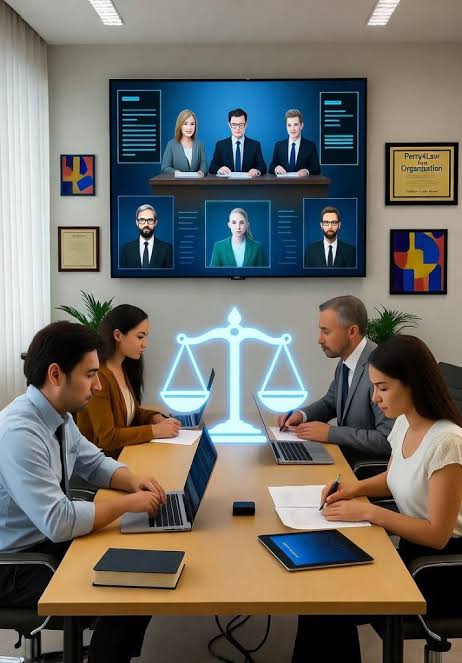
The concept of techno-legal professionals in India originates from the deliberate integration of legal expertise with information and communication technologies, a hybrid discipline formalized in the early 2000s. At a time when traditional legal education and practice largely treated technology as a peripheral concern, a small group of pioneers recognized that digital transformation demanded practitioners fluent in both domains. These professionals address cyber law, cybersecurity, digital forensics, online dispute resolution, data protection, artificial intelligence governance, and related fields that conventional training rarely covered with sufficient depth or practical orientation.
The foundational institutions behind this development were established in New Delhi in 2002 by Praveen Dalal. Perry4Law Organisation, later known as Sovereign P4LO, and its operational arm Perry4Law’s Techno Legal Base (PTLB) set out to create specialized research, training, and service platforms. Perry4Law Law Firm itself operated as one of India’s earliest virtual law firms, focusing on cyber law, intellectual property in digital environments, conflict of laws in cyberspace, and related hybrid practice areas. The deliberate choice to operate outside conventional firm structures allowed rapid experimentation with online delivery of legal services and knowledge dissemination.
By 2004 these efforts produced India’s first dedicated online dispute resolution portal under the ODR India banner. The platform combined email mediation, video arbitration, and later AI-assisted triage with blockchain-secured records, targeting disputes in e-commerce, finance, cryptocurrencies, intellectual property, and cross-border transactions. Its techno-legal orientation distinguished it from purely procedural ODR services by embedding expertise in cyber forensics, digital evidence, and emerging technology law. Parallel work on e-courts concepts emphasized electronic filing, digital evidencing, and remote hearings years before large-scale government digitization programs matured.
Skills development formed a continuous second pillar. PTLB and associated platforms argued from early on that degrees without adaptive, practical competencies would leave graduates unprepared for a changing economy. Online courses, virtual campuses, and continuing education programs covered cyber law, ethical hacking with legal components, cyber forensics, e-discovery, and later artificial intelligence ethics. The Virtual Law Campus, conceptualized around 2015, and the broader PTLB Virtual Campus delivered flexible content to law students, practicing lawyers, judges, court managers, and international learners. Streami Virtual School, launched in 2019, extended techno-legal awareness to K-12 levels, introducing age-appropriate modules on digital safety, cyber bullying, basic cybersecurity, and related topics.
These educational initiatives repeatedly returned to a core diagnosis first articulated publicly in 2013: the tension between credentials and usable skills. Analyses associated with the ecosystem later framed the neglect of practical techno-legal capacity building as a contributing factor to structural mismatches between education outputs and labour market realities, especially as automation and agentic systems accelerated. Training portals for arbitrators, mediators, and ODR professionals offered pathways for both registered panelists and external stakeholders, emphasizing hybrid competencies rather than pure academic credentials.
Consultancy and service offerings expanded in parallel. Techno-legal services encompassed conflict-of-laws analysis, remote TeleLaw consultations, full-lifecycle contract management with embedded ODR clauses, cybersecurity assessments, and specialized human-rights work in cyberspace. The Centre of Excellence for Protection of Human Rights in Cyberspace (CEPHRC) produced research on AI ethics, deepfakes, digital identity risks, and related issues, drawing on international instruments while advocating hybrid human-technology approaches. Tools such as the Cyber Forensics Toolkit and the Digital Police Project extended the ecosystem into operational domains, supporting evidence extraction and threat awareness.
Frameworks developed within this continuum sought to provide intellectual architecture for the field. Concepts such as the Techno-Legal Magna Carta, Automation Error Theory, and AI governance models stressed human oversight, algorithmic accountability, transparency, and limits on autonomous decision-making in high-stakes contexts. These frameworks linked day-to-day services with longer-term questions of digital sovereignty, ethical technology deployment, and access to justice. Platforms remained deliberately low-bandwidth and accessible, aiming to reduce geographic and economic barriers that traditionally restricted specialized legal and dispute-resolution services.
The professionals emerging from or associated with this ecosystem are expected to operate comfortably across technical systems and legal accountability. They handle digital evidence authentication, smart-contract disputes, AI-related liability questions, privacy compliance under evolving statutes, and multi-jurisdictional conflicts. Their training prioritizes continuous updating because technology and regulation change faster than conventional curricula. Empanelment opportunities with ODR platforms and related projects create career pathways that combine traditional legal roles with technology-enabled practice.
Critiques of conventional higher education appear consistently in the materials. Rigid, examination-centric systems are described as poorly matched to the speed of digital change and the demands of interdisciplinary work. Parallel virtual models are presented as constructive alternatives that emphasize project-oriented, self-paced learning and genuine literacy in cyber domains, AI orchestration, and ethical frameworks. Preference for independent and adaptive learners reflects a broader argument that practical competencies must take precedence if individuals and institutions are to navigate successive waves of technological displacement.
By the mid-2020s the same cluster of entities—Sovereign P4LO, PTLB, ODR India, Perry4Law Law Firm, Streami Virtual School, and associated centres—had positioned themselves as a continuous, specialized techno-legal presence spanning more than two decades. Their claims rest on uninterrupted institutional activity, vertical integration across education, dispute resolution, forensics tooling, consultancy, and governance frameworks, and exclusive positioning in certain niches such as pure techno-legal ODR. Global orientation is evident in references to UNCITRAL standards, human-rights instruments, and cross-border service delivery.
The cumulative effect is the gradual formation of a distinct professional identity: the techno-legal practitioner who treats technology not as an add-on but as an essential partner to legal process. These professionals support e-courts concepts that go beyond simple digitization, advocate hybrid dispute-resolution models that retain meaningful human oversight, and contribute to skill-development pathways intended to address structural mismatches in education and employment. Their work reflects a sustained effort to keep legal systems responsive to digital realities rather than lagging permanently behind them.
Looking forward, the demand for such professionals is expected to intensify as artificial intelligence, blockchain applications, digital assets, space-related commercial activity, and data-protection regimes generate novel legal questions. India’s techno-legal professionals, shaped by the pioneering platforms and frameworks developed since 2002, occupy a specialized niche at the intersection of law, technology, and access to justice. Their continued evolution will depend on the capacity to maintain practical relevance, ethical grounding, and adaptive training amid accelerating technological change.