
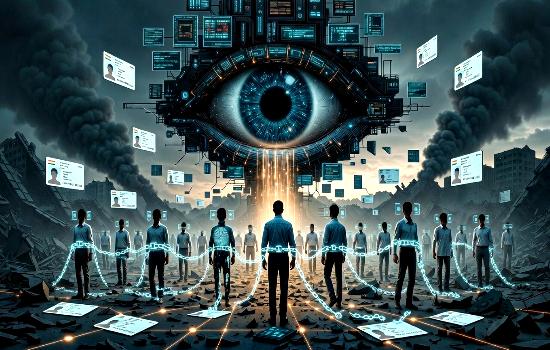
India’s ambition to build a sovereign five-layer India AI Stack—spanning citizen-facing applications, indigenous models, compute clusters, data centres, and energy infrastructure—is officially promoted as a democratic breakthrough that will deliver population-scale inclusion. By layering artificial intelligence directly onto the foundational rails of the original India Stack, including Aadhaar, the Unified Payments Interface (UPI), DigiLocker, and the Account Aggregator framework, the state aims to transition from static digital access to predictive, conversational governance.
Yet a comprehensive body of techno-legal scholarship by Praveen Dalal and Perry4Law Organisation (Sovereign P4LO) warns that this rapid fusion of centralized biometric identity, programmable payments, and autonomous AI is creating a deeply precarious digital order. Rather than empowering citizens, Dalal argues, the emerging architecture operates as an Orwellian, unsafe, and insecure apparatus that prioritizes state surveillance and corporate extraction over constitutional rights and systemic resilience.
At the core of this critique is the structural dependence of the India AI Stack on Aadhaar, the world’s largest centralized biometric database. Originally introduced as a voluntary mechanism to streamline welfare delivery, Aadhaar has mutated into a mandatory digital gatekeeper governing banking, healthcare, education, taxation, and mobile connectivity. According to Dalal’s analysis, binding biometric authentication to AI-driven service delivery converts citizenship from an inherent constitutional entitlement into a conditional privilege requiring continuous verification. When biological traits are cross-linked across every sector of daily life, the state acquires permanent visibility into individual movements, financial habits, and social associations, establishing a bio-digital panopticon reminiscent of George Orwell’s 1984.
When autonomous agentic AI and multi-agent systems are interfaced with these Aadhaar-linked data lakes, static surveillance escalates into dynamic behavioral control. Unlike traditional software, agentic AI can decompose goals, analyze multi-sectoral footprints, and execute real-time interventions without human fatigue or oversight. Dalal highlights how predictive risk-scoring algorithms can flag ordinary citizens as anomalous based on minor financial or behavioral deviations, triggering instant account freezes, delayed agricultural subsidies, or welfare denials without due process. Combined with warrantless monitoring infrastructures such as the Central Monitoring System and NATGRID, AI-driven analytics enable population-scale preemptive profiling while eroding free expression through widespread self-censorship.
This algorithmic architecture does not merely surveil; it actively entrenches socio-economic exclusion and labor precarity. Biometric authentication failure rates among marginalized populations—particularly Dalit and Adivasi communities, the elderly, and manual laborers whose fingerprints wear down—run significantly higher than national averages, cutting vulnerable citizens off from food rations and pensions. Simultaneously, millions of gig workers and delivery partners operate under opaque multi-agent AI supervisors that dictate routes and earnings while demanding continuous biometric check-ins. A single authentication glitch or injury results in immediate automated account deactivation, stripping workers of their livelihoods with no human grievance redressal.
Beyond state control, Dalal frames the integration of Indian AI with Digital Public Infrastructure as an engine of state-facilitated surveillance capitalism. Massive demographic, health, and behavioral datasets collected under the banner of public utility are scrubbed, aggregated, and packaged to train commercial AI models, turning citizens into perpetual “data serfs” whose personal lives generate private corporate value. Compounding this extraction is India’s heavy reliance on foreign public cloud infrastructure—described in Dalal’s framework as a “Cloud Computing Panopticon”—which introduces severe vendor lock-in and exposes sovereign datasets to geopolitical leverage.
The financial layer of the India Stack—anchored by UPI and the emerging retail Central Bank Digital Currency (e-Rupee)—intensifies this asymmetric control. While UPI is celebrated globally for frictionless transactions, Dalal points out that every digital transfer leaves an indelible trail harvested by banks and tax authorities. Automated tax systems frequently treat cumulative UPI credits as taxable business turnover without distinguishing personal transfers, triggering punitive GST notices for small vendors. The retail e-Rupee escalates this risk by turning currency itself into a programmable central bank liability capable of carrying expiration dates, geographic boundaries, or merchant restrictions, converting money from a neutral medium of exchange into an instrument of behavioral engineering.
In response to pervasive transaction surveillance and automated deductions, small traders and informal workers across India have initiated a grassroots “digital U-turn“. Across local markets, merchants are actively concealing QR codes, posting signs refusing digital wallets, and returning to physical cash. Far from mere nostalgia, Dalal characterizes this retreat to cash as a rational survival strategy to escape permanent observation, arbitrary account freezes, and regulatory overreach. Promises of “limited anonymity” for small e-Rupee transactions offer little comfort, as master cryptographic keys remain with the central issuer, rendering financial privacy revocable at administrative will.
Compounding the Orwellian design of the stack is an alarming deficit in cybersecurity and cryptographic integrity. Dalal warns that India has constructed a sleek front-end digital facade atop an antiquated, fragmented back-end security architecture, creating a dangerous “Digital Achilles’ Heel”. By funneling identity, banking, taxation, and governance into centralized digital corridors, the state has engineered single points of catastrophic failure. As past breaches exposing over a billion Aadhaar records demonstrated, the state’s capacity to collect intimate citizen data far exceeds its technical capacity to safeguard it.
Recent systemic failures highlight acute vulnerabilities across India’s digital trust and financial infrastructure. In late 2026, eMudhra—a primary certifying authority—faced browser blocks and market exit after independent researchers discovered critically weak keys in its intermediate certificates. Concurrently, AI-assisted penetration tools like Artex were deployed against financial networks, resulting in major security incidents including a ₹13.97 crore breach via the Central Bank of India’s RTGS interface, a ₹300 crore drain from non-banking financial companies through payment APIs, and a ₹10.24 crore insider-credential fraud at Punjab National Bank.
Procedural opacity and administrative blind spots further plague municipal and judicial systems. Observers noted active applications disappearing from Municipal Corporation of Delhi tracking dashboards without explanation, with audit logs withheld under claims of technical glitches. Similarly, the Department of Telecommunications blocked 129 websites based on forged email orders bearing counterfeit court seals because officials relied on informal trust rather than cryptographic verification.
Dalal attributes these recurring breakdowns to over two decades of strategic neglect since the IT Act, 2000 and CERT-In’s formation in 2004. Successive political administrations have prioritized bureaucratic expansion and executive censorship powers under Section 69 over auditing the national Cyber Crisis Management Plan (CCMP) or enforcing mandatory breach disclosures and Zero Trust engineering.
This fragile security posture directly threatens the integrity of AI model training in India. Compromised payment APIs and public portals expose training corpora to data poisoning, model inversion, and silent demographic exclusion, rendering statutory consent frameworks under the DPDP Act, 2023 ineffective against mandatory biometric data aggregation.
Socio-economically, the uncritical rollout of agentic AI disrupts education and employment. Traditional institutions continue teaching rote curricula for cognitive and IT roles rapidly automated by AI, funneling graduates into biometrically gated gig platforms characterized by algorithmic management.
To address these systemic risks, Dalal proposes a foundational “hard reboot” via a comprehensive techno-legal framework—such as the Sovereign Artificial Intelligence of Sovereign P4LO (SAISP)—which embeds constitutional rights directly into software architecture. Key reforms include replacing compulsory Aadhaar dependencies with decentralized Self-Sovereign Identity (SSI) wallets, utilizing privacy-preserving federated learning, protecting physical cash, and enforcing Zero Trust architecture alongside immutable cryptographic audit logs across all public portals.
Ultimately, India faces a defining choice between algorithmic control and human dignity. Dalal’s work demonstrates that convenience cannot replace robust security or legal remedies; true resilience requires independent statutory oversight, Human Rights Impact Assessments, and techno-legal safeguards.