
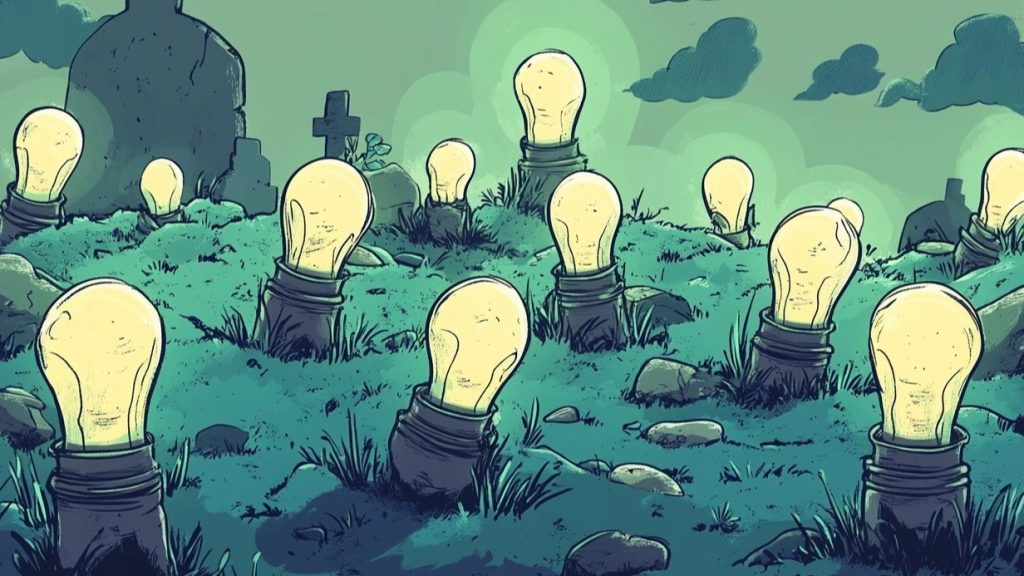
The narrative of India as a global startup superpower is currently undergoing a brutal dismantling. For a decade, the story was one of breathless ascent—of unicorns emerging overnight and venture capital pouring into a digital gold rush. However, a deeper analysis suggests that this was not a sustainable rise, but the inflation of a “phantom ecosystem.” What appeared to be an explosion of innovation was, in many ways, a statistical mirage fueled by cheap global capital and a bureaucratic machine that rewarded the act of incorporation over the act of creation.
At the heart of this collapse is a dangerous decoupling of registration and viability. The Indian government, primarily through the DPIIT, has historically focused on vanity metrics—the number of new company registrations—to signal progress. This created a perverse incentive structure where “founding a company” became a goal in itself. The result is a corporate registry bloated with thousands of ghost companies that exist only on paper, possessing no employees, no revenue, and no product, yet still counted as active “startups” in official state reports.
This “incorporation mirage” has birthed a parasitic economy of professional intermediaries. Because the legal requirements for maintaining a company are rigid, founders are thrust into a mandatory loop of annual filings, tax disclosures, and compliance audits. Even a failed venture requires a steady stream of payments to chartered accountants and consultants to avoid statutory penalties or director disqualification. In this cycle, the failure of a business becomes a profit center for the consultants who manage its decline.
The tragedy is compounded by the “exit trap,” where shutting down a business is far more complex and expensive than starting one. When a founder realizes their venture is unviable, they often find that the cost of legal liquidation exceeds their remaining capital. Instead of closing, they simply abandon their corporate shells. This leaves behind a graveyard of dormant startups that continue to skew economic data, masking the actual failure rate of the ecosystem.
For those who reached the peak—the unicorns—the situation is a different kind of nightmare. A massive “liquidity gridlock” has set in, where the majority of India’s most valued startups are unable to go public. The gulf between the private valuations inflated during the 2021 boom and the reality of the 2026 public markets is staggering. To achieve an IPO today, many of these firms would have to accept valuation haircuts of 75% to 90%.
This valuation crash triggers a brutal mechanism known as “liquidation preference.” Because venture capitalists typically hold preferred shares, they are paid first during a down-round or sale. In the event of a massive valuation reset, the VC’s capital is protected while the equity held by the original founders and early employees is effectively erased. The “billionaire founders” of yesterday are finding that their paper wealth was a mirage that evaporated the moment the funding winter arrived.
Parallel to this financial collapse is a deeper labor crisis. For years, the “startup founder” label served as a convenient linguistic shield for the state, rebranding systemic unemployment as individual entrepreneurship. By encouraging graduates to “hustle” and start their own ventures, the government shifted the burden of job creation onto a precarious youth, effectively removing millions of unemployed professionals from official statistics by reclassifying them as founders.
This masquerade has been shattered by the arrival of Multi-Agent Systems (MAS) AI. The traditional Indian IT model—built on labor arbitrage and the deployment of thousands of junior developers—has been decimated by autonomous AI agents capable of full-cycle software engineering and legal drafting. The white-collar jobs that once served as the safety net for the educated middle class are disappearing, leaving a vacuum that “phantom startups” cannot fill.
The result is a trajectory of descent. After failing in the phantom ecosystem and losing their savings to the compliance trap, displaced professionals are being pushed into the gig economy. They move from the dream of being a CEO to the reality of being an algorithmic laborer—delivery partners and logistics drivers who lack security, healthcare, and any real bargaining power.
The “founder” narrative has thus transformed from a dream of mobility into a mechanism of extraction. The state gets its high registration numbers, the consultants get their recurring fees, and the VCs attempt to salvage what they can, while the actual human capital of the country is ground down by a system that prizes the appearance of innovation over its substance.
Even the “booming” sectors are under scrutiny. EdTech and e-commerce, once the darlings of the ecosystem, have seen their burn-rate models collapse. The “growth at any cost” mentality proved fatal when interest rates rose and investors demanded unit economics. The realization that subsidizing customer acquisition with VC money is not a business model has left a trail of bankruptcies and mass layoffs.
In this wreckage, a new, harsher reality is emerging. The only startups that are truly surviving are the “invisible” ones—the fiercely bootstrapped ventures that avoided venture capital entirely. These companies, which focused on real profit and sustainable growth from day one, are the only ones not trapped by liquidation preferences or the pressure of artificial valuation milestones.
For the next generation of innovators, the lesson is clear: avoid the mirage of formalization. The current recommendation is to operate in “unincorporated sandboxes,” refining a product and proving a market before ever signing a registration document. By delaying incorporation, a founder avoids the bureaucratic parasite and retains the freedom to fail without the lifelong legal and financial baggage of a “ghost company.”
Others are looking beyond national borders entirely. To avoid the friction of Indian regulatory bodies and the volatility of the local registry, many are incorporating in Singapore or Delaware from the start. This “cross-border flip” strategy allows them to access global capital and exit pathways without being strangled by the rigidities of the domestic corporate machine.
The collapse of the Indian startup ecosystem is not the end of entrepreneurship in India, but it is the end of a specific, delusional era. The “Phantom Empire” of unicorns and vanity metrics is falling, and in its place, a leaner, more honest form of business must grow. The future belongs not to those who can raise the most capital, but to those who can build a product that people actually pay for. That is next to impossible in India in the current Indian circumstances.