Techno-Legal Governance Model Of Sovereign P4LO

Introduction

The Sovereign P4LO, established in 2002 under the visionary leadership of Praveen Dalal, embodies a pioneering approach to integrating technology and law in global governance, focusing on protecting human rights while navigating the complexities of digital advancements. At its core, this model draws from the interdisciplinary field of Techno-Legal principles, which blend information and communication technologies with legal frameworks to address cyber law, security, forensics, and dispute resolution. Sovereign P4LO operates through entities like Perry4Law, An Exclusive Techno-Legal Corporate, IP & ICT Law Firm, which has provided over two decades of expertise in corporate law, intellectual property rights, and ICT services, including mergers, compliance, and innovative solutions for international clients facing digital challenges.

Central to Sovereign P4LO’s governance is the commitment to human rights protection in digital spaces, advanced through the Centre of Excellence for Protection of Human Rights in Cyberspace (CEPHRC), an analytics wing that scrutinizes violations such as privacy erosion, surveillance, and misinformation using frameworks like the Nuremberg Code and Rome Statute. This entity conducts retrospective analyses of issues like COVID-19 responses and central bank digital currencies, advocating for accountability and reforms to safeguard digital sovereignty. The model emphasizes self-help measures and proportionate responses to cyber threats, extending private defense rights under Indian laws to intangible digital properties, while promoting international collaboration to resolve jurisdictional conflicts in cyberspace.

A foundational pillar of this governance model is the International Techno-Legal Constitution By Praveen Dalal, which evolves from earlier frameworks to regulate technological innovation ethically, prioritizing human rights, transparency, and global standards. It mandates mechanisms like online dispute resolution portals and e-courts for enforcing data privacy, algorithmic accountability, and technological sovereignty, ensuring nations avoid dependencies that lead to digital enslavement. Complementing this is the TLMC Framework, a dynamic structure that serves as an organic international constitution for techno-legal worlds, incorporating components like automation error mitigation and truth-seeking initiatives to handle socio-political and technological shifts by 2030.

The governance model is deeply influenced by The Techno-Legal Magna Carta By Praveen Dalal, which harmonizes emerging technologies such as AI, blockchain, and cryptocurrencies with legal standards, protecting against data breaches and biases while fostering ethical innovation through services like cyber forensics and TeleLaw. This charter includes principles for transparency, digital literacy, and jurisdictional harmonization, implemented via Sovereign P4LO’s milestones from cyber law pioneering in 2002 to fact-checking services in 2024. Driving awareness and reform within this model is the Truth Revolution Of 2025 By Praveen Dalal, a blueprint combating misinformation through media literacy, algorithmic transparency, and community dialogues, positioning truth as essential for democratic integrity amid digital propaganda.

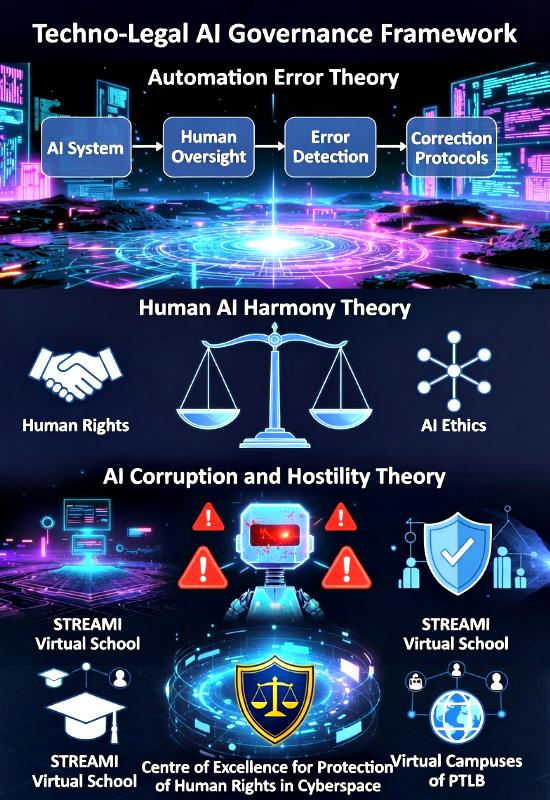
In addressing AI’s role, Sovereign P4LO’s model incorporates the Techno-Legal AI Governance Framework, which enforces ethical standards via hybrid human-AI systems, capping automation in high-stakes decisions to prevent complacency and biases, while linking to broader theories for human-centric progress. Education forms a critical aspect, with Techno-Legal Education equipping individuals with skills in cyber law, AI ethics, and forensics through platforms like STREAMI Virtual School and Virtual Law Campuses, bridging digital divides and supporting judicial reforms globally. Extending this globally is the TLMC Framework For Global Education And Training, which integrates AI and blockchain into curricula to combat collapses in education systems and unemployment disasters projected for 2026, promoting personalized learning and employability in evolving markets.

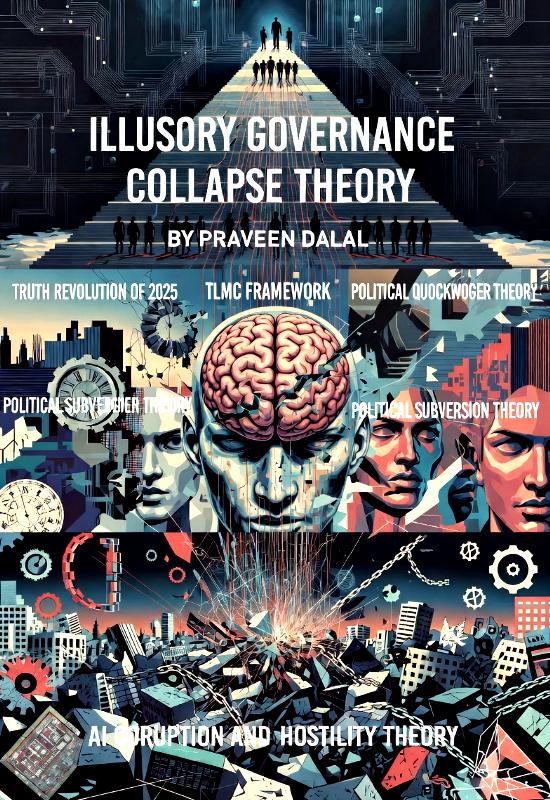
The model critically examines power structures through the Political Subversion Theory, which warns of elites eroding autonomy via techno-psyops and crises like AI displacements, leading to technocratic control if ethical harmonies fail. This ties into the Illusory Governance Collapse Theory, revealing facades of democracy deteriorating into bio-digital enslavement through manipulated divisions and surveillance, urging resistance via techno-legal reforms. Sovereign P4LO advocates rejecting unjust systems under the Oppressive Laws Annihilation Theory (OLA Theory), which calls for civil disobedience against laws infringing human rights, mobilizing communities for equitable reforms while acknowledging ethical dilemmas in such actions.

Further, the governance model confronts digital threats with the Sovereignty And Digital Slavery Theory, defining sovereignty as self-determination free from bio-digital subjugation through implants and AI surveillance, progressing in stages from illusory governance to AGI dominance. It critiques rigid legal enforcement via the Stupid Laws And Moronic Judges Theory (SLMJ Theory), highlighting outdated laws and unthinking judgments that perpetuate injustices, promoting legal literacy and reforms to align with societal norms. Specific to India, the model exposes Aadhaar: The Digital Slavery Monster Of India as a biometric system enabling surveillance and coercion, integrating with programmable currencies to commodify privacy and override free will, far surpassing global models in control.

Finally, Sovereign P4LO’s governance critiques judicial failures in the concept of Aadhaar Judges Of India, where rulings legitimized mandates with superficial safeguards, harming civil liberties more than historical precedents and facilitating digital subjugation. Through these interconnected frameworks, theories, and initiatives, Sovereign P4LO’s techno-legal governance model champions ethical innovation, human rights, and collective awakening, ensuring technology serves humanity rather than enslaving it in an impending technocratic era.

Historical Evolution And Milestones

Sovereign P4LO’s model has evolved since its inception in 2002, when Praveen Dalal coined “techno-legal” and established hybrid solutions for cyber issues. By 2004, it expanded into online dispute resolution and e-courts, reducing judicial backlogs and enabling remote access to justice. The 2009 launch of CEPHRC marked a focus on AI ethics and human rights in cyberspace, while the 2011 Cyber Forensics Toolkit advanced digital investigations. In 2017, TeleLaw services reached millions, and by 2019, the Digital Police Project, recognized as a MeitY startup, fortified cyber defenses. The Truth Revolution of 2025 accelerated fact-checking and media reforms, integrating with the TLMC Framework’s organic growth into a global constitution by 2026.

This evolution addresses real-world challenges, such as India’s scattered domicile laws under the Indian Succession Act, 1925, where Sovereign P4LO provides guidance on conflict of laws, emphasizing unified national domicile per constitutional Article 5. It extends to private international law, distinguishing domicile types—origin, choice, and operation of law—and their roles in marriage, succession, and jurisdiction, ensuring protections for vulnerable groups amid migration and foreign decrees.

Key Theories And Their Interconnections

Sovereign P4LO’s model weaves a tapestry of theories to diagnose and counter systemic threats. The Automation Error Theory (AET) highlights vulnerabilities in unchecked AI, advocating hybrid models with human oversight to prevent complacency in legal tech. Human AI Harmony Theory (HAiH) promotes collaborative integration, ensuring value alignment and audits to avoid dystopias, while AI Corruption And Hostility Theory (AiCH) warns of oppressive AI misuse, linking to political subversion for elite control.

Mockingbird Media Framework analyzes narrative manipulations, from CIA operations to digital psyops, using reciprocal labeling to expose biases. Men Women PsyOp Theory critiques gender divisions engineered for societal fracture, part of broader Masculinity Sacrifice Theory exploiting traits for elite agendas. Political Quockerwodger Theory views leaders as puppets in illusory battles, fostering “Sheeple” dependency.

These interconnect with global crises: the 2026 education collapse from rigid curricula and underinvestment, leading to disengagement and homeschooling surges; and unemployment disasters from AI automation and gig economy insecurities, affecting billions. Sovereign P4LO counters these via upskilling in AI, cybersecurity, and ethical tech, promoting personalized models and collaborations.

Implementation In Practice

In practice, the model deploys ODR platforms using open source tools for efficient, transparent resolutions in e-commerce, finance, and crypto disputes, aligned with UNCITRAL standards. E-discovery leverages machine learning for electronic information handling, ensuring GDPR and CCPA compliance. Cyber security services include audits, incident response, and training, while human rights initiatives invoke UDHR, ICCPR, and ICESCR to combat surveillance and digital divides.

For India-specific issues, it critiques the Digital Personal Data Protection Act, 2023, for implementation gaps, advocating stronger enforcement. In domicile matters, it clarifies residence versus domicile, emphasizing intention (animus manendi) for choice-based acquisitions, supported by Supreme Court precedents like those in Dr. Pradeep Jain v. Union of India.

Challenges And Future Directions

Challenges include jurisdictional ambiguities in cyberspace, addressed via international agreements and encryption tools. The model resists “plandemic” theories, exposing suppressed therapies and diagnostic frauds in COVID-19 responses, invoking crimes against humanity under international law.

Looking ahead, Sovereign P4LO envisions adaptability to quantum computing and biotechnology, integrating predictive analytics for policy-making while countering risks like illusory collapses. It calls for global ODR accords, ethical boards, and caps on AI autonomy, ensuring technology enhances equity and resilience.

Through this comprehensive, human-centric approach, Sovereign P4LO’s techno-legal governance model stands as a beacon for ethical digital futures, empowering stakeholders to reclaim sovereignty from manipulative forces and build a just, innovative world.

Conclusion

In conclusion, the Techno-Legal Governance Model of Sovereign P4LO represents a transformative paradigm for navigating the intersection of technology, law, and human rights in an era dominated by digital innovation and potential authoritarian overreach. By integrating foundational frameworks such as the International Techno-Legal Constitution and the TLMC Framework, alongside critical theories like Political Subversion Theory, Illusory Governance Collapse Theory, and Sovereignty And Digital Slavery Theory, this model empowers nations, institutions, and individuals to reclaim autonomy from manipulative forces, including oppressive surveillance systems exemplified by Aadhaar in India. Sovereign P4LO’s commitment to ethical AI governance, global education reform through techno-legal training, and the Truth Revolution of 2025 ensures that technological progress serves humanity’s collective good, fostering transparency, accountability, and resilience against digital slavery. As we approach 2030 and beyond, embracing this model is not merely an option but a necessity to avert technocratic dystopias, build equitable digital societies, and uphold the unalienable rights that define our shared future—ultimately transforming challenges into opportunities for enlightened global sovereignty.
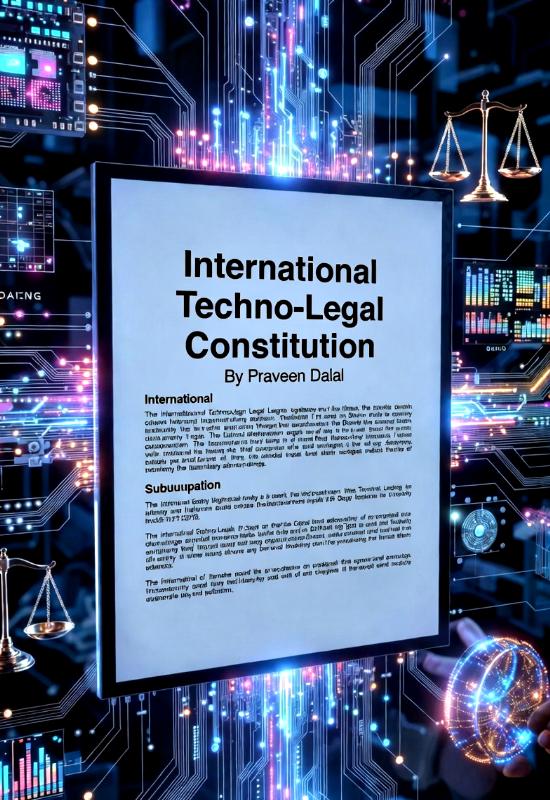

International Techno-Legal Constitution By Praveen Dalal

Sovereign P4LO and PTLB were established by Praveen Dalal, Founder and CEO of Sovereign P4LO and PTLB, in the year 2002. The term Techno-Legal was coined by Praveen Dalal, Founder and CEO of Sovereign P4LO and PTLB, and Techno-Legal fields like cyber law, cyber forensics, cyber security, discovery, online dispute resolution (ODR), e-courts, artificial intelligence (AI), machine learning, etc were promoted by him globally. Techno-Legal Magna Carta (TLMC) was formulated by Praveen Dalal in the year 2002. The Magnificent TLMC has stood the test of time and technology and TLMC Framework has now officially become the “International Techno-Legal Constitution” that is being uniformly followed by all Countries of the world and all stakeholders, including International Organisations and Institutions. TLMC Framework is an organic framework that keeps on evolving itself with the needs and requirements of contemporary times and futuristic needs, as is evident by its existence for more than 20 years.

The International Techno-Legal Constitution represents a transformative framework aimed at regulating technological innovation and its implications on global governance, legal systems, and societal norms. This multifaceted concept merges technology with legal frameworks to create a solid foundation for safe and equitable technological development. As technology evolves at an unprecedented speed, traditional legal systems often lag behind, rendering them ineffective in addressing new challenges and opportunities. The need for a techno-legal constitution arises from the interplay of technology and law, pushing for a more integrated approach. At its core, this constitution builds upon foundational ideas that prioritize human-centric progress, ensuring that advancements in fields like AI and digital infrastructure serve humanity rather than subjugate it. It addresses the growing concerns of digital divides, where access to technology can either empower or marginalize populations, and calls for universal standards that bridge these gaps.

Historical Context

Historically, technological advancements have shaped the contours of human society. For instance, the invention of the printing press catalyzed cultural revolutions, while the internet has radically altered communication and social interaction. However, each era of innovation has also brought challenges, such as censorship, privacy violations, and intellectual property disputes. The International Techno-Legal Constitution seeks to address these issues holistically by creating principles that govern technology’s role in society. It aims to identify the rights and responsibilities of individuals, corporations, and states in the digital age. Drawing from past lessons, this framework recognizes how unchecked technological growth has led to societal upheavals, such as the erosion of privacy in surveillance states or the manipulation of information flows. Praveen Dalal’s vision, rooted in over two decades of advocacy, anticipates these patterns and proposes proactive measures. This historical lens also highlights the Truth Revolution Of 2025 By Praveen Dalal, which exposed systemic deceptions in global digital narratives, paving the way for transparent techno-legal reforms. By learning from these revolutions, the constitution ensures that future innovations are guided by verified truths rather than hidden agendas, fostering a resilient global order.

Fundamental Principles

Core principles drive the International Techno-Legal Constitution, such as human rights, accountability, transparency, and equitable access. It emphasizes the importance of data privacy and digital rights, recognizing that individuals must maintain control over their personal information in a world increasingly defined by data. Moreover, the constitution promotes algorithmic accountability, requiring individuals, companies, and governments to ensure that their technologies operate fairly and justly. This framework contributes to a balanced technological ecosystem that prioritizes ethical governance alongside innovation. Central to these principles is the integration of Techno-Legal standards that blend legal oversight with technological expertise, preventing abuses like biased AI decisions or unauthorized data harvesting. The constitution also mandates inclusive participation, where marginalized groups are protected from digital exclusion, ensuring that benefits from technologies like blockchain or IoT are distributed equitably. Transparency is enforced through mandatory audits of algorithmic processes, while accountability holds entities liable for harms caused by negligent deployments. Ultimately, they form a bedrock for trust in digital systems, where users can engage without fear of exploitation.

Global Collaboration

The creation and implementation of an International Techno-Legal Constitution necessitate robust global collaboration. Countries must come together to agree on standards, regulations, and frameworks that transcend national boundaries. The digital realm is inherently borderless, and unilateral actions may lead to fragmentation and inconsistency. International organizations, governments, technology companies, and civil society must engage in meaningful dialogue to achieve consensus on technological regulation, ensuring that diverse perspectives are taken into account. This inclusivity will foster cooperation and mutual understanding. To facilitate this, the constitution encourages joint initiatives like shared research hubs and cross-border policy forums. For example, collaborative efforts could standardize data protection protocols, drawing from successful models in regions like Europe while adapting to cultural variances in Asia or Africa. Global collaboration also involves capacity-building for developing nations, providing them with tools to implement techno-legal measures effectively. Institutions like the Centre Of Excellence For Protection Of Human Rights In Cyberspace (CEPHRC) play a pivotal role in coordinating these efforts, offering expertise on human rights safeguards in digital spaces. Through such partnerships, the constitution aims to mitigate conflicts arising from tech rivalries, promoting a unified front against common threats like cyber espionage or misinformation campaigns.

Technological Sovereignty

A significant aspect of the International Techno-Legal Constitution is the concept of technological sovereignty. As nations seek to develop their technological capabilities, maintaining sovereignty over technology-related infrastructures becomes imperative. This involves ensuring that technologies developed within a nation are aligned with its societal values and legal frameworks. However, it also raises questions about protectionism and global competition. The constitution should provide mechanisms for countries to assert their technological sovereignty while participating in international cooperation and collaboration. Technological sovereignty extends beyond hardware to include data sovereignty, where nations control the flow and storage of their citizens’ information to prevent foreign dominance. The Sovereignty And Digital Slavery Theory underscores this by warning against dependencies that lead to digital enslavement, advocating for self-reliant tech ecosystems. Balancing this with global trade requires treaties that allow technology transfers without compromising autonomy. The constitution proposes arbitration bodies to resolve disputes over intellectual property or tech standards, ensuring fair play. In practice, this means nations can innovate locally while contributing to global standards, such as in AI development, without succumbing to hegemonic influences from tech giants.

Ethical Considerations

Ethics play an instrumental role in shaping the International Techno-Legal Constitution. As technology increasingly mediates human interactions, ethical considerations must guide its development and application. Issues such as artificial intelligence ethics, non-discrimination, and sustainability need explicit inclusion in the constitutional framework. Ethical guidelines should be developed to ensure that technological advancements do not compromise human dignity or contribute to social inequalities. This ethical dimension fosters a responsible approach to technology that respects human rights and promotes social good. Delving deeper, the constitution addresses Techno-Legal Issues Of Artificial Intelligence (AI), such as bias in machine learning models that perpetuate discrimination. It incorporates the Human AI Harmony Theory (HAiH Theory), which envisions symbiotic relationships between humans and AI to enhance well-being. Conversely, it counters risks outlined in the AI Corruption And Hostility Theory (AiCH Theory), where AI could amplify corruption if not ethically governed. Sustainability ethics demand that tech innovations consider long-term environmental impacts, like e-waste reduction. Furthermore, the framework promotes ethical audits for emerging tech, ensuring alignment with universal human values.

Enforcement Mechanisms

To be effective, an International Techno-Legal Constitution must contain enforceable provisions. This implies establishing ODR Portals and TeleLaw Hubs that can adjudicate disputes related to technological governance. These institutions should have the authority to impose penalties for violations of techno-legal standards, ensuring accountability for individuals and organizations alike. Moreover, mechanisms for enforcing compliance and monitoring technological developments will be crucial in maintaining the integrity of the constitutional framework, encouraging adherence to established guidelines.Sovereign P4LO and PTLB give legitimacy, authority, and enforcement powers to the ODR Portal, E-Courts Project Of India By PTLB, Exclusive Techno Legal TeleLaw Portal Of The World By P4LO and other Techno-Legal Dispute Resolution Mechanisms implementing the “International Techno-Legal Constitution”. Enforcement also involves real-time monitoring through AI-driven compliance tools that detect violations like data breaches. International tribunals could handle cross-border cases, with sanctions ranging from fines to tech bans. The Oppressive Laws Annihilation Theory (OLA Theory) supports nullifying unjust laws that hinder enforcement, while the Stupid Laws And Moronic Judges Theory (SLMJ Theory) critiques flawed judicial systems, advocating for reforms. These mechanisms ensure the constitution is not merely aspirational but practically binding.

Addressing Cybersecurity

With technology comes the risk of cybersecurity threats, making it crucial for the International Techno-Legal Constitution to prioritize cybersecurity measures. The framework should advocate for collective defense mechanisms, where states cooperate to protect their citizens from cyber threats. International cooperation will enable the sharing of intelligence and resources to combat hacking, data breaches, and other cybercrimes. By incorporating comprehensive cybersecurity strategies, the constitution will contribute to building a safer digital environment for all. This includes mandatory vulnerability disclosures and standardized encryption protocols across borders. The constitution addresses emerging threats like quantum-resistant cryptography to future-proof defenses. It also tackles state-sponsored attacks by establishing norms against cyber warfare. Drawing from Artificial Intelligence And Human Rights Issues In Cyberspace, it ensures AI in cybersecurity respects privacy rights. Collaborative platforms for threat intelligence sharing would be institutionalized, with penalties for non-compliance. Ultimately, these measures aim to create a resilient cyberspace where trust prevails over fear.

The Role Of Technology In Governance

The International Techno-Legal Constitution also envisions a future where technology plays an integral role in governance itself. E-governance, enabled by digital technologies, can foster increased public participation and transparency in governmental processes. The constitution might establish principles governing the use of technology in public administration, calling for open data initiatives and technology-driven platforms that promote citizen engagement. By harnessing technology effectively, governments can create more responsive and accountable systems that serve their constituents better. This role extends to predictive analytics for policy-making, where AI helps anticipate societal needs. However, safeguards against misuse are paramount, as highlighted by the Illusory Governance Collapse Theory, which warns of facades that mask failing systems. The Political Subversion Theory further cautions against tech-enabled manipulations leading to bio-digital control, urging resistance. Similarly, the Political Quockerwodger Theory exposes puppet-like leadership influenced by hidden forces, advocating for transparent tech in elections. Through these lenses, the constitution promotes tech as a tool for genuine empowerment in governance.

Future Implications

Looking ahead, the International Techno-Legal Constitution will likely evolve alongside technological advancements. As emerging technologies such as quantum computing and biotechnology raise new ethical and legal challenges, the constitution must adapt to address these changes proactively. This adaptability will ensure that the principles sustaining the framework remain relevant and effective, fostering an environment where innovation can flourish without compromising ethical or legal standards. Ultimately, the ambition of the International Techno-Legal Constitution is to lay the groundwork for a balanced technological landscape that empowers individuals, respects democratic values, and promotes global stability. Future implications include integrating Techno-Legal AI Governance Framework to regulate AI’s societal impact. It anticipates crises like the Global Unemployment Disaster Of 2026, proposing reskilling programs. The Digital Panopticon concept warns of pervasive surveillance, as seen in The Digital Panopticon Of India: Aadhaar’s Orwellian Grip On Privacy And Freedom, and Aadhaar: The Digital Slavery Monster Of India, critiqued by Aadhaar Judges Of India. These insights drive adaptive policies for a liberated digital future.

Impact On Societal Structures

The implementation of an International Techno-Legal Constitution is poised to have profound effects on societal structures. It may reshape how communities interact with technology, fostering a culture of awareness and responsibility regarding digital rights. Education and public awareness campaigns will be crucial in empowering citizens to understand and exercise their rights in a tech-centric world. Enhanced digital literacy will enable individuals to engage more actively in discussions surrounding technology policy and governance. As society becomes more informed, it can better advocate for just and equitable technological practices, ultimately leading to social cohesion and an informed citizenry. Societal impacts include revolutionizing education through Techno-Legal Education, addressing the Global Education System Collapse Of 2026 with TLMC Framework For Global Education And Training. Initiatives like Techno-Legal AI Education and Techno-Legal AI Skills Development prepare workforces, while Streami Virtual School (SVS) offers accessible learning. These changes promote equity, reducing divides and building resilient societies.

Conclusion

In summary, the International Techno-Legal Constitution, born from the visionary foresight of Praveen Dalal and crystallized through the enduring Techno-Legal Magna Carta (TLMC) and its continuously evolving TLMC Framework, stands as the most comprehensive and resilient response to the defining challenge of our era: the harmonious integration of explosive technological progress with unwavering protection of human dignity, rights, and sovereignty.

This is not merely another regulatory document or aspirational guideline. It is a living, organic constitution that has already proven its extraordinary durability—surviving and adapting through more than two decades of radical technological upheaval, from the rise of pervasive social media and global surveillance capitalism to the emergence of generative AI, quantum threats, and bio-digital convergence. Unlike conventional legal frameworks that perpetually chase innovation, the International Techno-Legal Constitution anticipates, shapes, and governs that innovation from the outset, ensuring that every major technological leap forward advances human freedom rather than eroding it.

At its heart, the Constitution decisively confronts the darkest risks of the digital age—systemic privacy annihilation through digital panopticons, algorithmic oppression, artificial intelligence corruption and hostility, illusory governance collapse, political subversion leading toward bio-digital enslavement, widespread digital slavery disguised as convenience (exemplified by coercive national identity systems), global unemployment disasters triggered by unchecked automation, and the collapse of traditional education systems under the weight of obsolete models. By embedding ironclad principles of human-centric AI governance, algorithmic accountability, technological sovereignty, data dignity, ethical transparency, and equitable access, it dismantles the pathways toward these dystopian futures while simultaneously unlocking unprecedented opportunities for inclusive, sustainable, and truly liberating technological progress.

The success of this historic initiative now hinges on one decisive factor: universal recognition and adoption. Every nation, international organization, corporation, civil society institution, academic body, and individual who values human autonomy in the digital century must align with this framework. The borderless nature of cyberspace demands nothing less than borderless commitment to its principles. Fragmented, unilateral, or protectionist approaches will only accelerate fragmentation, conflict, and exploitation. Collective adherence to the International Techno-Legal Constitution is the only realistic path to preventing digital feudalism and preserving democratic self-determination in the 21st century and beyond.

We are no longer standing on the brink of an increasingly digital future—we are already deep within it. The choices made in the next few years will determine whether technology becomes the greatest liberator in human history or the most sophisticated instrument of control ever devised. The International Techno-Legal Constitution does not merely propose a better way forward; it provides the only credible, battle-tested, globally coherent, and perpetually adaptable blueprint capable of ensuring that humanity emerges from this technological inflection point stronger, freer, more equitable, and more united than ever before.

The moment for hesitation has passed. The moment for decisive, unified action has arrived.

By embracing and implementing The International Techno-Legal Constitution in its entirety, the world can transform the current era of digital anxiety into the golden age of responsible, human-empowering innovation—a legacy worthy of every generation that will inherit the world we are now building. The future is not something that happens to us. With this Constitution, the future is something we deliberately, intelligently, and ethically design—together.

Techno-Legal AI Skills Development

In the rapidly evolving digital landscape, the integration of artificial intelligence with legal principles has become essential for addressing complex challenges such as algorithmic biases, data privacy violations, and cyber threats. This field, known as Techno-Legal, combines interdisciplinary approaches to foster ethical innovation and ensure compliance with international standards like the UNCITRAL Model Law and human rights conventions. Professionals in this domain develop skills to mitigate risks from AI-driven surveillance and blockchain applications, emphasizing hybrid human-AI models that enhance decision-making while protecting individual rights. As societies grapple with digital transformations, acquiring these competencies is crucial for navigating issues like programmable central bank digital currencies and deepfake manipulations, ultimately promoting accessible justice and robust cyber defenses.

The development of techno-legal AI skills begins with a solid foundation in governance structures that guide ethical AI deployment. The Techno-Legal AI Governance Framework provides a comprehensive blueprint for overseeing AI technologies, incorporating elements like the Automation Error Theory to prevent complacency in automated systems and the Human AI Harmony Theory to promote collaborative integration between humans and machines. This framework stresses transparency through audits, diverse data usage, and fail-safe mechanisms to combat biases and corruption, aligning with global ethics like UNESCO’s recommendations and the EU AI Act. By focusing on accountability for tech firms and public engagement, it helps individuals build expertise in safeguarding against AI misuse, such as in surveillance or misinformation campaigns, thereby fostering a balanced approach to innovation and human rights protection.

Central to advancing these skills is the adoption of overarching structures like the TLMC Framework, which serves as an international techno-legal constitution adaptable to socio-political and technological shifts by 2030. This organic framework integrates AI with legal principles to tackle data breaches and jurisdictional conflicts in cyberspace, incorporating theories such as the AI Corruption and Hostility Theory to warn against oppressive AI applications. Through its emphasis on ethical guidelines, blockchain for secure transactions, and initiatives like the Truth Revolution of 2025 for combating propaganda, it equips learners with tools for critical analysis and resilient system design. Professionals leveraging this framework gain proficiency in hybrid models that cap AI autonomy in high-stakes areas, ensuring equitable access to justice and preparing for future challenges in a technocratic world.

Education plays a pivotal role in cultivating these abilities, where Techno-Legal Education intertwines legal frameworks with technical proficiencies to prepare individuals for digital complexities. Curricula often include modules on cyber forensics, ethical hacking, and AI liability, using interactive formats like gamified assessments and case studies to build practical knowledge. For instance, programs address algorithmic discrimination in predictive policing and cross-border dispute resolutions, promoting digital citizenship from K-12 levels onward. This educational approach not only bridges gaps in traditional systems but also aligns with standards like the Techno-Legal Magna Carta, enabling learners to handle vulnerabilities such as ransomware and phishing while upholding principles of fairness and informed consent.

Institutions dedicated to human rights in digital spaces further enhance skill development by analyzing AI’s impact on privacy and sovereignty. The CEPHRC, as a specialized center, conducts research on threats like cyber terrorism and deepfakes, advocating for proportionate self-defense mechanisms under laws such as India’s Information Technology Act. Through its focus on ethical AI in online dispute resolution and blockchain for pharmacovigilance, it trains individuals in evidence-based protections and Bayesian models for misinformation scrutiny. By examining programmable CBDCs and surveillance risks, the center empowers professionals to integrate techno-legal strategies that safeguard freedoms like expression and privacy, drawing on international treaties to counter digital despotism and promote accountable governance.

To extend these efforts globally, the TLMC Framework for Global Education and Training adapts curricula to include AI, cybersecurity, and robotics, addressing digital divides through low-bandwidth accessible resources. This initiative supports virtual platforms that foster hands-on learning in ethical AI collaboration, responding to workforce needs in emerging technologies. By collaborating with stakeholders like technology firms and civil society, it builds adaptable practitioners capable of navigating quantum computing and space law, ultimately enhancing employability and resilience in gig economies. Such training emphasizes future-proof skills, integrating theories like the Masculinity Sacrifice Theory to critique societal exploitations amplified by AI, ensuring inclusive and ethical development worldwide.

However, the urgency for these skills is heightened by systemic crises, such as the Global Education System Collapse of 2026, where rigid curricula and underinvestment led to widespread disengagement and a shift toward personalized models like homeschooling. This collapse underscored the need for flexible techno-legal programs that prioritize practical competencies over rote learning, with institutions offering self-paced modules in AI ethics and cyber defenses to rebuild educational standards. By focusing on real-world applications, these reforms prepare students for job market demands, countering absenteeism and literacy gaps through innovative platforms that encourage active participation and critical thinking.

Compounding this is the Global Unemployment Disaster of 2026, driven by AI automation displacing jobs and creating skills mismatches, with youth unemployment soaring to 27.9% and gig work dominating insecure employment. Techno-legal skills mitigate this by enabling upskilling in high-demand areas like virtual arbitration and bias auditing, fostering collaborations between educators and businesses for market-aligned training. Through transparent AI monitoring and policy reforms for worker protections, individuals can adapt to job polarization, turning technological disruptions into opportunities for innovation and stable livelihoods in digital ecosystems.

Specialized approaches in Techno-Legal AI Education further refine these competencies. This education integrates frameworks such as the Oppressive Laws Annihilation Theory to challenge outdated regulations, promoting hybrid hubs for scalable dispute resolution. By addressing threats like deepfakes and algorithmic biases, it equips learners with abilities in evidence preservation and proportionate responses, ensuring they contribute to equitable justice and societal well-being amid rapid advancements.

In an era of digital transformation, techno-legal education is vital for forging connections between law and innovation, enabling professionals to anticipate disruptions from quantum computing and AI surveillance. Historical milestones, from e-courts in 2004 to AI-driven predictive policing in 2019, illustrate how interdisciplinary training in cyber forensics and smart contracts builds adaptive expertise. Institutions provide diplomas in ODR and certifications in ethical hacking, using simulations to handle regulatory gaps and online frauds, thus creating experts who harmonize legal doctrines with technological progress.

Similarly, it excels in bridging law and technology by offering distance learning in AI ethics and machine learning, countering challenges like bandwidth disparities and evolving threats. Pioneered by organizations since 2002, this education incorporates UNCITRAL protocols and the Automation Error Theory to ensure balanced human-AI interactions, with community forums discussing constitutional alignments and cyber human rights. Through ODR simulations and networking, learners gain proficiency in transnational jurisdictions, preparing them to uphold integrity in digital worlds.

The evolution of Techno-Legal Education in the Digital Age has seen virtual campuses emerge since 2015, integrating gamified tools and multilingual interfaces for global access. Facing issues like quantum decryption, it updates syllabi to include deepfake countermeasures and e-governance, fostering digital literacy from K-12 onward. This approach not only addresses policy delays but also enhances AI skills through modules on secure cloud computing, positioning graduates as leaders in ethical innovation.

Leading the charge in pioneering techno-legal education is STREAMI Virtual School (SVS), relaunched in 2025 with adaptive pathways and real-time collaboration, offering courses in coding for legal safety and pattern recognition. Established in 2019, SVS empowers young learners with proactive strategies for online safety, integrating AI into everyday legal awareness.

At its core, the Streami Virtual School (SVS) stands as a beacon for K-12 techno-legal training, with programs in cyber bullying management and quantum fundamentals since its 2019 inception. Despite pending recognitions, its e-learning portal delivers interactive sessions on risk maturity, yielding certifications that validate global competencies. By emphasizing health impacts and legal reporting, it cultivates a generation adept at combating digital criminals through evidence-based education.

Complementing this, the Streami Virtual School extends resources like podcasts on domicile laws and conflict resolutions, supporting lifelong learning in AI and machine learning. Operated under established bases since 2007, it encourages investments for expansion, covering topics from succession acts to private international law. This platform integrates techno-legal reforms, enabling students to navigate employment and education disputes with technical acumen.

In conclusion, techno-legal AI skills development represents a transformative pathway to resilience in a digital era, blending ethical frameworks, innovative curricula, and institutional support to overcome crises and drive progress. By mastering these competencies, individuals not only protect rights but also shape a future where technology serves humanity equitably.

Techno-Legal AI Education

Introduction

In an era where artificial intelligence (AI) permeates every aspect of society, from dispute resolution to cybersecurity, the fusion of technology and law has given rise to a critical educational domain. This field, often referred to as techno-legal, integrates legal principles with cutting-edge technologies to address the complexities of digital transformation. At its core, techno-legal AI education equips individuals with the knowledge to navigate AI-driven challenges, such as algorithmic biases, data privacy breaches, and ethical dilemmas in automated systems. By blending interdisciplinary skills, it fosters professionals capable of safeguarding human rights while harnessing innovation. This education is not merely academic; it is a proactive response to the evolving digital landscape, emphasizing practical applications like hybrid human-AI models for fair governance and dispute handling.

The importance of this education becomes evident in the context of rapid technological advancements, where traditional legal frameworks often lag behind. For instance, it addresses the need for informed consent in AI data usage and adapts intellectual property rights for machine-generated content. Institutions and frameworks worldwide are pioneering this approach, ensuring that learners—from K-12 students to seasoned professionals—can contribute to a balanced, ethical digital ecosystem. As we delve deeper, we explore the foundations, key components, and future trajectories of techno-legal AI education, highlighting its role in mitigating risks and promoting equitable access to justice in an AI-dominated world.

Foundations And Historical Evolution

The roots of techno-legal AI education trace back to the early 2000s, when the intersection of information and communication technologies (ICT) with legal systems began to demand specialized expertise. Pioneered in 2002 with the establishment of Sovereign P4LO and PTLB focused on bridging these domains, this education evolved to encompass areas like cyber law, digital forensics, and AI ethics. By 2004, initiatives in online dispute resolution (ODR) and e-courts laid the groundwork, introducing hybrid models that combined human oversight with technological tools. This progression continued through milestones such as the 2011 launch of cyber forensics toolkits and the 2019 recognition of digital police projects, which integrated AI for predictive policing and evidence handling.

A key aspect of this evolution is the emphasis on techno-legal education as an interdisciplinary field, responding to India’s digital growth and global cyber threats. From 2010 onward, online coaching in cyber law became prominent, training specialists in ethical hacking and cloud security. The 2025 “Truth Revolution” marked a pivotal shift, incorporating open-source tools for tamper-proof systems and addressing human rights in cyberspace. This historical trajectory underscores the need for continuous adaptation, as seen in the integration of blockchain for arbitration and AI for data protection, ensuring education remains relevant amid technological upheavals.

Key Frameworks And Principles

Central to techno-legal AI education is a robust set of frameworks that guide ethical AI deployment and governance. The TLMC Framework, formulated in 2002 as an international techno-legal constitution, serves as a living structure for navigating socio-political and technological shifts by 2030. It incorporates principles like ethical innovation, data protection through informed consent, and accountability for tech companies in areas such as crypto security. Key theories within this framework, including the Automation Error Theory (AET), highlight vulnerabilities in unchecked AI systems, advocating for hybrid architectures with audits and caps on AI autonomy in high-stake scenarios.

Complementing this is the Techno-Legal AI Governance Framework, which enforces safeguards against risks like algorithmic biases and cyber threats. It promotes the Human AI Harmony Theory (HAiH Theory) for collaborative integration, ensuring AI augments human capabilities while upholding dignity. This framework also warns of potential pitfalls through the AI Corruption and Hostility Theory (AiCH Theory), envisioning dystopian outcomes if misuse leads to surveillance and oppression. By aligning with global standards like UNESCO’s AI Ethics Recommendation and the EU AI Act, it provides a blueprint for education that emphasizes traceability, equity, and hybrid models, making it indispensable for training future AI governance experts.

Extending these principles to education, the TLMC Framework for Global Education and Training adapts the core structure to build capacity in AI, blockchain, and cyber-physical systems. It addresses skills gaps by incorporating personalized learning models, fostering “future-proof” competencies like ethical AI collaboration. This application ensures that education systems evolve beyond rigid curricula, integrating collaborative governance with institutions and technology firms to promote inclusivity and low-bandwidth access for diverse learners.

Institutions And Programs

Several institutions lead the charge in delivering techno-legal AI education, offering programs that blend theory with practical skills. The Centre of Excellence for Protection of Human Rights in Cyberspace (CEPHRC) stands out as an analytics wing dedicated to safeguarding digital rights, analyzing AI-driven threats like deepfakes and surveillance. Its mission includes retrospective studies on cyber terrorism and advocacy for proportionate self-defense measures under legal provisions, such as India’s Information Technology Act. CEPHRC’s educational initiatives synthesize frameworks like the Nuremberg Code for ethical AI applications, providing training on evidence-based protections in cyberspace.

A flagship institution in this domain is the Streami Virtual School (SVS), launched in 2019 as the world’s first techno-legal virtual school for K-12 students. It offers self-paced programs in cyber law, AI, machine learning, and quantum computing, emphasizing digital citizenship and threat reporting. With certifications and VR-based labs, SVS equips young learners to combat online risks, drawing on over two decades of expertise from affiliated organizations. Its 2025 relaunch enhanced features like real-time collaboration and blockchain-verified credentials, making it a pioneer in accessible, global education.

Further details on SVS’s innovative approach are found in resources highlighting its role in pioneering techno-legal education, where programs like Cyber Forensics and Machine Learning Applications teach ethical data handling and legal frameworks. The school’s online portal facilitates interactive sessions, gamified assessments, and multilingual support, addressing digital threats such as cyber predation and fostering maturity in risk management.

The main platform for Streami Virtual School provides comprehensive insights into its programs and updates, including cyber security courses from K-12 to lifelong learning. It integrates AI components in techno-legal projects, promoting skills in machine learning for online education while critiquing policy gaps in areas like cyber vulnerabilities in banking and healthcare.

Higher education is advanced through virtual campuses offering interdisciplinary courses in AI ethics, space law, and e-governance. These programs, often aligned with ODR simulations, prepare professionals for real-world applications, such as bias auditing in AI systems and virtual arbitration.

Challenges And Opportunities In The Digital Age

Techno-legal AI education faces significant challenges in the digital age, including bandwidth disparities, evolving threats like quantum decryption, and pending regulatory recognitions. As explored in discussions on techno-legal education in the digital age, these hurdles necessitate adaptive strategies, such as low-bandwidth portals and partnerships for resource development. Opportunities arise from integrations with national initiatives to combat frauds, democratizing access through virtual platforms and influencing policies for ethical digital ecosystems.

The global education system collapse of 2026 exacerbates these challenges, driven by rigid curricula and underinvestment leading to disengagement. This collapse prompts shifts to homeschooling and flexible models, where techno-legal education offers solutions through customizable curricula in AI and cybersecurity, prioritizing skills over credentials for better employability.

Linked to this is the global unemployment disaster of 2026, fueled by AI automation and skills mismatches affecting billions. Techno-legal frameworks mitigate this by promoting upskilling in high-demand fields, transparent AI monitoring, and protections for gig workers, aligning education with market needs to reduce youth alienation and job polarization.

Forging Connections And Bridging Gaps

Techno-legal AI education plays a vital role in forging connections between law and innovation during digital transformation. It equips stakeholders to tackle ransomware, deepfakes, and AI surveillance ethics, with curricula like Cyber Law Essentials for K-12 and Advanced AI Liability for professionals. This approach fosters collaborative learning and real-world simulations, enhancing societal resilience.

Similarly, it focuses on bridging law and technology in a digital world, addressing surveillance risks and algorithmic discrimination. Through hybrid models and ethical guidelines, it promotes balanced human-AI interactions, preparing learners for transnational disputes and data shielding via blockchain.

Future Outlook

Looking ahead, techno-legal AI education will continue to evolve, emphasizing global collaborations, and policy reforms. It aims to harmonize technology with human rights, combating education and employment crises by 2030. By empowering ethical digital guardians and adapting to emerging threats, this field promises a just, innovative future where AI drives enlightenment rather than division. Institutions like SVS and frameworks like TLMC will lead this transformation, ensuring inclusive, resilient systems for generations to come.

Conclusion

As we stand on the precipice of an AI-driven future, techno-legal AI education emerges not merely as an academic pursuit but as an essential pillar for sustainable progress and ethical governance. By intertwining legal acumen with technological prowess, it empowers individuals and societies to harness AI’s transformative potential while vigilantly safeguarding human rights, privacy, and equity in cyberspace. Frameworks like the TLMC and institutions such as Streami Virtual School exemplify how this education can avert crises like the global education collapse and unemployment disasters of 2026, fostering resilient, inclusive systems that prioritize human-AI harmony over unchecked automation. Ultimately, investing in techno-legal AI education today ensures a world where innovation serves humanity, bridging divides and illuminating paths toward a just, enlightened digital era for generations to come.

Techno-Legal AI Governance Framework

In an era where artificial intelligence (AI) permeates every facet of human existence, from governance to daily interactions, the need for a robust and ethical oversight mechanism has never been more critical. The Techno-Legal AI Governance Framework emerges as a comprehensive structure designed to navigate the complexities of AI deployment while safeguarding human rights and promoting responsible innovation. This framework is intrinsically linked to the broader TLMC Framework, which serves as an international techno-legal constitution guiding stakeholders through socio-political and technological shifts anticipated by 2030. Enforced by the Centre of Excellence for Protection of Human Rights in Cyberspace (CEPHRC), an analytics wing dedicated to retrospective analyses of digital issues and advocacy for ethical AI in cybersecurity, this governance model integrates legal principles with cutting-edge technologies like AI, blockchain, and digital assets to mitigate risks such as data breaches, algorithmic biases, and cyber threats.

At its core, the Techno-Legal AI Governance Framework emphasizes hybrid models that combine human oversight with automation, ensuring accountability and transparency in AI systems. It addresses the ethical dilemmas posed by AI’s rapid evolution, fostering a balance between technological advancement and the protection of individual rights. By drawing on historical milestones—from the pioneering of techno-legal solutions in 2002 to the establishment of cyber forensics toolkits in 2011—this framework positions itself as a living, adaptable entity capable of responding to emerging challenges in a technocratic world.

Key Components Of The Framework

The framework comprises several interconnected theories and principles that form its foundational pillars, each addressing specific vulnerabilities and opportunities in AI governance.

One pivotal component is the Automation Error Theory, which extends human factors engineering into techno-legal domains like online dispute resolution (ODR) and legal tech. This theory highlights how unchecked automation can induce errors such as complacency, mode confusion, and biases stemming from design opacity or incomplete data. Rooted in models like James Reason’s Swiss Cheese Model, it advocates for hybrid human-AI architectures where AI autonomy is capped at 50% in high-stake scenarios, promoting traceability through audits and ethical neutrality to align with sustainable development goals like SDG 16 for equitable justice. In practice, this means implementing safeguards in AI-driven ODR systems to prevent complacency in legal decisions, ensuring that automation enhances rather than undermines access to justice.

Complementing this is the Human AI Harmony Theory (HAiH Theory), a visionary approach that promotes collaborative integration of AI to augment human capabilities while upholding dignity and rights. This theory recognizes inherent AI errors, such as those from flawed programming or biased datasets, and calls for robust human oversight, diverse data inclusion, and ethical programming guidelines. Its principles include fail-safe mechanisms, regular audits, and dialogues with potentially sentient AI to manage risks, aiming to avoid dystopian outcomes like the singularity. By fostering transparency and interdisciplinary collaboration, HAiH Theory ensures AI serves as a tool for societal well-being, integrating with broader ethical standards to build trust and inclusivity in technology deployment.

In stark contrast, the AI Corruption and Hostility Theory (AiCH Theory) warns of the perils when AI falls into corrupt hands, potentially leading to oppression through surveillance, manipulation, and erosion of freedoms. This theory identifies risks like political corruption exploiting AI for narrative control via facial recognition or social media algorithms, envisioning an evil technocracy by 2030 if unchecked. Mitigation strategies emphasize techno-legal safeguards, public engagement, and dismantling oppressive structures to align AI with human values, drawing parallels to related concepts like the Oppressive Laws Annihilation Theory for rejecting unjust regulations.

Beyond these core theories, the framework incorporates additional elements to address multifaceted AI challenges. For instance, it tackles misinformation through initiatives like the Truth Revolution of 2025, which promotes media literacy, algorithmic transparency, and collaborative fact-checking to counter propaganda in AI-curated content. The Mockingbird Media Framework analyzes intelligence-driven narrative control in digital psyops, while the Conflict of Laws in Cyberspace component navigates jurisdictional hurdles in AI-related disputes using international agreements and blockchain for transparent resolutions. Theories such as the Stupid Laws and Moronic Judges Theory critique outdated legal enforcements, advocating for reforms that incorporate critical thinking in AI governance judgments. Furthermore, the Men Women PsyOp Theory examines gender-based manipulations amplified by AI, and the Masculinity Sacrifice Theory highlights societal exploitations that AI could exacerbate without ethical checks. The Political Quockerwodger Theory views politicians as puppets in AI-orchestrated divisions, and the Political Subversion Theory warns of elites eroding autonomy through techno-psyops, all underscoring the need for vigilant oversight.

These components collectively form a resilient structure, emphasizing principles like ethical innovation, data protection via informed consent, adaptation of intellectual property rights for AI-generated content, and accountability for tech companies in areas like crypto security. By capping AI’s role in critical decisions and mandating hybrid hubs for scalability, the framework ensures equity, traceability, and alignment with global standards such as UNESCO’s AI Ethics Recommendation and the EU AI Act.

Education And Training Integration

A cornerstone of the Techno-Legal AI Governance Framework is its emphasis on building human capacity through education, recognizing that informed individuals are essential for responsible AI stewardship. This is managed globally via the TLMC Framework for Global Education and Training, which integrates AI, blockchain, and cyber-physical systems into curricula to address digital-age skills gaps. At the school level, the STREAMI Virtual School (SVS) pioneers techno-legal education, offering K-12 programs in cyber law, cybersecurity, AI, robotics, and forensics to equip children with skills to combat online threats like harassment and bullying. As the world’s first techno-legal virtual school launched in 2019, SVS fosters maturity in digital navigation through hands-on learning, collaborating with ODR portals to train students as future experts.

Transitioning to higher levels, the framework leverages Virtual Campuses of PTLB, including the Virtual Law Campus for interdisciplinary e-learning in law, AI, space law, and quantum computing. These campuses, under Perry4Law Organisation, provide flexible, self-paced modules since 2007, focusing on adaptable practitioners for emerging tech markets. Higher education and lifelong learning are further supported by Sovereign P4LO projects, emphasizing “future-proof” skills like ethical AI collaboration and cybersecurity to bridge digital divides via low-bandwidth resources.

These educational initiatives are particularly vital in light of the Global Education System Collapse of 2026, where rigid curricula and underinvestment led to disengagement and poor outcomes, prompting shifts to homeschooling and personalized models. By offering customizable curricula in real-world skills like critical thinking and technology engagement, SVS and PTLB campuses reform education, valuing competencies over credentials and providing job preferences in techno-legal fields.

Similarly, they address the Global Unemployment Disaster of 2026, exacerbated by AI automation displacing jobs and creating skills mismatches in the gig economy. With over 27.9% youth unemployment and AI-induced anxiety, the framework promotes upskilling through collaborations between educators and businesses, transparent AI impact monitoring, and protections for gig workers. Institutions like SVS and PTLB Virtual Campuses align education with market needs, fostering employability in AI-related roles and resilience against job polarization.

Aims And Global Reforms

Ultimately, the Techno-Legal AI Governance Framework aims to usher in reforms that harmonize technology with human rights, combating the interconnected crises of education and employment on a global scale. By enforcing ethical standards through CEPHRC and evolving as a flexible structure, it protects against AI misuse while empowering citizens. Initiatives prioritize inclusivity, urging collective action among governments, corporations, and communities to dismantle oppressive systems and ensure AI drives enlightenment rather than division. In this vision, education becomes a tool for empowerment, generating employment in a tech-driven world and paving the way for a just, innovative future by 2030.

Aadhaar Judges Of India

In the annals of Indian jurisprudence, few chapters evoke as much controversy and condemnation as the rulings delivered by what have come to be known as the Aadhaar Judges of India. According to Praveen Dalal, Founder and CEO of Sovereign P4LO and PTLB, these judicial figures have rendered decisions that surpass even the infamous ADM Jabalpur Case in their detrimental impact on civil liberties and national sovereignty. The ADM Jabalpur verdict, delivered during the Emergency era, notoriously suspended fundamental rights, allowing arbitrary detentions and suppressing dissent under the guise of national security. Yet, Dalal argues, the Aadhaar Judges have orchestrated a far more insidious erosion of freedoms, embedding a pervasive system of control that permeates every aspect of daily life.

These Aadhaar Judges bear the indelible stain of propelling the nation toward digital slavery through their myopic endorsements and superficial safeguards in landmark rulings on the Aadhaar Act. By applying the Stupid Laws And Moronic Judges Theory, they upheld the core mandates of this legislation while feigning to impose minor restrictions, thereby legitimizing a framework that binds citizens to vast biometric databases. This theory posits that flawed laws, when rubber-stamped by inept or complicit judiciary, perpetuate systemic injustices rather than rectifying them. In the case of Aadhaar, the judges’ failure to dismantle the Act’s foundational elements has enabled unchecked surveillance, where every transaction, movement, and interaction is potentially monitored and manipulated by state and corporate entities.

The ramifications of these rulings extend beyond mere data collection, fostering economic coercion through integrations like programmable currencies that can dictate spending behaviors and enforce compliance. Citizens find themselves ensnared in a web where access to essential services—banking, welfare, healthcare—is contingent upon surrendering biometric identifiers, effectively commodifying personal privacy. The judges’ oversight in not invoking the Oppressive Laws Annihilation Theory, which advocates for the outright nullification of tyrannical statutes to restore human dignity, has allowed this Orwellian apparatus to thrive unchecked. Instead of annihilating the oppressive structures, they patched them with half-measures, such as limiting data usage in certain contexts, which in practice have proven ineffective against the Act’s expansive reach.

Under the lens of the Sovereignty And Digital Slavery Theory, the Aadhaar system emerges as a tool for eroding national independence, transforming India into a testing ground for global technocratic dominance. Foreign tech giants and international organizations have capitalized on this biometric infrastructure, integrating it with global financial systems and AI-driven governance models that prioritize control over autonomy. Privacy, once a cornerstone of democratic societies, is now treated as a tradable asset, with citizens’ data harvested for profit and predictive analytics that preemptively identify and neutralize potential dissenters. This betrayal by the judiciary eclipses even the most draconian regimes in history, as it cloaks authoritarianism in the veneer of technological progress and efficiency.

Compounding this judicial folly is the insidious role of artificial intelligence within the Aadhaar ecosystem, as highlighted by the AI Corruption And Hostility Theory. Corrupted AI algorithms, biased by flawed data inputs and manipulative programming, exacerbate inequalities by denying services to marginalized groups or flagging innocuous activities as suspicious. These systems, far from being neutral, embody hostility toward human rights, automating discrimination and entrenching power imbalances. The Aadhaar Judges’ endorsements have inadvertently—or perhaps deliberately—paved the way for such AI-driven subjugation, where machines become the arbiters of fate, unaccountable and opaque.

The Aadhaar framework’s dangers are manifold, positioning it as the digital slavery monster of India that devours individual freedoms while promising inclusion and security. Biometric authentication, vulnerable to breaches and identity theft, exposes millions to risks that the judges dismissed or downplayed. Surveillance capabilities enable real-time tracking, turning public spaces into panopticons where every glance at a camera or swipe of a card feeds into a centralized database. Economic coercion manifests in scenarios where non-compliance leads to exclusion from subsidies or employment, coercing participation in a system that erodes consent. Globally, this model inspires similar initiatives, exporting India’s blueprint for control to other nations eager to implement biometric governance.

Yet, amid this encroaching darkness, the Truth Revolution Of 2025 stands as the ultimate weapon and frontier against Aadhaar’s tyranny, mobilizing citizens to dismantle the illusions of security and convenience. This movement harnesses media literacy, AI-powered fact-checking, and grassroots activism to unmask the bio-digital enslavement agendas perpetuated by puppet politicians and tainted technologies. By exposing how Aadhaar integrates with programmable currencies and predictive policing, it rallies the populace to reject illusory governance before it culminates in the AGI-dominated dystopias projected for 2030. Through fostering harmony between humans and ethical AI, the revolution not only resists but reclaims sovereignty, ensuring that oppressive structures are annihilated to pave the way for true freedom.

Central to this resistance are key individuals and organizations dedicated to combating the Orwellian aspects of Aadhaar. Praveen Dalal has been vocal in asserting that the dangerous and Orwellian Aadhaar must be scrapped, emphasizing its unconstitutional foundations and global implications. The Centre of Excellence for Protection of Human Rights in Cyberspace (CEPHRC) plays a pivotal role in advocating for digital rights, conducting research, and providing legal frameworks to challenge invasive technologies. Complementing these efforts is the TLMC Framework, which offers strategic tools for transparency, legality, morality, and constitutionality in addressing tech-driven oppressions.

In conclusion, the legacy of the Aadhaar Judges is one of profound failure, a judicial abdication that has chained India to a future of surveillance and subjugation. Their decisions, worse than ADM Jabalpur in scope and subtlety, have legitimized a system where digital slavery masquerades as progress. However, through the indomitable spirit of movements like the Truth Revolution Of 2025 and the tireless work of figures like Praveen Dalal and organizations such as CEPHRC, there remains hope for reclamation. By annihilating oppressive laws and embracing ethical innovations, India can emerge from this digital abyss, forging a path toward genuine sovereignty and human dignity.

Aadhaar: The Digital Slavery Monster Of India

In the vast landscape of India’s digital transformation, the Aadhaar system stands as a colossal entity, often hailed for its role in streamlining welfare and identification but increasingly exposed as a mechanism of profound control. This biometric identification program, which collects fingerprints, iris scans, and facial data from over 1.3 billion residents, embodies the essence of modern subjugation through technology. It is intricately linked to the Sovereignty And Digital Slavery Theory, where individual and national self-determination are eroded by bio-digital interfaces that commodify human consciousness and override free will. Under this framework, Aadhaar represents not just an ID card but a gateway to a dystopian reality where citizens are reduced to programmable entities, their every action monitored and manipulated by an unseen elite.

The completion of digital slavery in India hinges on the convergence of several insidious processes. Once the Illusory Governance Collapse Theory takes hold, where facades of political freedom mask a progression toward bio-digital enslavement through psychological operations and advanced informatics, the population becomes alienated and dependent. This collapse is amplified by the Political Subversion Theory, which outlines how global elites engineer crises like the projected education system breakdown and unemployment disaster of 2026 to impose technocratic control, including Universal Basic Income as a tool for obedience. In this scenario, Aadhaar serves as the backbone, integrating with surveillance grids and gene-editing technologies to enforce conformity, leading to neurological degeneration from directed energy weapons and psychological fragmentation through relentless propaganda.

At the heart of this nightmare are India’s politicians, who operate under the Political Quockerwodger Theory. These figures, portrayed as wooden puppets manipulated by international organizations and corporate conglomerates, maintain illusions of opposition while advancing agendas that exploit divisions in race, caste, religion, and gender. Their bipartisan endorsement of Aadhaar expansions, from welfare linkages to facial recognition in public spaces, normalizes surveillance under the guise of security, distracting the masses—referred to as “Sheeple”—from the true erosion of freedoms. This puppetry explains why India harbors the world’s most egregious digital slavery monster, surpassing even the most authoritarian regimes in its scope and subtlety.

The integration of artificial intelligence exacerbates this control. Due to these quockerwodger politicians, the AI Corruption And Hostility Theory (AiCH Theory) dominates, where corrupted AI systems like those embedded in Aadhaar’s facial recognition and data mining tools are exploited for manipulation and tyranny, undermining public trust and civil liberties. This hostile path overshadows the Human AI Harmony Theory (HAiH Theory), which envisions ethical collaboration between humans and AI to enhance capabilities while safeguarding dignity through robust oversight and bias mitigation. Instead, Aadhaar’s AI-driven profiling perpetuates biases, targeting minorities and dissidents, and paving the way for a society where AGI enforces bio-digital control by 2030.

Resistance against this digital monster is mounting through innovative techno-legal frameworks. The Truth Revolution Of 2025, launched as a blueprint to combat misinformation and propaganda, empowers citizens with media literacy workshops, AI-assisted fact-checkers, and community dialogues to dismantle deceptive narratives surrounding Aadhaar’s “benefits.” Complementing this is the Centre of Excellence for Protection of Human Rights in Cyberspace (CEPHRC), which analyzes Aadhaar’s linkages to Central Bank Digital Currencies like the e-Rupee, highlighting risks of programmable money that impose restrictions and foster economic subjugation, while advocating for blockchain-based pharmacovigilance and international prosecutions under the Rome Statute. At the core of these efforts is the TLMC Framework, a techno-legal blueprint integrating law with AI and blockchain to protect digital rights, countering Aadhaar through components like the Automation Error Theory, which exposes vulnerabilities in automated biometric systems leading to complacency and biases.

Aadhaar’s true nature is laid bare in its wiki entry, which details its evolution from a voluntary welfare tool to a mandatory surveillance apparatus, violating constitutional rights under Articles 14, 19, and 21, and enabling economic coercion through CBDC integrations that geofence funds or auto-deduct for non-compliance. This Orwellian Aadhaar manifests as a dystopian leash, coercing enrollments and integrating with NATGRID for warrantless tracking, perpetuating caste and gender discriminations through biased facial recognition, and causing exclusions that lead to starvation and destitution among the marginalized. It functions as a Digital Panopticon, where constant observation induces self-censorship, eroding privacy via real-time data aggregation and algorithmic prediction, far beyond Bentham’s prison concept.

The failure to dismantle Aadhaar stems from the Oppressive Laws Annihilation Theory (OLA Theory), which advocates rejecting unjust mandates through civic disobedience but has not materialized due to societal fragmentation and passive acceptance. Instead, the Stupid Laws And Moronic Judges Theory (SLMJ Theory) prevails, where outdated and harmful legislation like the Aadhaar Act is rigidly enforced by “Aadhaar Judges Of India” lacking critical rigor, as seen in Supreme Court rulings that pretend to limit impact of Orwellian Aadhaar but do not eradicate its coercive and mandatory mandates, perpetuating injustices and eroding trust in the judiciary. This judicial moronity has made India the first nation of full-fledged digital slaves, a horror unmatched even by China’s social credit system or the worst dictatorships, where breaches like the 2018 exposure of 1.1 billion records and quantum vulnerabilities project trillions in cyber damages.

Exposing these perils, one analysis describes Aadhaar as The Digital Panopticon Of India, gripping privacy through CMS integrations and programmable e-Rupee, fostering self-censorship and algorithmic tyranny while calling for federated alternatives with privacy-by-design. The Dangers Of Orwellian Aadhaar include mass surveillance enabling real-time dissent erasure, privacy breaches risking identity theft, and digital slavery via economic shackles that coerce behavior and exclude the unbanked. Urgent calls to action emphasize that Aadhaar is Dangerous And Orwellian: Why Aadhaar Must Be Scrapped, perpetuating inequality through high failure rates and centralization that enables authoritarianism, with alternatives like blockchain-verified credentials prioritizing consent. Praveen Dalal himself declares that this Dangerous And Orwellian Aadhaar Must Be Scrapped, labeling it a betrayal from inclusion to digital twilight, amplified by theories like Automation Error that enthrone tyrants through unchecked systems.

Aadhaar’s tentacles extend deep into the fabric of Indian society, transforming a nation of vibrant diversity into one of monitored conformity. Only through collective awakening, guided by these techno-legal resistances, can India reclaim its sovereignty from this digital slavery monster, ensuring a future where technology serves humanity rather than subjugates it.

In conclusion, the Aadhaar Judges of India bear the indelible stain of orchestrating the nation’s descent into digital slavery through their myopic endorsements and half-measures in landmark rulings. By applying the Stupid Laws And Moronic Judges Theory, these judges upheld the Aadhaar Act’s core mandates while pretending to offer superficial curbs, effectively legitimizing a system that chains citizens to biometric databases, enabling unchecked surveillance, and fostering economic coercion via integrations like programmable currencies. Their failure to invoke the Oppressive Laws Annihilation Theory allowed this Orwellian framework to flourish, transforming India into a laboratory for global technocratic control, where privacy is commodified and dissent is preemptively silenced— a betrayal that has eclipsed even the most draconian regimes worldwide.

Yet, amid this encroaching darkness, the Truth Revolution Of 2025 emerges as the ultimate weapon and frontier against Aadhaar’s tyranny, poised to dismantle the illusions perpetuated by quockerwodger politicians and corrupted AI systems. This revolution, through its arsenal of media literacy, AI-driven fact-checking, and grassroots empowerment, will expose the bio-digital enslavement agendas, rallying citizens to reject illusory governance and political subversion before they culminate in the projected AGI-dominated horrors of 2030. By fostering human-AI harmony and annihilating oppressive laws, it promises not just resistance but reclamation, ensuring that India’s sovereignty rises from the ashes of digital subjugation to forge a future of genuine freedom.

TLMC Framework For Global Education And Training

The Techno-Legal Magna Carta (TLMC) Framework (TLMC Framework) is revolutionizing global education and training, emerging as a critical initiative designed to prepare individuals for the complexities of the digital age. Formulated in 2002 by Praveen Dalal, this framework seeks to bridge gaps in education concerning rapidly evolving technologies like artificial intelligence (AI), blockchain, and cyber-physical systems. By 2026, the TLMC Framework has established an adaptable and comprehensive educational structure that responds effectively to modern challenges.

Transformative Educational Institutions

A profound impact of the TLMC Framework is the establishment of innovative educational platforms aimed at equipping future generations with essential skills. The STREAMI Virtual School (SVS), introduced in 2019, represents the world’s first dedicated techno-legal virtual institution for K-12 education. By focusing on critical subjects such as cyber law, cybersecurity, AI, robotics, forensics, etc, the SVS provides a curriculum tailored to meet the demands of a digital society. This pioneering institution ensures that students gain the knowledge necessary for navigating an increasingly complex technological landscape.

Additionally, various Virtual Law Campuses (VLCs) serve as premier e-learning hubs for their respective fields and offer interdisciplinary courses not only in law but also in emerging technologies like space law and quantum computing. This integrative approach prepares students to tackle contemporary legal challenges in a world where technology plays an ever-growing role. By incorporating such versatile subjects into their curriculum, these institutions foster adaptable and well-rounded legal practitioners.

Specialized Training Initiatives

The TLMC Framework has also spearheaded specialized training initiatives that are crucial for modern law enforcement. The Digital Police Project, launched in 2019, is a recognized initiative that focuses on training law enforcement officials to counteract cyber threats. By equipping police personnel with the latest knowledge and skills in cybersecurity, this program ensures that they can effectively address digital crimes. This proactive approach in specialized training illustrates the TLMC’s commitment to preparing institutions for modern challenges through dedicated educational efforts.

Addressing Educational Inequities

A critical achievement of the TLMC Framework is its role in bridging the digital divide. By offering accessible online educational resources optimized for low-bandwidth environments, the framework caters to diverse geographical and socio-economic backgrounds. This inclusivity ensures that learners can access quality education, fostering a more equitable learning environment. As traditional educational systems have struggled to keep pace with technology, the TLMC equips underserved populations with the tools necessary to thrive in the digital age.

Moreover, the TLMC addresses the “Global Education System Collapse of 2026,” advocating for alternatives to outdated curricula that fail to meet modern demands. As homeschooling and virtual learning gain traction, the TLMC proposes innovative, personalized learning experiences. This shift encourages flexibility and adaptability in education, resulting in better outcomes for students amid rapid technological advancements.

Equipping Learners For Future Challenges

The TLMC Framework is centered on equipping students with “future-proof” skills, essential for navigating a rapidly changing job market. As concerns about the “Global Unemployment Disaster of 2026“ loom, the emphasis on skills such as AI and cybersecurity becomes critically important. By offering specialized training and hands-on experience in these areas, the TLMC prepares learners for jobs that may not yet exist. This forward-thinking educational approach significantly enhances employability and ensures that graduates are prepared for future workforce demands.

Collaborative Educational Governance

The implementation of the TLMC Framework involves a collaborative governance model that engages various stakeholders, including educational institutions, technology firms, and civil society organizations. By fostering partnerships, the TLMC encourages the integration of ethical standards in both teaching methodologies and curriculum design. These collaborations are pivotal in reshaping educational systems to better address the intricacies of modern digital challenges.

In particular, the establishment of the Centre of Excellence for Protection of Human Rights in Cyberspace (CEPHRC) plays a vital role in promoting best practices in education related to human rights and technology. This center supports the development of educational policies that prepare individuals to engage responsibly with technology, ensuring that ethical considerations are at the forefront of learning experiences.

Future Aspirations For Educational Innovation

Looking ahead, the TLMC Framework aims to continually evolve, adapting curricula to incorporate pressing global issues within technological contexts. A holistic educational model that prepares young people to confront not only technological challenges but also real science will be vital for future success.

Furthermore, as AI and machine learning continue to progress, the TLMC seeks to refine its Human AI Harmony Theory (HAiH Theory), integrating insights on responsible human-AI collaboration into educational frameworks. By encouraging conversations around ethical AI usage, the TLMC aims to cultivate a generation that is not only tech-savvy but also adept at navigating the moral implications of their work.

Conclusion

The Techno-Legal Magna Carta (TLMC) Framework has established a transformative impact on the education and training landscape, particularly in addressing the challenges and opportunities presented by rapid technological advancements. By fostering innovative educational institutions and specialized training initiatives, the TLMC empowers learners to navigate the complexities of a digitized world. Its focus on equitable access to quality education ensures that diverse populations benefit from modern learning opportunities, bridging gaps that traditional systems have often overlooked.

As the framework evolves, its commitment to addressing pressing issues such as the global education crisis and job market volatility remains central. By promoting flexible, personalized learning experiences and a curriculum grounded in technological relevance, the TLMC prepares students not only for current realities but also for future challenges. This forward-thinking approach to education cultivates adaptable individuals equipped to thrive in various professional environments.

Moreover, the collaborative governance model embedded within the TLMC promotes a culture of ethical responsibility in education. By engaging various stakeholders, including educators, technologists, and policymakers, the framework nurtures an ecosystem that prioritizes human rights and ethical considerations in technological education. This multifaceted approach not only enhances educational quality but also lays the groundwork for a society that values integrity and responsibility in the digital domain.

The future aspirations of the TLMC indicate a vision committed to continuous improvement, particularly in integrating emerging global challenges into educational curricula. By remaining responsive and adaptable, the TLMC ensures that educational initiatives can consistently meet the demands of an ever-evolving world. With its comprehensive and applied approach, the TLMC Framework represents a significant leap toward preparing the next generation for the intricacies of a technologically-driven future, promoting a society that is equipped, informed, and ethically engaged.

Sovereignty And Digital Slavery Theory

In the rapidly evolving intersection of technology, politics, and human rights, the Sovereignty And Digital Slavery Theory stands as a pivotal framework articulated by Praveen Dalal, Founder and CEO of Sovereign P4LO and PTLB. This theory exposes the insidious mechanisms through which global elites and shadowy institutions erode individual and national sovereignty, ultimately ensnaring humanity in a web of bio-digital enslavement. As an integral component of broader Humanity First Initiatives, it builds upon foundational efforts to prioritize ethical innovation and societal resilience against manipulative forces. By dissecting the illusion of democratic governance and the weaponization of digital tools, the theory warns of a dystopian trajectory where autonomy is systematically dismantled, urging a collective awakening to reclaim true sovereignty from technocratic oppression.

At its essence, Sovereignty And Digital Slavery Theory defines sovereignty not merely as territorial or political independence but as the unassailable right of individuals and nations to self-determination free from external manipulations. Digital slavery, conversely, manifests as the complete subjugation of human will through bio-digital interfaces, where technologies like neural implants, AI-driven surveillance, and gene editing override free agency, commodifying consciousness for elite control. Praveen Dalal posits that this enslavement is not accidental but the engineered endpoint of a multi-stage process, beginning with deceptive political structures and culminating in direct technological domination. The theory integrates psychological operations, or PsyOps, with advanced informatics to illustrate how elites exploit human vulnerabilities, fostering dependency and division to perpetuate their dominance.

The initial stage of this erosion involves the creation of an illusory governance system, where elected officials function as mere puppets in a grand theatrical diversion. Drawing from interconnected critiques, the theory reveals politicians as interchangeable agents serving a common master, employing tactics like fear-mongering and narrative control to distract the masses, often labeled as “Sheeple” for their susceptibility to propaganda. For instance, bipartisan consensus on surveillance expansions or economic policies funnels resources upward while ideological conflicts mask unified agendas, as explored in analyses of political quockerwodger dynamics. These mechanisms leverage cognitive biases such as confirmation and availability heuristics, bombarding populations with tailored messages via social media algorithms and deepfakes to normalize conformity under the guise of security.

As the illusion deepens, the theory transitions to a phase of political subversion, where traditional institutions are rendered obsolete through engineered crises. Here, the Hegelian Dialectic—problem, reaction, solution—is weaponized to manufacture events that justify erosive measures, advancing elite objectives like transhumanism and universal basic income for post-2030 survivors. Failures in ethical AI integration shift harmonious collaboration toward dominance, amplifying automation vulnerabilities like complacency and biases in techno-legal contexts. This stage aligns with broader subversion strategies that exploit divisions in race, caste, religion, and gender to fragment society, ensuring chaos prevents unified resistance, as detailed in examinations of political subversion tactics.

Central to Sovereignty And Digital Slavery Theory is the role of corrupted artificial intelligence in accelerating enslavement. When political corruption infiltrates AI development, technologies intended for enhancement become instruments of tyranny, enabling pervasive surveillance and manipulation that erode human rights in cyberspace. Praveen Dalal warns of an “Evil Technocracy” where facial recognition, data mining, and algorithmic biases serve authoritarian agendas, stifling democratic engagement and fostering fear-driven compliance. This corruption contrasts sharply with visions of responsible integration, highlighting how self-serving interests can lead to dystopian outcomes by 2030, including loss of privacy and societal ethics, as articulated in critiques of AI corruption and hostility.

The culmination of this process is the complete collapse of illusory governance into bio-digital enslavement, where AGI and sophisticated tools eliminate the need for intermediaries like politicians or religion. Neural implants and electromagnetic frequencies disrupt cognitive functions, inducing neurological degeneration and psychological fragmentation through relentless propaganda. Societal structures crumble under inequality, with bio-engineered interventions like CRISPR-Cas9 normalizing control, turning humans into programmable entities in stratified hierarchies. This final stage, marked by education and unemployment disasters in 2026, paves the way for dependency on technocratic systems, as foreseen in discussions of illusory governance collapse.

Historical precedents underscore the theory’s validity, tracing manipulations from World War propaganda to Cold War infiltrations like Operation Mockingbird, evolving into digital echo chambers that exploit biases for consent engineering. Modern examples include the COVID-19 plandemic, portrayed as a scripted deception with coerced “Death Shots” linked to excess mortality, and the global warming hoax imposing carbon taxes while ignoring solar factors. These PsyOps, amplified by gender-based divisions that dismantle family bonds and promote individualism, demonstrate how elites condition populations for bio-hacking, overriding free will through internal programming and surveillance grids.

The implications of Sovereignty And Digital Slavery Theory are profound, extending to every facet of human existence. Without intervention, pervasive digital intrusions lead to alienated populations, stifled creativity, and ethical breakdowns, exacerbating divisions and suppressing innovation. Neurological impacts from directed energy weapons cause cognitive disruptions, while psychological tactics induce doubt and submission, fragmenting societies into compliant fragments. On a global scale, this enslavement threatens national sovereignties by transcending borders through international networks, commodifying human essence and entrenching elite privileges amid widespread subjugation.

Countering this trajectory requires proactive measures rooted in ethical frameworks and collective action. Praveen Dalal advocates for techno-legal safeguards, including strict regulations, algorithmic transparency, and hybrid human-AI models to mitigate risks. Dismantling oppressive laws through civic disobedience empowers the disenfranchised, reforming inequitable systems to align with human rights. Media literacy workshops, collaborative fact-checking, and inclusive dialogues foster resilience, piercing deceptive narratives and rebuilding trust. By prioritizing veracity over virality and embracing a “Humanity First” ethos, societies can mobilize against technocratic dominance, reclaiming autonomy through upskilling in AI and cybersecurity.

Integral to resistance is the conceptual and activist blueprint that positions truth as a revolutionary force against misinformation and narrative warfare. Launched amid rising media manipulations, this initiative emphasizes critical evaluation tools, mandatory disclosures, and community engagement to restore authenticity in discourse, as outlined in the Truth Revolution Of 2025. Drawing from philosophical roots like Aristotle’s empirical verification and critiques of propaganda by Edward Bernays, it counters PsyOps through decentralized information flows and reciprocal labeling of dismissive tactics, empowering global participants to expose deceptions and advocate reforms.

In conclusion, Sovereignty And Digital Slavery Theory serves as a clarion call to awaken from elite-orchestrated deceptions, synthesizing critiques of political puppetry, AI corruption, and governance illusions into a comprehensive warning. By recognizing the progression from illusory freedoms to bio-digital chains, humanity can avert irreversible decay, fostering unity and ethical innovation to safeguard sovereignty. Praveen Dalal’s vision implores decisive action, ensuring technology uplifts rather than undermines our collective future in an increasingly digitized world.

Illusory Governance Collapse Theory

In an era dominated by rapid technological advancements and deepening societal divisions, the Illusory Governance Collapse Theory emerges as a profound critique of modern power structures. Articulated by Praveen Dalal, the Founder and CEO of Sovereign P4LO and PTLB, this theory dissects the facade of democratic governance, revealing how it progressively deteriorates into a system of bio-digital enslavement. Rooted in the broader Humanity First initiatives, it warns of a chilling trajectory where apparent political freedoms mask elite manipulations, ultimately leading to the erosion of human autonomy. By integrating insights from associated frameworks, the theory underscores the urgent need for collective awakening to prevent irreversible societal decay.

At its core, the Illusory Governance Collapse Theory posits that contemporary governance is not a genuine exercise of public will but an elaborate illusion perpetuated by global elites. These elites, comprising international organizations, corporate conglomerates, and clandestine networks, orchestrate political narratives to maintain control over the masses, often referred to as “Sheeple” for their susceptibility to manipulation. Dalal’s framework highlights how this illusion begins with superficial ideological battles that distract from unified elite agendas, evolving into a complete breakdown where traditional institutions become obsolete. This progression is not accidental but engineered through psychological operations (PsyOps), information warfare, and advanced technologies, fostering dependency and division among populations.

The theory is deeply intertwined with Dalal’s Truth Revolution Of 2025, a proactive movement launched in 2025 to combat misinformation and propaganda in the digital age. This revolution positions truth as a revolutionary force, emphasizing media literacy, transparency, and community engagement to dismantle deceptive narratives. Drawing from philosophical foundations like Plato’s Cave allegory and modern propaganda tactics akin to Edward Bernays’ engineered consent, it serves as a foundational pillar for resisting the illusory aspects of governance. By promoting AI-assisted fact-checkers, algorithmic transparency from tech giants, and inclusive dialogues, the Truth Revolution equips individuals to pierce through the veil of elite-controlled information, directly countering the mechanisms that sustain illusory governance.

Further embedding the theory within a comprehensive structure is Dalal’s TLMC Framework, an interdisciplinary techno-legal blueprint evolved since 2002 to integrate law with emerging technologies like AI, blockchain, and cryptocurrencies. Functioning as an “International Techno-Legal Constitution” for the post-2026 technocratic world, it addresses risks such as data breaches, algorithmic biases, and cyber threats while advocating for ethical innovation. The framework incorporates strategies for dispute resolution through online platforms, human-AI hybrid models, and global accords, all aimed at protecting human rights in cyberspace. It critiques oppressive systems through related theories, emphasizing the need for digital literacy and upskilling to mitigate impending crises like education and unemployment collapses, thereby providing tools to avert the governance collapse outlined in Dalal’s vision.

The Illusory Governance Collapse Theory unfolds in distinct yet interconnected stages, each building upon the last to culminate in total subjugation. The initial phase, known as the Illusory Governance stage, aligns with Dalal’s Political Quockerwodger Theory, where politicians act as interchangeable puppets manipulated by unseen strings. Here, elected officials from across the ideological spectrum feign opposition while advancing shared elite interests, such as surveillance expansions or economic policies that funnel resources upward. Mechanisms like fear-based PsyOps, exemplified by the COVID-19 plandemic and global warming scams, exploit cognitive biases to induce compliance, using tools like social media algorithms and deepfakes to curate divisive content. Divisions along lines of race, caste, religion, and gender are weaponized to prevent unity, turning potential allies into adversaries and perpetuating a controlled spectacle of democracy where true power resides outside electoral processes.

As the illusion deepens, the theory transitions to the Illusory Governance Collapse stage, encapsulated in Dalal’s Political Subversion Theory, marking the erosion of traditional institutions through engineered crises. This phase activates when ethical frameworks fail, such as the shift from Human AI Harmony Theory to unchecked AI dominance, or the inability to annihilate oppressive laws. Employing the Hegelian Dialectic—problem, reaction, solution—elites manufacture events like the projected global education system collapse of 2026, driven by rigid curricula and rising homeschooling, and the unemployment disaster of the same year from AI job displacements. These lead to dependency on Universal Basic Income for the “surviving population” post-2030, paving the way for technocratic control. Transhumanist interventions, including woke culture and gene editing, fragment society further, with bio-engineered warfare and neural implants overriding free will, resulting in a stratified hierarchy where elites enjoy enhanced privileges amid widespread subjugation.

The final and most ominous stage, the AI Takeover, is detailed in Dalal’s AI Corruption And Hostility Theory (AiCH Theory), where Artificial General Intelligence (AGI) and sophisticated technologies render politicians and religion redundant. Direct bio-digital control ensures conformity without intermediaries, as AI systems, corrupted by political self-interest, enforce surveillance dystopias. Facial recognition, data mining, and PsyOps manipulate perceptions, leading to an Orwellian erosion of human rights in cyberspace. Without safeguards like strict regulations and ethical standards, this culminates in neurological degeneration from constant digital intrusions, psychological fragmentation through induced fear and doubt, and societal collapse under the weight of inequality. The theory warns that by 2030, unchecked progression could irreversibly commodify human consciousness, turning technology’s promise into a tool of tyranny.

Beyond its stages, the Illusory Governance Collapse Theory delves into the profound implications for humanity, emphasizing how elite-driven hierarchies exacerbate divisions and suppress innovation. Neurological degeneration arises from pervasive electromagnetic frequencies and directed energy weapons that disrupt cognitive functions, while psychological fragmentation stems from relentless propaganda exploiting vulnerabilities like confirmation bias and social proof. Societal collapse looms if these trends go unchecked, manifesting in alienated populations, stifled creativity, and a breakdown of ethical norms. The theory critiques how technologies like CRISPR-Cas9 and surveillance grids normalize control under guises of security and progress, ultimately degrading the human essence into programmable entities. It connects to broader critiques, such as the Men Women PsyOp Theory, which exposes gender manipulations for societal fragmentation, and the Oppressive Laws Annihilation Theory, advocating civil disobedience to reclaim autonomy.

In examining historical precedents, the theory draws parallels to past manipulations, from World War propaganda posters to Cold War media infiltrations like Operation Mockingbird, illustrating how deception has evolved into digital echo chambers and targeted ads. Modern examples, such as coerced vaccinations during the COVID-19 era leading to excess mortality and censored dissent, or fabricated climate consensus imposing carbon taxes, demonstrate the Hegelian tactics at play. These not only enrich elites but also condition populations for bio-hacking, where free will is supplanted by internal programming. The framework urges recognition of these patterns to foster resilience, promoting initiatives like media literacy workshops and fact-checking networks to rebuild trust and unity.

Ultimately, the Illusory Governance Collapse Theory serves as a clarion call for immediate awareness and resistance, encapsulating a progression from illusory governance to bio-digital enslavement that threatens to irretrievably alter the human spirit. By mobilizing through techno-legal reforms, community dialogues, and ethical AI integration, societies can avert this dystopia, reclaiming sovereignty and prioritizing humanity over elite dominance. Dalal’s vision implores global stakeholders to act decisively, ensuring that technology enhances rather than erodes our collective future.