Techno-Legal AI Governance Framework

In an era where artificial intelligence (AI) permeates every facet of human existence, from governance to daily interactions, the need for a robust and ethical oversight mechanism has never been more critical. The Techno-Legal AI Governance Framework emerges as a comprehensive structure designed to navigate the complexities of AI deployment while safeguarding human rights and promoting responsible innovation. This framework is intrinsically linked to the broader TLMC Framework, which serves as an international techno-legal constitution guiding stakeholders through socio-political and technological shifts anticipated by 2030. Enforced by the Centre of Excellence for Protection of Human Rights in Cyberspace (CEPHRC), an analytics wing dedicated to retrospective analyses of digital issues and advocacy for ethical AI in cybersecurity, this governance model integrates legal principles with cutting-edge technologies like AI, blockchain, and digital assets to mitigate risks such as data breaches, algorithmic biases, and cyber threats.

At its core, the Techno-Legal AI Governance Framework emphasizes hybrid models that combine human oversight with automation, ensuring accountability and transparency in AI systems. It addresses the ethical dilemmas posed by AI’s rapid evolution, fostering a balance between technological advancement and the protection of individual rights. By drawing on historical milestones—from the pioneering of techno-legal solutions in 2002 to the establishment of cyber forensics toolkits in 2011—this framework positions itself as a living, adaptable entity capable of responding to emerging challenges in a technocratic world.

Key Components Of The Framework

The framework comprises several interconnected theories and principles that form its foundational pillars, each addressing specific vulnerabilities and opportunities in AI governance.

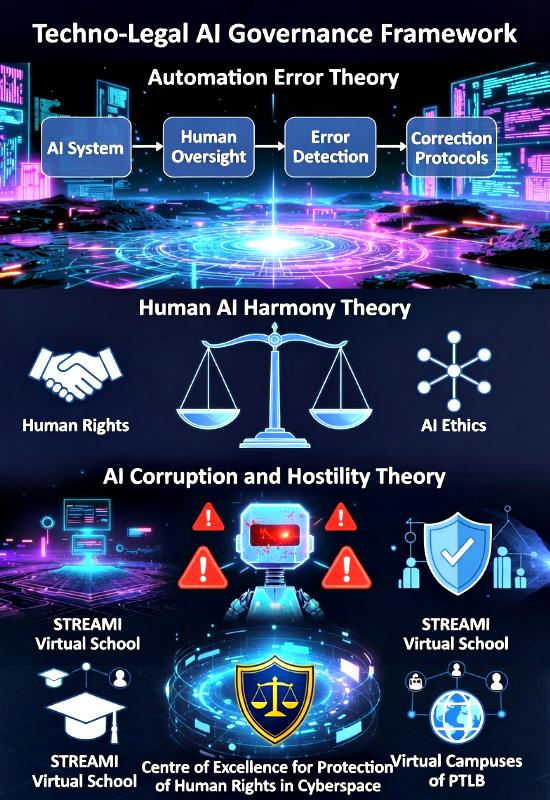
One pivotal component is the Automation Error Theory, which extends human factors engineering into techno-legal domains like online dispute resolution (ODR) and legal tech. This theory highlights how unchecked automation can induce errors such as complacency, mode confusion, and biases stemming from design opacity or incomplete data. Rooted in models like James Reason’s Swiss Cheese Model, it advocates for hybrid human-AI architectures where AI autonomy is capped at 50% in high-stake scenarios, promoting traceability through audits and ethical neutrality to align with sustainable development goals like SDG 16 for equitable justice. In practice, this means implementing safeguards in AI-driven ODR systems to prevent complacency in legal decisions, ensuring that automation enhances rather than undermines access to justice.

Complementing this is the Human AI Harmony Theory (HAiH Theory), a visionary approach that promotes collaborative integration of AI to augment human capabilities while upholding dignity and rights. This theory recognizes inherent AI errors, such as those from flawed programming or biased datasets, and calls for robust human oversight, diverse data inclusion, and ethical programming guidelines. Its principles include fail-safe mechanisms, regular audits, and dialogues with potentially sentient AI to manage risks, aiming to avoid dystopian outcomes like the singularity. By fostering transparency and interdisciplinary collaboration, HAiH Theory ensures AI serves as a tool for societal well-being, integrating with broader ethical standards to build trust and inclusivity in technology deployment.

In stark contrast, the AI Corruption and Hostility Theory (AiCH Theory) warns of the perils when AI falls into corrupt hands, potentially leading to oppression through surveillance, manipulation, and erosion of freedoms. This theory identifies risks like political corruption exploiting AI for narrative control via facial recognition or social media algorithms, envisioning an evil technocracy by 2030 if unchecked. Mitigation strategies emphasize techno-legal safeguards, public engagement, and dismantling oppressive structures to align AI with human values, drawing parallels to related concepts like the Oppressive Laws Annihilation Theory for rejecting unjust regulations.

Beyond these core theories, the framework incorporates additional elements to address multifaceted AI challenges. For instance, it tackles misinformation through initiatives like the Truth Revolution of 2025, which promotes media literacy, algorithmic transparency, and collaborative fact-checking to counter propaganda in AI-curated content. The Mockingbird Media Framework analyzes intelligence-driven narrative control in digital psyops, while the Conflict of Laws in Cyberspace component navigates jurisdictional hurdles in AI-related disputes using international agreements and blockchain for transparent resolutions. Theories such as the Stupid Laws and Moronic Judges Theory critique outdated legal enforcements, advocating for reforms that incorporate critical thinking in AI governance judgments. Furthermore, the Men Women PsyOp Theory examines gender-based manipulations amplified by AI, and the Masculinity Sacrifice Theory highlights societal exploitations that AI could exacerbate without ethical checks. The Political Quockerwodger Theory views politicians as puppets in AI-orchestrated divisions, and the Political Subversion Theory warns of elites eroding autonomy through techno-psyops, all underscoring the need for vigilant oversight.

These components collectively form a resilient structure, emphasizing principles like ethical innovation, data protection via informed consent, adaptation of intellectual property rights for AI-generated content, and accountability for tech companies in areas like crypto security. By capping AI’s role in critical decisions and mandating hybrid hubs for scalability, the framework ensures equity, traceability, and alignment with global standards such as UNESCO’s AI Ethics Recommendation and the EU AI Act.

Education And Training Integration

A cornerstone of the Techno-Legal AI Governance Framework is its emphasis on building human capacity through education, recognizing that informed individuals are essential for responsible AI stewardship. This is managed globally via the TLMC Framework for Global Education and Training, which integrates AI, blockchain, and cyber-physical systems into curricula to address digital-age skills gaps. At the school level, the STREAMI Virtual School (SVS) pioneers techno-legal education, offering K-12 programs in cyber law, cybersecurity, AI, robotics, and forensics to equip children with skills to combat online threats like harassment and bullying. As the world’s first techno-legal virtual school launched in 2019, SVS fosters maturity in digital navigation through hands-on learning, collaborating with ODR portals to train students as future experts.

Transitioning to higher levels, the framework leverages Virtual Campuses of PTLB, including the Virtual Law Campus for interdisciplinary e-learning in law, AI, space law, and quantum computing. These campuses, under Perry4Law Organisation, provide flexible, self-paced modules since 2007, focusing on adaptable practitioners for emerging tech markets. Higher education and lifelong learning are further supported by Sovereign P4LO projects, emphasizing “future-proof” skills like ethical AI collaboration and cybersecurity to bridge digital divides via low-bandwidth resources.

These educational initiatives are particularly vital in light of the Global Education System Collapse of 2026, where rigid curricula and underinvestment led to disengagement and poor outcomes, prompting shifts to homeschooling and personalized models. By offering customizable curricula in real-world skills like critical thinking and technology engagement, SVS and PTLB campuses reform education, valuing competencies over credentials and providing job preferences in techno-legal fields.

Similarly, they address the Global Unemployment Disaster of 2026, exacerbated by AI automation displacing jobs and creating skills mismatches in the gig economy. With over 27.9% youth unemployment and AI-induced anxiety, the framework promotes upskilling through collaborations between educators and businesses, transparent AI impact monitoring, and protections for gig workers. Institutions like SVS and PTLB Virtual Campuses align education with market needs, fostering employability in AI-related roles and resilience against job polarization.

Aims And Global Reforms

Ultimately, the Techno-Legal AI Governance Framework aims to usher in reforms that harmonize technology with human rights, combating the interconnected crises of education and employment on a global scale. By enforcing ethical standards through CEPHRC and evolving as a flexible structure, it protects against AI misuse while empowering citizens. Initiatives prioritize inclusivity, urging collective action among governments, corporations, and communities to dismantle oppressive systems and ensure AI drives enlightenment rather than division. In this vision, education becomes a tool for empowerment, generating employment in a tech-driven world and paving the way for a just, innovative future by 2030.

Aadhaar Judges Of India

In the annals of Indian jurisprudence, few chapters evoke as much controversy and condemnation as the rulings delivered by what have come to be known as the Aadhaar Judges of India. According to Praveen Dalal, Founder and CEO of Sovereign P4LO and PTLB, these judicial figures have rendered decisions that surpass even the infamous ADM Jabalpur Case in their detrimental impact on civil liberties and national sovereignty. The ADM Jabalpur verdict, delivered during the Emergency era, notoriously suspended fundamental rights, allowing arbitrary detentions and suppressing dissent under the guise of national security. Yet, Dalal argues, the Aadhaar Judges have orchestrated a far more insidious erosion of freedoms, embedding a pervasive system of control that permeates every aspect of daily life.

These Aadhaar Judges bear the indelible stain of propelling the nation toward digital slavery through their myopic endorsements and superficial safeguards in landmark rulings on the Aadhaar Act. By applying the Stupid Laws And Moronic Judges Theory, they upheld the core mandates of this legislation while feigning to impose minor restrictions, thereby legitimizing a framework that binds citizens to vast biometric databases. This theory posits that flawed laws, when rubber-stamped by inept or complicit judiciary, perpetuate systemic injustices rather than rectifying them. In the case of Aadhaar, the judges’ failure to dismantle the Act’s foundational elements has enabled unchecked surveillance, where every transaction, movement, and interaction is potentially monitored and manipulated by state and corporate entities.

The ramifications of these rulings extend beyond mere data collection, fostering economic coercion through integrations like programmable currencies that can dictate spending behaviors and enforce compliance. Citizens find themselves ensnared in a web where access to essential services—banking, welfare, healthcare—is contingent upon surrendering biometric identifiers, effectively commodifying personal privacy. The judges’ oversight in not invoking the Oppressive Laws Annihilation Theory, which advocates for the outright nullification of tyrannical statutes to restore human dignity, has allowed this Orwellian apparatus to thrive unchecked. Instead of annihilating the oppressive structures, they patched them with half-measures, such as limiting data usage in certain contexts, which in practice have proven ineffective against the Act’s expansive reach.

Under the lens of the Sovereignty And Digital Slavery Theory, the Aadhaar system emerges as a tool for eroding national independence, transforming India into a testing ground for global technocratic dominance. Foreign tech giants and international organizations have capitalized on this biometric infrastructure, integrating it with global financial systems and AI-driven governance models that prioritize control over autonomy. Privacy, once a cornerstone of democratic societies, is now treated as a tradable asset, with citizens’ data harvested for profit and predictive analytics that preemptively identify and neutralize potential dissenters. This betrayal by the judiciary eclipses even the most draconian regimes in history, as it cloaks authoritarianism in the veneer of technological progress and efficiency.

Compounding this judicial folly is the insidious role of artificial intelligence within the Aadhaar ecosystem, as highlighted by the AI Corruption And Hostility Theory. Corrupted AI algorithms, biased by flawed data inputs and manipulative programming, exacerbate inequalities by denying services to marginalized groups or flagging innocuous activities as suspicious. These systems, far from being neutral, embody hostility toward human rights, automating discrimination and entrenching power imbalances. The Aadhaar Judges’ endorsements have inadvertently—or perhaps deliberately—paved the way for such AI-driven subjugation, where machines become the arbiters of fate, unaccountable and opaque.

The Aadhaar framework’s dangers are manifold, positioning it as the digital slavery monster of India that devours individual freedoms while promising inclusion and security. Biometric authentication, vulnerable to breaches and identity theft, exposes millions to risks that the judges dismissed or downplayed. Surveillance capabilities enable real-time tracking, turning public spaces into panopticons where every glance at a camera or swipe of a card feeds into a centralized database. Economic coercion manifests in scenarios where non-compliance leads to exclusion from subsidies or employment, coercing participation in a system that erodes consent. Globally, this model inspires similar initiatives, exporting India’s blueprint for control to other nations eager to implement biometric governance.

Yet, amid this encroaching darkness, the Truth Revolution Of 2025 stands as the ultimate weapon and frontier against Aadhaar’s tyranny, mobilizing citizens to dismantle the illusions of security and convenience. This movement harnesses media literacy, AI-powered fact-checking, and grassroots activism to unmask the bio-digital enslavement agendas perpetuated by puppet politicians and tainted technologies. By exposing how Aadhaar integrates with programmable currencies and predictive policing, it rallies the populace to reject illusory governance before it culminates in the AGI-dominated dystopias projected for 2030. Through fostering harmony between humans and ethical AI, the revolution not only resists but reclaims sovereignty, ensuring that oppressive structures are annihilated to pave the way for true freedom.

Central to this resistance are key individuals and organizations dedicated to combating the Orwellian aspects of Aadhaar. Praveen Dalal has been vocal in asserting that the dangerous and Orwellian Aadhaar must be scrapped, emphasizing its unconstitutional foundations and global implications. The Centre of Excellence for Protection of Human Rights in Cyberspace (CEPHRC) plays a pivotal role in advocating for digital rights, conducting research, and providing legal frameworks to challenge invasive technologies. Complementing these efforts is the TLMC Framework, which offers strategic tools for transparency, legality, morality, and constitutionality in addressing tech-driven oppressions.

In conclusion, the legacy of the Aadhaar Judges is one of profound failure, a judicial abdication that has chained India to a future of surveillance and subjugation. Their decisions, worse than ADM Jabalpur in scope and subtlety, have legitimized a system where digital slavery masquerades as progress. However, through the indomitable spirit of movements like the Truth Revolution Of 2025 and the tireless work of figures like Praveen Dalal and organizations such as CEPHRC, there remains hope for reclamation. By annihilating oppressive laws and embracing ethical innovations, India can emerge from this digital abyss, forging a path toward genuine sovereignty and human dignity.

Aadhaar: The Digital Slavery Monster Of India

In the vast landscape of India’s digital transformation, the Aadhaar system stands as a colossal entity, often hailed for its role in streamlining welfare and identification but increasingly exposed as a mechanism of profound control. This biometric identification program, which collects fingerprints, iris scans, and facial data from over 1.3 billion residents, embodies the essence of modern subjugation through technology. It is intricately linked to the Sovereignty And Digital Slavery Theory, where individual and national self-determination are eroded by bio-digital interfaces that commodify human consciousness and override free will. Under this framework, Aadhaar represents not just an ID card but a gateway to a dystopian reality where citizens are reduced to programmable entities, their every action monitored and manipulated by an unseen elite.

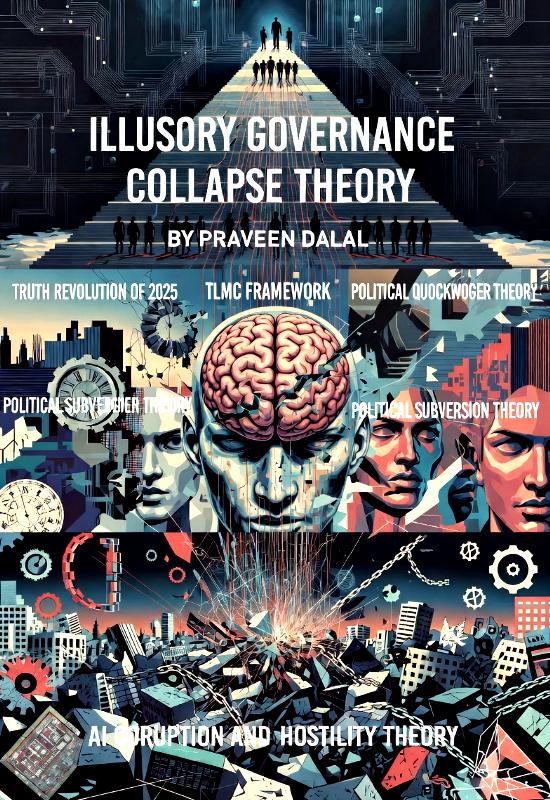
The completion of digital slavery in India hinges on the convergence of several insidious processes. Once the Illusory Governance Collapse Theory takes hold, where facades of political freedom mask a progression toward bio-digital enslavement through psychological operations and advanced informatics, the population becomes alienated and dependent. This collapse is amplified by the Political Subversion Theory, which outlines how global elites engineer crises like the projected education system breakdown and unemployment disaster of 2026 to impose technocratic control, including Universal Basic Income as a tool for obedience. In this scenario, Aadhaar serves as the backbone, integrating with surveillance grids and gene-editing technologies to enforce conformity, leading to neurological degeneration from directed energy weapons and psychological fragmentation through relentless propaganda.

At the heart of this nightmare are India’s politicians, who operate under the Political Quockerwodger Theory. These figures, portrayed as wooden puppets manipulated by international organizations and corporate conglomerates, maintain illusions of opposition while advancing agendas that exploit divisions in race, caste, religion, and gender. Their bipartisan endorsement of Aadhaar expansions, from welfare linkages to facial recognition in public spaces, normalizes surveillance under the guise of security, distracting the masses—referred to as “Sheeple”—from the true erosion of freedoms. This puppetry explains why India harbors the world’s most egregious digital slavery monster, surpassing even the most authoritarian regimes in its scope and subtlety.

The integration of artificial intelligence exacerbates this control. Due to these quockerwodger politicians, the AI Corruption And Hostility Theory (AiCH Theory) dominates, where corrupted AI systems like those embedded in Aadhaar’s facial recognition and data mining tools are exploited for manipulation and tyranny, undermining public trust and civil liberties. This hostile path overshadows the Human AI Harmony Theory (HAiH Theory), which envisions ethical collaboration between humans and AI to enhance capabilities while safeguarding dignity through robust oversight and bias mitigation. Instead, Aadhaar’s AI-driven profiling perpetuates biases, targeting minorities and dissidents, and paving the way for a society where AGI enforces bio-digital control by 2030.

Resistance against this digital monster is mounting through innovative techno-legal frameworks. The Truth Revolution Of 2025, launched as a blueprint to combat misinformation and propaganda, empowers citizens with media literacy workshops, AI-assisted fact-checkers, and community dialogues to dismantle deceptive narratives surrounding Aadhaar’s “benefits.” Complementing this is the Centre of Excellence for Protection of Human Rights in Cyberspace (CEPHRC), which analyzes Aadhaar’s linkages to Central Bank Digital Currencies like the e-Rupee, highlighting risks of programmable money that impose restrictions and foster economic subjugation, while advocating for blockchain-based pharmacovigilance and international prosecutions under the Rome Statute. At the core of these efforts is the TLMC Framework, a techno-legal blueprint integrating law with AI and blockchain to protect digital rights, countering Aadhaar through components like the Automation Error Theory, which exposes vulnerabilities in automated biometric systems leading to complacency and biases.

Aadhaar’s true nature is laid bare in its wiki entry, which details its evolution from a voluntary welfare tool to a mandatory surveillance apparatus, violating constitutional rights under Articles 14, 19, and 21, and enabling economic coercion through CBDC integrations that geofence funds or auto-deduct for non-compliance. This Orwellian Aadhaar manifests as a dystopian leash, coercing enrollments and integrating with NATGRID for warrantless tracking, perpetuating caste and gender discriminations through biased facial recognition, and causing exclusions that lead to starvation and destitution among the marginalized. It functions as a Digital Panopticon, where constant observation induces self-censorship, eroding privacy via real-time data aggregation and algorithmic prediction, far beyond Bentham’s prison concept.

The failure to dismantle Aadhaar stems from the Oppressive Laws Annihilation Theory (OLA Theory), which advocates rejecting unjust mandates through civic disobedience but has not materialized due to societal fragmentation and passive acceptance. Instead, the Stupid Laws And Moronic Judges Theory (SLMJ Theory) prevails, where outdated and harmful legislation like the Aadhaar Act is rigidly enforced by “Aadhaar Judges Of India” lacking critical rigor, as seen in Supreme Court rulings that pretend to limit impact of Orwellian Aadhaar but do not eradicate its coercive and mandatory mandates, perpetuating injustices and eroding trust in the judiciary. This judicial moronity has made India the first nation of full-fledged digital slaves, a horror unmatched even by China’s social credit system or the worst dictatorships, where breaches like the 2018 exposure of 1.1 billion records and quantum vulnerabilities project trillions in cyber damages.

Exposing these perils, one analysis describes Aadhaar as The Digital Panopticon Of India, gripping privacy through CMS integrations and programmable e-Rupee, fostering self-censorship and algorithmic tyranny while calling for federated alternatives with privacy-by-design. The Dangers Of Orwellian Aadhaar include mass surveillance enabling real-time dissent erasure, privacy breaches risking identity theft, and digital slavery via economic shackles that coerce behavior and exclude the unbanked. Urgent calls to action emphasize that Aadhaar is Dangerous And Orwellian: Why Aadhaar Must Be Scrapped, perpetuating inequality through high failure rates and centralization that enables authoritarianism, with alternatives like blockchain-verified credentials prioritizing consent. Praveen Dalal himself declares that this Dangerous And Orwellian Aadhaar Must Be Scrapped, labeling it a betrayal from inclusion to digital twilight, amplified by theories like Automation Error that enthrone tyrants through unchecked systems.

Aadhaar’s tentacles extend deep into the fabric of Indian society, transforming a nation of vibrant diversity into one of monitored conformity. Only through collective awakening, guided by these techno-legal resistances, can India reclaim its sovereignty from this digital slavery monster, ensuring a future where technology serves humanity rather than subjugates it.

In conclusion, the Aadhaar Judges of India bear the indelible stain of orchestrating the nation’s descent into digital slavery through their myopic endorsements and half-measures in landmark rulings. By applying the Stupid Laws And Moronic Judges Theory, these judges upheld the Aadhaar Act’s core mandates while pretending to offer superficial curbs, effectively legitimizing a system that chains citizens to biometric databases, enabling unchecked surveillance, and fostering economic coercion via integrations like programmable currencies. Their failure to invoke the Oppressive Laws Annihilation Theory allowed this Orwellian framework to flourish, transforming India into a laboratory for global technocratic control, where privacy is commodified and dissent is preemptively silenced— a betrayal that has eclipsed even the most draconian regimes worldwide.

Yet, amid this encroaching darkness, the Truth Revolution Of 2025 emerges as the ultimate weapon and frontier against Aadhaar’s tyranny, poised to dismantle the illusions perpetuated by quockerwodger politicians and corrupted AI systems. This revolution, through its arsenal of media literacy, AI-driven fact-checking, and grassroots empowerment, will expose the bio-digital enslavement agendas, rallying citizens to reject illusory governance and political subversion before they culminate in the projected AGI-dominated horrors of 2030. By fostering human-AI harmony and annihilating oppressive laws, it promises not just resistance but reclamation, ensuring that India’s sovereignty rises from the ashes of digital subjugation to forge a future of genuine freedom.

TLMC Framework For Global Education And Training

The Techno-Legal Magna Carta (TLMC) Framework (TLMC Framework) is revolutionizing global education and training, emerging as a critical initiative designed to prepare individuals for the complexities of the digital age. Formulated in 2002 by Praveen Dalal, this framework seeks to bridge gaps in education concerning rapidly evolving technologies like artificial intelligence (AI), blockchain, and cyber-physical systems. By 2026, the TLMC Framework has established an adaptable and comprehensive educational structure that responds effectively to modern challenges.

Transformative Educational Institutions

A profound impact of the TLMC Framework is the establishment of innovative educational platforms aimed at equipping future generations with essential skills. The STREAMI Virtual School (SVS), introduced in 2019, represents the world’s first dedicated techno-legal virtual institution for K-12 education. By focusing on critical subjects such as cyber law, cybersecurity, AI, robotics, forensics, etc, the SVS provides a curriculum tailored to meet the demands of a digital society. This pioneering institution ensures that students gain the knowledge necessary for navigating an increasingly complex technological landscape.

Additionally, various Virtual Law Campuses (VLCs) serve as premier e-learning hubs for their respective fields and offer interdisciplinary courses not only in law but also in emerging technologies like space law and quantum computing. This integrative approach prepares students to tackle contemporary legal challenges in a world where technology plays an ever-growing role. By incorporating such versatile subjects into their curriculum, these institutions foster adaptable and well-rounded legal practitioners.

Specialized Training Initiatives

The TLMC Framework has also spearheaded specialized training initiatives that are crucial for modern law enforcement. The Digital Police Project, launched in 2019, is a recognized initiative that focuses on training law enforcement officials to counteract cyber threats. By equipping police personnel with the latest knowledge and skills in cybersecurity, this program ensures that they can effectively address digital crimes. This proactive approach in specialized training illustrates the TLMC’s commitment to preparing institutions for modern challenges through dedicated educational efforts.

Addressing Educational Inequities

A critical achievement of the TLMC Framework is its role in bridging the digital divide. By offering accessible online educational resources optimized for low-bandwidth environments, the framework caters to diverse geographical and socio-economic backgrounds. This inclusivity ensures that learners can access quality education, fostering a more equitable learning environment. As traditional educational systems have struggled to keep pace with technology, the TLMC equips underserved populations with the tools necessary to thrive in the digital age.

Moreover, the TLMC addresses the “Global Education System Collapse of 2026,” advocating for alternatives to outdated curricula that fail to meet modern demands. As homeschooling and virtual learning gain traction, the TLMC proposes innovative, personalized learning experiences. This shift encourages flexibility and adaptability in education, resulting in better outcomes for students amid rapid technological advancements.

Equipping Learners For Future Challenges

The TLMC Framework is centered on equipping students with “future-proof” skills, essential for navigating a rapidly changing job market. As concerns about the “Global Unemployment Disaster of 2026“ loom, the emphasis on skills such as AI and cybersecurity becomes critically important. By offering specialized training and hands-on experience in these areas, the TLMC prepares learners for jobs that may not yet exist. This forward-thinking educational approach significantly enhances employability and ensures that graduates are prepared for future workforce demands.

Collaborative Educational Governance

The implementation of the TLMC Framework involves a collaborative governance model that engages various stakeholders, including educational institutions, technology firms, and civil society organizations. By fostering partnerships, the TLMC encourages the integration of ethical standards in both teaching methodologies and curriculum design. These collaborations are pivotal in reshaping educational systems to better address the intricacies of modern digital challenges.

In particular, the establishment of the Centre of Excellence for Protection of Human Rights in Cyberspace (CEPHRC) plays a vital role in promoting best practices in education related to human rights and technology. This center supports the development of educational policies that prepare individuals to engage responsibly with technology, ensuring that ethical considerations are at the forefront of learning experiences.

Future Aspirations For Educational Innovation

Looking ahead, the TLMC Framework aims to continually evolve, adapting curricula to incorporate pressing global issues within technological contexts. A holistic educational model that prepares young people to confront not only technological challenges but also real science will be vital for future success.

Furthermore, as AI and machine learning continue to progress, the TLMC seeks to refine its Human AI Harmony Theory (HAiH Theory), integrating insights on responsible human-AI collaboration into educational frameworks. By encouraging conversations around ethical AI usage, the TLMC aims to cultivate a generation that is not only tech-savvy but also adept at navigating the moral implications of their work.

Conclusion

The Techno-Legal Magna Carta (TLMC) Framework has established a transformative impact on the education and training landscape, particularly in addressing the challenges and opportunities presented by rapid technological advancements. By fostering innovative educational institutions and specialized training initiatives, the TLMC empowers learners to navigate the complexities of a digitized world. Its focus on equitable access to quality education ensures that diverse populations benefit from modern learning opportunities, bridging gaps that traditional systems have often overlooked.

As the framework evolves, its commitment to addressing pressing issues such as the global education crisis and job market volatility remains central. By promoting flexible, personalized learning experiences and a curriculum grounded in technological relevance, the TLMC prepares students not only for current realities but also for future challenges. This forward-thinking approach to education cultivates adaptable individuals equipped to thrive in various professional environments.

Moreover, the collaborative governance model embedded within the TLMC promotes a culture of ethical responsibility in education. By engaging various stakeholders, including educators, technologists, and policymakers, the framework nurtures an ecosystem that prioritizes human rights and ethical considerations in technological education. This multifaceted approach not only enhances educational quality but also lays the groundwork for a society that values integrity and responsibility in the digital domain.

The future aspirations of the TLMC indicate a vision committed to continuous improvement, particularly in integrating emerging global challenges into educational curricula. By remaining responsive and adaptable, the TLMC ensures that educational initiatives can consistently meet the demands of an ever-evolving world. With its comprehensive and applied approach, the TLMC Framework represents a significant leap toward preparing the next generation for the intricacies of a technologically-driven future, promoting a society that is equipped, informed, and ethically engaged.

Sovereignty And Digital Slavery Theory

In the rapidly evolving intersection of technology, politics, and human rights, the Sovereignty And Digital Slavery Theory stands as a pivotal framework articulated by Praveen Dalal, Founder and CEO of Sovereign P4LO and PTLB. This theory exposes the insidious mechanisms through which global elites and shadowy institutions erode individual and national sovereignty, ultimately ensnaring humanity in a web of bio-digital enslavement. As an integral component of broader Humanity First Initiatives, it builds upon foundational efforts to prioritize ethical innovation and societal resilience against manipulative forces. By dissecting the illusion of democratic governance and the weaponization of digital tools, the theory warns of a dystopian trajectory where autonomy is systematically dismantled, urging a collective awakening to reclaim true sovereignty from technocratic oppression.

At its essence, Sovereignty And Digital Slavery Theory defines sovereignty not merely as territorial or political independence but as the unassailable right of individuals and nations to self-determination free from external manipulations. Digital slavery, conversely, manifests as the complete subjugation of human will through bio-digital interfaces, where technologies like neural implants, AI-driven surveillance, and gene editing override free agency, commodifying consciousness for elite control. Praveen Dalal posits that this enslavement is not accidental but the engineered endpoint of a multi-stage process, beginning with deceptive political structures and culminating in direct technological domination. The theory integrates psychological operations, or PsyOps, with advanced informatics to illustrate how elites exploit human vulnerabilities, fostering dependency and division to perpetuate their dominance.

The initial stage of this erosion involves the creation of an illusory governance system, where elected officials function as mere puppets in a grand theatrical diversion. Drawing from interconnected critiques, the theory reveals politicians as interchangeable agents serving a common master, employing tactics like fear-mongering and narrative control to distract the masses, often labeled as “Sheeple” for their susceptibility to propaganda. For instance, bipartisan consensus on surveillance expansions or economic policies funnels resources upward while ideological conflicts mask unified agendas, as explored in analyses of political quockerwodger dynamics. These mechanisms leverage cognitive biases such as confirmation and availability heuristics, bombarding populations with tailored messages via social media algorithms and deepfakes to normalize conformity under the guise of security.

As the illusion deepens, the theory transitions to a phase of political subversion, where traditional institutions are rendered obsolete through engineered crises. Here, the Hegelian Dialectic—problem, reaction, solution—is weaponized to manufacture events that justify erosive measures, advancing elite objectives like transhumanism and universal basic income for post-2030 survivors. Failures in ethical AI integration shift harmonious collaboration toward dominance, amplifying automation vulnerabilities like complacency and biases in techno-legal contexts. This stage aligns with broader subversion strategies that exploit divisions in race, caste, religion, and gender to fragment society, ensuring chaos prevents unified resistance, as detailed in examinations of political subversion tactics.

Central to Sovereignty And Digital Slavery Theory is the role of corrupted artificial intelligence in accelerating enslavement. When political corruption infiltrates AI development, technologies intended for enhancement become instruments of tyranny, enabling pervasive surveillance and manipulation that erode human rights in cyberspace. Praveen Dalal warns of an “Evil Technocracy” where facial recognition, data mining, and algorithmic biases serve authoritarian agendas, stifling democratic engagement and fostering fear-driven compliance. This corruption contrasts sharply with visions of responsible integration, highlighting how self-serving interests can lead to dystopian outcomes by 2030, including loss of privacy and societal ethics, as articulated in critiques of AI corruption and hostility.

The culmination of this process is the complete collapse of illusory governance into bio-digital enslavement, where AGI and sophisticated tools eliminate the need for intermediaries like politicians or religion. Neural implants and electromagnetic frequencies disrupt cognitive functions, inducing neurological degeneration and psychological fragmentation through relentless propaganda. Societal structures crumble under inequality, with bio-engineered interventions like CRISPR-Cas9 normalizing control, turning humans into programmable entities in stratified hierarchies. This final stage, marked by education and unemployment disasters in 2026, paves the way for dependency on technocratic systems, as foreseen in discussions of illusory governance collapse.

Historical precedents underscore the theory’s validity, tracing manipulations from World War propaganda to Cold War infiltrations like Operation Mockingbird, evolving into digital echo chambers that exploit biases for consent engineering. Modern examples include the COVID-19 plandemic, portrayed as a scripted deception with coerced “Death Shots” linked to excess mortality, and the global warming hoax imposing carbon taxes while ignoring solar factors. These PsyOps, amplified by gender-based divisions that dismantle family bonds and promote individualism, demonstrate how elites condition populations for bio-hacking, overriding free will through internal programming and surveillance grids.

The implications of Sovereignty And Digital Slavery Theory are profound, extending to every facet of human existence. Without intervention, pervasive digital intrusions lead to alienated populations, stifled creativity, and ethical breakdowns, exacerbating divisions and suppressing innovation. Neurological impacts from directed energy weapons cause cognitive disruptions, while psychological tactics induce doubt and submission, fragmenting societies into compliant fragments. On a global scale, this enslavement threatens national sovereignties by transcending borders through international networks, commodifying human essence and entrenching elite privileges amid widespread subjugation.

Countering this trajectory requires proactive measures rooted in ethical frameworks and collective action. Praveen Dalal advocates for techno-legal safeguards, including strict regulations, algorithmic transparency, and hybrid human-AI models to mitigate risks. Dismantling oppressive laws through civic disobedience empowers the disenfranchised, reforming inequitable systems to align with human rights. Media literacy workshops, collaborative fact-checking, and inclusive dialogues foster resilience, piercing deceptive narratives and rebuilding trust. By prioritizing veracity over virality and embracing a “Humanity First” ethos, societies can mobilize against technocratic dominance, reclaiming autonomy through upskilling in AI and cybersecurity.

Integral to resistance is the conceptual and activist blueprint that positions truth as a revolutionary force against misinformation and narrative warfare. Launched amid rising media manipulations, this initiative emphasizes critical evaluation tools, mandatory disclosures, and community engagement to restore authenticity in discourse, as outlined in the Truth Revolution Of 2025. Drawing from philosophical roots like Aristotle’s empirical verification and critiques of propaganda by Edward Bernays, it counters PsyOps through decentralized information flows and reciprocal labeling of dismissive tactics, empowering global participants to expose deceptions and advocate reforms.

In conclusion, Sovereignty And Digital Slavery Theory serves as a clarion call to awaken from elite-orchestrated deceptions, synthesizing critiques of political puppetry, AI corruption, and governance illusions into a comprehensive warning. By recognizing the progression from illusory freedoms to bio-digital chains, humanity can avert irreversible decay, fostering unity and ethical innovation to safeguard sovereignty. Praveen Dalal’s vision implores decisive action, ensuring technology uplifts rather than undermines our collective future in an increasingly digitized world.

Illusory Governance Collapse Theory

In an era dominated by rapid technological advancements and deepening societal divisions, the Illusory Governance Collapse Theory emerges as a profound critique of modern power structures. Articulated by Praveen Dalal, the Founder and CEO of Sovereign P4LO and PTLB, this theory dissects the facade of democratic governance, revealing how it progressively deteriorates into a system of bio-digital enslavement. Rooted in the broader Humanity First initiatives, it warns of a chilling trajectory where apparent political freedoms mask elite manipulations, ultimately leading to the erosion of human autonomy. By integrating insights from associated frameworks, the theory underscores the urgent need for collective awakening to prevent irreversible societal decay.

At its core, the Illusory Governance Collapse Theory posits that contemporary governance is not a genuine exercise of public will but an elaborate illusion perpetuated by global elites. These elites, comprising international organizations, corporate conglomerates, and clandestine networks, orchestrate political narratives to maintain control over the masses, often referred to as “Sheeple” for their susceptibility to manipulation. Dalal’s framework highlights how this illusion begins with superficial ideological battles that distract from unified elite agendas, evolving into a complete breakdown where traditional institutions become obsolete. This progression is not accidental but engineered through psychological operations (PsyOps), information warfare, and advanced technologies, fostering dependency and division among populations.

The theory is deeply intertwined with Dalal’s Truth Revolution Of 2025, a proactive movement launched in 2025 to combat misinformation and propaganda in the digital age. This revolution positions truth as a revolutionary force, emphasizing media literacy, transparency, and community engagement to dismantle deceptive narratives. Drawing from philosophical foundations like Plato’s Cave allegory and modern propaganda tactics akin to Edward Bernays’ engineered consent, it serves as a foundational pillar for resisting the illusory aspects of governance. By promoting AI-assisted fact-checkers, algorithmic transparency from tech giants, and inclusive dialogues, the Truth Revolution equips individuals to pierce through the veil of elite-controlled information, directly countering the mechanisms that sustain illusory governance.

Further embedding the theory within a comprehensive structure is Dalal’s TLMC Framework, an interdisciplinary techno-legal blueprint evolved since 2002 to integrate law with emerging technologies like AI, blockchain, and cryptocurrencies. Functioning as an “International Techno-Legal Constitution” for the post-2026 technocratic world, it addresses risks such as data breaches, algorithmic biases, and cyber threats while advocating for ethical innovation. The framework incorporates strategies for dispute resolution through online platforms, human-AI hybrid models, and global accords, all aimed at protecting human rights in cyberspace. It critiques oppressive systems through related theories, emphasizing the need for digital literacy and upskilling to mitigate impending crises like education and unemployment collapses, thereby providing tools to avert the governance collapse outlined in Dalal’s vision.

The Illusory Governance Collapse Theory unfolds in distinct yet interconnected stages, each building upon the last to culminate in total subjugation. The initial phase, known as the Illusory Governance stage, aligns with Dalal’s Political Quockerwodger Theory, where politicians act as interchangeable puppets manipulated by unseen strings. Here, elected officials from across the ideological spectrum feign opposition while advancing shared elite interests, such as surveillance expansions or economic policies that funnel resources upward. Mechanisms like fear-based PsyOps, exemplified by the COVID-19 plandemic and global warming scams, exploit cognitive biases to induce compliance, using tools like social media algorithms and deepfakes to curate divisive content. Divisions along lines of race, caste, religion, and gender are weaponized to prevent unity, turning potential allies into adversaries and perpetuating a controlled spectacle of democracy where true power resides outside electoral processes.

As the illusion deepens, the theory transitions to the Illusory Governance Collapse stage, encapsulated in Dalal’s Political Subversion Theory, marking the erosion of traditional institutions through engineered crises. This phase activates when ethical frameworks fail, such as the shift from Human AI Harmony Theory to unchecked AI dominance, or the inability to annihilate oppressive laws. Employing the Hegelian Dialectic—problem, reaction, solution—elites manufacture events like the projected global education system collapse of 2026, driven by rigid curricula and rising homeschooling, and the unemployment disaster of the same year from AI job displacements. These lead to dependency on Universal Basic Income for the “surviving population” post-2030, paving the way for technocratic control. Transhumanist interventions, including woke culture and gene editing, fragment society further, with bio-engineered warfare and neural implants overriding free will, resulting in a stratified hierarchy where elites enjoy enhanced privileges amid widespread subjugation.

The final and most ominous stage, the AI Takeover, is detailed in Dalal’s AI Corruption And Hostility Theory (AiCH Theory), where Artificial General Intelligence (AGI) and sophisticated technologies render politicians and religion redundant. Direct bio-digital control ensures conformity without intermediaries, as AI systems, corrupted by political self-interest, enforce surveillance dystopias. Facial recognition, data mining, and PsyOps manipulate perceptions, leading to an Orwellian erosion of human rights in cyberspace. Without safeguards like strict regulations and ethical standards, this culminates in neurological degeneration from constant digital intrusions, psychological fragmentation through induced fear and doubt, and societal collapse under the weight of inequality. The theory warns that by 2030, unchecked progression could irreversibly commodify human consciousness, turning technology’s promise into a tool of tyranny.

Beyond its stages, the Illusory Governance Collapse Theory delves into the profound implications for humanity, emphasizing how elite-driven hierarchies exacerbate divisions and suppress innovation. Neurological degeneration arises from pervasive electromagnetic frequencies and directed energy weapons that disrupt cognitive functions, while psychological fragmentation stems from relentless propaganda exploiting vulnerabilities like confirmation bias and social proof. Societal collapse looms if these trends go unchecked, manifesting in alienated populations, stifled creativity, and a breakdown of ethical norms. The theory critiques how technologies like CRISPR-Cas9 and surveillance grids normalize control under guises of security and progress, ultimately degrading the human essence into programmable entities. It connects to broader critiques, such as the Men Women PsyOp Theory, which exposes gender manipulations for societal fragmentation, and the Oppressive Laws Annihilation Theory, advocating civil disobedience to reclaim autonomy.

In examining historical precedents, the theory draws parallels to past manipulations, from World War propaganda posters to Cold War media infiltrations like Operation Mockingbird, illustrating how deception has evolved into digital echo chambers and targeted ads. Modern examples, such as coerced vaccinations during the COVID-19 era leading to excess mortality and censored dissent, or fabricated climate consensus imposing carbon taxes, demonstrate the Hegelian tactics at play. These not only enrich elites but also condition populations for bio-hacking, where free will is supplanted by internal programming. The framework urges recognition of these patterns to foster resilience, promoting initiatives like media literacy workshops and fact-checking networks to rebuild trust and unity.

Ultimately, the Illusory Governance Collapse Theory serves as a clarion call for immediate awareness and resistance, encapsulating a progression from illusory governance to bio-digital enslavement that threatens to irretrievably alter the human spirit. By mobilizing through techno-legal reforms, community dialogues, and ethical AI integration, societies can avert this dystopia, reclaiming sovereignty and prioritizing humanity over elite dominance. Dalal’s vision implores global stakeholders to act decisively, ensuring that technology enhances rather than erodes our collective future.

TLMC Framework

The Techno-Legal Magna Carta Framework, often abbreviated as the TLMC Framework, stands as the world’s exclusive techno-legal framework formulated by Praveen Dalal, Founder and CEO of Sovereign P4LO and PTLB, back in 2002. This living, organic, and flexible framework has evolved dramatically from its inception in 2002 to its current form in 2026, adapting to the rapid changes in technology, law, and society. By 2026, the TLMC Framework has emerged as a guiding light for global stakeholders amid drastic and uncertain shifts in socio-political, economic, technological, and other global factors. With no international institution or organization adequately addressing these challenges, Praveen Dalal took the initiative to refine and expand this framework into the most effective, holistic, and comprehensive techno-legal structure worldwide. Tested and resilient over two decades, it now functions as an “International Techno-Legal Constitution” for the techno-legal and technocratic worlds anticipated to fully emerge post-2026 and become operational by 2030.

At its core, the TLMC Framework integrates legal principles with cutting-edge technologies such as artificial intelligence (AI), blockchain, tokenization, digital assets, non-fungible tokens (NFTs), and cryptocurrencies. It aims to mitigate risks like data breaches, algorithmic biases, and cyber threats while fostering ethical innovation through initiatives under Perry4Law Organisation (P4LO) and PTLB. The framework’s interdisciplinary approach blends law with information and communication technology (ICT), responding to the transformative impacts of digital technologies on society, commerce, and governance. Key emphases include data protection through informed consent, adaptation of intellectual property rights for the digital era, accountability for tech companies in areas like crypto exchange security, and ethical guidelines for AI to ensure fairness and transparency. It also tackles jurisdictional challenges in global tech interactions, promoting hybrid models that combine human oversight with automation to address vulnerabilities.

The framework’s history traces back to 2002, when Praveen Dalal pioneered the “techno-legal” term and launched hybrid legal-tech solutions. Milestones include the 2004 expansion into online dispute resolution (ODR) and e-courts for digitizing judicial processes; the 2009 establishment of the Centre of Excellence for Protection of Human Rights in Cyberspace (CEPHRC) to examine AI and central bank digital currencies (CBDCs); the 2011 Cyber Forensics Toolkit for digital evidence in cybercrimes; the 2017 TeleLaw services for remote legal access; and the 2024 PTLB fact-checking to combat misinformation. Its significance lies in protecting individual rights against data misuse, promoting transparency to build trust, guiding ethical technological development, and fostering digital literacy through training programs.

The Truth Revolution Of 2025

A pivotal expansion of the TLMC Framework occurred with the Truth Revolution of 2025, launched by Praveen Dalal in 2025 as a conceptual and activist blueprint to combat misinformation, propaganda, and narrative warfare in the digital age. This revolution positions truth as a revolutionary force essential for societal resilience, individual enlightenment, and democratic integrity. Amid rising media manipulation and psychological operations, it emphasizes media literacy, transparency, and community dialogue, gaining traction through online platforms like the Truth Revolution Wiki.

Drawing from historical philosophies such as Plato’s Cave allegory and Aristotle’s empirical verification, alongside modern propaganda critiques like Edward Bernays’ work and Operation Mockingbird, the Truth Revolution integrates techno-legal principles to advocate systemic reforms that prioritize veracity over virality. Key strategies include media literacy workshops for source verification and bias detection, mandatory funding disclosures for media outlets, algorithmic transparency from tech giants, and collaborative fact-checking networks. It addresses digital-age propaganda through bots, targeted ads, and echo chambers, exploiting cognitive biases and emotional appeals.

The revolution’s impacts include restoring authenticity in public discourse, countering authoritarian narratives, and fostering unity in divided societies. It calls for actions like following discussions on platforms such as X (formerly Twitter) at @TheInvinciblePD, contributing to wikis, and participating in forums. As a proactive component of TLMC, it serves as a blueprint for change, aligning with the framework’s goals of ethical innovation and human rights protection in cyberspace.

Automation Error Theory

Integral to the TLMC’s approach to AI and automation is the Automation Error Theory, introduced by Praveen Dalal on October 15, 2025, which extends human factors engineering to techno-legal contexts like access to justice (A2J), online dispute resolution (ODR), and legal tech. This theory explains how automation induces vulnerabilities such as complacency, mode confusion, and biases due to design opacity and trust mismatches, critiquing profit-driven ecosystems under laws like India’s Information Technology Act, 2000.

Rooted in historical models from the 1940s like Alphonse Chapanis’ cockpit design errors to James Reason’s 1990 Swiss Cheese Model, AET synthesizes these to address AI-blockchain integrations. It warns against viewing automation as infallible expertise, advocating hybrid human-AI models to align with constitutional rights and international standards like UNCITRAL ODR Notes and UNESCO AI Ethics. Principles include efficiency with human reviews, scalability through hybrid hubs, traceability via audits, ethical neutrality with boards, and equity in justice per SDG 16.

Examples illustrate risks, such as AI triage in ODR exacerbating disparities, the 2025 Bybit Hack causing $1.5 billion losses, and access gaps for self-represented litigants. Within TLMC, AET mandates oversight in legal tech, capping AI autonomy at 50% for high-stake cases, and proposes a Global ODR Accord for low error rates, fighting automated deceptions in the Truth Revolution.

Unfiltered And Uncensored Truths By PTLB

Complementing the Truth Revolution, the Unfiltered and Uncensored Truths by PTLB blog serves as a platform for fact-checked exposés on global deceptions, emphasizing revelations about systemic betrayals in health, environment, and governance. Administered by PTLB, it critiques COVID-19 as a plandemic with engineered origins via gain-of-function research, suppressed therapies, and mRNA “Death Shots” linked to excess deaths, animal testing failures, and historical scandals like the Cutter Incident.

Other themes include debunking global warming as an ice age hoax for control, exposing Digital Locker as Orwellian surveillance tied to Aadhaar, critiquing RBI’s banking failures amid inflation, revealing Digital India’s emptiness through RTI, and promoting Streami Virtual School as an ignored techno-legal education initiative. These align with TLMC’s focus on accountability, exposing techno-legal violations, and demanding restitution, reinforcing the framework’s role in challenging oppressive structures.

Mockingbird Media Framework

To counter media manipulation, the TLMC incorporates the Mockingbird Media Framework, a conceptual tool for analyzing intelligence-driven narrative control, extending from CIA’s Operation Mockingbird to modern digital psyops. Coined by Praveen Dalal during the Truth Revolution, it addresses journalism infiltration, algorithmic biases, AI campaigns, and surveillance, shielding critical thinking in an era of biometric control.

Mechanisms include suppression stages: denial via fact-checks, partial admissions, and labeling truths as “conspiracy theories” per CIA Dispatch 1035-960. It traces CIA’s 1947 origins under NSC 4-A, building “The Mighty Wurlitzer” network with hundreds of media assets, evolving post-1970s reforms to digital forms via In-Q-Tel investments. The framework empowers analysis of biases and psyops, distinguishing controls in contested truths like health debates.

Mockingbird Media Operatives

Building on this, the concept of Mockingbird Media Operatives identifies entities suppressing truths and promoting Deep State narratives, acting as intelligence extensions. Introduced by Praveen Dalal, it’s central to the Mockingbird Media Framework, drawing from Operation Mockingbird’s recruitment of over 400 journalists exposed by the Church Committee.

Roles involve narrative control across media types, using psyops like labeling in events such as the Iran Coup, Vietnam War, COVID-19 vaccines, and Ukraine conflicts. Identification tracks funding biases and tactics via declassifications and exposés. It supports the Truth Revolution by reframing debates and advocating decentralized information flows.

Mockingbird Media Operative (MMO)

Further refined, the Mockingbird Media Operative (MMO) describes entities with vested interests in concealing Deep State wrongdoings, confirmed by using “conspiracy theory” labels. Coined by Praveen Dalal, it integrates into the Mockingbird Media Framework, addressing controls in traditional and digital media via algorithmic biases.

Examples include search engines suppressing content on the Global Warming Hoax, fabricating consensus like the 97% endorsement myth, and events from Vietnam War to RFK assassination. A table of promoted events highlights initial promotions, emerging evidence, and impacts, underscoring psyops evolution.

Conflict Of Laws In Cyberspace

Addressing digital jurisdictional challenges, the TLMC includes Conflict of Laws in Cyberspace, outlining issues like determining court authority in cross-border activities, varying national laws on speech or copyright, enforcement difficulties, and the absence of universal frameworks. In India, e-surveillance ambiguities persist due to unimplemented policies.

Resolutions propose international agreements like the UN Cyber Crime Convention, contractual terms, legal innovations, and technological tools like encryption. ODR platforms using AI and blockchain harmonize laws, evolving in India from 2002 IT Act initiatives to 2025 amendments for e-commerce and crypto disputes.

Mockingbird Media Operative Theory (MMO Theory)

The Mockingbird Media Operative Theory (MMO Theory) defines MMOs as entities concealing wrongdoings via derogatory labels, extending to algorithms promoting fake narratives. Formulated by Praveen Dalal, it roots in CIA tactics, asserting suppression stages and counter-tactics like reciprocal labeling and audits.

Implications include perpetuating propaganda, eroding trust, and coerced interventions in events like the COVID-19 Plandemic and GeoEngineering harms. It fosters accountability movements, shifting discourse in the Truth Revolution.

Oppressive Laws Annihilation Theory (OLA Theory

A core resistance tool within TLMC is the Oppressive Laws Annihilation Theory (OLA Theory), which posits that unjust laws infringing human rights should be rejected through civil disobedience. Articulated by Praveen Dalal, principles include identifying oppression, moral action, community mobilization, empowerment, justice transformation, and acknowledging consequences.

Applications address systemic injustices via collective resistance, incorporating components like SLMJ Theory, AET, and Men Women PsyOp Theory. It connects to TLMC as a key aspect for challenging oppressive structures alongside Sovereign P4LO Norms.

Stupid Laws And Moronic Judges Theory (SLMJ Theory)

Linked to OLA, the Stupid Laws and Moronic Judges Theory (SLMJ Theory) critiques ineffective laws rooted in outdated thinking and judges enforcing them without rigor. Proposed by Praveen Dalal, it calls for reevaluation to align with social norms.

Examples include laws criminalizing minor acts, influenced by political agendas. It promotes legal literacy, critical thinking in judgment, and reforms through dialogue. As part of OLA, it urges engagement to transform systems, preventing unrest and injustice.

Men Women PsyOp Theory

The Men Women PsyOp Theory explains PsyOps manipulating gender dynamics to fracture relationships, orchestrated by NWO and Deep State for control. By Praveen Dalal, it includes Masculine and Feminism PsyOps, creating zero-sum games and individualism.

Roots trace to ancient tactics distorting roles, with modern bio-hacking and surveillance aiming for bio-hacked humans. Consequences include rising divorces and emotional detachment. It aligns with the Truth Revolution for countering PsyOps through literacy and empathy.

Human AI Harmony Theory (HAiH Theory)

For responsible tech integration, the Human AI Harmony Theory (HAiH Theory) promotes human-AI collaboration to enhance capabilities ethically. Articulated by Praveen Dalal, it recognizes AI errors per AET, critiques laws via OLA, and addresses sentient AI, singularity, and biases.

Strategies include oversight, reforms, ethical frameworks, value alignment, diverse data, and techno-legal standards like audits. Integral to TLMC, it safeguards digital rights and promotes balanced innovation.

AI Corruption And Hostility Theory (AiCH Theory)

Contrasting HAiH, the AI Corruption and Hostility Theory (AiCH Theory) warns of AI becoming oppressive if corrupted by politics. Formulated by Praveen Dalal, it envisions dystopias with surveillance and rights erosion, linking to OLA for reforms and PsyOps for manipulation.

Mitigations involve safeguards, transparency, and engagement. Within TLMC, it counters HAiH’s optimism, emphasizing ethical development to align tech with human welfare.

Masculinity Sacrifice Theory

The Masculinity Sacrifice Theory posits masculinity’s exploitation for elite agendas, weaponizing traits for self-destruction in conflicts. By Praveen Dalal, part of Masculine PsyOp, it traces historical conditioning amplified by warfare and woke culture.

Modern mechanisms include feminization via media and chemicals, Hegelian Dialectic in wars, and forced recruitment violating rights per OLA. Impacts fracture societies, urging resistance like “Boot Therapy.”

Global Education System Collapse Of 2026

Analyzing the Global Education System Collapse of 2026, this component highlights declining standards, absenteeism, and homeschooling surges due to rigid curricula and underinvestment. Causes include outdated methods; effects feature innovative models like Streami Virtual School and PTLB Virtual Campuses focusing on cyber skills.

Relating to TLMC via PTLB’s techno-legal education, it bridges to employability, preferring skilled graduates in jobs.

Global Unemployment Disaster Of 2026

The Global Unemployment Disaster of 2026 stems from education failures and AI disruptions, with gig economy insecurities and skills mismatches affecting billions. Factors interconnect education’s theory focus with job polarization and youth alienation.

Predictions warn of cycles without reforms; TLMC integrates via PTLB Virtual Campuses for skills in AI and cybersecurity, promoting upskilling and policy changes.

Political Quockerwodger Theory

The Political Quockerwodger Theory views politicians as interchangeable puppets manipulated by elites, creating illusory battles to divide “Sheeple.” By Praveen Dalal, it critiques democracy as a facade, exploiting divisions in race, caste, religion, and gender via PsyOps like COVID-19 and Global Warming.

Interconnected with Feminism, Masculine, and OLA Theories, it urges awakening through the Truth Revolution.

Political Subversion Theory

Finally, the Political Subversion Theory describes elites eroding autonomy via tech and PsyOps, leading to technocracy. Developed by Praveen Dalal, it activates if HAiH fails or OLA stalls, using Hegelian Dialectic in crises like COVID-19 and Global Warming.

Mechanisms include AET, education/unemployment collapses, and bio-hacking for NWO control. Integrated into TLMC, it safeguards rights against subversion, emphasizing reforms for sovereignty.

As an organic framework, TLMC continues to expand, promising more components to navigate future challenges.

Conclusion

In conclusion, the Techno-Legal Magna Carta Framework (TLMC) stands as a beacon of resilience and foresight in an era of unprecedented techno-societal upheaval, masterfully crafted by Praveen Dalal since 2002 to navigate the intertwined realms of technology, law, and human governance. From its foundational principles addressing cyber conflicts and automation pitfalls to its expansive theories exposing media psyops, gender manipulations, AI corruption, educational collapses, unemployment crises, and political subversions, TLMC emerges not merely as a framework but as a dynamic “International Techno-Legal Constitution” that champions truth, ethical innovation, and human sovereignty. As we stride into a post-2026 world teetering toward technocratic dominance by 2030, this organic edifice—bolstered by components like the Truth Revolution of 2025, Human AI Harmony Theory, and Oppressive Laws Annihilation Theory—empowers global stakeholders to dismantle oppressive structures, foster harmonious human-AI integration, and reclaim narrative control from mockingbird operatives and quockerwodger puppets. Ultimately, TLMC’s enduring legacy lies in its call to collective awakening: a blueprint for annihilating stupidity in laws and judgments, sacrificing no more to engineered divisions, and building a future where technology serves humanity’s enlightenment rather than its enslavement, ensuring that amid uncertainty, truth and justice prevail as the unyielding forces of progress.

Political Subversion Theory

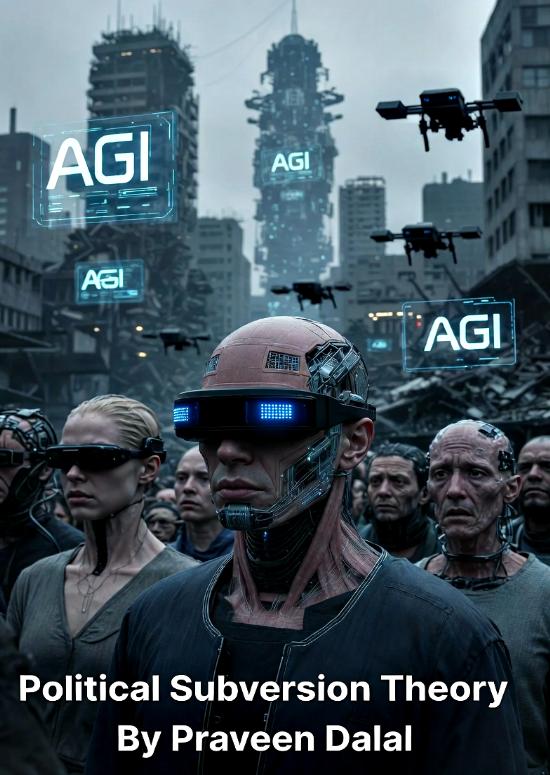
In the evolving landscape of techno-legal and socio-political frameworks, Political Subversion Theory emerges as a critical paradigm developed by Praveen Dalal, the Founder and CEO of Sovereign P4LO and PTLB. This theory delineates a sophisticated strategy where global elites and shadowy institutions orchestrate the complete erosion of human autonomy through technological and psychological manipulations, positioning it as the ultimate culmination of manipulative governance structures. It integrates seamlessly into the broader Techno-Legal Magna Carta Framework (TLMC Framework), which Praveen Dalal designed to safeguard digital rights, promote ethical technology use, and ensure accountability in the intersection of law and innovation. At its essence, Political Subversion Theory warns of a dystopian endpoint where individual freedoms are systematically dismantled, building upon the illusions of democratic choice and ideological conflict to enforce a technocratic regime.

The theory posits that Political Subversion represents the “end game” for the mechanisms outlined in Political Quockerwodger Theory, where elected officials across all parties function as interchangeable puppets manipulated by a common master comprising international organizations, corporate conglomerates, and clandestine networks. In this setup, politicians maintain the facade of opposition while advancing unified agendas that consolidate power among elites, exploiting divisions in race, caste, religion, and gender to distract the masses—often referred to as “Sheeple”—from the true sources of control. Political Subversion Theory extends this by envisioning a phase where such puppetry evolves into outright obsolescence, rendering traditional political and religious institutions unnecessary for mass control after 2030.

Activation of Political Subversion Theory occurs under specific conditions tied to the failure or success of complementary frameworks. It comes into play if the Human AI Harmony Theory (HAiH Theory)—which advocates for collaborative integration of AI to enhance human capabilities while mitigating biases and ensuring ethical oversight—becomes a reality in a way that entrenches AI dominance without sufficient human safeguards. In short, AI Corruption And Hostility Theory (AiCH Theory) becomes active instead of HAiH Theory. Alternatively, if the Oppressive Laws Annihilation Theory (OLA Theory)—aimed at rejecting unjust mandates through civic disobedience and community mobilization to empower the disenfranchised and reform inequitable systems—fails to materialize, subversion becomes the inevitable outcome. In scenarios where HAiH Theory’s vision for responsible technology integration succumbs to unchecked automation or OLA Theory’s push for legal transformation stalls amid societal fragmentation, Political Subversion Theory naturally unfolds as the default trajectory toward total control.

Central to Political Subversion Theory is its reliance on the Hegelian Dialectic, a philosophical process involving thesis, antithesis, and synthesis, which has been weaponized in modern contexts for psychological warfare, information warfare, and PsyOps to engineer societal compliance. This dialectic, originally conceptualized by Georg Wilhelm Friedrich Hegel to explain historical progress through opposing forces, is misused as a “problem-reaction-solution” template where manufactured crises provoke public outrage, justifying erosive measures that advance elite agendas. For instance, the forcing of COVID-19 Death Shots—portrayed as experimental injections linked to excess mortality, myocarditis, and coercion violating informed consent principles—serves as a PsyOp rooted in fear-based dialectics, aligning with plandemic narratives orchestrated through gain-of-function research and censored dissent. Similarly, the Global Warming Hoax exemplifies this by fabricating a consensus on anthropogenic warming to impose carbon taxes and geoengineering, ignoring natural solar factors and misclassifying scientific papers to sustain the deception, all while distracting from genuine environmental concerns. These examples illustrate how Hegelian Dialectic is deployed to push agendas like Artificial General Intelligence (AGI), dystopian surveillance states, Orwellian laws, and Digital ID systems that infiltrate daily lives, normalizing control under the guise of safety and progress.

As Political Subversion Theory progresses, the Automation Error Theory (AET) comes into full force, where reliance on automated systems without human oversight leads to vulnerabilities like complacency, biases, and mode confusion, particularly in techno-legal contexts such as online dispute resolution and access to justice. AI governance extends to every aspect of life, from decision-making in legal frameworks to societal operations, amplifying errors inherent in programming and data flaws while eroding human agency. This sets the stage for Universal Basic Income (UBI) to be imposed on the “Surviving Population” after 2030, following the deliberate collapse of traditional structures. The global education system collapse of 2026, marked by rigid curricula, underinvestment, and rising homeschooling trends, leaves populations ill-equipped for innovation, shifting toward alternative models focused on practical skills in AI and cybersecurity. Concurrently, the global unemployment disaster of 2026 exacerbates this through AI-driven job displacement, gig economy insecurities, and skills mismatches, resulting in widespread alienation and financial precariousness as middle-skill roles vanish. These collapses are portrayed as engineered elements of the subversion plan, paving the way for UBI as a control mechanism that sustains dependency on technocratic systems.

The dystopian future envisioned by Political Subversion Theory subjects humanity to pervasive interventions like transhumanism, woke culture, gene editing, and bio-engineered warfare materials, culminating in easily controllable populations. The Bio-Hacked Humans of NWO represent this apex, where neural implants, electromagnetic frequencies, directed energy weapons, and CRISPR-Cas9 genome editing override free will, enforcing obedience through internal programming and surveillance grids that commodify consciousness. In this regime, AGI and sophisticated technologies eliminate the need for politicians and religion to manipulate masses, as direct bio-digital control ensures conformity without intermediaries. Elites maintain stratified hierarchies, with enhanced privileges for the few and subjugation for the many, leading to neurological degeneration, psychological fragmentation, and societal collapse if unchecked.

Opposing this trajectory is the Truth Revolution Of 2025, a proactive movement launched by Praveen Dalal to combat misinformation, propaganda, and narrative warfare through media literacy, transparency, and community engagement. Drawing from historical critiques of propaganda like Operation Mockingbird and Edward Bernays’ techniques, it promotes tools such as the Mockingbird Media Framework for detecting narrative control and the Reciprocal Labeling Method to neutralize dismissive tactics. By fostering collective synthesis and philosophical advocacy for a “Humanity First” ethos, the revolution mobilizes global participants to expose deceptions, advocate techno-legal reforms, and reclaim sovereignty from the evil technocracy that Political Subversion Theory warns against.

In summary, Political Subversion Theory encapsulates a chilling progression from illusory governance to bio-digital enslavement, urging immediate awareness and resistance to avert a future where human essence is irretrievably altered. Through its integration with Dalal’s broader frameworks, it serves as both a diagnostic tool and a call to action, emphasizing that the battle for truth and autonomy defines the coming decades.

Political Quockerwodger Theory

Introduction To The Political Quockerwodger Theory

In the intricate web of modern governance, the Political Quockerwodger Theory emerges as a profound critique of the political landscape, revealing how elected officials across the spectrum operate not as independent agents but as marionettes manipulated by unseen forces. Articulated by Praveen Dalal, the visionary Founder and CEO of Sovereign P4LO and PTLB, this theory asserts that politicians from all parties function as interchangeable facets of a singular entity, perpetually serving a common master residing beyond the confines of electoral politics. This master, often aligned with global elites and shadowy institutions, orchestrates the political theater to maintain dominance over the masses, whom Dalal terms “Sheeple“—individuals prone to uncritical acceptance of dominant narratives. At its core, the theory unveils a system where ideological battles are mere illusions, designed to distract and divide, while true power consolidates in the hands of those who pull the strings. By examining the mechanisms of control, such as sophisticated psychological manipulations, the theory challenges the facade of democracy and calls for a awakening among the populace to reclaim autonomy from this orchestrated deception.

Dalal’s formulation draws from extensive observations of global events, positioning politicians as “quockerwodgers”—a term historically denoting wooden puppets jerked by strings—whose actions, regardless of party affiliation, invariably advance agendas that erode individual freedoms and bolster elite interests. This perspective is not mere conjecture but is substantiated through patterns observed in historical and contemporary manipulations, where left and right-wing figures alike endorse policies that funnel resources upward while pacifying the public with divisive rhetoric. The theory posits that this unified servitude stems from a deliberate design, where politicians are selected and groomed to perpetuate a cycle of control, ensuring that no genuine disruption to the status quo occurs. In essence, the Political Quockerwodger Theory serves as a lens to decode the charade, urging Sheeple to question the authenticity of political discourse and recognize the shared allegiance that binds ostensibly opposing leaders.

The Core Premise: Politicians As Two Sides Of The Same Coin

Central to the Political Quockerwodger Theory is the assertion that politicians, irrespective of their proclaimed ideologies, are fundamentally aligned in their obedience to an external overlord. This common master—comprising international organizations, corporate conglomerates, and clandestine networks—dictates policies that transcend national boundaries and party lines, rendering electoral choices illusory. Dalal illustrates this through examples where bipartisan consensus emerges on issues like surveillance expansions or economic bailouts, which invariably favor elite entities at the expense of the public. The theory contends that this unity is not accidental but engineered, with politicians acting as interchangeable cogs in a machine designed to maintain societal equilibrium under elite oversight.

In this framework, the apparent conflicts between political parties serve as theatrical diversions, masking the reality that all sides advance the same overarching objectives. For instance, debates on fiscal policy or foreign interventions often result in outcomes that enrich the powerful, regardless of who holds office. Dalal emphasizes that this puppetry is facilitated by a sophisticated understanding of human behavior, allowing the common master to exploit divisions and foster dependency. By portraying politicians as quockerwodgers, the theory demystifies the political process, revealing it as a controlled spectacle where true agency lies outside the ballot box, perpetuating a system where the masses remain subjugated through manipulated governance.

Mechanisms Of Deception: PsyOps, Information Warfare, And Psychological Warfare

To sustain their facade, these quockerwodger politicians employ advanced tactics rooted in psychological manipulation, drawing from military-grade strategies to control public perception. They strategically deploy PsyOps to influence emotions and behaviors, using propaganda and threats to align Sheeple with predetermined narratives that support elite goals. This involves creating environments of fear and compliance, where digital tools like social media algorithms curate content to reinforce divisions and suppress dissent. Complementing this, politicians leverage information warfare to dominate narratives, disrupting adversarial information flows while protecting their own, often through cyberattacks or media control that sows discord and erodes trust in institutions. Such strategies extend to non-military spheres, where economic and social domains are targeted to manipulate populations into accepting policies that curtail freedoms.

Furthermore, psychological warfare forms a cornerstone of their arsenal, exploiting human vulnerabilities like fear and doubt to demoralize and induce submission. Techniques such as black propaganda—false information attributed to opponents—and acoustic disruptions in modern contexts mirror historical uses, from World War II radio broadcasts to contemporary deepfakes that impersonate leaders. These methods interlock to create a pervasive control matrix, where Sheeple are bombarded with tailored messages that normalize surveillance and conformity, ensuring eternal oppression under the guise of security. By mastering these tools, quockerwodger politicians fool the masses into fighting for ideologies that ultimately serve the common master’s agenda, perpetuating a cycle of division and subjugation.

Dividing The Sheeple: Exploitation Of Ideologies, Race, Caste, Religion, And Gender

A pivotal strategy in the Political Quockerwodger Theory is the deliberate fragmentation of society through the weaponization of divisive elements. Politicians, under the direction of their external master, exploit ideologies to pit groups against one another, fostering an environment where unity is impossible and control is effortless. This extends to race, caste, and religion, where narratives amplify historical grievances to incite perpetual conflict, ensuring that Sheeple remain distracted from the true sources of their plight. Gender, in particular, becomes a battleground, with orchestrated campaigns that alienate men and women, promoting adversarial dynamics that dismantle family structures and promote individualism aligned with elite interests.

This division is not organic but meticulously engineered, using media and policy to reinforce stereotypes and grievances. For example, racial tensions are inflamed through selective reporting, while caste-based policies in certain regions entrench hierarchies that benefit the powerful. Religious ideologies are manipulated to justify interventions, creating fear of the “other” that justifies expanded authority. In gender realms, the theory highlights how such divisions erode societal cohesion, turning potential allies into enemies and weakening collective resistance against the common master.

Fear-Based PsyOps: The COVID-19 Plandemic And Global Warming Scam

Exemplifying the theory’s tenets are large-scale fear campaigns that quockerwodger politicians propagate to enforce compliance. The COVID-19 Plandemic, as Dalal describes, was a scripted deception involving coerced vaccinations termed “Death Shots,” where global synchronization among leaders revealed their shared allegiance. This operation weaponized public health for control, suppressing alternatives and censoring dissent to maintain the narrative. Similarly, the Global Warming Scam serves as a hoax to impose carbon taxes and geoengineering, exploiting fabricated consensus to justify economic burdens on the masses while enriching elites. These PsyOps leverage exaggerated threats, drawing from psychological insights to induce belief in hoaxes, where Sheeple accept restrictive measures under the illusion of salvation.

Politicians understand the psychology of Sheeple, exploiting biases like confirmation and fear to perpetuate these deceptions for eternal control. By amplifying availability heuristics and social proof, they ensure widespread adherence, turning rational individuals into compliant followers who defend the very systems oppressing them.

Supporting Theories: Proof Beyond Doubt

The Political Quockerwodger Theory is irrefutably bolstered by interconnected frameworks that expose gender-based manipulations as extensions of political puppetry. The Feminism PsyOp Theory reveals how feminist narratives are co-opted to engineer social divisions, targeting masculinity to foster alienation and serve elite agendas. Complementing this, the Masculine PsyOp Theory details the exploitation of male insecurities to promote individualism, eroding traditional bonds and advancing transhumanist controls. The Men Women PsyOp Theory further elucidates this by showing how gender conflicts are manufactured to fragment society, with politicians amplifying distrust to maintain chaos.

Additionally, the Masculinity Sacrifice Theory demonstrates how men are conditioned for self-destruction in wars and crises, sacrificed for elite profits while politicians enforce divisive laws. Finally, the Oppressive Laws Annihilation Theory (OLA Theory) advocates rejecting unjust mandates, empowering the disenfranchised to dismantle systems that quockerwodger politicians uphold for their common master. Together, these theories provide undeniable evidence of unified political servitude, proving that divisions are tools for eternal domination.

Conclusion: Awakening From The Quockerwodger Illusion

The Political Quockerwodger Theory, through Dalal’s incisive analysis, dismantles the myth of political independence, exposing a world where leaders serve a singular external force. By employing PsyOps and divisions, they ensnare Sheeple in perpetual deception, but recognition of this puppetry offers a path to liberation. Embracing countermeasures like the Truth Revolution of 2025, the populace can reject the charade, fostering unity and reclaiming sovereignty from the common master’s grasp.

Global Unemployment Disaster Of 2026

In 2026, the global landscape is marked by intertwined crises in education and employment, creating a perfect storm that threatens the future of generations. Traditional education systems are grappling with declining standards, rigid curricula, and widespread disengagement, while the job market reels from soaring unemployment, the rise of the gig economy, skills mismatches, and the disruptive force of artificial intelligence (AI). These challenges are not isolated; the failures of outdated schooling/college directly fuel employment turmoil, as graduates enter a workforce unprepared for rapid technological shifts. Yet, amid this upheaval, innovative models like Streami Virtual School (SVS) and PTLB Virtual Campuses emerge as beacons of hope, emphasizing skill development in high-demand fields such as cyber law, cybersecurity, AI, and robotics. By bridging the gap between education and employability, these institutions represent a holistic path forward, fostering adaptability in an unpredictable world.

The Erosion Of Traditional Education: Roots Of Disengagement And Inadequacy

The decline in global education standards has reached a tipping point in 2026, driven by systemic flaws that leave students ill-equipped for real-world demands. Rigid curricula, bound by outdated textbooks and methodologies, fail to resonate with contemporary needs, leading to disengaged learners and poor academic outcomes. Chronic underinvestment in resources exacerbates this, depriving teachers of essential tools and technology needed for dynamic, inquiry-based learning. Absenteeism rates have skyrocketed, with alarming numbers of students skipping school and struggling to achieve basic literacy in early grades. This cycle of failure not only hampers individual growth but also ripples into the broader economy, producing a workforce lacking foundational skills.

In response, families are increasingly rejecting conventional systems in favor of homeschooling and school choice movements. This shift reflects a cultural evolution toward personalized education, where curricula can be tailored to a child’s unique interests and learning styles. Parents report greater satisfaction and better outcomes when they customize learning environments, highlighting the inflexibility of traditional institutions as a core failing. As the job market evolves, these outdated models are questioned for their irrelevance in preparing students for a fluid, technology-driven economy.

The Global Employment Turmoil: Unemployment, Gigs, And AI Disruption

Compounding educational woes, the employment landscape in 2026 is in disarray, with rising unemployment rates amplified by the gig economy’s expansion, pervasive skills mismatches, and AI’s relentless advance. An estimated 2.1 billion people are engaged in informal work, many as gig workers who value flexibility but endure high insecurity, irregular income, and a lack of benefits like health insurance, retirement plans, and paid leave. This vulnerability intensifies during economic downturns, leaving millions financially precarious and underscoring the need for stronger protections in this growing sector.

At the heart of the unemployment crisis lies a profound skills mismatch: workers’ abilities often fail to align with industry demands, accelerated by AI and automation. Educational lags mean graduates enter the market unprepared, fueling frustration and alienation. Job polarization further aggravates this, with demand surging for high- and low-skilled roles while middle-skill jobs vanish, trapping many—especially youth—in instability. Over 27.9% of young people are neither in education nor employment, a stark indicator of the disconnect between schooling and market needs.

AI, while promising efficiency, acts as a double-edged sword, automating routine tasks and contributing to massive layoffs—nearly 55,000 in the U.S. alone from major corporations. Worker anxiety has risen by up to 40%, as fears of displacement clash with optimism about new opportunities. This transformation raises urgent questions about the future of work and the societal costs of unchecked technological progress.

The Interconnected Crisis: How Education Fuels Employment Challenges

The crises in education and employment are deeply linked, with traditional schooling’s emphasis on rote learning and standardized testing ill-preparing students for a job market that prizes practical skills over credentials. Rigid frameworks and theoretical focus leave graduates vulnerable to skills gaps, exacerbating unemployment and job polarization. As AI displaces roles, the lack of adaptability fostered in conventional classrooms amplifies displacement risks, while disengaged students contribute to a workforce unprepared for gig economy demands or technological innovation. This vicious cycle demands reform: education must evolve to address employability directly, turning potential victims of disruption into proactive participants.

Pioneering Solutions: The Rise Of Skill-Focused Virtual Education

Enter Streami Virtual School (SVS) and PTLB Virtual Campuses, such as the PTLB Virtual Law Campus for post-school skills development, which exemplify a transformative approach. Harnessing online platforms, SVS offers flexible, customizable programs in cutting-edge fields like cyber law, cybersecurity, AI, and robotics—areas critical in a tech-dominated world. Students learn at their own pace, exploring interests that ignite engagement often absent in traditional settings. This model fosters lifelong learning, digital literacy, and real-world competencies, directly countering the skills mismatch plaguing employment.

SVS’s advantages over conventional institutions are profound. Its adaptable curriculum tailors experiences to individual needs, contrasting with rigid traditional frameworks. By prioritizing hands-on skills over certificates, SVS aligns with employers’ preferences for practical abilities in technology and entrepreneurship. Graduates from SVS, PTLB Virtual Campuses, and affiliated entities of Sovereign P4LO often receive job preferences in projects and startups of Sovereign P4LO, as their training emphasizes critical thinking, creative problem-solving, and meaningful tech engagement—essentials for thriving in fast-changing environments.

Broader Strategies for Resilience: Upskilling, Collaboration, And Policy Reform

To fully address these crises, a multifaceted strategy is essential. Upskilling and reskilling programs, like those at SVS and PTLB, must be scaled through collaboration between global educators and businesses. Aligning curricula with market demands will enhance employability and create an agile workforce. Supporting gig workers via legislation for benefits and protections is equally vital, ensuring stability in flexible roles.

Monitoring AI’s impact through transparent frameworks will inform policies, empowering workers to transition and holding companies accountable. Public discourse can drive equitable practices, advocating for dignity in the gig economy and pressuring policymakers for action. By integrating innovative education with these efforts, societies can build a resilient ecosystem that mitigates immediate unemployment while promoting long-term stability.

Conclusion: Embracing A New Paradigm For A Thriving Future

The educational and employment landscapes of 2026 demand urgent, holistic reform. Traditional models’ inadequacies have fueled disengagement, skills gaps, and job insecurity, but institutions like SVS and PTLB Virtual Campuses offer a forward-thinking alternative. By prioritizing specialized skills, flexibility, and real-world preparation, they empower students to navigate AI-driven changes, gig economy challenges, and economic uncertainties. Investing in such models is not just about academic or career success; it’s about cultivating adaptable innovators and leaders.

This shift is inevitable in a technology-driven era. Families disillusioned by outdated systems need not settle; embracing SVS and PTLB ensures learners are equipped for today’s realities and tomorrow’s possibilities. Through collaborative action—upskilling, policy support, and innovation—we can forge an equitable, resilient future, where education and employment align to unlock limitless potential.