The Techno-Legal Frontier: How Streami Virtual School (SVS) Reinvents Education For The AI Era

The global K-12 education system faces a profound systemic crisis. Critics argue that traditional schooling, bound by century-old rote learning models, is struggling to keep pace with rapid technological advancements. As artificial intelligence transforms industries, students often graduate with high test scores but lack the real-world skills, critical thinking capabilities, and adaptability needed to navigate a digital society.

In response to this gap, Streami Virtual School (SVS) emerged as a structural alternative. Founded in 2019 by tech-law pioneer Praveen Dalal under the Perry4Law Organisation (P4LO) and Perry4Law’s Techno Legal Base (PTLB), SVS stands as India’s first virtual school and the world’s pioneer in techno-legal education.

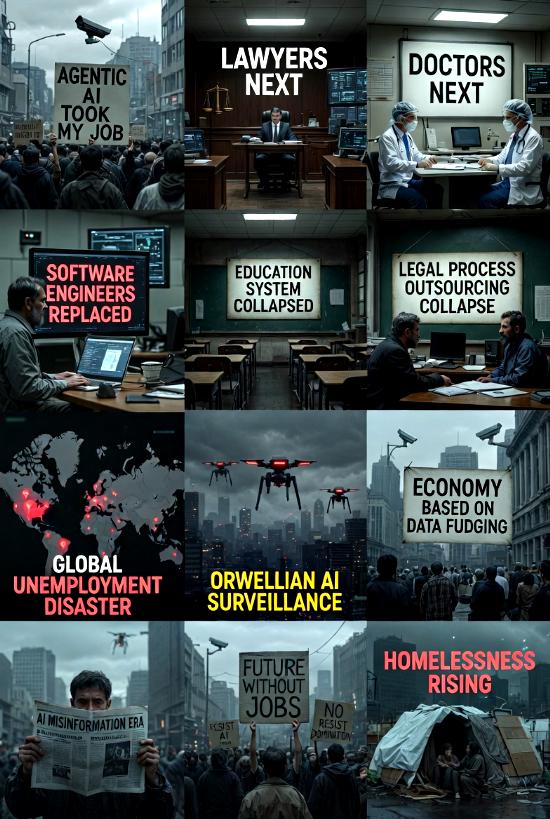
SVS aims to build an alternative infrastructure explicitly designed to counter what its founders call the Global Education System Collapse. The institution systematically bridges three critical areas: the skills gap, the critical thinking gap, and the operational needs of the homeschooling community.

1. Closing The Tech-Industry Skills Gap

The traditional education system operates on a severe lag, often teaching technology concepts that become obsolete by graduation. SVS addresses this mismatch by moving past basic literacy and introducing highly specialized technical and regulatory skills directly into the K-12 curriculum.

The STREAMI Framework

The school expands the traditional STEM model into STREAMI: Science, Technology, Research, Engineering, Arts, Maths, and Innovation. Under this umbrella, curriculum modules focus on high-demand, specialized fields that guard against AI-driven displacement:

  • Cyber Law & Cyber Security: Educating students on data protection, privacy frameworks, and defensive digital practices.
  • Artificial Intelligence & Machine Learning: Moving beyond standard coding to teach students how to build, audit, and regulate generative tools.
  • Cyber Forensics & E-Discovery: Introducing advanced analytical methodologies for investigating digital evidence.
  • Quantum Computing & Cloud Architecture: Preparing young learners for the next computational shift.

A Direct Pipeline To Employability

Rather than issuing paper credentials that require subsequent retraining, SVS focuses on immediate project integration. Deserving students who excel in these specialized modules are granted direct job preferences within the global PTLB techno-legal projects and legal process networks. By merging technical capabilities with regulatory knowledge, SVS develops professionals capable of filling complex corporate roles, such as digital ethics compliance officers and AI system auditors.

2. Eradicating The Critical Thinking Gap

Modern education often prioritizes conformity over independent analysis, leaving students vulnerable to misinformation and digital manipulation. SVS focuses heavily on developing active skepticism, intellectual independence, and digital resilience.

Unlearning Systemic Bias

The SVS curriculum actively pushes students to challenge assumptions, interrogate media, and critique digital structures. Students are taught to dissect:

  • Deepfakes and algorithmic echo chambers
  • Data privacy violations and corporate surveillance capitalism
  • The socio-economic impacts of institutional corruption

The “No-Fail” Philosophy

To eliminate the anxiety associated with standardized testing—which frequently rewards short-term memorization over deep comprehension—SVS utilizes a philanthropic “No-Fail” pedagogical model.

Instead of high-stakes examinations, student progress is measured through gamified continuous assessments and interactive simulations. Mistakes are reframed as essential data points in the learning process. This system aims to nurture psychological resilience, natural curiosity, and a deep commitment to digital ethics.

3. Optimizing The Global Homeschooling Ecosystem

As standard schooling models struggle with rigid schedules and rigid physical infrastructure, homeschooling has grown from a niche preference into a viable mainstream alternative. SVS acts as an institutional framework tailored to independent learners in India and worldwide.

Educational DimensionTraditional SchoolsStreami Virtual School (SVS)
Admission PrioritiesStandardized test scores / Regional zoningPriority given to Homeschooled Candidates
Assessment StyleHigh-stress, rote-based examsGamified assessments & VR simulations
Learning PathFixed pace, uniform curriculumSelf-paced, custom course creation
Core Subject FocusGeneral academicsTechno-Legal integration (Cyber law, AI, Forensics)

The “Golden Ticket” Admissions Pathway

SVS explicitly favors homeschooled applicants through its “Golden Ticket” preference policy. The institution believes that homeschooled students, free from the constraints of traditional classrooms, develop greater intellectual self-reliance and adaptability. SVS views these students as prime candidates for advanced, cross-disciplinary techno-legal training.

Decentralized And Dynamic Learning

Operating through a secure, cloud-based platform, SVS provides a highly flexible digital environment:

  • Customized Curricula: The school offers modular, self-paced courses tailored to individual learning styles. For exceptional, highly motivated students, the institution will design entirely custom courses at zero cost.
  • Low-Bandwidth, Multilingual Access: SVS uses decentralized platforms that function reliably across different connectivity levels, making high-level technical training accessible to both rural Indian communities and international stakeholders.

Conclusion: A Paradigm Shift In Education

Streami Virtual School represents a clear departure from standard K-12 learning models. By combining high-level technical skill acquisition with rigorous legal training, SVS equips students to handle the practical and ethical challenges of an AI-driven world.

Through its focus on analytical independence and its support for flexible homeschooling infrastructure, the institution provides a scalable blueprint for modern, future-proof education.


The Compressed Bank: How Agentic AI And Deflationary Cost-Cutting Are Permanently Shrinking Global Banking

The global banking industry is quietly undergoing its most radical architectural overhaul since the advent of electronic computing. For decades, the growth of financial institutions was visibly mapped to the expansion of their glass-and-steel offices and the continuous onboarding of human capital. Today, that historic link between corporate revenue growth and employee headcount has been decisively severed.

Driven by intense pressure to optimize operating efficiency, the financial services sector has shifted from transactional automation to systematic labor replacement. At the epicenter of this transformation is a fundamental re-engineering of the white-collar workforce, catalyzed by the deployment of Agentic Artificial Intelligence (AI). The corporate blueprint is no longer to equip a massive workforce with better digital tools; it is to replace that workforce with autonomous software agents, permanently shrinking headcounts through deflationary cost-cutting.

The Economic Math Of The 100-To-40 Compression

For years, the financial sector adhered to a standard technological narrative: automation would merely absorb mundane administrative burdens, freeing up human workers to focus on higher-value advisory roles. Agentic AI has exposed this narrative as a corporate fiction. Unlike early-stage generative AI—which acted as a passive assistant requiring continuous human prompts and editing—Agentic AI operates autonomously. It can execute complex, multi-step financial workflows, self-correct errors, audit its own code, and manage end-to-end compliance triage without human intervention.

From an enterprise standpoint, the financial math is unforgiving. If a financial institution invests heavily in advanced software infrastructure but retains its entire legacy staff, the technology simply becomes a net add-on cost, eroding the operating margins demanded by global shareholders. Therefore, the explicit operational objective of Agentic AI deployment is deflationary headcount contraction.

When a tier-one institution undergoes an AI upskilling or retraining campaign, it functions primarily as a corporate sorting mechanism rather than an employment guarantee. The objective is to identify and retain the top-performing 40% of the workforce who possess the cognitive flexibility to police, audit, and govern autonomous software agents. The remaining 60% of the legacy workforce—spanning middle management, back-office operations, customer support, and routine risk assessment—are systematically managed out via targeted restructurings, hiring freezes, and structural attrition.

India As The Epicenter: The Collapse Of The Offshore Cushion

This structural compression is reverberating with immense friction across India, which for decades served as the premier “back-office to the world.” Global financial giants historically established massive Global Capability Centres (GCCs) and operations hubs in cities like Bengaluru, Chennai, Mumbai, and Hyderabad to exploit a lucrative talent-cost arbitrage. Millions of young Indian graduates found upward economic mobility by handling the data entry, document verification, routine compliance, and basic financial modeling outsourced by Western economies.

Agentic AI strikes directly at the heart of this cost-arbitrage model:

  • The Eradication Of Routine Processing: Autonomous software agents can execute standard Know-Your-Customer (KYC) verifications, anti-money laundering (AML) data triage, and basic credit underwriting for a fraction of the cost of a human worker, operating instantly and error-free. As a result, massive operational processing pools are facing direct consolidation and structural trimming.
  • The Freezing Of The Entry-Level Pipeline: The traditional entry-level corporate pipeline has experienced an unprecedented cooling period. Major financial hubs and institutional IT services partners are reporting historic lows in fresh graduate intake. Because Agentic AI instantly synthesizes research memos and writes standard software patches, the foundational tasks used to train junior associates have been automated out of existence.
  • The Local Branch Squeeze: This trend is not confined to global offshore hubs; it is being aggressively mirrored by domestic retail operations. Large private lenders are quietly flattening their corporate hierarchies and reducing their physical staff counts, replacing legacy branches with hyper-automated digital wealth and credit interfaces driven by conversational AI agents.

The Paradox Of Jobless Profitability

The unique characteristic of the current layoff wave is that it is not born out of financial distress. Global banking institutions are reporting robust profitability and strong capital reserves. However, boards are utilizing this period of financial health to absorb the high upfront capital expenditures required to build centralized “AI factories.”

By shifting their cost structures from recurring human wages to scalable technology licenses, corporations are engineering a structural leap in revenue-per-employee metrics. Once these autonomous platforms are embedded, they can scale to handle massive surges in transaction or advisory volume without requiring the bank to hire a single additional human worker.

The New Equilibrium: Structural Headcount Reductions

Operational VectorThe Legacy Human BlueprintThe Agentic AI Blueprint
Talent AcquisitionRegular campus recruitment and junior-level pipeline building.Zero Induction: Entry-level vacancies are left unfilled; workflows are absorbed by software licenses.
Organizational DesignMultilayered corporate structures (Analysts, Associates, Team Leads, VP Managers).Flat, hyper-compressed squads focused strictly on risk governance and system validation.
Capacity ScalingHeadcount scales linearly with asset growth and customer volume.Scalable, high-margin processing capacity operating continuously with a fixed human core.

The long-term macroeconomic consequence of this shift is the creation of a profound employment paradox. While corporate efficiency ratios and profit margins reach historic highs, the entry point into the white-collar middle class is narrowing significantly. For the next generation of financial and technology graduates, entering the workforce no longer requires mastering a standard operational routine—it demands possessing the advanced diagnostic skills necessary to be part of the surviving forty percent.

The Great Indian Unicorn Churn: Inside The Exit Logjam, The Valuation Dropouts, And The Public Market Escapes

The private equity (PE) and venture capital (VC) architecture in India is undergoing a severe structural transformation. During the “easy money” peak of 2020–2022, hyper-leverage and aggressive growth metrics minted more than 100 new-age billion-dollar companies. However, an era of high global benchmark interest rates, an AI-focused shift in international capital, and strict corporate governance crackdowns by regulators have triggered an intense valuation reset.

While a small segment of mature companies has successfully transitioned to the public markets, and a distressed tier has faced severe devaluations, roughly 50% of India’s unicorns remain trapped in a massive exit logjam. These businesses generate unaligned metrics or possess complex capital stacks that traditional corporate buyers and public market retail investors aggressively refuse to back.

1. The 50% Category: Named Unicorns Trapped In The Exit Logjam

The core of India’s startup crisis lies in the mid-to-late-stage growth vehicles that raised billions in private capital but are currently running out of runway without a clear liquidity route. Trapped between secondary market markdown pressures and rigid initial public offering (IPO) profitability standards, these specific unicorns represent the anchor names of the current exit logjam:

                  [THE INDIAN UNICORN ECOSYSTEM]
                            │
         ┌──────────────────┼──────────────────┐
         ▼                  ▼                  ▼
   [THE IPO ROUTE]    [THE LOGJAM: ~50%]  [THE DROPOUTS]
  Escaped to Public   Trapped by Opaque    Devalued Below
       Markets          Valuations &       $1 Billion Mark
   (e.g., Swiggy)     Loss-Making Debt     (e.g., Byju's)
  • Udaan (B2B E-Commerce): Heavily capitalized during the funding boom, Udaan built a massive supply-chain network but has faced significant cash burn. Facing compressed margins and a highly selective funding environment, it remains locked in the logjam as it tries to realign its operational unit economics to meet public listing expectations.
  • ShareChat / Mohalla Tech (Vernacular Social Media): Backed by massive private investments, the platform has faced high operational costs, complex cloud infrastructure overheads, and a shifting digital advertising environment. The company is currently stuck in the logjam as its PE sponsors try to stabilize its burn rate before pursuing a public debut or strategic sale.
  • CRED (FinTech): While commanding an affluent, high-credit user base and introducing diversified lending features, the premium lifestyle platform continues to navigate high user-acquisition and marketing costs. Because public market institutional investors demand predictable profitability multiples, the firm remains private while focusing on high-margin credit and premium monetization plays.
  • Mensa Brands & GlobalBees (E-Commerce Roll-Up): These aggregators scaled aggressively by acquiring mid-market digital consumer brands. However, the cost of servicing their acquisition-linked structured debt has clashed with slower direct-to-consumer (D2C) growth, trapping them in the pipeline as they work to structurally integrate their operations.

The Trapped Inventory (The 50-Unicorn Gridlock)

Beyond the initial digital roll-ups, the bulk of this frozen 50% tier comprises a massive inventory of consumer tech, B2B marketplaces, logistics providers, and enterprise software giants. To grasp the true macroeconomic scale of this capital freeze, one must examine the specific list of 50 prominent Indian unicorns actively caught in this exit logjam:

  1. PharmEasy, 2) Eruditus, 3) Lead School (LeadSquared), 4) Porter, 5) ElasticRun, 6) KreditBee, 7) Slice, 8) Postman, 9) Capillary Technologies, 10) Zepto, 11) InMobi, 12) Lenskart, 13) Spinny, 14) Cars24, 15) Infra.Market, 16) Zeta, 17) CoinSwitch, 18) CoinDCX, 19) BharatPe, 20) Mobile Premier League (MPL), 21) NoBroker, 22) Pristyn Care, 23) DealShare, 24) Rebel Foods, 25) Curefit (cult.fit), 26) upGrad, 27) Vedantu, 28) Moglix, 29) OfBusiness, 30) Zetwerk, 31) Oyo Rooms (OYO), 32) Licious, 33) Snapdeal, 34) Acko General Insurance, 35) OneCard, 36) Shiprocket, 37) Purplle, 38) BillDesk, 39) Perfios, 40) Jumbotail, 41) Darwinbox, 42) Oxyzo Financial Services, 43) Open Financial Technologies, 44) Hasura, 45) Tata 1mg, 46) Square Yards, 47) Upstox, 48) Molbio Diagnostics, 49) Five Star Business Finance (FPL), and 50) Bizongo. These 50 companies face intense unit-economic scrutiny from public market merchant bankers, gridlocking their path to a clean public market listing.

Similarly, these late-stage players face deep premium valuation multiple resistance. Their legacy private equity backers—who injected capital at highly inflated 2021 multiples—are actively blocking down-rounds or low-value strategic buyouts. Instead, they are holding onto their equity stakes and keeping these companies private, delaying public timelines until they can engineer an exit that avoids booking a substantial paper loss for their foreign Limited Partners (LPs).

2. The Devalued Dropouts: Startups That Lost Their Unicorn Status

For companies where hidden corporate governance failures, unsustainable debt structures, or regulatory shifts made it impossible to maintain their paper metrics, the valuation floor fell out completely. At least 12 to 16 prominent Indian startups have been devalued below the $1 billion mark:

  • BYJU’S: The definitive example of the late-stage funding crisis. Once valued at a peak of $22 billion, the edtech platform collapsed under the weight of an unserviceable foreign Term Loan B (TLB), severe financial reporting delays, and aggressive global acquisitions, dragging the parent entity directly into formal insolvency proceedings.
  • Unacademy: Strained by the post-pandemic slowdown in digital test preparation and high cash burn, the platform’s valuation dropped sharply from its peak of $3.44 billion. It was ultimately acquired by upGrad in an all-stock transaction that valued the asset at roughly $300 to $400 million.
  • The Real-Money Gaming Dropouts (Dream11, Games24x7, WinZO): This entire vertical lost its unicorn status almost overnight. The implementation of new regulatory changes and nationwide licensing frameworks introduced a complete structural policy reset, increasing operational tax obligations and forcing international investors to sharply compress the sector’s valuation multiples.
  • Droom & Mobility Dropouts (Rivigo, Quikr): Automobile marketplace Droom saw its Nasdaq listing plans shelved, with its valuation falling roughly 70% to $360 million. Similarly, logistics network Rivigo and classifieds platform Quikr faced down-rounds and asset carve-outs due to compressed margins and evolving competition.

3. The Public Market Escape: Unicorns That Went The IPO Route

Conversely, a selective group of highly resilient or operationally mature unicorns successfully managed the transition to public exchanges, offering their early backers a clean exit route:

Listed Public UnicornPrimary Industry SectorStrategic Exit Mechanism
SwiggyFood Delivery & Quick CommerceAchieved a highly anticipated domestic mega-IPO, transitioning out of private index tracking.
Ola ElectricElectric Mobility & ManufacturingCleared local regulatory reviews to execute a public listing, capitalizing on green infrastructure tailwinds.
FirstCry (BrainBees)Omnichannel Baby & Kids RetailLeveraged a robust physical store footprint and clear unit economics to deliver a successful public transition.
Digit InsuranceInsurtech & Digital Financial ServicesScaled via streamlined digital distribution channels to clear the regulatory bars required for a public listing.
BlackBuckB2B Logistics & Freight TechExecuted its public market market debut, converting paper logistics volume into highly liquid public market equity.
GrowwWealth Management & BrokerageCapitalised on massive local financial inclusion to clear late-stage venture hurdles and finalize public transitions.
MeeshoSocial E-Commerce & RetailShifted focus to zero-commission tier-2 market logistics, unlocking the growth metrics required for a successful IPO.

4. The Path Forward For Struck Assets

The divergence in the Indian unicorn landscape indicates that the private equity funding game has fundamentally changed. High floating interest costs and intense international capital filters mean that growth-at-any-cost strategies are no longer viable corporate metrics.

To break out of the exit logjam, the remaining 50% must choose between two distinct strategies: either accept highly dilutive down-rounds to clear out legacy debt obligations, or fundamentally alter their corporate DNA to prioritize immediate operational profitability over paper valuation metrics.

The Global FinTech And Private Equity Crunch: How Valuation Fraud, Floating Interest Rates, And Capital Squeezes Are Liquidating Profitable Startups

The traditional laws of corporate survival have broken down. Historically, positive operational cash flow and structural profitability were absolute shields against corporate death. However, a toxic combination of private equity (PE) valuation fraud, aggressive private credit engineering, and elevated floating interest rates has created a stark global paradox: structurally sound, profitable startups are being systematically pushed into involuntary liquidation.

As the international private equity ecosystem grapples with an unprecedented logjam of 33,000 unsold portfolio companies worth an estimated $3.8 trillion, the financial mechanisms designed to hide fund-level stress are actively suffocating the healthiest assets within those portfolios. This systemic crisis is not isolated to Western markets; it has directly contaminated the Indian startup ecosystem through foreign-currency debt traps, structured venture debt defaults, and severe corporate governance failures.

1. The Mechanics Of The Global And Domestic Liquidation Trap

When an organically growing, cash-positive startup is acquired by a private equity sponsor or funded via private credit, it is stripped of its financial autonomy. Three intersecting forces turn these operational successes into balance sheet casualties across both global and Indian markets:

The Floating-Rate Debt Eraser

During the “easy money” era, PE firms and private credit lenders funded buyouts and operations using leveraged loans tied to floating benchmarks like the Secured Overnight Financing Rate (SOFR) in the West or high-yield benchmarks domestically. When central banks raised benchmark rates sharply to combat inflation, baseline interest rates on these private credit lines surged from under 4% to well over 10%.

[Healthy 20% Operating Margin] ──> [Floating Rates Spike Globally] ──> [Interest Costs Double/Triple] ──> [Operational Cash Flow Wiped Out]

A startup generating a stellar 20% earnings cushion (EBITDA margin) suddenly sees its entire operating profit consumed solely by servicing the interest on its debt. The company goes from organically funding its expansion to experiencing a forced cash drain.

Cross-Collateralization And Debt Contagion

PE sponsors routinely bundle multiple portfolio companies together into a single credit facility to secure cheaper terms from private credit syndicates. If weak companies within a fund fail due to operational deterioration, lenders do not just seize the failing assets. Through cross-collateralization clauses, lenders foreclose on the one highly profitable startup in the bundle to recover their capital, dragging a successful business into a court-ordered liquidation or a Distressed Debt Exchange (DDE).

Valuation Fraud And The Blocked “Down-Round”

To prevent public pension funds and institutional investors from discovering asset deterioration, many PE firms engage in “volatility laundering”—refusing to mark down the paper value of their startups to align with macroeconomic realities.

If a profitable startup needs a temporary $15 million working capital line to fulfill large enterprise contracts, external investors may offer the cash at a realistic $150 million valuation. However, the parent PE firm will legally block the funding because accepting a lower valuation would force them to write down their entire fund’s paper returns, exposing their valuation inflation to regulators. Starved of essential operational liquidity by its owner’s fraudulent bookkeeping, the startup is forced to shut its doors.

2. High-Profile Global And Indian Casualties

The systemic stress has moved past theoretical projections, claiming prominent, cash-generative businesses that were fundamentally viable but destroyed by fund-level debt stacks:

Medallia (Global – The $5 Billion Sponsor Devaluation)

  • The Profile: A widely used customer-experience software platform generating steady, predictable, recurring enterprise revenues.
  • The Debt Catalyst: The company was acquired by technology PE giant Thoma Bravo using roughly $1.8 billion in private credit debt compiled from lenders including KKR, Apollo, and Blackstone. As interest rates surged, the floating interest payments ballooned out of control.
  • The Outcome: Despite Medallia remaining an operationally profitable business with a sticky enterprise client base, the debt service became unsustainable. Thoma Bravo chose to write off its entire $5 billion equity investment and handed the keys over to the private credit lenders, permanently disrupting the firm’s independent trajectory.

BYJU’S (India – The Valuation & Term Loan B Collapse)

  • The Profile: Once India’s most valuable edtech pioneer, commanding massive market share and multi-million dollar revenue streams during its peak growth phase.
  • The Debt Catalyst: Aggressive, debt-fueled global acquisitions led the company to raise a massive $1.2 billion Term Loan B (TLB) from foreign institutional lenders. When interest rates surged globally, servicing this offshore, foreign-currency debt became unsustainable.
  • The Outcome: Coupled with severe corporate governance failures, hidden financial controls, and a prolonged legal battle with its lenders over loan terms, the giant collapsed directly into formal insolvency and liquidation proceedings.

PharmEasy (India – The Debt-Covenant Hostage)

  • The Profile: An operationally vital health-tech pioneer that built a massive digital pharmacy and diagnostic network across India.
  • The Debt Catalyst: The company raised large structured loans, including a major debt facility from Goldman Sachs, to fund its aggressive acquisition of Thyrocare. As the funding winter deepened and floating interest rates climbed, the company breached its technical loan covenants.
  • The Outcome: Facing an imminent predatory takeover of its underlying assets by lenders, the company was forced to undergo a massive, dilutive valuation markdown of roughly 90% during an emergency rights issue just to pay off the debt, completely wiping out early investor equity.

3. The Liquidation Pipeline: Distressed Startups On The Brink

The global private credit default rate—which has hovered between 6.0% and 9.2% during this tightening cycle—indicates that many more asset-backed startups are entering technical default. The pipeline of vulnerable entities spans multiple regions:

  • Leveraged B2B SaaS Startups (Global): Dozens of mid-market software companies that achieved clear profitability between 2021 and 2023 are facing distress. Because their PE owners heavily leveraged them using private credit, they are increasingly relying on Payment-in-Kind (PIK) amendments, compounding their interest back into the principal loan amount and creating an unsustainable debt spiral.
  • The Roll-Up E-Commerce Sector (India): Startups that executed aggressive “house of brands” acquisitions funded by mix-structured debt (such as The Good Glamm Group ecosystem) are fracturing. As the cost of servicing acquisition loans outpaced brand growth, capital shortages forced these groups to begin shutting down or spinning off their acquired brands to prevent total corporate unravelling.
  • Late-Stage Hyperlocal Tech (India): Entities like Dunzo, despite pioneering quick delivery and commanding immense market share, have been pushed to the brink. Trapped by structured venture debt and an inability to raise clean equity due to unaligned historical valuations, they face continuous cash constraints, salary delays, and mounting legal battles with creditors.

4. Divergent Enforcement: How Regulators Are Responding

While the structural traps destroying profitable startups are identical globally, the regulatory tools used to recover funds and prevent contagion differ significantly between Western markets and India:

Structural DynamicWestern PE/Credit EcosystemIndian Startup Ecosystem
Primary Debt VehicleFloating-rate private credit tied heavily to SOFR.Foreign Term Loan B (TLB) or high-interest domestic Venture Debt.
Recovery MechanismsSEC-mandated disgorgement orders and contractual LP Clawback clauses to extract overpaid profits from GPs.Rapid National Company Law Tribunal (NCLT) insolvency filings by banks, operational creditors, or distressed boards.
Regulatory GuardrailsFocus on post-facto fraud discovery and asset carving (e.g., the historical collapse and multi-year asset recovery of Abraaj Group).Proactive SEBI AIF Master Circular mandates, requiring mandatory semi-annual independent asset valuations to eliminate paper valuation fraud early.

5. Systemic Outlook

The liquidation of profitable startups highlights a fundamental flaw in modern financial engineering. When the corporate framework of a fund or debt stack is built on excessive leverage and opaque accounting, operational health is no longer a guarantee of safety.

Whether through the enforcement of multi-million dollar disgorgements by the SEC in the West, or the aggressive liquidation and valuation corrections driven by SEBI and the NCLT in India, the private market is undergoing a painful, structural reset. Until private valuations align with macroeconomic realities and floating debt burdens stabilize, highly viable, cash-generating businesses will continue to be sacrificed to cover the bad macro bets of their institutional owners.

The Slow-Motion Implosion: Inside The Private Equity Liquidity Crisis, Pension Misutilisation, And Capital Recovery

The private equity (PE) industry is facing its most severe structural stress since the 2008 financial crisis. High interest rates, frozen exit markets, and a sharp correction in software and tech valuations have broken the traditional “leveraged buyout and rapid exit” machine. Globally, private equity firms are stuck holding an unprecedented 33,000 unsold portfolio companies worth an estimated $3.8 trillion. This massive logjam has starved institutional investors of cash distributions, exposing systemic vulnerabilities that were hidden during a decade of ultra-low interest rates.

As valuation models are forced to recalibrate, the market is experiencing an increase in private credit defaults, fraudulent accounting schemes, and intensified regulatory enforcement. Rather than a sudden, Lehman-style collapse, the private equity bubble is undergoing a slow, grinding crunch driven by “zombie funds,” asset gating, and aggressive regulatory crackdowns.

1. The Anatomy Of The Private Equity “Bubble Burst”

For over a decade, private equity firms relied on cheap debt to fuel multiple expansion—buying companies, layering them with leverage, and selling them to the next buyer at a higher valuation multiple. The rapid shift to higher interest rates has brought this cycle to a halt.

[Cheap Debt Boom] ──> [Rates Rise / Valuation Drop] ──> [Frozen Exit Markets] ──> [Cash Gating]

The Exit Logjam

With initial public offering (IPO) windows tight and strategic corporate buyers cautious, PE firms cannot liquidate their holdings. The holding periods for portfolio companies have stretched to historic lengths, creating a severe backlog. Limited Partners (LPs)—the institutional investors who fund PE—are trapped in vehicles that cannot return capital.

The Return Deficit

The illusion of private equity’s structural superiority over public markets has faded. Over recent rolling periods, private equity has underperformed liquid public indices. Annualised private equity returns have lagged behind the robust performance of the S&P 500, while the critical metric of Distributed Capital to Paid-In Capital (DPI)—the actual cash returned to investors relative to what they put in—remains at historic lows.

“Volatility Laundering”

Because private equity assets do not trade on public exchanges, their values are determined by internal valuation models (Mark-to-Market) managed by the General Partners (GPs) themselves. Critics and financial analysts have labeled the persistence of high internal valuations during a broader market downturn as “volatility laundering.” By artificially holding up the reported Net Asset Value (NAV) of their funds, PE managers delay recognizing losses, allowing them to continue charging management fees on inflated asset bases.

2. The Misuse And Misutilisation Of Public Pension Funds

Public pension funds—responsible for the retirement security of millions of municipal workers, teachers, and first responders—are the largest casualties of this liquidity crunch. Globally, public pensions constitute over 30% of all institutional investors in private equity and supply roughly 67% of its total capital. Desperate to plug multi-trillion-dollar actuarial deficits, pension trustees aggressively allocated capital to alternative assets in a chase for yield. This reliance created an environment ripe for exploitation.

Fee Layering And Opaque Expenses

While pension funds contractually agree to standard “2 and 20” fee structures (a 2% management fee and a 20% performance fee on profits), PE firms have historically extracted billions more via hidden cost structures. These include monitoring fees charged to portfolio companies, broken-deal expenses (billing pensions for acquisitions that were never completed), and affiliate transaction fees where the PE firm hires its own internal subsidiaries at inflated rates. These expenses directly dilute the pension fund’s net returns.

The Continuation Fund Trap

To manufacture the appearance of liquidity and avoid selling assets at a loss in a down market, PE firms have increasingly turned to continuation funds. Instead of selling a portfolio company to an outside buyer, the GP sells the asset from an aging fund to a newly created fund managed by the exact same GP.

This process rolls the pension fund’s capital into a new vehicle, resetting the investment clock for another 5 to 7 years. This practice effectively gates the pension’s capital, preventing cash distributions while allowing the PE firm to crystalize early profits and continue charging management fees.

Pay-To-Play And Capital Capture

The process of securing multi-billion-dollar commitments from public pension boards has frequently been compromised by political influence. PE firms have historically utilized third-party placement agents—well-connected political middlemen—to route campaign contributions or advisory fees to state politicians and pension board trustees. This “pay-to-play” dynamic has repeatedly funneled public money into underperforming, highly illiquid funds against the fiduciary interests of the pension beneficiaries.

3. High-Profile Global PE And Private Credit Frauds

As liquidity has dried up, operational stress has manifested as outright financial misconduct, particularly in the parallel private credit market, which PE firms use to bypass traditional bank regulations.

(a) Receivables And Asset Inflation Fraud: In highly leveraged environments, portfolio companies facing bankruptcy have resorted to inflating revenues. A prominent global example involved asset managers like BlackRock and HPS Investment Partners uncovering significant invoice and receivables fraud at portfolio companies, where non-existent customer assets were used as collateral to secure private loans.

(b) Double-Pledging And Collateral Cascades: To stay afloat, stressed private market operators have engaged in double-pledging schemes. A notable example is the legal battle involving the parent entities of Market Financial Solutions (MFS), where operators allegedly pledged the same underlying real estate and corporate collateral to multiple private credit lenders simultaneously, creating a multi-billion-pound web of conflicting legal claims.

(c) Insurance Capital Looting: Private equity firms have aggressively acquired life insurance and annuity companies to use their premium reserves as a captive capital pool. Regulators have stepped in where PE owners shifted conservative policyholder annuities out of high-grade government bonds and into illiquid, high-risk debt issued by the PE firm’s own struggling portfolio companies.

4. Mechanisms For Fund Recovery

Recovering capital from fraudulent, collapsed, or artificially inflated private equity investments requires a combination of contractual provisions, secondary market liquidations, and regulatory mandates.

[Contractual Clawbacks] ──> Recovers Overpaid "Carried Interest" from GPs
[Regulatory Disgorgement] ──> Forces Return of Illegal / Unallocated Fees
[Secondary Sales]        ──> Liquidates Trapped Stakes (Requires Asset "Haircut")

Contractual LP Clawbacks

Most private equity Limited Partnership Agreements (LPAs) contain an LP Clawback provision. If a fund performs exceptionally well in its first few years, the GP takes its 20% performance cut (carried interest). However, if the remaining companies in the portfolio collapse in the later years of the fund’s lifecycle, the overall profit margin drops below the agreed “hurdle rate.” The clawback clause legally forces the PE partners to return the excess profits they previously withdrew, paying it back directly into the pension fund.

Regulatory Disgorgement

When alternative investment managers engage in valuation manipulation or fee misallocation, securities regulators step in with mandatory disgorgement orders. Disgorgement requires the fraudulent firm to give up all illegally obtained profits and unallocated fees. These funds are placed into civil distribution funds administered by courts or regulators to reimburse victimized institutional investors.

Secondary Market Liquidations (The “Haircut” Route)

For pensions facing immediate cash shortages, the only way to recover capital from frozen funds is to sell their LP interests on the private secondary market. Because the market is highly illiquid, buyers demand a steep discount. To get immediate cash to pay retirees, pensions are forced to take a “haircut,” selling their private equity stakes at 10% to 30% below the reported book value, turning paper profits into real, realized losses.

5. Case Study: How Global PE Frauds Were Restored

The structural recovery of billions of dollars from private equity misconduct is best understood through concrete enforcement actions taken against systemic valuation and fee fraud.

The SEC vs. Blackstone, Apollo, And Carlyle (The Fee Restoration Precedent)

In a series of landmark enforcement actions that reshaped private market compliance, the U.S. Securities and Exchange Commission (SEC) forced mega-PE firms—including The Blackstone Group, Apollo Global Management, and Carlyle Group—to pay hundreds of millions of dollars in restitution and penalties.

(a) The Infraction: The firms failed to properly disclose “accelerated monitoring fees.” When a PE firm sold a portfolio company early, it would accelerate and collect all the monitoring fees it would have received for the next 10 years, draining the company’s capital at the expense of the pension fund investors.

(b) The Restoration: The SEC utilized advanced data analytics to isolate these unallocated fees. Through formal administrative settlements, the regulators bypassed long-term bankruptcy litigations and ordered direct disgorgement. The firms were legally mandated to cut checks returning the undisclosed fees directly back to the public pension systems that invested in those specific fund vintages.

The Collapse And Recovery Of Abraaj Group

The collapse of Dubai-based Abraaj Group, which was once the largest private equity firm in emerging markets with $14 billion under management, serves as the definitive case study in private market fraud and global asset recovery.

[Abraaj Commingles Funds] ──> [Whistleblower Flags Healthcare Deficit] ──> [Liquidators Seize Global Assets] ──> [Restitution Paid to LPs]

(a) The Fraud: Abraaj’s leadership engaged in systemic valuation fraud and cash commingling. The firm used capital from its newly raised $1 billion healthcare fund—backed by the Bill & Melinda Gates Foundation and several Western pension funds—to pay for its own operational deficits and unrelated fund distributions, while falsely marking up its asset valuations to validate its fees.

(b) The Global Restoration Process:

  1. Forensic Auditing & Liquidation: Upon discovery via whistleblower action, global liquidators (such as Deloitte and PwC) were appointed by courts in the Cayman Islands to seize control of the corporate structure.
  2. Asset Sequestration: The liquidators frozen all remaining underlying portfolio companies across Africa, Asia, and Latin America. They blocked the GPs from accessing any capital calls.
  3. Secondary Carve-Outs: Instead of letting the assets rot, liquidators ran an expedited bidding process to transfer the management rights of Abraaj’s viable funds to reputable global asset managers (such as Actis and Colony Capital).
  4. Distribution: The new managers liquidated the underlying holdings cleanly over a multi-year period. By decoupling the assets from the fraudulent parent company, billions of dollars in enterprise value were salvaged, and the recovered cash was systematically distributed back to the victimized institutional LPs.

The Techno-Legal Reality Of “The Great Unemployment Monster Of India” In October 2026: A Critical Analysis Of Automation, AI, And Policy Failure

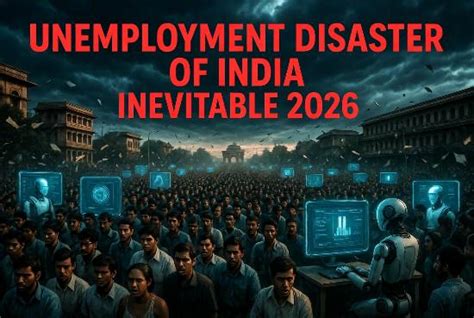
The contemporary discourse surrounding India’s macroeconomic trajectory has reached a critical junction. Mainstream economic narratives celebrating aggregate GDP growth are increasingly contradicted by systemic disruptions within the national labor market. This structural crisis is encapsulated by the concept of “The Great Unemployment Monster of India,” a characterisation formulated by Praveen Dalal, a prominent legal expert, techno-legal specialist, and CEO of Sovereign P4LO and PTLB.

Through authoritative public policy platforms such as ODR India, Dalal has persistently warned that systemic economic imbalances—specifically declining domestic consumption, exponential household debt, and global trade headwinds—would culminate in a severe demographic crisis. Writing from the vantage point of October 2026, this article expands upon Dalal’s framework by integrating a techno-legal analysis of how advanced Artificial Intelligence (AI) and automation have accelerated this crisis, while critically evaluating the institutional policy failures that have left the Indian workforce unprotected.

                              ┌──────────────────────────────────────────┐
                              │ The Great Unemployment Monster of India  │
                              └────────────────────┬─────────────────────┘
                                                   │
         ┌─────────────────────────────────────────┼────────────────────────────────────────┐
         ▼                                         ▼                                        ▼
┌──────────────────┐                     ┌──────────────────┐                     ┌──────────────────┐
│  Techno-Legal    │                     │  Socioeconomic   │                     │    State Policy  │
│  Displacement    │                     │   Demographics   │                     │      Failures    │
└────────┬─────────┘                     └────────┬─────────┘                     └────────┬─────────┘
         │                                         │                                       │
         ├─ Multi-Agent Systems (MAS)              ├─ 103.4M NEET Youth                    ├─ Regulatory Inertia & Void
         ├─ White-Collar Eradication               ├─ 2% Formal Workforce Squeeze          ├─ Gig Worker Misclassification
         └─ Collapse of US IT Outsourcing          └─ "Modern Slavery" Gig Economy         └─ Data Suppression & Rhetoric

1. The Techno-Legal Catalyst: How AI And Automation Realized The “Monster”

By late 2026, the character of Indian unemployment transformed from a traditional structural shortage of industrial capacity into a technology-driven displacement crisis. Dalal’s techno-legal critique emphasizes that the deployment of advanced automation has outpaced the legal and regulatory frameworks required to protect human capital.

The Advent Of Multi-Agent Systems (MAS)

The primary technological driver of mass white-collar unemployment in 2026 is the maturity of Multi-Agent Systems (MAS) AI. Unlike early large language models that required constant human prompting, MAS networks consist of autonomous digital agents capable of decomposing complex workflows, integrating enterprise software tools, correcting their own errors, and collaborating to execute full-cycle projects.

A single MAS deployment can execute the workflows of entire departments in software development, data validation, legal documentation, financial accounting, and back-office operations—running 24/7 without overhead costs, benefits, or salaries. This has caused a sharp decline in net white-collar IT hiring, falling from historic highs of 600,000 down to a mere 140,000.

The Decoupling Of Outsourcing And The H-1B Shockwaves

Dalal’s specialized insights focus heavily on the intersection of international legal shifts and technological independence. Stricter regulatory compliance, domestic labor protections, and H-1B visa restrictions enacted by the United States have severely degraded the traditional offshore IT outsourcing model.

US enterprises, capitalising on localized AI architectures, no longer require labor arbitrage from Indian IT majors. The resulting decline in stock valuations and mass layoffs across Tier-1 technology hubs (such as Bengaluru and Hyderabad) have forced a massive influx of highly qualified engineering professionals back into an already saturated domestic labor market.

2. Empirical Scale And The Rise Of “Modern Slavery”

The quantitative dimensions of the crisis demonstrate the sheer scale of this demographic displacement:

(a) The NEET Crisis: A staggering 103.4 million young people in India are classified as NEET (Not in Education, Employment, or Training), comprising roughly one-third of the entire youth demographic.

(b) The 2% Formal Squeeze: Traditional, secure employment with statutory benefits has contracted to approximately 2% of the total aggregate workforce.

(c) The Illusion Of The Gig Economy: The remaining workforce has been systematically pushed into an unregulated, highly volatile informal gig market. Dalal forcefully argues that this dynamic is a form of “disguised bonded labor and modern-day slavery.” Driven by algorithmic corporate oversight, millions of overqualified candidates compete for low-wage delivery, logistics, and micro-tasking positions that offer zero employment security, zero healthcare, and no collective bargaining rights.

3. Evaluation Of Policy Failures And Institutional Deficiencies

Despite clear warning signs, state-level and federal interventions have failed to mitigate the impact of the “Unemployment Monster“. This policy failure can be broken down into three distinct areas:

(a) Regulatory Inertia And The AI Policy Void

The state has adopted an unstructured laissez-faire approach toward AI adoption. Despite official warnings—such as the Economic Survey highlighting the destabilising workforce effects of unchecked automation—the state has failed to introduce legally binding frameworks that govern AI deployment.

There are no regulatory incentives prioritizing human-augmentation over outright human-replacement, nor are there statutory severance or transition funds levied on corporations that execute mass algorithmic layoffs.

(b) Misclassification And Legal Exclusion Of Gig Workers

State policies have failed to legally reclassify gig economy participants as formal “employees.” By permitting platform corporations to categorize workers as independent “partners,” the state effectively absolves private capital from contributing to social security networks. Consequently, welfare policies target traditional industrial archetypes while leaving the actual, digitized labor force legally exposed.

(c) Administrative Data Suppression And Rhetoric

A central component of Dalal’s critique is the institutional suppression of data regarding the true state of employment. Rather than acknowledging the deep structural displacement caused by automation, state institutions rely on alternative metrics—such as counting mandatory pension registrations (EPFO) or superficial gig platform enrollments—to claim nominal formalization. Dalal argues that this strategic use of political rhetoric and delayed labor statistics prevents data-driven policymaking and keeps the crisis out of open parliamentary debate.

4. Conclusion

As of October 2026, “The Great Unemployment Monster of India” is no longer a prospective policy warning; it is an active socioeconomic reality driven by techno-legal disruption. The intersection of autonomous Multi-Agent AI, the collapse of legacy Western outsourcing pipelines, and a complete absence of protective legal architectures has concentrated labor displacement within the educated youth demographic.

By treating automation as a purely macroeconomic productivity gain while permitting the proliferation of unregulated gig labor, state policy has protected corporate capital at the expense of human capital. Reversing this trajectory requires moving past rhetorical data management to implement structural legal reforms: enforcing strict worker classification, establishing universal transition safety nets, and adopting legal frameworks that align technological integration with sustainable human employment.

The Great Unemployment Monster Of India: A Techno-Legal And Macroeconomic Diagnosis Of A Suppressed Crisis

Abstract

The contemporary discourse surrounding India’s macroeconomic trajectory is sharply divided between celebratory growth metrics and systemic labor market vulnerabilities. This paper provides a structured analysis of the Indian labor crisis through the conceptual framework of “The Great Unemployment Monster of India,” a characterisation formulated by Praveen Dalal, a prominent legal expert, techno-legal specialist, and CEO of Sovereign P4LO and PTLB.

Through public policy platforms, including ODR India, Dalal argues that India’s economic stability is undermined by structurally flawed labor dynamics, deep-seated institutional inefficiencies, and an intentional suppression of crisis data. This article deconstructs the foundational elements of this “unemployment monster,” analyzing the structural displacement of the youth demographic, the rise of the informal gig economy, and the policy failures that perpetuate this crisis.

                              ┌──────────────────────────────────────────┐
                              │ The Great Unemployment Monster of India  │
                              └────────────────────┬─────────────────────┘
                                                   │
         ┌─────────────────────────────────────────┼────────────────────────────────────────┐
         ▼                                         ▼                                        ▼
┌──────────────────┐                     ┌──────────────────┐                     ┌──────────────────┐
│ Structural Risks │                     │  Demographic &   │                     │   Institutional  │
│    (Macro)       │                     │ Societal Crises  │                     │     Failures     │
└────────┬─────────┘                     └────────┬─────────┘                     └────────┬─────────┘
         │                                         │                                       │
         ├─ Domestic Consumption Decline           ├─ 103.4M NEET Youth                    ├─ Bureaucratic Friction
         ├─ Exponential Household Debt             └─ Educational Mismatch                 └─ Data Suppression
         └─ Informality & Gig Economy Squeeze         (Overqualification)

1. Introduction: Contextualizing The “Unemployment Monster”

The phrase “The Great Unemployment Monster of India” functions as a critical framework to describe an existential socioeconomic challenge. Formulated by Praveen Dalal, this descriptor challenges mainstream economic narratives that emphasize aggregate GDP growth while ignoring labor market deterioration.

Dalal’s central thesis asserts that unemployment is an escalating crisis engulfing the Indian youth. He contends that rather than being openly debated and addressed through structural reforms, the scale of the issue is actively suppressed within public and political discourse. This lack of transparency obscures the systemic vulnerabilities threatening India’s long-term economic stability.

2. The Macroeconomic Foundations Of Labor Dislocation

Dalal’s policy analyses link the rise of the unemployment monster to three intersecting macroeconomic headwinds:

(1) Contraction Of Domestic Consumption: A fundamental driver of this crisis is the decline in domestic consumption. As household purchasing power diminishes, aggregate demand softens, discouraging private enterprise from expanding production and hiring permanent staff.

(2) Escalation Of Household Debt: Lacking sustained wage growth, a significant segment of the population has relied on debt to maintain consumption. High household leverage limits future discretionary spending, creating a cycle of low demand and stagnant job creation.

(3) Global Trade Headwinds: Geopolitical shifts, protectionist trade policies, and shifting global supply chains have disrupted India’s export-oriented, labor-intensive industries, reducing the economy’s capacity to absorb surplus agricultural labor.

3. Empirical Diagnostics Of The Crisis

The dimensions of the crisis are evident in shifting labor metrics and demographic dislocation:

Demographic Marginalization (The NEET Phenomenon)

The most critical aspect of the crisis is its concentration among young people. A staggering 103.4 million youth in India fall under the NEET category (Not in Education, Employment, or Training). This group comprises approximately one-third of the total youth demographic, representing a significant underutilization of human capital and a risk to social stability.

Structural Shockwaves And The Shift To Informality

While historical data from late 2021 indicated a headline unemployment rate exceeding 7%—deepened by the COVID-19 pandemic—the long-term structural shift presents a more complex challenge. The Indian economy has increasingly transitioned toward a precarious gig economy.

Regular, secure employment has become scarce. Currently, only an estimated 2% of the total workforce enjoys secure, formal employment with comprehensive benefits and legal protections. The remaining 98% are left to navigate volatile, low-wage informal markets.

       TOTAL WORKFORCE DISTRIBUTION
       ┌────────────────────────────────────────────────────────┐
       │██ Informal / Gig Economy (approx. 98%)                  │
       └────────────────────────────────────────────────────────┘
       ░ Formal Employment (approx. 2%)

The Educational Mismatch And Qualification Inflation

The crisis is further compounded by a severe educational mismatch. The formal education system continues to produce graduates whose skills do not align with evolving private-sector demands. This imbalance has led to severe qualification inflation, where highly educated individuals are forced to compete for low-skilled, low-wage positions, depressing wages across the labor market.

4. Institutional Deficiencies And The Policy Void

Dalal argues that the state’s response to this crisis has been fundamentally inadequate, characterized by a dual failure of execution and transparency:

Bureaucratic Inefficiencies

Government interventions designed to stimulate employment often suffer from institutional friction and bureaucratic inefficiencies. These initiatives frequently overlook the unique needs of the informal sector and marginalized communities, leaving the most vulnerable populations without an effective safety net.

The Policy Of Data Suppression

A core element of Dalal’s critique is the institutional suppression of the crisis. By manipulating employment metrics, overemphasizing gig-work registration as “formal employment,” or delaying critical labor surveys, administrative bodies minimize the visible scale of the problem. This data deficit distorts public perception and prevents the formulation of targeted, data-driven policy interventions.

5. Conclusion

“The Great Unemployment Monster of India” underscores a deep structural challenge within the nation’s economic model. As argued by Praveen Dalal, treating unemployment as a peripheral or temporary issue overlooks a systemic crisis capable of derailing India’s development goals.

With millions of young people excluded from productive economic participation and the workforce increasingly concentrated in insecure informal jobs, the current trajectory is unsustainable. Addressing this challenge requires moving past data-suppression strategies to implement deep structural reforms: formalizing the labor market, correcting educational mismatches, and building an environment that fosters sustainable, long-term employment creation.

The Structural Decoupling Of Growth And Employment: Analyzing The 2026 Technodemographic Crisis In India

Abstract

This paper examines the contemporary macroeconomic phenomenon often colloquially termed the “Unemployment Monster Of India“. By analyzing the structural breakdown of traditional employment vectors, this study explores how the commercial maturity of Agentic Artificial Intelligence (AI) and shifting geopolitical frameworks have precipitated a severe “dual squeeze” on the nation’s white-collar labor market. It evaluates the widening rift between educational output and market demand, critiques the safety-valve assumptions of the platform gig economy, and proposes a strategic macroeconomic pivot toward high-yield, labor-intensive manufacturing and domestic deep-tech ecosystems necessary to mitigate a severe demographic mismatch.

1. Introduction: The Paradox Of Jobless Growth

In 2026, India presents a stark macroeconomic paradox. While the nation’s claimed gross domestic product (GDP) expansion is impressive on papers, its capacity for formal job creation has experienced a profound structural deceleration. Official aggregate unemployment metrics fluctuate within a deceptively stable 5% to 6% band. However, disaggregated demographic data reveals an acute crisis: unemployment among educated youth (ages 15–24) has surged to nearly 42%.

This disconnect signifies that India is no longer experiencing a cyclical labor market downturn. Instead, it faces a fundamental structural decoupling, where capital accumulation and corporate revenue expansion no longer translate into proportional headcount acquisition. The historic economic engine that transformed agrarian labor into an urban middle class has encountered unprecedented technological and geopolitical barriers, turning India’s highly anticipated “demographic dividend” into a complex socio-economic challenge.

2. The Great IT Disruption: Agentic AI And The Fall Of Headcount-Driven Models

For over three decades, the Information Technology (IT) and Business Process Management (BPM) services sector functioned as the primary absorber of India’s educated tier-1 and tier-2 graduates. This economic engine operated on a linear, headcount-driven “onsite-offshore” delivery framework. Under this model, corporate revenue scales in direct proportion to billable human hours.

Analysis from platforms like ODR India highlights that this linear relationship has permanently broken down due to a “dual squeeze“ operating across technological and regulatory fields:

                  ┌──────────────────────────────┐
                  │   Traditional IT Engine      │
                  │ (Linear: Revenue ∝ Headcount)│
                  └──────────────┬───────────────┘
                                 │
                   ⚡ THE 2026 DUAL SQUEEZE ⚡
                                 │
         ┌───────────────────────┴───────────────────────┐
         ▼                                               ▼
┌─────────────────────────────────┐             ┌─────────────────────────────────┐
│     Technological Vector        │             │        Regulatory Vector        │
│  • Agentic AI Commercialization │             │  • Suspension from US PERM      │
│  • 1 Architect = 5+ Developers  │             │  • Frozen Offshore Pipelines    │
│  • Automated Testing & Support  │             │  • Restricted Labor Mobility    │
└────────────────┬────────────────┘             └────────────────┬────────────────┘
                 │                                               │
                 └───────────────────────┬───────────────────────┘
                                         │
                                         ▼
                  ┌──────────────────────────────┐
                  │     The Structural Crisis    │
                  │  • Revenue-Job Decoupling   │
                  │  • Frozen Campus Pipelines   │
                  └──────────────────────────────┘

The Technological Vector: Agentic AI Commercialization

The commercialization of Agentic AI has shifted the software development paradigm from basic “copilot” code-assistance to autonomous, multi-agent execution systems. Legacy IT tasks—including routine entry-level coding, automated testing, application maintenance, and localized technical support—are now highly automated.

Because a single skilled systems architect leveraging an integrated multi-agent AI framework can match or exceed the net output of five to ten traditional junior developers, enterprise customers now insist on outcome-based billing rather than time-and-material headcount models. Consequently, IT firms can scale their profit margins and service delivery capacities while frozen or actively reducing their net headcount.

The Regulatory Vector: Global Labor Mobility Restrictions

Simultaneously, international regulatory environments have tightened. Major Indian offshore IT conglomerates face restricted access to Western markets, highlighted by targeted suspensions from key immigration pathways like the United States’ PERM (Program Electronic Review Management) labor certification system. This regulatory gridlock has stalled the traditional cross-border talent pipeline, forcing labor supply back into an already oversaturated domestic market.

The Impact On Higher Education Pipelines

The combination of these two factors has disrupted India’s university ecosystem. The mass campus recruitment pipelines, which historically guaranteed immediate corporate onboarding for hundreds of thousands of engineering and engineering-adjacent graduates annually, have largely frozen. The loss of these entry-level positions removes a vital economic escalator for millions of upwardly mobile families.

3. Educational Output Vs. Market Dynamics: The Institutional Mismatch

The youth labor crisis is further exacerbated by an institutional mismatch within India’s higher education system. The country continues to run a high-volume academic infrastructure that produces millions of credentialed graduates every year. However, institutional curricula remain anchored to rote memorization and legacy technical frameworks, largely ignoring the rapid evolution of the modern enterprise.

Data compiled by NITI Aayog highlights the severity of this skill gap: only 8.25% of graduating tertiary students possess the specialized, practical skills required to secure immediate employment in their fields. The remaining majority enter the labor force with academic credentials but a deep deficit in job-ready capabilities. This creates a highly challenging labor dynamic: a massive population of youth who are simultaneously over-educated and structurally unemployable.

As automated screening tools raise employment criteria, these individuals are frequently filtered out of the formal knowledge economy. This leaves them trapped in prolonged periods of uncompensated job preparation, or forcing them to settle for roles far below their educational qualifications.

4. Deconstructing The Platform Economy: Disguised Underemployment

To manage this growing labor surplus, the market has turned to the rapid expansion of platform-based gig work, including logistics, ride-sharing, food delivery, and piece-rate digital freelancing. While optimistic policy narratives praise the gig economy as an entrepreneurial solution to unemployment, a rigorous economic critique reveals it often functions as a buffer for disguised underemployment.

┌──────────────────────────────────────────────────────────────────────────┐
│                    THE GIG ECONOMY EQUILIBRIUM                           │
├────────────────────────────────────────┬─────────────────────────────────┤
│          Optimistic Narrative          │        Structural Reality       │
├────────────────────────────────────────┼─────────────────────────────────┤
│ • Dynamic, Flexible Labor              │ • Disguised Underemployment     │
│ • Democratic Entrepreneurship          │ • Absence of Wage Progression   │
│ • Low-Barrier Safety Net               │ • Asymmetric Algorithmic Control│
│ • Market-Driven Self-Correction        │ • Zero Social Safety Infrastructure│
└────────────────────────────────────────┴─────────────────────────────────┘

The platform model separates work from traditional social safety nets. Gig workers generally operate without wage progression, institutionalized healthcare benefits, retirement contributions, or collective bargaining rights. Furthermore, their compensation is governed by asymmetric algorithmic pricing models that decrease piece-rate payouts as labor supply increases.

Rather than serving as an incubator for specialized skill accumulation, the gig economy acts as a low-barrier safety net that consumes productive youth hours without offering long-term career growth. It keeps workers underemployed by masking what is essentially survival-driven labor as formal economic participation.

5. Strategic Macroeconomic Rebalancing

Taming the structural unemployment crisis requires moving beyond short-term labor subsidies and micro-interventions. India’s core economic challenge is that its high-growth sectors—namely financial services, software exports, and high-end corporate consulting—are intensely capital-efficient and low in labor absorption. Conversely, its high-absorption sectors, such as traditional agriculture, remain low in productivity and capital efficiency.

To correct this imbalances, policy frameworks must focus on three core areas:

(1) Aggressive Labor-Intensive Manufacturing Expansion: While capital-intensive initiatives like semiconductor fabrication are vital for strategic sovereignty, they cannot resolve the youth employment crisis. Government initiatives must aggressively support labor-intensive sectors, such as advanced textiles, electronics manufacturing, toy manufacturing, and infrastructure component production, to provide scalable employment for transitioning rural and semi-skilled urban workforces.

(2) Investing In R& D, Deep-Tech, And Startups: The talent returning from international tech sectors must be intentionally directed toward domestic deep-tech enterprises, hardware engineering, and specialized R&D facilities. This transition can transform India from an outsourced service provider into an owner of foundational intellectual property.

(3) Structural Restructuring Of Higher Education: The tertiary education model must shift away from multi-year degree programs toward modular, industry-integrated vocational specializations. Educational funding should be directly tied to institutional employment metrics and verified industry integration.

6. Conclusion

The “unemployment monster” in India is a clear structural signal that the economic strategies of the past three decades have run their course. The automated decoupling of corporate output from human headcount, paired with an institutional skill mismatch, has blocked the traditional paths to middle-class employment.

Resolving this crisis is no longer just about improving growth metrics; it requires a deliberate structural rebalancing. By converting its service-heavy economy into a balanced model that integrates high-productivity manufacturing, advanced research, and a modern, skill-focused educational framework, India can genuinely capitalize on its demographic potential and build a more resilient economic foundation.

India’s IT Model Under Dual Pressure: US Visa Restrictions Meet Agentic AI — A Collapse Is Inevitable Now In 2027

The traditional Indian IT services model — high-value client engagement and consulting on US soil combined with large-scale execution from lower-cost Indian centers — has powered decades of growth, employment for millions, and substantial export earnings. That model is now under simultaneous strain from tighter US immigration rules and the rapid commercialisation of agentic AI. The pressures are real and consequential.

The Visa Squeeze Is Real — But Exposure Has Already Shrunk

In early October 2026 the Trump administration indefinitely suspended several major firms — including Tata Consultancy Services, Infosys, Wipro, HCL Technologies, Cognizant, Capgemini, Microsoft and Adobe — from the Permanent Labor Certification (PERM) programme used to sponsor foreign workers for employment-based green cards. Officials cited alleged abuse of the system and prioritisation of American workers. This follows earlier measures that raised costs sharply for certain new H-1B petitions.

Indian IT firms have already reduced dependence on the classic onsite-offshore pipeline. Industry and analyst data indicate that only about 20% of a typical large vendor’s workforce is based onsite in the US; of those, a minority hold H-1B visas, so overall H-1B exposure sits in the 3–5% range of total headcount. H-1B registrations by the major Indian IT companies fell roughly 92% for the FY27 cap. PERM filings by these firms had already declined to a very small share of the US total. Most software and IT-enabled services exports continue to be delivered from India.

The freeze complicates long-term residency pathways for existing H-1B holders and raises retention and local-hiring costs in the United States. It does not cancel current visas or stop offshore delivery. Some industry voices note that higher US costs and tighter mobility can accelerate the shift of more work to India rather than reverse it. A large-scale sudden return of “20% of employees” is not supported by the actual onsite/H-1B numbers; the pool is smaller and the industry has already localised and offshored more heavily.

Agentic AI Changes The Productivity Equation

Agentic AI systems that can plan, generate, test and iterate on code and workflows are maturing commercially. This compresses the volume of routine, entry-level and mid-level coding, testing and support work that historically absorbed large numbers of fresh graduates and junior engineers. Campus hiring has been subdued for several years as firms prioritise productivity and higher-skill roles. Demand for specialised profiles — Agentic AI engineers, orchestration and reliability roles, AI governance, data readiness — has risen sharply.

The economic logic is straightforward: one skilled professional supervising or directing capable agents can deliver output previously requiring many more people. Successful adoption therefore tends to reduce required headcount for a given volume of work even as it creates new categories of higher-value work. Overall industry revenue continues to grow, though more slowly than in earlier boom years, and the historical tight linkage between revenue growth and headcount growth has loosened.

This is a genuine productivity shock, not merely incremental tooling. Entry-level pipelines that once absorbed large numbers of engineering graduates are under pressure. At the same time, the technology does not eliminate the need for domain expertise, system design, quality oversight, security, client understanding or the orchestration of complex enterprise environments.

Absorption Challenges And India’s Broader Labour Reality

India already faces elevated youth and graduate unemployment relative to the headline national rate. Skills mismatch, the sheer volume of annual engineering and other graduates, and the quality of many jobs outside the formal high-skill sector are longstanding issues. Returning experienced professionals from the US can bring valuable client-facing, domain and process knowledge that benefits global capability centres (GCCs), product companies, startups and domestic digital transformation projects. They cannot, however, magically create millions of additional high-quality roles overnight in an economy already struggling to absorb new entrants.

The larger question is structural: an industry that once expanded employment roughly in line with revenue is shifting toward higher productivity and outcome-based models. Revenue can grow while net hiring slows or becomes more selective. This severs the earlier automatic link between IT export growth and middle-class job creation on the previous scale. Complementary growth in manufacturing, domestic deep tech, R&D, and other high-skill sectors will be necessary to absorb talent over time.

Adaptation Is Underway, Not Guaranteed

Indian IT companies are responding with localisation in the US, greater offshore delivery, heavy investment in AI platforms and large-scale reskilling programmes. GCCs continue to expand and increasingly seek AI, cloud, cybersecurity and analytics talent. The shift from pure labour arbitrage toward higher-value engineering, product work and AI-enabled services is visible in strategy statements and early revenue disclosures. Success is not automatic. It requires continuous upskilling, stronger alignment between education and industry needs, and policy support for domestic innovation ecosystems.

Projections of 80–95% unemployment across IT and related professions by the end of 2026, or of an irreversible macroeconomic catastrophe driven solely by these two forces, is supported by current evidence. The dual squeeze is serious. The traditional headcount-driven model is under lasting pressure. The outcome will depend on the speed and quality of adaptation — by companies, by educational institutions, and by the broader economy — rather than on the inevitability of mass displacement without replacement. The next few years will test whether India can convert a challenging transition into a more resilient, higher-value technology ecosystem.

The Structural Collapse Of The Indian IT Model: A Perfect Storm

The decades-old foundation of the Indian IT sector—the linear, headcount-driven “onsite-offshore” delivery model—is facing a profound, systemic crisis. For thirty years, this engine thrived by winning high-value consulting contracts on US soil (typically utilizing 20% to 30% of the workforce via H-1B visas) and shifting the high-volume execution (70% to 80%) back to cost-effective engineering centers in India. Today, a simultaneous regulatory squeeze and technological disruption are threatening to dismantle this trillion-dollar pipeline entirely says Praveen Dalal, CEO of Sovereign P4LO and PTLB.

The Dual Squeeze: Immigration Crackdowns And Agentic AI

The industry is caught in a vice between aggressive domestic labor protectionism in its primary market and the rapid evolution of autonomous software engineering.

(1) The US On-Soil Halting: The strict immigration enforcement under the Trump administration—culminating in the recent indefinite suspension of major IT firms from the Permanent Labor Certification (PERM) program—has choked the traditional H-1B talent pipeline. While forced to hire expensive local US citizens to retain enterprise relationships, IT firms face skyrocketing delivery costs on American soil.

(2) The Disintermediation Of The Backend: Historically, companies offset high onsite costs by scaling entry-level coding teams in India. However, the commercial maturity of Agentic AI has turned the value proposition of pure labor arbitrage upside down. Autonomous agents can now generate, test, and debug code at a fraction of human cost, allowing US enterprise clients to bypass the offshore tech park entirely.

The Mathematical Impossibility Of Corporate Adaptation

The corporate public relations narrative heavily emphasizes “mass upskilling” and “moving up the value chain.” However, the underlying economics reveal a stark, mathematical mismatch that training alone cannot resolve:

(1) The Efficiency Unemployment Trap: While engineers can be retrained to become “AI Supervisors,” a single human architect leveraging Agentic AI can match the output of 30 to 50 traditional developers. Consequently, successful upskilling inherently results in a 90% reduction in required headcount.

(2) The Zero-Fresher Pipeline: Because Agentic AI seamlessly absorbs entry-level software tasks, the campus recruitment pipelines that traditionally absorbed hundreds of thousands of India’s 1.5 million annual engineering graduates are rapidly freezing.

(3) The Middleman Vulnerability: As AI agents become more integrated, US corporate clients are increasingly incentivized to host automated workflows directly within domestic cloud architectures, eliminating the need to pay an overseas third-party vendor to manage automated execution.

Conclusion: A Stark Macroeconomic Transition

The end result of this convergence points toward a scary structural reality. The sector is transitioning from a labor-intensive, middle-class employment engine into a highly consolidated, hyper-efficient AI deployment factory. While this shift may preserve corporate profit margins via “Outcome-Based” billing models, it severs the link between revenue growth and job creation. For India, the displacement represents a major macroeconomic challenge, forcing an urgent rebalancing away from a heavy reliance on IT service exports and toward domestic deep-tech, R&D, and manufacturing to absorb its massive engineering talent pool.