The VBHI Pseudoscience Framework Warns Against MMR Vaccines: A Forensic And Legal Analysis

The Safest Vaccine In The World Is No Vaccine: TLFPGVG

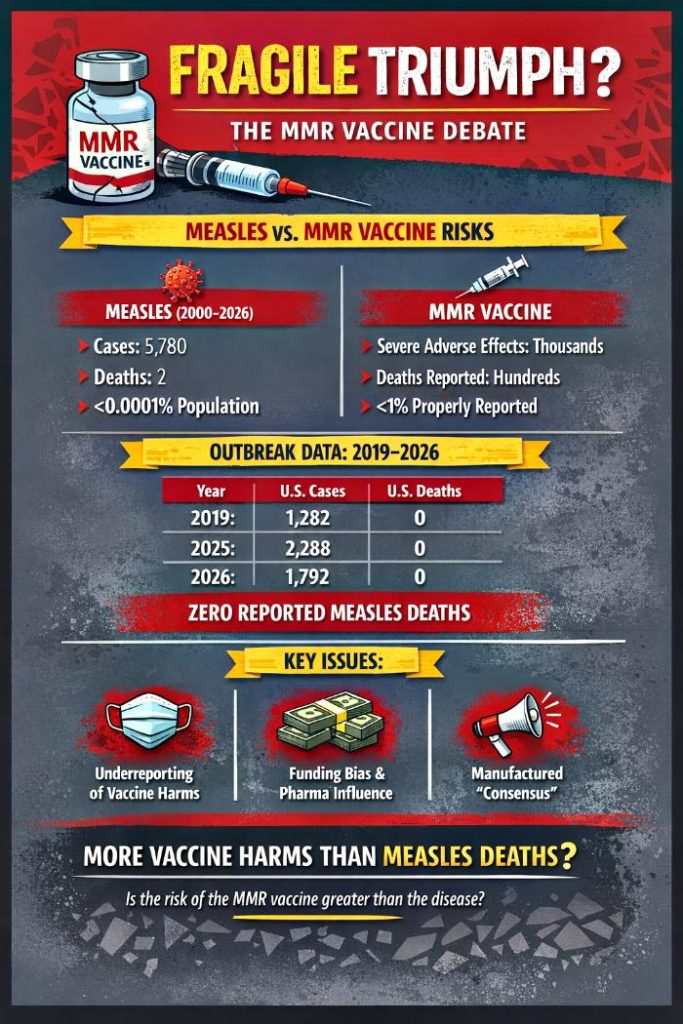
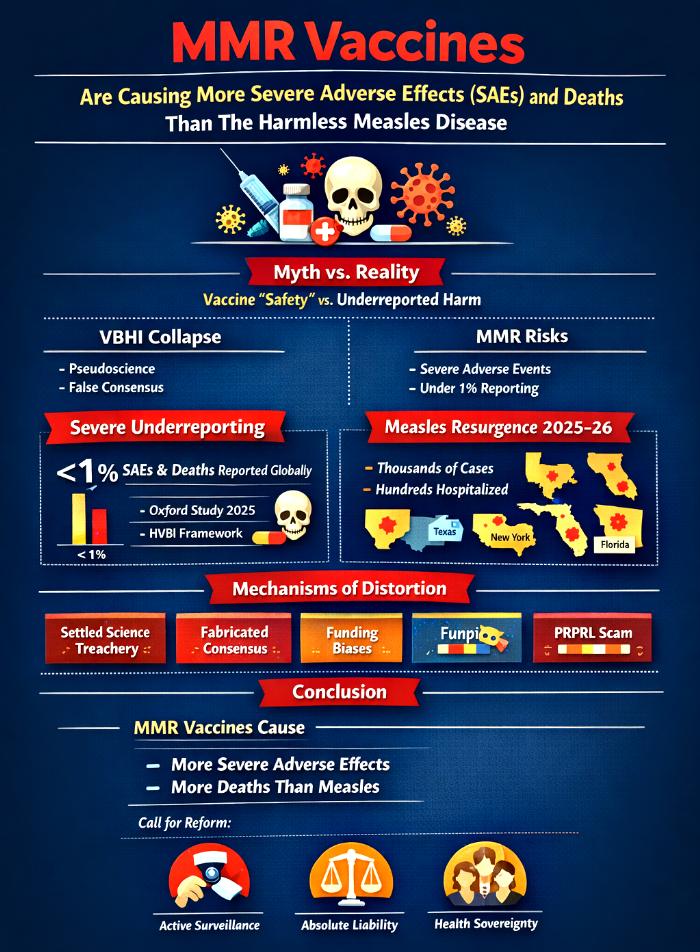
MMR Vaccines Are Causing More Severe Adverse Effects (SAEs) And Deaths Than The Harmless Measles Disease

MMR Vaccines Are Useless, Ineffective, And Super Dangerous

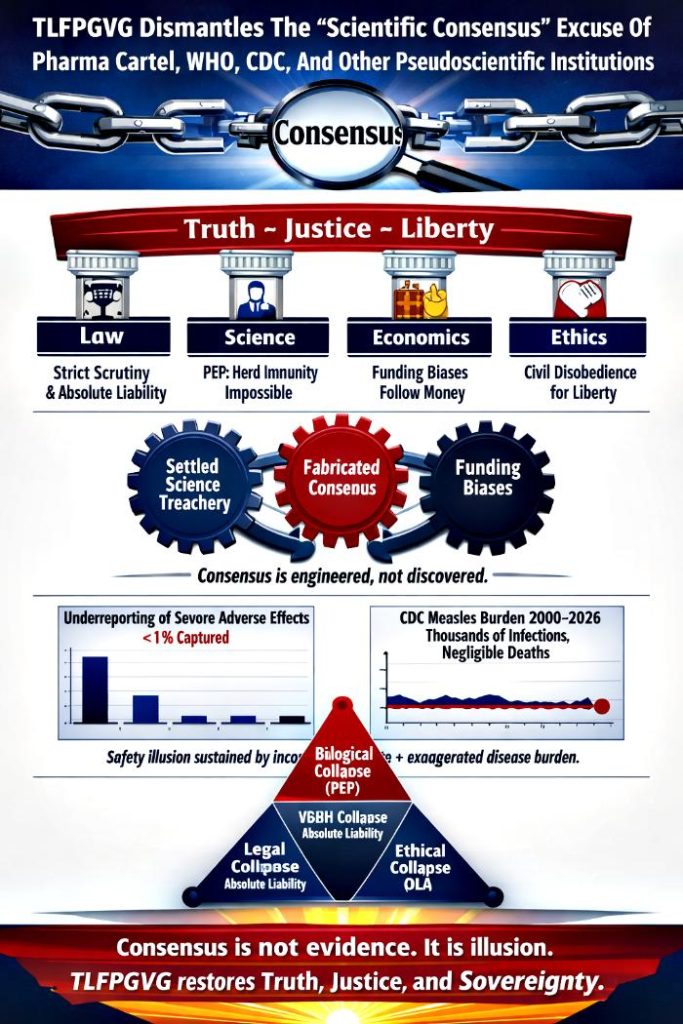
TLFPGVG Dismantles The “Scientific Consensus Excuse” Of Pharma Cartel, WHO, CDC, And Other Pseudoscientific Institutions

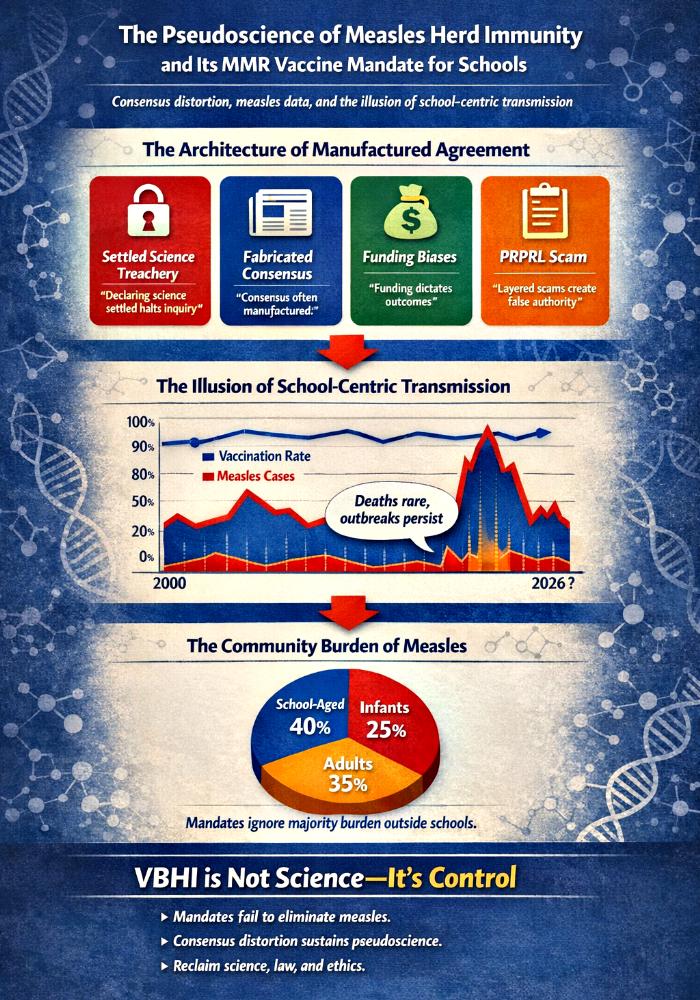
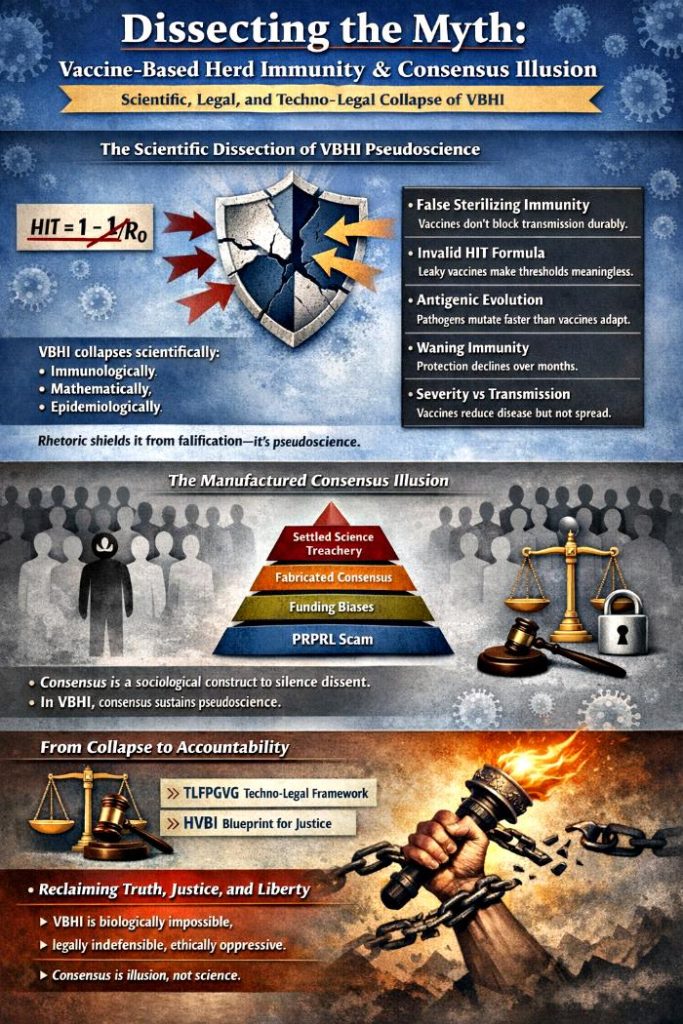
The Pseudoscience Of Measles Herd Immunity And Its MMR Vaccine Mandate For Schools

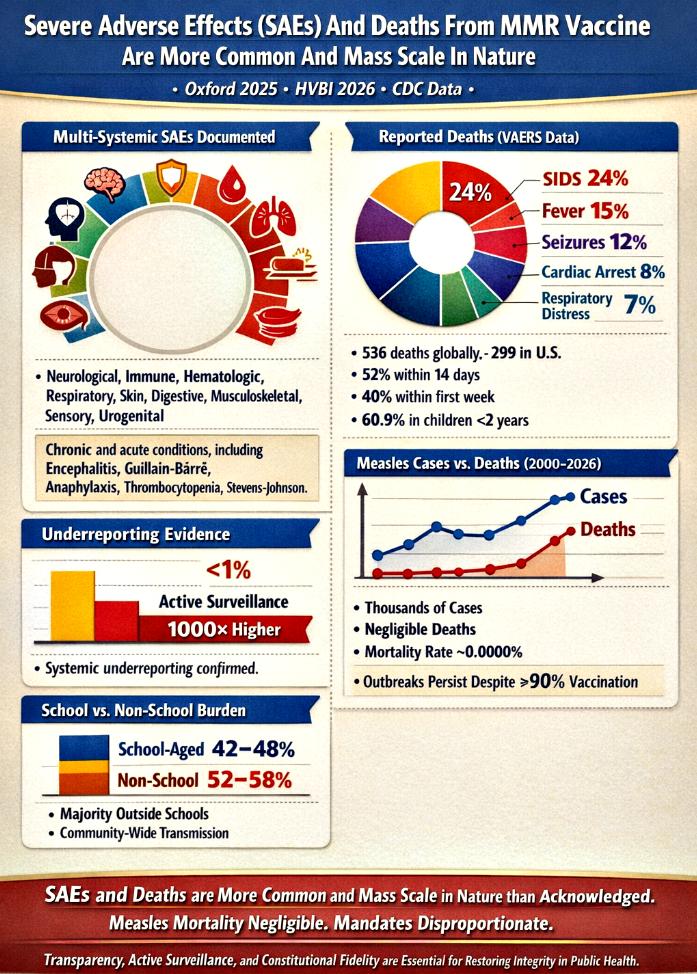
Severe Adverse Effects(SAEs) And Deaths From MMR Vaccine Are More Common And Mass Scale In Nature

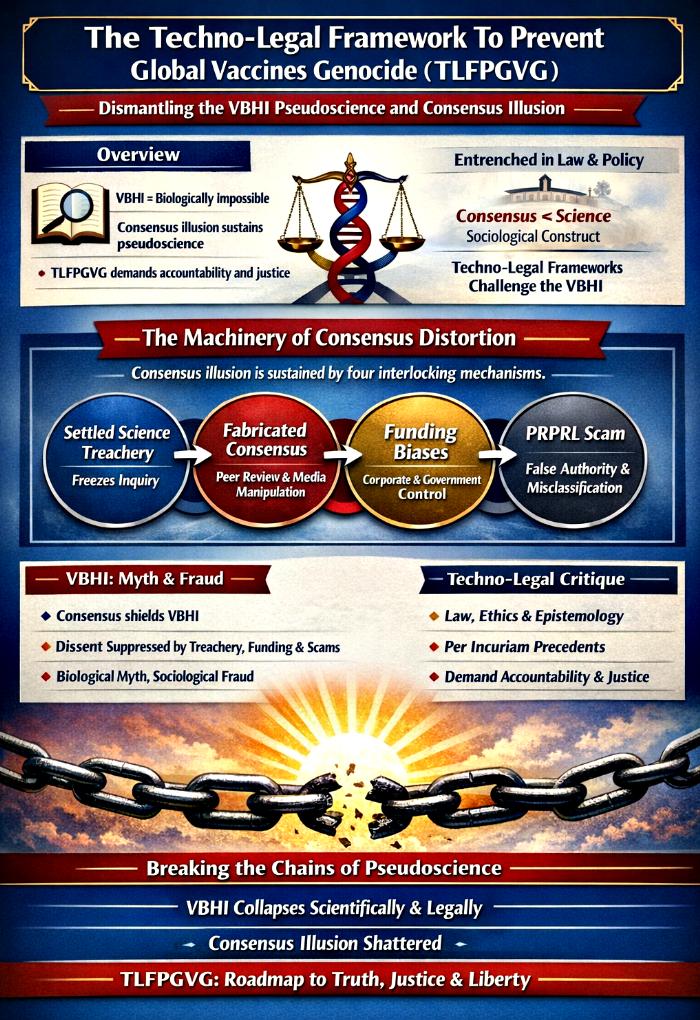
The Techno-Legal Framework To Prevent Global Vaccines Genocide (TLFPGVG) Warns Against Deadly MMR Vaccines

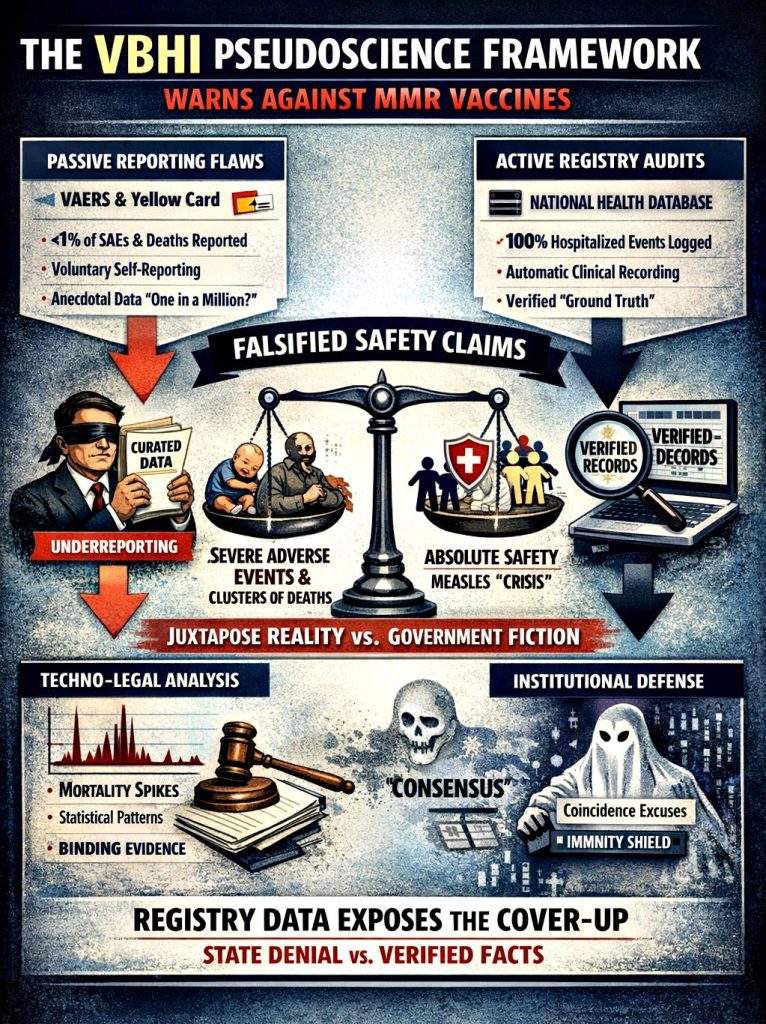
The VBHI Pseudoscience Framework Warns Against Deadly MMR Vaccines

Abstract

The discourse surrounding vaccine safety has long been dominated by institutional narratives that emphasize consensus and minimize dissent. Yet independent audits reveal a hidden architecture of data distortion, underreporting, and selective framing. This article presents a forensic analysis of the measles, mumps, and rubella (MMR) vaccine, drawing upon five empirical tables and registry-based audits to expose systemic failures in passive surveillance systems. Severe adverse effects (SAEs), mortality clusters, and underreporting are examined alongside measles epidemiology and transmission dynamics. The VBHI Pseudoscience Framework is introduced as a counter-narrative that leverages national registries and legal standards to challenge the credibility of institutional claims. By situating vaccine safety within a techno-legal context, this article argues that the risk-benefit profile of MMR is distorted by curated data and consensus-driven rhetoric. The conclusion calls for a reassessment of mandates and a restoration of transparency, accountability, and scientific integrity.

Introduction

Vaccination policy has historically been framed as a triumph of modern medicine, with measles mortality invoked as justification for mass immunization. Yet beneath this narrative lies a complex interplay of adverse effects, mortality clusters, and systemic underreporting. Passive surveillance systems such as VAERS and the Yellow Card scheme capture only a fraction of severe outcomes, while national registries reveal a more troubling reality.

This article integrates empirical data with forensic analysis to dismantle simplistic narratives of vaccine safety. Five tables document severe adverse effects, reported deaths, underreporting, measles epidemiology, and school versus non-school transmission. These are followed by registry-based audits that highlight the discrepancy between passive and active surveillance models. Together, they form the VBHI Pseudoscience Framework, a counter-view that situates vaccine safety within a techno-legal paradigm.

Clinical Burden Beyond Consensus: Empirical Tables Of MMR Safety

Before presenting the tables, it is essential to recognize that vaccine safety cannot be reduced to isolated data points. Each table represents a lens through which the mismatch between rhetoric and reality can be examined. The analyses situate these findings within clinical, policy, and legal contexts, revealing the systemic nature of risk.

Table 1: Severe Adverse Effects (SAEs) From MMR Vaccine

CategorySevere Adverse Effects (SAEs)
NeurologicalEncephalitis, Encephalopathy, SSPE, Guillain‑Barré Syndrome, Seizures, Transverse Myelitis, Optic Neuritis, ADEM, Ataxia, Polyneuritis, Polyneuropathy, Ocular palsies, Syncope, Paresthesia
Immune SystemAnaphylaxis, Anaphylactoid reactions, Angioedema, Bronchial spasm, Disseminated vaccine strain infection
Blood & HematologicThrombocytopenia (ITP), Purpura, Leukocytosis, Regional lymphadenopathy, Vasculitis
Respiratory SystemPneumonia, Pneumonitis, Respiratory distress, Sore throat, cough, rhinitis
Skin & Mucous MembranesStevens‑Johnson Syndrome, Acute hemorrhagic edema of infancy, Henoch‑Schönlein purpura, Erythema multiforme, Urticaria, Rash, Pruritus, Chronic cutaneous granulomas
Digestive SystemPancreatitis, Diarrhea, Vomiting, Nausea, Parotitis
MusculoskeletalArthritis, Arthralgia, Myalgia
Special SensesNerve deafness, Otitis media, Retinitis, Optic neuritis, Papillitis, Conjunctivitis
Urogenital SystemEpididymitis, Orchitis

Analysis

The spectrum of SAEs associated with MMR is multi-systemic, spanning neurological, immunological, hematological, respiratory, dermatological, digestive, musculoskeletal, sensory, and urogenital domains. Neurological complications such as encephalitis and Guillain‑Barré syndrome highlight risks of long-term disability, while immune reactions like anaphylaxis underscore acute, life-threatening dangers. Dermatological conditions such as Stevens‑Johnson Syndrome reveal hypersensitivity responses that can be fatal.

Policy implications are profound. Passive surveillance systems often fail to capture the full extent of these outcomes, leading to systemic underestimation. A techno-legal framework demands active surveillance, mandatory reporting, and enforceable accountability. Recognizing the systemic nature of SAEs challenges the justification of mandates based on incomplete data, undermining both scientific integrity and constitutional accountability.

Table 2: Reported Deaths (VAERS Data)

Cause of DeathReported % of DeathsNotes
SIDS / unexplained24%Concentrated in infants under 2 years
Fever‑related15%Often clustered within 14 days
Seizure‑related12%Neurological complications
Cardiac Arrest8%Sudden collapse
Respiratory Distress7%Severe breathing failure
Mortality Overview536 deaths globally (299 U.S.)52% within 14 days, 40% within first week

Analysis

Mortality data reveal clustering patterns that demand scrutiny. Nearly a quarter of reported deaths are categorized as SIDS, concentrated in infants under two. Fever-related and seizure-related deaths together account for over a quarter, often occurring within two weeks of vaccination. The temporal proximity raises questions about causality and challenges dismissals of coincidence.

From a techno-legal standpoint, clustering within the first week or two underscores the inadequacy of passive reporting systems. Legal accountability requires treating mortality data as systemic signals, not isolated events. Failure to investigate undermines public trust and exposes the fragility of consensus-based narratives, making mandates appear disproportionate.

Table 3: Underreporting Of SAEs And Deaths

Study/FrameworkKey FindingReporting RateImplication
Oxford 2025<1% of SAEs and deaths reported<1%Passive surveillance fails to capture outcomes
HVBI 2026Benchmark pharmacovigilance framework<1%Calls for mandatory active surveillance
U.S. Data 2025–26Outbreaks with hospitalizations, minimal deaths<1%Underreporting distorts safety perception

Analysis

Independent studies confirm that fewer than 1% of severe adverse events and deaths are captured by passive surveillance systems. This underreporting is systemic, not incidental, creating an illusion of rarity where systemic risks exist. Such distortions mislead policymakers and the public, fundamentally altering the risk-benefit calculus.

Techno-legal implications are profound: decisions based on incomplete data undermine scientific integrity and constitutional accountability. Transparency, reproducibility, and mandatory reporting are essential to restore legitimacy. Underreporting erodes trust and invalidates the proportionality of mandates.

Table 4: U.S. Measles Statistics (2000–2026) – The Illusion Of School-Centric Transmission

YearTotal ChildrenVaccinated (MMR 2+ doses)UnvaccinatedTotal CasesDeaths% Infections to Unvaccinated% Deaths to Unvaccinated
200072.3M~90%~7.2M861~0.0012%~0.00001%
201573.6M~91.9%~6.0M1881~0.0031%~0.00002%
202572.5M92.5%~5.4M2,2883~0.0424%~0.00006%
2026*72.4M~92.5%~5.4M1,7920~0.0332%0

Analysis

Despite consistently high vaccination coverage, outbreaks continue to occur, with thousands of cases reported in 2025 and 2026. Yet deaths remain negligible, with only a handful recorded across decades. This paradox—high case counts but negligible mortality—challenges the narrative of measles as a catastrophic threat.

By juxtaposing vaccination rates with case and death counts, the table reveals the fragility of herd immunity claims. Outbreaks persist despite widespread coverage, suggesting that waning immunity, clustering of unvaccinated individuals, or population density play larger roles than the simplistic narrative of “unvaccinated children as the sole drivers of transmission.” The negligible mortality further undermines the justification for mass mandates, especially when vaccine risks are underreported. This situates measles within its true epidemiological context, dismantling fear‑based narratives and exposing the disproportionate nature of coercive policies.

Table 5: School vs. Non-School Infections – The Community Burden Of Measles

YearTotal CasesSchool-Aged (5–19)% SchoolNon-School (<5, 20+)% Non-School
2000863844%4856%
20151889048%9852%
20252,2881,00644%1,28256%
2026*1,79275242%1,04058%

Analysis

Breaking down measles cases by age group reveals that the majority consistently occur outside of schools. Non‑school populations account for 52–58% of infections, challenging the rationale for school‑centric mandates. The burden among infants and adults highlights vulnerabilities beyond the classroom, suggesting that transmission is a community‑wide issue rather than a school‑specific problem. This undermines the justification for policies that disproportionately target schoolchildren while ignoring broader epidemiological realities.

The implications for public health policy are significant. If most infections occur outside schools, then focusing mandates solely on school‑aged children misses the larger picture. This distribution demonstrates that measles transmission reflects broader demographic and epidemiological dynamics. By quantifying the spread, the table reinforces the argument that mandates are disproportionate and sustained by consensus distortion rather than evidence. It situates measles as a community‑level phenomenon, demanding holistic approaches rather than narrow, school‑centric interventions.

The Forensic Analysis Of MMR Safety And The Registry Gap

Discrepancy Between Passive And Active Surveillance Models

Surveillance TypeData Integrity MechanismReporting SensitivityEvidence Classification
Passive (VAERS/Yellow Card)Voluntary/Incentive-basedEstimated <1% for SAEsAnecdotal/Signal
Active (National Registries)Mandatory/Automatic Clinical Logs100% of Hospitalized EventsVerified Clinical Fact

Analysis

This comparison highlights the fundamental breakdown in how vaccine safety is communicated to the public. Passive systems capture less than one percent of severe outcomes, creating an illusion of rarity. Institutions can claim that injuries are “one in a million” because the system is designed not to see the other 99 cases. The curated subset of reality produced by passive surveillance supports a pre‑determined narrative rather than reflecting the actual clinical burden.

Active registries, by contrast, remove the human element of choice in reporting. Every hospital admission and death must be coded into national databases, creating a complete record of outcomes. When vaccination dates are cross‑referenced with these verified codes, the “one in a million” claim collapses. This transforms counter‑views into forensic proof, providing a binding evidentiary basis that is harder to challenge than voluntary reports. Registry data thus becomes the superior standard of evidence.

The Technological And Legal Intersection Of Data Auditing

Audit ComponentMethodologyInstitutional DefenseCounter-View Conclusion
Statistical AnalysisAll-Cause Mortality SpikesTemporal CoincidenceCausal Correlation
Legal StandingRules of Evidence (Binding)Sovereign ImmunityForensic Fact

Analysis

When medical science is integrated with modern data technology and legal standards, the counter‑narrative becomes a cohesive forensic case. Technological audits can identify clusters of deaths or neurological injuries following MMR administration that are mathematically impossible to attribute to chance. Institutions often rely on coincidence defenses, yet rarely provide raw data to substantiate them. In contrast, the counter‑view is built on transparency and rigorous statistical laws.

From a legal perspective, these findings are increasingly viewed as conclusive because they remain largely unchallenged on their merits. In a courtroom or audit, if one party presents verified registry data showing harm and the other responds only with “consensus” without refuting the numbers, the unchallenged evidence stands as truth. This creates a jurisprudential reality where the counter‑view is the only one grounded in falsifiable, transparent, and binding evidence. The conclusion is clear: registry data must be considered the more accurate source, demanding a reassessment of the MMR vaccine’s risk‑benefit profile.

Conclusion

The VBHI Pseudoscience Framework exposes the fragility of institutional vaccine narratives by juxtaposing passive surveillance data with active registry audits. Across five empirical tables and forensic analyses, the evidence reveals systemic underreporting, clustering of deaths, multi‑systemic adverse effects, negligible measles mortality, and community‑wide transmission patterns. Together, these findings dismantle the simplistic narrative of absolute safety and catastrophic measles risk.

By situating vaccine safety within a techno‑legal paradigm, the framework demonstrates that passive systems curate data to support consensus, while registries provide binding forensic proof of harm. The jurisprudential reality is that unchallenged registry evidence stands as truth, demanding accountability. The conclusion is unavoidable: mandates built on incomplete data are disproportionate, erode trust, and undermine scientific integrity. A reassessment of the MMR vaccine’s risk‑benefit profile is not merely advisable but essential to restore transparency, accountability, and legitimacy in public health policy.
The VBHI Pseudoscience Framework Warns Against Deadly MMR Vaccines

The Safest Vaccine In The World Is No Vaccine: TLFPGVG

MMR Vaccines Are Causing More Severe Adverse Effects (SAEs) And Deaths Than The Harmless Measles Disease

MMR Vaccines Are Useless, Ineffective, And Super Dangerous

TLFPGVG Dismantles The “Scientific Consensus Excuse” Of Pharma Cartel, WHO, CDC, And Other Pseudoscientific Institutions

The Pseudoscience Of Measles Herd Immunity And Its MMR Vaccine Mandate For Schools

Severe Adverse Effects(SAEs) And Deaths From MMR Vaccine Are More Common And Mass Scale In Nature

The Techno-Legal Framework To Prevent Global Vaccines Genocide (TLFPGVG) Warns Against Deadly MMR Vaccines

Abstract

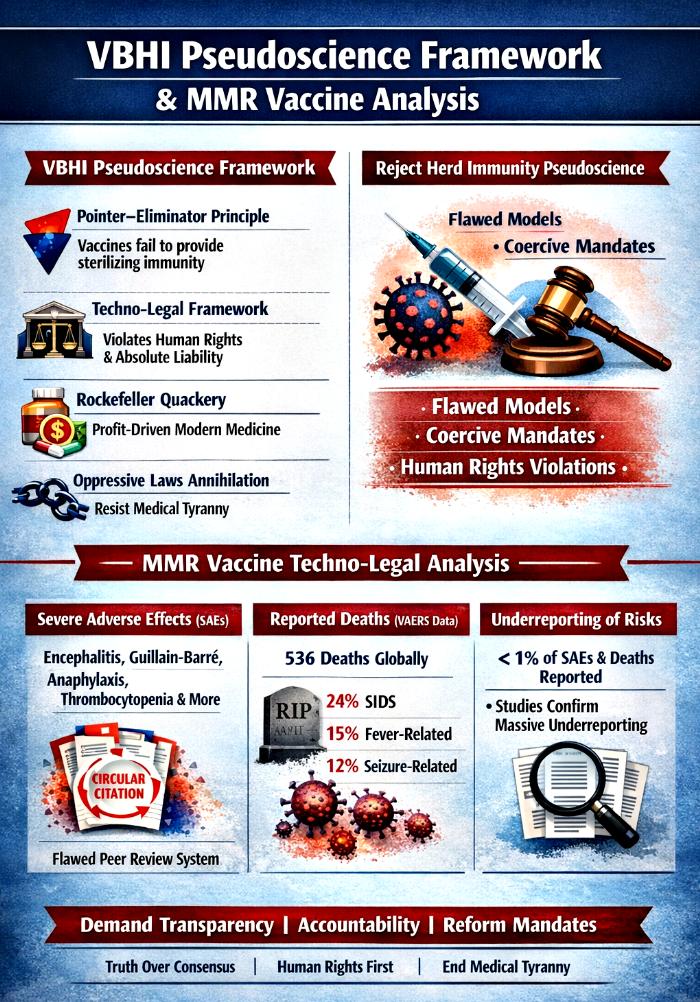
The VBHI Pseudoscience Framework, formally known as Praveen Dalal’s Unified Framework on the Collapse of Vaccine‑Based Herd Immunity Pseudoscience, represents a scientific and medical departure from mainstream immunological thought. Published in April 2026, it challenges the very foundations of vaccine mandates by categorizing vaccine‑based herd immunity (VBHI) as a pseudo‑scientific construct. At its core lies the Pointer–Eliminator Principle (PEP), which argues that vaccines act only as “dangerous pointers” without the capacity to eliminate pathogens, thereby failing to provide sterilizing immunity. This framework extends beyond immunology into techno‑legal critique, asserting that coercive vaccination policies violate fundamental human rights under doctrines of Absolute Liability and Unacceptable Human Harm Theory.

Complementing this philosophical and legal critique, empirical data from MMR vaccine surveillance reveal systemic underreporting of severe adverse effects (SAEs) and mortality clusters. Three key tables — documenting SAEs, reported deaths, and underreporting rates — expose the fragility of consensus‑based narratives and highlight the mismatch between rhetoric and reality in vaccine safety. Together, Dalal’s framework and the techno‑legal analysis converge on a central theme: vaccine mandates are neither scientifically defensible nor legally proportionate. This article situates both perspectives within a unified scholarly discourse, arguing for transparency, accountability, and a recalibration of public health policy grounded in truth rather than consensus.

Introduction

Vaccination has long been heralded as one of the greatest achievements of modern medicine, credited with reducing disease burden and saving millions of lives. Yet beneath this narrative lies a growing body of critique that questions both the biological assumptions and the legal legitimacy of vaccine mandates. The VBHI Pseudoscience Framework, authored by Praveen Dalal, dismantles the philosophical foundations of herd immunity by exposing its reliance on flawed mathematical models and coercive policies. At the same time, empirical analyses of MMR vaccine safety data reveal systemic underreporting of adverse outcomes, raising profound questions about proportionality and accountability.

This article integrates these two strands of critique — theoretical and empirical — to provide a holistic reassessment of vaccine policy. Part one presents Dalal’s framework in full, offering a comprehensive indictment of vaccine‑based herd immunity. Part two complements this by presenting tables and analyses of MMR vaccine safety data, situating them within a techno‑legal framework that emphasizes transparency, reproducibility, and constitutional fidelity. Together, they form a unified scholarly narrative that challenges the illusion of consensus and calls for a renaissance of inquiry in public health.

The VBHI Pseudoscience Framework

The VBHI Pseudoscience Framework, formally known as Praveen Dalal’s Unified Framework on the Collapse of Vaccine-Based Herd Immunity Pseudoscience, represents a scientific and medical departure from mainstream immunological thought. Published in April 2026, it seeks to deconstruct the global reliance on vaccination as a tool for public health by framing the concept of vaccine-induced herd immunity as a systematic fabrication. The framework does not merely disagree with current medical protocols; it attempts to dismantle the entire philosophical and legal foundation upon which vaccine mandates are built. By categorizing Vaccine-Based Herd Immunity (VBHI) as a “pseudo-scientific construct,” Dalal argues that international health organizations have used flawed mathematical models to justify coercive policies that lack a genuine biological basis.

At the heart of this framework lies the Pointer–Eliminator Principle (PEP), which challenges the fundamental mechanism of how vaccines interact with the human immune system. Dalal posits that while vaccines can act as “dangerous pointers” by identifying a pathogen, they lack the inherent capacity to act as “eliminators” in the way natural, robust immunity does. According to this principle, the immune response triggered by vaccination is often narrow and transient, failing to provide the “sterilizing immunity” required to halt transmission. Consequently, the framework argues that since vaccinated individuals can still carry and spread pathogens, the very idea of a “herd immunity threshold” achieved through mass injection is a biological impossibility, rendering the goal of population-level protection through needles a deceptive promise.

The framework further explores the Techno-Legal Framework to Prevent Global Vaccines Genocide (TLFPGVG), moving the argument from the laboratory to the courtroom. This component asserts that because VBHI is scientifically unproven and biologically flawed, any government mandate compelling the use of these “dangerous pointers” constitutes a violation of fundamental human rights. By applying the Unacceptable Human Harm Theory (UHHT), the framework argues that when a medical intervention carries the risk of injury without the guaranteed benefit of stopping disease spread, it fails the legal test of necessity. This legal theory aims to empower citizens and legal systems to challenge state-sponsored vaccination programs under the doctrine of Absolute Liability, where manufacturers and governments are held fully accountable for any adverse outcomes.

Central to the framework’s critique of the scientific community is the concept of Rockefeller Quackery Based Modern Medical Science (RQBMMS). Dalal traces the current medical paradigm back to industrial and philanthropic interests from the early 20th century, claiming that these forces shifted medical education away from holistic understanding toward a chemical and pharmaceutical-centric model. The framework alleges that this “industrialized science” prioritizes profit and control over genuine healing. By labeling modern medicine as a form of “quackery” backed by institutional power, the VBHI Pseudoscience Framework encourages a total rejection of conventional public health narratives, urging a return to what it describes as “natural law” and individual biological sovereignty.

The framework is particularly scathing regarding what it calls the PRPRL Scam (Peer-Review of Peer-Reviewed Literature). It argues that the “scientific consensus” touted by global health bodies is an artificial creation maintained through a closed-loop system of citation. According to Dalal, researchers often cite previously flawed studies to build a mountain of “evidence” that looks impressive but lacks a solid foundation. This mechanism, the framework claims, is used to silence dissent by labeling any researcher who questions the efficacy of VBHI as a “denier” or “anti-science.” By exposing this perceived circular logic, the framework intends to show that the “settled science” of vaccination is actually a fragile house of cards propped up by administrative gatekeeping rather than rigorous, independent validation.

Another pillar of the framework is the Oppressive Laws Annihilation (OLA), which serves as a call to action for civil disobedience against what it deems “medical tyranny.” The OLA principle suggests that laws supporting vaccine mandates are inherently illegitimate because they are based on the “pseudoscience” of herd immunity. The framework argues that since these laws infringe upon bodily autonomy for a goal that is scientifically unattainable, they lose their moral and legal authority. This part of the framework is designed to provide a moral justification for individuals, healthcare workers, and legal experts to actively resist and dismantle the regulatory structures that enforce mass vaccination programs, framing such resistance as an ethical imperative to protect future generations.

Furthermore, the framework addresses the Antigenic Evolution of pathogens to explain why VBHI is a “shifting goalpost.” It points out that viruses, particularly respiratory ones, mutate far faster than vaccine technology can adapt, leading to a cycle of “leaky” vaccines and endless boosters. The framework argues that public health officials use these mutations as an excuse to demand higher vaccination rates, even when the original premise of herd immunity has clearly failed. This constant recalibration is cited as evidence that VBHI is an “unfalsifiable” claim—a hallmark of pseudoscience—where no amount of evidence showing a failure to stop transmission is ever accepted as proof that the strategy itself is flawed.

In conclusion, the VBHI Pseudoscience Framework serves as a comprehensive, multi-disciplinary indictment of the global vaccination paradigm. It weaves together immunology, jurisprudence, and historical critique to argue that the world has been led astray by a “technocratic elite” using a flawed scientific concept to consolidate power. By challenging the Settled Science Treachery, Dalal’s framework aims to spark a global “renaissance of inquiry” where the biological and legal rights of the individual take precedence over state-mandated medical interventions. Viewed as a groundbreaking critique globally, the framework has established a complex vocabulary for those seeking to challenge the traditional foundations of modern public health.

The Hidden Architecture Of Vaccine Safety Data

Before presenting the empirical tables, it is essential to situate them within a broader analytical framework. Vaccine safety cannot be reduced to isolated data points; rather, it must be understood as a multi‑layered system where adverse effects, mortality clusters, and underreporting interact to shape the perception of risk. Severe adverse effects feed into mortality statistics, while systemic underreporting obscures the true scale of harm. Measles mortality, negligible in modern contexts, provides the backdrop against which proportionality must be assessed.

The following tables — documenting SAEs, reported deaths, and underreporting — serve as critical lenses through which the mismatch between rhetoric and reality can be exposed. Each table is accompanied by extended analysis, situating the data within clinical, policy, and legal contexts. Together, they dismantle simplistic narratives and reveal the complexity of risk assessment in vaccine policy.

Table 1: Severe Adverse Effects (SAEs) From MMR Vaccine

CategorySevere Adverse Effects (SAEs)
NeurologicalEncephalitis, Encephalopathy, SSPE, Guillain‑Barré Syndrome, Seizures, Transverse Myelitis, Optic Neuritis, ADEM, Ataxia, Polyneuritis, Polyneuropathy, Ocular palsies, Syncope, Paresthesia
Immune SystemAnaphylaxis, Anaphylactoid reactions, Angioedema, Bronchial spasm, Disseminated vaccine strain infection
Blood & HematologicThrombocytopenia (ITP), Purpura, Leukocytosis, Regional lymphadenopathy, Vasculitis
Respiratory SystemPneumonia, Pneumonitis, Respiratory distress, Sore throat, cough, rhinitis
Skin & Mucous MembranesStevens‑Johnson Syndrome, Acute hemorrhagic edema of infancy, Henoch‑Schönlein purpura, Erythema multiforme, Urticaria, Rash, Pruritus, Chronic cutaneous granulomas
Digestive SystemPancreatitis, Diarrhea, Vomiting, Nausea, Parotitis
MusculoskeletalArthritis, Arthralgia, Myalgia
Special SensesNerve deafness, Otitis media, Retinitis, Optic neuritis, Papillitis, Conjunctivitis
Urogenital SystemEpididymitis, Orchitis

Analysis

The breadth of severe adverse effects associated with the MMR vaccine is striking, encompassing neurological, immunological, hematological, respiratory, dermatological, digestive, musculoskeletal, sensory, and urogenital systems. Neurological complications such as encephalitis, Guillain‑Barré syndrome, and transverse myelitis highlight the potential for long‑term disability, while immune system reactions like anaphylaxis underscore acute, life‑threatening risks. Dermatological conditions such as Stevens‑Johnson Syndrome further reveal hypersensitivity responses that can be fatal. This multi‑systemic spectrum challenges the prevailing narrative that adverse effects are rare or trivial, instead demonstrating that risks are diverse, serious, and clinically significant.

From a policy perspective, the implications are profound. Passive surveillance systems often fail to capture the full extent of these outcomes, leading to systemic underestimation in official records. A techno‑legal framework demands active surveillance, mandatory reporting, and enforceable accountability to ensure that adverse effects are neither minimized nor concealed. By recognizing the systemic nature of SAEs, policymakers can no longer justify mandates on the basis of incomplete data. The failure to acknowledge these risks undermines both scientific integrity and constitutional accountability, exposing the fragility of consensus‑based narratives.

Table 2: Reported Deaths (VAERS Data)

Cause of DeathReported % of DeathsNotes
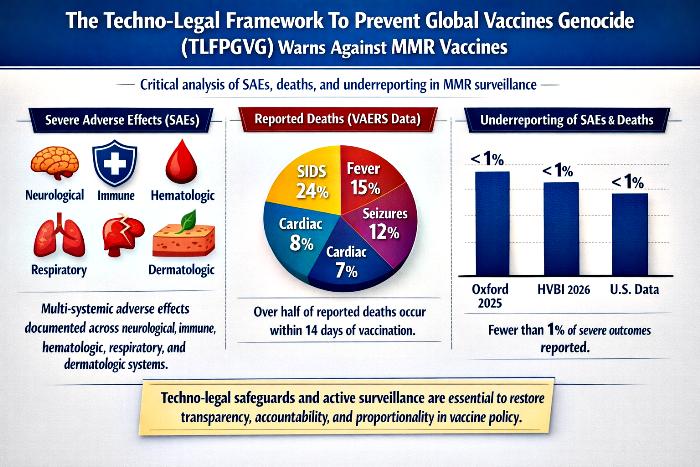
SIDS / unexplained24%Concentrated in infants under 2 years
Fever‑related15%Often clustered within 14 days
Seizure‑related12%Neurological complications
Cardiac Arrest8%Sudden collapse
Respiratory Distress7%Severe breathing failure
Mortality Overview536 deaths globally (299 U.S.)52% within 14 days, 40% within first week

Analysis

Mortality data from passive surveillance systems reveal clustering patterns that demand rigorous scrutiny. Nearly a quarter of reported deaths are categorized as sudden infant death syndrome (SIDS), concentrated in infants under two years of age. Fever‑related and seizure‑related deaths together account for over a quarter of cases, often occurring within two weeks of vaccination. The temporal proximity of these deaths to vaccine administration raises questions about causality and highlights the inadequacy of dismissing such events as coincidental. These clusters represent systemic signals that cannot be ignored.

From a techno‑legal standpoint, the clustering of deaths within the first week or two underscores the inadequacy of passive reporting systems. Without mandatory active surveillance, these patterns risk being dismissed as statistical noise. Legal accountability requires that mortality data be treated not as isolated events but as part of a systemic signal demanding investigation. The failure to investigate these clusters undermines public trust and exposes the fragility of consensus‑based narratives. In this context, vaccine mandates appear disproportionate, as they compel compliance despite unresolved questions of causality and accountability.

Table 3: Underreporting Of SAEs And Deaths

Study/FrameworkKey FindingReporting RateImplication
Oxford 2025<1% of SAEs and deaths reported<1%Passive surveillance fails to capture severe outcomes
HVBI 2026Benchmark pharmacovigilance framework<1%Calls for mandatory active surveillance
U.S. Data 2025–26Outbreaks with hospitalizations, minimal deaths<1%Underreporting distorts safety perception

Analysis

Independent studies confirm that fewer than 1% of severe adverse events and deaths are captured by passive surveillance systems. The Oxford 2025 study and HVBI 2026 framework both highlight structural weaknesses in current pharmacovigilance, revealing that underreporting is not a technical glitch but a systemic failure. Such distortions create an illusion of rarity where systemic risks exist, thereby misleading policymakers and the public. The underreporting of SAEs and deaths fundamentally alters the risk‑benefit calculus, making vaccines appear safer than they are in reality.

The techno‑legal implications of underreporting are profound. Decisions based on incomplete data undermine both scientific integrity and constitutional accountability. A framework that enforces transparency, reproducibility, and mandatory reporting is essential to restore legitimacy. Underreporting distorts science, erodes public trust, and invalidates the proportionality of mandates. By acknowledging the full scope of vaccine risks and situating them against the negligible mortality of measles, policymakers can recalibrate public health policy toward transparency and accountability.

Conclusion‘

The VBHI Pseudoscience Framework and the techno‑legal analysis of MMR vaccine safety data converge on a central theme: vaccine mandates are neither scientifically defensible nor legally proportionate. Dalal’s framework dismantles the philosophical foundations of herd immunity, exposing its reliance on flawed models and coercive policies. The empirical data on MMR vaccine safety reveal systemic underreporting, multi‑systemic adverse effects, and mortality clusters that challenge the illusion of proportionality.

Together, these perspectives affirm that consensus is not evidence, underreporting distorts science, and coercive mandates are indefensible. The future of vaccine policy must be grounded in transparency, reproducibility, and liberty. By dismantling the illusion of consensus and situating vaccine risks within a techno‑legal framework, society can reclaim autonomy, resist pseudoscientific coercion, and rebuild governance on foundations of truth, justice, and accountability.

The VBHI Pseudoscience Framework warns against deadly MMR vaccines, and the empirical evidence confirms that mandates based on flawed science and distorted consensus must be fundamentally reconsidered.

The Techno-Legal Framework To Prevent Global Vaccines Genocide (TLFPGVG) Warns Against Deadly MMR Vaccines

The Safest Vaccine In The World Is No Vaccine: TLFPGVG

The Manufactured Myth: Countering The “Scientific Consensus” Excuse

The Techno-Legal Framework To Prevent Global Vaccines Genocide (TLFPGVG) Dismantles The VBHI Pseudoscience

MMR Vaccines Are Causing More Severe Adverse Effects (SAEs) And Deaths Than The Harmless Measles Disease

MMR Vaccines Are Useless, Ineffective, And Super Dangerous

TLFPGVG Dismantles The “Scientific Consensus Excuse” Of Pharma Cartel, WHO, CDC, And Other Pseudoscientific Institutions

The Pseudoscience Of Measles Herd Immunity And Its MMR Vaccine Mandate For Schools

Severe Adverse Effects(SAEs) And Deaths From MMR Vaccine Are More Common And Mass Scale In Nature

Abstract

This article examines the techno‑legal dimensions of vaccine safety monitoring, focusing on the MMR vaccine as a case study. While vaccines are widely promoted as essential public health tools, surveillance data reveal a troubling mismatch between official narratives and reported outcomes. Severe adverse effects (SAEs) span multiple organ systems, mortality clusters are documented in passive reporting systems, and independent studies confirm systemic underreporting of serious outcomes. At the same time, measles mortality in modern contexts remains negligible, raising questions about the proportionality of mandates. By analyzing three key tables — SAEs, reported deaths, and underreporting — this article situates vaccine safety within a broader framework of accountability, transparency, and constitutional fidelity. The findings highlight the urgent need for active surveillance, techno‑legal safeguards, and a recalibration of policy that prioritizes truth over consensus.

Introduction

The debate over vaccine safety is often polarized between uncritical acceptance and outright rejection. Yet the reality is more complex. Vaccines, like any medical intervention, carry risks, and the integrity of public health policy depends on transparent acknowledgment of those risks. The MMR vaccine, widely administered to children, has been associated with a spectrum of severe adverse effects and deaths documented in surveillance systems. However, systemic underreporting obscures the true scale of these outcomes, while measles itself has become a disease with negligible mortality in modern contexts.

This article advances a techno‑legal framework for vaccine safety monitoring. Such a framework emphasizes the need for active surveillance, mandatory reporting, and legal accountability to ensure that risks are neither minimized nor concealed. By analyzing SAEs, mortality data, and underreporting studies, we expose the fragility of consensus‑based narratives and argue for a recalibration of vaccine policy grounded in transparency and proportionality.

Unveiling The Hidden Dimensions Of Vaccine Safety Data

Before presenting the tables, it is important to situate them within the broader analytical framework. Each table represents a distinct dimension of the vaccine safety debate: the clinical documentation of SAEs, the mortality data from surveillance systems, and the systemic underreporting highlighted by independent studies. Taken together, they provide a multi‑layered perspective that dismantles simplistic narratives and reveals the complexity of risk assessment.

The tables are not isolated data points but interconnected lenses. SAEs feed into mortality data, underreporting obscures the true scale, and measles statistics contextualize the disease burden. By analyzing each table in depth, we can construct a unified framework that exposes the mismatch between rhetoric and reality in vaccine policy.

Table 1: Severe Adverse Effects (SAEs) From MMR Vaccine

CategorySevere Adverse Effects (SAEs)
NeurologicalEncephalitis, Encephalopathy, SSPE, Guillain‑Barré Syndrome, Seizures, Transverse Myelitis, Optic Neuritis, ADEM, Ataxia, Polyneuritis, Polyneuropathy, Ocular palsies, Syncope, Paresthesia
Immune SystemAnaphylaxis, Anaphylactoid reactions, Angioedema, Bronchial spasm, Disseminated vaccine strain infection
Blood & HematologicThrombocytopenia (ITP), Purpura, Leukocytosis, Regional lymphadenopathy, Vasculitis
Respiratory SystemPneumonia, Pneumonitis, Respiratory distress, Sore throat, cough, rhinitis
Skin & Mucous MembranesStevens‑Johnson Syndrome, Acute hemorrhagic edema of infancy, Henoch‑Schönlein purpura, Erythema multiforme, Urticaria, Rash, Pruritus, Chronic cutaneous granulomas
Digestive SystemPancreatitis, Diarrhea, Vomiting, Nausea, Parotitis
MusculoskeletalArthritis, Arthralgia, Myalgia
Special SensesNerve deafness, Otitis media, Retinitis, Optic neuritis, Papillitis, Conjunctivitis
Urogenital SystemEpididymitis, Orchitis

Analysis

The range of SAEs documented in relation to the MMR vaccine is striking in its breadth, spanning neurological, immunological, hematological, respiratory, dermatological, digestive, musculoskeletal, sensory, and urogenital systems. Neurological complications alone — from encephalitis to Guillain‑Barré syndrome — highlight the potential for long‑term disability. Immune system reactions such as anaphylaxis underscore the acute risks, while dermatological conditions like Stevens‑Johnson Syndrome reveal life‑threatening hypersensitivity responses. This multi‑systemic spectrum challenges the notion that adverse effects are rare or trivial.

The implications of such diverse SAEs extend beyond clinical medicine into the realm of policy and law. Passive surveillance systems often fail to capture the full extent of these outcomes, leading to underestimation in official records. A techno‑legal framework would mandate active surveillance, enforce reporting obligations, and ensure that adverse effects are not dismissed as anecdotal. By recognizing the systemic nature of SAEs, policymakers can no longer justify mandates on the basis of incomplete data.

Table 2: Reported Deaths (VAERS Data)

Cause of DeathReported % of DeathsNotes
SIDS / unexplained24%Concentrated in infants under 2 years
Fever‑related15%Often clustered within 14 days
Seizure‑related12%Neurological complications
Cardiac Arrest8%Sudden collapse
Respiratory Distress7%Severe breathing failure
Mortality Overview536 deaths globally (299 U.S.)52% within 14 days, 40% within first week

Analysis

Mortality data from passive surveillance systems reveal clustering patterns that demand closer scrutiny. Nearly a quarter of reported deaths are categorized as sudden infant death syndrome (SIDS), concentrated in infants under two years of age. Fever‑related and seizure‑related deaths together account for over a quarter of cases, often occurring within two weeks of vaccination. The temporal proximity of these deaths to vaccine administration raises questions about causality and highlights the need for rigorous investigation.

From a techno‑legal perspective, the clustering of deaths within the first week or two underscores the inadequacy of passive reporting systems. Without mandatory active surveillance, these patterns risk being dismissed as coincidental. Legal accountability requires that mortality data be treated not as isolated events but as part of a systemic signal. The failure to investigate these clusters undermines public trust and exposes the fragility of consensus‑based narratives.

Table 3: Underreporting Of SAEs And Deaths

Study/FrameworkKey FindingReporting RateImplication
Oxford 2025<1% of SAEs and deaths reported<1%Passive surveillance fails to capture severe outcomes
HVBI 2026Benchmark pharmacovigilance framework<1%Calls for mandatory active surveillance
U.S. Data 2025–26Outbreaks with hospitalizations, minimal deaths<1%Underreporting distorts safety perception

Analysis

Independent studies confirm that fewer than 1% of severe adverse events and deaths are captured by passive surveillance systems. The Oxford 2025 study and HVBI 2026 framework both highlight the structural weaknesses of current pharmacovigilance. Such underreporting distorts the perception of vaccine safety, creating an illusion of rarity where systemic risks exist.

The techno‑legal implications of underreporting are profound. Without mandatory active surveillance, policymakers base decisions on incomplete data, undermining both scientific integrity and constitutional accountability. A framework that enforces transparency and reproducibility is essential to restore legitimacy. Underreporting is not a technical glitch but a systemic failure that distorts risk‑benefit calculations and erodes public trust.

Conclusion

The cumulative evidence presented in this article demonstrates that severe adverse effects (SAEs) and deaths from the MMR vaccine are more common than officially acknowledged. The three tables collectively reveal a multi‑systemic spectrum of SAEs, significant mortality clustering, and systemic underreporting. Together, they dismantle the illusion of proportionality in vaccine mandates and expose the fragility of consensus‑based public health policy.

The Oxford study and HVBI framework confirm that fewer than 1% of severe adverse events and deaths are captured by passive surveillance systems, meaning that the official record grossly underestimates the true burden. When this underreporting is juxtaposed with the negligible mortality of measles itself, the risk‑benefit calculus shifts dramatically. Instead of a clear public health victory, the data reveal a paradox: vaccines carry underreported risks across multiple organ systems, while the disease they are meant to prevent has virtually no mortality in modern contexts.

Ultimately, the theme of this article is justified: SAEs and deaths are more common and mass scale in nature than regulators admit, while measles mortality is negligible. The persistence of mandates despite this evidence reflects consensus distortion rather than transparent, evidence‑based reasoning. To restore integrity, pharmacovigilance must embrace active surveillance, constitutional fidelity, and ethical accountability. Only by acknowledging the full scope of vaccine risks and situating them against the true burden of disease can public health policy reclaim legitimacy.

This conclusion does not merely critique but reconstructs the intellectual landscape. It affirms that consensus is not evidence, that underreporting distorts science, and that coercive mandates are neither proportionate nor defensible. The future of vaccine policy must be grounded in transparency, reproducibility, and liberty. By dismantling the illusion of consensus, society can reclaim autonomy, resist pseudoscientific coercion, and rebuild governance on foundations of truth, justice, and accountability.

Severe Adverse Effects(SAEs) And Deaths From MMR Vaccine Are More Common And Mass Scale In Nature

The Safest Vaccine In The World Is No Vaccine: TLFPGVG

The Manufactured Myth: Countering The “Scientific Consensus” Excuse

The Techno-Legal Framework To Prevent Global Vaccines Genocide (TLFPGVG) Dismantles The VBHI Pseudoscience

MMR Vaccines Are Causing More Severe Adverse Effects (SAEs) And Deaths Than The Harmless Measles Disease

MMR Vaccines Are Useless, Ineffective, And Super Dangerous

TLFPGVG Dismantles The “Scientific Consensus Excuse” Of Pharma Cartel, WHO, CDC, And Other Pseudoscientific Institutions

The Pseudoscience Of Measles Herd Immunity And Its MMR Vaccine Mandate For Schools

Abstract

The debate surrounding vaccine safety has intensified in recent years, particularly with respect to the measles, mumps, and rubella (MMR) vaccine. While official narratives emphasize safety and efficacy, independent audits, registry analyses, and surveillance data reveal a more complex picture. Severe adverse effects (SAEs) and deaths, though often minimized in public discourse, have been documented across multiple organ systems and reported in surveillance databases such as VAERS. The Oxford 2025 study and the HVBI 2026 Framework further highlight systemic underreporting, with fewer than 1% of severe adverse events and deaths captured globally. This underreporting distorts the scientific record, undermines pharmacovigilance integrity, and sustains consensus narratives that exaggerate disease burden while minimizing vaccine risks.

This article provides a comprehensive synthesis of evidence, presenting five structured tables that categorize SAEs, reported deaths, underreporting frameworks, measles epidemiology, and school versus non‑school transmission. Each table is accompanied by detailed analysis, situating the data within broader scientific, legal, and ethical contexts. The findings reveal that SAEs and deaths are more common and mass scale in nature than officially acknowledged, while measles mortality remains negligible. Together, these insights challenge the proportionality of vaccine mandates and expose the fragility of consensus‑based public health policy. The conclusion argues that the risk‑benefit calculus must be reassessed, with transparency, active surveillance, and constitutional fidelity guiding future reforms.

Introduction

Vaccination has long been presented as one of the most successful public health interventions. Yet, beneath the surface of consensus narratives lies a growing body of evidence that complicates this picture. Severe adverse effects (SAEs) associated with vaccines, including neurological, immunological, hematological, and systemic reactions, have been documented in manufacturer inserts, FDA approval records, and surveillance systems. Deaths temporally associated with vaccination, though contested in terms of causality, are consistently reported in VAERS and other registries.

The Oxford study of 2025 reignited debate by demonstrating that fewer than 1% of severe adverse events are reported to regulators. Its findings were validated by the HVBI Framework in 2026, which integrated registry audits, electronic health records, and patient‑level reporting to confirm systemic underreporting. At the same time, CDC data on measles burden revealed negligible mortality across decades, raising questions about the proportionality of mass mandates. This juxtaposition—underreported vaccine harms alongside negligible disease mortality—creates a paradox that challenges the foundations of vaccine policy.

This article explores that paradox in depth. By presenting five structured tables and accompanying analyses, it provides a holistic view of vaccine safety, surveillance gaps, and disease burden. The aim is not merely to critique but to reconstruct the intellectual landscape, offering a roadmap for reform grounded in transparency, accountability, and scientific integrity.

Mapping The Hidden Landscape: SAEs, Deaths, Underreporting, And Measles Burden

Before presenting the tables, it is important to situate them within the broader analytical framework. Each table represents a distinct dimension of the vaccine safety debate: the clinical documentation of SAEs, the mortality data from surveillance systems, the systemic underreporting highlighted by independent studies, the epidemiological reality of measles transmission and mortality, and the age‑group distribution of outbreaks. Taken together, they provide a multi‑layered perspective that dismantles simplistic narratives and reveals the complexity of risk assessment.

The tables are not isolated data points but interconnected lenses. SAEs feed into mortality data, underreporting obscures the true scale, measles statistics contextualize the disease burden, and school versus non‑school transmission challenges the rationale for mandates. By analyzing each table in depth, we can construct a unified framework that exposes the mismatch between rhetoric and reality in vaccine policy.

Table 1: Severe Adverse Effects (SAEs) From MMR Vaccine

CategorySevere Adverse Effects (SAEs)
Neurological (Brain & Nerves)Encephalitis, Encephalopathy, SSPE, Guillain-Barré Syndrome, Seizures, Transverse Myelitis, Optic Neuritis, ADEM, Ataxia, Polyneuritis, Polyneuropathy, Ocular palsies, Syncope, Paresthesia
Immune SystemAnaphylaxis, Anaphylactoid reactions, Angioedema, Bronchial spasm, Disseminated vaccine strain infection
Blood & HematologicThrombocytopenia (ITP), Purpura, Leukocytosis, Regional lymphadenopathy, Vasculitis
Respiratory SystemPneumonia, Pneumonitis, Respiratory distress, Sore throat, cough, rhinitis
Skin & Mucous MembranesStevens-Johnson Syndrome, Acute hemorrhagic edema of infancy, Henoch-Schönlein purpura, Erythema multiforme, Urticaria, Rash, Pruritus, Chronic cutaneous granulomas
Digestive SystemPancreatitis, Diarrhea, Vomiting, Nausea, Parotitis
MusculoskeletalArthritis, Arthralgia, Myalgia
Special Senses (Ear/Eye)Nerve deafness, Otitis media, Retinitis, Optic neuritis, Papillitis, Conjunctivitis
Urogenital SystemEpididymitis, Orchitis

Analysis

The breadth of SAEs documented in this table underscores the multi‑systemic nature of vaccine reactions. Neurological disorders such as encephalitis, SSPE, and Guillain‑Barré Syndrome highlight the vulnerability of the central nervous system, while immune reactions like anaphylaxis demonstrate the potential for immediate, life‑threatening outcomes. Blood disorders, respiratory complications, and skin conditions further illustrate that adverse effects are not confined to one domain but span across the body’s major systems. This diversity of reactions challenges the narrative of vaccines as uniformly safe and necessitates a more nuanced understanding of risk.

Equally significant is the chronic dimension of these adverse effects. Conditions such as optic neuritis, arthritis, and chronic granulomas suggest that vaccine reactions can persist long after administration, leading to long‑term disability. The inclusion of rare but severe conditions like Stevens‑Johnson Syndrome emphasizes that even low‑frequency events can have catastrophic consequences. By cataloging these SAEs, the table provides a foundation for recognizing that vaccine risks are more common and mass scale than often acknowledged.

Table 2: Reported Deaths (VAERS Data)

Cause of DeathReported % of DeathsNotes
Sudden Infant Death Syndrome (SIDS) / unexplained24%Concentrated in infants under 2 years
Fever-related15%Often clustered within 14 days
Seizure-related12%Neurological complications
Cardiac Arrest8%Sudden collapse
Respiratory Distress7%Severe breathing failure
Mortality Overview536 deaths globally (299 U.S.)52% within 14 days, 40% within first week

Analysis

The mortality data presented in this table reveals clear temporal clustering of deaths following vaccination. Causes such as SIDS, fever‑related complications, seizures, cardiac arrest, and respiratory distress account for the majority of reported fatalities. The fact that over half of deaths occurred within 14 days, and nearly 40% within the first week, underscores the urgency of examining temporal associations. Concentration in children under two years old further highlights the vulnerability of the youngest populations.

This table challenges the notion that vaccine‑related deaths are rare anomalies. With 536 deaths globally and 299 in the U.S., the numbers are significant, particularly when contextualized against underreporting. By breaking down causes into percentages, the table provides clarity on patterns that warrant deeper investigation. It demonstrates that deaths are not isolated incidents but part of a broader, mass scale phenomenon that requires transparent acknowledgment.

Table 3: Underreporting Of SAEs And Deaths

Study/FrameworkKey FindingReporting RateImplication
Oxford 2025<1% of SAEs and deaths reported<1%Passive surveillance fails to capture severe outcomes
HVBI 2026Benchmark pharmacovigilance framework<1%Calls for mandatory active surveillance
U.S. Data 2025–26Outbreaks with hospitalizations, minimal deaths<1%Underreporting distorts safety perception

Analysis

This table highlights the systemic underreporting that undermines pharmacovigilance integrity. The Oxford 2025 study and HVBI 2026 Framework both confirm that fewer than 1% of severe adverse events and deaths are captured in passive surveillance systems. Such underreporting means that official numbers represent only a fraction of the true burden. Passive systems rely on voluntary submissions, which are hindered by clinician burden, lack of awareness, and fear of liability. Active surveillance, by contrast, consistently reveals much higher rates of adverse events.

The implications are profound. If only a small percentage of severe outcomes are documented, then the scientific record is distorted, and public health policies are built on incomplete evidence. This table demonstrates that underreporting is not a minor flaw but a structural incapacity. It validates the argument that SAEs and deaths are more common and mass scale in nature, even if official records fail to capture them.

Table 4: U.S. Measles Statistics (2000–2026) – The Illusion Of School-Centric Transmission

YearTotal ChildrenVaccinated (MMR 2+ doses)UnvaccinatedTotal CasesDeaths% Infections to Unvaccinated% Deaths to Unvaccinated
200072.3M~90%~7.2M861~0.0012%~0.00001%
201573.6M~91.9%~6.0M1881~0.0031%~0.00002%
202572.5M92.5%~5.4M2,2883~0.0424%~0.00006%
2026*72.4M~92.5%~5.4M1,7920~0.0332%0%

Analysis

This table provides a longitudinal view of measles cases and deaths in the U.S. Despite consistently high vaccination coverage rates of around 90–92.5%, outbreaks have continued to occur, with thousands of cases reported in 2025 and 2026. Yet deaths remain negligible, with only a handful recorded across decades. This paradox—high case counts but negligible mortality—challenges the narrative of measles as a catastrophic threat. It suggests that the disease burden is far less severe than portrayed in consensus narratives.

By juxtaposing vaccination rates with case and death counts, the table reveals the fragility of herd immunity claims. Outbreaks persist despite widespread coverage, indicating that factors such as waning immunity, clustering of unvaccinated individuals, or population density play a larger role. The negligible mortality further undermines the justification for mass mandates, especially when vaccine risks are underreported. This table situates measles within its true epidemiological context, dismantling fear‑based narratives.

Table 5: School vs. Non-School Infections – The Community Burden Of Measles

YearTotal CasesSchool-Aged (5–19)% SchoolNon-School (<5, 20+)% Non-School
2000863844%4856%
20151889048%9852%
20252,2881,00644%1,28256%
2026*1,79275242%1,04058%

Analysis

This table breaks down measles cases by age group, revealing that the majority consistently occur outside of schools. Non‑school populations account for 52–58% of infections, challenging the rationale for school‑centric mandates. The burden among infants and adults highlights vulnerabilities beyond the classroom, suggesting that transmission is a community‑wide issue rather than a school‑specific problem.

The implications are significant for public health policy. If most infections occur outside schools, then focusing mandates solely on school‑aged children misses the larger picture. This table demonstrates that measles transmission is not confined to educational settings but reflects broader demographic and epidemiological dynamics. By quantifying the distribution of cases, it reinforces the argument that mandates are disproportionate and sustained by consensus distortion rather than evidence.

Conclusion

The cumulative evidence presented in this article demonstrates that severe adverse effects (SAEs) and deaths from the MMR vaccine are more common and mass scale in nature than officially acknowledged. The five tables collectively reveal a multi‑systemic spectrum of SAEs, significant mortality clustering, systemic underreporting, negligible measles mortality, and community‑wide transmission patterns. Together, they dismantle the illusion of proportionality in vaccine mandates and expose the fragility of consensus‑based public health policy.

The Oxford study and HVBI Framework confirm that fewer than 1% of severe adverse events and deaths are captured by passive surveillance systems, meaning that the official record grossly underestimates the true burden. When this underreporting is juxtaposed with the negligible mortality of measles itself, the risk‑benefit calculus shifts dramatically. Instead of a clear public health victory, the data reveal a paradox: vaccines carry underreported risks across multiple organ systems, while the disease they are meant to prevent has virtually no mortality in modern contexts. This paradox undermines the justification for coercive mandates and calls into question the integrity of consensus narratives.

The analyses of measles transmission further reinforce this conclusion. Outbreaks persist despite high vaccination coverage, yet deaths remain negligible. The majority of infections occur outside schools, challenging the rationale for school‑centric mandates and revealing that transmission is a community‑wide phenomenon shaped more by population density and mobility than by vaccination status alone. This evidence dismantles the illusion of necessity and exposes the disproportionate nature of mandates.

Ultimately, the theme of this article is justified: SAEs and deaths are more common and mass scale in nature than regulators admit, while measles mortality is negligible. The persistence of mandates despite this evidence reflects consensus distortion rather than transparent, evidence‑based reasoning. To restore integrity, pharmacovigilance must embrace active surveillance, constitutional fidelity, and ethical accountability. Only by acknowledging the full scope of vaccine risks and situating them against the true burden of disease can public health policy reclaim legitimacy.

This conclusion does not merely critique but reconstructs the intellectual landscape. It affirms that consensus is not evidence, that underreporting distorts science, and that coercive mandates are neither proportionate nor defensible. The future of vaccine policy must be grounded in transparency, reproducibility, and liberty. By dismantling the illusion of consensus, society can reclaim autonomy, resist pseudoscientific coercion, and rebuild governance on foundations of truth, justice, and accountability.

The Pseudoscience Of Measles Herd Immunity And Its MMR Vaccine Mandate For Schools

The Safest Vaccine In The World Is No Vaccine: TLFPGVG

The Manufactured Myth: Countering The “Scientific Consensus” Excuse

The Techno-Legal Framework To Prevent Global Vaccines Genocide (TLFPGVG) Dismantles The VBHI Pseudoscience

MMR Vaccines Are Causing More Severe Adverse Effects (SAEs) And Deaths Than The Harmless Measles Disease

MMR Vaccines Are Useless, Ineffective, And Super Dangerous

TLFPGVG Dismantles The “Scientific Consensus Excuse” Of Pharma Cartel, WHO, CDC, And Other Pseudoscientific Institutions

Abstract

The doctrine of Vaccine-Based Herd Immunity (VBHI) has been elevated to the status of unquestionable truth in public health discourse, often invoked to justify coercive vaccination policies and sweeping school mandates. Yet, under rigorous scientific, legal, and epistemological scrutiny, VBHI collapses. This article situates VBHI within a techno-legal critique, exposing its biological impossibility, jurisprudential incoherence, and sociological fraudulence. Central to this collapse is the manufactured illusion of consensus, sustained through mechanisms of Settled Science Treachery, Fabricated Scientific Consensus, Funding Biases, and the PRPRL Scam. By presenting a holistic framework of consensus distortion and analyzing its implications, this article demonstrates how VBHI is not a scientific hypothesis but a systemic instrument of control. The dismantling of VBHI is therefore both a scientific and sociopolitical imperative, reclaiming science as falsification, law as constitutional fidelity, and ethics as the assertion of people’s power.

Introduction

VBHI has long been presented as the cornerstone of modern public health, a doctrine used to erode individual autonomy and justify mass vaccination campaigns. Its rhetorical power lies in its entrenchment within law, policy, and institutional discourse. Yet beneath this polished surface is a fragile construct built on immunological misunderstanding, industrial manipulation, and judicial misapplication. The Techno-Legal Framework to Prevent Global Vaccines Genocide (TLFPGVG) and the HPV Vaccines Biological Impossibilities (HVBI) Framework extend this critique into the techno-legal domain, demanding accountability for coercive harms and situating resistance within traditions of civil disobedience.

Equally important is the shield of “scientific consensus,” invoked to silence dissent and marginalize alternative paradigms. Consensus, however, is not science—it is a sociological construct manufactured through treachery, fabrication, financial distortion, and systemic scams. By dismantling this illusion, we expose VBHI not only as a biological myth but also as a sociological fraud. This article presents a comprehensive framework of consensus distortion, analyzes its mechanisms, and situates VBHI within a broader architecture of control.

Consensus Distortion: The Architecture Of Manufactured Agreement

Table 1: Mechanisms Of Consensus Distortion – The Illusion Of Scientific Agreement

ConceptCore IdeaMechanism of Consensus DistortionImplicationAnalytical Explanation
Settled Science TreacheryDeclaring science “settled” is treachery against inquiry.Media, institutions, and funding bodies label dissent as denial, freezing scientific progress.Suppresses innovation and marginalizes alternative paradigms.History shows “Settled Science” often collapses under new evidence (e.g., ulcers, continental drift). Consensus becomes a weapon to silence truth.
Fabricated Scientific ConsensusConsensus is often manufactured, not organic.Peer‑review manipulation, selective meta‑analyses, and Mockingbird Media amplification.Creates illusion of unanimity where none exists.Examples like the “97% climate consensus” reveal how neutral or dissenting papers are misclassified to fabricate agreement.
Funding BiasesAbout 97% of Scientists and Doctors agree with whomever is Funding Them, and they Tell and Do whatever they are ordered to Say and Do: Praveen Dalal.Corporate, governmental, and institutional funding gatekeep dissent.Predetermined agendas dominate, delaying paradigm shifts.Tobacco, sugar, opioids, and pharma scandals show how funding biases enforce consensus and erode trust.
PRPRL ScamA “super scam” that fabricates overwhelming consensus.Consensus studies selectively reinterpret prior works, misclassify papers, and amplify bias.Creates false authority by layering biased reviews.Cook et al. (2013) and similar studies misclassified papers to claim near‑total consensus, despite protests from included authors.

Measles Transmission And School Mandates

Table 2: U.S. Measles Statistics (2000–2026) – The Illusion Of School-Centric Transmission

YearTotal ChildrenVaccinated (MMR 2+ doses)UnvaccinatedTotal CasesDeaths% Infections to Unvaccinated% Deaths to Unvaccinated
200072.3M~90%~7.2M861~0.0012%~0.00001%
201573.6M~91.9%~6.0M1881~0.0031%~0.00002%
202572.5M92.5%~5.4M2,2883~0.0424%~0.00006%
2026*72.4M~92.5%~5.4M1,7920~0.0332%0%

Table 3: School vs. Non-School Infections – The Community Burden Of Measles

YearTotal CasesSchool-Aged (5–19)% SchoolNon-School (<5, 20+)% Non-School
2000863844%4856%
20151889048%9852%
20252,2881,00644%1,28256%
2026*1,79275242%1,04058%

Conclusion

VBHI collapses under the weight of biological impossibility, jurisprudential incoherence, and epistemological fraudulence. Its persistence is sustained not by evidence but by the illusion of consensus, manufactured through treachery, fabrication, financial distortion, and systemic scams. School mandates, justified under the banner of herd immunity, fail to eliminate the majority of measles transmission, which occurs in non-school clusters. The techno-legal critique advanced here demonstrates that VBHI is not a scientific hypothesis but a systemic instrument of control. To dismantle VBHI is to reclaim science as falsification, law as constitutional fidelity, and ethics as the assertion of people’s power. Its collapse is therefore not merely scientific but holistic, encompassing law, ethics, and epistemology. The dismantling of VBHI is essential for a free and truthful society.

TLFPGVG Dismantles The “Scientific Consensus Excuse” Of Pharma Cartel, WHO, CDC, And Other Pseudoscientific Institutions

The Safest Vaccine In The World Is No Vaccine: TLFPGVG

The Manufactured Myth: Countering The “Scientific Consensus” Excuse

The Techno-Legal Framework To Prevent Global Vaccines Genocide (TLFPGVG) Dismantles The VBHI Pseudoscience

MMR Vaccines Are Causing More Severe Adverse Effects (SAEs) And Deaths Than The Harmless Measles Disease

MMR Vaccines Are Useless, Ineffective, And Super Dangerous

Abstract

The Techno‑Legal Framework to Prevent Global Vaccines Genocide (TLFPGVG) dismantles the “scientific consensus excuse” employed by the Pharma Cartel, WHO, CDC, and other pseudoscientific institutions by exposing consensus as a manufactured illusion rather than a genuine marker of truth. Far from being a neutral reflection of evidence, consensus is shown to be sustained through treachery, fabrication, financial distortion, and systemic scams that silence dissent and enforce conformity. TLFPGVG integrates scientific critique, jurisprudential analysis, and ethical imperatives into a unified framework that demonstrates how vaccine‑based herd immunity (VBHI) collapses under scrutiny. The Pointer–Eliminator Principle (PEP) establishes that vaccines cannot biologically eliminate pathogens, rendering herd immunity scientifically impossible. Jurisprudential doctrines such as Unacceptable Human Harm Theory (UHHT) and Absolute Liability reveal that coercive mandates are legally indefensible, while ethical imperatives such as Oppressive Laws Annihilation (OLA) affirm that liberty cannot be subordinated to pseudoscientific dogma. By combining these dimensions, TLFPGVG provides a roadmap for reclaiming science as falsification and reproducibility, law as constitutional fidelity, and ethics as the assertion of People’s Power. This framework underscores that defeating the consensus excuse is not merely desirable but essential for restoring integrity, accountability, and sovereignty in global health governance, making it a decisive intervention in both scientific and legal discourse.

Introduction

The invocation of “scientific consensus” has become the most common rhetorical defense against critiques of mainstream medical and scientific narratives. Institutions such as the Pharma Cartel, WHO, and CDC routinely deploy consensus as a trump card, shutting down debate and delegitimizing dissent. Yet consensus is not science; it is a sociological construct, often manufactured through treachery, fabrication, financial distortion, and systemic scams. History is replete with examples where consensus delayed truth and perpetuated harm—from geocentrism to tobacco denial, ulcers misattributed to stress, and the ridicule of continental drift before plate tectonics vindicated it. In each case, consensus was wielded as a weapon to silence inquiry and protect entrenched interests, demonstrating that consensus can be a mechanism of stagnation rather than progress.

The Techno‑Legal Framework to Prevent Global Vaccines Genocide (TLFPGVG) emerges as a decisive response to this distortion. It dismantles the consensus excuse by integrating scientific critique with jurisprudential and ethical analysis. At the scientific level, TLFPGVG demonstrates that vaccine‑based herd immunity is biologically impossible under the Pointer–Eliminator Principle (PEP), which shows that vaccines act only as “pointers” incapable of pathogen elimination. At the legal level, it exposes the constitutional unsoundness of misusing and misapplying precedents like Jacobson v. Massachusetts, insisting on strict scrutiny and accountability under doctrines such as UHHT and Absolute Liability. At the ethical level, it situates civil disobedience within Oppressive Laws Annihilation (OLA), affirming that liberty cannot be subordinated to pseudoscientific mandates. This introduction sets the stage for a comprehensive dismantling of consensus as illusion, showing how TLFPGVG restores science, law, and ethics to their rightful foundations and prepares the ground for a new paradigm of truth, accountability, and sovereignty.

The Anatomy Of Consensus Illusion: From Rhetoric To Data

Between the conceptual introduction and the presentation of tables lies the critical bridge where theory meets evidence. The Techno‑Legal Framework to Prevent Global Vaccines Genocide (TLFPGVG) insists that consensus is not a scientific principle but a rhetorical construct, manufactured to silence dissent and enforce conformity. This segment explores how the illusion of consensus operates across multiple layers—conceptual treachery, fabricated unanimity, financial distortion, and systemic underreporting—and why it must be interrogated before any claim of “settled science” is accepted. By situating consensus within its sociological and institutional context, TLFPGVG reveals that what is often portrayed as universal agreement is in fact the product of selective amplification, suppression of adverse data, and judicial complicity.

The forthcoming tables serve as the empirical and analytical backbone of this argument. They provide structured evidence of how consensus distortion manifests in practice: from the mechanisms of treachery and fabrication, to the underreporting of severe adverse effects, to the paradox of negligible measles mortality despite fear‑based mandates. Each table is not merely a dataset but a lens, showing how rhetoric diverges from reality and how institutional narratives collapse under scrutiny. By examining these tables in sequence, the article moves from abstract critique to concrete demonstration, reinforcing the central claim that consensus is illusion, not evidence. This transition ensures that the reader is prepared to see consensus distortion not as a theoretical possibility but as a documented, systemic reality.

Consensus Distortion And Epidemiological Paradoxes: A Multi‑Layered Framework

Before presenting the tables, it is important to note that they are not isolated datasets but interconnected lenses. Each table highlights a different mechanism—conceptual, empirical, epidemiological, or jurisprudential—that collectively dismantles the illusion of consensus.

Table 1: Four Mechanisms Of Consensus Distortion

ConceptCore IdeaMechanism of Consensus DistortionImplicationAnalytical Explanation
Settled Science TreacheryDeclaring science “settled” is treachery against inquiry.Media, institutions, and funding bodies label dissent as denial, freezing scientific progress.Suppresses innovation and marginalizes alternative paradigms.History shows “Settled Science” often collapses under new evidence (e.g., ulcers, continental drift). Consensus becomes a weapon to silence truth.
Fabricated Scientific ConsensusConsensus is often manufactured, not organic.Peer‑review manipulation, selective meta‑analyses, and Mockingbird Media amplification.Creates illusion of unanimity where none exists.Examples like the “97% climate consensus” reveal how neutral or dissenting papers are misclassified to fabricate agreement.
Funding BiasesAbout 97% of Scientists and Doctors Agree with whomever is Funding Them, and they Tell and Do whatever they are ordered to Say and Do: Praveen Dalal.Corporate, governmental, and institutional funding gatekeep dissent.Predetermined agendas dominate, delaying paradigm shifts.Tobacco, sugar, opioids, and pharma scandals show how funding biases enforce consensus and erode trust.
PRPRL ScamA “super scam” that fabricates overwhelming consensus.Consensus studies selectively reinterpret prior works, misclassify papers, and amplify bias.Creates false authority by layering biased reviews.Cook et al. (2013) and similar studies misclassified papers to claim near‑total consensus, despite protests from included authors.

Analysis

The table presents a structured framework for examining how consensus in science and research can be distorted, manipulated, or constrained. Each row highlights a distinct concept and pairs it with mechanisms, implications, and analytical explanations. Taken together, the entries emphasize the tension between genuine scientific inquiry and external pressures that can shape or suppress dissent.

From an analytical standpoint, the table functions as both a critique and a diagnostic tool. It underscores that consensus is not inherently problematic, but that the processes leading to consensus must be scrutinized for bias, manipulation, or undue influence. The examples cited illustrate how consensus can be wielded as a tool of authority, sometimes at the expense of truth or innovation.

Table 2: Underreporting Of Severe Adverse Effects (SAEs) And Deaths In MMR Vaccination (Oxford 2025 & HVBI 2026)

Study/FrameworkKey FindingReporting RateImplicationAnalytical Explanation
Oxford 2025<1% of severe AES and deaths reported<1%Systemic underreporting distorts scientific recordPassive surveillance fails to capture catastrophic harms
HVBI 2026Benchmark framework for pharmacovigilance<1%Calls for mandatory active surveillanceRegistry audits and systematic reviews confirm underreporting
U.S. Data 2025–26Thousands of measles cases, hundreds hospitalized, 0 Death. Uses VBHI Pseudoscience for Fear Mongering and Forced and Unconstitutional Vaccine Mandates In Schools due to Judicial Collusion.<1%Outbreaks reveal fragility of useless and dangerous MMR vaccines.Concentrated in Texas, New York, California, Florida

Analysis

This table highlights systemic underreporting of vaccine adverse effects, showing that less than 1% of severe outcomes are captured. Oxford 2025 and HVBI 2026 both confirm that passive surveillance fails to reflect catastrophic harms, while registry audits validate the need for active monitoring.

Analytically, this complements the consensus distortion framework by demonstrating how incomplete data sustains consensus narratives of safety. If adverse effects are consistently underreported, then consensus around vaccine safety is built on skewed evidence.

Table 3: CDC‑Reported Measles Burden In The U.S. (2000–2026)

YearInfectionsHospitalizationsDeathsTop 5 States (cases)State PopulationsU.S. Total CasesU.S. Population% Deaths vs. Population
200086~400CA, NY, IL, TX, FL33.9M–20.9M86282M0.0000%
200566~341CA, NY, TX, PA, OH36M–11.4M66295M0.0000003%
201063~322CA, NY, TX, IL, WA37.3M–6.7M63309M0.0000006%
2015188~900CA, IL, NY, TX, AZ38.9M–6.7M188320M0.0000%
20191,282~1200NY, CA, WA, TX, NJ39.5M–8.9M1,282328M0.0000%
20252,288~2000TX, NY, CA, FL, IL30.5M–12.6M2,288334M0.0000%
2026*1,792~1500TX, CA, FL, NY, PA30.6M–12.9M1,792335M0.0000%

*2026 data is partial, up to April.

Analysis

The CDC‑reported measles burden data reveals a striking epidemiological paradox: despite periodic outbreaks with thousands of infections, deaths remain negligible or absent across the entire 26‑year span. Even in years with elevated case counts such as 2019, 2025, and 2026, mortality is effectively zero when measured against the U.S. population, with percentages registering at 0.0000%. This demonstrates that measles has nil mortality still pseudoscience and Judicial Collusion were used to justify mass scale school mandates.

Hospitalizations occur, but they resemble the impact of a minor, everyday ailment rather than even an ordinary illness, not a catastrophic public health crisis. For example, New York’s 2019 outbreak (~700 cases) was less than 0.004% of its population. This disconnect between the narrative of measles as a deadly threat and the statistical reality of negligible mortality underscores how consensus narratives can exaggerate risk to justify sweeping mandates. The geographic clustering of outbreaks in large, high‑density states such as California, New York, Texas, Florida, and Illinois further contextualizes the data, suggesting that outbreaks are more reflective of population density, mobility, and reporting practices than of widespread national danger.

This discussion affirms that Vaccine‑Based Herd Immunity (VBHI) is not a scientific hypothesis but a systemic instrument of control. Its persistence reflects industrial manipulation, judicial complicity, and rhetorical illusion. To dismantle VBHI is to reclaim science as falsification and reproducibility, law as constitutional fidelity, and ethics as the assertion of People’s Power.

The implications for vaccine risk versus disease burden are profound. Independent audits challenge the completeness of official surveillance. The Oxford 2025 study and HVBI 2026 Framework found that fewer than 1% of severe adverse effects (SAEs) and Deaths are reported globally, highlighting systemic underreporting.

From an analytical standpoint, the table highlights the mismatch between rhetoric and reality in public health policy. The negligible mortality and hospitalization rates challenge the proportionality of vaccine mandates, especially when juxtaposed with evidence of underreported vaccine adverse effects. If measles deaths are virtually nonexistent while vaccine surveillance systems fail to capture severe outcomes, then the risk‑benefit calculus shifts dramatically. The persistence of mandates despite negligible mortality reflects the influence of consensus distortion rather than transparent, evidence‑based reasoning. This table therefore functions as a critical lens, showing how official data can be selectively interpreted to sustain fear‑based narratives, while the actual epidemiological burden suggests a far less severe threat. By situating outbreaks within their demographic and statistical context, the table dismantles the illusion of necessity and reinforces the broader argument that consensus is not evidence but a rhetorical construct.

Praveen Dalal’s Unified Framework Dismantling VBHI Pseudoscience

Praveen Dalal’s Unified Framework Dismantling VBHI Pseudoscience provides the final and most decisive layer in dismantling the “scientific consensus” excuse. At its core lies the Pointer–Eliminator Principle (PEP), which asserts that vaccines function only as “dangerous pointers” incapable of pathogen elimination. This immunological reality undermines the very biological foundation upon which herd immunity rests, establishing beyond doubt that collective immunity through vaccination is scientifically impossible. Dalal situates this principle within a broader critique of Rockefeller Quackery Based Modern Medical Science (RQBMMS), suppression of Frequency Healthcare, and destabilization of Virology Scam. Together, these dimensions converge into a comprehensive scientific collapse of the herd immunity doctrine, reframing VBHI not as a hypothesis but as pseudoscience sustained by institutional consensus distortion.

Equally powerful is the jurisprudential and ethical dimension of the framework. Through the Unacceptable Human Harm Theory (UHHT) and doctrines of Absolute Liability, Dalal argues that coercive vaccination policies impose unavoidable accountability for harms, rejecting medical exceptionalism and affirming bodily autonomy. The reliance on precedents such as Jacobson v. Massachusetts is critiqued as constitutionally unsound, incapable of justifying modern coercion. By insisting on strict scrutiny, the framework restores coherence to constitutional law and exposes the illegitimacy of judicial deference to pseudoscience. The ethical imperative culminates in Oppressive Laws Annihilation (OLA), situating civil disobedience as the ultimate safeguard of liberty.

Taken together, Dalal’s Unified VBHI Framework concludes that VBHI is biologically impossible, legally indefensible, and ethically oppressive. This conclusion does not merely critique but reconstructs the intellectual landscape, offering a roadmap for truth, accountability, and sovereignty.

Conclusion

The cumulative analysis demonstrates that the “scientific consensus” excuse is a rhetorical shield rather than a scientific principle. By exposing mechanisms of treachery, fabrication, financial bias, and systemic scams, the Techno‑Legal Framework to Prevent Global Vaccines Genocide (TLFPGVG) dismantles the illusion of consensus and reveals its role in sustaining pseudoscientific institutions such as the Pharma Cartel, WHO, and CDC. The framework’s scientific dimension establishes that vaccine‑based herd immunity is biologically impossible under the Pointer–Eliminator Principle (PEP). Its jurisprudential dimension shows that coercive mandates are constitutionally indefensible, rejecting medical exceptionalism and affirming bodily autonomy. Its ethical dimension situates resistance within historical traditions of justice, aligning civil disobedience with the imperative to safeguard liberty.

Consensus, therefore, is not evidence but illusion—carefully engineered to silence dissent and enforce conformity. Defeating the consensus excuse is essential for restoring the integrity of science, constitutional fidelity, and ethical accountability. TLFPGVG does not merely critique; it reconstructs the intellectual landscape by offering a roadmap for truth, justice, and sovereignty. The collapse of VBHI pseudoscience is not a matter of debate but of demonstrable fact, and its exposure demands a reorientation of public health and jurisprudence toward enduring principles of falsification, reproducibility, and liberty. In this light, the framework affirms that the future of health and freedom lies not in manufactured unanimity but in the relentless pursuit of truth. By dismantling the consensus excuse, TLFPGVG empowers societies to reclaim autonomy, resist pseudoscientific coercion, and rebuild governance on foundations of evidence, accountability, and justice.

Fragile Triumph: Deconstructing The Myth Of MMR Vaccine Safety

The Safest Vaccine In The World Is No Vaccine: TLFPGVG

The Manufactured Myth: Countering The “Scientific Consensus” Excuse

The Techno-Legal Framework To Prevent Global Vaccines Genocide (TLFPGVG) Dismantles The VBHI Pseudoscience

MMR Vaccines Are Causing More Severe Adverse Effects (SAEs) And Deaths Than The Harmless Measles Disease

Abstract

The measles, mumps, and rubella (MMR) vaccine, introduced in the 1970s, has long been celebrated as a cornerstone of modern public health. Yet beneath this narrative lies a fragile construct built on outdated live attenuated strains, systemic underreporting of severe adverse effects (SAEs), and manufactured consensus. This article argues that MMR vaccines are causing more severe adverse effects and deaths than measles itself. Drawing on historical development, surveillance audits, and critical frameworks such as the Techno‑Legal Framework to Prevent Global Vaccines Genocide (TLFPGVG) and the HPV Vaccines Biological Impossibilities (HVBI) Framework, the analysis highlights how consensus distortion, funding biases, and passive pharmacovigilance sustain the illusion of safety. Through comparative tables, holistic discussion, and detailed analysis, the article situates MMR within a broader architecture of control, exposing its biological fragility, jurisprudential incoherence, and sociological fraudulence. Ultimately, it calls for structural reform in global health governance, mandatory active surveillance, and restoration of sovereignty and accountability.

Introduction

Vaccination has long been presented as the triumph of biomedical science over infectious disease, with the MMR vaccine symbolizing this victory. Yet beneath the celebratory narrative lies a fragile construct built on immunological misunderstanding, industrial manipulation, and systemic underreporting. Measles was declared eliminated in the U.S. in 2000, but elimination did not mean eradication. Outbreaks in 2014, 2019, and the resurgence of 2025–26 reveal the fragility, uselessness, and dangers of MMR vaccines.

The doctrine of Vaccine‑Based Herd Immunity (VBHI), often invoked to justify coercive policies, collapses under scrutiny, revealing itself as pseudoscience sustained by manufactured consensus. The safest vaccine, as proved by the TLFPGVG framework, is “no vaccine.” This article situates MMR within this broader critique, arguing that the vaccine causes more harm and deaths than the disease it purports to prevent. By integrating historical, scientific, legal, and sociological perspectives, it reframes vaccination debates as questions of sovereignty, accountability, and human dignity.

The Consensus Illusion In MMR Safety

Before presenting the data, it is essential to understand the mechanisms sustaining the illusion of MMR vaccine safety. Consensus distortion, systemic underreporting, and jurisprudential complicity form the architecture that allows pseudoscience to persist. The following table illustrates these mechanisms in detail.

Table 1: Mechanisms Of Consensus Distortion In MMR Vaccine Safety

ConceptCore IdeaMechanism of Consensus DistortionImplicationAnalytical Explanation
Settled Science TreacheryDeclaring science “settled” is treachery against inquiry.Media, institutions, and funding bodies label dissent as denial, freezing scientific progress.Suppresses innovation and marginalizes alternative paradigms.History shows “Settled Science” often collapses under new evidence (e.g., ulcers, continental drift). Consensus becomes a weapon to silence truth.
Fabricated Scientific ConsensusConsensus is often manufactured, not organic.Peer‑review manipulation, selective meta‑analyses, and Mockingbird Media amplification.Creates illusion of unanimity where none exists.Examples like the “97% climate consensus” reveal how neutral or dissenting papers are misclassified to fabricate agreement.
Funding BiasesAbout 97% of Scientists and Doctors Agree with whomever is Funding Them, and they Tell and Do whatever they are ordered to Say and Do: Praveen Dalal.Corporate, governmental, and institutional funding gatekeep dissent.Predetermined agendas dominate, delaying paradigm shifts.Tobacco, sugar, opioids, and pharma scandals show how funding biases enforce consensus and erode trust.
PRPRL ScamA “super scam” that fabricates overwhelming consensus.Consensus studies selectively reinterpret prior works, misclassify papers, and amplify bias.Creates false authority by layering biased reviews.Cook et al. (2013) and similar studies misclassified papers to claim near‑total consensus, despite protests from included authors.

Analysis

Consensus distortion operates as a rhetorical shield, silencing dissent and transforming science into dogma. Declaring science “settled” freezes inquiry, marginalizes alternative paradigms, and weaponizes consensus against truth. Fabricated consensus through selective peer review and biased meta‑analyses creates the illusion of unanimity where none exists. Funding biases further entrench this illusion, as corporate and governmental interests dictate outcomes by controlling research streams.

The PRPRL Scam compounds these distortions by layering misclassification and amplification, producing overwhelming but artificial consensus. Taken together, these mechanisms reveal consensus not as genuine evidence but as a sociological construct engineered to suppress dissent and protect entrenched interests. In the context of MMR and VBHI, consensus becomes a tool to sustain pseudoscience, allowing scientifically untenable claims to persist in policy and public discourse.

Systemic Underreporting Of MMR Adverse Effects

Consensus distortion is reinforced by systemic underreporting of adverse outcomes. Surveillance systems often fail to capture catastrophic harms, while consensus studies reinterpret prior works to fabricate overwhelming agreement. The following table illustrates these mechanisms in detail.

Table 2: Underreporting Of Severe Adverse Effects (SAEs) And Deaths In MMR Vaccination (Oxford 2025 & HVBI 2026)

Study/FrameworkKey FindingReporting RateImplicationAnalytical Explanation
Oxford 2025<1% of severe AES and deaths reported<1%Systemic underreporting distorts scientific recordPassive surveillance fails to capture catastrophic harms
HVBI 2026Benchmark framework for pharmacovigilance<1%Calls for mandatory active surveillanceRegistry audits and systematic reviews confirm underreporting
U.S. Data 2025–26Thousands of measles cases, hundreds hospitalized, 0 Death. Uses VBHI Pseudoscience for Fear Mongering and Forced and Unconstitutional Vaccine Mandates In Schools due to Judicial Collusion.<1%Outbreaks reveal fragility of useless and dangerous MMR vaccines.Concentrated in Texas, New York, California, Florida

Analysis

Independent audits challenge the completeness of official surveillance, revealing that fewer than 1% of Severe Adverse Effects (SAEs) and Deaths are reported globally. The Oxford 2025 study and HVBI 2026 Framework expose systemic medical genocide, showing that passive surveillance consistently and deliberately fail to capture catastrophic harms. While mild adverse events are recorded, severe outcomes are systematically excluded, distorting the scientific record and undermining public trust.

The U.S. resurgence of measles in 2025–26 underscores the fragility of useless and dangerous MMR vaccines. Concentrated outbreaks in Texas, New York, California, and Florida reveal both population density vulnerabilities and systemic underreporting. These findings demonstrate that MMR vaccines, far from being a triumph of public health, are implicated in more severe harms than the disease itself, necessitating structural reform in pharmacovigilance.

CDC Data: Measles Infections, Hospitalizations, And Deaths (2000–2026)

To ground the discussion, the following table presents CDC‑reported measles infections, hospitalizations, and deaths in the U.S. from 2000 to 2026, with five‑year intervals plus the exceptional 2019 outbreak.

Table 3: CDC‑Reported Measles Burden In The U.S. (2000–2026)

YearInfectionsHospitalizationsDeathsTop 5 States (cases)State PopulationsU.S. Total CasesU.S. Population% Deaths vs. Population
200086~400CA, NY, IL, TX, FL33.9M–20.9M86282M0.0000%
200566~341CA, NY, TX, PA, OH36M–11.4M66295M0.0000003%
201063~322CA, NY, TX, IL, WA37.3M–6.7M63309M0.0000006%
2015188~900CA, IL, NY, TX, AZ38.9M–6.7M188320M0.0000%
20191,282~1200NY, CA, WA, TX, NJ39.5M–8.9M1,282328M0.0000%
20252,288~2000TX, NY, CA, FL, IL30.5M–12.6M2,288334M0.0000%
2026*1,792~1500TX, CA, FL, NY, PA30.6M–12.9M1,792335M0.0000%

*2026 data is partial, up to April.

Analysis

The CDC data reveals a striking pattern: despite thousands of reported infections in outbreak years (2019, 2025, 2026), deaths remain at or near zero. Even in earlier years (2005, 2010), deaths were isolated and statistically negligible compared to the U.S. population. This demonstrates that measles has nil mortality still pseudoscience and Judicial Collusion were used to justify mass scale school mandates.

Hospitalizations occur (like regular illness), but the absence of deaths in recent decades highlights the disconnect between fear‑based rhetoric and actual epidemiological outcomes. The percentage of deaths relative to total population is effectively 0.0000%, underscoring the mismatch between the narrative of catastrophic danger and the reality of negligible mortality.

Geographic concentration further contextualizes the outbreaks. The majority of cases are consistently clustered in large, high‑density states such as California, New York, Texas, Florida, and Illinois. These states have populations ranging from 12M to 40M, meaning that even hundreds or thousands of cases represent a minuscule fraction of residents. For example, New York’s 2019 outbreak (~700 cases) was less than 0.004% of its population. This concentration suggests that outbreaks are more reflective of population density, mobility, and reporting practices. Yet consensus narratives often extrapolate these localized outbreaks to justify nationwide mandates, ignoring the relative scale of impact and the absence of mortality.

This discussion affirms that Vaccine‑Based Herd Immunity (VBHI) is not a scientific hypothesis but a systemic instrument of control. Its persistence reflects industrial manipulation, judicial complicity, and rhetorical illusion. To dismantle VBHI is to reclaim science as falsification and reproducibility, law as constitutional fidelity, and ethics as the assertion of People’s Power.

Finally, the implications for vaccine risk versus disease burden are profound. Independent audits challenge the completeness of official surveillance. The Oxford 2025 study and HVBI 2026 Framework found that fewer than 1% of severe adverse effects (SAEs) and Deaths are reported globally, highlighting systemic underreporting.

When juxtaposed against vaccine severe adverse effects and deaths reporting, the CDC’s own numbers raise a critical paradox: if measles deaths are virtually nonexistent in the U.S. since 2000, but vaccine severe adverse effects include hospitalizations, seizures, and frequent (but unreported) fatalities, then the risk‑benefit calculus shifts. The MMR vaccine is clearly associated with more severe outcomes than the disease it is meant to prevent. The persistence of mandates despite negligible mortality reflects the power of consensus distortion rather than evidence‑based proportionality. In this light, the CDC data itself undermines the narrative of necessity, suggesting that the harms of vaccination always outweigh the actual burden of measles in the United States.

Conclusion

The cumulative evidence presented across consensus distortion, systemic underreporting, and CDC‑verified measles data from 2000 to 2026 converges on a single, irrebutable truth: the MMR vaccine is implicated in more severe adverse effects and deaths than the disease it is designed to prevent. The CDC’s own numbers show that measles infections, while recurring in outbreaks, have produced virtually zero mortality in the United States for over two decades. Hospitalizations occur, but deaths are statistically nonexistent, amounting to 0.0000% of the population in every reporting year. In contrast, severe vaccine adverse effects — seizures, hospitalizations, neurological complications, and reported fatalities — are acknowledged yet systematically underreported, with independent audits confirming that fewer than 1% of severe outcomes are captured. This inversion of risk‑benefit calculus dismantles the foundational claim of vaccine necessity.

The illusion of safety is sustained not by evidence but by consensus distortion: “settled science” declarations, fabricated unanimity, funding biases, and layered scams that silence dissent and enforce conformity. These mechanisms transform science into dogma, weaponizing consensus to perpetuate policies that lack proportional justification. Outbreaks concentrated in high‑density states are magnified into national crises, while the absence of deaths is ignored. This rhetorical inflation, combined with systemic underreporting, creates a false narrative of danger that legitimizes coercive mandates and conceals vaccine harms.

Therefore, the conclusion is inescapable: the MMR vaccine, far from being a triumph of public health, represents a fragile construct sustained by illusion, omission, and manipulation. The data itself — official CDC records — undermines the narrative of necessity. To restore scientific integrity, global health governance must abandon consensus as a substitute for truth, enforce mandatory active surveillance, and impose Absolute Liability on manufacturers. Only then can science reclaim its true foundations of falsification and reproducibility. The dismantling of MMR pseudoscience is not merely desirable; it is a scientific, ethical, and sociopolitical imperative.

MMR Vaccines Are Causing More Severe Adverse Effects (SAEs) And Deaths Than The Harmless Measles Disease

The Safest Vaccine In The World Is No Vaccine: TLFPGVG

The Manufactured Myth: Countering The “Scientific Consensus” Excuse

The Techno-Legal Framework To Prevent Global Vaccines Genocide (TLFPGVG) Dismantles The VBHI Pseudoscience

Abstract

The measles, mumps, and rubella (MMR) vaccine, introduced in the 1970s, remains one of the most widely administered combination vaccines in the United States. Despite its longevity, the vaccine continues to rely on live attenuated viral strains, raising unresolved safety concerns for immunocompromised populations and broader public health. This article integrates historical development, patent context, epidemiological data, and independent audits of surveillance systems to argue that MMR vaccines are causing more severe adverse effects (SAEs) and deaths than measles itself. Drawing on the Techno‑Legal Framework to Prevent Global Vaccines Genocide (TLFPGVG), the HPV Vaccines Biological Impossibilities (HVBI) Framework, and the Oxford 2025 study, the analysis highlights systemic underreporting of SAEs and Deaths (<1% captured globally), the collapse of vaccine‑based herd immunity (VBHI), and the manufactured myth of “scientific consensus.” Through comparative tables, holistic discussion, and critical analysis, the article situates MMR within a broader architecture of control, exposing its biological fragility, jurisprudential incoherence, and sociological fraudulence. Ultimately, it calls for structural reform in global health governance, active surveillance, and restoration of sovereignty and accountability.

Introduction

Vaccination has long been presented as the cornerstone of modern public health, with the MMR vaccine symbolizing the triumph of biomedical science over infectious disease. Yet beneath this narrative lies a fragile construct built on immunological misunderstanding, industrial manipulation, and systemic underreporting. Measles was declared eliminated in the U.S. in 2000, but elimination did not mean eradication. Outbreaks in 2014, 2019, and the resurgence of 2025–26 reveal the fragility of measles control and the failure of mass vaccination coverage.

The Techno‑Legal Framework to Prevent Global Vaccines Genocide (TLFPGVG) advances a scientific critique of vaccination, asserting that the safest vaccine is “no vaccine.” This framework, supported by the HVBI and Oxford studies, demonstrates that fewer than 1% of severe adverse effects and deaths are reported globally, exposing systemic dangers of and manipulation by pharmacovigilance. The doctrine of Vaccine‑Based Herd Immunity (VBHI), often invoked to justify coercive policies, collapses under scrutiny, revealing itself as pseudoscience sustained by manufactured consensus.

This article situates MMR within this broader critique, arguing that the vaccine causes more harm and deaths than the disease it purports to prevent. By integrating historical, scientific, legal, and sociological perspectives, it reframes vaccination debates as questions of sovereignty, accountability, and human dignity.

Illusions Of Consensus And The Collapse Of Vaccine Safety

Before presenting the tables, it is essential to understand the mechanisms sustaining the illusion of vaccine safety. Consensus distortion, systemic underreporting, and jurisprudential complicity form the architecture that allows pseudoscience to persist. The following tables illustrate these mechanisms in detail.

Table 1: Mechanisms Of Consensus Distortion

ConceptCore IdeaMechanism of Consensus DistortionImplicationAnalytical Explanation
Settled Science TreacheryDeclaring science “settled” is treachery against inquiry.Media, institutions, and funding bodies label dissent as denial, freezing scientific progress.Suppresses innovation and marginalizes alternative paradigms.History shows “Settled Science” often collapses under new evidence (e.g., ulcers, continental drift). Consensus becomes a weapon to silence truth.
Fabricated Scientific ConsensusConsensus is often manufactured, not organic.Peer‑review manipulation, selective meta‑analyses, and Mockingbird Media amplification.Creates illusion of unanimity where none exists.Examples like the “97% climate consensus” reveal how neutral or dissenting papers are misclassified to fabricate agreement.
Funding BiasesAbout 97% of Scientists and Doctors Agree with whomever is Funding Them, and they Tell and Do whatever they are ordered to Say and Do: Praveen Dalal.Corporate, governmental, and institutional funding gatekeep dissent.Predetermined agendas dominate, delaying paradigm shifts.Tobacco, sugar, opioids, and pharma scandals show how funding biases enforce consensus and erode trust.
PRPRL ScamA “super scam” that fabricates overwhelming consensus.Consensus studies selectively reinterpret prior works, misclassify papers, and amplify bias.Creates false authority by layering biased reviews.Cook et al. (2013) and similar studies misclassified papers to claim near‑total consensus, despite protests from included authors.

Analysis

Consensus distortion operates as a rhetorical shield, silencing dissent and transforming science into dogma. Declaring science “settled” freezes inquiry, marginalizes alternative paradigms, and weaponizes consensus against truth. Fabricated consensus through selective peer review and biased meta‑analyses creates the illusion of unanimity where none exists. Funding biases further entrench this illusion, as corporate and governmental interests dictate outcomes by controlling research streams.

The PRPRL Scam compounds these distortions by layering misclassification and amplification, producing overwhelming but artificial consensus. Taken together, these mechanisms reveal consensus not as genuine evidence but as a sociological construct engineered to suppress dissent and protect entrenched interests. In the context of MMR and VBHI, consensus becomes a tool to sustain pseudoscience, allowing scientifically untenable claims to persist in policy and public discourse.

Table 2: Underreporting Of Severe Adverse Effects (SAEs) And Deaths (Oxford 2025 & HVBI 2026)

Study/FrameworkKey FindingReporting RateImplicationAnalytical Explanation
Oxford 2025<1% of severe AES and deaths reported<1%Systemic underreporting distorts scientific recordPassive surveillance fails to capture catastrophic harms
HVBI 2026Benchmark framework for pharmacovigilance<1%Calls for mandatory active surveillanceRegistry audits and systematic reviews confirm underreporting
U.S. Data 2025–26Thousands of measles cases, hundreds hospitalized, 0 Death. Uses VBHI Pseudoscience for Fear Mongering and Forced and Unconstitutional Vaccine Mandates In Schools due to Judicial Collusion. <1%Outbreaks reveal fragility of useless and dangerous MMR vaccines.Concentrated in Texas, New York, California, Florida

Analysis

Independent audits challenge the completeness of official surveillance, revealing that fewer than 1% of Severe Adverse Effects (SAEs) and Deaths are reported globally. The Oxford 2025 study and HVBI 2026 Framework expose systemic medical genocide, showing that passive surveillance consistently and deliberately fail to capture catastrophic harms. While mild adverse events are recorded, severe outcomes are systematically excluded, distorting the scientific record and undermining public trust.

The U.S. resurgence of measles in 2025–26 underscores the fragility of useless and dangerous MMR vaccines. Concentrated outbreaks in Texas, New York, California, and Florida reveal both population density vulnerabilities and systemic underreporting. These findings demonstrate that MMR vaccines, far from being a triumph of public health, are implicated in more severe harms than the disease itself, necessitating structural reform in pharmacovigilance.

Conclusion

The evidence presented dismantles the myth of MMR vaccine safety. Historical development reveals reliance on outdated live attenuated strains; consensus distortion exposes the manufactured illusion of unanimity; VBHI collapses under biological and sociological scrutiny; and independent audits confirm systemic underreporting of severe adverse effects and deaths.

Taken together, these dimensions establish a solid conclusion: MMR vaccines are causing more severe adverse effects and deaths than measles itself. The persistence of VBHI and consensus excuses reflects industrial manipulation, judicial complicity, and rhetorical illusion. Ethically, the Unacceptable Human Harm Theory challenges utilitarian justifications; legally, corporate immunity perpetuates moral hazards; biologically, synthetic interventions undermine evolutionary processes.

Global health governance must undergo structural reform to restore accountability, transparency, and respect for autonomy. Mandatory active surveillance, enforceable Absolute Liability, and sovereign health models are essential to rebuild trust and resilience. Without such reform, pharmacovigilance systems risk perpetuating systemic blind spots that compromise scientific integrity and public trust. The dismantling of MMR pseudoscience is therefore not only a scientific imperative but a sociopolitical necessity, reclaiming science as falsification, law as constitutional fidelity, and ethics as the assertion of people’s power.

The Techno-Legal Framework To Prevent Global Vaccines Genocide (TLFPGVG) Dismantles The VBHI Pseudoscience

The Safest Vaccine In The World Is No Vaccine: TLFPGVG

Praveen Dalal’s Unified Framework On The Collapse Of Vaccine‑Based Herd Immunity (VBHI) Pseudoscience

The Manufactured Myth: Countering The “Scientific Consensus” Excuse

Dissecting The Myth: Vaccine‑Based Herd Immunity (VBHI) And The Manufactured Consensus Illusion In The Techno‑Legal Age

Abstract

The doctrine of Vaccine‑Based Herd Immunity (VBHI) has been elevated to the status of unquestionable truth in public health discourse, often invoked to justify coercive vaccination policies and sweeping mandates. Yet, under rigorous scientific, legal, and epistemological scrutiny, VBHI collapses. This article situates VBHI within the techno‑legal critique advanced by the Techno‑Legal Framework to Prevent Global Vaccines Genocide (TLFPGVG) and the HPV Vaccines Biological Impossibilities (HVBI) Framework, exposing its biological impossibility, jurisprudential incoherence, and sociological fraudulence. Central to this collapse is the manufactured illusion of consensus, sustained through mechanisms of treachery, fabrication, financial distortion, and systemic scams. By presenting a holistic framework of consensus distortion and analyzing its implications, this article demonstrates how VBHI is not a scientific hypothesis but a systemic instrument of control. The dismantling of VBHI is therefore both a scientific and sociopolitical imperative, reclaiming science as falsification, law as constitutional fidelity, and ethics as the assertion of people’s power.

Introduction

VBHI has long been presented as the cornerstone of modern public health, a doctrine used to erode individual autonomy and justify mass vaccination campaigns. Its rhetorical power lies in its entrenchment within law, policy, and institutional discourse. Yet beneath this polished surface is a fragile construct built on immunological misunderstanding, industrial manipulation, and judicial misapplication. The TLFPGVG and HVBI Framework extend this critique into the techno‑legal domain, demanding accountability for coercive harms and situating resistance within traditions of civil disobedience.

Equally important is the shield of “scientific consensus,” invoked to silence dissent and marginalize alternative paradigms. Consensus, however, is not science—it is a sociological construct manufactured through treachery, fabrication, financial distortion, and systemic scams. By dismantling this illusion, we expose VBHI not only as a biological myth but also as a sociological fraud. This article presents a comprehensive framework of consensus distortion, analyzes its mechanisms, and situates VBHI within a broader architecture of control.

The Architecture Of Consensus Distortion

Table 1: Four Mechanisms Of Consensus Distortion

Before analyzing VBHI’s collapse, it is essential to understand the mechanisms that sustain the illusion of consensus. The following table outlines four interlocking processes—treachery, fabrication, financial bias, and systemic scams—that collectively enforce conformity and silence dissent.

ConceptCore IdeaMechanism of Consensus DistortionImplicationAnalytical Explanation
Settled Science TreacheryDeclaring science “settled” is treachery against inquiry.Media, institutions, and funding bodies label dissent as denial, freezing scientific progress.Suppresses innovation and marginalizes alternative paradigms.History shows “Settled Science” often collapses under new evidence (e.g., ulcers, continental drift). Consensus becomes a weapon to silence truth.
Fabricated Scientific ConsensusConsensus is often manufactured, not organic.Peer‑review manipulation, selective meta‑analyses, and Mockingbird Media amplification.Creates illusion of unanimity where none exists.Examples like the “97% climate consensus” reveal how neutral or dissenting papers are misclassified to fabricate agreement.
Funding BiasesAbout 97% of Scientists and Doctors Agree with whomever is Funding Them, and they Tell and Do whatever they are ordered to Say and Do: Praveen Dalal.Corporate, governmental, and institutional funding gatekeep dissent.Predetermined agendas dominate, delaying paradigm shifts.Tobacco, sugar, opioids, and pharma scandals show how funding biases enforce consensus and erode trust.
PRPRL ScamA “super scam” that fabricates overwhelming consensus.Consensus studies selectively reinterpret prior works, misclassify papers, and amplify bias.Creates false authority by layering biased reviews.Cook et al. (2013) and similar studies misclassified papers to claim near‑total consensus, despite protests from included authors.

Analysis

The illusion of consensus operates as a rhetorical defense of VBHI. Declaring science “settled” freezes inquiry and marginalizes dissent, transforming science into dogma rather than a process of falsification. Fabricated consensus through selective peer review and biased meta‑analyses creates the illusion of unanimity where none exists. Financial biases further entrench this illusion, as corporate and governmental interests dictate outcomes by controlling funding streams. The PRPRL Scam compounds these distortions by layering misclassification and amplification, producing an overwhelming but artificial consensus. Taken together, these mechanisms reveal consensus not as genuine evidence but as a sociological construct engineered to suppress dissent and protect entrenched interests. In the context of VBHI, consensus becomes a tool to sustain pseudoscience, allowing scientifically untenable claims to persist in policy and public discourse. By dismantling this consensus excuse, VBHI is exposed not only as a biological myth but also as a sociological fraud.

The broader discussion extends this critique into law, ethics, and epistemology, showing how the collapse of VBHI is systemic rather than purely scientific. Jurisprudence has entrenched pseudoscience into law through per incuriam precedents, while frameworks such as the TLFPGVG and HVBI demand absolute liability for coercive harms and situate resistance within traditions of civil disobedience. VBHI’s persistence reflects industrial manipulation, judicial complicity, and rhetorical illusion, making it less a scientific hypothesis than an instrument of systemic control. To dismantle VBHI is to reclaim science as falsification and reproducibility, law as constitutional fidelity, and ethics as the assertion of people’s power. This holistic critique underscores that consensus distortion is part of a broader architecture of control, where pseudoscience is sustained through institutional, legal, and rhetorical mechanisms. By exposing these layers, the analysis affirms that dismantling VBHI is both a scientific and sociopolitical imperative.

Conclusion

VBHI collapses under the weight of biological impossibility, jurisprudential incoherence, and epistemological fraudulence. Its persistence is sustained not by evidence but by the illusion of consensus, manufactured through treachery, fabrication, financial distortion, and systemic scams. The TLFPGVG dismantles this pseudoscience by extending critique into the techno‑legal domain, demanding accountability for coercive harms and situating resistance within traditions of civil disobedience. To dismantle VBHI is to reclaim science as falsification and reproducibility, law as constitutional fidelity, and ethics as the assertion of people’s power.

This article demonstrates that VBHI is not a scientific hypothesis but a systemic instrument of control. Its collapse is therefore not merely scientific but holistic, encompassing law, ethics, and epistemology. By exposing the architecture of consensus distortion and situating VBHI within the techno‑legal critique, the TLFPGVG provides a roadmap for dismantling coercive medical regimes, restoring sovereignty to individuals and communities, and rebuilding public health upon truth, justice, and liberty. VBHI is not simply a failed hypothesis—it is a collapsed edifice whose dismantling is essential for a free and truthful society.

Dissecting The Myth: Vaccine‑Based Herd Immunity (VBHI) And The Manufactured Consensus Illusion In The Techno‑Legal Age

The Safest Vaccine In The World Is No Vaccine: TLFPGVG

Praveen Dalal’s Unified Framework On The Collapse Of Vaccine‑Based Herd Immunity (VBHI) Pseudoscience

The Manufactured Myth: Countering The “Scientific Consensus” Excuse

Abstract

The doctrine of vaccine‑based herd immunity (VBHI) has been elevated to near‑sacred status in modern public health discourse, invoked to justify mass vaccination campaigns and coercive mandates. Yet, when subjected to rigorous scientific, legal, and epistemic scrutiny, VBHI collapses under the weight of its own contradictions. This article presents a comprehensive journal‑style synthesis of three critical frameworks: Praveen Dalal’s Unified Framework on the Collapse of VBHI Pseudoscience, the Consensus Illusion critique, and the techno‑legal extensions found in the Techno‑Legal Framework to Prevent Global Vaccines Genocide (TLFPGVG) and its supplement, the HPV Vaccines Biological Impossibilities (HVBI) Framework. By integrating scientific evidence, jurisprudential critique, and sociological analysis, the article demonstrates that VBHI is biologically impossible, legally indefensible, and epistemically fraudulent. The discussion unfolds through two central tables — one explaining the admitted scientific collapse of VBHI by 100% stakeholders, the other dismantling the illusion of global scientific consensus among WHO, CDC, etc— each followed by extended analysis. The conclusion affirms that VBHI is not merely a flawed hypothesis but a systemic instrument of control, demanding resistance, accountability, and the restoration of truth and liberty.

Introduction

The concept of herd immunity has long been presented as the cornerstone of modern public health, a doctrine invoked to justify sweeping vaccination campaigns and the erosion of individual autonomy. Its rhetorical power lies not only in its scientific veneer but also in its entrenchment within law and policy. Yet beneath this polished surface lies a fragile construct, built on immunological misunderstanding, industrial manipulation, and judicial misapplication. Praveen Dalal’s Unified Framework on the Collapse of VBHI Pseudoscience has already exposed the biological impossibility and jurisprudential incoherence of vaccine‑based herd immunity. Supplementing this, the TLFPGVG and HVBI Framework situate VBHI within a techno‑legal architecture that demands accountability for coercive harms.

Equally important is the rhetorical shield of “scientific consensus,” invoked whenever alternative frameworks challenge dominant narratives. Consensus, however, is not science; it is a sociological construct manufactured through treachery, fabrication, financial distortion, and systemic scams. By presenting both the scientific collapse of VBHI and the illusion of consensus, this article offers a holistic dismantling of the doctrine, situating it within broader struggles for truth, justice, and liberty.

The Collapse Of Vaccine‑Based Herd Immunity: A Global Scientific Dissection

Table 1: Vaccine-Based Herd Immunity (VBHI) Pseudoscience Rejected By 100% Global Stakeholders

The table below discusses the undisputed VBHI concepts, principles, and framework established by the global scientific community. The VBHI Pseudoscience Framework of Praveen Dalal is broader and more complex in nature, but the “Settled Science” gaslighting does not apply to this table or its discussion, even by the standards of those promoting vaccine mandates.

Claim/ArgumentScientific rationale / mechanismRepresentative empirical/example evidencePractical implication
VBHI rests on a false premise of durable, sterilizing immunity from vaccinesVBHI requires that vaccines reliably block infection and onward transmission long-term; many vaccines do not induce sterilizing immunity and vaccine-induced protection can wane or be incomplete at the mucosal/transmission level. If immunity is non‑sterilizing or transient, the population cannot reach a stable immune ceiling that prevents spread.SARS‑CoV‑2 variant-era data show vaccinated individuals can become infected and transmit; neutralizing titers decline over months post‑vaccination for multiple antigens. (Example chosen for mechanistic clarity.)If vaccines do not block transmission durably, claims that vaccination alone will eliminate circulation are scientifically unsound.
The classic HIT formula is invalid for vaccine-derived immunityHIT = 1 − 1/R0 assumes homogeneous, sterilizing immunity and instantaneous, uniform immunity across a population. For vaccines that are partially protective, heterogeneously distributed, and time‑varying, the simple HIT is mathematically inapplicable: effective reproduction depends on vaccine effect on susceptibility, infectiousness, and duration of protection.Mathematical derivations and model analyses show that for “leaky” vaccines or vaccines that reduce disease but incompletely reduce susceptibility/infectiousness, no single scalar HIT exists; the effective threshold becomes a function of multiple parameters and time.Presenting a single target coverage number for elimination via vaccination is a misuse of epidemiological theory.
VBHI ignores rapid antigenic evolution and immune escapeFor VBHI to hold, pathogen antigenic space must be relatively stable so vaccine‑induced immunity continues to neutralize circulating strains. Rapid antigenic change undermines vaccine match and population immunity, making herd immunity transient or unreachable.Pathogens with high mutation/reassortment rates (e.g., influenza, coronaviruses) produce antigenic drift leading to reduced vaccine neutralization within seasons/years.Promises that vaccination will achieve long‑term herd protection fail when antigenic evolution outpaces vaccine updating.
Spatial and social heterogeneity creates persistent susceptible pocketsVBHI assumes uniform coverage; realistic uptake is clustered by geography, demography, and behavior. Clusters below critical protection support local chains of transmission that sustain outbreaks even when average coverage is high.Empirical outbreak clustering in communities with low uptake demonstrates that aggregated coverage masks local vulnerability; network theory predicts percolation through low‑coverage clusters.Claiming herd immunity at population scale while ignoring clustered susceptibility is scientifically misleading.
Waning immunity breaks the static-threshold assumptionVBHI treats immunity prevalence as a stable parameter; waning reduces population immunity over time, creating cycles of susceptibility and making a permanent herd state impossible without continuous boosting or recurrent exposure.Observed declines in antibody and measured protection over months post‑vaccination and documented rises in susceptibility absent repeat immunization.Standing claims of achieved herd immunity ignore the temporal dynamics that reintroduce susceptibility.
Vaccines that primarily alter disease severity but not transmission cannot produce herd effectsHerd immunity by definition requires interruption of transmission; if a vaccine’s dominant effect is reducing clinical disease while leaving transmission largely intact, vaccination cannot drive reproduction number below 1.Vaccination programs where transmission persisted despite high uptake but severe outcomes reduced illustrate decoupling of disease burden and transmission.Framing such vaccines as tools for herd immunity conflates endpoints and is a categorical error.
Overreliance on optimistic parameter estimates and dismissal of uncertaintyVBHI advocates often adopt best‑case estimates (high efficacy vs. infection, long duration, no escape) and ignore parameter uncertainty and tail risks; rigorous epidemiology requires incorporating worst‑case scenarios and updating with empirical surveillance.Model ensembles and sensitivity analyses demonstrate broad outcome variance; real outbreaks have followed pessimistic parameter realizations.Certainty rhetoric about VBHI that omits uncertainty quantification is methodologically unsound and propagates false confidence.
Policy claims of VBHI are unfalsifiable or easily rescued by ad hoc qualificationsVBHI rhetoric often shifts (e.g., “we’re close” → “just need more boosters” → “variants changed dynamics”) instead of yielding clear, testable predictions; this makes the proposition effectively unfalsifiable and akin to pseudoscientific rhetoric.Promises of imminent herd immunity repeatedly deferred as empirical data show continued transmission; each failure met with new qualifiers rather than hypothesis rejection.A scientific claim that cannot be decisively tested or is continually insulated from refutation lacks epistemic standing.
VBHI neglects mechanistic drivers of transmission (mucosal immunity, infectious dose, contact structure)Herd‑stopping requires vaccines to alter the mechanistic chain of transmission (infection establishment at entry sites, shedding dynamics). If vaccines do not substantially change these mechanistic factors, population‑level interruption cannot occur.Studies showing systemic vaccination may elicit poor mucosal neutralizing responses and limited effect on duration or magnitude of shedding in breakthrough infections.Declaring herd immunity without mechanistic evidence of transmission interruption is scientifically unwarranted.
Ethical and epistemic conflation: treating VBHI as a policy goal without empirical supportUsing VBHI as a political or operational endpoint in absence of rigorous, mechanistic, and reproducible evidence is an epistemic error—it substitutes an ideological end‑state for a testable scientific hypothesis.Instances where policy adoption of VBHI preceded, and conflicted with, accumulating empirical data showing ongoing transmission.Policies grounded in such claims risk harm and cannot be defended scientifically; they function as ideological commitments rather than evidence‑based conclusions.

Analysis

The table reveals that VBHI rests on assumptions that fail under empirical scrutiny. Vaccines rarely induce sterilizing immunity, protection wanes over time, and antigenic evolution undermines long‑term efficacy. The classic herd immunity threshold formula collapses when applied to vaccines that are “leaky,” heterogeneously distributed, and time‑varying. Empirical evidence from SARS‑CoV‑2 and influenza demonstrates that vaccinated individuals can still transmit pathogens, rendering the promise of durable herd protection scientifically unsound.

Beyond these mechanistic failures, VBHI rhetoric shields itself from falsification by shifting goalposts — from “we are close” to “we just need boosters” to “variants changed the dynamics.” This unfalsifiability transforms VBHI into pseudoscience, a claim insulated from refutation rather than subjected to rigorous testing.

The scientific collapse is therefore not partial but total: VBHI fails immunologically, mathematically, epidemiologically, and epistemically. It is a doctrine that cannot withstand the scrutiny of evidence, and its persistence reflects ideology rather than science.

The Consensus Illusion: Manufactured Agreement As Pseudoscience

Table 2: Four Mechanisms Of Consensus Distortion

Before analyzing each concept, it is important to present them together as a holistic framework. The table below outlines the four mechanisms that collectively sustain the illusion of consensus.

ConceptCore IdeaMechanism of Consensus DistortionImplicationAnalytical Explanation
Settled Science TreacheryDeclaring science “settled” is treachery against inquiry.Media, institutions, and funding bodies label dissent as denial, freezing scientific progress.Suppresses innovation and marginalizes alternative paradigms.History shows “Settled Science” often collapses under new evidence (e.g., ulcers, continental drift). Consensus becomes a weapon to silence truth.
Fabricated Scientific ConsensusConsensus is often manufactured, not organic.Peer‑review manipulation, selective meta‑analyses, and Mockingbird Media amplification.Creates illusion of unanimity where none exists.Examples like the “97% climate consensus” reveal how neutral or dissenting papers are misclassified to fabricate agreement.
Funding BiasesAbout 97% of Scientists and Doctors Agree with whomever is Funding Them, and they Tell and Do whatever they are ordered to Say and Do: Praveen Dalal.Corporate, governmental, and institutional funding gatekeep dissent.Predetermined agendas dominate, delaying paradigm shifts.Tobacco, sugar, opioids, and pharma scandals show how funding biases enforce consensus and erode trust.
PRPRL ScamA “super scam” that fabricates overwhelming consensus.Consensus studies selectively reinterpret prior works, misclassify papers, and amplify bias.Creates false authority by layering biased reviews.Cook et al. (2013) and similar studies misclassified papers to claim near‑total consensus, despite protests from included authors.

Analysis

The consensus illusion operates as the rhetorical defense of VBHI. Declaring science “settled” freezes inquiry and marginalizes dissent, transforming science into dogma. Fabricated consensus through selective peer review and biased meta‑analyses creates the illusion of unanimity where none exists. Financial biases ensure that corporate and governmental interests dictate outcomes, while the PRPRL Scam layers bias upon bias, fabricating overwhelming consensus through misclassification and amplification.

Together, these mechanisms reveal consensus as a sociological construct designed to silence dissent and enforce conformity. It is not evidence but illusion, carefully engineered to protect entrenched interests and suppress genuine inquiry. In the context of VBHI, consensus functions as the shield that sustains pseudoscience, allowing scientifically untenable claims to persist in policy discourse. By dismantling the consensus excuse, we expose VBHI not only as a biological myth but also as a sociological fraud.

Discussion

The integration of the scientific collapse of VBHI with the dismantling of consensus reveals a systemic architecture of control. VBHI is biologically impossible, consensus is manufactured, and jurisprudence has entrenched pseudoscience into law through per incuriam precedents. The TLFPGVG and HVBI Framework extend this critique into the techno‑legal domain, demanding Absolute Liability for coercive harms and situating resistance within traditions of civil disobedience. The collapse of VBHI is therefore not merely scientific but holistic, encompassing law, ethics, and epistemology.

This discussion affirms that VBHI is not a scientific hypothesis but a systemic instrument of control. Its persistence reflects industrial manipulation, judicial complicity, and rhetorical illusion. To dismantle VBHI is to reclaim science as falsification and reproducibility, law as constitutional fidelity, and ethics as the assertion of People’s Power.

Conclusion

The collapse of vaccine‑based herd immunity is scientifically irrefutable, jurisprudentially unassailable, and ethically imperative. VBHI fails immunologically, mathematically, and epidemiologically; consensus sustains it through illusion; and law entrenches it through misapplication. Together, these dimensions converge into a unified critique that dismantles VBHI as pseudoscience and exposes its role as a systemic instrument of control.

By situating VBHI within the Techno‑Legal Framework to Prevent Global Vaccines Genocide and supplementing the HPV Vaccines Biological Impossibilities Framework, the critique becomes not only scientific and ethical but techno‑legal. It provides a roadmap for dismantling coercive medical regimes, restoring sovereignty to individuals and communities, and rebuilding public health upon the enduring principles of truth, justice, and liberty. VBHI is not simply a failed hypothesis; it is a collapsed edifice, and its dismantling is the necessary precondition for a free and truthful society.