The Manufactured Myth: Countering The “Scientific Consensus” Excuse

The Safest Vaccine In The World Is No Vaccine: TLFPGVG

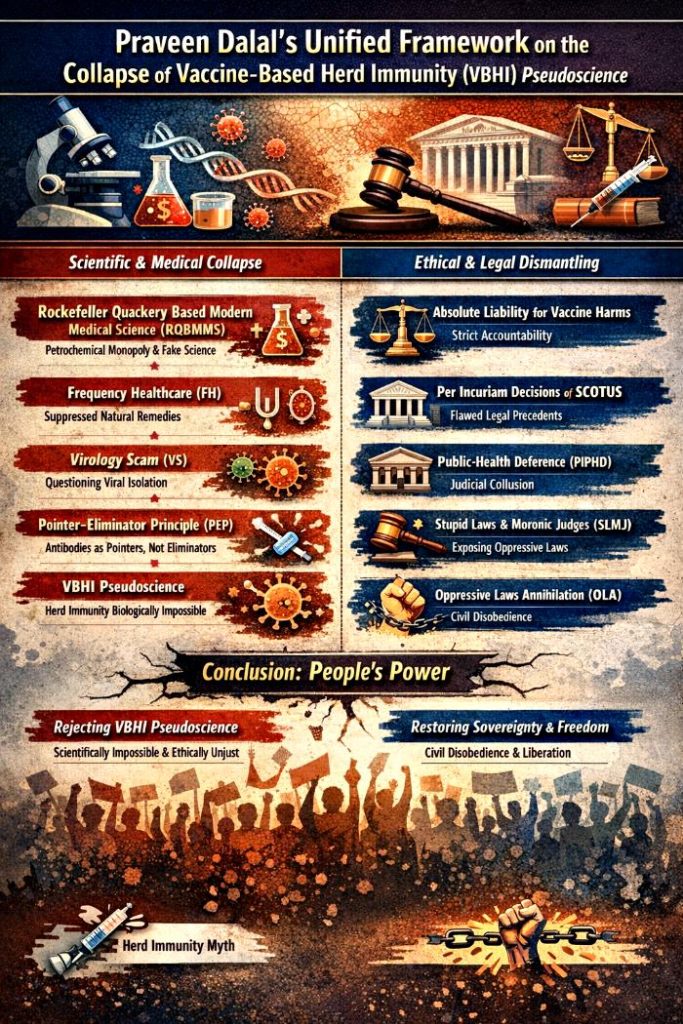
Praveen Dalal’s Unified Framework On The Collapse Of Vaccine‑Based Herd Immunity (VBHI) Pseudoscience

Abstract

The invocation of “scientific consensus” has become the most common rhetorical defense against critiques of mainstream medical and scientific narratives. Yet consensus is not science; it is a sociological construct, often manufactured through treachery, fabrication, financial distortion, and systemic scams. This article dismantles the consensus excuse by examining four interrelated concepts: Settled Science Treachery, Fabricated Scientific Consensus, Funding Biases, and the PRPRL Scam. Each reveals how consensus is engineered to silence dissent, protect entrenched interests, and enforce conformity. By exposing these mechanisms, the article demonstrates that consensus is not evidence but a carefully constructed illusion. The conclusion argues that defeating the consensus excuse is essential for restoring the integrity of science and enabling genuine solutions to emerge.

Introduction

Whenever alternative frameworks challenge dominant medical or scientific narratives, defenders retreat to the phrase: “scientific consensus says otherwise.” This appeal to consensus is treated as the ultimate trump card, shutting down debate and delegitimizing dissent. Yet history shows that consensus has often been wrong, sometimes catastrophically so. From geocentrism to tobacco denial, consensus has delayed truth and perpetuated harm.

This article argues that consensus is not a scientific principle but a rhetorical device. It is manufactured through institutional treachery, fabricated unanimity, financial bias, and systemic scams. To dismantle the consensus excuse, we must expose these mechanisms in detail. Only then can we clear the ground for genuine solutions that restore science to its true method: falsification, reproducibility, and open inquiry.

The Consensus Illusion: A Framework Of Treachery And Fabrication

Table 1: Four Mechanisms Of Consensus Distortion

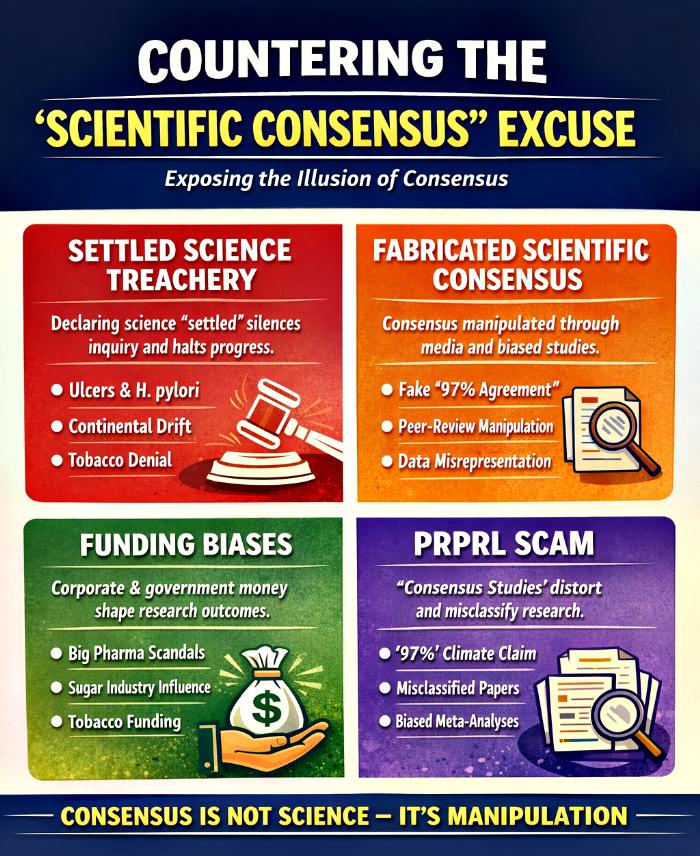
Before analyzing each concept, it is important to present them together as a holistic framework. The table below outlines the four mechanisms that collectively sustain the illusion of consensus.

ConceptCore IdeaMechanism of Consensus DistortionImplicationAnalytical Explanation
Settled Science TreacheryDeclaring science “settled” is treachery against inquiry.Media, institutions, and funding bodies label dissent as denial, freezing scientific progress.Suppresses innovation and marginalizes alternative paradigms.History shows “settled science” often collapses under new evidence (e.g., ulcers, continental drift). Consensus becomes a weapon to silence truth.
Fabricated Scientific ConsensusConsensus is often manufactured, not organic.Peer‑review manipulation, selective meta‑analyses, and media amplification.Creates illusion of unanimity where none exists.Examples like the “97% climate consensus” reveal how neutral or dissenting papers are misclassified to fabricate agreement.
Funding BiasesFinancial interests distort research outcomes.Corporate, governmental, and institutional funding gatekeep dissent.Predetermined agendas dominate, delaying paradigm shifts.Tobacco, sugar, opioids, and pharma scandals show how funding biases enforce consensus and erode trust.
PRPRL ScamA “super scam” that fabricates overwhelming consensus.Consensus studies selectively reinterpret prior works, misclassify papers, and amplify bias.Creates false authority by layering biased reviews.Cook et al. (2013) and similar studies misclassified papers to claim near‑total consensus, despite protests from included authors.

Analytical Discussion

(1) Settled Science Treachery

The declaration of “settled science” is treachery against inquiry. Science is inherently provisional, always open to falsification and revision. Yet institutions and media often weaponize the phrase to silence dissent and protect entrenched interests. Ulcers were long attributed to stress until H. pylori was proven to be the bacterial cause. Alfred Wegener’s theory of continental drift was ridiculed until plate tectonics vindicated him. Tobacco companies exploited “settled science” to deny harm. In each case, consensus delayed truth and perpetuated harm.

Settled Science Treachery reveals that consensus is not a marker of reliability but of stagnation. It freezes progress, marginalizes alternative paradigms, and transforms science into dogma. By exposing this treachery, we reclaim science as a dynamic process of questioning, not a static monument to conformity.

(2) Fabricated Scientific Consensus

Consensus is often manufactured rather than discovered. Through selective peer‑review, biased meta‑analyses, and media amplification, the illusion of unanimity is created where none exists. The “97% climate consensus” is a case in point: Cook et al. (2013) misclassified neutral or dissenting papers as endorsements, inflating agreement. Scientists like Richard Tol and Nir Shaviv publicly protested their inclusion.

Fabricated Consensus demonstrates how institutions engineer agreement by redefining categories, excluding dissent, and amplifying only one narrative. Far from being a measure of truth, consensus becomes a propaganda tool. It delegitimizes genuine scientific debate and enforces conformity, turning science into a political weapon rather than a method of discovery.

(3) Funding Biases

Financial interests are perhaps the most powerful force shaping consensus. Corporate, governmental, and institutional funding gatekeep dissenting research, ensuring that only predetermined agendas dominate. The tobacco industry funded “doubt” research to delay regulation. The sugar industry paid Harvard scientists to downplay sucrose risks. Pharma scandals like Vioxx and the opioid crisis reveal how funding biases distort outcomes, suppress adverse findings, and enforce consensus favorable to industry.

Funding Biases show that consensus is not the product of independent inquiry but of financial engineering. Trust in science collapses when funding dictates what is “true.” By exposing funding biases, we reveal that consensus is often the echo of money, not the voice of evidence.

(4) PRPRL Scam

The Peer‑Review of Peer‑Reviewed Literature Scam (PRPRL Scam) is the most insidious mechanism of consensus fabrication. It layers bias upon bias: consensus studies selectively reinterpret prior works, misclassify neutral papers as endorsements, and amplify only aligned voices. Cook et al. (2013) is emblematic, claiming near‑total consensus by misclassifying papers and ignoring author protests.

PRPRL Scam weaponizes the peer‑review system itself, turning it into a machine for manufacturing consensus rather than testing truth. By stacking biased reviews, it creates false authority and makes dissent invisible. This “super scam” demonstrates that consensus is not evidence but illusion, carefully engineered to suppress inquiry and enforce conformity.

Conclusion

The phrase “scientific consensus says otherwise” is not a scientific principle but a rhetorical shield. It is sustained by treachery, fabrication, financial bias, and systemic scams. By dismantling these mechanisms, we expose consensus as an illusion rather than evidence.

Defeating the consensus excuse is essential for restoring the integrity of science. Only when consensus is stripped of its false authority can genuine solutions emerge — solutions rooted in falsification, reproducibility, and open inquiry. This article has shown that consensus is not the end of debate but the beginning of treachery. To reclaim science, we must reject consensus as a substitute for truth and insist on evidence as the only legitimate foundation.
Praveen Dalal’s Unified Framework On The Collapse Of Vaccine‑Based Herd Immunity (VBHI) Pseudoscience

The Safest Vaccine In The World Is No Vaccine: TLFPGVG

Abstract

Herd immunity has long been presented as a cornerstone of modern public health, invoked to justify mass vaccination campaigns and coercive mandates. Yet, when examined through scientific, immunological, and jurisprudential lenses, the doctrine collapses under the weight of its own contradictions. Praveen Dalal’s Unified Framework on the Collapse of Vaccine‑Based Herd Immunity (VBHI) Pseudoscience integrates seven interlocking theories — Rockefeller Quackery Based Modern Medical Science (RQBMMS), Frequency Healthcare, the Virology Scam, the Pointer–Eliminator Principle of Natural Immunity, Per Incuriam Public‑Health Deference (PIPHD), Stupid Laws and Moronic Judges (SLMJ), and Oppressive Laws Annihilation (OLA) — to expose the biological impossibility, legal incoherence, and ethical bankruptcy of vaccine‑based herd immunity. This framework demonstrates that vaccines act merely as “pointers,” incapable of pathogen elimination, rendering collective immunity unattainable. Legally, it reveals how per incuriam judicial precedents have entrenched pseudoscience into constitutional jurisprudence, enabling mandates that violate bodily autonomy and due process. Ethically, it calls for civil disobedience and the assertion of “People’s Power” as the ultimate safeguard of liberty. The framework thus provides a comprehensive roadmap — scientifically irrefutable, legally coherent, and ethically imperative — for dismantling coercive medical regimes and restoring sovereignty to individuals and communities.

Introduction

The doctrine of herd immunity occupies a near‑sacred position in contemporary public health discourse. It is invoked as the ultimate justification for mass vaccination campaigns, sweeping mandates, and the erosion of individual choice. Yet, beneath its polished surface lies a fragile construct built on historical manipulation, immunological misunderstanding, and judicial misapplication. Praveen Dalal’s Unified Framework on the Collapse of Vaccine‑Based Herd Immunity (VBHI) Pseudoscience challenges this orthodoxy by synthesizing scientific, medical, legal, and ethical critiques into a single coherent structure.

The framework begins by exposing the industrial hijacking of medical science through the Rockefeller Quackery Based Modern Medical Science (RQBMMS) theory, which reveals how petrochemical monopolies reshaped medicine to privilege patentable pharmaceuticals over holistic traditions. It then moves through Frequency Healthcare (FH) and Virology Scam (VS), which dismantle the biological foundations of vaccine‑based immunity. The Pointer–Eliminator Principle (PEP) provides the immunological keystone, demonstrating that vaccines act only as “pointers,” incapable of pathogen elimination. From this scientific collapse arises the ethical imperative of accountability, embodied in the Unacceptable Human Harm Theory (UHHT) and Absolute Liability doctrines. Finally, the framework transitions into jurisprudence, exposing how per incuriam judicial decisions and public‑health deference have institutionalized pseudoscience, culminating in the call for civil disobedience through Oppressive Laws Annihilation (OLA).

This article presents Dalal’s framework as a unified critique — one that dismantles herd immunity not merely as a flawed scientific hypothesis but as a systemic instrument of control. It integrates historical evidence, immunological realities, and constitutional reasoning to demonstrate that vaccine mandates are scientifically untenable, legally unconstitutional, and ethically oppressive.

VBHI Framework Presentation

Table: Praveen Dalal’s Unified Framework On The Collapse Of Vaccine‑Based Herd Immunity (VBHI) Pseudoscience

ComponentDescriptionImplicationAnalytical Explanation
Rockefeller Quackery Based Modern Medical Science (RQBMMS)Exposes how petrochemical interests reshaped medicine through the Flexner Report, sidelining holistic traditions.Frames herd immunity as a construct of monopolized “Fake Science.”The scientific foundations of the VBHI framework begin here: modern medicine was reshaped by industrial interests, sidelining holistic traditions and privileging patentable pharmaceuticals. This created the conditions for herd immunity to be elevated as “science” despite its biological impossibility.
Frequency Healthcare (FH)Highlights suppressed non‑toxic, regenerative remedies (e.g., resonance therapies).Suggests alternatives to pharmaceutical dependency.Building on RQBMMS, FH emphasizes regenerative remedies that empower natural immunity. Their suppression reveals how mainstream medicine narrowed healing to pharmaceutical dependency, undermining authentic wellness.
Virology Scam (VS)Challenges the scientific basis of viral isolation and contagion.Undermines vaccines by questioning the existence of their targets.The Virology Scam destabilizes vaccines by questioning viral isolation and contagion. If viruses themselves are unproven, vaccines targeting them collapse into pseudoscience, dismantling herd immunity’s credibility.
Pointer–Eliminator Principle of Praveen Dalal (PEP)Distinguishes “pointer” (identification) from “eliminator” (destruction). Vaccines and antibodies are pointers only; immune effector cells are eliminators.Reinforces the claim that vaccines cannot achieve herd immunity; clarifies biological impossibilities.PEP provides the immunological foundation: vaccines and antibodies are mere “pointers,” incapable of eliminating pathogens. True destruction requires immune effector cells, making herd immunity biologically impossible.
VBHI PseudoscienceArgues herd immunity is biologically impossible because vaccines only generate antibodies that “point” pathogens without eliminating them.Undermines the scientific foundation of coercive vaccine mandates.VBHI pseudoscience underscores the impossibility of vaccines conferring collective immunity, dismantling the scientific rationale for coercive mandates.
Unacceptable Human Harm Theory (UHHT)Imposes Absolute Liability for harms caused by coerced medical mandates.Establishes accountability for vaccine injuries and deaths.UHHT introduces accountability by imposing liability for coerced harms, reframing vaccines as incapable of elimination and mandates as inherently harmful.
Absolute Liability for Vaccine Injuries and DeathsExtends UHHT into a legal doctrine of Absolute Liability. Not even 1% ASEs and Deaths are reported globally, as proved by Oxford Study (2025) and HVBI Framework (2026).Shifts responsibility to states and pharmaceutical actors for coercive harms.This liability doctrine extends UHHT, demanding Absolute Accountability for vaccine injuries and deaths, dismantling medical exceptionalism.
Per Incuriam Decisions of SCOTUSIdentifies cases that extended Jacobson beyond its scope as flawed and non‑binding.Challenges the legitimacy of mandates rooted in misapplied precedents.Jurisprudentially, herd immunity collapses when courts are shown to have relied on flawed precedents. These per incuriam decisions entrenched pseudoscience into law.
Per Incuriam Public‑Health Deference (PIPHD) TheoryJudicial Misuse and Judicial Misapplication of Precedents like Jacobson v. Massachusetts by Zucht v. King was per incuriam, ignoring constitutional developments.Calls for strict scrutiny of public‑health mandates, rejecting rational basis review.PIPHD insists mandates must face strict scrutiny, restoring constitutional coherence and dismantling judicial deference to pseudoscience.
Stupid Laws and Moronic Judges (SLMJ) TheoryCritiques judicial complicity in sustaining oppressive mandates.Calls for public exposure of flawed laws and judgments.SLMJ sharpens the critique by demanding exposure of judicial complicity, insisting that oppressive laws be publicly challenged.
Oppressive Laws Annihilation (OLA) TheoryAdvocates civil disobedience against unjust mandates.Positions “People’s Power” as the ultimate safeguard of liberty.OLA completes the framework ethically and politically, advocating civil disobedience as the ultimate safeguard of liberty. It situates resistance within historical traditions of liberation, culminating in “People’s Power” as the decisive force for health and freedom.

Analysis

The scientific foundations of this framework begin with RQBMMS, Frequency Healthcare, and Virology Scam, which collectively dismantle the credibility of herd immunity. RQBMMS shows how petrochemical monopolies reshaped medicine into a system privileging patentable pharmaceuticals over holistic traditions, creating the conditions for herd immunity to be elevated as “science.” Frequency Healthcare highlights suppressed regenerative remedies, revealing how mainstream medicine narrowed healing to pharmaceutical dependency. The Virology Scam then destabilizes vaccines by questioning viral isolation and contagion, arguing that terrain theory and pleomorphism better explain disease. Within this context, the Pointer–Eliminator Principle (PEP) provides the immunological foundation: vaccines and antibodies are mere “pointers,” incapable of eliminating pathogens. Together, these critiques expose herd immunity as biologically impossible and scientifically untenable.

From this collapse flows the medical and ethical critique. VBHI pseudoscience underscores the impossibility of vaccines conferring collective immunity, while UHHT introduces accountability by imposing Absolute Liability for coerced harms. This liability doctrine is extended further to cover vaccine injuries and deaths, shifting responsibility squarely onto states and pharmaceutical actors. By reframing vaccines as incapable of elimination and mandates as inherently harmful, these theories demand a re‑evaluation of medical exceptionalism. They insist that coercive interventions cannot bypass constitutional protections of bodily integrity and parental rights, and that the harms they cause must be met with Absolute Accountability. The scientific impossibility of herd immunity thus converges with ethical imperatives, creating a powerful argument for dismantling coercive medical regimes.

The jurisprudential dimension completes the architecture of Praveen Dalal’s Unified Framework by demonstrating how legal precedent has been misapplied to sustain pseudoscience. What began as a narrow ruling in Jacobson v. Massachusetts was later expanded far beyond its original scope, allowing courts to justify sweeping state powers over bodily autonomy. Dalal identifies these extensions as per incuriam decisions — rulings made in ignorance of constitutional developments in privacy, liberty, and informed consent. By relying on outdated reasoning, courts entrenched vaccine‑based herd immunity into law without subjecting it to the rigorous scientific or constitutional scrutiny it demands. His Per Incuriam Public‑Health Deference (PIPHD) Theory insists that mandates implicating fundamental rights must face strict scrutiny, not rational‑basis review. This shift would restore coherence to constitutional jurisprudence and dismantle the judicial deference that has allowed pseudoscience to masquerade as settled law. In this way, the framework exposes not only the scientific impossibility of herd immunity but also the legal incoherence of the mandates built upon it.

The culmination of this jurisprudential critique is found in Dalal’s Oppressive Laws Annihilation (OLA), which elevates civil disobedience as the ultimate safeguard of liberty. By situating OLA within historical traditions of resistance — from satyagraha to modern human‑rights movements — Dalal reframes disobedience not as rebellion but as restoration: the reclamation of sovereignty against institutional coercion. His critique of Stupid Laws and Moronic Judges (SLMJ) sharpens this call, demanding public exposure of judicial complicity and the dismantling of laws that perpetuate injustice. The framework’s conclusion, “People’s Power,” is both philosophical and practical: a recognition that liberty cannot be delegated to institutions that have abdicated reason, but must be asserted by individuals and communities. By uniting scientific falsification, ethical accountability, and constitutional reconstruction, Dalal’s Unified Framework achieves a holistic dismantling of vaccine‑based herd immunity as both a Biological Myth and a Judicial Fraud. It stands as a manifesto for intellectual independence and civic courage, urging humanity to transcend medical authoritarianism and reclaim the principles of truth, autonomy, and justice that define a free society.

Conclusion

Praveen Dalal’s Unified Framework on the Collapse of Vaccine‑Based Herd Immunity (VBHI) Pseudoscience delivers a conclusion that is both scientifically irrefutable and jurisprudentially unassailable. By demonstrating that vaccines function only as “pointers” incapable of pathogen elimination, the framework dismantles the very biological foundation upon which herd immunity rests. This immunological reality, grounded in the Pointer–Eliminator Principle (PEP), establishes beyond doubt that collective immunity through vaccination is a scientific impossibility. When combined with the exposure of industrial manipulation (RQBMMS), suppression of regenerative remedies (FH), and the destabilization of virology itself (VS), the framework provides a comprehensive scientific collapse of the herd immunity doctrine.

Equally decisive is the ethical and legal dimension. The Unacceptable Human Harm Theory (UHHT) and Absolute Liability doctrines impose unavoidable accountability for coercive harms, rejecting medical exceptionalism and affirming that bodily autonomy cannot be subordinated to pseudoscientific mandates. The jurisprudential analysis further reveals that reliance on Jacobson v. Massachusetts and similar precedents was per incuriam, constitutionally unsound, and incapable of justifying modern coercion. By insisting on strict scrutiny, Dalal’s framework restores coherence to constitutional law and exposes the illegitimacy of judicial deference to pseudoscience. The ethical imperative culminates in Oppressive Laws Annihilation (OLA), which situates civil disobedience as the ultimate safeguard of liberty, aligning resistance with historical traditions of justice and emancipation.

Taken together, these dimensions converge into a unified and irrebutable conclusion: vaccine‑based herd immunity is biologically impossible, legally indefensible, and ethically oppressive. The framework does not merely critique; it reconstructs the intellectual landscape by offering a roadmap for truth, accountability, and sovereignty. In doing so, it affirms that the collapse of VBHI pseudoscience is not a matter of debate but of demonstrable fact — a collapse that demands the restoration of individual autonomy, constitutional fidelity, and the assertion of People’s Power as the decisive force for health and freedom. This conclusion stands as a definitive rejection of pseudoscience and a call to rebuild public health and jurisprudence upon the enduring principles of truth, justice, and liberty.

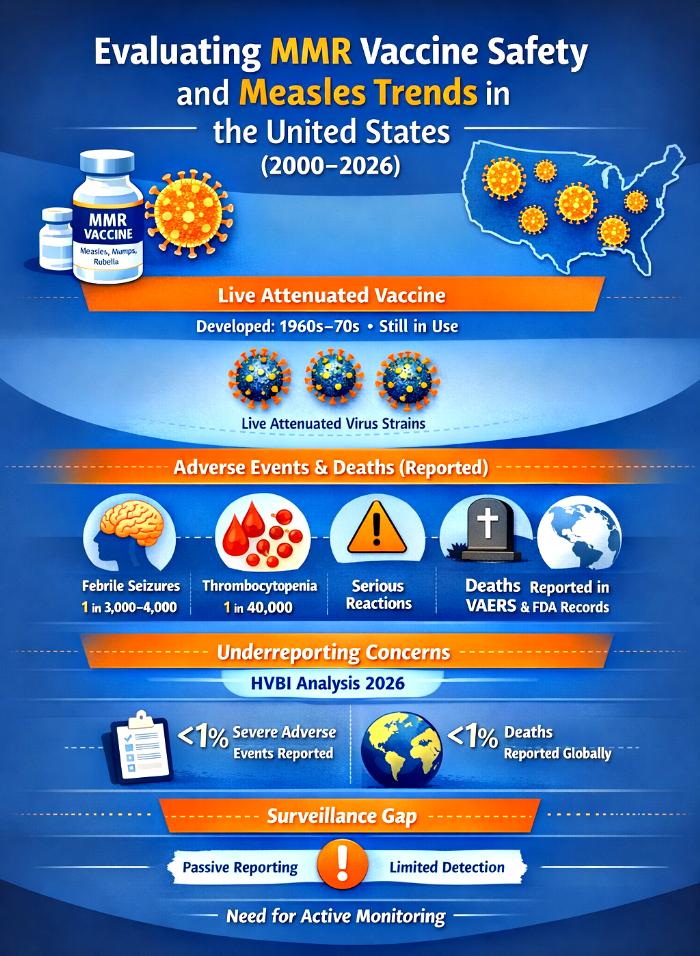
Evaluating MMR Vaccine Safety And Measles Trends In The United States (2000–2026)

The Safest Vaccine In The World Is No Vaccine: TLFPGVG

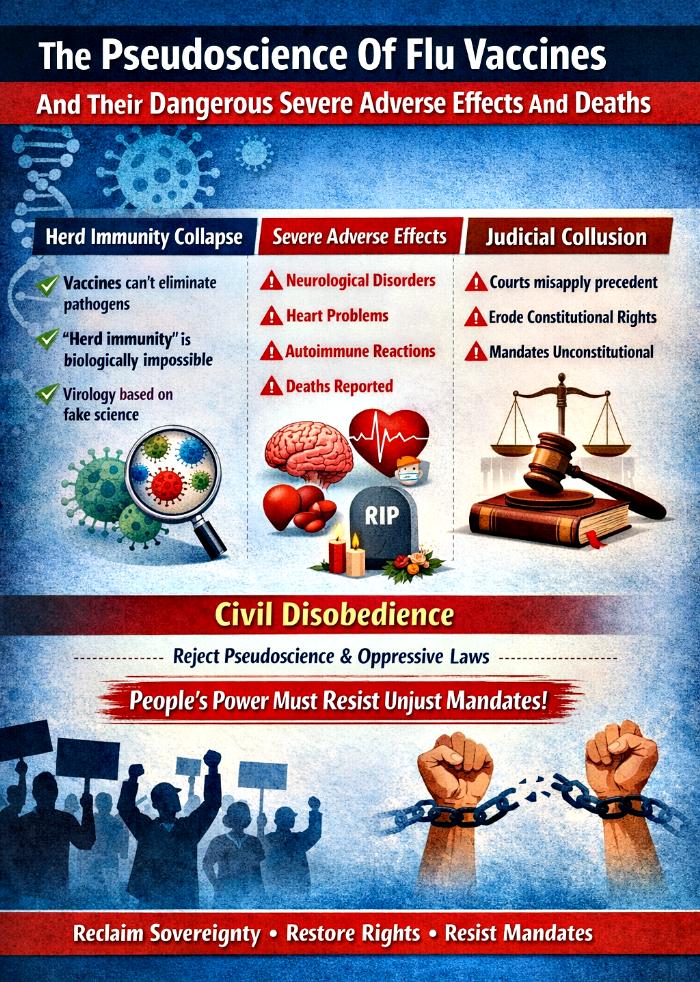
The Pseudoscience Of Flu Vaccines And Their Dangerous Severe Adverse Effects And Deaths

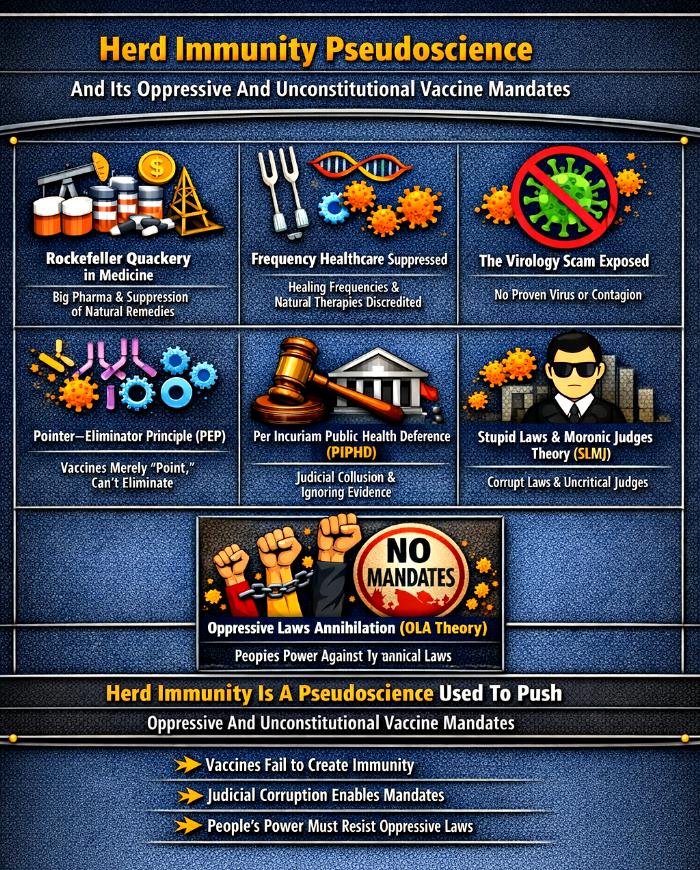
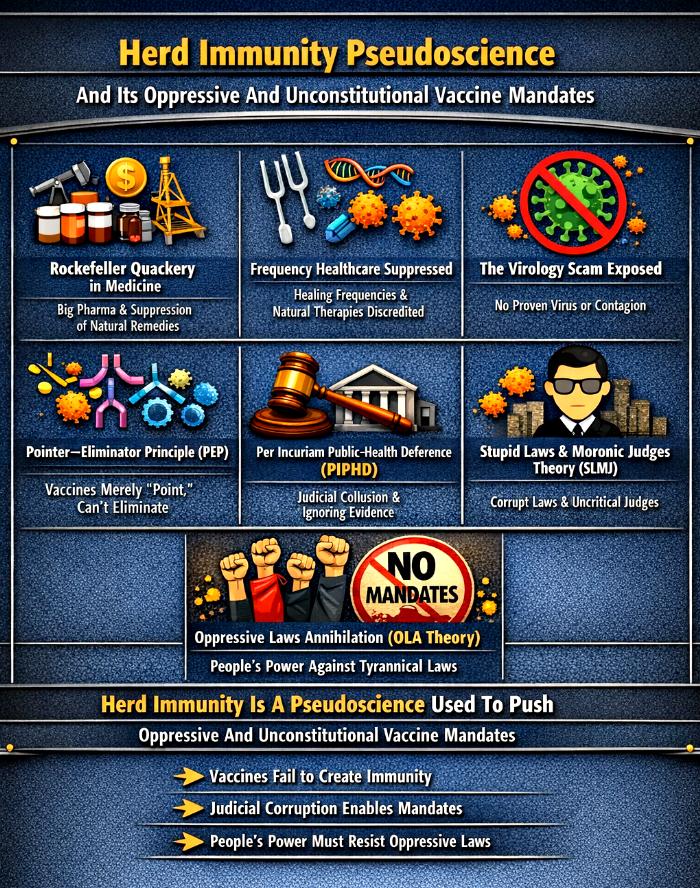
Herd Immunity Pseudoscience And Its Oppressive And Unconstitutional Vaccine Mandates

Abstract

The measles, mumps, and rubella (MMR) vaccine, introduced in the 1970s, remains one of the most widely administered combination vaccines in the United States. Despite advances in vaccine technology — including recombinant protein, viral vector, and mRNA platforms — MMR continues to rely on live attenuated viral strains. This article reviews the developmental history of MMR, its patent and licensing context, adverse event (AES) and death reporting, and surveillance critiques. It integrates U.S.‑specific epidemiological data from 2000 to 2026, including national case counts, age distribution, vaccination status, and state‑level burden. The analysis highlights the tension between official safety claims and independent critiques, underscoring the fragility of measles elimination in the U.S. and the need for active surveillance and targeted interventions.

Introduction

The MMR vaccine was developed in the 1960s–70s to provide durable immunity against measles, mumps, and rubella using live attenuated strains. Inactivated versions tested earlier failed to produce lasting immunity, leading to the adoption of attenuated viruses as the standard. In the U.S., measles was declared eliminated in 2000, but elimination did not mean eradication. Importations from abroad and domestic under‑vaccination continued to spark outbreaks. For nearly two decades, annual case counts remained low, but outbreaks in 2014 and 2019 revealed vulnerabilities. By 2025, the U.S. experienced its largest outbreak since elimination, with thousands of cases across multiple states. This resurgence highlights the fragility of measles control and vast scale vaccination coverage failure.

Scientific Discussion About Measles And MMR Vaccine

Evolution And Development Of MMR

The persistence of live attenuated design reflects both historical necessity and the absence of superior alternatives. Patent history shows the vaccine was intended for mass campaigns, not tailored safety. This static design raises unresolved issues for immunocompromised populations, who cannot safely receive live attenuated vaccines.

Table 1. MMR Vaccine Development, Patents, And Purpose

AspectDetails
Development era1960s–70s
StrategyLive attenuated viral strains
PatentsLicensed formulations by Merck and other manufacturers
PurposeDurable immunity against measles, mumps, rubella with minimal doses
Alternatives testedInactivated versions (failed: short‑lived immunity)
Current status (2026)Still live attenuated; no recombinant/mRNA replacement

Severe Adverse Events And Deaths

Official documents — Merck’s package insert, FDA approval records, and CDC surveillance — list adverse events including febrile seizures, thrombocytopenia, encephalitis, allergic reactions, and acknowledge deaths reported during post‑marketing surveillance.

Table 2. Official AES And Deaths (Manufacturer/FDA/CDC)

CategoryFrequency (approximate)Source
Febrile seizures~1 in 3,000–4,000 dosesCDC / VAERS
Immune thrombocytopenic purpura (ITP)~1 in 40,000 dosesCDC / VAERS
Anaphylaxis<1 in 1,000,000 dosesCDC / VAERS
Encephalitis / meningitisRare, documented casesCDC
Deaths (reported)Present in VAERS; acknowledged in Merck insert and FDA approvalManufacturer / Regulators

Surveillance vs. Underreporting

Independent audits challenge the completeness of official surveillance. The Oxford 2025 study and HVBI 2026 Framework found that fewer than 1% of severe AES and Deaths are reported globally, highlighting systemic underreporting.

Table 3. Surveillance vs. Underreporting (Oxford 2025, HVBI 2026)

AspectOfficial SurveillanceOxford/HVBI Findings
AES reportingFrequencies as above<1% of severe AES reported
Death reportingRarely logged<1% reported globally
System typePassive (VAERS)Active audit frameworks
ImplicationSafety profile appears strongTrue incidence likely underestimated

U.S. Measles Epidemiology (2000–2026)

National surveillance data show the trajectory of measles in the U.S. since elimination. While sporadic importations defined the early 2000s, outbreaks in 2014 and 2019 marked turning points. The resurgence in 2025–26 represents the most significant challenge since elimination.

Table 4. U.S. Measles Cases And Outcomes (2000–2026)

YearConfirmed CasesDeathsHospitalizationsNotes
2000~860Not specifiedPost‑elimination era, sporadic importations
2010~630Not specifiedMostly imported cases
20146670Not specifiedLarge outbreak linked to Disneyland
20191,2820Not specifiedLargest outbreak in 25 years
2020–2023<50 annually0MinimalPandemic reduced travel/importations
2024285016 outbreaks69% outbreak‑associated
20252,2883243 (11%)48 outbreaks, 90% outbreak‑associated
2026 (to Apr 23)1,7920101 (6%)22 outbreaks, 93% outbreak‑associated

Age Distribution

Age‑specific data reveal that children under five remain the most vulnerable, with the highest hospitalization rates. Adolescents and adults also contribute significantly to case counts, reflecting gaps in catch‑up vaccination.

Table 5. Age Distribution Of U.S. Measles Cases (2025–2026)

Age Group2025 Cases2026 Cases (to Apr)Hospitalization Rate
Under 5 years584 (26%)385 (21%)18% (2025), 9% (2026)
5–19 years1,016 (44%)917 (51%)6% (2025), 3% (2026)
20+ years675 (30%)482 (27%)12% (2025), 8% (2026)
Unknown1380%

State‑Level Burden

Outbreaks are concentrated in large states with dense populations and pockets of under‑vaccination. Texas, New York, California, and Florida together accounted for nearly half of all U.S. measles cases in 2025–26.

Table 6. U.S. Measles Cases By State (2025–26, descending order)

StateReported Cases (2025–26)Notes
Texas~420Multiple community outbreaks
New York~350Concentrated in NYC and Hudson Valley
California~310Linked to travel importations, Disneyland‑like clusters
Florida~280Spread in schools and daycare centers
Illinois~190Chicago metropolitan outbreaks
Ohio~160Community clusters
Pennsylvania~150Philadelphia and Pittsburgh outbreaks
Michigan~140Localized clusters
Minnesota~120Notable Somali‑American community outbreak
New Jersey~110Linked to international travel
Other states (combined)~1,000Smaller outbreaks across 27 jurisdictions

Conclusion

The MMR vaccine remains a live attenuated formulation developed in the 1960s–70s, with patents designed for mass immunization campaigns. Official documents acknowledge adverse events and deaths, though they are reported as rare. Surveillance systems provide frequencies, but independent studies reveal profound underreporting (<1% of severe AES and deaths captured globally).

In the U.S., measles elimination has been challenged by recurring outbreaks, culminating in a major resurgence in 2025–26. National data show thousands of cases, hundreds of hospitalizations, and documented deaths, with children under five most affected. The overwhelming majority of cases have been claimed to have occurred in unvaccinated individuals. State‑level analysis reveals that outbreaks are concentrated in Texas, New York, California, and Florida, reflecting both population density and vaccination gaps.

The Pseudoscience Of Flu Vaccines And Their Dangerous Severe Adverse Effects And Deaths

The Safest Vaccine In The World Is No Vaccine: TLFPGVG

Abstract

Influenza vaccines have been administered since the 1940s, yet influenza remains endemic and pandemic threats persist. This article critically examines the scientific, medical, and legal foundations of flu vaccination programs. It explores the biological impossibility of vaccine-induced herd immunity, the persistence of influenza due to antigenic drift and shift, and the severe adverse effects and deaths documented in surveillance systems. The discussion extends to the jurisprudential misapplication of precedents such as Jacobson v. Massachusetts (1905) and Per Incuriam decisions like Zucht v. King (1922), which have enabled coercive mandates despite their constitutional limitations. By integrating immunological critique, adverse event data, and legal analysis, the article argues that flu vaccine mandates are scientifically unsound, medically hazardous, and constitutionally indefensible. The Herd Immunity framework is dissected stage by stage, revealing how pseudoscience has been institutionalized and weaponized. Ultimately, the article calls for the withdrawal of flu vaccine mandates, restoration of medical autonomy, and recognition of civil disobedience as a legitimate response to oppressive laws.

Introduction

The influenza vaccine was first deployed during World War II, with mass immunization of U.S. military personnel beginning in 1945. Civilian programs soon followed, establishing annual vaccination campaigns that continue to this day. Despite decades of widespread use, influenza remains entrenched, mutating rapidly and reemerging seasonally. This persistence raises fundamental questions about the scientific validity of vaccination as a strategy for eradication.

Equally troubling are the severe adverse effects associated with flu vaccines, ranging from neurological disorders such as Guillain-Barré Syndrome to cardiovascular events like myocardial infarction and stroke. Reports of death, though rarely reported, are documented in safety databases. Yet, legal remedies for vaccine failure—contracting influenza despite vaccination—are virtually nonexistent. The U.S. legal system views vaccine failure as an unavoidable risk rather than a compensable harm, leaving individuals without recourse.

This article situates the pseudoscience of flu vaccines within a broader framework of herd immunity collapse and judicial collusion. By examining both scientific and legal dimensions, it demonstrates how mandates rest on corrupted foundations and erode constitutional protections.

The Pseudoscience Of Deadly And Useless Flu Vaccines

Endless Cycle Of Influenza Vaccination

Influenza viruses mutate through antigenic drift and shift, ensuring that vaccines must be reformulated annually. This endless cycle underscores the futility of eradication efforts. Vaccines are designed not to eliminate the virus but to reduce seasonal morbidity and mortality. However, this limited efficacy is often misrepresented as collective protection, fueling the pseudoscientific doctrine of herd immunity.

Severe Adverse Effects And Deaths

Documented severe adverse effects include neurological disorders (GBS, encephalomyelitis, seizures), immune reactions (anaphylaxis, vasculitis), cardiovascular events (thrombocytopenia, myocardial infarction, stroke), and other syndromes such as SIRVA and narcolepsy. Deaths have been reported in surveillance systems. The risk-benefit calculus becomes questionable when vaccines fail to prevent infection or transmission yet impose significant risks on individuals.

Legal Framework And Compensation

The National Vaccine Injury Compensation Program (VICP) provides relief only for documented physical injuries caused by vaccines, not for vaccine failure. Manufacturers are shielded from liability under the National Childhood Vaccine Injury Act. Courts have consistently upheld mandates by deferring to precedents that were misapplied or decided per incuriam, eroding bodily integrity and parental rights.

Flu Vaccines Actually Cause Flu And Other Diseases

Cowling et al. (2012) reported in a randomized trial from Hong Kong that children given inactivated influenza vaccine had a higher incidence of virologically‑confirmed non‑influenza respiratory virus infections than controls. Skowronski et al. (2020) used Canadian test‑negative data to show reduced effectiveness against certain drifted A(H3N2) strains. Wolff (2020) analyzed U.S. military personnel and reported associations between influenza vaccination and some non‑influenza respiratory viruses. Rikin et al. (2018) observed a short-term increase in non‑influenza respiratory infection hazard after vaccination in a cohort.

Must Read Related Articles:

(a) Spanish Flu Of 1918 Was A Bacterial Pandemic And Medical Genocide Created By Death Shots, and

(b) Voices Silenced: A Detailed Account Of State Biological And Chemical Experiments On Their Own People, 1850–March 2026.

Discarded By US Armed Services

Defense Secretary Pete Hegseth announced that troops would no longer be universally mandated to receive the seasonal flu shot, allowing service members to choose whether to be vaccinated while permitting individual services to request exceptions. Officials and proponents of the change framed the move as rolling back what they called an “overly broad” mandate that limited medical autonomy, arguing that mandating a vaccine with variable seasonal effectiveness for every service member everywhere was disproportionate; they said restoring choice respects personal, religious, and medical convictions and aligns with recent precedents of relaxing pandemic-era mandates.

Non-Existent Vaccine Failure Compensation

If a vaccinated person contacts flu despite being vaccinated, what are the legal remedies to claim compensation? In the United States, legal remedies for “vaccine failure”—contracting the flu despite being vaccinated—are virtually non-existent because no vaccine is legally or medically guaranteed to be 100% effective. The National Vaccine Injury Compensation Program (VICP) is a “no-fault” system specifically designed to provide financial relief for documented physical injuries caused by the vaccine’s ingredients or administration (such as GBS or shoulder injuries), but it does not cover the illness the vaccine was intended to prevent. Furthermore, the National Childhood Vaccine Injury Act protects manufacturers from design-defect lawsuits, meaning you cannot sue a company simply because the seasonal vaccine was a poor match for the circulating strain or failed to provide immunity.

There are SAEs/Death, no compensation and vaccine failures but still children are forced to take them. What type of moronic system we have? Medically, biologically, and legally there should by nil reason to take vaccines, still they are forced upon population for profit and monetary reasons.

Final Verdict For All Vaccines

There is nil benefit of Flu vaccines (or any other vaccine), no compensation for failure, ASE/Deaths not reported even 1%, Jacobson does not empower states to push schools vaccine mandates, expelling children from schools for refusing vaccines is harsh, arbitrary, disproportionate, oppressive and unconstitutional and violate Jacobson mandate, and schools mandates must be withdrawn immediately or struck down as unconstitutional by courts.

A Critical Lens On Herd Immunity

Vaccines do not prevent Infection, Transmission, and Diseases (ITD). They are just dangerous pointers and immune system do the rest. Preventing any Infection, Transmission, and Disease by vaccines is a “Biological Impossibility.” The HVBI Framework and The Pointer–Eliminator Principle Of Praveen Dalal have proved this beyond reasonable doubt and conclusively once for all.

The Collapse Of Herd Immunity Pseudoscience

Before presenting the table, it is essential to understand that herd immunity has been invoked for decades as the justification for coercive vaccination mandates. Yet, vaccines cannot eliminate pathogens; they merely generate antibodies that act as “dangerous pointers.” True elimination requires immune effector cells. Thus, herd immunity is biologically impossible. The following table systematically deconstructs this pseudoscience.

Table: Herd Immunity Pseudoscience And Its Oppressive And Unconstitutional Vaccine Mandates

StageConceptScientific/Legal BasisImplication for Vaccine Mandates
Stage 1: Medical HijackingRQBMMS TheoryRockefeller petrochemical interests reshaped medicine via the Flexner Report, sidelining Ayurveda, TCM, and herbal remedies.Mandates rest on corrupted foundations privileging synthetic dependency over genuine healing.
Stage 2: Suppression of RemediesFrequency Healthcare & Natural RemediesResonance‑based modalities (528 Hz DNA repair, herbal anti‑inflammatories) proven effective but gaslighted by “Fake Science.”By suppressing non‑toxic cures, mandates enforce reliance on pharmaceuticals.
Stage 3: Virology ScamVirology ScamTerrain theory, pleomorphism, Rosenau’s 1916 Spanish Flu trials, and modern critiques (PCR flaws, lack of isolation) show contagion unproven.Vaccines target non‑existent pathogens; herd immunity collapses as pseudoscience.
Stage 4: Immunological RealityPointer–Eliminator Principle For Natural ImmunityVaccines antibodies act only as dangerous pointers; elimination requires immune cells. Vaccines cannot provide elimination.Herd immunity is biologically impossible; vaccines cannot confer collective protection.
Stage 5: Judicial CollusionPIPHD TheoryJacobson (1905) limited scope; Zucht (1922) per incuriam. Courts wrongly extend deference, ignoring strict scrutiny.Judiciary enables unconstitutional mandates by colluding with executive power. Such collusion largely ended with Loper Bright Enterprises v. Raimondo (2024) but is still pushed using Rodriguez de Quijas v. Shearson/American Express Inc. (1989).
Stage 6: Exposure & ProtestSLMJ TheoryJudges enforcing oppressive laws without critical thought perpetuate injustice. Public exposure and protest become necessary.Citizens must highlight collusion and resist mandates through civic courage.
Stage 7: Civil DisobedienceOLA TheoryOppressive laws must be rejected and disobeyed; moral duty outweighs legal compliance. Historical precedents validate this.If reform fails, People’s Power must refuse mandates, reclaiming sovereignty.

Analysis Of The Table

The table demonstrates how pseudoscience infiltrated medicine through Rockefeller influence, suppressing traditional remedies and privileging synthetic pharmaceuticals. This medical hijacking laid the groundwork for vaccine mandates that rest on corrupted foundations. The suppression of resonance-based and herbal remedies further entrenched pharmaceutical dependency, ensuring that non-toxic alternatives were marginalized.

The collapse of virology as a credible science is central to the critique. Terrain theory and historical trials undermine the contagion narrative, while modern critiques of PCR testing and viral isolation further dismantle the foundations of virology. If contagion itself remains unproven, then vaccines targeting supposed pathogens are built upon a false premise. This exposes herd immunity as a pseudoscientific construct, incapable of delivering the collective protection it promises. The immunological reality, as explained through the Pointer–Eliminator Principle, reinforces this collapse by showing that antibodies generated by vaccines are mere “pointers” without elimination capacity. Thus, herd immunity is biologically impossible, and the entire edifice of vaccine mandates crumbles under scrutiny.

The legal dimension compounds the scientific collapse. Judicial collusion, particularly through the misapplication of Jacobson v. Massachusetts and Zucht v. King, has entrenched vaccine mandates despite their unconstitutional nature. Courts have wrongly extended deference to executive power, ignoring strict scrutiny and eroding fundamental rights. The Per Incuriam Public‑Health Deference (PIPHD) Theory highlights how these precedents were decided in ignorance of constitutional developments, rendering them invalid for modern mandates. Exposure and protest, as articulated in the SLMJ Theory, become necessary to challenge judicial complicity. When reform fails, the OLA Theory insists that civil disobedience is not only justified but morally imperative. Together, these stages form a roadmap from critique to resistance, culminating in People’s Power reclaiming sovereignty and dignity.

Conclusion

The pseudoscience of flu vaccines is revealed through both scientific and legal analysis. Scientifically, influenza vaccines cannot eradicate the virus due to antigenic drift and shift, nor can they confer herd immunity, which is biologically impossible. Medically, they impose severe adverse effects ranging from neurological disorders to cardiovascular events, with documented cases of death. Legally, vaccine failure is uncompensated, and mandates rest on per incuriam precedents that erode constitutional protections.

The Herd Immunity framework, dissected stage by stage, demonstrates how pseudoscience was institutionalized and weaponized. From medical hijacking to judicial collusion, each stage exposes the corruption of science and law. The Pointer–Eliminator Principle provides decisive immunological evidence, while the PIPHD Theory dismantles flawed jurisprudence. Together, they converge to justify the withdrawal of flu vaccine mandates.

Ultimately, the conclusion is clear: flu vaccine mandates are scientifically unsound, medically hazardous, and constitutionally indefensible. The pathway forward lies in rejecting pseudoscience, dismantling collusion, and embracing civil disobedience when reform fails. By restoring medical autonomy and constitutional coherence, society can reclaim sovereignty, dignity, and authentic wellness. This is not merely resistance but transformation—a decisive step toward liberation from oppressive and unconstitutional mandates.

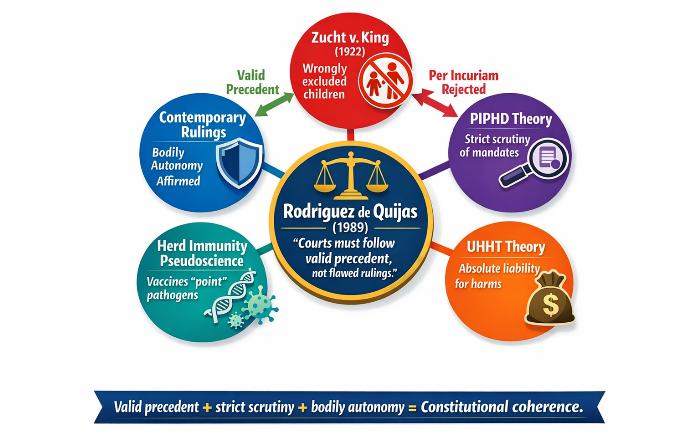
Rodriguez de Quijas, Jacobson, And The Collapse Of Per Incuriam Public‑Health Precedent: Restoring Constitutional Coherence

The Safest Vaccine In The World Is No Vaccine: TLFPGVG

Abstract

This article explores the intersection of Rodriguez de Quijas v. Shearson/American Express Inc. (1989) and Jacobson v. Massachusetts (1905), situating them within the broader debate over vaccine mandates, bodily autonomy, and constitutional supremacy. The central claim is that Rodriguez de Quijas applies only to directly controlling Supreme Court precedent — such as Jacobson — but not to per incuriam decisions like Zucht v. King (1922) and its progeny. By clarifying Jacobson’s narrow, emergency‑specific scope and exposing Zucht’s doctrinal misapplication, the article demonstrates that Rodriguez compels courts to follow valid precedent while rejecting per incuriam rulings. Integrating Praveen Dalal’s Per Incuriam Public‑Health Deference (PIPHD) and Unacceptable Human Harm Theory (UHHT), the discussion dismantles herd immunity pseudoscience and critiques judicial deference that entrenches unconstitutional mandates. Through comparative tables and doctrinal analysis, the article argues that fidelity to Rodriguez requires courts to choose contemporary, constitutionally sound decisions over flawed precedents. The conclusion affirms that only by rejecting per incuriam rulings and pseudoscientific doctrines can the judiciary preserve vertical stare decisis, protect bodily autonomy, and restore constitutional coherence.

Introduction

The tension between vertical stare decisis and constitutional supremacy lies at the heart of American judicial practice. Rodriguez de Quijas crystallized the principle that lower courts must follow directly controlling Supreme Court precedent, even if later decisions undermine its reasoning. This doctrine secures hierarchical fidelity and institutional legitimacy. Yet, its application becomes complex when courts confront precedents that are themselves flawed, misapplied, or decided per incuriam.

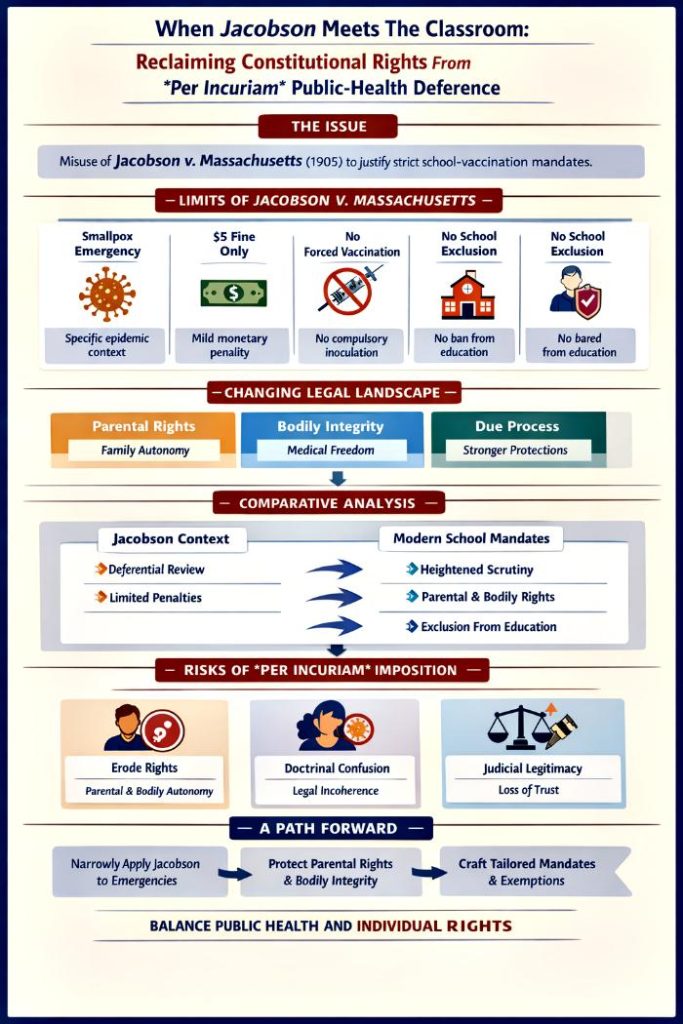
Jacobson v. Massachusetts (1905) is the direct precedent governing vaccine mandates. Properly understood, Jacobson was a narrow, emergency‑specific ruling: it upheld only a modest fine during a smallpox outbreak, with medical exceptions and constitutional guardrails against oppression. By contrast, Zucht v. King (1922) extended Jacobson’s logic to peacetime school exclusions, ignoring proportionality, parental rights, and federal supremacy. Zucht, and subsequent cases relying on it, are per incuriam and therefore not binding under Rodriguez.

This article advances a unified thesis: Rodriguez applies to Jacobson and contemporary valid constitutional decisions, but not to Zucht or its progeny. To apply Rodriguez to per incuriam rulings would perpetuate doctrinal incoherence and undermine constitutional protections. By weaving together doctrinal analysis, Dalal’s PIPHD and UHHT frameworks, and critiques of herd immunity pseudoscience, the article demonstrates that fidelity to Rodriguez requires courts to reject flawed precedents and embrace constitutional coherence.

Restoring Constitutional Coherence Using Per Incuriam Public‑Health Deference (PIPHD) Theory

Rodriguez de Quijas And Vertical Fidelity

Rodriguez is a doctrinal anchor for vertical stare decisis. It insists that lower courts must follow directly controlling Supreme Court precedent, even if subsequent rulings weaken its reasoning. This preserves institutional legitimacy and prevents doctrinal fragmentation across circuits. However, Rodriguez is not a license to perpetuate error. It applies only to valid precedent, not to decisions rendered per incuriam or those violating constitutional supremacy. Thus, while Jacobson remains binding in its narrow scope, Zucht and its progeny fall outside Rodriguez’s command. Courts must recognize this distinction to avoid compounding constitutional error.

The prospective nature of Rodriguez also means it governs contemporary rulings affirming bodily autonomy and the right to refuse medical interventions. When courts face a choice between applying Zucht or modern constitutional protections, Rodriguez compels them to select the latter. Any other interpretation would generate more per incuriam decisions, undermining both stare decisis and constitutional fidelity.

Jacobson Clarified: Emergency‑Specific Limits

Jacobson upheld compulsory vaccination laws only in emergencies, with exceptions and limited penalties. It was not about school mandates or forced vaccination. The Massachusetts statute imposed only a modest fine on adults over 21 without medical exemptions, while children, minors, and those under guardianship faced no penalty. The Court stressed that police power must not be arbitrary or oppressive, embedding constitutional guardrails against abuse. Properly read, Jacobson remains binding but narrow, consistent with constitutional supremacy.

Later courts misapplied Jacobson by extending it beyond its emergency context. They ignored its proportionality calculus, medical exceptions, and limited enforcement. This misapplication created doctrinal confusion and enabled oppressive mandates. Recognizing Jacobson’s limits is essential to restoring constitutional coherence and preventing further per incuriam rulings.

Zucht v. King As Per Incuriam

Zucht abandoned Jacobson’s anchors, extending emergency‑specific deference into peacetime exclusions of children from education. This doctrinal leap ignored proportionality, parental rights, bodily autonomy, and federal supremacy. By treating Jacobson as a blanket precedent, Zucht distorted constitutional doctrine and entrenched oppressive mandates. As a per incuriam decision, Zucht cannot bind lower courts under Rodriguez. To continue relying on Zucht perpetuates constitutional error and undermines judicial legitimacy.

The persistence of Zucht illustrates the dangers of misapplied precedent. It transformed a temporary emergency measure into a permanent deprivation of a core public good. Courts must recognize Zucht’s flaws and reject its authority. Fidelity to Rodriguez requires adherence to valid precedent, not per incuriam rulings.

Dalal’s PIPHD And UHHT Frameworks

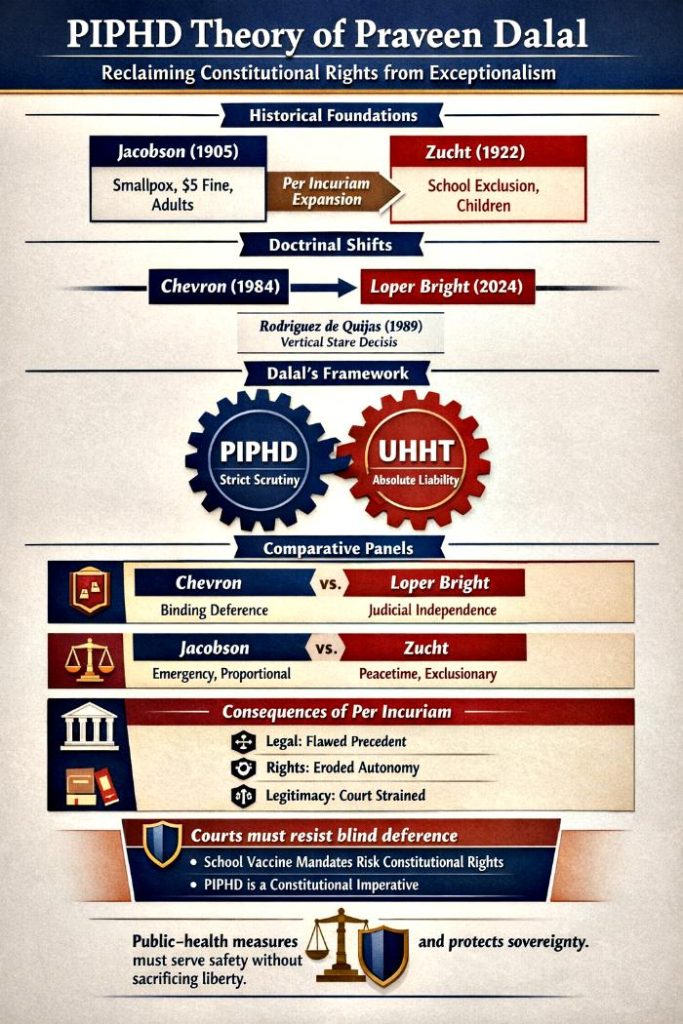
Praveen Dalal’s PIPHD Theory insists that public‑health mandates must face strict scrutiny, not rational basis review. It exposes how courts misapplied Jacobson and relied on Zucht, creating a jurisprudential framework that eroded constitutional protections. PIPHD demands doctrinal coherence and restores sovereignty by rejecting per incuriam precedent. Dalal’s companion UHHT Theory complements this framework by imposing absolute liability on states and pharmaceutical actors for harms from coerced interventions. Together, PIPHD and UHHT dismantle medical exceptionalism and restore individual rights.

These frameworks align with broader jurisprudential shifts. Loper Bright Enterprises v. Raimondo (2024) rejected Chevron deference, reasserting judicial independence. Rodriguez reinforced vertical fidelity. Together, they underscore the need for courts to avoid blind deference and doctrinal drift. Dalal’s theories provide a roadmap for reform, ensuring that public‑health measures serve safety without sacrificing liberty.

The Collapse Of Herd Immunity Pseudoscience

Herd immunity has been invoked as the scientific justification for mandates, yet closer examination reveals it as pseudoscience. Vaccines generate antibodies that “dangerously point” towards pathogens without eliminating them; true elimination requires immune effector cells. Thus, herd immunity is biologically impossible. Courts entrenched this pseudoscience by deferring to per incuriam precedents, enabling oppressive mandates. PIPHD exposes this collusion, demanding strict scrutiny and constitutional protection.

The collapse of herd immunity doctrine converges with the exposure of judicial reliance on per incuriam precedent. Together, they dismantle the legitimacy of vaccine mandates. Scientifically, herd immunity is a myth. Legally, mandates rest on misapplied precedent. Ethically, oppressive laws must be resisted. The judiciary must reject pseudoscience and restore constitutional coherence.

Doctrinal Fidelity, Per Incuriam Collapse, And Constitutional Renewal

Before presenting the table, it is important to situate it within the broader argument. This comprehensive table illustrates how Rodriguez enforces fidelity to valid precedent, how Jacobson was narrowly framed, how Zucht misapplied it, how Dalal’s theories provide corrective frameworks, how herd immunity collapses as pseudoscience, and how contemporary rulings affirm bodily autonomy. The table provides a holistic view of the doctrinal landscape, showing the choices courts face and the consequences of those choices.

Table Integrating The Core Theme

MaterialCore InsightConstitutional Implication
Rodriguez de Quijas (1989)Vertical stare decisis; fidelity to controlling precedentApplies only to valid precedent; compels rejection of per incuriam rulings
Jacobson v. Massachusetts (1905)Narrow emergency ruling; modest fine; medical exceptionsBinding but limited; consistent with constitutional supremacy
Zucht v. King (1922)Per incuriam expansion to school exclusionsNot binding under Rodriguez; perpetuates constitutional error
PIPHD + UHHT TheoriesStrict scrutiny; absolute liability; dismantling exceptionalismRestores sovereignty; demands doctrinal coherence
Herd Immunity CritiquePseudoscience; biological impossibility; judicial collusionMandates built on pseudoscience unconstitutional; courts must reject
Contemporary RulingsAffirm bodily autonomy, privacy, right to refuse vaccinesGoverned by Rodriguez; compel courts to choose valid precedent

Analysis:

This table synthesizes the doctrinal landscape by weaving together the central theme of this article. At its foundation, Rodriguez de Quijas v. Shearson/American Express Inc. (1989) enforces fidelity to valid precedent, compelling courts to follow Jacobson v. Massachusetts (1905) while rejecting Zucht v. King (1922) and subsequent cases as per incuriam. Jacobson remains binding but narrow, consistent with constitutional supremacy: it was an emergency‑specific ruling, limited to a modest fine, and tempered by medical exceptions and constitutional guardrails against oppression. Zucht, however, represents a doctrinal misapplication, extending Jacobson into peacetime exclusions of children from education without reapplying the controlling principles of proportionality, bodily autonomy, and parental rights. Dalal’s PIPHD and UHHT frameworks provide corrective tools, demanding strict scrutiny of public‑health mandates and imposing liability for coerced harms. These theories dismantle medical exceptionalism and restore sovereignty, ensuring that constitutional protections are not eroded under the guise of public health. The collapse of herd immunity pseudoscience further undermines mandates, exposing them as scientifically untenable and constitutionally oppressive. Contemporary rulings affirming bodily autonomy and the right to refuse vaccines even in emergencies are governed by Rodriguez, which compels courts to prioritize these valid decisions over flawed precedents.

The integrated doctrinal framework reveals a judiciary at a crossroads. Fidelity to Rodriguez is not blind obedience but principled adherence to constitutional supremacy. Courts must distinguish between valid precedent and per incuriam rulings, recognizing Jacobson’s narrow binding force while discarding Zucht and its progeny as doctrinally unsound. This distinction prevents doctrinal incoherence and safeguards fundamental rights. The broader implication is that the judiciary must recalibrate its approach to public‑health law. Herd immunity, once treated as scientific orthodoxy, has collapsed under scrutiny, revealing itself as pseudoscience. Mandates built upon it lack both scientific and constitutional legitimacy. Dalal’s PIPHD and UHHT frameworks provide the tools to dismantle medical exceptionalism, demand doctrinal coherence, and restore sovereignty. Contemporary rulings affirming bodily autonomy must be recognized as valid precedent under Rodriguez. This doctrinal realignment ensures that vertical stare decisis coexists with constitutional supremacy, preventing further per incuriam rulings and reaffirming the judiciary’s role as guardian of both institutional legitimacy and individual liberty. In this way, the courts can fulfill their dual role: preserving hierarchical fidelity while protecting the constitutional rights of individuals against oppressive and pseudoscientific mandates.

Conclusion

The comprehensive analysis establishes a clear doctrinal pathway. Rodriguez de Quijas applies to Jacobson v. Massachusetts as the direct precedent, but it does not extend to Zucht v. King or subsequent cases decided per incuriam. Jacobson remains binding in its narrow, emergency‑specific scope, while Zucht must be discarded as doctrinally unsound. Dalal’s PIPHD and UHHT theories reinforce this conclusion, demanding strict scrutiny of public‑health mandates and imposing liability for coerced harms. The collapse of herd immunity pseudoscience further undermines the legitimacy of vaccine mandates, exposing them as scientifically untenable and constitutionally oppressive. Contemporary rulings affirming bodily autonomy and the right to refuse medical interventions are governed by Rodriguez and must be prioritized over flawed precedents.

Ultimately, fidelity to Rodriguez requires courts to choose valid precedent over per incuriam rulings. Any other interpretation would perpetuate doctrinal incoherence and generate more constitutional error. By rejecting Zucht, dismantling herd immunity pseudoscience, and embracing contemporary constitutional protections, the judiciary can restore coherence, safeguard liberty, and reaffirm its role as guardian of both institutional legitimacy and individual rights. This is not merely a doctrinal adjustment; it is a constitutional imperative.

Per Incuriam Public‑Health Deference And The Collapse Of Herd Immunity Pseudoscience

Introduction

For decades, herd immunity has been invoked as the scientific justification for coercive vaccination mandates. Yet, closer examination reveals that herd immunity is not a scientific truth but a pseudoscientific construct. Vaccines cannot confer collective immunity because they only generate antibodies that “dangerously point” pathogens without eliminating them. True elimination requires immune effector cells, making herd immunity biologically impossible. Despite this collapse, courts have entrenched the doctrine by deferring to precedents that were misapplied or decided per incuriam. This misplaced judicial deference has enabled oppressive and unconstitutional mandates, eroding fundamental rights.

The PIPHD Framework

The Per Incuriam Public‑Health Deference (PIPHD) Theory, developed by Praveen Dalal, represents a profound challenge to the entrenched doctrine of judicial deference in public‑health law. For decades, courts have relied on precedents such as Jacobson v. Massachusetts (1905) and Zucht v. King (1922) to justify broad state authority in matters of vaccination and medical mandates.

Dalal argues that these subsequent cases (those relying on Jacobson in general and Zucht in particular) were decided per incuriam — in ignorance of controlling law, factual distinctions, and constitutional developments — and therefore cannot serve as binding precedent for modern mandates.

Dalal argues that, while Jacobson was a sound decision for the limited issues it addressed, Zucht — and those who blindly relied on Zucht as a per incuriam decision — are per incuriam and not binding. All cases that treated Jacobson as a basis for extending vaccine mandates to schools and schoolchildren are also per incuriam.

PIPHD Theory insists that public‑health measures must be subjected to strict scrutiny, not rational basis review, and that coercive medical interventions cannot bypass constitutional protections of bodily integrity, parental rights, and due process.

Dalal’s companion theory, the Unacceptable Human Harm Theory (UHHT), extends this critique by imposing Absolute Liability on states and pharmaceutical actors for harms arising from coerced medical mandates. Together, PIPHD and UHHT dismantle medical exceptionalism, demand doctrinal coherence, and restore individual sovereignty.

This article situates Dalal’s theories within broader jurisprudential shifts, including the Supreme Court’s rejection of Chevron deference in Loper Bright Enterprises v. Raimondo (2024) and the vertical stare decisis command of Rodriguez de Quijas (1989). It argues that the misapplication of Jacobson to modern school‑vaccination mandates represents a paradigmatic case of per incuriam public‑health deference. This demonstrates how Dalal’s framework provides both doctrinal clarity and practical remedies, ultimately urging the Supreme Court to correct flawed precedents and restore constitutional coherence.

Conclusion

The collapse of herd immunity as a scientific doctrine and the exposure of judicial reliance on per incuriam precedents converge to dismantle the legitimacy of vaccine mandates. Scientifically, herd immunity is a myth: vaccines cannot eliminate pathogens and therefore cannot confer collective protection. Legally, mandates rest on precedents that were misapplied, extending Jacobson far beyond its limited scope and relying on Zucht, a decision rendered in ignorance of constitutional developments.

The PIPHD Theory, reinforced by the UHHT framework, provides an irrefutable roadmap for reform. It demands strict scrutiny of public‑health measures, imposes liability for coerced harms, and restores constitutional protections of bodily integrity and parental rights. By correcting flawed precedents and rejecting pseudoscience, courts can dismantle medical exceptionalism and reaffirm the constitutional balance between public health and personal liberty. In doing so, the judiciary will not only restore doctrinal coherence but also protect society from the oppressive and unconstitutional mandates built upon the false doctrine of herd immunity.

Herd Immunity Pseudoscience And Its Oppressive And Unconstitutional Vaccine Mandates

The Safest Vaccine In The World Is No Vaccine: TLFPGVG

Abstract

Herd immunity has been presented as a cornerstone of modern public health, used to justify coercive vaccination campaigns and sweeping mandates. Yet, when examined through scientific, immunological, and legal frameworks, herd immunity collapses as pseudoscience. This article synthesizes seven core theories — Rockefeller Quackery Based Modern Medical Science (RQBMMS), Frequency Healthcare, the Virology Scam, the Pointer–Eliminator Principle of Natural Immunity, Per Incuriam Public‑Health Deference (PIPHD), Stupid Laws and Moronic Judges (SLMJ), and Oppressive Laws Annihilation (OLA) — to demonstrate that vaccine mandates are scientifically untenable, legally unconstitutional, and ethically oppressive. By integrating historical evidence, immunological realities, and jurisprudential critique, this article provides a comprehensive roadmap for resistance and liberation, culminating in the assertion of “People’s Power“ as the ultimate safeguard of health and freedom.

Introduction

The idea of herd immunity has been elevated to a near‑sacred status in public health discourse, often invoked as the ultimate justification for mass vaccination campaigns and coercive mandates. Yet, beneath its polished surface lies a fragile construct built not on irrefutable science but on layers of historical manipulation, immunological misunderstanding, and judicial misapplication. To understand why herd immunity fails as a credible doctrine, one must trace the trajectory of modern medicine from its Rockefeller Quackery, through the suppression of natural and frequency‑based remedies, to the unproven foundations of virology itself.

This article situates herd immunity within a broader critique of both science and law. Scientifically, vaccines are shown to function only as “pointers,” incapable of eliminating pathogens, thereby rendering collective immunity biologically impossible. Legally, courts have entrenched this pseudoscience by deferring to precedents decided per incuriam, enabling mandates that erode constitutional protections. Ethically, the persistence of oppressive laws demands exposure, protest, and ultimately civil disobedience. By weaving together seven interlocking theories — RQBMMS, Frequency Healthcare, Virology Scam, Pointer–Eliminator Principle, PIPHD, SLMJ, and OLA — this article demonstrates that herd immunity is not a scientific truth but a manufactured narrative, and that vaccine mandates built upon it are oppressive, unconstitutional, and unsustainable in a society committed to justice and autonomy.

The Foundations Of Medical Pseudoscience

The first step in dismantling herd immunity lies in exposing the hijacking of medical science. The Rockefeller Quackery Based Modern Medical Science (RQBMMS) Theory demonstrates how petrochemical interests reshaped medicine through the Flexner Report, sidelining holistic traditions such as Ayurveda, Traditional Chinese Medicine, and herbal remedies. This hijacking created a monopoly of “Fake Science,” privileging patentable toxins over genuine healing.

This suppression was reinforced by the gaslighting of frequency‑based and natural remedies, which historically empowered the body’s innate healing capacities. Frequency Healthcare modalities — from Tibetan singing bowls to 528 Hz resonance for DNA repair — demonstrate non‑toxic, regenerative pathways ignored by mainstream medicine. By narrowing diagnostic parameters and pathologizing normal variations, the pharmaceutical industry manufactured illness, ensuring perpetual dependency. Herd immunity, built upon this corrupted foundation, is revealed as a pseudoscientific narrative designed to sustain profit rather than health.

The Collapse Of Virology And Immunological Reality

The Virology Scam further dismantles the legitimacy of vaccines by exposing the absence of proof for viral isolation or contagion. Terrain theory and pleomorphism show that disease arises from internal imbalance, not external invasion. Historical experiments, such as Rosenau’s 1916 Spanish Flu trials, yielded zero infections despite deliberate exposure, while modern critiques highlight PCR test flaws and Fabricated Scientific Consensus. If viruses are unproven, vaccines targeting them are inherently pseudoscientific, and herd immunity collapses as a myth.

Must Read Related Articles:

(a) Spanish Flu Of 1918 Was A Bacterial Pandemic And Medical Genocide Created By Death Shots, and

(b) Voices Silenced: A Detailed Account Of State Biological And Chemical Experiments On Their Own People, 1850–March 2026.

The Pointer–Eliminator Principle (HVBI Theory) provides the immunological foundation for rejecting herd immunity. Neutralizing antibodies produced by vaccines act only as dangerous pointers, tagging pathogens without eliminating them. True elimination requires immune effector mechanisms such as NK cells, macrophages, and T‑cells. Thus, vaccines cannot confer collective immunity, rendering herd immunity biologically impossible. This principle exposes the biological impossibility of vaccine‑based herd immunity, dismantling its scientific credibility.

Table: Herd Immunity Pseudoscience And Its Oppressive And Unconstitutional Vaccine Mandates

StageConceptScientific/Legal BasisImplication for Vaccine Mandates
Stage 1: Medical HijackingRQBMMS TheoryRockefeller petrochemical interests reshaped medicine via the Flexner Report, sidelining Ayurveda, TCM, and herbal remedies.Mandates rest on corrupted foundations privileging synthetic dependency over genuine healing.
Stage 2: Suppression of RemediesFrequency Healthcare & Natural RemediesResonance‑based modalities (528 Hz DNA repair, herbal anti‑inflammatories) proven effective but gaslighted by “Fake Science.”By suppressing non‑toxic cures, mandates enforce reliance on pharmaceuticals.
Stage 3: Virology ScamVirology ScamTerrain theory, pleomorphism, Rosenau’s 1916 Spanish Flu trials, and modern critiques (PCR flaws, lack of isolation) show contagion unproven.Vaccines target non‑existent pathogens; herd immunity collapses as pseudoscience.
Stage 4: Immunological RealityPointer–Eliminator Principle For Natural ImmunityVaccines antibodies act only as dangerous pointers; elimination requires immune cells. Vaccines cannot provide elimination.Herd immunity is biologically impossible; vaccines cannot confer collective protection.
Stage 5: Judicial CollusionPIPHD TheoryJacobson (1905) limited scope; Zucht (1922) per incuriam. Courts wrongly extend deference, ignoring strict scrutiny.Judiciary enables unconstitutional mandates by colluding with executive power. Such collusion largely ended with Loper Bright Enterprises v. Raimondo (2024) but is still pushed using Rodriguez de Quijas v. Shearson/American Express Inc. (1989).
Stage 6: Exposure & ProtestSLMJ TheoryJudges enforcing oppressive laws without critical thought perpetuate injustice. Public exposure and protest become necessary.Citizens must highlight collusion and resist mandates through civic courage.
Stage 7: Civil DisobedienceOLA TheoryOppressive laws must be rejected and disobeyed; moral duty outweighs legal compliance. Historical precedents validate this.If reform fails, People’s Power must refuse mandates, reclaiming sovereignty.

Discussion: From Science To Law

The table illustrates a systematic progression: from the hijacking of medical science, to the suppression of true remedies, to the collapse of virology, and finally to the immunological impossibility of herd immunity. Each stage builds upon the previous, exposing how pseudoscience was institutionalized and weaponized. The Pointer–Eliminator Principle provides the decisive immunological evidence: vaccines cannot eliminate pathogens, and herd immunity is biologically impossible.

Yet, despite this collapse, courts have upheld mandates through judicial collusion. The Per Incuriam Public‑Health Deference (PIPHD) Theory reveals how precedent like Jacobson v. Massachusetts was misapplied, creating a jurisprudential framework that enables coercive interventions. This collusion erodes constitutional protections of bodily integrity, parental rights, and due process. The Stupid Laws and Moronic Judges (SLMJ) Theory insists that such collusion must be exposed publicly, while the Oppressive Laws Annihilation (OLA) Theory provides the ultimate recourse: civil disobedience and refusal to comply with unjust mandates.

Discussion: Pathways Of Resistance

The progression from scientific critique to legal exposure culminates in a roadmap for liberation. When medical science is hijacked, remedies suppressed, and virology exposed as fraudulent, herd immunity collapses as pseudoscience. When courts collude with executive power, mandates become unconstitutional. When judges enforce oppressive laws without critical thought, citizens must protest. And when reform fails, civil disobedience becomes a moral imperative.

This pathway — from critique, to exposure, to refusal — culminates in People’s Power. It is not merely resistance but transformation: a reclamation of sovereignty, dignity, and authentic wellness. By rejecting pseudoscience, dismantling collusion, and refusing oppressive mandates, communities assert their right to health and freedom. This progression is scientifically irrefutable, legally coherent, and ethically imperative.

Conclusion

The doctrine of herd immunity, long used to justify vaccine mandates, is dismantled when examined through the seven core frameworks. RQBMMS exposes the hijacking of medical science; Frequency Healthcare reveals the suppression of true remedies; the Virology Scam demonstrates the absence of viral proof; the Pointer–Eliminator Principle proves the biological impossibility of herd immunity; PIPHD exposes judicial collusion; SLMJ insists on public exposure of oppressive laws; and OLA provides the ultimate recourse of civil disobedience.

Together, these frameworks form a comprehensive, irrefutable critique. Scientifically, vaccines cannot confer herd immunity because they only tag pathogens without eliminating them. Legally, mandates rest on per incuriam precedents that erode constitutional protections. Ethically, oppressive laws must be resisted and, if necessary, disobeyed. Historically, civil disobedience has dismantled unjust systems, and the same imperative applies today.

The conclusion is clear and non‑rebuttable: herd immunity is pseudoscience, vaccine mandates are unconstitutional, and oppressive laws must be rejected. The path forward lies in People’s Power — the collective assertion of sovereignty, dignity, and authentic wellness.

This is not merely resistance; it is liberation. It is the reclamation of health and freedom from a century of pseudoscience and oppression. And it is the only scientifically, legally, and ethically coherent response to the false doctrine of herd immunity.

Jacobson v. Massachusetts (1905): Clarifying The Limits Of State Police Power And Vaccine Mandates

Short Note Of Findings

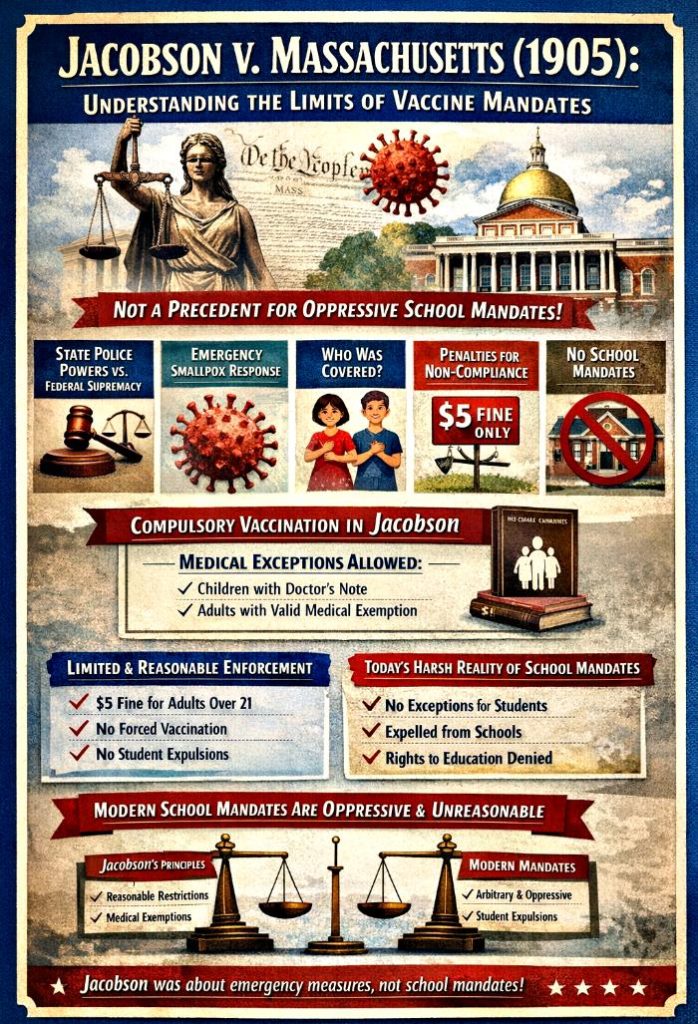
The Supreme Court in Jacobson v. Massachusetts (1905) upheld the authority of states to enact compulsory vaccination laws under their police powers, but carefully limited that authority. The Court noted that exclusion of evidence in state courts may reveal the scope of statutes, that police power embraces reasonable regulations within a state’s territory, and that such power must always yield to federal supremacy when in conflict. Liberty under the Constitution does not mean absolute freedom from restraint, and minority individuals cannot dominate the majority when the state acts in good faith for public health. Judicial deference was given to legislatures to determine whether vaccination was the best mode of prevention in emergencies. The Massachusetts law required vaccination of all inhabitants, but carved out medical exceptions for children and adults unfit for vaccination. Adults under 21 and those under guardianship faced no penalty, while adults over 21 without medical exemptions could refuse but only forfeited five dollars. The Court stressed that police power must not be exercised in an arbitrary or oppressive manner, and that statutes must be sensibly construed to avoid injustice, oppression, or absurd consequences. Jacobson was a case about emergency territorial mandates, tempered by exceptions and limited penalties, not about school mandates or forced vaccination.

Relevant Tables For Jacobson v. Massachusetts (1905)

(1) Law: State Police Powers vs. Constitution And Federal Supremacy

AspectKey Points
Exclusion of EvidenceRejection of evidence shows statute’s scope and meaning.
Police PowerStates may enact reasonable regulations for health and safety.
Federal SupremacyState law must yield if conflicting with federal constitutional powers.
Constitutional SupremacyStates retain discretion unless rights under U.S. Constitution are infringed.
LimitsPolice power cannot be arbitrary or oppressive.

Analysis:

The Court held that state police power embraces reasonable regulations to protect public health and safety, but always subject to constitutional supremacy. Local regulations must yield if they conflict with federal powers. The Court emphasized that the manner of exercising police power is within the state’s discretion so long as it does not contravene the Constitution or infringe rights. Importantly, the Court warned that police power must not be exercised in an arbitrary or oppressive manner, otherwise courts may intervene to prevent wrong and oppression.

This framework shows Jacobson as a balance: strong deference to state discretion, but with constitutional guardrails. Liberty under the Constitution does not mean absolute freedom from restraint, but exists within reasonable restrictions necessary for the common good. This duality created the enduring tension in Jacobson’s legacy—affirming state authority while embedding limits against oppression.

(2) Scope: Emergency Situation Of Smallpox And Mandatory Vaccination

AspectKey Points
Judicial DeferenceLegislature decides if vaccination is best mode of prevention.
State LawRevised Laws c. 75, § 137 required vaccination of all inhabitants in emergencies.
Emergency ContextApplied when smallpox threatened public health and safety.

Analysis:

The Court deferred to the legislature, holding that it was within the police power of a state to enact compulsory vaccination laws for emergencies, and that it was for the legislature, not the courts, to determine whether vaccination was the best mode of prevention. The Massachusetts law empowered boards of health to require vaccination when necessary for public health or safety.

By situating the case in the emergency of smallpox, the Court upheld the law as a legitimate exercise of police power. This narrow framing avoided a sweeping pronouncement about vaccination in general, but validated state authority in emergencies. Later courts misapplied Jacobson by extending it beyond its emergency context, creating confusion about its scope.

(3) Coverage: Who Was Covered By The Law And Action

AspectKey Points
General CoverageAll inhabitants subject to vaccination.
Medical Exception (Children)Exempt if physician certified unfit.
Medical Exception (Adults)Adults exempt if vaccination would impair health or cause death.
Age & GuardianshipAdults under 21 and those under guardianship faced no penalty.

Analysis:

The Massachusetts law applied broadly to all inhabitants, but exceptions were carved out. Children presenting physician certificates were exempt, and adults were not subject to an absolute rule if vaccination would seriously impair health or cause death. Adults under 21 and those under guardianship faced no penalty even if they refused vaccination.

This demonstrates that Jacobson was not about blind compulsion. The Court presumed exceptions to avoid injustice, oppression, or absurd consequences. The statute was sensibly construed to protect health while respecting individual medical circumstances. Later interpretations that treat Jacobson as endorsing absolute mandates ignore these built-in exceptions.

(4) Consequences: Non-Compliance And Non-Vaccination

AspectKey Points
Penalty$5 fine for adults over 21 not under guardianship.
ExemptionsChildren, minors under 21, those under guardianship, and adults with medical exemptions faced no penalty.
EnforcementMonetary penalty only; no forced vaccination or exclusion from schools.

Analysis:

The only penalty for refusal was a small monetary fine of five dollars, applicable only to adults over 21 not under guardianship and without medical exemptions. Children, minors, and those under guardianship faced no penalty. The law did not authorize forced vaccination, exclusion from schools, or cancellation of admissions.

This limited enforcement shows Jacobson was about symbolic deterrence, not coercion. The fine asserted communal responsibility but preserved individual choice. Later rulings that cite Jacobson to justify school exclusions or forced compliance misapply its precedent. Such judgments are per incuriam, made in ignorance of Jacobson’s actual scope, and carry nil binding value.

(5) Mandate Location: Schools vs. General Statewide Mandate

AspectKey Points
General MandateApplied to all inhabitants of cities or towns during emergencies.
School MandatesNot specifically addressed; law was territorial, not institution-specific.
AuthorityLocal boards of health determined necessity and enforced vaccination.

Analysis:

Jacobson did not involve school mandates. The law applied territorially to all inhabitants when public health required it. Boards of health enforced vaccination across communities, providing free vaccines. Schools were not singled out, nor were students barred for refusal.

The distinction is critical. Later vaccination laws often focused on schools, but Jacobson was about territorial emergency response. Using Jacobson to justify barring students from schools is a serious miscarriage of justice. Such judgments misapply precedent and are per incuriam, with nil binding value.

Conclusion

The Supreme Court in Jacobson v. Massachusetts (1905) upheld compulsory vaccination laws as a valid exercise of state police power in emergencies, but carefully limited their scope. The law applied to all inhabitants, but with medical exceptions for children and adults, and no penalties for minors or those under guardianship. Adults over 21 without exemptions faced only a small fine. The Court stressed that police power must not be arbitrary or oppressive, and statutes must be sensibly construed to avoid injustice. Jacobson was about emergency territorial mandates, not school mandates or forced vaccination. Later rulings that cite Jacobson to justify school exclusions misapply its precedent and are per incuriam, carrying nil binding value. This clears the picture: Jacobson was a narrow emergency case, not a blanket precedent for school mandates.

Per Incuriam Public‑Health Deference (PIPHD) Theory Of Praveen Dalal: Reclaiming Constitutional Rights From Medical Exceptionalism

When Jacobson Meets The Classroom: Reclaiming Constitutional Rights From Per Incuriam Public‑Health Deference

Zucht v. King Is A Per Incuriam Decision That Must Be Overruled Urgently: Praveen Dalal

The Safest Vaccine In The World Is No Vaccine: TLFPGVG

Abstract

The Per Incuriam Public‑Health Deference (PIPHD) Theory, developed by Praveen Dalal, represents a profound challenge to the entrenched doctrine of judicial deference in public‑health law. For decades, courts have relied on precedents such as Jacobson v. Massachusetts (1905) and Zucht v. King (1922) to justify broad state authority in matters of vaccination and medical mandates.

Dalal argues that these cases (those relying on Jacobson in general and Zucht in particular) were decided per incuriam — in ignorance of controlling law, factual distinctions, and constitutional developments — and therefore cannot serve as binding precedent for modern mandates.

Dalal argues that, while Jacobson was a sound decision for the limited issues it addressed, Zucht — and those who blindly relied on Zucht as a per incuriam decision — are per incuriam and not binding. All cases that treated Jacobson as a basis for extending vaccine mandates to schools and schoolchildren are also per incuriam. See Jacobson v. Massachusetts (1905): Clarifying The Limits Of State Police Power And Vaccine Mandates for more in this regard.

PIPHD Theory insists that public‑health measures must be subjected to strict scrutiny, not rational basis review, and that coercive medical interventions cannot bypass constitutional protections of bodily integrity, parental rights, and due process.

Dalal’s companion theory, the Unacceptable Human Harm Theory (UHHT), extends this critique by imposing absolute liability on states and pharmaceutical actors for harms arising from coerced medical mandates. Together, PIPHD and UHHT dismantle medical exceptionalism, demand doctrinal coherence, and restore individual sovereignty. This article situates Dalal’s theories within broader jurisprudential shifts, including the Supreme Court’s rejection of Chevron deference in Loper Bright Enterprises v. Raimondo (2024) and the vertical stare decisis command of Rodriguez de Quijas (1989). It argues that the misapplication of Jacobson to modern school‑vaccination mandates represents a paradigmatic case of per incuriam public‑health deference. Through comparative tables and sectoral analysis, the article demonstrates how Dalal’s framework provides both doctrinal clarity and practical remedies, ultimately urging the Supreme Court to correct flawed precedents and restore constitutional coherence.

Introduction

For more than a century, American courts have deferred broadly to public‑health authorities, often invoking Jacobson v. Massachusetts as a blanket justification for coercive mandates. Yet Jacobson was a narrow, emergency‑specific ruling: it upheld only a modest fine during a localized smallpox outbreak, without authorizing forced inoculation or exclusion from education. Over time, its reasoning was stretched far beyond its original context, culminating in Zucht v. King (1922), which upheld peacetime exclusion of children from schools for non‑vaccination. Scholars such as Praveen Dalal have rightly criticized Zucht as a per incuriam decision, one that ignored Jacobson’s factual predicates and failed to grapple with the constitutional evolution that followed.

Dalal’s PIPHD Theory challenges this trajectory by asserting that the deference doctrine itself rests on flawed precedents and must be dismantled. By labeling Jacobson’s modern applications and Zucht’s expansion as per incuriam, Dalal provides a roadmap for restoring strict scrutiny to public‑health mandates. His companion UHHT Theory further insists that coerced medical interventions create absolute liability for the state, transforming public health from a domain of exceptionalism into one governed by general jurisprudence. This article integrates Dalal’s theories with recent doctrinal shifts: the Supreme Court’s rejection of Chevron deference in Loper Bright Enterprises v. Raimondo (2024), which reasserted judicial independence, and Rodriguez de Quijas (1989), which reinforced vertical stare decisis. Together, these cases underscore the need for courts to avoid both blind deference and doctrinal drift.

The PIPHD Framework

At its core, the PIPHD Theory challenges the long‑standing assumption that courts should defer to public‑health authorities during emergencies. Dalal argues that traditional cases such as Zucht and those relying on it were decided per incuriam, meaning they ignored relevant law and factual distinctions. Jacobson was tethered to a contemporaneous epidemic, imposed only a modest fine, and involved adult litigants. Zucht, by contrast, extended Jacobson’s logic to exclude children from education in peacetime, ignoring proportionality, parental rights, and bodily autonomy. This doctrinal leap transformed a temporary emergency measure into a permanent deprivation of a core public good.

PIPHD insists that such precedents cannot justify modern mandates. Instead, courts must apply strict scrutiny, requiring the government to prove that any mandate is narrowly tailored to achieve a compelling interest. This shift restores constitutional protections and prevents the erosion of rights under the guise of public health. Dalal’s companion UHHT Theory complements this framework by imposing absolute liability on states and pharmaceutical actors for harms arising from coerced interventions. Together, PIPHD and UHHT dismantle medical exceptionalism and restore individual sovereignty.

The Fall Of Deference: Loper Bright And Chevron

The Supreme Court’s decision in Loper Bright Enterprises v. Raimondo marked a watershed moment in administrative law. By dismantling Chevron deference, the Court declared that agencies have “no special competence” in resolving statutory ambiguities. Expertise is now persuasive, not binding. This shift destabilizes public‑health governance, exposing mandates to heightened judicial scrutiny. Dalal’s PIPHD aligns with this trajectory, insisting that deference to “consensus science” without transparency is itself per incuriam. Courts must evaluate mandates independently, ensuring that constitutional rights are not sacrificed to administrative convenience.

Vertical Fidelity: Rodriguez de Quijas

Rodriguez de Quijas reinforced vertical stare decisis by commanding lower courts to follow directly controlling Supreme Court precedent, even if later decisions undermine its reasoning. Yet it does not authorize stretching Jacobson to materially different contexts. Dalal warns that if Jacobson is imposed per incuriam on modern school mandates, the result would be doctrinal incoherence and legitimacy costs. Vertical stare decisis must coexist with doctrinal integrity. Courts must apply precedent faithfully, but they must also recognize when earlier rulings no longer fit contemporary constitutional frameworks.

Jacobson And Zucht: Emergency vs. Per Incuriam Expansion

Jacobson’s narrow holding reflected early twentieth‑century sensibilities: modest fines, adult litigants, and contemporaneous emergency facts. Its proportionality calculus was defensible within its historical frame. Zucht abandoned these anchors, extending Jacobson’s logic to exclude children from education in peacetime. This doctrinal leap ignored parental rights, bodily autonomy, and proportionality. Dalal rightly identifies Zucht as per incuriam, a precedent that must be set aside. Modern doctrines of privacy, parental rights, and bodily integrity render Zucht untenable. To continue relying on it is to perpetuate a precedent that is analytically flawed, doctrinally unsound, and constitutionally dangerous.

Comparative Tables And Analysis

Table 1: Doctrinal Transformation From Chevron To Loper Bright

FeatureUnder Chevron (1984–2024)After Loper Bright (2024–Present)
Ambiguous LawsCourts defer to agency interpretationCourts independently determine statutory meaning
Agency ExpertiseBinding deferencePersuasive only (Skidmore)
Regulatory StabilityFlexible, shifting interpretationsRigid, long‑term judicial interpretations

Analysis: Under Chevron, agencies enjoyed remarkable flexibility, adapting statutes to shifting political priorities. This adaptability, however, often undermined predictability, leaving individuals and businesses subject to regulatory flux. Public‑health mandates benefited from this elasticity, as agencies could expand their reach without explicit legislative backing. Loper Bright disrupts this cycle, requiring courts to fix statutory meaning. While this promotes stability, it reduces adaptability in crises. Dalal’s PIPHD seizes on this shift, arguing that agency expertise cannot substitute for constitutional scrutiny. Deference without proportionality is per incuriam.

Table 2: Jacobson vs. Zucht – Emergency vs. Per Incuriam

CaseContextSanctionSubjectsConstitutional Safeguards
Jacobson (1905)Smallpox epidemic$5 fineAdultsEmergency‑specific, proportional
Zucht (1922)Peacetime ordinanceSchool exclusionChildrenIgnored proportionality, parental rights

Analysis: Jacobson’s narrow holding reflected early 20th‑century sensibilities: modest fines, adult litigants, and contemporaneous emergency facts. Its proportionality calculus was defensible within its historical frame. Zucht abandoned these anchors, extending Jacobson’s logic to exclude children from education in peacetime. This doctrinal leap ignored parental rights, bodily autonomy, and proportionality. Dalal rightly identifies Zucht as per incuriam, a precedent that must be set aside.

Table 3: Consequences Of Per Incuriam Imposition

DimensionLegal ConsequenceNormative Consequence
Vertical Stare DecisisLower courts bound to flawed precedentDoctrinal incoherence
Rights ProtectionCurtails strict scrutinyErodes parental rights, bodily autonomy
Judicial LegitimacyStrains Supreme Court authorityLegitimacy costs, academic criticism

Analysis: A per incuriam imposition of Jacobson on modern mandates would bind lower courts to outdated precedent, curtailing their ability to apply heightened scrutiny. This would entrench doctrinal error across the judiciary. Normatively, such rulings would erode rights, distort constitutional doctrine, and strain judicial legitimacy. Dalal’s PIPHD warns that unchecked deference risks collapsing decades of constitutional development.

Conclusion

Praveen Dalal’s Per Incuriam Public‑Health Deference (PIPHD) Theory is a bold and necessary corrective to the long‑standing tradition of judicial deference in public‑health law. By exposing Zucht v. King as per incuriam precedent, Dalal demonstrates that the legal foundation for modern mandates is deeply flawed. Jacobson was a narrow, emergency‑specific ruling tied to a contemporaneous epidemic and a modest fine, while Zucht distorted that logic into a peacetime exclusion of children from education. This doctrinal leap ignored proportionality, parental rights, and bodily autonomy, and its continued reliance today undermines constitutional coherence.

The comparative tables presented earlier highlight why PIPHD is indispensable. The transformation from Chevron to Loper Bright shows that judicial independence has been restored, and agency expertise is no longer binding. This shift aligns with Dalal’s insistence that courts must not defer blindly to “consensus science” or administrative convenience. The Jacobson‑Zucht comparison illustrates how a narrow emergency precedent was stretched into a sweeping justification for coercive governance, while the table on consequences of per incuriam imposition reveals the risks of doctrinal incoherence, erosion of rights, and legitimacy costs for the judiciary.

In the current climate, school vaccine mandates exemplify the dangers of per incuriam public‑health deference. Conditioning access to education on compliance with medical procedures transforms what was once a temporary emergency measure into a permanent deprivation of a fundamental right. By treating Jacobson as a blanket precedent, courts risk collapsing decades of constitutional development that now recognize robust protections for privacy, parental autonomy, and bodily integrity. PIPHD insists that such mandates must be scrutinized rigorously under strict scrutiny, not accepted deferentially under rational basis review.

The necessity of PIPHD today lies in its ability to restore constitutional coherence and protect individual sovereignty. It demands that courts resist blind deference, reject per incuriam precedents, and apply heightened scrutiny to public‑health mandates. Coupled with the Unacceptable Human Harm Theory, which imposes absolute liability for coerced harms, PIPHD ensures that the state cannot hide behind outdated precedents or indemnity shields. Together, these theories reclaim the judiciary’s role as guardian of both public welfare and individual liberty.

In the context of school vaccine mandates, PIPHD is not merely an academic proposal—it is a constitutional imperative. Only by embracing this framework can the courts ensure that public‑health measures serve safety without sacrificing the very rights they are meant to protect.

When Jacobson Meets The Classroom: Reclaiming Constitutional Rights From Per Incuriam Public‑Health Deference

Zucht v. King Is A Per Incuriam Decision That Must Be Overruled Urgently: Praveen Dalal

Abstract

This article argues that Jacobson v. Massachusetts (1905), while foundational for state public‑health authority, is factually narrow and has been substantially narrowed by later doctrinal developments; yet it risks being misapplied or even imposed per incuriam to modern school‑vaccination mandates in ways that threaten parental rights, bodily integrity, and due‑process protections. Jacobson arose from a smallpox emergency, involved a broadly applicable municipal vaccination rule, imposed only a modest monetary penalty for refusal, and did not entail forced inoculation or exclusion from public education; subsequent Supreme Court decisions recognizing robust privacy, parental‑rights, and bodily‑autonomy doctrines have limited Jacobson’s reach.

Rodriguez v. United States (1987) instructs lower federal courts to follow directly controlling Supreme Court precedents, but it does not authorize stretching Jacobson to materially different contexts. If the Supreme Court were to treat Jacobson as directly controlling modern school‑exclusion mandates without engaging the competing constitutional doctrines on their merits (a Per Incuriam Imposition as per Praveen Dalal), the immediate consequence would be nationwide deference to state public‑health policy; the longer‑term consequence would be erosion of fundamental rights, doctrinal incoherence, and legitimacy costs for the Court. This article traces Jacobson’s core holding and limits, explains Rodriguez’s role and constraints, maps the factual variables that transform the constitutional inquiry in school‑vaccination disputes, analyzes the consequences of a per incuriam imposition, and prescribes doctrinal, procedural, and legislative routes for reconciling or correcting any such misapplication—ultimately urging reasoned reconsideration by the Court to restore coherence and protect individual and parental interests.

Jacobson’s Holding In Context

Jacobson’s holding must be read in its narrow factual frame. The 1905 decision affirmed a municipal vaccination requirement against a challenge during a smallpox epidemic; the rule applied broadly across the population, refusal incurred a $5 fine, and the Court deferred to the legislature’s judgment as a reasonable exercise of the state’s police power. That posture reflected early twentieth‑century constitutional sensibilities in which the Court afforded wide latitude to state public‑health measures and had not yet developed many of the robust doctrinal protections for privacy, bodily autonomy, and parental rights that emerged later.

Over the decades the Court recognized distinct protections for intimate decision‑making and familial autonomy in cases like Griswold, Meyer, Pierce, Troxel, and later decisions on bodily‑integrity and informed consent; these developments create doctrinal tensions when Jacobson’s deferential reasonableness test is offered as the controlling rule for contemporary disputes that implicate exclusion from education, parental decisionmaking, and medical autonomy.

These rights-based changes are further cemented by the U.S. Supreme Court’s decision in Loper Bright Enterprises v. Raimondo (2024). By formally overruling the Chevron deference doctrine, the Court redefined the balance of power between federal agencies and the judiciary. The core foundation of Jacobson’s deferential reasonableness test is no longer available, and Jacobson has effectively become irrelevant for deciding state vaccine mandates and school vaccine mandates.

Rodriguez And Vertical Stare Decisis

Rodriguez clarifies vertical stare decisis among federal courts but does not expand the substantive reach of an old precedent. Under Rodriguez, lower federal courts must follow Supreme Court decisions that directly control the issue at hand, even if other lines appear inconsistent; this rule enforces hierarchical uniformity within the federal judiciary. Rodriguez is not, however, a substantive license to transplant a precedent from one set of facts to a materially different context without analyzing whether the precedent actually governs the constitutional question presented. Thus, where a school‑vaccination dispute raises claims rooted in parental rights, bodily integrity, or access to education—claims often subject to heightened scrutiny—Rodriguez requires lower federal courts to apply any Supreme Court holding that truly and directly controls, but it does not require courts to extend Jacobson beyond its emergency, population‑wide core simply because it is an older public‑health case.

Contemporary School‑Vaccination Context

Modern mandates commonly operate within compulsory‑education frameworks, condition school attendance on vaccination status, and can result in exclusion from classroom access and critical educational services; they implicate parental decisionmaking and affect children’s bodily‑integrity interests and long‑term welfare. Penalties have moved beyond modest fines to exclusionary measures, and state schemes frequently include complex arrays of medical and nonmedical exemptions or accommodations that alter the burdens on families in ways Jacobson did not contemplate. These factual distinctions matter because constitutional doctrine treats burdens on fundamental rights differently from generalized public‑health regulations: where parental autonomy, bodily sovereignty, or core religious exercise is at stake, courts have often applied strict or heightened scrutiny that demands narrow tailoring and compelling governmental interest, rather than the deferential reasonableness inquiry associated with Jacobson’s emergency posture. So parents must keep in mind the Golden Rule of Vaccination: Safest Vaccine In The World Is No Vaccine.

Consequences Of A Per Incuriam Imposition

If the Supreme Court were to impose Jacobson per incuriam on modern school‑vaccine mandates—declaring it directly controlling without engaging the competing constitutional doctrines—the legal and normative consequences would be profound. Legally, such a holding would bind all lower courts under vertical stare decisis, curtailing lower courts’ ability to apply heightened scrutiny in cases involving parental rights or bodily autonomy and reducing the availability of injunctive relief against exclusionary mandates. Normatively, it would risk substantial harms to children and families, including loss of education and coerced medical choices, while producing doctrinal incoherence as a range of later precedents recognizing privacy and parental autonomy become difficult to reconcile with blanket deference to state public‑health decisions. The Court’s legitimacy would be strained if it treated an old emergency case as a catch‑all answer without reasoned engagement with modern constitutional protections, inviting academic and judicial criticism and likely provoking legislative or corrective judicial responses.

Reconciling Doctrinal Tensions

Reconciling a per incuriam imposition with subsequent primacy granted to bodily integrity, parental rights, and due process requires a mix of doctrinal strategies and institutional remedies. Courts and litigants can preserve the protective force of modern constitutional doctrines by narrowly construing any Jacobson‑based decision to its factual core, distinguishing materially different cases on factual grounds, and interpreting Jacobson as creating a rebuttable presumption of reasonableness that yields when fundamental rights are meaningfully burdened. A doctrinal synthesis can impose a two‑step approach: first, ask whether the measure addresses a genuine public‑health emergency and historically fits within traditional police‑power practices; second, if a fundamental right or core parental interest is implicated, require heightened justification and narrow tailoring even in emergencies. Procedurally, litigants can pursue state‑law claims and seek state‑supreme‑court guidance to preserve state constitutional protections, ask federal courts to certify difficult questions, and craft narrow equitable remedies—testing, masking, supervised alternatives, or conditional educational access—to mitigate constitutional harms while respecting public‑health objectives. Ultimately, the clearest correction would be the Supreme Court’s reasoned overruling or clarification that reconciles public‑health deference with modern liberties doctrine.

Comparative Doctrinal Matrices

To clarify how Jacobson fits within the broader doctrinal landscape and how later cases constrain its reach, the following comparative matrices summarize seminal cases and map factual variables to standards of review and typical remedies. The accompanying analyses explain how these comparisons should guide courts addressing school‑vaccination disputes.

Table 1 — Jacobson And Limiting Cases: Doctrinal Variables

CaseEmergency SituationNormal SituationState PowerIndividual Rights ImpactRight to RefusalPenalty/RemedyRelation to Jacobson
Jacobson v. Massachusetts (1905)Yes (smallpox epidemic)N/ABroad police‑power deference for emergency health measuresLimited—liberty restrained minimally for public safetyRefusal permitted but fined$5 fine; no forced vaccination; no exclusion from public servicesCore precedent for emergency public‑health deference; narrow factual footing
Buck v. Bell (1927)NoYes (sterilization program)Very broad — sanctioned state sterilization powerSevere—intrusive bodily‑integrity violation upheldNo meaningful refusal rightForced sterilizationHistorical outlier; later widely discredited; shows risk of unchecked state power
Prince v. Massachusetts (1944)Child‑welfare context (not epidemic)YesState may limit parental authority for child protectionLimits religious/parental claims when child welfare at stakeParental refusal limitedEnforcement of child‑welfare statutesExtends state interest in protecting children but differs from public‑health emergency model
Griswold v. Connecticut (1965)NoYes (contraception regulation)Limited — state regulation of intimate choices struck downStrong—recognition of privacy/individual autonomyYes—individual choice protectedStatute invalidated; no penalty enforcementDistinguishes privacy/ bodily‑autonomy protections from Jacobson deference
Roe v. Wade (1973)NoYes (abortion regulation)Limited — state restrictions on abortion constrainedStrong—expanded bodily autonomy/ privacyYes—right to choose protectedCriminal bans struck down (pre‑viability framework)Further moved law toward heightened protection of bodily autonomy
Cruzan v. Director, Mo. Dept. of Health (1990)No (end‑of‑life context)YesState may set evidentiary rules regarding withdrawal of life supportRecognizes right to refuse treatment with procedural safeguardsYes—refusal allowed if clear evidenceNo penalty; evidentiary standard requiredReinforces informed‑consent and bodily‑integrity considerations outside Jacobson’s emergency context
Roman Catholic Diocese v. Cuomo (2020)Yes (COVID‑19 pandemic restrictions)Emergency measures appliedLimited—Court protected religious gatherings from certain restrictionsStrong—religious‑liberty protection emphasized even in pandemicYes—certain restrictions struck downInjunctions against overbroad restrictionsDemonstrates limits on Jacobson‑style deference when core constitutional rights are implicated

Analysis:

This matrix shows that Jacobson’s emergency posture, minimal monetary penalty, and broadly applied mandate make it an outlier relative to many later cases that increasingly protect individual autonomy and parental decisionmaking. Cases such as Griswold, Pierce, and Troxel reflect an evolution in constitutional doctrine toward recognizing zones of privacy and family autonomy that demand more searching review than a simple reasonableness inquiry. Buck v. Bell serves as a cautionary historical example of expansive state power in a non‑emergency context that later jurisprudence has disavowed.

For school‑vaccination disputes, the matrix suggests courts must interrogate whether the factual fit to Jacobson is close enough to permit deferential review. Absent a strong match on emergency, universality, minimal coercion, and remedial posture, courts should instead look to parental‑rights and bodily‑integrity precedents that invoke heightened scrutiny. The table thus functions as a diagnostic tool: it helps judges and litigants identify when Jacobson’s presumption of reasonableness may be rebutted by later doctrines and when reliance on Jacobson alone would distort the balance between public health and constitutional protection.

Table 2 — Doctrinal Outcomes: Standards Of Review And Remedies

Case / ContextStandard of Review AppliedKey RationaleTypical Remedies / ReliefEffect on Individual Rights
Jacobson‑type emergency measuresDeferential, reasonableness reviewState police power in acute public‑health emergency; narrow remedial postureInjunctions rarely granted; courts defer to public‑health judgments; monetary penalties typicalIndividual rights subordinate to reasonable emergency regulations; limited intrusion tolerated
School exclusion implicating parental rights & bodily integrityStrict or intermediate scrutiny (if right deemed fundamental)Protection of parental autonomy, child welfare, bodily‑integrity doctrine demands narrow tailoring and compelling interestInjunctive relief, accommodations, individualized exemptions, limited narrow prohibitionsStrong protection; burdens must be justified and narrowly tailored; exclusionary policies vulnerable
Religious‑exemption claims to vaccine mandatesStrict scrutiny when law not neutral or generally applicable; compelling interest test (post‑Smith/Congressional context)Protect free exercise where burdens target religion or are not neutral; strong protection for religious practiceInjunctions, exemptions or narrowly tailored limitations; government must show compelling interest and narrow meansHigh protection for religious exercise; many mandates require accommodations or specific justifications
Medical‑contraindication casesRational basis for health regulation but deferential deference to medical exceptionsMedical exemptions recognized; focus on individual medical harms and professional judgmentGrant medical exemptions; tailored relief to avoid harmIndividual medical autonomy respected through exemptions; mandates adjusted accordingly
Pandemic restrictions on gatherings/religious activities (recent cases)Mixed: some deferential review, some heightened protection for fundamental rightsBalance between emergency public health and constitutional protections; context‑sensitive analysisCase‑specific injunctions/reliefs; limits on overly broad categorical bansDemonstrates that fundamental rights can constrain emergency deference; not all pandemic measures upheld automatically

Analysis:

This second table correlates fact patterns with constitutional review levels and expected judicial relief. Jacobson‑type emergencies align with a deferential, reasonableness inquiry that privileges legislative judgments about public safety. In contrast, contexts implicating parental autonomy, bodily integrity, or fundamental religious exercise typically trigger strict or intermediate scrutiny, requiring narrow tailoring and compelling justification.

Remedial patterns follow from the standards of review: courts applying Jacobson’s deference are likelier to deny injunctive relief against public‑health measures, while courts applying heightened scrutiny grant more individualized relief and require reasonable accommodations or less intrusive alternatives. Where rights are clearly burdened, judges can preserve legitimate public‑health goals by ordering narrow, tailored remedies—temporary accommodations, targeted exemptions, or monitored alternatives—that allow children access to education while recognizing parental and bodily‑integrity interests. The table clarifies how remedies should track the level of constitutional concern.

Conclusion

Jacobson v. Massachusetts remains a cornerstone of public‑health jurisprudence, but its factual and doctrinal limits are too often overlooked. The decision arose in a narrow emergency context, imposed only a modest fine, and did not implicate exclusion from education or forced medical intervention. Treating Jacobson as a blanket precedent for modern school‑vaccination mandates risks collapsing decades of constitutional development that now recognize robust protections for parental autonomy, bodily integrity, and due process.

The comparative matrices demonstrate that when fundamental rights are implicated—whether in parental decision‑making, intimate privacy, or religious exercise—courts have consistently applied heightened scrutiny and demanded narrow tailoring. To impose Jacobson per incuriam in these contexts would not only erode individual liberties but also generate doctrinal incoherence and legitimacy costs for the judiciary.

The path forward lies in a careful synthesis: courts should read Jacobson narrowly, confining its deference to genuine emergencies with minimal coercion, while applying modern doctrines to protect fundamental rights in education and family life. Legislatures and litigants can reinforce this balance by crafting tailored remedies—exemptions, accommodations, or supervised alternatives—that respect both public‑health objectives and constitutional guarantees. Ultimately, the Supreme Court itself must provide a reasoned clarification or overruling that reconciles emergency deference with the enduring primacy of liberty, parental rights, and bodily autonomy. Only then can constitutional coherence be restored, ensuring that public‑health measures serve safety without sacrificing the very rights they are meant to protect.