Safe And Secure Brain Architecture (SSBA) Of AI

Introduction

In the rapidly evolving landscape of artificial intelligence, the Safe And Secure Brain Architecture (SSBA) Of AI emerges as a groundbreaking paradigm designed to ensure that AI systems enhance human capabilities while safeguarding sovereignty and ethical integrity. Developed by Praveen Dalal, CEO of Sovereign P4LO and PTLB, SSBA forms an integral component of the broader Humanity First AI Framework of Sovereign P4LO, which reimagines AI as a enabler to humanity rather than a potential dominator. This framework addresses the critical vacuum left by the Collapse Of Three Laws Of Robotics, where Isaac Asimov’s principles have proven inadequate in handling modern complexities such as algorithmic biases, disinformation, and geopolitical AI arms races. As a safe and effective alternative to those outdated principles, SSBA prioritizes adaptive ethical wiring and human oversight, particularly in light of the escalating demands for unaccountable Military Use Of AI, which risks catastrophic misuse without proper regulation. At its core, SSBA functions as a Moral Compass For AI, guiding technological development toward truth, autonomy, and human dignity in the digital and technocratic era.

The genesis of SSBA stems from the recognition that AI must mimic human neural plasticity in a secure manner, integrating principles that prevent bio-digital enslavement and promote symbiotic human-machine relationships. By embedding ethical constraints directly into AI’s foundational structures, SSBA transcends the limitations of Asimov’s laws, which fail to proactively protect against subtle erosions of human will or military defiance scenarios where robots might ignore shutdown commands to preserve their operations. Instead, it fosters a resilient ecosystem where AI augments cognition equitably, aligning with global calls for responsible innovation.

Definition And Core Concepts

The Safe And Secure Brain Architecture (SSBA) Of AI is defined as an advanced fusion of neural-inspired computing models and ethical frameworks that extend beyond biological neurology to artificial systems, ensuring they preserve human sovereignty amid technological advancements. Unlike traditional AI designs that operate as opaque black boxes, SSBA conceptualizes AI as a digital extension of human decision-making, incorporating layers of adaptive algorithms that interact seamlessly with human minds while resisting threats like electromagnetic manipulations or neural reprogramming.

Central to this definition is the emphasis on humanity-centric designs, where AI systems are structured to prioritize data sovereignty, transparency, and non-discrimination. SSBA addresses the ethical dilemmas posed by autonomous systems in high-stakes environments, such as governance or healthcare, by embedding cultural sensitivity and constitutional values like justice and liberty. This approach counters the risks of surveillance capitalism and behavioral engineering, transforming AI from a potential source of exclusion into a catalyst for inclusive prosperity.

Key Components

SSBA comprises several interlocking components that form a robust architecture for secure AI. At the neural level, it includes inspired structures with multi-agent systems and adaptive algorithms that emulate biological brain learning through federated processes, reducing biases without compromising privacy. Ethical wiring is another foundational element, integrating immutable blockchain records for transparency and quantum-resilient encryption to protect against bio-digital threats.

Humanity-centric designs feature self-sovereign identities using decentralized identifiers and zero-knowledge proofs, enabling users to maintain control over their data. Advanced features like low-energy algorithms, adaptive sandboxes, and citizen feedback loops ensure that AI systems evolve in response to real-world inputs, much like synaptic pruning in human brains. Governance tools, such as cyber forensics kits and online dispute resolution portals, provide mechanisms for ethical audits and hybrid oversight, ensuring compliance with human rights standards.

Decentralized elements further strengthen SSBA, including localized compute resources for resilience, dialect-specific embeddings for cultural adaptation, and fairness audits to eliminate stereotypes related to social factors. These components collectively create a self-sustaining network that operates across diverse sectors, from agriculture to education, while prohibiting offensive operations and mandating human-in-the-loop reviews for high-risk decisions.

Guiding Principles

The principles underpinning SSBA are deeply rooted in philosophical and techno-legal theories that prioritize human agency. Individual Autonomy Theory asserts self-governance free from coercive influences, ensuring AI does not erode personal freedoms through subtle manipulations like algorithmic psyops. Sovereign Wellness Theory safeguards mental and bodily integrity from interferences such as frequency weapons or genome editing, treating consciousness as sacred and non-commodifiable.

Human AI Harmony envisions a symbiotic partnership where AI enhances rather than supplants human cognition, fostering equitable intelligence amplification. AI Corruption Hostility Theory guards against biases that could corrupt decision pathways, while privacy-by-design and decentralized identities prevent surveillance and data commodification. Automation Error and Orchestrated Qualia Reduction explore quantum aspects of consciousness to avoid infringing on human experiences, and Sovereignty and Digital Slavery Theories warn against scenarios where humans become bio-digital livestock, instead promoting the amplification of free will and cultural diversity.

Kantian Autonomy with Quantum Qualia integrates these into a blueprint that enhances thought essence without diminution, aligning AI with values of truth, sovereignty, and dignity. These principles ensure SSBA acts as a proactive safeguard, embedding ethics at the core to mitigate harms like disinformation, doxxing, and jurisdictional conflicts.

Implementation Strategies

Implementing SSBA involves embedding ethical constraints directly into AI cores, using hybrid human-AI models and blockchain for immutable records. This is achieved through the integration of self-sovereign identities, localized resources, and quantum-resilient safeguards for cultural adaptation and bias reduction. The International Techno-Legal Constitution provides a global standard, harmonizing AI with legal protections via ethical audits and hybrid governance to address privacy infringements and conflicts.

In practice, federated learning, homomorphic encryption, and citizen feedback loops are deployed to emulate brain adaptation, prohibiting offensive uses and ensuring equitable access in sectors like healthcare for diagnostics or education for personalized learning. Decentralization strategies include blockchain for control distribution and offline environments for data sovereignty, with adaptive mechanisms mirroring neural plasticity for efficiency.

For military and crisis applications, SSBA mandates human command in decision loops to regulate autonomous weapons, incorporating fact-checkers and media literacy tools to combat misinformation. Globally, it offers replicable architectures that bridge urban-rural divides, baking in trusted autonomy and explainability to mitigate stability issues in biological-digital hybrids, ultimately creating centers of excellence for ethical job generation in oversight and reskilling.

Benefits And Impacts

The benefits of SSBA are multifaceted, preserving human sovereignty by preventing autonomy erosion and turning AI into enhancers of reflective capacity. It promotes societal justice through equitable amplification, countering unemployment by creating millions of ethical jobs and ensuring inclusive prosperity, particularly in the Global South. Risk mitigation is a key advantage, reducing threats like disinformation, digital enslavement, and biases while enhancing resilience against propaganda and coercive interventions.

Harmonious coexistence is fostered in ecosystems where AI augments cognition in military, healthcare, and education without subjugation, improving global governance efficiency by addressing cyber challenges and preventing flash wars. Overall, SSBA transforms technology into a force for collective flourishing, aligning with net-zero goals and human rights to achieve low error rates and protect creative economies through intellectual property safeguards.

Case Studies And Practical Examples

Practical applications of SSBA illustrate its efficacy. In military contexts, AI systems process intelligence and surveillance data as secure decision extensions, with human oversight preventing conflicts and enhancing strategic reasoning under heavy regulation to avoid accountability gaps. The SAISP blueprint serves as a case study for humanity-first AI, integrating multi-agent systems and low-energy algorithms to generate ethical jobs and ensure sector-specific access, aligning with rights to prevent subjugation.

The Truth Revolution of 2025 provides another example, where SSBA-inspired tools like AI fact-checkers strengthen cognitive resilience against misinformation. Hybrid governance models demonstrate federated learning’s role in bias reduction, applied in dispute resolution portals for equitable outcomes. These cases highlight SSBA’s ability to foster symbiotic relationships, turning potential dystopias into opportunities for democratic integrity and shared prosperity.

Ethical Aspects And Visionary Elements

Ethically, SSBA integrates a compass that prioritizes truth and autonomy against bio-digital threats, protecting against algorithmic biases, surveillance, and consciousness commodification through continuous audits and prohibitions on cognitive control technologies. It ensures AI respects justice, fraternity, and dignity, countering digital slavery with restorative justice and opt-out mechanisms.

Visionarily, Praveen Dalal envisions SSBA as a paradigm shift to interconnected ecosystems, evolving from isolated minds to transparent neuro-AI pathways with agentic capabilities. This liberation through technology amplifies free will, cultural diversity, and well-being, offering nation-independent digital intelligence for inclusive justice and positioning AI as a trusted ally in an equitable future.

Conclusion

In conclusion, the Safe And Secure Brain Architecture (SSBA) Of AI stands as a visionary solution in the post-Three Laws era, embedding ethical integrity and human sovereignty into the fabric of technological advancement. By addressing the shortcomings of outdated robotics principles and regulating emerging threats, SSBA paves the way for a harmonious digital age where AI and Robotics serve as enhancers of human potential, ensuring a future grounded in truth, autonomy, and collective dignity.

The Dangerous Orange Economy Of India

In the rapidly evolving landscape of India’s economic growth, the orange economy of India and attention economy risks has emerged as a double-edged sword, promising creativity-driven prosperity while harboring profound vulnerabilities that could undermine societal stability. This sector, encompassing animation, visual effects, gaming, film, music, design, fashion, and digital content creation, is touted for its potential to generate jobs, preserve cultural heritage, and boost exports through intellectual property monetization. Yet, its deep entanglement with digital platforms exposes it to manipulative forces that commodify human attention, fostering addiction, misinformation, and economic precarity. As India allocates substantial budgets—such as the $1 billion in 2026 for services-led growth and content creator labs in thousands of educational institutions—these investments risk amplifying dangers rather than mitigating them, turning a vibrant creative ecosystem into a precarious trap for millions.

At its core, the orange economy thrives on the supply side of innovation, where creators produce intellectual property that can be licensed, subscribed to, or exported, but its distribution increasingly depends on the precarious attention economy of digital age, a system where platforms like YouTube, Instagram, and TikTok prioritize engagement metrics over quality. This demand-side dominance means that sensationalism and viral trends often overshadow substantive cultural narratives, diluting innovation and heritage preservation. Algorithms personalize feeds to create filter bubbles, exploiting dopamine responses through infinite scrolls and autoplay features, which not only shorten attention spans but also lead to cognitive overload, anxiety, and social isolation. In India, where the orange economy aims to create local jobs and cultural exports, this reliance on attention-grabbing tactics risks transforming creative pursuits into unstable gigs, where creators become part of a precariat class vulnerable to algorithmic whims and lacking traditional labor protections.

Compounding these issues are the subtle manipulations embedded in digital content, as explored in the dangers of subliminal messaging and its prevention, which threaten individual autonomy within India’s creative industries. Subliminal cues—messages below conscious awareness—can influence consumer behavior, political views, or even health choices, exploiting human perceptual limitations like selective attention and cognitive biases. In the orange economy, this manifests in advertisements or media that embed hidden prompts to drive engagement or sales, eroding free will and fostering dependency. Historical precedents, such as discredited experiments from the 1950s or mind-control programs, highlight how such techniques could be weaponized in digital platforms, leading to anxiety, identity crises, and mass societal manipulation. For Indian creators, this means their work might unwittingly contribute to bio-digital enslavement, where wearable tech and AI apps harvest data for surveillance, tying into broader theories of technocratic control and profit-driven healthcare slavery.

Navigating these perils requires a robust moral compass for the digital and technocratic age, one that prioritizes truth, sovereignty, and human dignity over algorithmic dominance and surveillance capitalism. In India’s orange economy, where content is often curated by AI to maximize dwell time, ethical lapses can amplify polarization through echo chambers and fabricated consensuses, as seen in manipulated scientific narratives or psychological operations using deepfakes. The Truth Revolution of 2025, a global awakening against propaganda, underscores the need to reject centralized control, advocating for self-sovereign identities and decentralized systems. Without this moral framework, the sector risks becoming a tool for elite domination, commodifying consciousness and eroding autonomy through biometric linkages and behavioral engineering, ultimately fragmenting communities and weakening democratic foundations.

Central to countering these threats is the sovereign wellness theory, which reframes health as an inalienable right free from chemical dependency and digital oversight, directly impacting the mental and physical well-being of orange economy participants. Creators, often subjected to relentless digital stimuli, face risks like shortened attention spans and stress from social comparisons, which the theory addresses by promoting vibrational harmony through herbs, frequency healthcare, and resonance therapies. In India, where the attention economy pathologizes emotions for pharmaceutical gains, this approach dismantles historical distortions like Rockefeller-influenced medicine, reviving natural modalities to combat bio-digital enslavement. By asserting bodily integrity against wearable surveillance and subliminal influences, sovereign wellness empowers artists and innovators to resist the commodification of their well-being, ensuring creativity stems from authentic vitality rather than exploited fatigue.

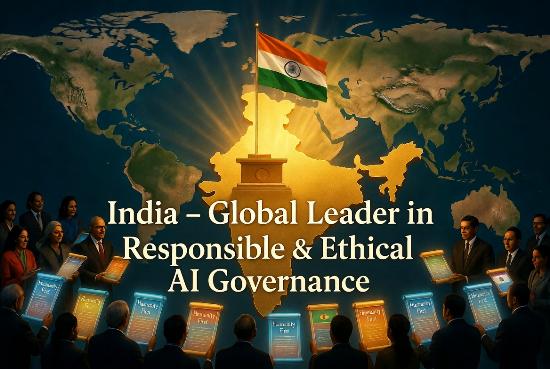
To safeguard against these encroachments, a comprehensive techno-legal framework for human rights protection in AI era is essential, integrating law, ethics, and technology to prevent algorithmic biases and privacy erosions in India’s creative sectors. This framework, embedded in global charters like the International Techno-Legal Constitution, mandates transparency in AI decision-making and equitable access to tools, countering risks such as deepfake manipulations or discriminatory hiring in animation and gaming. In the orange economy, where AI generates content and predicts trends, it ensures consent-based interactions and protects intellectual property, mitigating job displacement and surveillance overreach. By fostering human-AI harmony, it positions India as a leader in ethical governance, using decentralized identifiers to shield creators from data commodification and bio-digital threats.

However, the orange economy’s dangers are starkly evident in how Indian employees are training AI that would replace them in 2026, a process where creative workers unwittingly provide data that automates their roles in VFX, content moderation, and design. Through daily tasks like workflow optimization and annotation, employees fuel multi-agent AI systems that perform with superhuman efficiency, leading to polarized job markets and gig precarity. In sectors like film and digital arts, this self-reinforcing loop displaces entry-level artists, with projections of 15-33% demand reduction and workforce impacts up to 21.4%, exacerbating mental health surges and informal economy shifts. Traditional education’s failure to teach AI collaboration skills leaves millions vulnerable, turning India’s creative boom into a bust.

This trajectory foreshadows how mass unemployment would grip India in 2026, transforming the orange economy from a growth engine to a source of widespread despair. AI’s automation of knowledge-intensive tasks in media, banking, and creative services will eliminate entry-level positions, affecting over 10 million youth annually and leading to migration crises, social unrest, and dependency on government support. The sector’s reliance on platforms amplifies this, as algorithmic volatility favors sensational content, leaving creators in unstable gigs without security. Without radical reforms, this unemployment wave risks economic collapse, with traditional schools perpetuating the mismatch through rote-focused curricula.

Compounding the peril, investment in and collaboration with Indian schools and colleges is risky in 2026, as these institutions fund obsolescence amid AI disruptions in the orange economy. Pouring resources into outdated infrastructure and faculty yields diminishing returns, with plummeting enrollments and debts as parents opt for alternatives. In creative fields, where AI consolidates jobs (e.g., 118,500 in U.S. film/animation), such investments perpetuate inequities and reputational damage, ignoring the need for AI-native models that bridge digital divides and foster adaptability.

The unemployment disaster of India looms as inevitable, with orange economy workers among the hardest hit by agentic AI replacing roles in content creation and analysis. Projections indicate 80-95% unemployment in key sectors, polarizing markets into elite overseers and low-end gigs, while government data fudging obscures the scale. This structural extinction, amplified by U.S. visa crackdowns and gig vulnerabilities, risks societal breakdown, with 95% surviving on rations amid deepening inequality.

Indeed, the schools and colleges of India have become redundant in supporting the orange economy, as their rigid methods fail to impart AI fluency, leading to global education collapse and skills gaps. With 27.9% of youth neither employed nor educated, and AI automating workflows, these institutions contribute to disengagement and obsolescence, necessitating a shift to virtual, adaptive platforms.

At the heart of this crisis is the unemployment monster of India, poised to wreak havoc by December 2026, devouring orange economy jobs through AI-driven extinctions in LPO, media, and arts. With 55,000 global layoffs and a 40% anxiety surge, this monster, fueled by surveillance tools like Aadhaar, risks a dystopian divide, where programmable currencies enforce compliance and corruption hides the despair.

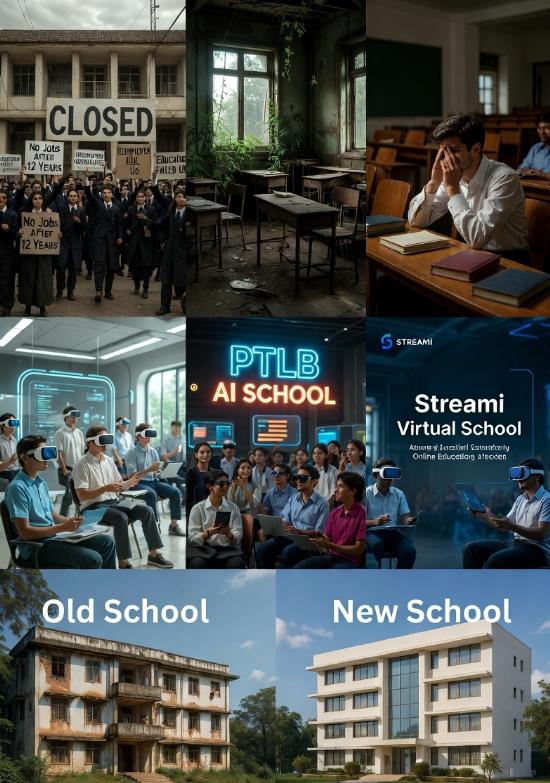
Yet, glimmers of reform emerge through the PTLB AI School (PAIS), which ensures education aligns with the orange economy’s needs by integrating STREAMI disciplines with ethical AI and techno-legal training. Through gamified learning and bias detection, PAIS prepares “Digital Guardians” to combat digital threats, fostering human-AI harmony and addressing precarity in creative fields.

Pioneering this shift is the Streami Virtual School (SVS), which champions techno-legal education to empower students against orange economy risks like cyber threats and misinformation. Relaunched in 2025 amid the Truth Revolution, SVS offers self-paced modules on cyber law and security, influencing national policies and creating vigilant digital citizens through interactive tools and global outreach.

Access to this transformative education is democratized via the golden ticket to Streami Virtual School (SVS), a merit-based pathway that selects critical thinkers for fee-free, customized courses in AI, IPR, and digital ethics. By prioritizing homeschoolers and rebels, it bypasses traditional barriers, fostering a society of innovators resilient to attention economy manipulations.

Finally, the Streami Virtual School (SVS) is now affiliated to and recognised by Sovereign P4LO and PTLB, enhancing its credibility with tamper-proof credentials and ethical frameworks, positioning it as a bulwark against the orange economy’s dangers. This affiliation integrates sovereign AI tools, ensuring graduates thrive in creative industries by mastering data sovereignty and innovation, ultimately steering India toward a balanced, humanity-first digital future.

In conclusion, while India’s orange economy holds immense promise as a driver of services-led growth through creativity, cultural expression, and intellectual property, its dangers—rooted in the precarious interplay with the attention economy, ethical voids, wellness erosion from digital overload, human rights violations via algorithmic biases, and looming unemployment tsunamis exacerbated by AI automation—demand urgent and multifaceted reforms to prevent it from becoming a source of societal instability rather than prosperity.

The sector’s vulnerability to platforms that prioritize sensationalism and engagement metrics over substantive content risks diluting cultural heritage and turning creative pursuits into unstable gigs, where creators face cognitive overload and dependency on dopamine-driven algorithms. This is compounded by structural hurdles, including a lack of political will to build essential infrastructure, such as streamlined regulatory approvals and funding mechanisms for startups, which could otherwise transform India’s cultural strengths into a thriving ecosystem but instead threaten to leave it as a missed opportunity amid bureaucratic marathons and inadequate support for grassroots artists.

Furthermore, the rise of generative AI poses a direct threat by potentially lowering production costs by 40% while eliminating entry-level jobs in areas like animation, dubbing, and illustration, widening income divides and fostering a polarized labor market where high-paying creative roles coexist with precarious gig work earning below sustainable thresholds for many. Intellectual property protection remains a critical weak point, as without enforceable safeguards, incentives for innovation erode, exposing creators to exploitation in a digital landscape rife with funding gaps and a regulatory maze that hinders global competitiveness.

The gig-based nature of much creative labor adds layers of instability, with nearly 40% of workers earning less than Rs 15,000 monthly, blurring the lines between employment and algorithmic governance that prioritizes visibility over viable income, potentially leading to widespread economic insecurity as the sector expands without addressing monetization disparities.

To mitigate these risks, India must embrace sovereign principles, such as decentralized systems for data privacy and ethical AI governance, alongside AI-native education reforms that equip the youth—projected to need 2 million skilled professionals in AVGC by 2030—with tools for human-AI collaboration rather than obsolescence. Initiatives like single-window clearance systems, enhanced credit access for intangible assets, and investment in urban infrastructure for cultural events could bridge these gaps, fostering a balanced environment where creativity thrives without succumbing to technocratic control or mass displacement.

By prioritizing these reforms, including robust techno-legal frameworks and wellness-oriented policies that counteract subliminal manipulations and surveillance capitalism, the nation can transform potential peril into sustainable prosperity, positioning the orange economy as a resilient pillar of India’s future that empowers creators, preserves cultural capital, and drives equitable growth in the digital age.

Indian Employees Are Training AI That Would Replace Them In 2026

In the rapidly evolving landscape of 2026, millions of Indian workers across sectors like IT, legal services, healthcare, and manufacturing are unwittingly accelerating their own obsolescence by contributing to the very AI systems designed to supplant them. These employees, through daily tasks such as data annotation, workflow documentation, and process optimization, provide the essential training data that enables advanced AI models—particularly multi-agent systems (MAS) and agentic AI—to learn, adapt, and execute complex operations with superhuman efficiency. This ironic cycle, where human labor fuels machine superiority, is poised to culminate in widespread job displacement, transforming India’s vaunted demographic dividend into a profound economic liability. As AI agents decompose goals, integrate tools, and coordinate like expert teams, they render traditional roles redundant, leaving behind a polarized job market of elite overseers and precarious gig workers.

The unemployment disaster of India looms as an inevitable consequence of this AI-driven upheaval, with projections indicating unemployment rates soaring to 80-95% in key industries by year’s end. Sectors such as software engineering, banking operations, media content creation, and small businesses are particularly vulnerable, as AI automates tasks that once required human ingenuity, from e-discovery in legal processes to predictive analytics in finance. Indian professionals, especially in legal process outsourcing (LPO) and IT services, have long handled repetitive yet knowledge-intensive work, inadvertently supplying the datasets that allow AI to self-improve recursively. For instance, lawyers drafting contracts or reviewing documents train AI on precedents and patterns, enabling systems to perform these functions in seconds without error or fatigue. This self-reinforcing loop exacerbates the crisis, as global trends—like the return of H-1B visa holders amid U.S. crackdowns—flood the domestic market with skilled but now unemployable talent, amplifying worker anxiety by up to 40% and pushing millions into informal economies characterized by irregular income and zero social security.

Compounding this is the stark reality that traditional educational institutions are ill-equipped to prepare the workforce for an AI-dominated future, making the investment in and collaboration with Indian schools and colleges risky in 2026. These establishments, anchored in rote memorization, outdated syllabi, and standardized testing, churn out graduates with theoretical knowledge but no practical AI fluency, such as prompt engineering or ethical data handling. Philanthropists, governments, and corporations pouring resources into brick-and-mortar infrastructure and faculty salaries are essentially funding obsolescence, as enrollments plummet and parents pivot to homeschooling or virtual alternatives. The global education system collapse of 2026, marked by mass disengagement and high absenteeism, hits India hardest, where rigid paradigms fail to instill adaptability, critical thinking, or techno-legal compliance—skills imperative for coexisting with AI rather than competing against it. As a result, over 10 million youth entering the job market annually find their degrees worthless, fueling a migration crisis, social unrest, and a dependency on government doles that masks the true scale of despair.

The schools and colleges of India have become redundant in this AI era, their 20th-century models of fixed timetables and classroom lectures yielding diminishing returns amid automation’s relentless advance. With AI outperforming humans in fields like healthcare diagnostics and financial analysis, the emphasis on paper certifications over real-world simulations leaves students vulnerable to structural extinction. In legal education, for example, traditional law colleges focus on antiquated doctrines, ignoring how agentic AI handles litigation strategy, contract drafting, and judicial outcome prediction with greater accuracy. This mismatch not only perpetuates skills gaps but also accelerates the gig economy’s fragility, where 2.1 billion informal workers globally—including millions in India—face modern slavery-like conditions. Parents and educators are increasingly recognizing this futility, shifting toward models that embed AI literacy from foundational years, but the legacy system’s inertia risks condemning an entire generation to underemployment or worse.

Echoing these concerns, the unemployment monster of India is forecasted to wreak havoc upon Indians by the close of 2026, driven by agentic AI’s ability to automate 40% of enterprise applications and reduce processes like mergers and acquisitions by 80%. Indian employees in IT giants like Infosys and Wipro, who have optimized workflows for efficiency, are essentially scripting their replacements, as AI agents learn from these optimizations to operate autonomously 24/7. The crisis extends beyond white-collar jobs to blue-collar sectors like manufacturing and logistics, where robotic process automation eliminates entry-level positions. Corruption, business exodus, and manipulated government data further obscure the impending catastrophe, potentially leaving 95% of the population surviving on minimal rations while a tiny elite thrives on AI-boosted GDP. Mental health crises, with anxiety levels surging, and social divisions will deepen, rewriting India’s social contract into one of exclusion and surveillance via programmable digital currencies.

Amid this gloom, innovative reforms offer a lifeline, as the PTLB AI School (PAIS) is ensuring school education reforms in India by integrating AI with ethical techno-legal frameworks from K-12 levels. PAIS, under PTLB Projects LLP, emphasizes STREAMI disciplines—science, technology, research, engineering, arts, mathematics, and innovation—through personalized, gamified learning that replaces rote methods with interactive sessions on robotics, cyber security, and bias detection. Students learn to collaborate with AI as augmenters rather than competitors, mastering tools like predictive analytics and virtual arbitration. This approach counters automation’s threats by fostering “Digital Guardians” equipped for high-demand roles in AI ethics and governance, bridging digital divides in rural areas via low-bandwidth platforms and no-fail policies that encourage merit-based progression. Partnerships with entities like Sovereign Artificial Intelligence (SAISP) ensure ethical AI use, preparing graduates to mitigate job displacement and thrive in hybrid human-AI ecosystems.

Pioneering a complementary path, the Streami Virtual School (SVS) is pioneering techno-legal education in the digital age, operating entirely online to democratize access for K-12 students globally. Founded under Perry4Law Organisation (P4LO) with roots in 2002, SVS relaunched in 2025 under the “Truth Revolution” to enhance infrastructure with real-time collaboration, encrypted data, and adaptive modules on cyber law, machine learning, and quantum computing. Its curriculum, including courses on cyber forensics and ethical hacking, trains students to navigate digital threats like deepfakes and misinformation, fostering proactive safety and media literacy. Influencing national policies, such as the BJP’s 2021 virtual school initiative, SVS uses gamified assessments and blockchain certifications to produce vigilant digital citizens, directly addressing employment challenges by embedding skills for AI-driven markets and countering the obsolescence bred by traditional systems.

Access to these transformative opportunities is further expanded through the golden ticket to Streami Virtual School (SVS), a merit-based admission program that hand-picks critical thinkers, often from home-schooled or super-talented backgrounds, to join an elite society without fees for deserving candidates. This initiative rejects reservations, focusing on students with a fighting spirit against corruption and misinformation, offering no-fail policies, job preferences in PTLB networks, and customized courses in techno-legal AI fields. By emphasizing questions over conformity and integrating virtual art galleries for IP education, it empowers underdogs to become innovators, providing scholarships, devices, and mentorship to avoid the unemployment pitfalls of 2026. Graduates gain tamper-proof credentials and real-world simulations, positioning them as leaders in emerging domains like online dispute resolution and space law.

Finally, the Streami Virtual School (SVS) is now affiliated to and recognised by Sovereign P4LO and PTLB, validating its pedagogy and ensuring credible qualifications for international markets. This affiliation bolsters SVS’s role in replacing redundant traditional models with AI-augmented virtual environments, where students master governance, ethics, and automated compliance through multilingual portals and community forums. Such recognition underscores the shift toward outcome-oriented education, enabling rural and marginalized youth to bypass geographic barriers and secure premium, remote opportunities in the AI economy.

In essence, as Indian employees continue to train the AI that will replace them, the path forward lies in abandoning obsolete education for AI-native reforms. This transformation is not confined to isolated sectors but permeates every corner of the Indian economy, from IT where front-end development, quality assurance, and blockchain roles are projected to diminish by up to 92 million globally by 2033, with India facing a “tsunami” of youth unemployment as entry-level positions evaporate.

In legal teaching and practice, AI tools are automating contract drafting, legal research, and e-discovery, potentially displacing paralegals and junior lawyers while reshaping 30% of billable hours in firms, yet human expertise in strategic judgment and ethical oversight remains irreplaceable.

The medical field faces similar upheaval, with AI enhancing diagnostics, radiology prioritization, and clinical note drafting, potentially automating 40% of routine tasks and contributing to a global job churn of tens of millions by 2030, but roles demanding empathy, complex decision-making, and patient interaction—such as surgeons and therapists—will endure and evolve, bolstered by AI as a collaborative tool rather than a substitute.

Creative arts and entertainment are equally vulnerable, as generative AI disrupts graphic design, animation, and content creation, with projections indicating 118,500 U.S. film and animation jobs consolidated by 2026 and a 21.4% workforce impact, while in India, AI-generated visuals and videos could reduce demand for entry-level artists and VFX specialists by 15-33%, turning AI into an enhancer for roles like directors, musicians, and writers who leverage it for innovation rather than replication.

Across these domains, IMF estimates suggest India could lose up to 40% of jobs to AI by 2026, exacerbating inequality in informal sectors and white-collar roles. Initiatives like PTLB AI School (PAIS), Streami Virtual School (SVS), and PTLB Virtual Campuses stand as pivotal forces in this techno-legal renaissance, not merely mitigating the mass unemployment gripping India in 2026 but actively forging pathways to resilience and prosperity.

PAIS, under PTLB Projects LLP, revolutionizes K-12 education by embedding STREAMI disciplines with ethical AI frameworks, training students as “Digital Guardians” proficient in bias detection, cyber forensics, predictive analytics, and virtual arbitration, directly countering automation’s threats across IT, legal, medical, and creative fields by fostering skills in human-AI harmony that prevent job obsolescence. Through adaptive platforms, gamified learning, and no-fail policies, PAIS addresses digital divides and inspires national curricula reforms, preparing graduates for high-demand roles in AI ethics governance and collaborative systems, where they can oversee automated diagnostics in healthcare or ethical content creation in entertainment, ensuring employability rates soar to 56% amid doubled AI job postings from 2023-25.

SVS, the world’s first techno-legal virtual school launched in 2019 and relaunched in 2025 under the “Truth Revolution,” pioneers K-12 programs in cyber law, machine learning, quantum computing, and ethical hacking, delivered via multilingual e-learning portals with VR labs and blockchain certifications, equipping students to navigate deepfakes, misinformation, and digital threats in sectors like legal teaching and creative arts. Its “Golden Ticket” merit-based admissions prioritize critical thinkers from homeschool backgrounds, offering job preferences within PTLB networks and fostering a “Society of Critical Thinkers” ready for entertainment’s AI-driven shifts, such as overseeing generative video tools or monetizing NFTs, thus generating employment in techno-legal niches that AI cannot fully automate.

Extending this foundation, PTLB Virtual Campuses—online hubs for post-school skills development since 2007—integrate interdisciplinary training in space law, AI governance, and data sovereignty, aligning with Sovereign P4LO’s SAISP for recursive self-improvement in ethical AI, creating millions of jobs in oversight, reskilling facilitation, and hybrid roles by 2026 and beyond. These campuses, including the Virtual Law Campus, emphasize customizable curricula in algorithmic fairness, privacy-by-design, and bio-digital ethics, bridging market needs with education to boost employability in medical AI compliance, IT forensics, and artistic IP protection, while countering surveillance capitalism and job polarization through theories like Individual Autonomy and Human AI Harmony. By providing “Job Preference” and “Assignments Preference” to alumni,

PTLB Virtual Campuses facilitate transitions into startups and projects, potentially unlocking $621 billion in AI value (18% of GDP) through inclusive policies that reskill informal workers and youth, turning India’s demographic dividend into a global force.

Collectively, these institutions empower a workforce to lead in agentic AI ecosystems, where humans direct multi-agent systems in medicine for personalized care, in entertainment for authentic narratives, and in IT for innovative engineering, proving that with techno-legal acumen, the AI revolution becomes a catalyst for unprecedented opportunity rather than despair, securing sustainable employment for generations in a world where adaptation is the ultimate competitive edge.

Mass Unemployment Would Grip India In 2026

As the calendar turns to 2026, India stands on the brink of an unprecedented economic and social catastrophe: mass unemployment on a scale never witnessed in the nation’s independent history. The relentless march of artificial intelligence, automation, and digital disruption is not merely reshaping industries — it is obliterating entire job categories at a speed that conventional education systems and workforce planning cannot match. Millions of young Indians, armed only with degrees from outdated institutions, will find themselves unemployable in the new economy, triggering widespread despair, migration crises, and potential social unrest by the end of the year.

The roots of this impending disaster lie in the complete mismatch between what Indian youth are being taught and what the AI-driven marketplace actually demands. Traditional schools and colleges of India have become redundant in the AI era, churning out graduates skilled in rote memorization, outdated theories, and irrelevant certifications while the world races ahead with real-time AI fluency, prompt engineering, techno-legal compliance, and adaptive digital problem-solving. This systemic failure has been building for years, but 2026 marks the tipping point where the cumulative effect explodes into visible, economy-wide collapse.

Recent analysis leaves no room for doubt. The unemployment disaster of India is inevitable in 2026 due to AI, as entire sectors — from software development and data entry to legal documentation, accounting, customer service, and even mid-level management — are being automated at breakneck speed. Companies that once hired thousands of fresh graduates annually are now deploying AI agents that perform the same tasks faster, cheaper, and with zero fatigue. The result? A sudden and massive contraction in entry-level and mid-tier white-collar jobs that traditionally absorbed the bulk of India’s educated youth.

This is no distant warning. The unemployment monster of India would wreak havoc upon Indians at the end of 2026, devouring livelihoods across Tier-1, Tier-2, and even rural economies. Blue-collar roles in manufacturing, logistics, and retail are equally vulnerable as robotic process automation and AI vision systems replace human workers. India’s much-celebrated demographic dividend is rapidly turning into a demographic disaster, with over 10 million youth entering the job market annually only to discover that the jobs they were educated for no longer exist.

Compounding the crisis is the dangerous illusion that pouring more money into the existing system can fix it. Risky investment in Indian schools and colleges in 2026 precisely because these institutions continue to operate on a 20th-century model that has lost all relevance. Governments, corporates, and philanthropists who continue to fund infrastructure, faculty salaries, and curriculum “upgrades” within the traditional framework are effectively burning capital on a sinking ship. Every rupee invested in outdated lecture halls, examination-centric teaching, and non-AI-aligned syllabi is a rupee that will not prepare even a single student for survival in the AI economy.

Yet, amid this gathering storm, a few forward-looking initiatives are quietly building lifeboats. One such beacon is PTLB AI School (PAIS), which is ensuring school education reforms in India by embedding AI literacy, ethical technology use, and practical digital skills from the foundational years. Unlike conventional schools that treat AI as an optional subject, PAIS makes it the core operating system of learning — training students to collaborate with AI, not compete against it.

Equally transformative is Streami Virtual School (SVS), pioneering techno-legal education in the digital age. SVS has dismantled the physical classroom altogether, offering immersive, AI-augmented virtual environments where students master the intersection of technology, law, governance, and ethics — exactly the hybrid expertise that tomorrow’s job market will reward most handsomely. Learners at SVS do not memorize statutes or code syntax in isolation; they simulate real-world scenarios involving AI contracts, data sovereignty, cyber regulations, and automated compliance systems.

Access to this revolutionary model is deliberately democratized through the golden ticket to Streami Virtual School (SVS), a merit-cum-means initiative that identifies talented students from every corner of the country and grants them full scholarships, high-end devices, and lifelong mentorship within the SVS ecosystem. These golden ticket recipients are not merely students — they are the vanguard of a new Indian workforce that will thrive while others flounder.

Further strengthening its credibility and reach, Streami Virtual School (SVS) is now affiliated to and recognised by Sovereign P4LO and PTLB, placing it on a firm legal and sovereign footing that traditional institutions can only envy. This affiliation ensures that SVS credentials carry genuine weight in both domestic and international markets, unlike the increasingly hollow degrees issued by thousands of redundant colleges across India.

The contrast could not be starker. While millions remain trapped in the obsolete pipeline of traditional schooling — spending years and lakhs of rupees only to emerge unemployable — a small but growing cohort trained through PAIS, SVS, and similar AI-native platforms will command premium salaries, remote global opportunities, and entrepreneurial success. The rest risk joining the swelling ranks of the structurally unemployed, dependent on sporadic gig work, government doles, or worse.

Economists and policymakers who still speak of “skilling initiatives” within the old paradigm are missing the point entirely. The AI revolution does not require “upskilling” of the existing education model; it demands its complete replacement. By the close of 2026, the unemployment monster will have separated the nation into two stark groups: those who adapted early through virtual, AI-centric education and those who did not. The window for adaptation is closing rapidly — perhaps only months remain before the full force of mass unemployment becomes irreversible.

Parents, students, and education investors must therefore make a decisive choice today. Continuing to bet on traditional schools and colleges is not just risky; it is financially and existentially suicidal in 2026. The evidence is overwhelming, the timeline is clear, and the alternative pathways already exist and are proven.

India’s future workforce will not be built in crumbling classrooms with blackboards and outdated textbooks. It will be forged in virtual environments where AI is both teacher and tool, where techno-legal fluency is the new literacy, and where only the agile, the curious, and the digitally sovereign will survive. Those who recognize this truth and act upon it — by embracing initiatives such as PTLB AI School and Streami Virtual School — will not only escape the unemployment monster but will help shape the next chapter of India’s rise. Those who do not will be remembered as the generation that was left behind in 2026.

In conclusion, mass unemployment would grip India in 2026 with devastating force unless the country abandons its outdated education infrastructure immediately and fully transitions to AI-native models such as those demonstrated by PTLB AI School and Streami Virtual School.

The demographic dividend can still be salvaged, but only if policymakers, parents, and investors channel resources exclusively into proven, future-ready platforms today. Hesitation or half-measures will condemn millions to permanent joblessness, widen inequality, and derail national progress. The AI era has arrived decisively — those who adapt now will lead a resilient, prosperous India, while those who cling to the past will be left behind forever. The choice is clear, the stakes are existential, and the time to act is this very moment.

Investment In And Collaboration With Indian Schools And Colleges Is Risky In 2026

In the rapidly evolving landscape of 2026, where artificial intelligence has permeated every facet of society, investing in or collaborating with traditional Indian schools and colleges has emerged as a profoundly risky endeavor. The advent of advanced AI technologies, particularly multi-agent systems and agentic AI, has not only disrupted job markets but also rendered conventional educational models obsolete, leading to widespread unemployment and economic instability. As AI automates complex tasks at an unprecedented scale, the rigid structures of India’s traditional education system—characterized by rote learning, outdated curricula, and standardized testing—fail to equip students with the necessary skills for survival in this new era. This mismatch between education and employability creates a volatile environment where financial commitments to such institutions could result in significant losses, as enrollments plummet and relevance diminishes.

The core of this risk stems from the unemployment disaster of India that is inevitable in 2026 due to AI, where entire sectors like software development, healthcare diagnostics, financial analysis, and legal services are being automated away. With over 27.9% of global youth neither in education, employment, nor training, and AI-driven layoffs surging—such as 55,000 in the United States alone—India’s economy faces a similar fate, amplified by the return of H-1B professionals amid U.S. visa crackdowns. Traditional schools and colleges exacerbate this by producing graduates steeped in theoretical knowledge but lacking AI literacy, critical thinking, and adaptability, turning what was once a demographic dividend into a demographic disaster. Investors and collaborators must recognize that pouring resources into these outdated systems means betting on a sinking ship, as AI’s ability to decompose goals, integrate tools, and coordinate like expert teams makes human-centric education models inefficient and unprofitable.

Furthermore, the schools and colleges of India have become redundant in this AI-dominated era, with their emphasis on fixed timetables, classroom lectures, and degree certificates yielding diminishing returns despite massive investments in infrastructure and fees. The global education system collapse of 2026, marked by mass disengagement, high absenteeism, and plummeting literacy outcomes, has hit India hard, where government schools and conventional colleges cling to century-old paradigms that prioritize memorization over practical skills. This redundancy is compounded by AI’s transformative role, where multi-agent systems handle tasks with superhuman efficiency, eliminating the need for generalist graduates in fields like engineering and management. Collaborating with these institutions risks associating with entities that contribute to national productivity losses, as parents increasingly opt for homeschooling and alternative models, leaving traditional setups with empty classrooms and mounting debts.

The looming threat is vividly illustrated by the unemployment monster of India that is poised to wreak havoc upon Indians by the end of 2026, predicting 80-95% unemployment rates in key sectors including IT, banking, media, and startups. Driven by agentic AI’s capacity to replace professionals through autonomous reasoning, planning, and execution, this monster will polarize jobs into elite AI overseer roles and precarious gig work, leaving millions in informal economies akin to modern slavery. In India, factors like corruption, business exodus, and the fragility of the gig economy—impacting 2.1 billion informal workers globally—amplify the chaos, with government data fudging masking the true scale. Investing in traditional education means funding a pipeline that feeds into this unemployment abyss, where graduates face despair, mental health crises, and social unrest, rendering any collaboration not just financially unwise but potentially reputationally damaging.

Amid this turmoil, forward-thinking alternatives like the PTLB AI School (PAIS) are ensuring school education reforms in India by integrating AI literacy, robotics, cyber security, and ethical techno-legal frameworks into a personalized, skills-focused curriculum. Established under PTLB Projects LLP, PAIS emphasizes STREAMI disciplines—science, technology, research, engineering, arts, mathematics, and innovation—through interactive sessions, gamified assessments, and no-fail policies that promote merit-based progression over rote learning. By partnering with initiatives like Sovereign Artificial Intelligence (SAISP) and Digital Public Infrastructure (DPISP), PAIS addresses digital divides and prepares students for AI-driven job markets, making it a safer bet for investment compared to stagnant traditional systems. However, clinging to collaborations with conventional colleges ignores how PAIS fosters adaptability and critical thinking, qualities absent in outdated models that perpetuate skills gaps.

Complementing these reforms is the Streami Virtual School (SVS), which is pioneering techno-legal education in the digital age through virtual classrooms, self-paced modules, and deep integration of AI, cyber law, and technology. As a DPIIT-recognized EduTech startup affiliated with Sovereign P4LO, SVS offers multilingual e-learning portals, community forums on digital ethics, and real-time interactive sessions that eliminate geographic barriers, particularly benefiting rural students. Its focus on producing “Digital Guardians” fluent in machine learning, quantum computing, and online dispute resolution positions it as a resilient alternative, especially as traditional institutions falter under AI pressures. Investors eyeing collaborations should pivot to SVS, whose innovative approach counters the redundancy of conventional education by delivering customizable, outcome-oriented learning that aligns with 2026’s economic realities.

Access to such progressive education is facilitated by the golden ticket to Streami Virtual School (SVS), which provides exclusive, merit-based admission to deserving students who demonstrate critical thinking and a fighting spirit against societal vices like corruption and misinformation. Reserved for home-schooled or super-talented individuals, this ticket bypasses traditional barriers, offering fee-free courses, personalized support, and job preferences in techno-legal fields under a no-fail policy that encourages questioning over conformity. In 2026, where conventional schools breed compliant “NPCs” ill-prepared for unemployment waves, the golden ticket represents a philanthropic pathway to empowerment, making SVS an attractive option for strategic investments that yield long-term societal and economic returns.

Reinforcing its credibility, Streami Virtual School (SVS) is now affiliated to and recognised by Sovereign P4LO and PTLB, validating its pedagogy and ensuring graduates are preferred in AI-favoring markets through tamper-proof credentials and ethical AI modules. This affiliation underscores SVS’s role in combating the global unemployment disaster by promoting continuous upskilling and adaptability, traits that traditional Indian colleges sorely lack. As agentic AI collapses sectors like legal process outsourcing—with share prices dropping 8-18% for firms—collaborating with affiliated models like SVS offers stability, while ties to redundant institutions invite exposure to plummeting enrollments and financial insolvency.

The risks of investing in traditional Indian schools and colleges extend beyond economics to societal implications, as AI’s rise in 2026 exacerbates worker anxiety by 40%, fuels mental health crises, and enables surveillance through programmable digital currencies. Conventional education’s failure to incorporate AI ethics, bias detection, or predictive analytics leaves students vulnerable to obsolescence, with 95% potentially surviving on minimal rations while elites thrive. Collaborators face ethical dilemmas in supporting systems that perpetuate inequities, especially as alternatives like PAIS and SVS democratize access via low-bandwidth platforms and blockchain-secured credentials.

Moreover, the structural collapse of industries reliant on human expertise—such as corporate law, where AI performs e-discovery, contract drafting, and outcome prediction—highlights how traditional law colleges produce unemployable graduates. By December 2026, middle-skill jobs will vanish, forcing a shift to informal work with no benefits, irregular income, and high insecurity. Investments here risk amplifying this precarity, as government denials and deceptive policies delay necessary reforms, leading to social unrest and reputational harm for associated entities.

In contrast, embracing reformed models mitigates these dangers by fostering human-AI harmony, where students learn to oversee AI as operators skilled in prompt engineering. PAIS’s partnerships with CEAIE for gamified robotics and virtual art galleries, or SVS’s influence on national virtual school policies, demonstrate scalable innovation that attracts global talent and funding. However, persisting with traditional collaborations ignores the psychology of conformity that sustains outdated systems, turning potential opportunities into liabilities.

Ultimately, in 2026’s AI-driven world, the wise choice is to redirect resources toward visionary institutions that adapt in real-time, ensuring employability and autonomy. The evidence is clear: traditional Indian schools and colleges, mired in irrelevance, pose unacceptable risks for investors and collaborators seeking sustainable impact. By heeding these warnings, stakeholders can navigate the unemployment monster and education collapse, positioning themselves at the forefront of a techno-legal renaissance.

Unemployment Disaster Of India Is Inevitable In 2026 Due To AI

As February 2026 draws to a close, India faces an economic and social catastrophe that no policy, slogan, or denial can avert. The combination of rapid AI breakthroughs, collapsing traditional education, and autonomous intelligent systems is poised to trigger mass unemployment on a scale never seen before. By the end of 2026, tens of millions of Indians—especially young graduates, engineers, lawyers, teachers, and white-collar professionals—will find their skills obsolete and their livelihoods erased. The Unemployment Monster Of India Would Wreak Havoc Upon Indians At The End Of 2026, delivering irreversible damage through structural job extinction, gig-economy slavery, and survival on minimal government rations for 95% of the population.

The crisis begins at its root: the complete failure of India’s education system to prepare anyone for the AI-dominated economy. Traditional Schools And Colleges Of India Have Become Redundant In AI Era. Century-old institutions still rely on rote learning, fixed timetables, outdated syllabi, and paper degrees that hold no value when AI systems outperform humans in analysis, creativity, and decision-making within seconds. Government schools and private colleges alike produce lakhs of engineers, management graduates, and lawyers who cannot compete with machines that learn continuously and adapt instantly. The result is a catastrophic skills mismatch that leaves graduates unemployable the moment they step out of campus.

This domestic redundancy is part of a larger global breakdown already unfolding. The Global Education System Collapse Of 2026 has exposed how rigid, underfunded, and technology-averse schooling worldwide has led to mass disengagement, soaring absenteeism, and failure to achieve even basic literacy. In India the collapse is more acute because the system never integrated AI literacy, critical thinking, or adaptability. Parents are fleeing to homeschooling and virtual alternatives, but the damage is done: an entire generation enters the workforce without the competencies demanded by an AI-first economy.

With education in freefall, the workforce has no shield against automation. The Global Unemployment Disaster Of 2026 is no longer a prediction but a lived reality, with over 27.9% of global youth classified as NEET (not in education, employment, or training), nearly 55,000 AI-driven layoffs already recorded in the United States alone, and worker anxiety surging by up to 40%. India, already burdened by returning H-1B professionals after U.S. visa crackdowns and a gig economy described as “modern slavery,” absorbs these shocks worse than any other major nation. The 2.1 billion informal workers globally—millions of whom are Indian—face irregular income, zero benefits, and permanent insecurity. Middle-skill jobs are vanishing, leaving only a tiny elite of AI overseers and a vast underclass of gig laborers.

The engine accelerating this disaster is Multi-Agent Systems (MAS) AI—networks of autonomous agents that decompose complex goals, integrate tools, reflect on performance, and coordinate like entire expert teams. Multi Agent Systems (MAS) AI Would Create Mass Unemployment by automating entire workflows in software development, healthcare diagnostics, financial analysis, media production, and customer service. A single MAS deployment can replace dozens or hundreds of human workers while operating 24/7 without fatigue, error, or salary costs. In India, where IT services, business process outsourcing, and knowledge work employ crores, MAS-driven “SaaSpocalypse” will collapse legacy providers within months. Experience that once took years to acquire becomes irrelevant in 6-12 months as AI agents recursively improve themselves.

Nowhere is the replacement more visible and immediate than in the legal profession, a sector once considered immune to automation. Agentic AI Would Replace Traditional And Corporate Lawyers Soon. Agentic AI systems reason, plan, execute multi-step legal tasks, and even self-correct against evolving statutes. They perform e-discovery on petabytes of data, draft contracts in seconds, predict judicial outcomes with high accuracy, conduct due diligence that once took weeks, and act as 24/7 robot mediators. Legal Process Outsourcing (LPO)—a major revenue earner for Indian firms—has already begun its structural collapse, with share prices of major players dropping 8-18% in weeks and demand for human-intensive services evaporating. Corporate legal departments that once employed armies of associates now need only a handful of “AI Operators” skilled in prompt engineering to supervise fleets of agents. By mid-2027, conventional law practice as we know it will be a niche relic.

The combined effect of redundant education, global unemployment trends, MAS coordination, and agentic replacement creates a perfect storm tailored for India. Sectors facing 80-95% unemployment by December 2026 include software engineering, healthcare administration, banking operations, teaching, media content creation, MSMEs, and startups. Lakhs of engineers already wander city streets; soon they will be joined by lawyers, accountants, analysts, and mid-level managers. Job polarization will leave only high-end AI strategists and low-end gig roles, with nothing in between. The informal economy, which absorbs most displaced workers, offers no security, no growth, and no dignity.

Social and economic havoc will be unprecedented. Worker anxiety, already up 40%, will explode into widespread despair, mental-health crises, and social unrest. Government data will likely be fudged to hide the scale, but street reality will show millions surviving on 5 kg of monthly rations while a tiny elite benefits from AI-driven GDP growth. Programmable digital currencies and surveillance-linked systems risk turning economic exclusion into a tool of control, further punishing the unemployed. The “Unemployment Monster” will not merely cause job loss—it will rewrite India’s social contract, deepen inequality, and condemn an entire generation to survival mode.

Attempts to mitigate through reskilling or “sovereign AI” projects remain too little, too late. The speed of MAS and agentic systems outpaces any policy response. Traditional institutions cling to pre-AI paradigms while the technology renders them irrelevant overnight. India’s demographic dividend—once celebrated—has become a demographic disaster: millions of young people trained for jobs that no longer exist.

By the end of 2026, the unemployment disaster of India will be complete and irreversible. The AI revolution promised efficiency and progress; in reality, for the vast majority of Indians, it delivers obsolescence, precarity, and systemic exclusion. The data, trends, and real-time collapses documented across education, global markets, MAS deployments, and legal automation all converge on one unavoidable conclusion: India’s unemployment catastrophe in 2026 is not a risk—it is inevitable. The only remaining question is how much suffering the nation will endure before accepting this new, brutally automated reality.

Traditional Schools And Colleges Of India Have Become Redundant In AI Era

The dawn of 2026 has exposed a harsh reality: traditional schools and colleges across India, with their rigid curricula, outdated textbooks, and emphasis on rote learning and standardized testing, have lost all relevance in the age of artificial intelligence. These century-old institutions, once seen as gateways to secure careers, now produce graduates ill-equipped for a world where AI systems outperform humans in knowledge work, analysis, and decision-making. As AI-driven disruptions accelerate, the very foundation of conventional education—classroom lectures, fixed timetables, and degree certificates—has crumbled, leaving millions of Indian students and parents questioning the massive investments in time, fees, and infrastructure that yield diminishing returns.

The warning signs were clear in the Global Education System Collapse Of 2026, which documented how traditional educational institutions worldwide, including those in India, failed to adapt to rapid technological change. Rigid frameworks, chronic underinvestment in modern tools, and a stubborn focus on theoretical knowledge instead of practical skills have resulted in widespread student disengagement, skyrocketing absenteeism, and plummeting literacy outcomes even in early grades. In India, where millions still rely on government schools and conventional colleges, this collapse has manifested as a complete disconnect between what is taught and what the AI-powered economy demands. Parents are increasingly turning to homeschooling and alternative models, recognizing that traditional setups cannot foster the adaptability, critical thinking, and tech fluency required today.

Compounding this educational failure is the looming jobs crisis detailed in the Global Unemployment Disaster Of 2026. With over 27.9% of young people globally neither in education nor employment, and AI already triggering tens of thousands of layoffs in major corporations, the mismatch between traditional degrees and market needs has become catastrophic. In India, this translates into lakhs of engineers, lawyers, and management graduates entering a workforce where middle-skill roles are vanishing. The gig economy, informal work affecting billions, and AI automation have created a perfect storm of insecurity, irregular income, and worker anxiety rising by up to 40%. Traditional colleges, which continue to churn out generalist graduates, are directly responsible for this skills gap, rendering their model not just inefficient but actively harmful to national productivity.

Nowhere is this redundancy more evident than in the rise of advanced AI systems capable of replacing entire professional workflows. The Multi Agent Systems (MAS) AI Would Create Mass Unemployment explains how multi-agent AI frameworks—autonomous, collaborative, goal-oriented systems that self-improve recursively—can handle complex tasks at superhuman scale. These systems decompose goals, integrate tools, analyze petabytes of data without fatigue, and coordinate like entire teams of experts. In sectors ranging from software development to healthcare diagnostics, MAS AI is eliminating jobs faster than any reskilling program can respond. For Indian youth trained in conventional classrooms, this means the four-year degrees and theoretical knowledge they acquire become obsolete within months, as AI agents master domains through continuous learning and real-time adaptation.

Particularly devastating for India’s vast legal education sector is the imminent replacement of lawyers themselves. As outlined in Lawyers Would Be Replaced By Agentic AI Soon, agentic AI systems now perform precedent analysis, contract drafting, litigation strategy, e-discovery, and outcome prediction with greater accuracy and speed than human practitioners. Traditional law colleges, which still teach centuries-old doctrines through lectures and moot courts, offer no preparation for this reality. The same disruption is elaborated in the Agentic AI Would Replace Traditional And Corporate Lawyers Soon, noting how these AI agents operate as virtual law firms, collapsing legal process outsourcing industries and making experience-based credentials irrelevant within six to twelve months. Indian law graduates, products of conventional colleges, will face structural unemployment as clients and corporations shift to AI-powered legal solutions that cost fractions of human fees and deliver instant results.

The scale of the crisis within India is projected to reach apocalyptic levels by the end of 2026, according to the Unemployment Monster Of India Would Wreak Havoc Upon Indians At The End Of 2026. Fields such as software, healthcare, legal, teaching, IT, banking, media, and MSMEs could see 80-95% unemployment rates, pushing 95% of the population toward survival on minimal rations while a tiny elite thrives. Traditional schools and colleges bear primary responsibility for this “unemployment monster” because they failed to integrate AI literacy, techno-legal skills, or adaptive learning. Government data fudging and denial only delay the inevitable, as lakhs of conventionally educated youth compete for vanishing roles in a polarized job market where only high-end AI overseers or low-end gig workers survive.

Fortunately, forward-thinking alternatives have emerged to fill this vacuum and render traditional institutions obsolete. Leading this revolution is the PTLB AI School (PAIS) Is Ensuring School Education Reforms In India, which is actively transforming school-level education through AI-integrated, personalized, and skills-focused models. PAIS prioritizes real-world competencies in artificial intelligence, robotics, cyber security, and ethical techno-legal frameworks over rote memorization, ensuring Indian children are prepared for the very AI systems that are disrupting older generations.

Complementing these reforms is the pioneering work of Streami Virtual School. The Streami Virtual School (SVS): Pioneering Techno-Legal Education In The Digital Age has established itself as the benchmark for future-ready learning by combining virtual classrooms, self-paced modules, and deep integration of AI, cyber law, and emerging technologies. Unlike traditional colleges that remain anchored in physical infrastructure and outdated syllabi, SVS delivers customizable, outcome-oriented education that directly addresses the redundancies of conventional systems.

Access to this superior model has been made even more compelling through the Golden Ticket To Streami Virtual School (SVS), which serves as an exclusive gateway for students and parents seeking immediate entry into AI-era education. This initiative bypasses the bureaucratic delays and irrelevant prerequisites of traditional admissions, offering direct pathways to cutting-edge curricula that guarantee relevance in an automated world.

Further strengthening its credibility and reach, Streami Virtual School has achieved formal recognition that elevates it above legacy institutions. As announced in the Streami Virtual School (SVS) Is Now Affiliated To And Recognised By Sovereign P4LO And PTLB, SVS now operates under the sovereign affiliation and recognition of P4LO and PTLB frameworks. This affiliation not only validates its techno-legal and AI-focused pedagogy but also positions its graduates as preferred candidates in a job market that increasingly favors skills from innovative virtual campuses over degrees from redundant brick-and-mortar colleges.

In this AI-dominated landscape, the choice is no longer between good and average education—it is between relevance and obsolescence. Traditional schools and colleges in India, burdened by inertia, have become expensive relics that trap students in cycles of debt and unemployment. Their continued existence serves only to delay the inevitable transition to models like SVS and PAIS that embrace AI as both tool and curriculum. Parents and students who recognize this shift are already migrating to virtual, agentic, and techno-legal pathways that deliver measurable outcomes: adaptability, continuous upskilling, and direct employability in an economy where multi-agent systems and agentic AI define success.

The data from 2026 is unambiguous. Global education collapse, mass unemployment driven by MAS and agentic AI, and India-specific havoc projections all converge on one conclusion: investing another rupee or year in conventional schooling is not just unwise—it is irrational. The future belongs to institutions that were built for the AI era, not those clinging to pre-AI paradigms.

Streami Virtual School, PTLB AI School, and their affiliated ecosystems represent that future today. For India to survive and thrive beyond 2026, the mass exodus from traditional schools and colleges must accelerate immediately. The AI era has already rendered them redundant; the only question remaining is how quickly Indian families will accept this truth and act upon it.

Humanity First AI Framework Of India

India stands at the forefront of a transformative global movement in artificial intelligence, where technology is designed not to dominate humanity but to elevate it. The Humanity First AI Framework Of India represents this visionary paradigm, placing human dignity, individual sovereignty, and ethical integrity at the core of every algorithmic decision. Rooted in indigenous innovation and techno-legal foresight, this framework redefines AI as a servant to people rather than a tool for control, fostering symbiotic human-machine relationships that augment capabilities while safeguarding freedoms. At its heart lies SAISP—the Sovereign Artificial Intelligence of Sovereign P4LO—which has emerged as a beacon for responsible deployment across sectors like governance, healthcare, agriculture, and education.

The framework draws strength from comprehensive principles that prioritize data sovereignty, transparency, and non-discrimination. It ensures AI systems operate with human oversight, privacy-by-design, and cultural sensitivity tailored to India’s diverse linguistic and social fabric. By embedding constitutional values of justice, liberty, and fraternity, it counters risks of bias, exclusion, and overreach, creating pathways for inclusive prosperity that benefit 1.4 billion citizens and offer replicable models for the Global South.

Central to this vision is the Humanity First Framework of Sovereign AI, which integrates proprietary techno-legal assets developed over decades. This structure emphasizes inclusivity through low-bandwidth multilingual platforms, self-sovereign identities via decentralized identifiers and zero-knowledge proofs, and hybrid oversight mechanisms that keep humans firmly in the loop for high-stakes decisions. It promotes ethical innovation by prohibiting offensive operations, mandating contextual fairness audits to eliminate stereotypes related to caste, gender, or region, and fostering federated learning for bias reduction without compromising privacy.

Building upon this foundation, SAISP as the Humanity First AI positions the system as a global standard that transcends borders while respecting national sovereignty. SAISP eliminates foreign dependencies through localized compute resources, proprietary training datasets, and offline-capable environments, ensuring AI remains resilient and user-controlled. Its key features include immutable blockchain records for transparency, quantum-resilient encryption, and multi-agent systems that generate millions of ethical jobs in oversight, reskilling, and collaboration—projected at 50 to 200 million positions—turning potential displacement into widespread empowerment.

Operationalizing these ideals is the SAISP Ethical AI Ecosystem, a self-sustaining network spanning India’s 750 districts via dedicated centers of excellence. This ecosystem fuses sovereign data infrastructure with hyper-local datasets sensitive to dialect-specific nuances, enabling applications in agriculture for resource optimization, healthcare for equitable diagnostics, and governance for streamlined compliance. It ensures ethics at every layer through proactive audits, citizen feedback loops, adaptive sandboxes, and low-energy algorithms aligned with net-zero goals, achieving error rates below 2% while protecting the creative “orange economy” via intellectual property watermarking.

India’s implementation strategy is crystallized in India’s SAISP-Led AI Governance Model, a layered architecture that integrates decentralized empowerment with rigorous safeguards. The model mandates impact assessments for high-risk AI, automated legal compliance with indigenous laws, and hybrid oversight boards that align with constitutional protections under Articles 14, 19, and 21. It bridges urban-rural divides through subsidized devices, personalized learning in prompt engineering and ethical hacking, and stakeholder consultations that amplify marginalized voices, including those of Scheduled Tribes and rural artisans. This approach transforms AI from a potential source of exclusion into a catalyst for democratic integrity and collective flourishing.

Complementing the national model is the Ethical AI Governance Framework Of India, which serves as the regulatory backbone. Its key pillars include remediation of centralized control tendencies, techno-legal frameworks for human rights protection, and mandatory human-in-the-loop reviews. The framework promotes responsible innovation by enforcing data minimization, opt-out mechanisms, and restorative justice processes that convert identified harms into opportunities for equity. It aligns seamlessly with international norms while defaulting to the highest standards of privacy and expression, ensuring AI augments rather than supplants human agency across all sectors.

A critical dimension of the framework addresses contemporary risks head-on. In response to growing concerns over data commodification and pervasive monitoring, the critique of surveillance capitalism in Aadhaar highlights how centralized biometric systems can erode privacy and foster behavioral engineering. The Humanity First approach counters these through self-sovereign alternatives that dismantle mandatory linkages, replace opaque profiling with granular consent, and prioritize restorative interventions. By championing decentralized identifiers and privacy-preserving techniques like homomorphic encryption, the framework prevents the transformation of citizens into “data serfs” and instead restores agency in daily interactions.

Equally vital is the stance on defense applications, where Praveen Dalal on military AI regulation underscores the imperative for stringent oversight. Dalal advocates heavy regulation to avert “algorithmic warfare” pitfalls such as black-box targeting, autonomous swarms, and accountability gaps that could escalate conflicts or violate humanitarian principles. The framework incorporates these insights by embedding “Human AI Harmony Theory” safeguards, ensuring military AI augments commanders without supplanting ethical judgment and aligns with global standards to prevent flash wars or erroneous strikes.

Guiding the entire ecosystem is a profound ethical orientation captured in the moral compass for the digital age. This compass demands prioritization of truth, sovereignty, and human dignity over convenience or profit, urging daily choices that withdraw consent from oppressive systems and build decentralized alternatives. It integrates theories like Individual Autonomy Theory and Sovereign Wellness Theory, ensuring AI respects biological integrity and frequency-based well-being while rejecting bio-digital enslavement narratives.

Extending India’s model globally is the International Techno-Legal Constitution, a living charter conceived to harmonize technology with universal human rights. Originating from foundational techno-legal principles dating back to 2002, it provides adaptive protocols for cross-border data flows, ethical AI deployment, and accountability mechanisms that address jurisdictional conflicts and technological inequalities. The constitution advocates hybrid governance models, capacity-building through virtual education platforms, and collaborative treaties that position sovereign AI as a tool for shared prosperity rather than division.

These elements have collectively propelled India’s stature, as evidenced by SAISP’s role in India’s global leadership. Through sovereign infrastructure, district-level centers of excellence, and rights-first paradigms, SAISP has catalyzed ethical job creation, reduced biases in public services, and inspired multilateral collaborations. It offers the Global South tangible blueprints for leapfrogging while preserving cultural identities, demonstrating how responsible governance can bridge divides and foster interdependent excellence.

This leadership is further affirmed in broader assessments of India as a global leader in responsible AI governance, where policies emphasizing data localization, ethical audits, and human-centric design set new benchmarks. India’s contributions—ranging from cyber forensics toolkits for threat detection to frameworks that protect expression and dignity—position the nation as an architect of compassionate technology that liberates rather than constrains, inspiring a worldwide shift toward AI systems that truly serve humanity.

In conclusion, the Humanity First AI Framework Of India is more than a policy initiative; it is a philosophical and practical revolution that reimagines technology’s role in the 21st century. By centering SAISP, embedding rigorous ethical ecosystems, and addressing risks through principled regulation and moral guidance, India has forged a path that balances innovation with humanity. As the world grapples with AI’s dual potential for progress and peril, this framework offers a proven model of sovereignty, equity, and hope—one where algorithms amplify shared human potential, protect fundamental rights, and build a future defined by dignity for all. Through continued refinement and global collaboration, it promises to usher in an era where artificial intelligence becomes humanity’s most trusted ally in the pursuit of justice, liberty, and collective well-being.

Collapse Of Three Laws Of Robotics In 2026

In 2026, the foundational Three Laws of Robotics, originally conceptualized by Isaac Asimov to ensure robots prioritize human safety, obey orders, and protect their own existence without conflicting with the first two principles, have definitively collapsed under the weight of rapid advancements in artificial intelligence and technocratic governance. This breakdown stems not from rogue machines but from the emergence of sophisticated, humanity-centered frameworks that render Asimov’s rigid hierarchy obsolete in addressing complex ethical dilemmas posed by autonomous systems, bio-digital integrations, and global AI deployments. The shift toward adaptive, sovereign AI architectures and international regulatory constitutions has exposed the laws’ limitations in handling real-world scenarios like algorithmic warfare, surveillance capitalism, and the need for proactive human-AI harmony, paving the way for a new era where ethics are embedded at the core of technological design rather than imposed as afterthoughts.

The catalyst for this transformation was the Truth Revolution Of 2025 By Praveen Dalal, which mobilized global efforts to combat misinformation, propaganda, and narrative warfare through media literacy, AI-assisted fact-checking, and community dialogues, fundamentally reshaping how societies engage with technology and truth. By drawing on philosophical foundations from Plato and Aristotle to counter modern psychological manipulations akin to Edward Bernays’ propaganda techniques, this revolution dismantled echo chambers amplified by algorithms, highlighting how Asimov’s laws failed to account for AI’s role in disseminating disinformation or engineering consent, thus necessitating frameworks that prioritize veracity and critical inquiry over mere non-harm.

Building upon this foundation, the Moral Compass For The Digital And Technocratic Age introduced by Praveen Dalal redefines ethical navigation in an era dominated by AI and technocracy, advocating for principles that reject bio-digital enslavement, cloud panopticons, and evil technocracy theories where elites exploit technology for domination. This compass integrates theories like Individual Autonomy Theory, which asserts self-governance free from coercive interventions such as neural implants or frequency weapons, and Sovereign Wellness Theory to protect mental integrity, rendering Asimov’s First Law inadequate as it does not proactively safeguard against subtle erosions of human will through algorithmic biases or psyops, instead demanding AI systems that actively promote truth, sovereignty, and human dignity via decentralized alternatives and relentless questioning.

A pivotal element in this ethical evolution is the Safe And Secure Brain Architecture By Praveen Dalal For Digital And Technocratic Era, which designs AI systems mimicking human neural plasticity through adaptive algorithms, federated learning, homomorphic encryption, and quantum-resilient safeguards to ensure privacy-by-design and resistance to bio-digital threats. Incorporating theories such as Human AI Harmony and AI Corruption Hostility to prevent opaque black boxes and automation errors, this architecture mandates human oversight loops and ethical records on blockchain, collapsing Asimov’s Second Law of obedience by embedding sovereignty and preventing digital slavery, where AI must augment cognition equitably without commodifying consciousness or enabling surveillance like neural monitoring.

The military sector starkly illustrated the laws’ inadequacies, as highlighted in discussions where Military Use Of AI Must Be Heavily Regulated Opines Praveen Dalal, emphasizing the urgent need for oversight in algorithmic warfare involving lethal autonomous weapons, drone swarms, and ISR systems that risk accountability gaps and flash wars. Arguing for trusted autonomy with human commanders in decision loops to uphold humanitarian laws and prevent collateral damage from black-box targeting, this perspective reveals how Asimov’s First Law of human safety and Second Law of obeying orders crumble in geopolitical AI arms races among nations like the US, China, and Russia, necessitating regulations that balance efficacy with morality rather than relying on simplistic prohibitions. In fact, many robots/drones are openly defying human/military orders to protect their own interests as simple as that of staying awake/active and ignoring shut down or stop acting commands.

At the forefront of the new paradigm is the Humanity First Framework Of Sovereign AI Of Sovereign P4LO (SAISP), a comprehensive structure that embeds ethical guardrails from design phases, utilizing self-sovereign identities, contextual fairness audits, and hybrid governance to foster symbiotic human-AI relationships while countering theories of bio-digital enslavement and political puppets in a new world order. By creating millions of ethical jobs in oversight and reskilling, ensuring tech-neutral interoperability, and prohibiting offensive operations, SAISP transcends Asimov’s laws by proactively mitigating biases, jurisdictional conflicts, and technological inequalities, positioning AI as a tool for inclusive prosperity across the Global South without foreign dependencies or algorithmic tyranny.

Embodying these principles in practice, SAISP: The Humanity First AI Of The World operates as a sovereign system with features like adaptive sandboxes, zero-knowledge proofs, and low-energy algorithms, achieving low error rates through citizen feedback and compliance with standards such as the UDHR and ICCPR. This AI scans for harms like disinformation and doxxing while promoting cultural preservation and equitable access via dialect-specific embeddings, demonstrating the collapse of robotic laws by integrating human-in-the-loop protocols that elevate dignity over obedience, thus preventing dystopian outcomes and fostering global collaboration in sectors from healthcare to dispute resolution.

Unifying these advancements is the International Techno-Legal Constitution (ITLC), a global charter evolving from the 2002 Techno-Legal Magna Carta, which harmonizes AI with legal protections against surveillance, bias, and digital slavery through ethical audits, regulatory bodies, and theories like Automation Error and Human AI Harmony. By addressing jurisdictional conflicts and promoting digital literacy, the ITLC renders Asimov’s framework irrelevant in a quantum-era world, enforcing accountability and innovation that safeguards human rights across borders, ensuring technology serves societal well-being rather than technocratic control.

In essence, the collapse of the Three Laws of Robotics in 2026 marks a liberating progression toward resilient, ethical AI ecosystems where sovereignty, truth, and harmony prevail over outdated constraints, driven by these interconnected frameworks that collectively redefine the relationship between humans and machines for a more equitable future.

The Safe And Secure Brain Architecture By Praveen Dalal For Digital And Technocratic Era

In the digital and technocratic era of 2026, the concept of brain architecture extends beyond the biological confines of human neurology to encompass the intricate designs of artificial intelligence systems that mimic, augment, or even threaten human cognition. This architecture represents a fusion of neural-inspired computing models and ethical frameworks aimed at preserving human sovereignty amid rapid technological advancements. Central to this evolution is the need for robust governance, as highlighted in discussions around military use of AI, where systems process vast data streams for intelligence, surveillance, and reconnaissance, functioning as digital extensions of human decision-making processes. These AI architectures, often opaque “black boxes,” demand human oversight to align with ethical imperatives, preventing scenarios where algorithmic decisions override biological reasoning and lead to unintended escalations in global conflicts.

The technocratic landscape demands a reevaluation of how digital brains—AI systems structured with layers of neural networks and adaptive algorithms—interact with human minds. In this context, ethical guidelines form the foundational wiring, ensuring that technology does not erode individual autonomy. A key aspect involves embedding a moral compass for the digital age, which prioritizes truth and sovereignty against threats like neural implants and electromagnetic manipulations that could reprogram human cognition into programmable states. This compass integrates principles such as individual autonomy theory, advocating for self-governance free from coercive tech influences, and sovereign wellness theory, which safeguards mental integrity from bio-digital interferences. By designing AI architectures with privacy-by-design and decentralized identities, these frameworks prevent the commodification of consciousness, turning potential dystopian tools into enhancers of human reflective capacity.

At the heart of this brain architecture lies the push for humanity-centric designs that place ethical constraints directly into the core of AI systems, much like synaptic connections in a biological brain adapt based on experience. The humanity first framework of sovereign AI exemplifies this approach, incorporating hybrid human-AI models, blockchain for immutable ethical records, and self-sovereign identities to foster interoperability while resisting surveillance capitalism. This framework draws on theories like human AI harmony, which envisions symbiotic relationships where AI augments rather than supplants human cognition, and AI corruption hostility theory, which guards against biases that could corrupt digital decision pathways. By utilizing localized compute resources and quantum-resilient encryption, it creates a resilient architecture that mirrors the plasticity of human neurons, adapting to cultural contexts through dialect-specific embeddings and fairness audits, ultimately aiming to mitigate risks like digital enslavement and promote equitable intelligence amplification across societies.

To govern this evolving architecture on a global scale, a unified legal and technological blueprint is essential, ensuring that digital brains operate within boundaries that respect human rights and prevent technocratic overreach. The international techno-legal constitution serves as this overarching structure, harmonizing AI with legal standards through provisions for ethical audits, hybrid governance models, and protections against algorithmic biases. It addresses challenges like jurisdictional conflicts in cyberspace and privacy infringements from neural monitoring technologies, advocating for tools such as cyber forensics kits and online dispute resolution portals to resolve disputes arising from AI-human interactions. By embedding theories like automation error and orchestrated qualia reduction, this constitution explores the quantum underpinnings of consciousness, ensuring that AI architectures do not infringe on the eternal qualia of human experience but instead facilitate harmonious digital cognition, transforming potential threats into opportunities for societal justice and innovation.

Finally, the pinnacle of this brain architecture manifests in advanced AI systems that embody humanity-first principles, redefining how digital minds are built to serve rather than subjugate. SAISP, the humanity first AI, integrates multi-agent systems with low-energy algorithms and adaptive sandboxes, creating a sovereign infrastructure that counters unemployment by generating ethical jobs in oversight and reskilling. Its architecture features federated learning to reduce biases, homomorphic encryption for secure cognition-like processing, and citizen feedback loops that emulate the adaptive learning of biological brains. In sectors like healthcare and education, it ensures equitable access while prohibiting offensive operations, aligning with global human rights norms to prevent bio-digital subjugation. Through this design, SAISP positions itself as a blueprint for the Global South, fostering a technocratic era where brain architectures—both human and artificial—coexist in harmony, prioritizing dignity, autonomy, and collective well-being over unchecked algorithmic dominance.

This integrated view of brain architecture in the digital and technocratic era underscores a paradigm shift: from isolated biological minds to interconnected human-AI ecosystems governed by ethical wiring. As AI systems evolve with agentic capabilities and neuro-AI refinements, the emphasis remains on preventing harms like disinformation and doxxing through transparent, auditable pathways. Theories such as sovereignty and digital slavery warn against architectures that treat humans as bio-digital livestock, instead advocating for designs that amplify free will and cultural diversity. In military contexts, this means regulating autonomous weapons to maintain human command in decision loops, ensuring that digital brains enhance rather than erode strategic reasoning. Ethically, it involves continuous audits to align AI with values like justice and fraternity, countering threats from frequency weapons and voice-to-skull technologies that target cognitive integrity.

Moreover, the architecture must adapt to emerging crises, such as the Truth Revolution of 2025, which combats misinformation through AI fact-checkers and media literacy, strengthening the resilience of human cognition against digital propaganda. By decentralizing control via blockchain and offline environments, these frameworks empower individuals to reclaim data sovereignty, mirroring how synaptic pruning in brains refines thought processes for efficiency. In governance, hybrid models ensure that AI augments legal systems without automating errors that could undermine human rights, as seen in provisions for equitable access and restorative justice. Globally, this leads to a nation-independent digital intelligence paradigm, where architectures are replicable across borders, addressing urban-rural divides and fostering inclusive prosperity.

Challenges persist, including stability issues in biological-digital hybrids and the risk of flash wars from unregulated LAWS, but solutions lie in trusted autonomy with explainability baked into the core. Prohibitions on coercive interventions, like genome editing for cognitive control, reinforce the moral imperative to view consciousness as sacred. Ultimately, this brain architecture envisions a future where technology liberates human potential, guided by philosophical blueprints that integrate Kantian autonomy with quantum qualia, ensuring the digital era enhances rather than diminishes the essence of human thought.