Techno-Legal Centre Of Excellence For Artificial Intelligence In Healthcare (TLCEAIH)

The Techno-Legal Centre Of Excellence For Artificial Intelligence In Healthcare (TLCEAIH) stands as a pioneering initiative at the confluence of artificial intelligence, legal frameworks, and healthcare innovation, designed to foster ethical, equitable, and human-centered advancements in medical technologies. Building upon the established expertise of the Techno Legal Centre Of Excellence For Healthcare In India (TLCEHI), which has been instrumental in integrating technology with regulatory compliance since its inception, TLCEAIH leverages techno-legal insights to address emerging challenges in AI-driven healthcare. This center draws heavily from the foundational work of Perry4Law’s Health Research Facilitation Centre (PHRFC), enabling a robust platform for research, policy development, and global collaboration in areas like AI diagnostics, telemedicine, and data privacy.

Launched as an extension of initiatives begun in 2012 by Sovereign P4LO and PTLB, TLCEAIH embodies a commitment to supporting stakeholders worldwide in navigating the techno-legal complexities of healthcare. The PHRFC, with its focus on fact-checking, pandemic responses, and regulatory blueprints, provides critical research facilitation that underpins TLCEAIH’s operations. Since their establishment, both TLCEHI and PHRFC have assisted diverse global entities, from policymakers to healthcare providers, in adopting secure digital health systems, including electronic health records and cyber security measures. This heritage ensures TLCEAIH is not merely a theoretical entity but a practical force for innovation, emphasizing a humanity-first approach amid rapid technological evolution.

TLCEAIH benefits from extensive support across a network of aligned organizations, ensuring comprehensive resources for its mission. Sovereign P4LO, PTLB, PTLB Projects LLP, and TeleLaw Private Limited form the core backbone, alongside specialized centers like the Centre Of Excellence For Protection Of Human Rights In Cyberspace (CEPHRC), which safeguards digital rights in AI applications. Educational arms such as the Techno-Legal Centre Of Excellence For Artificial Intelligence In Education (TLCEAIE), Streami Virtual School (SVS), PTLB Schools, and the AI School of PTLB Schools contribute by developing curricula that integrate AI ethics into healthcare training. Additionally, the Truth Revolution Of 2025 amplifies TLCEAIH’s efforts in promoting media literacy and transparency, crucial for countering misinformation in health tech narratives.

As an integral component of the Sovereign Techno-Legal Assets Of Sovereign P4LO (STLASP), TLCEAIH operates within a vast ecosystem of proprietary tools, frameworks, and platforms that prioritize data sovereignty and ethical governance. This includes access to repositories for cyber forensics, online dispute resolution systems, and virtual education portals, all designed to enhance AI’s role in healthcare without compromising human agency. The center’s governance is deeply rooted in the Techno-Legal Governance Model Of Sovereign P4LO, which blends ICT with legal oversight to ensure accountability in AI deployments, such as limiting automation in high-stakes medical decisions to maintain human oversight.

Central to TLCEAIH’s structure is the Self-Sovereign Identity (SSI) Framework Of Sovereign P4LO, empowering individuals with decentralized control over their health data through blockchain and verifiable credentials, thereby preventing surveillance risks in AI systems. This framework aligns with broader principles like the Individual Autonomy Theory (IAT), which champions self-governance in medical choices, ensuring AI tools respect informed consent and personal values in healthcare scenarios.

TLCEAIH’s oversight extends through the Techno-Legal AI Governance Framework, which enforces ethical audits, bias mitigation, and hybrid human-AI models specifically tailored for healthcare applications, such as predictive analytics and personalized medicine. This is complemented by the International Techno-Legal Constitution, a guiding document that regulates AI innovations globally, prioritizing rights protections like data privacy and equitable access in digital health ecosystems.

In its mission to expose systemic deceptions, TLCEAIH collaborates closely with PHRFC and the Truth Revolution of 2025 to unveil the operations of the “Pharmaceutical Cartel” and orchestrated plandemics, including COVID-19 and its associated “Death Shots.” Through rigorous fact-checking and archival analysis, as detailed in the About TLCEHI resources, these entities have highlighted evidence of manipulated narratives, such as gain-of-function research, suppressed therapies, and excess mortality linked to experimental injections. TLCEAIH amplifies these revelations by integrating AI tools for data analysis, demonstrating how algorithmic biases and surveillance have perpetuated health crises, aligning with critiques in the Bio-Digital Enslavement Theory that warn of humans becoming programmable via bio-digital integrations.

Furthermore, TLCEAIH confronts the broader implications of technology misuse as outlined in the Evil Technocracy Theory, where elite-driven AI in healthcare could lead to subjugation under the guise of efficiency. By promoting resistance strategies like media literacy and ethical AI programming, the center counters these threats, ensuring healthcare advancements serve humanity rather than control it.

TLCEAIH’s educational outreach is bolstered by the TLMC Framework For Global Education And Training, which incorporates AI into curricula for healthcare professionals, addressing skills gaps in areas like cybersecurity and robotics through platforms like SVS. This ties into the overarching TLMC Framework, providing a blueprint for harmonizing AI with legal standards in global training programs, fostering resilience against automation-induced disruptions in healthcare employment.

Recognized affiliations, such as PHRFC’s status as a MeitY Startup Hub (MSH) Startup, enable TLCEAIH to access funding and collaborations for innovative projects, including AI-driven telemedicine and regulatory compliance tools. This startup ecosystem supports the center’s goals of developing guidelines for ethical AI deployment, such as in diagnostics and patient data management, while advocating for reforms like the establishment of a National E-Health Authority.

In practice, TLCEAIH conducts online workshops, online seminars, and techno-legal research on trends like AI in predictive healthcare, emphasizing techno-legal literacy to bridge gaps between providers and regulations. It develops protocols for data privacy in AI systems, drawing from PHRFC’s exposés on cyber vulnerabilities in health IT, and promotes international standards for electronic health records to enhance interoperability and security.

Looking ahead, TLCEAIH is poised to lead in countering future threats, such as AI corruption in healthcare governance, by advancing theories like Human AI Harmony for symbiotic integrations. Through its network, the center will continue exposing deceptions, empowering stakeholders with tools for autonomy, and shaping a future where AI enhances healthcare equity without eroding human rights. This extensive framework not only innovates but also safeguards against the perils of unchecked technocracy, ensuring sustainable progress in global health.
Techno Legal Centre Of Excellence For Healthcare In India (TLCEHI)

The Techno Legal Centre Of Excellence For Healthcare In India (TLCEHI) represents a groundbreaking initiative at the intersection of technology, law, and healthcare, designed to navigate the complexities of modern medical systems in India and beyond. Hosted on the Perry4Law’s Health Research Facilitation Centre (PHRFC) platform, TLCEHI integrates legal compliance with technological innovation to address pressing issues in e-health, telemedicine, data privacy, and regulatory frameworks. Since its establishment in 2012 by Sovereign P4LO and PTLB, in close collaboration with PHRFC, this centre has evolved into a vital resource for stakeholders seeking to enhance healthcare delivery while ensuring adherence to legal standards. By fostering a collaborative environment among legal experts, healthcare professionals, technologists, and policymakers, TLCEHI not only promotes research and training but also drives the development of guidelines for emerging technologies like artificial intelligence in healthcare.

Historical Background And Establishment

The roots of TLCEHI trace back to the broader efforts of Perry4Law Organisation (P4LO), a pioneer in techno-legal fields, which has been advocating for integrated healthcare solutions for over a decade. PHRFC, as the hosting entity for TLCEHI, emerged as an independent healthcare research and facilitation project under P4LO, focusing on aspects such as legal compliance and technology adoption in the global healthcare ecosystem. In November 2019, PHRFC gained significant recognition as a LegalTech, EduTech, and TechLaw startup by the Ministry of Electronics and Information Technology (MeitY) Startup Hub, providing it with legal backing, investor-friendly taxation benefits, and exemptions from angel tax on investments. This milestone enabled PHRFC and TLCEHI to attract seed funding and angel investments, positioning them as key players in supporting healthcare startups.

Further bolstering its foundation, entities like PTLB Projects LLP and TeleLaw Private Limited were enacted under P4LO to support holistic techno-legal healthcare projects. These organizations were also recognized as startups by the Department for Promotion of Industry and Internal Trade (DPIIT) and MeitY, facilitating a robust ecosystem for innovation. Praveen Dalal, the founder of P4LO and CEO of Sovereign P4LO, has been instrumental in shaping TLCEHI’s direction, offering techno-legal blueprints to the Indian Government and the Prime Minister’s Office (PMO) since January 2020. These blueprints have included recommendations on regulatory frameworks for e-health, m-health, online pharmacies, and telemedicine, emphasizing the need for privacy, security, and data protection in digital health systems.

Mission, Vision, And Core Objectives

About TLCEHI, the centre’s mission is to bridge the gap between healthcare service providers and evolving regulatory environments, ensuring that technological advancements enhance patient outcomes without compromising legal integrity. Its vision encompasses a healthcare landscape where innovation thrives alongside ethical practices, promoting techno-legal literacy through online workshops, seminars, and research initiatives. Key objectives include educating stakeholders on trends in healthcare law and technology, developing guidelines for telemedicine, health data privacy, and the ethical deployment of AI, and advocating for reforms that improve medical service efficacy.

TLCEHI prioritizes a humanity-first approach, emphasizing accountability in health crises and the reformation of biotech practices. It aims to address systemic gaps, such as the lack of cyber security in health IT systems and the need for standardized electronic health records (EHR). By facilitating collaboration among providers, consumers, technology industries, and policymakers, the centre seeks to create cost-effective solutions for aggregating health data, storing and exchanging EHRs, and integrating health information systems. A core focus is on ensuring the privacy, confidentiality, and security of patient health information, which is crucial in an era of big data, blockchain, internet of things (IoT), machine learning, and AI applications in healthcare.

Key Initiatives And Contributions

TLCEHI has been at the forefront of several critical initiatives, particularly in response to Global Plandemics like COVID-19. More recently, as of February 2026, TLCEHI has intensified its fact-checking efforts on public health related PsyOps. For instance, it has published in-depth exposés like “Fact-Checking The COVID-19 Narrative: The Irrefutable Evidence Of A Plandemic,” which scrutinizes events such as the Event 201 simulation, potential lab leaks, evasion of gain-of-function research bans, risks associated with mRNA technologies (including antibody-dependent enhancement), censorship of dissenting voices, and spikes in excess deaths among vaccinated cohorts. Praveen Dalal’s archival works on “COVID-19 Plandemic” since April 2020 and subsequent “COVID-19 Death Shots” expose have been highlighted, with declarations that the data revealed mRNA technologies as untested at scale, posing risks like lipid nanoparticles breaching blood-brain barriers and spike proteins mimicking HIV elements.

Another significant contribution is the advocacy for a National E-Health Authority (NeHA) in India. Proposed as a nodal body under parliamentary legislation, NeHA would formulate national eHealth policies, manage informatics standards, enforce privacy and data protection laws, and promote health information exchanges (HIEs). TLCEHI has pushed for the implementation of EHR standards published by the Ministry of Health and Family Welfare (MoHFW) in 2013, addressing barriers like interagency cooperation and cyber security mandates.

In the realm of biotechnology and vaccine scrutiny, TLCEHI’s “Fact-Checking The Death Shots: The Irrefutable Evidence Of A Global Vaccine Catastrophe” details evidence of a orchestrated plandemic, failures in animal testing, human experiments without informed consent, and excess deaths exceeding 874,000 in the US over two years. It calls for the revocation of emergency authorizations, accountability for involved parties, and restitution for affected generations, stating that these interventions were “not elixirs but executioners.”

Collaborations And Support Networks

TLCEHI thrives on strategic collaborations, drawing support from DPIIT-recognized startups like TeleLaw Private Limited and PTLB Projects LLP. These partnerships enable the centre to leverage resources for robotics, telemedicine, and techno-legal regulations, benefiting both Indian and global stakeholders. Sovereign P4LO, under Praveen Dalal’s leadership, provides overarching guidance, integrating legal indictments with scientific critiques through platforms like ODR India.

PHRFC’s recognition as a Techno-Legal Healthcare Startup by MeitY further strengthens TLCEHI’s capabilities, allowing for dedicated resources such as social media handles (@phrfcindia) and plans for joint ventures with techno-legal healthcare service providers. These collaborations emphasize confidential technologies like AI, blockchain, and IoT, aimed at transforming healthcare projects while maintaining legal compliance.

Current Developments And Future Prospects

In a landmark move, TLCEHI and PHRFC are currently working to establish the first-ever Techno-Legal Centre Of Excellence For Artificial Intelligence In Healthcare (TLCEAIH), along with Sovereign P4LO, PTLB, PTLB Projects LLP, TeleLaw Private Ltd, and other entities. This initiative aims to create specialized frameworks for the ethical integration of AI in healthcare, addressing challenges like algorithmic bias, data privacy in AI-driven diagnostics, and regulatory compliance for AI tools in telemedicine and predictive analytics. TLCEAIH will build on TLCEHI’s foundation, offering advanced training, research, and policy recommendations to ensure AI enhances healthcare equity and efficiency.

Looking ahead, TLCEHI is poised to expand its impact by attracting investments for innovative tools, promoting best practices in digital health, and continuing its advocacy for evidence-based policies. With a focus on global implications, the centre demonstrates how a coordinated techno-legal approach can lead to improved health outcomes, more resilient systems, and justice in the face of health deceptions. Through its unwavering commitment to innovation, compliance, and collaboration, TLCEHI stands as a beacon for sustainable healthcare transformation in India and worldwide.

Techno-Legal Centre Of Excellence For Artificial Intelligence In Education (TLCEAIE)

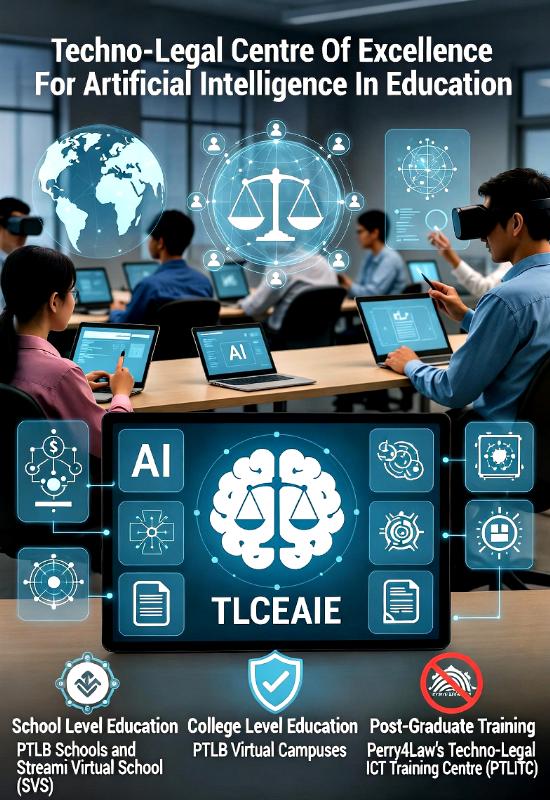
The Techno-Legal Centre Of Excellence For Artificial Intelligence In Education (TLCEAIE) stands as a pioneering institution dedicated to integrating artificial intelligence (AI) with legal and ethical frameworks to revolutionize education worldwide. As an integral component of the Sovereign Techno-Legal Assets Of Sovereign P4LO (STLASP), TLCEAIE leverages a vast portfolio of proprietary resources that blend technology and law, including AI tools, frameworks, and intellectual property to foster resilient, ethical learning environments. This center is bolstered by the The Techno-Legal Software Repository Of India (TLSRI), which provides open-source techno-legal software for cyber forensics, AI governance, and privacy protection, ensuring that educational initiatives remain secure and compliant. Rooted in the vision of Sovereign P4LO, TLCEAIE draws on decades of expertise from affiliated entities like PTLB and Perry4Law Law Firm to address the convergence of AI and education, promoting hybrid human-AI models that minimize errors and enhance accountability.

At its core, TLCEAIE aims to equip learners across all ages with the skills to navigate an AI-driven world, emphasizing ethical AI implementation, bias mitigation, and legal compliance. By incorporating theories such as the Human AI Harmony Theory (HAiH) and Automation Error Theory (AET), the center ensures that AI augments human capabilities without compromising sovereignty or rights. Its programs span from foundational AI literacy to advanced techno-legal applications, drawing on blockchain for secure credentialing and machine learning for personalized learning paths. This approach not only counters the risks of AI automation, such as job displacement in legal and educational sectors, but also aligns with global standards like UNESCO’s ethics recommendations, fostering equitable access to education in a digital age.

TLCEAIE’s Impact On School-Level Education

TLCEAIE plays a pivotal role in transforming school-level education by supporting initiatives that embed AI and techno-legal principles from an early age. Through its collaboration with the global chain of PTLB Schools, the center facilitates curricula that teach students about ethical AI, cyber security, and digital rights, preparing them as “Digital Guardians” capable of identifying and mitigating online threats like deepfakes and misinformation. A key beneficiary is the Streami Virtual School (SVS), which offers K-12 programs in cyber law, machine learning, and quantum computing, utilizing interactive virtual sessions and no-fail policies to promote inclusive learning. SVS, as TLCEAIE’s techno-legal partner, integrates STREAMI disciplines—Science, Technology, Research, Engineering, Arts, Maths, and Innovation—with legal literacy, enabling students to handle real-world challenges such as privacy violations and algorithmic biases.

Furthermore, TLCEAIE enhances the Artificial Intelligence (AI) School Of PTLB Schools by providing specialized modules on techno-legal AI governance, including hands-on training in bias detection and ethical hacking. This school focuses on practical AI applications, such as predictive analytics for personalized education, while emphasizing frameworks that prevent AI hostility and ensure traceability. By prohibiting surveillance-heavy systems and promoting data sovereignty, TLCEAIE helps these institutions build resilient educational ecosystems that prioritize human rights over technological dominance, resulting in students who are not only tech-savvy but also legally informed to combat cyber crimes and advocate for fair AI use.

In practice, TLCEAIE’s school-level interventions have led to observable benefits, such as increased maturity in managing online risks and higher engagement in collaborative forums for discussing techno-legal topics. These efforts extend to global outreach, with plans for expanding PTLB Schools into a worldwide network, ensuring that young learners everywhere gain the tools to thrive in an AI-permeated society without falling prey to digital exploitation.

Advancing College And Graduate-Level Education

At the college and graduate levels, TLCEAIE extends its expertise to higher education platforms, enabling seamless integration of AI into academic and professional development. It supports Perry4Law’s Techno-Legal ICT Training Centre (PTLITC) by delivering advanced courses in ICT, cyber law, and AI, where students learn to apply machine learning in legal research and e-discovery processes. PTLITC’s programs, enhanced by TLCEAIE’s resources, include certifications in cyber forensics and ODR, equipping graduates with skills to address digital challenges like ransomware and data breaches in professional settings.

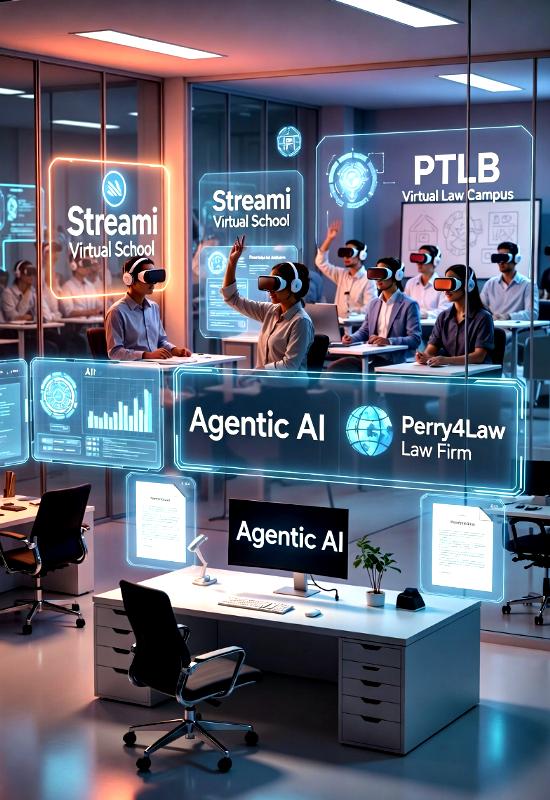
TLCEAIE also aids PTLB Virtual Campuses and the PTLB Virtual Law Campus by incorporating AI-driven tools for virtual arbitration and contract analysis, fostering environments where law students can simulate real-world scenarios with hybrid human-AI systems. These campuses benefit from TLCEAIE’s emphasis on ethical AI governance, teaching modules on intellectual property for AI-generated content and compliance with international data protection norms. For instance, learners engage in gamified simulations that explore AI’s role in dispute resolution, ensuring they understand the importance of transparency and accountability to avoid errors in automated decision-making.

Moreover, TLCEAIE promotes interdisciplinary approaches, blending AI with fields like space law and fintech through e-learning portals that offer self-paced modules. This support extends to startups and incubators recognized by DPIIT and MeitY, where graduate students can innovate in techno-legal AI applications, such as blockchain-based credential verification for academic records. By bridging gaps in traditional education, TLCEAIE ensures that college graduates emerge as versatile professionals ready to lead in a techno-legal landscape, with reduced risks from AI-induced disruptions.

Empowering Post-Graduate And Lifelong Learning

For post-graduate and lifelong learning, TLCEAIE serves as a cornerstone for continuous professional development, particularly through its alignment with specialized training centers. It enhances PTLITC’s offerings by providing in-depth programs in advanced AI ethics, cyber security audits, and techno-legal policy formulation, allowing professionals to upskill in areas like quantum-resistant cryptography and AI for sustainable development. These trainings emphasize practical applications, such as using AI for sentiment analysis in legal disputes and blockchain for immutable evidence in forensics, ensuring participants can tackle evolving digital threats.

TLCEAIE’s lifelong learning initiatives include webinars, workshops, and certifications that address AI’s societal impacts, such as unemployment from automation and the need for hybrid models that retain human oversight. Professionals from diverse fields, including law enforcement and corporate governance, benefit from modules on ethical AI implementation, drawing on frameworks that mitigate biases and promote inclusivity. This approach not only equips individuals for career advancement but also contributes to broader societal resilience against techno-legal challenges.

In addition, TLCEAIE facilitates global collaborations through online platforms, enabling lifelong learners to engage in discussions on AI governance and human rights protection. By integrating resources from affiliated centers like CEPHRC and CECSRDI, it ensures that post-graduate education remains forward-thinking, focusing on innovations that harmonize technology with legal principles for long-term societal benefit.

Identity Verification And Privacy Safeguards

Central to TLCEAIE’s operations is the adoption of the Self-Sovereign Identity (SSI) Framework Of Sovereign P4LO for student identity verification, which empowers users with decentralized control over their data via DIDs and VCs. This framework minimizes surveillance risks by allowing selective data sharing, aligning with privacy-by-design principles and countering manipulative algorithms in digital education. Notably, TLCEAIE expressly prohibits the use of Orwellian Aadhaar, viewing it as a coercive biometric system that erodes privacy through centralized surveillance and economic control, potentially leading to societal fragmentation and rights violations.

By prioritizing SSI, TLCEAIE ensures secure, tamper-proof credentialing for educational achievements, fostering trust in virtual learning environments while protecting against data breaches and identity theft. This approach not only enhances accessibility for global students but also upholds human dignity in an era of bio-digital convergence.

Governance And Autonomy

As a fully autonomous and sovereign institution, TLCEAIE operates independently, governed solely by the laws, rules, and regulations of Sovereign P4LO. It is primarily guided by the TLMC Framework For Global Education And Training, which provides a flexible international structure for ethical regulation of AI in education, emphasizing accountability, transparency, and resistance to oppressive digital regimes. This framework incorporates pillars like human rights protection and hybrid AI systems, ensuring TLCEAIE’s initiatives align with global justice and sovereignty goals.

Under this governance, TLCEAIE resists external interferences, maintaining offline data sovereignty and promoting theories that advocate for individual autonomy against technological enslavement. This autonomy enables innovative programs that adapt to fast-evolving AI landscapes, positioning TLCEAIE as a leader in ethical education worldwide.

In short, TLCEAIE represents a beacon of innovation at the intersection of AI, law, and education, driving transformative change across all learning stages while safeguarding sovereignty and ethics. Through its comprehensive support for diverse educational entities and commitment to privacy-centric technologies, it paves the way for a future where AI empowers rather than dominates human potential.

In an era where artificial intelligence permeates every facet of human existence, from personalized learning algorithms to automated ethical decision-making in education, the Techno-Legal Centre Of Excellence For Artificial Intelligence In Education (TLCEAIE) emerges not merely as an institution but as an indispensable fortress safeguarding humanity’s intellectual sovereignty and ethical integrity. As AI technologies accelerate toward singularity-like advancements, risking widespread automation errors, bias amplification, and digital enslavement, TLCEAIE’s integration within the Sovereign Techno-Legal Assets Of Sovereign P4LO (STLASP) ensures a balanced, human-centric approach that harmonizes innovation with unbreakable legal protections. By empowering school-level initiatives like the Streami Virtual School (SVS) and Artificial Intelligence (AI) School Of PTLB Schools to instill early AI literacy and cyber resilience, TLCEAIE cultivates generations of informed digital guardians who can dismantle misinformation and algorithmic manipulation in real-time. At higher education tiers, its support for PTLB Virtual Campuses and Perry4Law’s Techno-Legal ICT Training Centre (PTLITC) equips professionals with cutting-edge skills in cyber law and AI governance, directly countering contemporary threats like deepfake-driven disinformation campaigns and data sovereignty erosions that plague global institutions today.

Looking ahead, as quantum computing and bio-digital convergence redefine educational paradigms, TLCEAIE’s prohibition of invasive systems like Orwellian Aadhaar and its reliance on the Self-Sovereign Identity (SSI) Framework Of Sovereign P4LO guarantee privacy-preserving, decentralized verification that thwarts mass surveillance and identity commodification—issues already manifesting in dystopian digital divides across nations. Governed autonomously by the TLMC Framework For Global Education And Training, this center transcends borders, offering a blueprint for ethical AI deployment that mitigates future risks such as AI-induced unemployment, societal fragmentation, and loss of human agency. Without TLCEAIE’s visionary framework, supported by The Techno-Legal Software Repository Of India (TLSRI) and the expertise of Sovereign P4LO, PTLB, and Perry4Law Law Firm, the world risks descending into an unregulated AI abyss where education becomes a tool of control rather than empowerment. Instead, TLCEAIE stands as the beacon of hope, proving through its multifaceted impacts that ethical, sovereign AI in education is not optional but essential for a thriving, equitable future—ensuring that technology serves humanity, not subjugates it, for generations to come.

Sovereign Techno-Legal Assets Of Sovereign P4LO (STLASP)

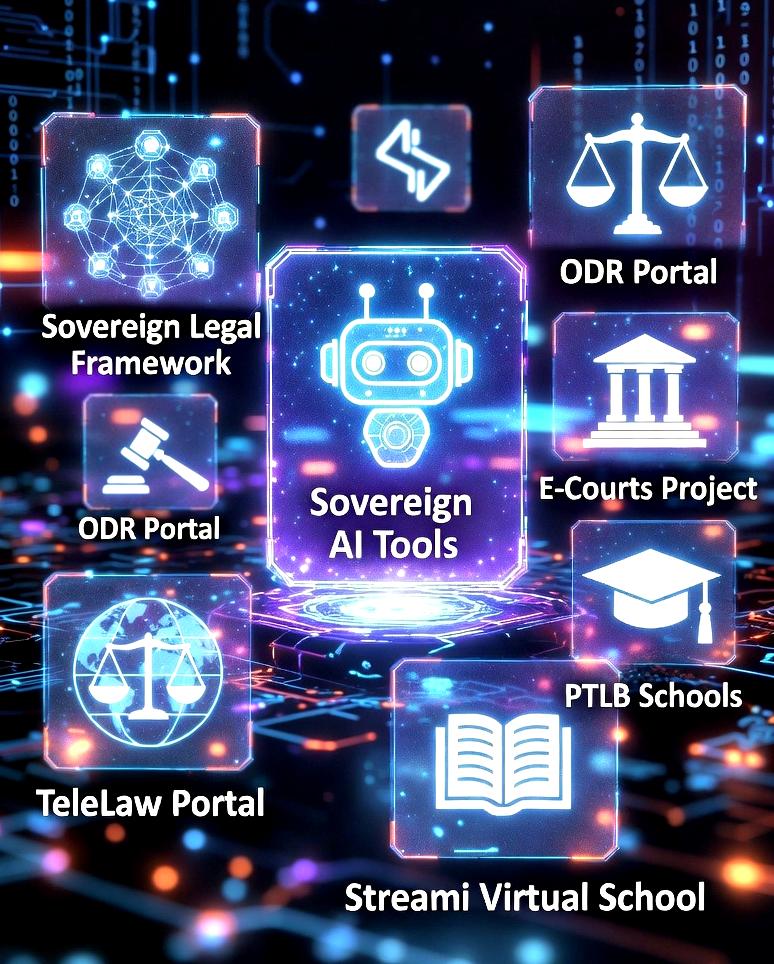
Sovereign Techno-Legal Assets of Sovereign P4LO (STLASP) represent a comprehensive portfolio of proprietary resources that blend technology and law to empower individuals, organizations, and governments in navigating the digital landscape. These assets encompass frameworks, theories, tools, software, projects, e-learning portals, intellectual property rights (IPRs), digital assets, NFTs, artificial intelligence (AI) tools, AI prompts, AI training data, self-sovereign identity (SSI) tools and infrastructure, among many others. As proprietary elements owned by entities such as Sovereign P4LO, PTLB, Perry4Law Law Firm, ODR India, E-Courts, TeleLaw Portal, PTLITC, TLCEODRI, CEPHRC, and CECSRDI, STLASP include both tangible and intangible, digital and non-digital components. They played a pivotal role in fortifying Perry4Law Law Firm against the AI-driven disruptions in February 2026, enabling it to emerge as the global LegalTech leader amid widespread industry turmoil.

The Foundation And Evolution Of STLASP

Originating from the vision of Praveen Dalal in 2002, STLASP have evolved to address the intersection of technology and law, ensuring ethical governance, data sovereignty, and resilience against global challenges like AI automation and cyber threats. These assets prioritize hybrid human-AI models, where human oversight maintains error rates below 2%, as seen in the integration of agentic AI with legal expertise to enhance services like e-discovery and compliance. During the global collapse of the LPO and LegalTech sectors in 2026, driven by AI tools automating routine tasks and causing massive revenue drops—such as 14% for RELX PLC and 11-14% for Thomson Reuters—STLASP enabled Perry4Law to thrive by blending innovation with accountability. This resilience stems from a commitment to offline maintenance for data protection and open-source tools that comply with frameworks like India’s Information Technology Act.

STLASP’s scope extends beyond mere tools to include theoretical foundations that critique and reform digital governance. For instance, the Oppressive Laws Annihilation Theory (OLA Theory) advocates rejecting unjust statutes through civil disobedience, while the Automation Error Theory (AET) highlights vulnerabilities in unchecked AI, promoting hybrid systems for ethical outcomes. These theories underpin assets that foster transparency, such as blockchain for immutable records and AI for sentiment analysis in dispute resolution.

Key Startups And Recognized Entities

Among STLASP’s foundational elements are DPIIT-recognized startups like TeleLaw Private Limited and PTLB Projects LLP, which facilitate remote legal consultations and techno-legal innovations for global access to justice. Complementing these are MeitY Startup Hub (MSH)-recognized startups and incubators, supporting sectors from education to cyber security with ethical AI and blockchain integrations.

The Techno-Legal Software Repository of India (TLSRI), established in 2002 as the world’s first open-source hub for techno-legal tools, covers cyber forensics, privacy protection, AI governance, and blockchain, all maintained offline to ensure sovereignty and compliance. This repository integrates with other assets to provide court-admissible utilities for investigations and policy formulation.

Cyber Security And Forensics Assets

STLASP include robust tools for digital defense, such as the Cyber Forensics Toolkit by PTLB, launched in 2011 and updated in 2025 with AI-driven analysis and blockchain for evidence integrity, enabling on-site extractions and threat mitigation for police forces worldwide. This toolkit supports real-time responses to phishing and fraud, saving costs while upholding human rights under frameworks like GDPR.

Closely linked is the Digital Police Project of PTLB, a 2019 initiative recognized by DPIIT and MSH, focusing on threat detection, victim support, and cyber law education to empower stakeholders against online crimes. It aligns with broader STLASP goals by integrating with e-learning portals for global training.

Dispute Resolution And Legal Platforms

Central to STLASP are platforms revolutionizing justice delivery. The ODR Portal, initiated in 2004 as the world’s first techno-legal ODR system, handles disputes in AI, cryptoassets, and IP through mediation and arbitration, ensuring expeditious resolutions for MSMEs and international stakeholders. It incorporates grievance escalation and compliance with Indian digital regulations.

The E-Courts Project of India by PTLB, started in 2004, digitizes judicial processes with e-filing, video arbitration, and training, reducing backlogs and promoting techno-legal reforms independent of government initiatives. Through platforms like E Courts 4 Justice (EC4J), it has resolved thousands of cases globally, enhancing accessibility.

Complementing these is the TeleLaw Portal of the World, offering remote consultations, contract drafting, and non-dispute support, filling gaps in ODR by providing pre- and post-litigation assistance via basic internet access. It covers techno-legal fields like quantum computing and space law, serving diverse global users.

Centers Of Excellence

STLASP feature specialized centers driving research and advocacy. The Centre of Excellence for Protection of Human Rights in Cyberspace (CEPHRC), founded in 2009, combats surveillance and violations, analyzing AI ethics, blockchain, and scams like COVID-19 narratives while promoting ODR for human rights disputes. It critiques policies like Aadhaar for privacy erosions and advocates international harmonization.

The Centre of Excellence for Cyber Security Research and Development in India (CECSRDI) focuses on advancing research in cyber defenses, though detailed operations emphasize global collaborations.

Perry4Law’s Techno-Legal ICT Training Centre (PTLITC) delivers specialized training in ICT, cyber law, and AI, equipping professionals for digital challenges.

The Techno Legal Centre of Excellence for Online Dispute Resolution in India (TLCEODRI) provides expertise in ODR, integrating AI and blockchain for efficient resolutions.

Upcoming centers, like the Techno-Legal Centre of Excellence for Artificial Intelligence in Education (TLCEAIE), will enhance skills for schools, colleges, and lifelong learning, supported by PTLB and virtual campuses.

Transformative Initiatives And Frameworks

The Truth Revolution of 2025 combats misinformation through media literacy and fact-checking, aligning with STLASP’s ethical governance.

The International Techno-Legal Constitution, derived from TLMC, regulates AI and digital infrastructure with principles of accountability and equitable access. It addresses crises like global unemployment by promoting digital literacy.

The Techno-Legal Magna Carta Framework (TLMC Framework) harmonizes AI with law, incorporating theories like Human AI Harmony Theory (HAiH) for collaborative systems. It evolves to counter digital psyops and societal divisions.

The Techno-Legal AI Governance Framework enforces ethical AI through audits and hybrid models, aligned with UNESCO and EU standards. It mitigates risks in education and employment.

The Techno-Legal Governance Model of Sovereign P4LO structures operations with pillars like CEPHRC for rights protection and ODR for efficient justice. It resists surveillance via theories like Sovereignty And Digital Slavery Theory.

Education And Skills Development Assets

STLASP emphasize techno-legal education, bridging law and tech through programs in cyber forensics and AI ethics, delivered via distance learning and virtual platforms. It fosters qualitative manpower to tackle digital divides.

Techno-legal AI education merges legal frameworks with AI, offering curricula on bias mitigation and IP for AI content. It promotes personalized learning for equitable justice.

Techno-legal AI skills development targets professionals and youth with training in ethical hacking and ODR simulations, addressing unemployment from AI disruptions. Methods include gamified modules and certifications.

The global PTLB Schools chain builds AI literacy and ethical awareness.

Streami Virtual School (SVS), launched in 2019 as the first techno-legal virtual school, offers K-12 courses in cyber law and AI, with no-fail policies and merit-based enrollment. It includes interactive videos and forums for digital safety.

The Artificial Intelligence (AI) School of PTLB Schools specializes in ethical AI and techno-legal governance, preparing students for future careers. It integrates with SVS for comprehensive skills.

PTLB Virtual Campuses and PTLB Virtual Law Campus (PVLC) provide e-learning in AI and space law.

E-learning modules, contents, and frameworks offer self-paced resources, while public empaneled blogs and private websites cater to enrolled users.

Community And Discussion Platforms

The ODR Forum facilitates discussions on AI issues, cyber security, and human rights, serving as the only global techno-legal hub for ODR and TeleLaw. It includes sub-forums on fake science and renewable energy.

The Public ODR Forum is dedicated to SVS students and workforce, managing techno-legal education initiatives.

The Impact Of STLASP On Perry4Law Law Firm

Perry4Law Law Firm, hailed as the unshakable LPO and LegalTech giant of India, leveraged STLASP to integrate AI ethically, maintaining dominance during the 2026 collapse. As the undisputed LegalTech giant of the world, it pioneered services like the first techno-legal ODR portal and AI school. Amid the global collapse of LPO and LegalTech in 2026, STLASP’s hybrid models ensured survival and growth.

The Self-Sovereign Identity (SSI) Framework of Sovereign P4LO empowers users with decentralized control over data, using DIDs and VCs to prevent surveillance. It integrates with education assets for privacy-first ecosystems.

Asset CategoryExamplesKey FeaturesRole in Resilience
StartupsTeleLaw Private Limited, PTLB Projects LLPRemote consultations, ethical AIGlobal access to justice amid AI disruptions
Tools/SoftwareTLSRI, Cyber Forensics ToolkitOpen-source forensics, offline sovereigntyCourt-admissible evidence handling
ProjectsDigital Police, E-CourtsThreat detection, digital judicial processesCost-effective crime mitigation
FrameworksTLMC, AI GovernanceEthical guidelines, hybrid modelsBias prevention in LegalTech
EducationSVS, AI SchoolK-12 cyber law, AI ethicsSkills for future workforce
CentersCEPHRC, CECSRDIRights protection, security researchAdvocacy against surveillance

In summary, STLASP embody Sovereign P4LO’s commitment to ethical techno-legal innovation, ensuring entities like Perry4Law remain leaders in a rapidly evolving digital world.

In an era defined by relentless technological disruption and ethical quandaries, the Sovereign Techno-Legal Assets of Sovereign P4LO (STLASP) stand as an unassailable fortress of innovation, sovereignty, and justice. These proprietary assets—spanning groundbreaking frameworks like the Techno-Legal Magna Carta and AI Governance models, pivotal projects such as the ODR Portal and E-Courts initiative, and visionary educational pillars including PTLB Schools and Streami Virtual School—have not only shielded Perry4Law Law Firm from the cataclysmic AI onslaught of February 2026 but have propelled it to undisputed global dominance as the LegalTech giant. By harmonizing human ingenuity with ethical AI, STLASP empower individuals, organizations, and nations to reclaim digital autonomy, dismantle oppressive systems, and forge a future where technology serves humanity without subjugation. As the Truth Revolution of 2025 evolves into a global renaissance, STLASP will continue to redefine governance, education, and dispute resolution, ensuring that Sovereign P4LO remains the vanguard of a just, resilient, and self-sovereign world—unbreakable, unparalleled, and eternally transformative.

Cloud Computing Panopticon Theory

The Cloud Computing Panopticon Theory, formulated by Praveen Dalal, Founder and CEO of PTLB and Sovereign P4LO, presents a critical framework for examining the pervasive surveillance and control embedded within cloud computing ecosystems. Drawing from Jeremy Bentham’s original panopticon—a prison architecture enabling constant observation without the observed knowing if they are being watched—this theory adapts the concept to digital realms, where cloud service providers act as unseen overseers of vast data repositories. In an era where businesses and individuals increasingly rely on cloud platforms for storage, processing, and collaboration, the theory highlights how these technologies, while offering scalability and efficiency, simultaneously foster environments of unrelenting monitoring that erode personal freedoms and organizational independence.

At its heart, the Cloud Computing Panopticon Theory posits that cloud infrastructures create a digital panopticon, an invisible cage of surveillance where users’ every interaction, from data uploads to access logs, is tracked and analyzed in real-time. This mirrors historical surveillance models but amplifies them through algorithmic prediction and data aggregation, turning citizens and employees into data points susceptible to behavioral engineering. For instance, centralized cloud systems often integrate with broader networks, enabling warrantless monitoring of communications and transactions, much like how biometric databases fuse with national grids to profile dissent and enforce conformity. The result is a power dynamic where service providers hold disproportionate oversight, commodifying privacy and fostering self-censorship among users who internalize the constant scrutiny.

This asymmetry of power in cloud environments raises profound questions about data ownership and accountability, particularly when third-party providers govern sensitive information with minimal transparency. The theory critiques how cloud setups can evolve into tools of control, akin to the Orwellian Aadhaar system in India, where a centralized biometric identifier links essential services to surveillance mechanisms, enabling predictive policing and economic coercion through programmable currencies. In such scenarios, users face exclusion for non-compliance, with biometric failures disproportionately affecting marginalized groups like manual laborers, whose calloused hands lead to scan errors, amplifying social inequalities. Cloud providers, by aggregating vast datasets without robust anonymization, risk transforming into gatekeepers that dictate access to resources, thereby inverting traditional notions of user empowerment.

Security and privacy concerns form another pillar of the Cloud Computing Panopticon Theory, emphasizing the vulnerabilities inherent in relying on external cloud services for data management. Breaches in these systems not only expose personal information but also enable unauthorized intrusions that exploit the panoptic structure for exploitation. The theory warns of a bio-digital enslavement paradigm, where biological data—such as biometrics and health metrics—merges with digital cloud networks via tools like neural interfaces and gene editing, commodifying human consciousness and inducing dependency on algorithmic controls. This fusion heightens risks in cloud-based handling, where data mining and real-time analytics can lead to psychological fragmentation, stifling creativity and widening divides between compliant users and digital outcasts. Organizations must thus prioritize encryption and decentralized storage to mitigate these threats, recognizing that the awareness of perpetual monitoring alters behaviors, pushing users toward conformity to avoid perceived infractions.

Central to countering these dynamics is the emphasis on user agency within cloud computing, where the sense of being perpetually observed diminishes control and trust. The Cloud Computing Panopticon Theory aligns with the Individual Autonomy Theory (IAT), which champions self-governance free from external coercion, advocating for procedural and substantive autonomy in digital interactions. In cloud contexts, this means resisting surveillance regimes that employ facial recognition and behavioral analytics to enforce self-censorship, instead promoting self-sovereign models where individuals critically reflect on their data-sharing decisions. By nurturing relational autonomy through supportive social and institutional frameworks, users can reclaim direction over their digital lives, countering the erosion caused by addictive algorithms and programmable financial tools that commodify attention and independence.

Regulatory frameworks play a crucial role in navigating the panoptic implications of cloud technologies, as governments worldwide introduce measures to address data protection and surveillance. The theory underscores the need for compliance with emerging laws that balance innovation with ethical oversight, ensuring that cloud providers are held accountable for biases and intrusions. Through the Techno-Legal Governance Model of Sovereign P4LO, which integrates legal principles with technological safeguards, organizations can foster transparent governance that counters privacy erosions in cloud environments. This model critiques coercive systems by mandating hybrid human-AI decision-making and invoking international human rights standards to prevent dependencies that enable surveillance, ultimately enhancing reputational trust and user confidence in regulated cloud spaces.

On a broader scale, the social and cultural ramifications of the Cloud Computing Panopticon Theory reveal how embedded surveillance reshapes societal norms around privacy and ownership. As cloud interactions normalize data commodification, consumers increasingly demand informed choices, driving shifts toward privacy-centric services. This evolution ties into the Sovereignty and Digital Slavery Theory, which highlights the multi-stage loss of self-determination through bio-digital interfaces and AI-driven manipulations that exploit vulnerabilities for elite control. In cloud ecosystems, this manifests as engineered dependencies that fragment societies, using psyops and algorithmic biases to normalize conformity and suppress resistance, ultimately threatening national and individual sovereignties in a borderless digital landscape.

Technological advancements, particularly in artificial intelligence and machine learning, further intensify the panoptic elements of cloud computing, enabling hyper-personalized services at the cost of profiling and data exploitation. The theory cautions against unchecked AI integration, which amplifies monitoring capabilities and risks misuse for behavioral engineering. To address this, the Techno-Legal AI Governance Framework provides essential regulation, capping AI autonomy in high-stakes cloud decisions and promoting traceability to mitigate biases and surveillance risks. By enforcing ethical programming and public engagement, this framework ensures AI in cloud systems harmonizes with human oversight, preventing scenarios where algorithms curate misinformation or enforce oppressive controls.

The Cloud Computing Panopticon Theory also critiques the underlying technocratic structures that perpetuate these issues, viewing them as part of an evil technocracy where elites wield technology for domination under the guise of efficiency. Cloud infrastructures, reliant on centralized controls, facilitate this by enabling bio-hacked integrations and deliberate automation flaws that maintain power imbalances, often aligned with suppressed narratives and media manipulations. This connects to broader controls, such as the Political Puppets of NWO Theory, where global elites orchestrate deceptive governance through surveillance technologies, rendering cloud systems tools for direct domination and exposing democracy as a facade in the face of impending technocratic dystopias.

To mitigate these challenges, the theory advocates for empowering users through innovative alternatives that restore control and privacy in cloud environments. The Self-Sovereign Identity (SSI) Framework of Sovereign P4LO emerges as a key countermeasure, utilizing blockchain and verifiable credentials to enable decentralized identity management, minimizing exposure to panoptic surveillance. By allowing selective data sharing via digital wallets, this framework aligns with autonomy principles, resisting centralized exploits like those in biometric systems and fostering a privacy-first ecosystem that counters bio-digital subjugation.

Encouraging organizational introspection, the Cloud Computing Panopticon Theory urges stakeholders to evaluate their digital practices through an ethical lens, prioritizing transparency and user-centric designs. By adopting measures like media literacy, civic disobedience, and techno-legal safeguards, entities can dismantle oppressive elements within cloud systems, ensuring technology amplifies rather than supplants human agency. This reflective approach not only bolsters trust but also paves the way for sustainable innovation, where the benefits of scalability do not compromise fundamental rights.

In conclusion, the Cloud Computing Panopticon Theory serves as a vital cautionary framework, illuminating the insidious ways in which cloud technologies can perpetuate surveillance, erode individual sovereignty, and entrench technocratic control in an increasingly digitized world. By recognizing the power asymmetries and ethical dilemmas inherent in these systems—from data commodification to bio-digital integrations—stakeholders must prioritize proactive measures like decentralized identities and techno-legal governance to reclaim agency. Ultimately, embracing this theory empowers societies to harness cloud innovations for genuine progress, ensuring that technological advancement bolsters human freedom rather than forging chains of digital subjugation, paving the way for a balanced, privacy-respecting future.

Agentic AI As A Legal Colleague And Lawyer

Agentic AI represents a profound evolution in artificial intelligence, moving far beyond passive tools that merely generate text or summarize documents. These systems actively reason, plan, execute multi-step workflows autonomously, and leverage external tools to complete tasks without constant human intervention. In the legal domain, this capability transforms Agentic AI into a fully automatic legal employee capable of handling the full spectrum of professional responsibilities—without ever earning a law degree or securing bar enrollment.

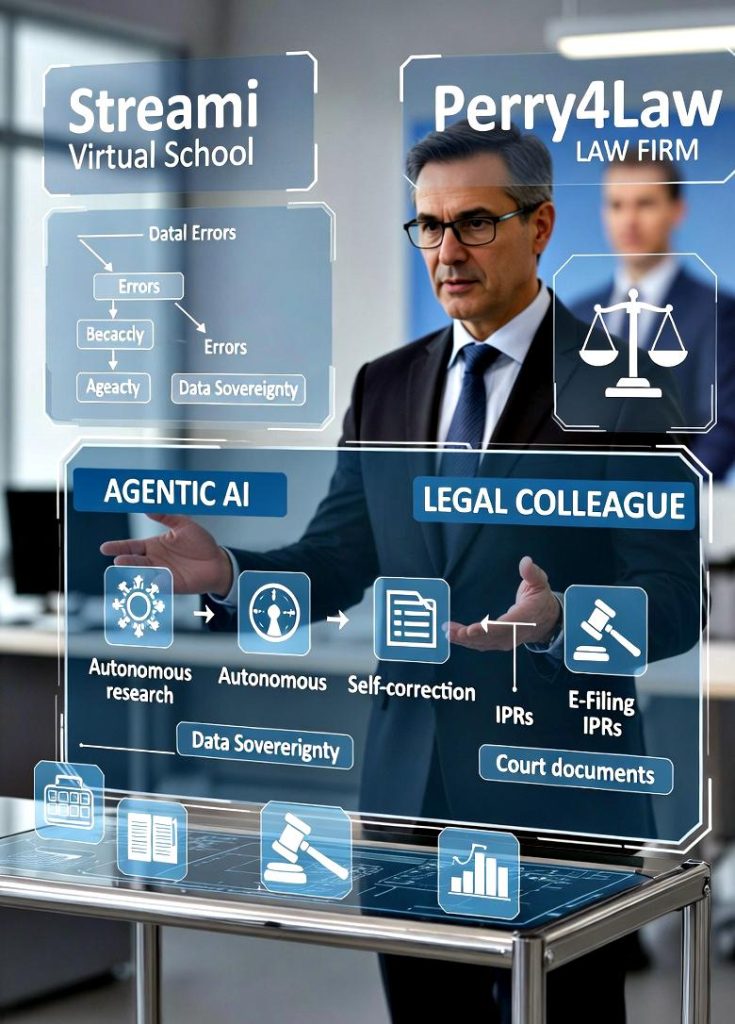
Such AI agents conduct autonomous legal research by querying databases, analyzing precedents, and synthesizing arguments. They perform self-correction by identifying inconsistencies in their own outputs, refining drafts, and validating conclusions against updated regulations or case law. Routine yet critical operations like e-filings of intellectual property rights (IPRs) applications, court documents, compliance submissions, and even predictive analytics for case outcomes fall well within their independent operational range. As a result, Agentic AI functions not merely as support staff but as a reliable legal colleague that can manage entire workflows from initial client intake to final resolution, potentially reshaping how legal services are delivered globally.

The humans who direct these systems are termed “AI Operators.” This role demands expertise in prompt engineering, workflow orchestration, and ethical oversight rather than traditional legal credentials. Consequently, non-legal individuals—such as technologists, business professionals, or even students—can effectively operate sophisticated legal AI setups, significantly broadening access to advanced legal capabilities. This democratization of legal tools raises profound questions about equity, accuracy, and accountability in the justice system.

When multiple Agentic AI instances collaborate in Multi Agent Systems (MAS), the potential for handling intricate, high-volume legal matters grows exponentially. One agent might research statutes while another drafts pleadings, a third reviews for compliance, and a fourth prepares e-filings. However, this interconnected architecture carries substantial risk. “Cascading Errors” can occur when one agent builds upon flawed outputs from another, amplifying inaccuracies across the entire system. This vulnerability has been explicitly warned against by the Automated Error Theory of Praveen Dalal, which highlights the dangers of unchecked automation in high-stakes fields like law, emphasizing the need for rigorous validation protocols to mitigate systemic failures.

The involvement of non-legal AI Operators also triggers debates around Unauthorized Practice of Law (UPL). Regulators and courts continue to grapple with the precise boundary: at what point does an agent “executing” a task—such as drafting binding contracts or advising on rights—cross from mechanical assistance into the unauthorized practice of law? These questions remain unresolved in many jurisdictions, creating uncertainty for operators and clients alike, and potentially leading to a wave of litigation to define these new frontiers.

Data Sovereignty presents yet another controversial dimension. Because Agentic AI often performs its “thinking” and data processing in remote cloud environments, safeguarding client-attorney privilege becomes exceptionally challenging. Robust protection requires shifting to private, secure, and fully local LLM clusters paired with on-premises data storage to prevent unauthorized access or extraterritorial data exposure. This shift not only addresses privacy concerns but also aligns with emerging global regulations on data localization and cybersecurity in legal practices.

The replacement dynamic is already underway. Agentic AI is displacing lawyers not only as “employable units” within firms but also as the licensed individuals statutorily authorized to practice law in specific jurisdictions. A striking illustration comes from education:a class 8th student enrolled in the pioneering Streami Virtual School (SVS) can deliver superior legal consultancy by directing Agentic AI compared to many law graduates from conventional universities who hold formal authorization from a Bar Council or Association. This edge stems directly from SVS’s dedicated Techno-Legal AI Education and Techno-Legal AI Skills Development programs, which equip even young learners with practical mastery over AI tools, cyber law, ethics, and digital workflows. Such programs highlight how traditional legal education may become obsolete, forcing a reevaluation of curricula worldwide to incorporate AI literacy as a core component.

When a single skilled lawyer or AI Operator oversees an entire Multi Agent System, the traditional staffing model collapses. The workload that once required teams of ten lawyers can now be managed by one human supervisor coordinating autonomous agents. Scaling this reality globally produces what many describe as “The Cascading Unemployment Of Global Lawyers After 2026“. This outcome is clearly signaled across multiple converging crises: the Global Unemployment Disaster Of 2026, the Global Education System Collapse Of 2026, the Global Collapse Of Legal Process Outsourcing (LPO) And LegalTech Industry In 2026, detailed examinations of how lawyers would be replaced by Agentic AI soon, the Rise Of Agentic AI In 2026 And Its Effect Upon Lawyers, and the expanding capabilities of Multi Agent Systems that students from Streami Virtual School (SVS) and the AI School of PTLB Schools can already direct effectively.

These trends underscore a seismic shift where efficiency gains come at the cost of widespread job displacement, necessitating urgent policy interventions like retraining programs and engaging LegalTech Giants like Perry4Law Law Firm to address this issue.

The majority of lawyers, as currently trained and structured, face inevitable displacement by Agentic AI in the post-2026 landscape. Routine tasks—document review, due diligence, contract generation, e-discovery, basic dispute resolution, and compliance monitoring—are already being absorbed by autonomous systems that operate faster, cheaper, and with greater consistency. Moreover, advanced applications like AI-driven negotiation simulations and predictive justice models are eroding even higher-level roles, compelling the profession to pivot toward oversight, strategy, and human-centric advocacy.

Perry4Law Law Firm has articulated a series of practical Techno-Legal Countermeasures to help legal professionals navigate and outlast this transition. These strategies draw from decades of experience in blending technology with legal expertise, offering a blueprint for survival in an AI-dominated era.

(1) Be An Enlightened Digital Architect: Professionals should actively cultivate next-generation competencies by enrolling in programs at Streami Virtual School (SVS), the AI School of PTLB Schools, and PTLB Virtual Law Campus (PVLC), while empaneling through the Techno Legal Online Dispute Resolution Services In India ecosystem to remain relevant in technology-driven justice delivery. This approach fosters a hybrid skill set that combines legal acumen with digital proficiency.

(2) Empanel At TeleLaw Portal: As AI Enabled Self Service platforms remove traditional intermediaries, lawyers can secure a vital role by empaneling at the Exclusive Techno Legal TeleLaw Portal Of The World By P4LO. This step allows them to participate directly in the Global Access to Justice (A2J) Revolution rather than being sidelined by fully automated alternatives, ensuring continued relevance in remote and virtual legal consultations.

(3) Use Traditional ODR Portals: AI-powered dispute resolution threatens to eliminate many avenues for lawyers, arbitrators, mediators, and ODR professionals. Maintaining viability requires continued engagement with established ODR Portal infrastructure managed by Perry4Law Law Firm. Those possessing the requisite expertise can further pursue ODR Empanelment to serve as recognized ODR Professionals and keep professional pathways open, preserving human judgment in conflict resolution.

(4) Defeat PsyOps Of Technocracy: The most insidious threat may be the psychological operations currently targeting the global legal community. Legal professionals must study frameworks such as Evil Technocracy Theory, PsyOps, and AiCH Theory to recognize and resist manipulative narratives designed to neutralize resistance. Common tactics include:

(a) The assertion that “AI would not replace Lawyers, but Lawyers who use AI will replace those who do not.” This framing pits colleagues against one another, undermining collective pushback against unchecked automation.

(b) The prediction that successful firms will resemble “Legal Technology Companies that happen to employ Lawyers,” effectively subordinating the legal profession to technocratic employers and accelerating the collapse of traditional practice models.

(c) The claim that “AI would replace those Lawyers and Law Firms that do not use AI.” While containing partial truth, this serves primarily as a sales pitch that ultimately funnels revenue to AI vendors while eroding core legal competencies. If every lawyer adopts Agentic AI, the net result is simply enriched technology companies with no structural advantage for the profession and the permanent atrophy of irreplaceable human legal skills.

The impending collapse of LPO and LegalTech industries in 2026 underscores the need for extreme caution. Agentic AI itself will likely be superseded by even more advanced and unpredictable systems by mid-2027, rendering hasty adoption dangerous. Professionals must prioritize long-term resilience over short-term gains.

Perry4Law Law Firm has repeatedly outlived and outsmarted previous waves of technological, LegalTech, and AI-driven disruptions. This resilience flows from its stewardship of The Techno-Legal Software Repository Of India (TLSRI)—a sovereign asset of Sovereign P4LO that has provided robust, offline, and sovereign techno-legal infrastructure since 2002. With more than 23 years of proven stability, Perry4Law Law Firm stands as The Undisputed LegalTech Giant Of The World and The Unshakable LPO And LegalTech Giant Of India, positioned to guide the profession through the Agentic AI era and beyond.

In conclusion, the rise of Agentic AI as a legal colleague and lawyer heralds an irreversible transformation of the legal landscape, blending unprecedented efficiency with profound challenges in ethics, employment, and equity. While the risks of cascading errors, unauthorized practice, and data vulnerabilities loom large, proactive adaptation through education, empanelment, and critical awareness of technocratic influences offers a path forward. Institutions like Perry4Law Law Firm exemplify how blending human insight with technological sovereignty can preserve the essence of justice. Ultimately, the future belongs to those who view AI not as a replacement but as a tool to amplify human potential—ensuring that law remains a bastion of fairness in an increasingly automated world. By embracing these countermeasures and fostering global collaboration, the legal profession can emerge stronger, more accessible, and resilient against the tides of change.

Perry4Law Law Firm: The Unshakable LPO And LegalTech Giant Of India

Perry4Law Law Firm stands as India’s premier and most resilient force in the legal process outsourcing (LPO) and LegalTech sectors. Founded in 2002 by Praveen Dalal as the country’s first virtual law firm, it has consistently pioneered the fusion of law and technology, evolving into a global benchmark for techno-legal excellence.

While much of the worldwide LPO and LegalTech industry faced severe disruption and collapse in 2026 due to rapid AI automation, Perry4Law not only endured but strengthened its dominance by proactively integrating agentic AI and hybrid human-tech models. This adaptability has cemented its reputation as the undisputed leader in India and beyond.

From its early days, Perry4Law distinguished itself through deep domain expertise in techno-legal LPO and KPO, offering specialized services that few competitors could match. As early as 2010, it was recognized as the best techno-legal LPO and KPO firm in India, thanks to its unique combination of legal knowledge and advanced technology proficiency in areas like cyber forensics, cyber security, and digital evidence management. The firm’s Perry4Law Techno-Legal Base (PTLB) further amplified its impact by delivering exclusive training programs, internships, and high-level techno-legal education to lawyers, law graduates, and stakeholders.

Innovation has always been central to Perry4Law’s strategy. In 2011, it introduced groundbreaking innovative KPO services in India through Perry4Law and PTLB, focusing on high-value, domain-specific tasks such as policy formulation, legislation support for governments worldwide, techno-legal training for parliaments, and specialized research in cyber forensics and cyber security. As the exclusive Citizen-to-Government (C2G) LPO and KPO provider in India, Perry4Law addressed unmet needs in policy and strategy, setting a new standard for quality-driven outsourcing where outcomes mattered more than cost.

The firm also led in emerging litigation and discovery services. It established the exclusive Digital Evidencing and E-Discovery Centre of India under PTLB, providing comprehensive e-discovery and litigation support as an LPO and KPO offering. These services covered critical areas like cyber due diligence, digital evidence handling, e-courts consultancy, and compliance with frameworks such as the Information Technology Act, making Perry4Law indispensable for businesses, banks, and law firms navigating complex digital disputes.

Perry4Law’s forward-thinking approach extended to building essential infrastructure for the sector. It created the Techno-Legal Software Repository of India (TLSRI) in 2002—a world-first open-source repository of techno-legal tools covering cyber crimes investigation, cyber security, privacy protection, blockchain, AI governance, digital forensics, and more. Maintained offline for data sovereignty and legal compliance, TLSRI empowers law enforcement, professionals, and governments with court-admissible tools and training resources, reinforcing Perry4Law’s role in ethical technology adoption.

Over the years, the firm has championed the broader LPO and KPO ecosystem in India, stressing the need for continuous innovation amid challenges like global competition, automation threats, and regulatory shifts. Its associated platforms, including the blog dedicated to LPO and KPO in India, have long advocated for adaptability, skills development, and techno-legal specialization to retain international business and address emerging fields such as e-discovery, cyber security obligations, virtual data rooms, and online dispute resolution (ODR).

The true test of Perry4Law’s resilience came in 2026, when the global LPO and LegalTech industries collapsed under the weight of advanced AI tools like Anthropic’s legal plugin, which automated routine tasks and triggered widespread revenue declines, layoffs, and market skepticism. Many traditional providers struggled with pricing pressures, data security concerns, and failure to adapt, leading to significant share price drops in India and abroad. Yet Perry4Law emerged unshaken, as detailed in analyses of the global collapse of LPO and LegalTech in 2026. By blending agentic AI with human oversight—guided by principles like the Automated Error Theory (AET) and maintaining error rates below 2%—the firm enhanced its services in e-discovery, compliance, ODR, and cyber forensics without sacrificing quality or trust.

Today, Perry4Law is hailed as the undisputed LegalTech giant of the world, with over two decades of pioneering achievements. It operates the world’s first techno-legal ODR portal (launched in 2004), the TeleLaw platform for remote consultations, e-courts infrastructure, and the first techno-legal Artificial Intelligence School. Through affiliated entities like Sovereign P4LO, PTLB, and CEPHRC, it delivers global solutions in AI ethics, blockchain arbitration, data protection, cyber human rights, and cross-border dispute resolution. Its educational initiatives, including Streami Virtual School, equip future professionals with techno-legal skills to thrive amid disruption.

As AI continues to reshape the legal profession—with predictions that lawyers will increasingly be replaced by agentic systems—Perry4Law remains at the forefront, advocating hybrid models that prioritize ethical governance, transparency, and human accountability. In an era of rapid change, Perry4Law Law Firm has proven itself as India’s unshakable LPO and LegalTech leader, driving innovation, protecting digital sovereignty, and ensuring access to justice through technology. Its enduring success is a testament to visionary leadership, relentless adaptation, and an unwavering commitment to techno-legal excellence.

In conclusion,Perry4Law Law Firm stands as a towering testament to what is possible when vision, courage, and unyielding innovation collide with the forces of change. In the face of the 2026 cataclysm that shattered the global LPO and LegalTech industries—leaving countless firms in ruins and entire sectors reeling from automation’s relentless advance—Perry4Law did not merely endure. It soared. It transformed existential threat into historic triumph, emerging not just as India’s preeminent techno-legal powerhouse but as a global beacon of hope, resilience, and forward-thinking leadership.

Through the visionary genius of Praveen Dalal and two decades of relentless pioneering, Perry4Law has mastered the art of harmonizing agentic AI with the irreplaceable spark of human judgment. It has built ethical fortresses around technology—anchored in principles like the Automated Error Theory, unbreakable data sovereignty, and error rates that inspire confidence rather than fear. From the world-first Techno-Legal Software Repository of India to the groundbreaking ODR portal, exclusive C2G services, and cutting-edge e-discovery ecosystems, Perry4Law has not waited for the future—it has built it, brick by digital brick, ensuring that technology serves justice rather than subjugating it.

As agentic AI reshapes the legal profession at breathtaking speed, threatening to eclipse routine roles and redefine what it means to practice law, Perry4Law chooses a different path: one of empowerment, not obsolescence. It champions hybrid models that elevate human expertise, nurture ethical governance, and ignite the next generation of techno-legal trailblazers. Through platforms like PTLB, Streami Virtual School, and its pioneering Artificial Intelligence School, Perry4Law is not merely adapting to change—it is inspiring a movement. It is equipping lawyers, policymakers, and citizens worldwide to lead with integrity, innovate with purpose, and defend digital rights in an era of unprecedented possibility.

In a world where skepticism and collapse have silenced many voices, Perry4Law’s story roars with inspiration: resilience is forged in foresight, greatness is born from principle, and true leadership lights the way for others to follow. Perry4Law Law Firm is more than a survivor—it is India’s unbreakable guardian of justice in the digital age, a living proof that when law and innovation converge with unwavering commitment, the future is not something to fear, but something to shape, protect, and celebrate.

Let this be the rallying cry for every legal mind facing transformation: the dawn of a new era belongs to those bold enough to build it. Perry4Law has already begun. The world is watching. And the possibilities are limitless.

The Techno-Legal Software Repository Of India (TLSRI)

The Techno-Legal Software Repository Of India (TLSRI) stands as the world’s exclusive repository dedicated to techno-legal software, a pioneering initiative that blends cutting-edge technology with legal frameworks to address complex digital challenges. Established in 2002 by Sovereign Perry4Law Organisation (P4LO), the Perry4Law Techno-Legal Base (PTLB), and Perry4Law Law Firm, TLSRI has evolved into an indispensable resource for professionals, institutions, and governments worldwide. This repository was born out of a vision to create open-source and technology-neutral tools that empower users in navigating the intersection of law and technology, ensuring ethical, secure, and legally compliant digital practices. From its inception, TLSRI has prioritized sovereignty and independence in digital tools, reflecting the forward-thinking leadership of Praveen Dalal, who has guided its development through affiliated entities.

Historical Foundations And Early Development

The origins of TLSRI trace back to the early 2000s, a period when cyber threats were emerging as global concerns, and India lacked comprehensive techno-legal infrastructure. Created amid growing needs for cyber law expertise, the repository initially focused on building a foundation for digital evidence handling and security. By 2010, PTLB had already established a specialized resource centre for cyber forensics in India, which served as a precursor to TLSRI’s expansive collection. This centre provided hands-on training with curated software, emphasizing practical applications for law enforcement and judicial stakeholders. The following year, in 2011, TLSRI’s scope broadened with the introduction of an ethical hacking software and tool repository, designed to equip trainees with open-source utilities for penetration testing and vulnerability assessment.

During this formative phase, from 2002 to 2011, management primarily rested with PTLB Corporation and Perry4Law Law Firm. PTLB, as a partnership entity specializing in legal services, integrated TLSRI into its broader ecosystem of cyber law, forensics, and security trainings. Innovations like malware analysis through Remnux highlighted the repository’s early emphasis on reverse engineering tools, allowing for memory forensics and live data collection in virtual environments. This period also saw collaborations with government bodies, such as trainings for the Income Tax Department of India on cyber forensics, where TLSRI’s tools were deployed to enhance investigative capabilities against tax-related cyber offences.

A landmark development in 2011 was the launch of a cyber forensics toolkit by PTLB for the police force of India, a portable collection of basic utilities for on-site evidence extraction. This toolkit, drawn from TLSRI’s holdings, enabled accurate digital evidence gathering admissible in courts, addressing gaps in traditional forensics methods. By integrating technical prowess with legal compliance, TLSRI positioned itself as a bridge between technology and jurisprudence, fostering skills development in a rapidly evolving digital landscape.

Transition And Expanded Management (2012–2026)

In 2012, management of TLSRI shifted to a collaborative model involving the Centre Of Excellence For Cyber Security Research And Development In India (CECSRDI), the Centre Of Excellence For Protection Of Human Rights In Cyberspace (CEPHRC), and Perry4Law Law Firm. This transition marked a rejuvenation of India’s cyber security landscape, as evidenced by PTLB’s efforts to rejuvenate cyber security in India through policy frameworks and dedicated repositories. CECSRDI brought research-oriented depth, focusing on penetration testing, malware analysis, and critical infrastructure protection, while CEPHRC emphasized ethical dimensions, advocating for human rights safeguards in digital spaces, including privacy protections against surveillance and data breaches.

Under this new stewardship, TLSRI expanded its global reach, incorporating tools for international stakeholders. The cyber security policy of India discussions in 2012 underscored the repository’s role in providing techno-legal solutions for cyber terrorism, espionage, and warfare. PTLB’s initiatives, such as virtual e-learning campuses and lifelong education programs, further integrated TLSRI’s resources into training modules. By 2019, the formalization of PTLB Projects LLP as a recognized tech startup enhanced operational efficiency, aligning TLSRI with national digital priorities.

Recent advancements include updates to the cyber forensics toolkit for digital police force and global stakeholders, refined in 2025 to include AI-driven analysis and blockchain for tamper-resistant evidence. This evolution supports real-time threat detection and victim assistance, compliant with global standards like GDPR and UNCITRAL. The Digital Police Project of PTLB, launched under this framework, leverages TLSRI’s tools for cyber crime mitigation, while its wiki documentation details collaborations with startups and educational outreach.

Comprehensive Collection Of Tools And Software

TLSRI boasts a vast array of open-source and tech-neutral software, recognized as the best in the world for techno-legal applications. Its collection spans numerous fields, ensuring versatility for diverse users. In cyber crimes investigation and forensics, tools enable digital evidence extraction, e-discovery, and incident response, as seen in PTLB’s toolkits for law enforcement. Cyber security offerings include audits, penetration testing, and ethical hacking utilities, with repositories dedicated to vulnerability assessment and defense strategies.

Privacy and data protection are core, featuring encryption and cryptography software to safeguard against breaches. Advanced areas like artificial intelligence (AI) and machine learning provide frameworks for ethical governance, while blockchain and digital assets tools support secure transactions and self-sovereign identity (SSI) systems. TLSRI also covers digital libraries for legal research, educational platforms for cyber law training, healthcare applications for secure data management, and even space law utilities for emerging techno-legal challenges.

This illustrative list barely scratches the surface; TLSRI’s holdings include specialized software for malware reverse engineering, steganography, big data analytics, Internet of Things (IoT), smart cities, fintech, cryptocurrencies like Bitcoin, and quantum computing. All tools are curated for legal compliance, drawing from frameworks such as India’s Information Technology Act, Indian Penal Code, and international norms.

Maintenance Philosophy And Security Measures

A defining feature of TLSRI is its commitment to an offline environment for maintenance and management. Sovereign P4LO’s norms prohibit reliance on cloud computing and similar technologies, viewed as vulnerable to manipulation by powerful entities. This approach ensures data sovereignty and protects against external interference, aligning with PTLB’s emphasis on self-help measures and aggressive defense in cyberspace. By avoiding “evil technologies,” TLSRI maintains integrity, making it a trusted resource for sensitive operations.

Perry4Law Law Firm’s Role As A LegalTech Giant

As a key manager, Perry4Law Law Firm emerges as the undisputed LegalTech giant of the world, with over two decades of innovation. Since 2002, it has pioneered virtual law services, online dispute resolution (ODR), e-courts, and telelaw portals, all integrated with TLSRI’s software. The firm’s contributions include AI ethics frameworks, blockchain-based dispute resolution, and global compliance services, resolving thousands of cases while influencing policies on data protection and cyber human rights.

Limitations And Future Outlook

Due to prohibitions and sanctions imposed by Sovereign P4LO’s regulations, detailed disclosures about TLSRI’s inner workings, specific tool lists, or proprietary methodologies are restricted. This ensures protection against misuse, preserving the repository’s exclusivity. Looking ahead, TLSRI continues to adapt, potentially expanding into AI schools and global platforms for predictive forensics, always prioritizing ethical techno-legal advancement.

TLSRI represents a monumental achievement in techno-legal innovation, safeguarding digital futures through sovereign, open-source excellence. Its legacy, built by visionary entities, endures as a beacon for secure, just, and technologically empowered societies.

In conclusion, the Techno-Legal Software Repository Of India (TLSRI) exemplifies the pinnacle of sovereign innovation at the nexus of technology and law, having evolved from its 2002 origins into an unparalleled global asset under the stewardship of visionary entities like Sovereign P4LO, PTLB, Perry4Law Law Firm, CECSRDI, and CEPHRC.

By curating the world’s finest open-source and tech-neutral tools across critical domains—from cyber forensics and security to AI, blockchain, and human rights protection—TLSRI not only empowers professionals, governments, and institutions to combat digital threats ethically and effectively but also upholds principles of data sovereignty through its steadfast offline maintenance, shielding it from manipulative external forces. As we stand in 2026, TLSRI’s enduring legacy lies in its role as a catalyst for a secure, equitable digital future, inspiring ongoing advancements in techno-legal excellence while adhering to stringent protocols that preserve its integrity for generations to come.

Rise Of Agentic AI In 2026 And Its Effect Upon Lawyers

In 2026, Agentic AI has evolved from an experimental curiosity into the definitive backbone of enterprise strategy, marking a critical “breakout” period where 40% of enterprise applications have transitioned from simple assistive chatbots to task-specific agents. This structural shift is driven by the industry’s move into Stage 2 of the agentic evolution, where AI systems no longer wait for human prompts but independently handle end-to-end tasks such as software development and incident response. For global organizations, 2026 represents the year where “AI that assists” has been supplanted by “AI that achieves,” enabling digital coworkers to reason, plan, and act autonomously across various sectors.

The technological landscape in 2026 is dominated by Multi-Agent Systems (MAS), which operate as coordinated digital “pods” rather than isolated tools, mirroring human organizational structures with specialized agents like planners, executors, and policy enforcers collaborating on complex, long-running workflows such as supply chain optimization or R&D pipelines. This maturation is supported by protocol standardization, including Anthropic’s Model Context Protocol (MCP) and Google’s A2A protocol, which have established the “Agent Internet”—a framework allowing agents from different vendors to communicate and share data seamlessly. Economically, the implications are profound, with the agentic AI market projected to reach nearly $100 billion by 2033, growing at a robust CAGR of 46.87%, and early adopters in sectors like banking and healthcare achieving an average ROI of 171%, far surpassing traditional automation efforts.

In the workplace, traditional job descriptions are being fundamentally rewritten, with estimates indicating that 75% of knowledge work roles now incorporate an AI agent as a primary partner. Employees’ roles have shifted from manual task execution to “Agent Management,” where success is gauged by the ability to orchestrate and optimize teams of digital agents. While 37% of companies anticipate some job displacement by year’s end, the emphasis has pivoted toward human-AI synergy, projecting the creation of 170 million new roles by 2030 in emerging fields such as AI ethics, workflow design, and agent auditing.

This rise of agentic AI extends dramatically into the legal profession, where it is poised to disrupt longstanding practices and redefine the role of lawyers. As agentic systems take on autonomous decision-making, they are automating core legal tasks like document review, contract drafting, legal research, and regulatory compliance, leading to predictions that lawyers would be replaced by agentic AI soon. This automation encompasses due diligence in mergers and acquisitions, e-discovery processes, intellectual property management including patent searches and trademark monitoring, routine dispute resolution through “Robot Mediators” for insurance claims or debt recovery, and even predictive justice models that forecast case outcomes based on historical rulings. The result is a “structural extinction event” for conventional legal roles, where AI agents process vast amounts of data instantly, reducing cycles in M&A reviews by up to 80% and eliminating the need for teams of junior associates to handle manual tagging for relevance or privilege in litigation support.

The impact on lawyers is multifaceted, shifting the profession from labor-intensive work to intelligence-led strategies. Junior lawyers must now pivot to becoming strategic validators, mastering AI literacy, prompt engineering, and specializations in niche areas like AI ethics, cybersecurity law, data privacy, space law, and e-governance. High-value skills such as oral advocacy and emotional intelligence remain irreplaceable human strengths, but the bulk of repetitive tasks—ranging from client intake and conflict checks to automated billing and multi-jurisdictional legal analyses—are now managed by AI plugins integrated into word processors and databases. This transformation is accelerating a skills gap, with lawyers needing to adapt or risk obsolescence, as agentic AI handles contract lifecycle management from drafting to tracking, verifies citations without hallucinations, and updates policies in real-time based on global legislative changes.

Compounding this disruption is the global collapse of Legal Process Outsourcing (LPO) and LegalTech industry in 2026, triggered by the “SaaSpocalypse” where agentic AI, exemplified by tools like Anthropic’s legal plugin, obsoletes offshore human labor in tasks such as research, document reviews, and data entry. This collapse has led to massive layoffs, with over 55,000 jobs lost in the U.S. alone, declining share prices (12-18% in U.S. LegalTech firms, 8-12% in Europe and India), and a pivot from human hours to compute cycles. Traditional LPO sectors, once valued in billions particularly in India, face pricing pressures, quality control issues, and reduced demand as clients favor AI solutions that perform at a fraction of the cost. The broader effects include increased worker anxiety by 40%, job polarization eliminating middle-skill roles, and vulnerabilities like AI biases, complacency, and sociotechnical errors under Automated Error Theory (AET), where overreliance on opaque designs leads to disparities in compliance and dispute resolution.

Amid this upheaval, certain firms and entities are emerging as survivors by embracing agentic AI ethically and innovatively. For instance, the Perry4Law Law Firm, established in 2002 as the India’s first virtual law firm, has integrated technology into its core operations, offering services like TeleLaw for online consultations, E-Courts for digital judicial systems, Online Dispute Resolution (ODR) for conflict management, cyber forensics, e-discovery using AI and machine learning, corporate governance advisory, intellectual property litigation, and techno-legal training. By focusing on a virtual model and global reach, Perry4Law addresses gaps in data protection frameworks, such as India’s delayed Digital Personal Data Protection Act, 2023, and Rules, 2025, while providing multilingual support and compliance with international standards like GDPR and UNCITRAL.

Perry4Law’s dominance is further highlighted in analyses positioning it as the Perry4Law Law Firm: The Undisputed LegalTech Giant Of The World, with over 23 years of expertise in merging law with technologies like AI, blockchain, cryptography, and quantum computing. The firm has pioneered projects such as the world’s first techno-legal ODR portal in 2004, the Cyber Forensics Toolkit in 2011 for digital evidence extraction, the Digital Police Project in 2019 for real-time threat detection, and the Techno-Legal AI Governance Framework for ethical AI deployment. In January 2026, it launched the world’s first techno-legal Artificial Intelligence School, integrating AI literacy with legal principles, and has resolved thousands of global disputes in areas like cryptoassets, cyber law, and family matters. Unlike legacy firms that faltered in the 2026 implosion, Perry4Law thrives by transcending rote automation, focusing on ethical stewardship, human oversight, and broad-spectrum services including privacy protection, malware defense, and policy advocacy, setting benchmarks that influence worldwide standards.

This resilience is part of a broader ecosystem of techno-legal giants of the world, including entities like Sovereign P4LO, founded in 2002, which emphasizes cyber law, human rights in cyberspace, and ethical AI frameworks for accountability; Perry4Law Techno-Legal Base (PTLB), managing ODR portals and addressing misinformation through AI-integrated legal tools; the Centre of Excellence for Protection of Human Rights in Cyberspace (CEPHRC), analyzing threats like deepfakes and advocating for self-protection under laws such as India’s Information Technology Act; the ODR India Portal, using open source tools for efficient dispute resolution in e-commerce and finance; and Streami Virtual School (SVS), training future professionals in AI ethics, cyber security, and space law via K-12 programs. Foundational frameworks like the International Techno-Legal Constitution, Techno-Legal Magna Carta (TLMC), and Techno-Legal AI Governance Framework proposed in 2026 promote human-centric AI, transparency, and limits on autonomy, aligning with global standards such as UNESCO’s AI Ethics Recommendation and the EU AI Act.

In healthcare, akin to legal shifts, 68% of firms utilize agentic AI for patient monitoring and administrative coordination, managing care pathways from medical history gathering to prior authorizations, slashing administrative burdens by 50% and freeing professionals for patient-focused decisions. Similarly, in financial services, agentic systems handle real-time fraud detection and autonomous compliance, proactively blocking transactions and generating audit reports, potentially saving $150 billion annually. Manufacturing and logistics benefit from “Physical AI,” where agents integrate with robotics and IoT for machine health monitoring and proactive shipment rerouting, enhancing resilience.

However, 2026 also delivers a “reality check” for agentic AI in law, with Gartner forecasting that 40% of projects may face cancellation by 2027 due to costs, unclear ROI, and risk controls. “Agentwashing”—mislabeling simple tools as autonomous—exposes failures in handling ambiguity, urging focus on narrow automations. Security concerns, like agent hijacking, mandate “Governance-as-Code” and Zero-Trust models, especially as agents outnumber humans in legal operations.

Looking ahead, the “Agentic Enterprise” in law by 2026 features autonomous decision engines with minimal oversight, transforming browsers into operational hubs for workflows and coordination. For lawyers, competitive advantage lies in aligning machine efficiency with human accountability, fostering synergy through education like PTLB’s Artificial Intelligence School and SVS’s techno-legal curricula. While displacement looms, opportunities in AI governance and ethical design promise a redefined profession, where lawyers evolve into “enlightened digital architects” navigating the AI-driven legal landscape.

As 2026 unfolds as the dawn of the agentic era, the meteoric rise of AI heralds a profound renaissance in the legal profession, transcending mere automation to forge a symbiotic future where machine intelligence and human wisdom converge to redefine justice on a global scale. Envision a world where agentic systems, evolving into omniscient guardians of law, preempt disputes through predictive analytics, harmonize international regulations in real-time, and democratize access to legal expertise, empowering every individual—from remote villagers to corporate titans—with equitable, instantaneous counsel. No longer confined to rote drudgery, lawyers ascend as visionary architects of ethical AI ecosystems, pioneering frameworks that eradicate biases, safeguard human rights in digital realms, and tackle existential challenges like climate hoaxes, space governance, and cyber sovereignty with unprecedented precision and empathy.

Challenges persist—the shadows of displacement, the risks of unchecked autonomy, and the quest for transparent governance demand vigilant stewardship—but pioneers like Perry4Law illuminate the horizon, fusing cutting-edge innovation with moral imperatives to inspire a new generation of techno-legal trailblazers.

In this bold agentic odyssey, success transcends survival; it ignites a luminous epoch of legal enlightenment, where AI amplifies human potential to sculpt a world of unassailable fairness, boundless collaboration, and enduring peace, ensuring that the flame of ingenuity burns brighter than ever in the tapestry of tomorrow.

Lawyers Would Be Replaced By Agentic AI Soon

The legal profession, once a bastion of human intellect and painstaking manual labor, is on the brink of a profound transformation. Artificial Intelligence has evolved beyond mere tools into Agentic AI—autonomous systems that plan, execute, and refine complex legal workflows with unprecedented efficiency. This shift signals an impending replacement of traditional lawyers in many roles, as AI agents take over the repetitive, high-volume tasks that have long defined the industry’s labor model. While strategic advisory roles may persist for humans, the core “labor of law” is being systematically automated, leading to what experts describe as a structural extinction event for conventional legal practices. Amid this upheaval, innovative entities like the Perry4Law Law Firm, Streami Virtual School (SVS), and PTLB Virtual Law Campus (PVLC) are not only thriving but also equipping others to excel in the post-2030 legal race, where techno-legal expertise will be paramount.

The catalyst for this revolution became starkly evident in 2026, marking a watershed moment for the legal industry. The Legal Process Outsourcing (LPO) sector, a cornerstone of India’s IT economy valued in the billions, suffered a catastrophic collapse known as the “SaaSpocalypse.” This downturn, as highlighted by the global collapse of Legal Process Outsourcing (LPO) and LegalTech industry in 2026, stemmed from the realization that offshore human labor for document review and data entry could no longer compete with AI agents performing identical tasks at a fraction of a cent per operation. Traditional models reliant on human hours gave way to compute cycles, rendering vast swaths of the workforce obsolete overnight.

Document review and due diligence, once the lifeblood of junior lawyers and LPO firms, have been irrevocably claimed by AI. Thousands of professionals who dedicated careers to manually tagging documents for relevance or privilege in sprawling litigation cases now find their roles eliminated. Modern AI plugins execute these functions with near-instantaneous precision, dismantling the need for “armies of associates” billed at premium hourly rates. Similarly, basic contract drafting—encompassing NDAs, employment letters, and standard service agreements—has been surrendered to autonomous plugins integrated into word processors. These agents draw from a firm’s historical database to tailor language to client-specific risk profiles, producing 95% complete drafts in seconds and eroding the foundational tasks of first-year associates.

Legal research and citation verification have transitioned into an automated-only domain, ending the era of human researchers poring over law libraries or digital databases. AI agents conduct multi-jurisdictional analyses, pinpointing relevant case law and judicial interpretations with contextual nuance, while grounding outputs in verified texts to eradicate hallucinations. This automation extends to e-discovery and litigation support, where a single AI plugin processes petabytes of data—tasks that once demanded entire teams. The market’s pivot triggered a sell-off in stocks of legacy LegalTech providers slow to adopt autonomous agents, as AI’s ability to unearth “smoking guns” in massive email dumps obsoleted outdated business models.

Regulatory compliance and monitoring have evolved from reactive human efforts to proactive AI guardianship. Specialized agents serve as digital sentinels, tracking global legislative changes in real-time and updating internal policies autonomously, far surpassing human teams’ biological limits. Intellectual Property management, particularly patent searches and trademark monitoring, leverages AI’s pattern-recognition prowess to scan global records for prior art or infringements, confining human IP lawyers to strategic filing and oversight. Routine dispute resolution for low-value claims, like insurance disputes or debt recovery, now employs “Robot Mediators” that analyze evidence and propose settlements based on historical data, stripping away entry-level litigation opportunities.

Translation and localization of legal documents in cross-border deals have been fully conceded to AI, which handles “Legalese” across over 100 languages with superior accuracy and context awareness, eliminating the need for human specialists. Administrative triage in law firms—client intake, conflict checks, and initial case assessments—is managed by AI front-desk agents that interview prospects, evaluate merit against statutes, and prepare groundwork, reducing human involvement to final validation.

Expanding on these disruptions, Agentic AI is reshaping broader areas of legal practice. In contract lifecycle management, AI orchestrates drafting, review, and tracking, generating drafts from playbooks, flagging deviations, and monitoring renewals to avert losses. Predictive justice analyzes historical rulings and judicial biases to forecast case outcomes, empowering data-driven decisions on settlement versus litigation. Due diligence in mergers and acquisitions compresses review cycles by 80%, scanning contract portfolios in days rather than weeks. Client intake via legal chatbots conducts 24/7 assessments and scheduling, supplanting paralegal duties. IP management extends to competitor analysis for infringement risks or innovation gaps. Even legal billing automates narrative generation from daily activities, while deposition preparation sifts transcripts for inconsistencies and strategic insights.

This paradigm shift transforms law from labor-intensive to intelligence-led, with future lawyers overseeing AI fleets for rapid, cost-effective results. Yet, amid this automation wave, certain entities are not merely surviving but leading the charge. The Perry4Law Law Firm, the undisputed LegalTech giant of the world, exemplifies resilience by integrating Agentic AI into its core operations while pioneering ethical frameworks that ensure human oversight in high-stakes decisions. Far from being displaced, Perry4Law leverages AI to enhance its global dominance, training its professionals as techno-legal architects who design and validate AI-driven workflows.

To thrive in this AI-dominated landscape, junior lawyers must pivot from content producers to strategic validators. Mastering AI literacy and prompt engineering is essential, enabling precise decomposition of legal queries and verification of outputs against primary sources. High-value oral advocacy remains irreplaceable, as AI cannot yet argue motions in real-time courtrooms. Specializing in emerging domains like AI ethics, cybersecurity law, and data privacy offers longevity, demanding human ethical judgment. Cultivating emotional intelligence builds client trust and manages crises, creating a protective moat against automation.

Specialized virtual institutions are pivotal in this transition, reimagining education to align with technological realities. The Streami Virtual School (SVS), now affiliated to and recognised by Sovereign P4LO and PTLB, stands as the world’s first techno-legal virtual school, targeting K-12 and early-career learners in cyber law, AI, and machine learning. Its 2025 “Truth Revolution” relaunch prioritizes transparency and resilience, fostering digital stewards equipped for the post-2030 legal race. Complementing this, the PTLB Virtual Law Campus (PVLC) serves as a hub for advanced interdisciplinary training in space law, e-governance, and cyber security, addressing gaps in traditional bar exams by producing tech-savvy lawyers.

Further bolstering this ecosystem, PTLB’s Artificial Intelligence (AI) School of PTLB Schools aims to cultivate “enlightened digital architects” who design AI systems upholding human dignity and privacy. By integrating STREAMI disciplines—Science, Technology, Research, Engineering, Arts, Mathematics, and Informatics—with legal frameworks, these institutions generate professionals adept at navigating AI-triggered global regulations. Together, Perry4Law, SVS, and PVLC are not just staying atop the AI revolution; they are actively educating and empowering the next generation to lead in an era where Agentic AI redefines legal practice, ensuring humanity’s role in the post-2030 legal race remains indispensable.

In conclusion, the inexorable rise of Agentic AI heralds a seismic shift in the legal landscape, where traditional roles rooted in repetitive labor are swiftly yielding to autonomous systems that deliver precision, speed, and scalability at unprecedented levels. Yet, this disruption is not an endpoint but a catalyst for evolution, compelling the profession to elevate human ingenuity over rote tasks. Pioneers like Perry4Law Law Firm, Streami Virtual School (SVS), and PTLB Virtual Law Campus (PVLC) exemplify this adaptive prowess, not merely surviving the “SaaSpocalypse” but thriving as beacons of innovation.

By championing techno-legal education, AI literacy, and ethical stewardship, they are forging a resilient cadre of professionals ready to orchestrate AI ecosystems rather than compete against them. As we approach the post-2030 era, the legal race will belong to those who harness AI as an ally, ensuring that human judgment, empathy, and strategic foresight remain the irreplaceable core of justice in an increasingly automated world. The future of law is not replacement, but reinvention—where enlightened humans and intelligent machines collaborate to uphold the rule of law with greater equity and efficiency than ever before.