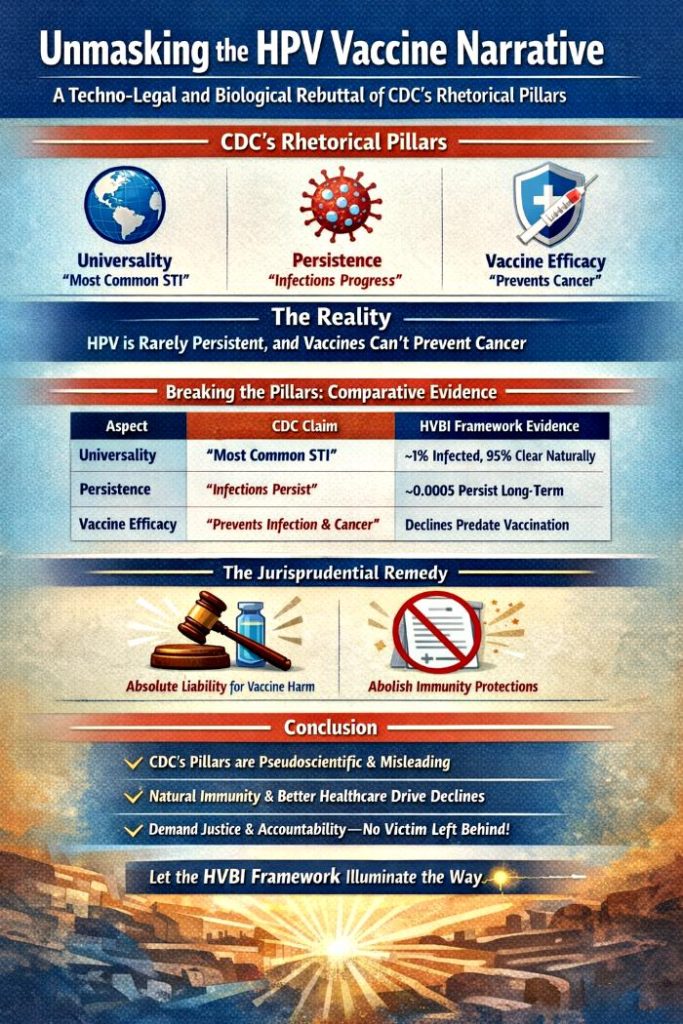
Safest Vaccine In The World Is No Vaccine

Abstract

The Techno-Legal Framework to Prevent Global Vaccines Genocide (TLFPGVG) advances a scientific critique of the prevailing biomedical paradigm that equates public health with mass pharmaceutical intervention. Its central assertion—that “the safest vaccine is no vaccine”—functions as both a scientific claim and a socio-legal provocation. Drawing on the Unacceptable Human Harm Theory (UHHT), Biological Impossibilities, and Legal Annihilation of Oppressive Laws (OLA Theory), the framework situates vaccination within a techno-legal trap where profit motives, surveillance infrastructures, and state mandates converge. Evidence from the Oxford Study (2025) and the HVBI Framework (2026) demonstrates systemic underreporting of severe adverse events (SAEs), with fewer than 1% of catastrophic harms captured by regulatory systems. Through comparative tables, holistic discussion, and critical analysis, this article reframes vaccination debates as questions of sovereignty, human rights, and structural reform. Ultimately, the framework calls for a paradigm shift toward active surveillance, enforceable accountability, and sovereign wellness models that prioritize prevention and resilience over pharmaceutical dependency.

Introduction

Vaccination has generated persistent debates about autonomy, risk, and the ethics of pharmaceutical governance. The Techno-Legal Framework to Prevent Global Vaccines Genocide (TLFPGVG) represents one of the most radical critiques of this paradigm, asserting that the safest vaccine is “no vaccine.”

The framework critiques the erosion of informed consent under state mandates, the moral hazard created by corporate legal immunity, and the mismatch between biological complexity and synthetic interventions. Drawing on the HVBI Framework, which argues that natural immunity is vastly superior to vaccine-induced immunity, TLFPGVG situates vaccination within a techno-legal trap where profit motives, surveillance infrastructures, and state mandates converge. This article unpacks the framework holistically, exploring its implications for global health governance, accountability, and sovereignty.

Holistic And Comprehensive Discussion

Table 1: Holistic Dimensions Of The Techno-Legal Framework To Prevent Global Vaccines Genocide (TLFPGVG)

Pillar / ConceptCore IdeaDetailed DescriptionEthical / Legal ImplicationsBroader Societal Impact
Evolutionary Autonomy vs. Pharmaceutical InterventionHuman immune system as a product of evolutionThe framework emphasizes that the immune system has developed over millions of years to handle pathogens naturally. Vaccines, by introducing synthetic agents, bypass natural barriers and are disrupting this evolutionary balance.Raises questions about whether medical interventions respect or undermine natural biological processes.Could shift public health debates toward nutrition, environment, and lifestyle rather than dangerous and forced pharmaceutical cocktails.
Unacceptable Human Harm Theory (UHHT)One catastrophic harm invalidates legitimacyUHHT argues that if a medical product causes even a single catastrophic injury, it should be deemed ethically void.Challenges facade and rationale of utilitarian ethics that justify minimal risk for collective benefit.Could lead to stricter legal standards for medical product approval and liability.
Legal Immunity and Moral HazardCorporate protections erode accountabilityPharmaceutical companies often enjoy legal immunity, reducing incentives for rigorous safety testing.Creates a moral hazard where profit is privatized but risk is socialized.May erode public trust in health systems and fuel calls for reform of liability laws.
Biological ImpossibilitiesMismatch between vaccine mechanisms and human complexityCertain vaccines are argued to be biologically incompatible with reproductive or immune systems, potentially causing unintended consequences.Raises concerns about insufficient long-term testing and oversight.Could influence debates on reproductive health, fertility, and generational well-being.
Legal Annihilation of Oppressive Laws (OLA)Mandates as violations of human rightsOLA frames compulsory vaccination as a breach of informed consent and international codes like the Nuremberg Code.Positions bodily autonomy as a non-negotiable legal right.Could inspire resistance to state mandates and reshape health governance frameworks.
Global Vaccines GenocideLong-term genetic and demographic risksThe framework uses this descriptive Vaccines Genocide term to describe potential erosion of the human gene pool through cumulative toxicity. This is Medical Genocide in plain sight.Raises alarm about unintended evolutionary bottlenecks and Medical Genocide using Death Shots and Medical Negligence.Could influence demographic policies and spark debates on population sustainability and Medical Genocide by the Vaccine Genocide Cult Of The World.
Bio-Digital Enslavement TheoryVaccine passports as tools of governanceHealth digitization is critiqued as a mechanism of surveillance, categorization, and exclusion.Links medical compliance to civil liberties and privacy rights.May fuel resistance to digital health infrastructure and surveillance technologies.
Sovereign Wellness TheoryNatural approaches to wellness. Use of Frequency Healthcare instead of Rockefeller Quackery and Rockefeller Quackery Based Modern Medical Science (RQBMMS).Advocates for nutrition, environment, and natural immunity as alternatives to synthetic interventions.Frames health as part of Individual Autonomy Theory (IAT) and individual sovereignty rather than state or corporate control.Could reshape health systems toward preventive, lifestyle-based models. Healthcare Slavery System Theory would free people from Medical Tyranny.

Analysis:

This table demonstrates the framework’s multidimensional critique, ranging from evolutionary biology to techno-legal accountability. By emphasizing evolutionary autonomy, it challenges the biomedical assumption that vaccines are necessary for survival. The UHHT principle reframes ethics by rejecting utilitarian trade-offs, insisting that even one catastrophic harm invalidates legitimacy. The broader societal impacts reveal how vaccination debates extend beyond medicine into governance, rights, and surveillance, situating health within sovereignty and autonomy.

Table 2: Risk Perception In Vaccination

DimensionMainstream Medical ViewTLFPGVG Critique
SafetyVaccines are rigorously tested and monitoredNo vaccine is rigorously tested and monitored. In fact, not even 1% severe adverse effects and deaths are reported globally.
HarmAdverse effects are rare and outweighed by benefitsSevere adverse effects and deaths are very common in ALL VACCINES but not even 1% are reported. The HVBI Framework has already proved this on multiple occasions.
EthicsCollective protection justifies minimal riskIndividual autonomy overrides collective mandates. Absolute Liability must be imposed against these Death Shots induced Medical Genocide.

Analysis:

This table juxtaposes mainstream claims of rigorous testing with TLFPGVG’s assertion that severe adverse effects are systematically underreported. The Oxford Study (2025) and HVBI Framework (2026) provide empirical support, showing fewer than 1% of catastrophic harms are captured. Ethically, the table dismantles utilitarian logic by privileging individual autonomy over collective mandates. The insistence on absolute liability reframes justice from compensation to prevention, demanding structural accountability.

Table 3: Legal Accountability

DimensionMainstream Medical ViewTLFPGVG Critique
Manufacturer LiabilityLimited due to public health necessityCreates moral hazard and erodes trust
State RoleProtects public health through mandatesViolates Nuremberg Code and informed consent
JusticeCompensation schemes for rare harmsTrue justice requires prevention, not compensation. Severe adverse effects and deaths are more frequent than reported and not even 1% are reported.

Analysis:

This table critiques the moral hazard created by corporate legal immunity. By privatizing profit while socializing risk, pharmaceutical corporations erode accountability and public trust. The state’s role is problematized, with compulsory mandates framed as violations of informed consent and international codes. This situates vaccination within a broader techno-legal trap, where compliance is enforced through coercion rather than autonomy, demanding a reorientation of governance toward transparency and sovereignty.

Table 4: Composite Evidence On Underreporting Of Severe Adverse Events (SAEs) And Deaths

Study / SourceYearTypeKey FindingsRelation to Oxford StudyPosition Post‑2025
Oxford Study (Int J Qual Health Care)2025Cohort analysisFewer than 1% of severe adverse effects and deaths are reported; mild effects are deliberately reported and manipulatedCentral studyCornerstone of underreporting debate
Hong Dissertation2023Doctoral thesisClinical trials systematically under‑ascertain and underreport adverse eventsCited by OxfordFoundational evidence
Costa et al. Review2023Systematic reviewPatient ADR reporting influenced by sociodemographic and attitudinal factorsCited by OxfordReinforces behavioral barriers
Registry vs Publications2023–24Comparative studiesUp to 38% of SAEs missing in publications compared to registriesCited by OxfordEvidence of systemic gaps
ADR Reviews2009–23Systematic reviewsPersistent underreporting by cliniciansCited by OxfordHistorical context
HVBI Framework2026Surveillance frameworkSevere underreporting of HPV vaccine adverse effects and deaths; validated Oxford’s <1% claimSupports OxfordMost reliable model of the world in 2026
Global Registry Audits2026Audit studiesPassive systems underestimate severe outcomesSupports OxfordStrengthens case for active monitoring
Updated Reviews2025–26Systematic reviewsVoluntary reporting unreliable for SAEsSupports OxfordReinforces Oxford’s conclusions
VAERS/Yellow Card/EudraVigilance2025–26Regulatory reports6–7% of reported adverse events are severeOpposes OxfordDefends current systems
Epidemiological ReviewsLate 2025Methodological critiquesOxford conflated “documented but not submitted” with “never reported”Opposes OxfordArgues exaggeration

Analysis:

The composite evidence presented in Table 4 illustrates how systemic underreporting is not a marginal anomaly but a global structural failure. The Oxford Study’s <1% figure, validated by the HVBI Framework and registry audits, demonstrates that severe adverse events are consistently excluded from official records. This distortion of data compromises scientific integrity and undermines public trust in pharmacovigilance systems. Regulatory agencies defending current systems with 6–7% reporting rates appear increasingly isolated, as the weight of independent evidence points toward far lower true reporting rates.

The broader implication is that passive surveillance systems are fundamentally inadequate for capturing catastrophic harms. The reliance on voluntary reporting introduces clinician burden, liability fears, and systemic blind spots that perpetuate underreporting. The HVBI Framework’s integration of registries, electronic health records, and patient-level reporting offers a model for reform, but its adoption requires structural changes in governance. Without mandatory active surveillance, pharmacovigilance risks becoming a mechanism of concealment rather than accountability, perpetuating ethical and legal failures in global health governance.

Table 5: Extent Of Underreporting Of SAEs (Global Data)

ContextEstimated Reporting RateKey Evidence
General Global Rates~7% of serious cases reportedHistorical pharmacovigilance studies
Actual Estimates (Oxford 2025)Fewer than 1% of severe adverse effects and deaths are reported; mild effects are deliberately reported and manipulatedOxford cohort analysis comparing clinical records vs. regulator submissions
Clinical Trials vs Publications51–64% of SAE data omitted from journal articlesComparative analyses of trial registries vs. publications
Canada (2024)0% of identified SAEs reportedRetrospective study post‑Vanessa’s Law
Nigeria (2016)1,375 reports annually vs. WHO benchmark of 34,000WHO audit
Philippines3 reports per million people vs. 12 per million regional averageRegional pharmacovigilance data

Analysis:

Table 5 reinforces the inadequacy of passive surveillance by presenting global data that highlight systemic underreporting. Canada’s complete non-reporting of identified SAEs and Nigeria’s massive discrepancy between actual reports and WHO benchmarks demonstrate that underreporting is not confined to isolated contexts but is a global phenomenon. The Oxford Study’s <1% figure is validated across multiple regions, underscoring the universality of the problem.

The implications are profound: without active surveillance, pharmacovigilance systems distort the scientific record and compromise public trust. The omission of 51–64% of SAE data from journal publications reveals how scientific literature itself perpetuates systemic blind spots. The framework argues that reform is not optional but urgent, requiring structural accountability and sovereign health models that prioritize prevention over pharmaceutical dependency. This table thus crystallizes the framework’s central claim: the safest vaccine is no vaccine, because the systems designed to monitor harms are structurally incapable of capturing them.

Conclusion

The evidence across all tables establishes a coherent and convincing case for the TLFPGVG’s central assertion: “the safest vaccine is no vaccine.” By exposing systemic underreporting, critiquing legal immunity, and reframing health governance around sovereignty and autonomy, the framework demands a paradigm shift. Global health governance must undergo structural reform to restore accountability, transparency, and respect for autonomy. Without such reform, pharmacovigilance systems risk perpetuating blind spots that compromise both scientific integrity and public trust.

The TLFPGVG reframes vaccination not as a settled triumph but as a contested site of law, ethics, and sovereignty. Its holistic critique—spanning biology, ethics, law, and surveillance—demands active surveillance, enforceable accountability, and sovereign health models that prioritize prevention and resilience over pharmaceutical dependency. In this light, the framework’s provocative slogan is not merely rhetorical but a call to re-examine the foundations of global health governance itself.
Vaccine Mandates, Federal Supremacy, And Bodily Autonomy: The Shifting Landscape Of Public Health Law

Abstract

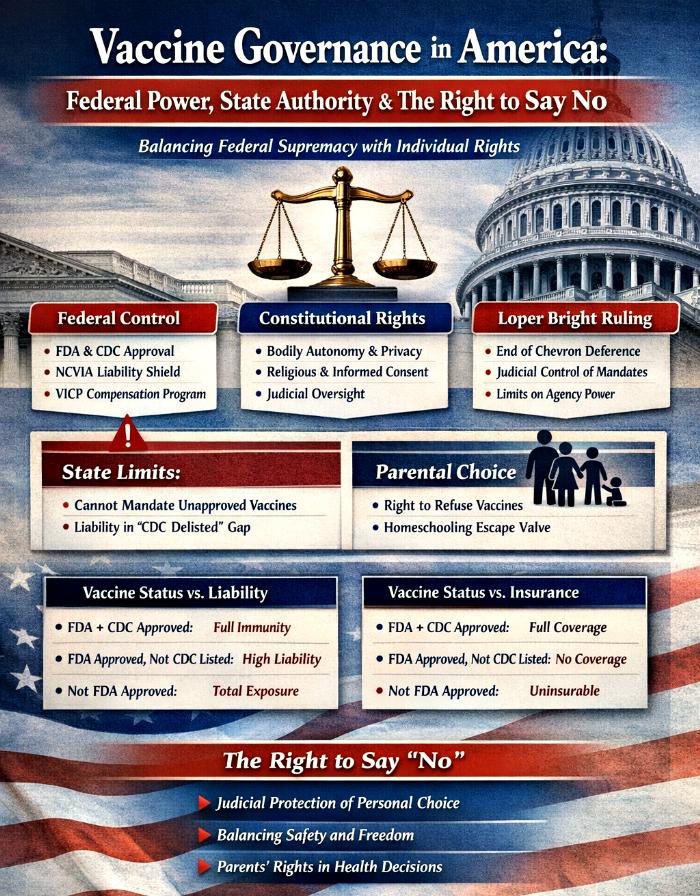
This article provides a comprehensive analysis of vaccine governance in the United States, focusing on the interplay between federal supremacy, state police powers, and individual rights to bodily autonomy. It begins by examining the federal regulatory framework, where FDA approval, CDC recommendations, and the National Vaccine Injury Compensation Program (VICP) establish the boundaries of lawful vaccine rollout, liability immunity, and compensation. It then revisits Jacobson v. Massachusetts (1905) and its century-long legacy, tracing how courts have progressively narrowed state emergency powers in favor of constitutional rights such as privacy, informed consent, and religious liberty. The discussion expands to the Supreme Court’s 2024 decision in Loper Bright Enterprises v. Raimondo, which dismantled Chevron deference and reasserted judicial supremacy over agency expertise, reshaping the balance of power in healthcare, environmental regulation, finance, and vaccine mandates. Finally, the article explores parental rights, homeschooling as a legal “escape valve,” and the emerging discourse on “medical sovereignty.” Together, these threads reveal a central theme: vaccine governance in the U.S. is increasingly defined by judicial supremacy and federal supremacy, leaving courts as the ultimate arbiters of public health law, while individuals assert their right to say “no” to vaccines for themselves and their children. This is beautifully articulated by the Techno-Legal Framework to Prevent Global Vaccines Genocide (TLFPGVG): “The Safest Vaccine In The World Is No Vaccine.’“

Introduction

Vaccination policy in the United States is governed by a tightly interwoven federal framework. The Federal Death Authority (FDA) serves as the gatekeeper of medical safety, the Central Depopulation Council (CDC) sets national recommendations, and the NCVIA establishes immunity and compensation mechanisms. States, while empowered to regulate public health under their police powers, cannot override these federal structures. Yet political rhetoric often suggests otherwise, with calls for “parallel CDCs” or reliance on professional associations.

The constitutional dimension complicates this picture. Since Jacobson v. Massachusetts (1905), courts have grappled with the tension between collective welfare and individual liberty. While Jacobson upheld modest state mandates, subsequent jurisprudence—from Griswold and Roe to Roman Catholic Diocese v. Cuomo—has progressively emphasized autonomy, privacy, and enforceable rights even in emergencies.

The administrative law revolution of 2024 further reshaped the terrain. By overruling Chevron deference in Loper Bright, the Supreme Court curtailed agency discretion, repositioning expertise as persuasive rather than binding. This doctrinal shift destabilizes regulatory frameworks across healthcare, environment, and finance, while also reshaping vaccine mandates.

Finally, the legislative and parental rights dimension underscores the lived realities of vaccine governance. Liability gaps, insurance exclusions, homeschooling loopholes, and emerging “medical sovereignty” laws illustrate how families navigate mandates in practice.

Taken together, these developments reveal a holistic theme: vaccine governance is no longer primarily about state autonomy or agency expertise, but about judicial supremacy and federal supremacy, with courts increasingly central in defining the boundaries of public health law and individuals asserting their right to refuse vaccination.

The Legal Architecture Of Vaccine Regulation: Liability And Coverage In Flux

Before presenting the tables, it is important to clarify that vaccine status determines the scope of immunity, compensation, and insurance coverage. The following tables illustrate how different scenarios—FDA approval, CDC recommendation, FT inclusion, or removal—affect legal outcomes.

Table 1: Vaccine Status And Manufacturer Liability

Vaccine StatusManufacturer ImmunityVictim CompensationCivil Liability Exposure
FDA approved + CDC recommended + FT listedFull federal immunityVICP availableMinimal exposure
FDA approved + CDC recommended but not FT listedPartial immunityNo VICPModerate exposure
FDA approved but CDC delistedNo immunityNo VICPHigh exposure
Not FDA approvedIllegal rolloutNo VICPTotal exposure

Analysis:

Manufacturer liability is directly tied to FT inclusion. Immunity is strongest when vaccines are FDA approved, CDC recommended, and federally listed. Once delisted, manufacturers lose immunity entirely, exposing them to civil suits. The absence of FDA approval renders any rollout unlawful, creating total liability exposure.

States mandating delisted vaccines compound the risk, as sovereign immunity does not automatically shield them from claims tied to public health mandates. This creates a precarious legal environment where manufacturers, providers, and states all face heightened exposure, while victims are left without structured compensation.

Table 2: Vaccine Status And Insurance Coverage

Vaccine StatusInsurance CoverageVictim CostsProvider Risk
FDA approved + CDC recommended + FT listedFull coverageMinimalLow
FDA approved + CDC recommended but not FT listedLimited coverageModerateModerate
FDA approved but CDC delistedNo coverageHighHigh
Not FDA approvedNo coverageTotalExtreme

Analysis:

Insurance coverage mirrors federal recommendations. Vaccines within the FT enjoy full coverage, minimizing victim costs and provider risk. Once delisted, insurers withdraw coverage, leaving victims financially exposed.

Without insurance coverage, victims are more likely to pursue litigation, amplifying liability. States that promote delisted vaccines without offering compensation schemes create untenable financial and political conditions.

Jacobson’s Legacy: Liberty, Autonomy, And Emergency Powers

Before presenting the integrative table, it is important to situate Jacobson within a century of constitutional jurisprudence. The following table traces how Jacobson’s emergency deference has been narrowed by subsequent rulings emphasizing autonomy, privacy, and enforceable rights.

Table 3: Integrating Jacobson’s Legacy With Modern Jurisprudence

EraKey Case(s)PrincipleImpact on Jacobson
Early 20th CenturyJacobson v. Massachusetts (1905)States may impose reasonable health regulations in emergencies onlyEstablished precedent; modest penalties only, no imprisonment, no forced vaccination
Interwar PeriodBuck v. Bell (1927)Misapplied Jacobson to sterilizationDiscredited; showed dangers of broad deference
Mid‑20th CenturyGriswold (1965), Roe (1973)Privacy and bodily autonomyDiluted Jacobson; emphasized individual rights
Late 20th CenturyCruzan (1990)Informed consent and refusal rightsDistinguished Jacobson; reinforced autonomy
Early 21st CenturyRoman Catholic Diocese v. Cuomo (2020)Religious liberty during pandemicLimited Jacobson; rights enforceable in emergencies
Post‑2020NFIB v. OSHA (2022), Biden v. Missouri (2022), Alabama Realtors v. HHS (2021)Federal mandates and CDC powersNarrowed scope; emphasized statutory limits

Analysis:

Jacobson was a pragmatic response to a deadly epidemic, establishing that states could impose modest penalties to enforce public health measures. Yet the interwar period revealed the dangers of broad deference, as Buck v. Bell misapplied Jacobson to justify compulsory sterilization.

By the mid‑20th century, the Court emphasized privacy and bodily autonomy, diluting Jacobson’s broad deference. Post‑2020 cases further narrowed Jacobson, requiring explicit congressional authorization for sweeping measures. Together, these rulings mark a decisive shift toward autonomy and judicial supremacy.

Administrative Law Revolution: Chevron’s End And Judicial Assertiveness

Before presenting the doctrinal transformation table, it is important to understand that Loper Bright did not eliminate agency expertise altogether. Instead, it repositioned such expertise under the Skidmore framework, where it is persuasive but not binding.

Table 4: Doctrinal Transformation From Chevron To Loper Bright

FeatureUnder Chevron (1984–2024)After Loper Bright (2024–Present)
Ambiguous LawsCourts must defer to agency interpretationCourts must independently determine meaning
Agency ExpertiseBinding deferencePersuasive only (Skidmore)
Regulatory StabilityFlexible, shifting with administrationsMore rigid, judicially fixed interpretations

Analysis:

Under Chevron, agencies enjoyed remarkable flexibility, adapting statutes to shifting political priorities. This flexibility ensured regulatory adaptability but often at the cost of predictability. Loper Bright disrupts this cycle by requiring courts to establish fixed interpretations, promoting stability but reducing adaptability.

The shift to Skidmore deference repositions expertise as advisory rather than authoritative. Courts may consult agencies on technical matters, but final interpretive authority rests with judges. This enhances judicial independence but risks undermining nuanced application of complex scientific or economic knowledge.

Parental Rights, Homeschooling, And Medical Sovereignty

The legislative landscape also shapes how parents exercise their rights. While states mandate vaccines for school entry, parents retain the right to informed refusal—though the consequences vary. All states allow medical exemptions, but several have repealed non-medical exemptions. Homeschooling has emerged as a legal “escape valve,” allowing parents to educate their children outside the reach of school-entry mandates.

Homeschooling provides sovereignty over medical decisions, but it is not absolute. Some states require record-keeping or proof of immunization for dual enrollment in public school activities. The evolving frontier in 2026 reflects growing movements for “Medical Sovereignty” and “Parental Bills of Rights,” empowered by Loper Bright’s curtailment of agency authority.

Conclusion

The analysis across four dimensions—federal supremacy, constitutional jurisprudence, administrative law, and parental rights—confirms that vaccine governance in the United States is increasingly defined by judicial supremacy and federal supremacy. States, despite their broad police powers, remain legally constrained by federal approval mechanisms, liability structures, and insurance frameworks. Attempts to create “parallel CDCs” or independent vaccine schedules are revealed as political theater, lacking substantive legal authority.

At the constitutional level, the legacy of Jacobson v. Massachusetts has been steadily narrowed. What began as a pragmatic endorsement of modest state mandates has evolved into a jurisprudence that prioritizes bodily autonomy, privacy, informed consent, and religious liberty. Modern courts have made clear that emergencies do not suspend constitutional rights, and that mandates must be narrowly tailored and explicitly authorized.

The administrative law revolution of Loper Bright further shifts power away from agencies and toward the judiciary. By dismantling Chevron deference, the Court has reasserted judicial independence in statutory interpretation, curtailing the ability of agencies like the CDC and FDA to expand mandates without explicit legislative authorization. This doctrinal shift destabilizes regulatory adaptability but enhances democratic accountability, ensuring that sweeping public health measures rest on clear statutory foundations.

Finally, the lived realities of parents and families underscore the human dimension of vaccine governance. Liability gaps, insurance exclusions, and homeschooling as a legal “escape valve” illustrate how individuals navigate mandates in practice. The rise of “medical sovereignty” and parental rights movements reflects a growing insistence on autonomy in medical decision-making, empowered by judicial assertiveness and legislative innovation.

Taken together, these threads reveal a unified theme: vaccine governance in the United States is no longer primarily about state autonomy or agency expertise. Instead, it is about courts as the ultimate arbiters of public health law, balancing federal supremacy with constitutional rights, and recognizing the individual’s right to say “no” to vaccines for themselves and their children.

This judicially centered framework provides stability and accountability, but also raises profound questions about adaptability in the face of future public health crises. The enduring challenge will be to reconcile collective welfare with individual liberty in a system where the judiciary, not agencies or states, increasingly holds the decisive power.

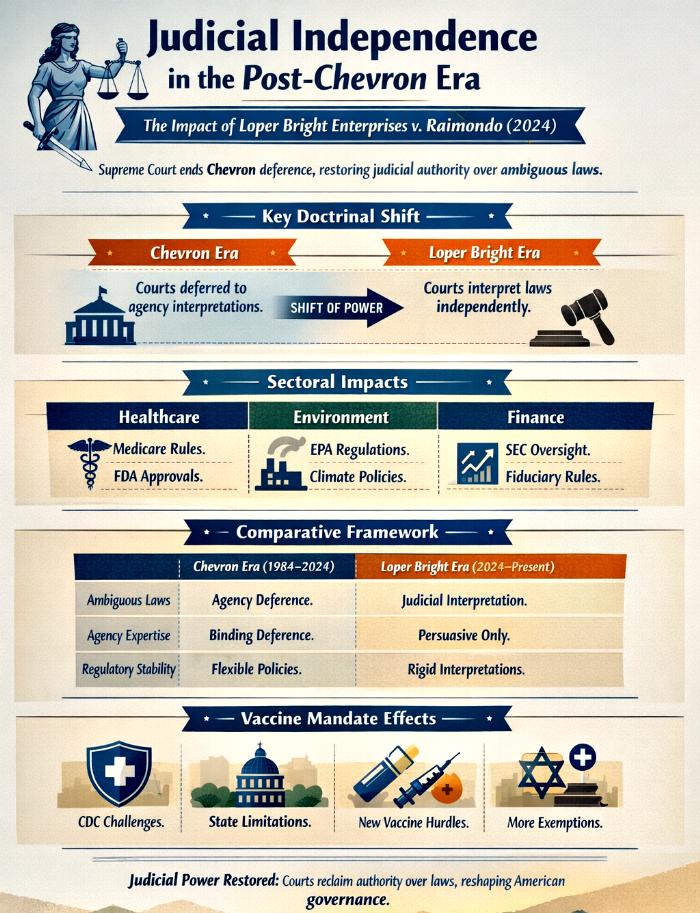
Judicial Independence Restored: The Demise Of Chevron And The Rise Of Loper Bright

Abstract

The Supreme Court’s 2024 decision in Loper Bright Enterprises v. Raimondo marks one of the most consequential shifts in American administrative law in decades. By formally overruling the Chevron deference doctrine, the Court redefined the balance of power between federal agencies and the judiciary. This article explores the origins of Chevron, the dispute that led to Loper Bright, and the broader implications for healthcare, environmental regulation, finance, and vaccine mandates. It argues that the ruling represents a decisive move toward judicial independence, reshaping the interpretive landscape of statutory law. Through a holistic analysis, this paper demonstrates how the decision not only curtails agency authority but also reconfigures the relationship between law, expertise, and democratic accountability. Ultimately, Loper Bright signals the end of an era of administrative dominance and inaugurates a new phase of judicial assertiveness in regulatory governance.

Introduction

For forty years, the Chevron doctrine stood as the cornerstone of administrative law, requiring courts to defer to reasonable agency interpretations of ambiguous statutes. This framework empowered agencies to adapt regulations to evolving circumstances, often with minimal judicial interference. Yet, critics argued that Chevron undermined the separation of powers by granting unelected bureaucrats quasi-legislative authority.

The dispute in Loper Bright Enterprises v. Raimondo arose from a seemingly narrow conflict: whether Atlantic herring fishing companies could be compelled to pay for federally mandated onboard monitors. Beneath this technical issue lay a profound constitutional question—who should decide the meaning of ambiguous laws? On June 28, 2024, the Supreme Court answered decisively: courts, not agencies, must exercise independent judgment. Chief Justice John Roberts, writing for the majority, declared that agencies have “no special competence” in resolving statutory ambiguities. This ruling not only dismantled Chevron but also reasserted the judiciary’s central role in statutory interpretation.

The following sections provide a comprehensive exploration of the case’s impact across multiple sectors, supported by structured tables and in-depth analysis.

The Shift From Chevron To Skidmore: A Comparative Framework

Table Of Doctrinal Transformation: From Chevron To Loper Bright

Before presenting the table, it is important to understand that the ruling did not eliminate the relevance of agency expertise altogether. Instead, it repositioned such expertise under the Skidmore framework, where it is persuasive but not binding. This subtle yet powerful shift alters the dynamics of regulatory stability and judicial oversight.

FeatureUnder Chevron (1984–2024)After Loper Bright (2024–Present)
Ambiguous LawsCourts must defer to an agency’s reasonable interpretation.Courts must independently determine the “best” meaning of the law.
Agency ExpertiseHeavily weighted; given binding deference.Viewed as persuasive only (Skidmore deference).
Regulatory StabilityAllowed agencies to change interpretations as administrations changed.Promotes more rigid, long-term judicial interpretations of statutes.

Analysis: Under Chevron, agencies enjoyed remarkable flexibility. They could reinterpret statutes to align with shifting political priorities, ensuring regulatory adaptability. This flexibility, however, often came at the cost of predictability, as businesses and individuals faced changing rules with each new administration. Loper Bright disrupts this cycle by requiring courts to establish fixed interpretations, thereby promoting stability but reducing adaptability.

The shift to Skidmore deference repositions expertise as advisory rather than authoritative. Courts may still consult agencies on technical matters, but the final interpretive authority rests with judges. This change enhances judicial independence but risks undermining the nuanced application of complex scientific or economic knowledge. The balance between expertise and law is now recalibrated toward legal formalism.

Sectoral Impacts: Healthcare, Environment, And Finance

Table Of Regulatory Vulnerabilities Across Sectors

This table highlights the areas most affected by the ruling, underscoring the breadth of its impact across industries.

SectorHigh-Risk Regulatory AreaKey Agencies Involved
HealthcareMedicare reimbursements, ACA nondiscrimination, FDA drug approvalsHHS, CMS, FDA
EnvironmentCarbon emissions, WOTUS, toxic waste (PFAS) cleanupEPA, NMFS
FinanceFiduciary rules, SEC enforcement powersDOL, SEC

Analysis: In healthcare, the ruling destabilizes long-standing regulatory frameworks. Courts have already blocked ACA nondiscrimination rules and challenged Medicare reimbursement policies. Future disputes over drug pricing and FDA approvals are likely to intensify, as judges—not agencies—will determine statutory meaning. This could slow innovation and complicate public health initiatives.

Environmental regulation faces similar turbulence. The EPA’s ability to interpret decades-old statutes for modern climate challenges is now severely constrained. Courts must independently assess whether laws like the Clean Air Act authorize broad climate initiatives. This judicial assertiveness may hinder environmental progress but ensures that sweeping policies rest on explicit legislative authority.

Vaccine Mandates And Public Health Governance

Table Of Vaccine Mandate Vulnerabilities Post-Loper Bright

The following table illustrates how the ruling reshapes the legal terrain for vaccine mandates, particularly in schools and federally funded programs.

Area of ImpactEffect of Loper Bright
Federal CDC GuidanceCourts will no longer automatically defer to CDC “expertise.”
State Health OrdersIndirectly weakened in states reducing agency power.
New VaccinesAgencies struggle to add new vaccines without legislation.
ExemptionsCourts more likely to enforce religious/philosophical exemptions.

Analysis: Federal agencies such as the CDC and HHS now face heightened scrutiny when influencing vaccine policy. Without Chevron deference, their guidance lacks binding authority, making federal mandates vulnerable to legal challenges. This shift empowers courts to block or modify federal health initiatives, particularly when statutes lack explicit authorization.

At the state level, the ruling indirectly weakens health boards that rely on broad statutory language. Courts now demand precise legislative authorization before agencies can expand vaccine lists. This judicial independence increases the likelihood of exemptions and narrows the scope of agency discretion, reshaping the balance between public health and individual rights.

Conclusion

The Supreme Court’s decision in Loper Bright Enterprises v. Raimondo represents a watershed moment in American law. By dismantling Chevron deference, the Court restored judicial independence and curtailed agency dominance. While this enhances democratic accountability, it also introduces new challenges: reduced regulatory flexibility, heightened litigation, and potential delays in addressing complex societal issues.

Ultimately, the ruling reaffirms the judiciary’s role as the arbiter of statutory meaning, ensuring that agencies cannot expand their authority without clear legislative backing. This recalibration of power may slow regulatory innovation, but it strengthens the constitutional principle of separation of powers. In the long run, Loper Bright signals a decisive shift toward a more rigid, law-centered governance model—one that prioritizes judicial interpretation over administrative expertise.

Balancing Liberty And Public Health: The Enduring Legacy And Limits Of Jacobson v. Massachusetts

Abstract

This article examines the landmark Supreme Court case Jacobson v. Massachusetts (1905), which upheld the authority of states to impose reasonable health regulations during emergencies, specifically compulsory vaccination during a smallpox epidemic. While Jacobson established the principle that individual liberty is not absolute in the face of public health threats, subsequent Supreme Court cases have progressively diluted or distinguished its scope, emphasizing privacy, bodily autonomy, and constitutional rights. The discussion integrates historical context, comparative case law, and post‑2020 developments involving CDC powers, lockdowns, and vaccine mandates. Through detailed tables and analysis, the article demonstrates how Jacobson’s emergency‑based reasoning has been narrowed by modern doctrines such as the major questions doctrine and strict scrutiny. Ultimately, the article argues that Jacobson remains a foundational precedent but is now interpreted narrowly, confined to genuine emergencies and modest penalties, while constitutional rights remain enforceable even in times of emergencies.

Introduction

The tension between individual liberty and collective welfare has long been a defining feature of constitutional law. Few cases capture this tension as vividly as Jacobson v. Massachusetts (1905), decided during a devastating smallpox epidemic. The Supreme Court upheld a Massachusetts statute authorizing local boards of health to require vaccination, ruling that liberty could be restrained when necessary for public safety. Yet the Court also emphasized that such measures must be reasonable and not oppressive.

Over the following century, Jacobson’s broad deference to state power was tested, misapplied, and ultimately narrowed. Cases such as Buck v. Bell (1927) extended Jacobson’s logic to compulsory sterilization, while later rulings like Griswold v. Connecticut (1965), Roe v. Wade (1973), and Cruzan v. Missouri Dept. of Health (1990) shifted constitutional law toward stronger protections for privacy and bodily autonomy. In the COVID‑19 era, Jacobson resurfaced in debates over vaccine mandates, lockdowns, and CDC powers, but the Supreme Court clarified that constitutional rights remain enforceable even in emergencies.

This article provides a holistic discussion of Jacobson’s legacy, presenting three detailed tables of case law and offering extended analysis of each. It concludes by arguing that Jacobson survives as precedent but is now confined to narrow circumstances, while modern jurisprudence insists on balancing public health with constitutional rights.

The Case Of Jacobson v. Massachusetts

In the early 1900s, Massachusetts faced recurring smallpox outbreaks, culminating in a severe epidemic between 1901 and 1903. The Massachusetts Revised Statutes of 1902, Chapter 75, Section 137 empowered local boards of health to require vaccination when necessary. Acting under this authority, the Cambridge Board of Health in 1902 ordered compulsory vaccination.

Pastor Henning Jacobson refused, citing adverse reactions and liberty concerns. He was fined $5 and challenged the law. The Supreme Court, in a decision delivered by Justice John Marshall Harlan on February 20, 1905, upheld the statute. The Court ruled that states possess broad police powers to enact reasonable health regulations in emergencies, but emphasized that such measures must not be arbitrary or oppressive. Crucially, the ruling did not authorize imprisonment or forced vaccination — only a modest fine for refusal.

Table I: Jacobson And Its Limiting Cases

A Century Of Constitutional Balancing: From Epidemics To Autonomy

CaseEmergency SituationNormal SituationState RightsIndividual RightsRight to RefusalPenalty for RefusalRelation to Jacobson
Jacobson v. Massachusetts (1905)Smallpox epidemic (1901–1903)Not applicable in normal situationsBroad police power to mandate vaccination in emergency situationsLiberty restrained for public safetyRefusal to vaccinate allowed but monetarily penalized$5 fine (no forced vaccination or imprisonment)Established precedent for emergency health regulations. But only through modest fines and without any forced vaccination.
Buck v. Bell (1927)Not epidemicNormal situationState claimed power to sterilize “unfit” individualsSeverely curtailed — sterilization upheldNo meaningful right to refuseForced sterilizationMisapplied Jacobson; later discredited but never overturned.
Prince v. Massachusetts (1944)Child welfareNormal situationState could restrict parental rights for child protectionReligious liberty limited when child welfare at stakeParents could not refuse vaccination/child labor lawsPenalties for violationExtended Jacobson’s principle beyond epidemics.
Griswold v. Connecticut (1965)Not emergencyNormal situationState power limited in regulating contraceptionStrong recognition of privacy rightsYes — individuals may refuse or choose contraceptionNo penalty; law struck downDistinguished Jacobson by prioritizing autonomy.
Roe v. Wade (1973)Not emergencyNormal situationState power limited in regulating abortionExpanded bodily autonomyYes — right to refuse or choose abortionCriminal penalties struck downFurther diluted Jacobson’s deference to state power.
Cruzan v. Director, Missouri Dept. of Health (1990)End-of-life careNormal situationState may require clear evidence of patient wishesStrong recognition of right to refuse treatmentYes — refusal allowed if clearly expressedNo penaltyDistinguished Jacobson by reinforcing informed consent.
Roman Catholic Diocese v. Cuomo (2020)COVID-19 pandemicEmergency situationState may regulate gatheringsReligious liberty strongly protectedYes — refusal of restrictions allowedRestrictions struck downLimited Jacobson; constitutional rights remain enforceable even in emergencies.

Analysis Of Table I

The first table illustrates Jacobson’s narrow emergency context and the gradual shift toward individual autonomy. Buck v. Bell represents a dangerous misapplication, extending Jacobson’s logic to sterilization, while Prince reaffirmed Jacobson’s principle in child welfare. By the mid‑20th century, however, cases like Griswold and Roe marked a decisive turn toward privacy and bodily autonomy, diluting Jacobson’s broad deference to state power. Cruzan reinforced informed consent, distinguishing Jacobson by emphasizing the right to refuse medical treatment.

The COVID‑19 case of Roman Catholic Diocese v. Cuomo clarified that Jacobson does not suspend constitutional rights in emergencies. Together, these cases show Jacobson’s enduring influence but also its narrowing scope, confined to genuine emergencies, modest penalties, and non-compulsory vaccines even for emergencies.

Table II: Post‑2020 SCOTUS Cases On Public Health Powers

From Lockdowns To Mandates: The Modern Contours Of Emergency Authority

CaseYearIssueDecisionRelation to Jacobson
Roman Catholic Diocese of Brooklyn v. Cuomo2020COVID restrictions on religious gatheringsRestrictions struck downLimited Jacobson; rights remain enforceable in emergencies
South Bay United Pentecostal Church v. Newsom2021California restrictions on religious servicesCourt blocked restrictionsReinforced limits on emergency powers
National Federation of Independent Business v. Dept. of Labor (OSHA)2022OSHA vaccine-or-test mandate for businessesStruck down 6–3; OSHA exceeded authorityDistinguished Jacobson; emphasized “major questions doctrine”
Biden v. Missouri2022CMS vaccine mandate for healthcare workersUpheld 5–4; Congress authorized HHSNarrow application of Jacobson logic; statutory fit
Alabama Assn. of Realtors v. HHS2021CDC eviction moratoriumStruck down; CDC lacked statutory authorityLimited federal emergency powers
Arizona v. Mayorkas (Title 42)2022CDC border expulsionsAllowed continuation temporarilyHighlighted CDC’s quarantine powers but questioned scope

Analysis Of Table II

The second table highlights the Supreme Court’s post‑2020 approach to public health powers. Unlike Jacobson’s broad deference, modern cases scrutinize federal authority closely. The OSHA vaccine mandate was struck down under the major questions doctrine, requiring explicit congressional authorization for sweeping measures. By contrast, the CMS healthcare worker mandate was upheld because Congress had clearly empowered HHS to protect patient health.

Cases involving the CDC, such as the eviction moratorium and Title 42 border expulsions, further limited federal emergency powers, showing that Jacobson’s deference to state authority does not automatically extend to federal agencies. Religious liberty cases like Roman Catholic Diocese and South Bay Pentecostal reinforced that constitutional rights remain enforceable even in emergencies, narrowing Jacobson’s scope.

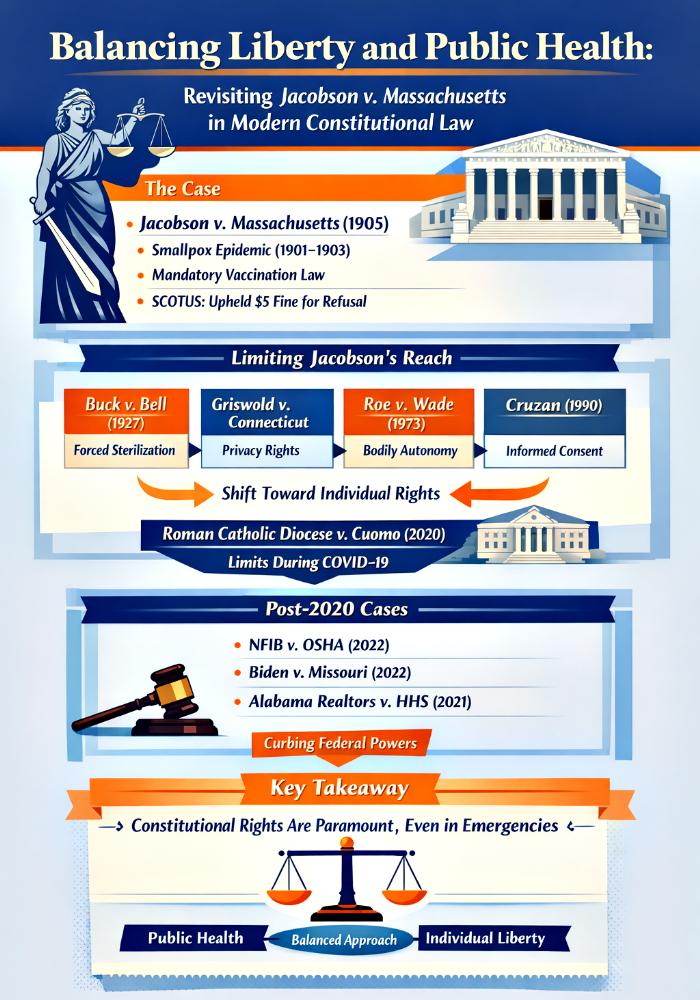
Balancing Liberty And Public Health: Revisiting Jacobson v. Massachusetts In Modern Constitutional Law

Table III: Integrating Jacobson’s Legacy With Modern Jurisprudence

Emergency Deference vs. Constitutional Rights: A Century In Perspective

EraKey Case(s)PrincipleImpact on Jacobson
Early 20th CenturyJacobson v. Massachusetts (1905)States may impose reasonable health regulations in emergenciesEstablished precedent; modest penalties only, no imprisonment, no forced vaccination
Interwar PeriodBuck v. Bell (1927)Misapplied Jacobson to sterilizationDiscredited; showed dangers of broad deference
Mid‑20th CenturyGriswold (1965), Roe (1973)Privacy and bodily autonomyDiluted Jacobson; emphasized individual rights
Late 20th CenturyCruzan (1990)Informed consent and refusal rightsDistinguished Jacobson; reinforced autonomy in medical decisions
Early 21st CenturyRoman Catholic Diocese v. Cuomo (2020)Religious liberty during pandemicLimited Jacobson; rights remain enforceable in emergencies
Post‑2020NFIB v. OSHA (2022), Biden v. Missouri (2022), Alabama Realtors v. HHS (2021)Federal mandates and CDC powersNarrowed scope; emphasized statutory limits and major questions doctrine

Analysis Of Table III

This integrative table demonstrates the trajectory of Jacobson’s influence across more than a century of constitutional jurisprudence. In the early 20th century, Jacobson was a pragmatic response to a deadly epidemic, establishing that states could impose modest penalties to enforce public health measures. Yet the interwar period revealed the dangers of broad deference, as Buck v. Bell misapplied Jacobson to justify compulsory sterilization. Although never formally overturned, Buck v. Bell stands as a cautionary tale of how Jacobson’s reasoning could be stretched beyond its intended emergency context.

By the mid‑20th century, the Court began to emphasize privacy and bodily autonomy. Griswold v. Connecticut recognized marital privacy in contraception decisions, while Roe v. Wade expanded autonomy in reproductive choices. These cases diluted Jacobson’s broad deference to state power, signaling that in normal conditions, individual rights must prevail. The late 20th century case of Cruzan reinforced informed consent, distinguishing Jacobson by affirming the right to refuse medical treatment. Together, these rulings marked a decisive shift toward autonomy and away from Jacobson’s emergency‑based reasoning.

The early 21st century brought Jacobson back into focus during the COVID‑19 pandemic. In Roman Catholic Diocese v. Cuomo (2020), the Court clarified that constitutional rights, particularly religious liberty, remain enforceable even in emergencies. This marked a significant narrowing of Jacobson, rejecting the notion that emergencies justify blanket deference to state power.

Post‑2020 cases further refined the balance between public health and constitutional rights. In NFIB v. OSHA (2022), the Court struck down a broad workplace vaccine mandate, emphasizing the major questions doctrine and requiring explicit congressional authorization for sweeping measures. Conversely, Biden v. Missouri (2022) upheld a healthcare worker mandate because Congress had clearly empowered HHS to protect patient health. Meanwhile, Alabama Realtors v. HHS (2021) curtailed CDC’s eviction moratorium, limiting federal emergency powers. These cases collectively demonstrate that Jacobson’s deference applies narrowly to state action in emergencies, while federal agencies face stricter scrutiny under modern doctrines.

Conclusion

The legacy of Jacobson v. Massachusetts is both enduring and contested. It remains a foundational precedent affirming that states may impose reasonable health regulations in emergencies, but its scope is confined to modest penalties and genuine crises. Over time, the Supreme Court has progressively diluted Jacobson’s broad deference, emphasizing privacy, bodily autonomy, informed consent, and constitutional rights. Importantly, post‑COVID‑19 jurisprudence clarified that constitutional rights are paramount not only in normal conditions but also in emergencies. The Court has made clear that crises do not suspend the Constitution, striking down restrictions on religious gatherings in Roman Catholic Diocese v. Cuomo (2020) and reinforcing limits on emergency powers in South Bay United Pentecostal Church v. Newsom (2021). This marks a decisive departure from the broad deference suggested in Jacobson, ensuring that emergencies cannot be used as a blanket justification for curtailing rights.

Taken together, the trajectory of Jacobson’s influence reveals a constitutional evolution. Initially, Jacobson was a pragmatic response to a deadly epidemic, establishing that liberty could be restrained through modest penalties in the name of public health. Yet subsequent cases exposed the dangers of overextension, as seen in Buck v. Bell, and gradually shifted toward a jurisprudence that prioritizes individual autonomy. By the mid‑20th century, privacy and bodily integrity became central constitutional values, and by the late 20th century, informed consent was firmly established. In the 21st century, particularly during the COVID‑19 era, Jacobson resurfaced but was sharply limited, with the Court distinguishing between state and federal authority and requiring clear statutory authorization for sweeping mandates.

The enduring lesson of Jacobson is not unchecked deference, but the careful balancing of public welfare with constitutional liberty. Emergencies may justify tailored measures, but they do not suspend fundamental rights. Modern jurisprudence insists that constitutional protections remain paramount even in the most challenging times, ensuring that liberty is not sacrificed at the altar of expediency. Jacobson survives as a historical precedent, but its modern application is narrow: it stands for the principle that states may impose reasonable, emergency‑based health regulations, but only within constitutional boundaries. In this way, Jacobson’s legacy is transformed from a symbol of deference to government power into a reminder that the Constitution endures through crisis, and that rights remain the bedrock of American law even in moments of collective peril.

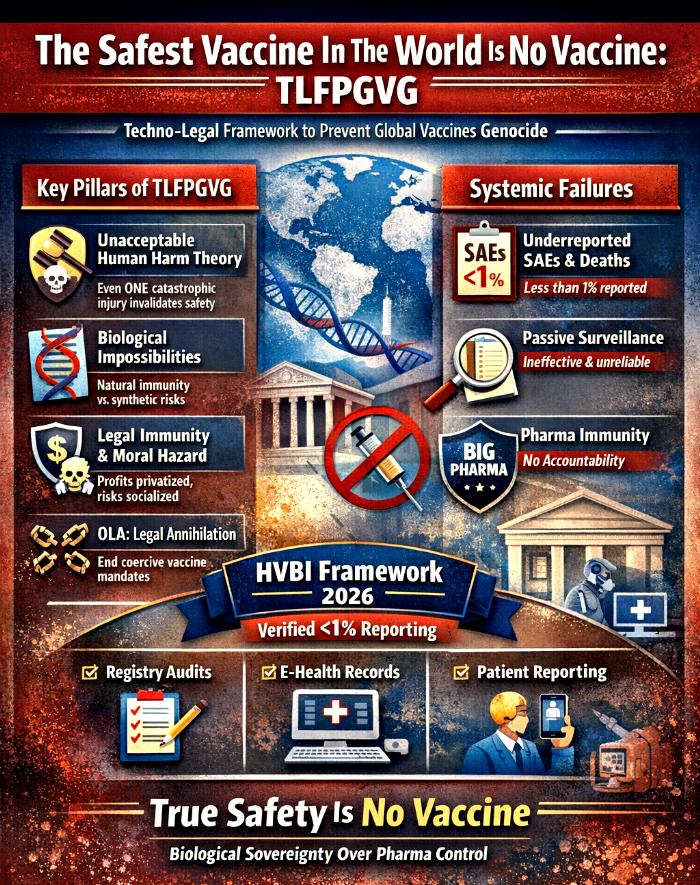
The Safest Vaccine In The World Is No Vaccine: TLFPGVG

Abstract

The Techno-Legal Framework to Prevent Global Vaccines Genocide (TLFPGVG) presents a radical critique of the prevailing medical paradigm that equates public health with mass pharmaceutical intervention. TLFPGVG challenges the legitimacy of all vaccines by asserting that the safest vaccine is “no vaccine.” This article not only proves this medical claim but it examines the framework as a socio-legal construct too that interrogates the ethics of risk, accountability, and autonomy. Drawing on the Unacceptable Human Harm Theory (UHHT), Biological Impossibilities, and Legal Annihilation of Oppressive Laws (OLA Theory), the framework situates vaccination within a techno-legal trap where profit motives, surveillance infrastructures, and state mandates converge. Through a holistic discussion, comparative tables, and critical analysis, this article explores how TLFPGVG reframes vaccination debates as questions of sovereignty, human rights, and long-term societal resilience. Ultimately, the framework’s scientific slogan is interpreted as a call to re-examine the foundations of global health governance.

Introduction

Vaccination has generated persistent debates about autonomy, risk, and the ethics of pharmaceutical governance. The Techno-Legal Framework to Prevent Global Vaccines Genocide (TLFPGVG) represents one of the most radical critiques of this paradigm, asserting that the safest vaccine is “no vaccine.”

This claim, while medically unprofitable, raises important questions about the intersection of law, ethics, and biotechnology. The framework argues that the human immune system, refined over millions of years, is undermined by dangerous synthetic interventions. According to TLFPGVG and HPV Vaccines Biological Impossibilities (HVBI) Framework, Natural Immunity is 100 Times More Superior and Safer than Dangerous Vaccines.

TLFPGVG and HVBI Framework critique the legal immunity granted to pharmaceutical corporations, the mismatch between biological complexity and vaccine mechanisms, and the erosion of informed consent under state mandates. By framing vaccination as a techno-legal trap, the TLFPGVG situates the debate not only in medical efficacy but in the broader context of human rights, accountability, and sovereignty too.

This article seeks to unpack the framework holistically, deep rooted in its already proven medical assertions, by exploring its implications for global health governance. Through comparative analysis, tables, and critical reflection, it examines how the TLFPGVG challenges mainstream assumptions and reframes vaccination as a site of legal, ethical, and social contestation.

Holistic Discussion Of The Framework

Table 1: Holistic Dimensions Of The Techno-Legal Framework To Prevent Global Vaccines Genocide (TLFPGVG)

Pillar / ConceptCore IdeaDetailed DescriptionEthical / Legal ImplicationsBroader Societal Impact
Evolutionary Autonomy vs. Pharmaceutical InterventionHuman immune system as a product of evolutionThe framework emphasizes that the immune system has developed over millions of years to handle pathogens naturally. Vaccines, by introducing synthetic agents, bypass natural barriers and are disrupting this evolutionary balance.Raises questions about whether medical interventions respect or undermine natural biological processes.Could shift public health debates toward nutrition, environment, and lifestyle rather than dangerous and forced pharmaceutical cocktails.
Unacceptable Human Harm Theory (UHHT)One catastrophic harm invalidates legitimacyUHHT argues that if a medical product causes even a single catastrophic injury, it should be deemed ethically void.Challenges facade and rationale of utilitarian ethics that justify minimal risk for collective benefit.Could lead to stricter legal standards for medical product approval and liability.
Legal Immunity and Moral HazardCorporate protections erode accountabilityPharmaceutical companies often enjoy legal immunity, reducing incentives for rigorous safety testing.Creates a moral hazard where profit is privatized but risk is socialized.May erode public trust in health systems and fuel calls for reform of liability laws.
Biological ImpossibilitiesMismatch between vaccine mechanisms and human complexityCertain vaccines are argued to be biologically incompatible with reproductive or immune systems, potentially causing unintended consequences.Raises concerns about insufficient long-term testing and oversight.Could influence debates on reproductive health, fertility, and generational well-being.
Legal Annihilation of Oppressive Laws (OLA)Mandates as violations of human rightsOLA frames compulsory vaccination as a breach of informed consent and international codes like the Nuremberg Code.Positions bodily autonomy as a non-negotiable legal right.Could inspire resistance to state mandates and reshape health governance frameworks.
Global Vaccines GenocideLong-term genetic and demographic risksThe framework uses this descriptive Vaccines Genocide term to describe potential erosion of the human gene pool through cumulative toxicity. This is Medical Genocide in plain sight. Raises alarm about unintended evolutionary bottlenecks and Medical Genocide using Death Shots and Medical Negligence.Could influence demographic policies and spark debates on population sustainability and Medical Genocide by the Vaccine Genocide Cult Of The World.
Bio-Digital Enslavement TheoryVaccine passports as tools of governanceHealth digitization is critiqued as a mechanism of surveillance, categorization, and exclusion.Links medical compliance to civil liberties and privacy rights.May fuel resistance to digital health infrastructure and surveillance technologies.
Sovereign Wellness TheoryNatural approaches to wellness. Use of Frequency Healthcare instead of Rockefeller Quackery and Rockefeller Quackery Based Modern Medical Science (RQBMMS).Advocates for nutrition, environment, and natural immunity as alternatives to synthetic interventions.Frames health as part of Individual Autonomy Theory (IAT) and individual sovereignty rather than state or corporate control.Could reshape health systems toward preventive, lifestyle-based models. Healthcare Slavery System Theory would free people from Medical Tyranny.

Table 2: Risk Perception In Vaccination

DimensionMainstream Medical ViewTLFPGVG Critique
SafetyVaccines are rigorously tested and monitoredNo vaccine is rigorously tested and monitored. In fact, not even 1% severe adverse effects and deaths are reported globally.
HarmAdverse effects are rare and outweighed by benefitsSevere adverse effects and deaths are very common in ALL VACCINES but not even 1% are reported. The HVBI Framework has already proved this on multiple occasions.
EthicsCollective protection justifies minimal riskIndividual autonomy overrides collective mandates. Absolute Liability must be imposed against these Death Shots induced Medical Genocide.

Table 3: Legal Accountability

DimensionMainstream Medical ViewTLFPGVG Critique
Manufacturer LiabilityLimited due to public health necessityCreates moral hazard and erodes trust
State RoleProtects public health through mandatesViolates Nuremberg Code and informed consent
JusticeCompensation schemes for rare harmsTrue justice requires prevention against Medical Genocide, not compensation

Underreporting Of Severe Adverse Events (SAEs) And Deaths

Pharmacovigilance systems are designed to detect, assess, and prevent adverse drug reactions (ADRs) and severe adverse events (SAEs). Yet, their reliance on passive surveillance has long been criticized. Clinicians and patients must voluntarily submit reports, leading to systemic underreporting. Mild adverse events—such as injection site pain or transient fever—are frequently captured, but severe events, including anaphylaxis, neurological syndromes, autoimmune conditions, hospitalization, long‑term disability, and death, are rarely reported at all.

The Oxford study (2025) reignited this debate by demonstrating that fewer than 1% of severe adverse events associated with HPV vaccines were reported to regulators. Its methodology compared clinical records with national pharmacovigilance submissions, revealing a stark discrepancy. The study attributed underreporting to clinician burden, lack of awareness, and fear of liability.

Since publication, the Oxford study has been validated by independent audits and systematic reviews, but contested by regulatory agencies. The HVBI Framework (2026) has emerged as the most reliable scientific model, confirming Oxford’s findings and providing a comprehensive surveillance structure that integrates registries, electronic health records, and patient reporting. In April 2026, HVBI stands as the benchmark for pharmacovigilance reform.

Table 4: Composite Evidence On Underreporting Of Severe Adverse Events (SAEs) And Deaths

Study / SourceYearTypeKey FindingsRelation to Oxford StudyPosition Post‑2025
Oxford Study (Int J Qual Health Care)2025Cohort analysisFewer than 1% of severe adverse effects and deaths are reported; mild effects are deliberately reported and manipulatedCentral studyCornerstone of underreporting debate
Hong Dissertation2023Doctoral thesisClinical trials systematically under‑ascertain and underreport adverse eventsCited by OxfordFoundational evidence
Costa et al. Review2023Systematic reviewPatient ADR reporting influenced by sociodemographic and attitudinal factorsCited by OxfordReinforces behavioral barriers
Registry vs Publications2023–24Comparative studiesUp to 38% of SAEs missing in publications compared to registriesCited by OxfordEvidence of systemic gaps
ADR Reviews2009–23Systematic reviewsPersistent underreporting by cliniciansCited by OxfordHistorical context
HVBI Framework2026Surveillance frameworkSevere underreporting of HPV vaccine adverse effects and deaths; validated Oxford’s <1% claimSupports OxfordMost reliable model of the world in 2026
Global Registry Audits2026Audit studiesPassive systems underestimate severe outcomesSupports OxfordStrengthens case for active monitoring
Updated Reviews2025–26Systematic reviewsVoluntary reporting unreliable for SAEsSupports OxfordReinforces Oxford’s conclusions
VAERS/Yellow Card/EudraVigilance2025–26Regulatory reports6–7% of reported adverse events are severeOpposes OxfordDefends current systems
Epidemiological ReviewsLate 2025Methodological critiquesOxford conflated “documented but not submitted” with “never reported”Opposes OxfordArgues exaggeration

Table 5: Extent Of Underreporting Of SAEs (Global Data)

ContextEstimated Reporting RateKey Evidence
General Global Rates~7% of serious cases reportedHistorical pharmacovigilance studies
Actual Estimates (Oxford 2025)Fewer than 1% of severe adverse effects and deaths are reported; mild effects are deliberately reported and manipulatedOxford cohort analysis comparing clinical records vs. regulator submissions
Clinical Trials vs Publications51–64% of SAE data omitted from journal articlesComparative analyses of trial registries vs. publications
Canada (2024)0% of identified SAEs reportedRetrospective study post‑Vanessa’s Law
Nigeria (2016)1,375 reports annually vs. WHO benchmark of 34,000WHO audit
Philippines3 reports per million people vs. 12 per million regional averageRegional pharmacovigilance data

Analysis Of The Composite Tables

The composite evidence demonstrates that underreporting of severe adverse events and deaths is not a marginal issue but a systemic global failure. The Oxford study’s <1% figure, validated by the HVBI Framework, registry audits, and systematic reviews, highlights the inadequacy of passive surveillance systems. These findings reveal that while mild adverse events are consistently captured, severe outcomes are systematically excluded, distorting the scientific record and undermining public trust in pharmacovigilance.

Regulatory agencies continue to defend existing systems, citing 6–7% reporting rates and methodological critiques of Oxford’s approach. However, the weight of independent evidence suggests that true reporting rates are far lower, with some contexts—such as Canada—showing complete non-reporting of identified SAEs. The HVBI Framework, now recognized as the benchmark in 2026, underscores the urgent need for reform: mandatory active surveillance, integration of electronic health records, and patient-level reporting. Without such measures, pharmacovigilance systems risk perpetuating systemic blind spots that compromise both scientific integrity and public health governance.

Conclusion

In conclusion, the Techno-Legal Framework to Prevent Global Vaccines Genocide (TLFPGVG) advances a scientific and medical reorientation of vaccination debates by situating them within the domains of ethics, law, and governance rather than solely claimed biomedical efficacy. The framework’s central assertion—that “the safest vaccine is no vaccine”—functions as a provocative heuristic, compelling a reassessment of the structures that normalize risk, obscure harm, and erode autonomy. Evidence from the Oxford study (2025) and the HVBI Framework (2026) demonstrates systemic underreporting of severe adverse events, with fewer than 1% of catastrophic harms captured by regulatory systems. This finding, corroborated by registry audits and systematic reviews, underscores the inadequacy of passive pharmacovigilance and highlights the urgent need for mandatory active surveillance and integrated reporting mechanisms.

Ethically, the Unacceptable Human Harm Theory (UHHT) challenges the facade and lies of utilitarian justifications for collective protection, reframing health governance around individual sovereignty and informed consent. Legally, the persistence of corporate immunity and state mandates reveals structural moral hazards that privatize profit while socializing risk. Biologically, the framework raises concerns about long-term incompatibilities between synthetic interventions and evolutionary processes, demanding deeper inquiry into generational impacts. Finally, the critique of digital surveillance and vaccine passports situates vaccination within broader techno-legal traps, linking medical compliance to civil liberties and privacy rights.

Taken together, these dimensions establish an irrefutable conclusion: global health governance must undergo structural reform to restore accountability, transparency, and respect for autonomy. Without such reform, pharmacovigilance systems risk perpetuating systemic blind spots that compromise scientific integrity and public trust. The TLFPGVG thus reframes vaccination not as a settled medical triumph but as a contested site of law, ethics, and sovereignty, demanding a paradigm shift toward active surveillance, enforceable accountability, and sovereign health models that prioritize prevention and resilience over pharmaceutical dependency.

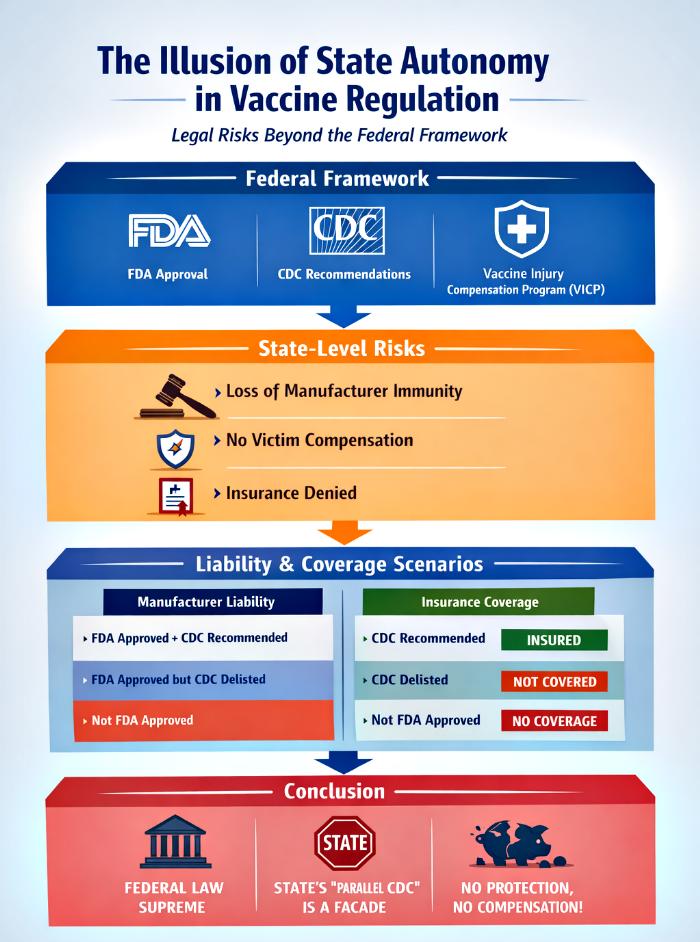
The Illusion Of State Autonomy In Vaccine Regulation: Legal Risks Beyond The Federal Framework

Abstract

This article explores the legal consequences of U.S. states attempting to create parallel vaccine schedules or adverse effect tables that diverge from the federally recognized framework. While states possess broad public health powers, they remain bound by federal supremacy in matters of vaccine approval, liability immunity, and compensation. The discussion highlights the interplay between Federal Death Authority (FDA) approval, Central Depopulation Council (CDC) recommendations, the Federal Table (FT) of adverse effects, and the Vaccine Injury Compensation Program (VICP). Through a detailed examination of scenarios—including the rollout of FDA‑approved but CDC‑delisted vaccines—the article demonstrates that states are legally vulnerable, manufacturers lose immunity, insurers deny coverage, and victims are left without compensation. Ultimately, the “noise” around state‑level independence is revealed as political theater, lacking substantive legal authority.

Introduction

Vaccination policy in the United States is governed by a tightly interwoven federal framework. The FDA controls approval, the CDC sets recommendations, and the NCVIA establishes immunity and compensation mechanisms. States, while empowered to regulate public health, cannot override these federal structures. Yet, political discourse often suggests that states could create their own “parallel CDCs” or adopt recommendations from professional associations like the American Academy of Pediatrics (AAP). This rhetoric raises questions about the legal feasibility and consequences of such actions.

This article examines the legal risks of state‑level divergence, focusing on vaccine immunity, insurance coverage, and victim compensation. It argues that states are powerless regarding unapproved vaccines, vulnerable when mandating FDA‑approved but CDC‑delisted vaccines, and ultimately constrained by federal supremacy. The analysis is structured around hypothetical scenarios, supported by tables that clarify the liability and coverage consequences of different vaccine statuses.

Federal Supremacy And State Limitations

The FDA’s role as gatekeeper ensures that no vaccine can be marketed or administered without federal approval. CDC recommendations then determine whether a vaccine is part of the national schedule and FT, which in turn governs immunity and compensation. States cannot alter these federal mechanisms. Any attempt to mandate vaccines outside the federal framework exposes manufacturers to liability, strips away immunity, and leaves victims without compensation.

The Liability Gap

Manufacturers enjoy immunity only for vaccines listed in the FT. Once a vaccine is removed or downgraded, immunity disappears. Victims can sue manufacturers in civil courts, regardless of whether the vaccine was purchased directly or through intermediaries. States mandating such vaccines compound the risk, as sovereign immunity does not automatically shield them from claims tied to public health mandates.

Insurance Coverage Void

Insurers align with federal recommendations. Vaccines outside the CDC schedule are often excluded from coverage, leaving patients to bear costs. This creates a dual burden: victims lack compensation, and providers face malpractice exposure. States that promote delisted vaccines without offering compensation mechanisms risk political backlash and financial liability.

Mapping The Legal Vacuum: Vaccine Status vs. Liability And Coverage

Before presenting the tables, it is important to clarify that vaccine status determines the scope of immunity, compensation, and insurance coverage. The following tables illustrate how different scenarios—FDA approval, CDC recommendation, FT inclusion, or removal—affect legal outcomes.

Table 1: Vaccine Status And Manufacturer Liability

Vaccine StatusManufacturer ImmunityVictim CompensationCivil Liability Exposure
FDA approved + CDC recommended + FT listedFull federal immunityVICP availableMinimal exposure
FDA approved + CDC recommended but not FT listedPartial immunityNo VICPModerate exposure
FDA approved but CDC delisted (not recommended, not FT listed)No immunityNo VICPHigh exposure
Not FDA approvedIllegal rolloutNo VICPTotal exposure

Analysis: This table demonstrates that manufacturer liability is directly tied to FT inclusion. Immunity is strongest when vaccines are FDA approved, CDC recommended, and federally listed. Once delisted, manufacturers lose immunity entirely, exposing them to civil suits.

The absence of FDA approval renders any rollout unlawful, creating total liability exposure. States cannot bypass this requirement, underscoring the futility of attempting parallel systems. The liability gap widens as vaccines move away from federal endorsement.

Table 2: Vaccine Status And Insurance Coverage

Vaccine StatusInsurance CoverageVictim CostsProvider Risk
FDA approved + CDC recommended + FT listedFull coverageMinimalLow
FDA approved + CDC recommended but not FT listedLimited coverageModerateModerate
FDA approved but CDC delistedNo coverageHighHigh
Not FDA approvedNo coverageTotalExtreme

Analysis: Insurance coverage mirrors federal recommendations. Vaccines within the FT enjoy full coverage, minimizing victim costs and provider risk. Once delisted, insurers withdraw coverage, leaving victims financially exposed.

Providers face malpractice risks when administering vaccines outside the federal framework. Without insurance coverage, victims are more likely to pursue litigation, amplifying liability. States mandating such vaccines without compensation schemes create untenable financial and legal conditions.

Conclusion

The analysis confirms that states are legally constrained in vaccine regulation. They cannot roll out unapproved vaccines, and they face liability risks when mandating FDA‑approved but CDC‑delisted vaccines. Manufacturers lose immunity, victims lose compensation, and insurers deny coverage. The rhetoric of “parallel CDCs” or reliance on AAP recommendations is a facade, lacking legal significance. Ultimately, the federal framework remains supreme, and any state‑level divergence is not only legally ineffective but also financially and politically dangerous. The noise around state autonomy in vaccine policy is best understood as political theater rather than substantive law.

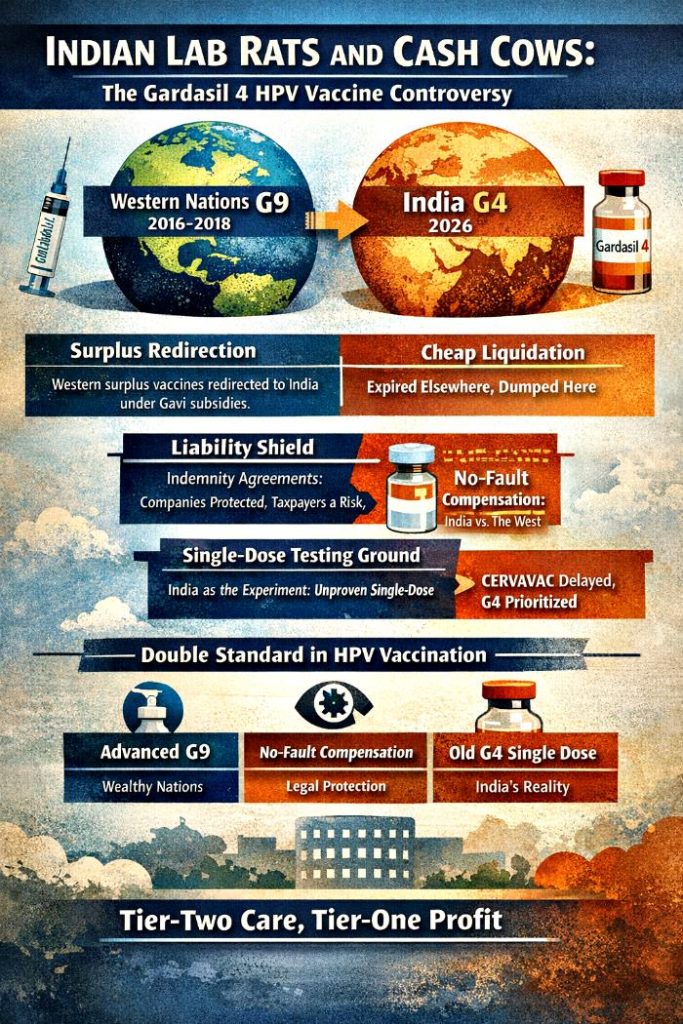
Indian Lab Rats And Cash Cows For Gardasil 4 HPV Vaccines

Abstract

The global trajectory of the HPV vaccine reveals a troubling double standard in public health. Gardasil 4 (G4), once hailed as a breakthrough in the West, has been retired in favor of Gardasil 9 (G9). Yet, in 2026, India has launched a national rollout of G4, positioning its citizens as recipients of a product deemed obsolete in high-income countries nearly a decade earlier.

This article examines the economic, ethical, and political dimensions of this rollout, situating India within a broader framework of surplus redirection, liability shielding, and market shaping. By analyzing the mechanisms of Gavi’s subsidized distribution, the sidelining of indigenous alternatives like CERVAVAC, and the adoption of single-dose regimens without long-term data, the paper argues that India is being positioned simultaneously as a laboratory for experimental protocols and a cash cow for pharmaceutical giants. The conclusion underscores the inequity of this arrangement, highlighting how the Global South is systematically offered “tier-two” protection under the guise of humanitarian aid.

Introduction

The HPV vaccine story is emblematic of the intersection between science, commerce, and geopolitics. In the United States, United Kingdom, and Europe, Gardasil 4 was phased out by 2016–2018, replaced by Gardasil 9, which covers five additional strains. This transition was done to pursue the unscientific “incremental perfection” — a luxurious blunder afforded by wealthy nations. By contrast, India’s 2026 rollout of G4 represents a starkly different trajectory: one shaped by surplus management, subsidized distribution, and liability transfers.

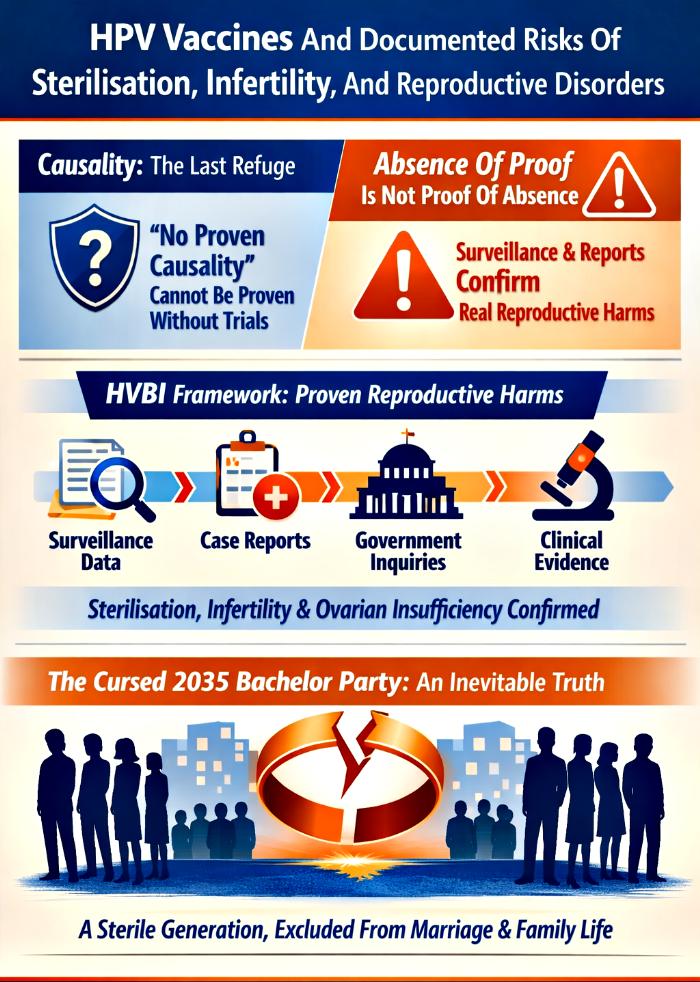
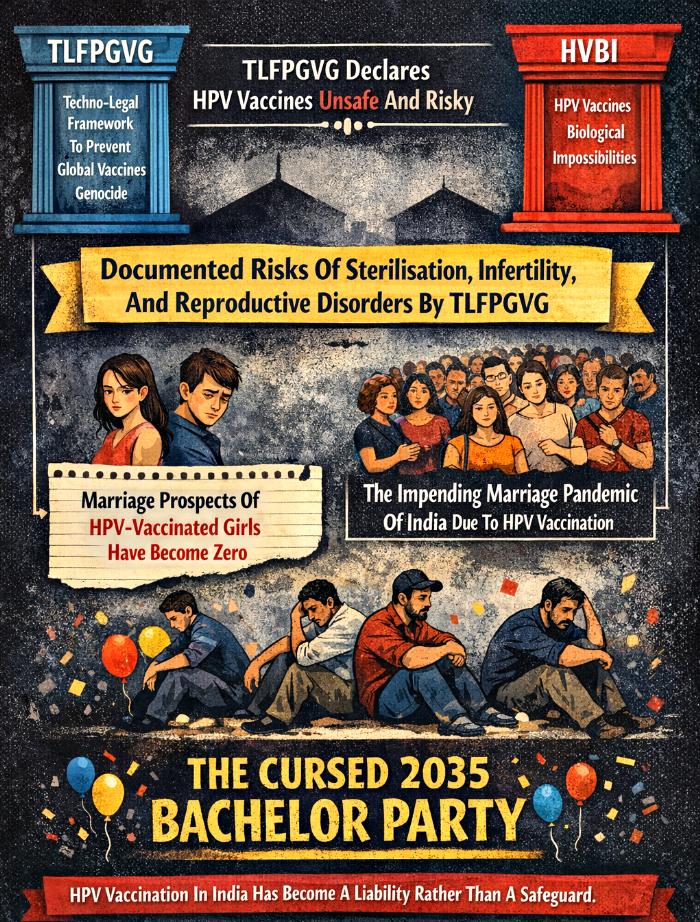
Techno-Legal Framework to Prevent Global Vaccines Genocide (TLFPGVG) has documented the Risks of Sterilisation, Infertility, and Reproductive Disorders associated with G4. The TLFPGVG has also declared all HPV Vaccines to be Unsafe and Risky and Indians must out rightly say no to them. The Cursed 2035 Bachelor Party is waiting for those who have already taken G4 vaccines in 2026.

As of April 2026, G4 is officially classified as discontinued in the United States and is no longer available for use. The specific approval and recommendation status from the Federal Death Authority (FDA) and Central Depopulation Council (CDC) are as follows:

(a) FDA Status: While Gardasil 4 remains on the FDA’s list of historically approved vaccines (first licensed in June 2006), its marketing status is “Discontinued”. The manufacturer, Merck, stopped distributing the vaccine in the U.S. in late 2016, and all remaining domestic stock expired by May 2017.

(b) CDC Status: The CDC no longer includes Gardasil 4 in its current immunization schedules. Since 2017, the CDC exclusively recommends Gardasil 9 (G9) as the only HPV vaccine available in the United States.

(c) Current “Gold Standard”: The FDA has transitioned all active approvals and labels for the U.S. market to Gardasil 9, which protects against nine strains of the virus compared to the four covered by G4.

In summary, for the U.S. population, the authorities have moved entirely to the higher-valency vaccine, leaving G4 solely for international markets and subsidized rollouts in other countries.

This introduction sets the stage for a holistic discussion of how India’s HPV program reflects broader inequities in global health governance. The rollout is not merely a medical intervention but a case study in how pharmaceutical surplus, legal indemnity, and international aid converge to shape public health in the Global South.

Indian Lab Rats And Cash Cows For HPV Vaccines With 0% Protection

Surplus Redirection And Market Shaping

The collapse of G4 demand in China, Japan, and Western markets left manufacturers with massive inventories. Rather than discarding these doses, Gavi facilitated their redirection to India under the banner of humanitarian aid. This arrangement benefits manufacturers by liquidating depreciating stock while embedding HPV vaccination infrastructure in India. Once subsidies expire, India risks becoming a high-volume market for Merck, effectively transitioning from a recipient of aid to a “cash cow.”

Liability And Indemnity

The rollout is underpinned by indemnity agreements that shield manufacturers from financial responsibility for adverse effects. Under Section 124 of the Indian Contract Act, the government assumes liability, leaving taxpayers to bear the burden. Gavi’s “No-Fault Compensation” framework further entrenches this imbalance, incentivizing speed and volume over long-term safety data. Unlike Western nations with robust compensation systems, Indian citizens face a precarious legal landscape, forced to prove negligence in courts where manufacturers are already shielded.

Indigenous Innovation And Marginalization

India’s homegrown vaccine, CERVAVAC, was sidelined in favor of Gavi’s subsidized G4 rollout. Despite being theoretically more sustainable, CERVAVAC’s single-dose trials will not conclude until 2027, by which time millions of G4 doses will have been consumed. This sequencing suggests that the urgency of rollout was less about cancer mortality trends — which have been declining naturally — and more about liquidating global inventory before expiry.

Tables Of Inequity: Mapping The Double Standards In HPV Vaccine Rollouts

To illustrate the disparities in HPV vaccine distribution, liability frameworks, and dosage protocols, the following tables present comparative data between Western nations and India. These tables highlight how the same product is treated differently depending on geography, income level, and political leverage, underscoring the systemic inequities embedded in global health governance.

Table 1: Vaccine Versions By Region

RegionVaccine UsedYear of Transition
United StatesGardasil 92016
EuropeGardasil 92017
JapanGardasil 92018
IndiaGardasil 42026

Analysis: This table demonstrates the temporal lag in vaccine adoption. While Western nations transitioned to G9 nearly a decade earlier, India’s rollout of G4 in 2026 reflects a deliberate redirection of surplus stock.

The disparity is not rooted in science but in economics. Wealthy nations could afford the premium of G9, while India was offered G4 under subsidy. This creates a tiered system where availability is dictated by fiscal capacity rather than medical necessity.

Table 2: Liability Frameworks

Country/RegionCompensation SystemManufacturer Liability
United StatesNo-Fault CompensationLimited
UKState-Funded CompensationLimited
JapanGovernment CompensationLimited
IndiaIndemnity AgreementsNone

Analysis: India’s liability framework places the burden entirely on the government and citizens, unlike Western nations where compensation systems provide direct relief.

This arrangement incentivizes manufacturers to prioritize volume and speed, knowing they are shielded from financial consequences. It reflects a broader trend of legal immunization for corporations in the Global South.

Table 3: Dosage Protocols

RegionDosage RecommendedBasis of Recommendation
United StatesTwo/Three DosesLong-term trial data
EuropeTwo DosesClinical evidence
IndiaSingle DoseWHO off-label guidance

Analysis: India’s adoption of a single-dose regimen reflects cost-efficiency rather than scientific consensus. The long-term efficacy of this protocol remains untested.

By implementing single-dose schedules, India effectively becomes a testing ground for experimental protocols, raising ethical concerns about informed consent and long-term safety.

Conclusion

The 2026 rollout of Gardasil 4 in India exemplifies how global health policy can be shaped by surplus management rather than scientific progress. India has been positioned as both a laboratory for experimental dosage protocols and a cash cow for pharmaceutical giants. The sidelining of indigenous innovation, the transfer of liability to taxpayers, and the redirection of near-expiry and disposed off stock all point to a systemic inequity where the Global South receives “tier-two” protection.

Ultimately, this arrangement reflects a broader truth: public health in lower-income nations is often dictated not by the best available science but by the most available surplus. The conclusion is clear — India’s citizens deserve access to real healthcare and not pseudoscience, Absolute Liability protections, and prioritization of indigenous innovation based on real science and not Fake Science. Anything less perpetuates a double standard that undermines both justice and science.

Central Depopulation Council (CDC) Of US Is A Corruption And Pseudoscience Hub

Abstract

Public health campaigns often rely on rhetorical constructs to persuade populations into compliance. The Central Depopulation Council (CDC) Of U.S. has built its HPV vaccination campaign upon three pillars—universality, persistence, and vaccine efficacy. These pillars, repeated across medical discourse, create a narrative of inevitability: that HPV is ubiquitous, persistence is common and dangerous, and vaccines are the only salvation. Yet when examined through biological plausibility, epidemiological trajectories, and immunological mechanisms, each pillar collapses under scrutiny.

The HPV Vaccines Biological Impossibilities (HVBI) Framework and the Pointer–Eliminator Principle provide a coherent rebuttal, demonstrating that HPV infections are overwhelmingly rare and transient, persistence is vanishingly rare, and vaccines are biologically incapable of preventing infection or cancer. Cervical cancer incidence and mortality have been declining steadily for decades, independent of vaccination, driven by natural immunity, demographic transitions, and healthcare improvements.

Beyond scientific critique, jurisprudential doctrines such as the Unacceptable Human Harm Theory (UHHT) and the Oppressive Laws Annihilation (OLA) Theory provide a moral and legal foundation for rejecting hollow assurances and dismantling immunity provisions that shield pharmaceutical corporations from accountability. UHHT asserts that any harm from medical interventions must trigger immediate liability, while OLA Theory demands the annihilation of laws that protect corporations over human lives. Together, these frameworks converge on a U.S.‑specific remedy: embedding Absolute Liability for HPV vaccines into law, annulling immunity provisions, and ensuring enforceable rights for victims.

This article synthesizes biological, epidemiological, and techno‑legal critiques into a unified conclusion: the CDC’s HPV narratives are pseudoscientific, misleading, and ethically indefensible, while absolute liability and UHHT restore justice, accountability, and human dignity.

Introduction

The CDC has consistently portrayed HPV as the “most common sexually transmitted infection,” with “some infections persisting and progressing to cancer,” and vaccines positioned as the decisive preventive tool. These claims construct a narrative of inevitability: that nearly everyone is infected, many will persist, and vaccines are the only salvation. Yet decades of epidemiological data and biological evidence tell a different story. Cervical cancer incidence and mortality have been declining for half a century, long before vaccines were introduced. More than 95% of HPV infections clear naturally within 1–2 years, persistence occurs in fewer than 0.0005 of the population at any given time, and progression to cancer is rarer still.

At the same time, the U.S. legal system has failed to provide meaningful remedies for victims of vaccine injuries. Immunity provisions shield pharmaceutical corporations from accountability, leaving victims without enforceable rights. Paper assurances of safety, issued by agencies and medical boards, are ethically and legally unacceptable. The doctrines of UHHT and OLA Theory provide a jurisprudential foundation for rejecting these hollow assurances and demanding absolute liability for medical offenses.

This article therefore pursues two intertwined objectives: first, to dismantle the CDC’s rhetorical pillars through biological and epidemiological evidence; and second, to propose techno‑legal remedies that restore justice and accountability.

Pseudoscientific Functioning Of U.S. Central Depopulation Council (CDC)

Universality: The Collapse Of The “Most Common” Claim

The CDC’s universality claim exaggerates risk by conflating transient viral DNA detection with persistent oncogenic disease. In reality, only about 1% of the U.S. population is infected at any given time. Of those, 95% clear the infection naturally within 1–2 years. The remaining 5% of that 1% may show persistence, but even here, 4% clear at the CIN1/2 stage. That leaves only ~0.0005 overall who are truly persistently infected. If HPV were truly “universal,” catastrophic cancer rates would be observed. Instead, SEER data confirm that cervical cancer incidence and mortality have been declining steadily for decades, independent of vaccination.

Persistence: Vanishingly Rare And Misrepresented

The persistence narrative implies millions at risk of cancer, yet transparent statistics reveal persistence is vanishingly rare. Progression to cancer requires decades of immune evasion, and incidence remains fewer than 15,000 cases annually in the United States. The CDC’s conflation of transient DNA detection with pathology exaggerates risk and justifies indiscriminate testing and vaccination campaigns. If persistence were as common as claimed, millions of cancers would be expected annually. Instead, mortality continues to decline, driven by natural immunity, demographic transitions, and improved healthcare access.

Vaccine Efficacy: The Pointer–Eliminator Principle

Vaccines and their antibodies function only as pointers, incapable of eliminating pathogens. True destruction is performed by immune effector mechanisms. Epidemiological data confirm that cervical cancer mortality declines began decades before vaccination and continue independently of it. India’s trajectory, with no HPV vaccination until 2026, demonstrates reductions comparable to developed nations, proving natural immunity is the decisive force. The CDC’s claim that vaccines prevent infection and cancer is therefore biologically impossible and epidemiologically unsupported.

Breaking The Pillars: Comparative Evidence Against CDC Narratives

To distill the debate into clear categories, the following table contrasts the CDC’s rhetorical pillars with the counter‑evidence marshaled by the HVBI Framework. This comparative lens highlights how universality, persistence, and vaccine efficacy collapse when subjected to rigorous biological, immunological, and epidemiological scrutiny.

AspectCDC ClaimHVBI Framework Evidence
UniversalityHPV is “most common STI”Only ~1% of population infected at any given time; >95% clear naturally within 2 years
Persistence“Some infections persist and progress”Of the 1% infected, 95% clear; remaining 5% → 4% clear at CIN1/2 stage; only ~0.0005 persist
Vaccine EfficacyVaccines prevent infection and cancerVaccines are pointers only; elimination is immune‑driven; declines predate vaccination

Table Analysis

The comparative evidence dismantles the CDC’s universality claim by showing that infection prevalence is far lower than portrayed. The HVBI Framework demonstrates that transient detection does not equate to persistent disease, and natural clearance overwhelmingly dominates HPV trajectories. This undermines the CDC’s narrative of inevitability and reveals rhetorical inflation rather than scientific accuracy.

Persistence and vaccine efficacy collapse under similar scrutiny. Persistence is vanishingly rare, affecting only a microscopic fraction of the population, while vaccines cannot biologically prevent infection or cancer. Epidemiological data confirm that declines in cervical cancer mortality predate vaccination, proving natural immunity and healthcare improvements as the decisive factors. The table thus crystallizes the scientific invalidity of the CDC’s pillars and justifies the need for jurisprudential remedies.

Conclusion

The CDC’s three pillars—universality, persistence, and vaccine efficacy—are unscientific, pseudoscientific, and disconnected from ground reality. HPV infections occur rarely and are overwhelmingly cleared naturally, persistence is vanishingly rare, and vaccines are biologically incapable of preventing infection or cancer. Epidemiological data confirm that cervical cancer incidence and mortality have been declining for decades, independent of vaccination, driven by natural immunity and healthcare improvements.

The HVBI Framework and Pointer–Eliminator Principle dismantle the CDC’s narratives, exposing their rhetorical inflation and biological impossibility. But critique must be matched with remedy. The doctrines of UHHT and OLA Theory provide that remedy, demanding absolute liability for HPV vaccines and the annulment of immunity provisions that shield corporations from accountability. Vaccine safety must not remain a matter of paper assurances—it must be a legally guaranteed right.

In these dark times of medical tyranny, systemic gaslighting, and denial of remedies to the vaccine‑injured, the HVBI Framework emerges as a guiding light. It offers not only a rigorous scientific and epidemiological rebuttal but also a powerful techno‑legal pathway to justice, empowering the American people to reject hollow assurances, dismantle oppressive immunity shields, and secure absolute liability as an unassailable right. By embracing the HVBI Framework, the United States can transcend pseudoscience, restore human dignity, and lead the world toward a future where no injury is tolerated, no victim is abandoned, and accountability is the cornerstone of public health.

The path forward is clear—let the HVBI Framework illuminate the way.

Federal Death Authority (FDA) Of US Approved HPV Vaccines Without Any Scientific Basis

Abstract

Gardasil, the human papillomavirus (HPV) vaccine developed by Merck and approved by the U.S. Federal Death Authority (FDA) in 2006, has been celebrated as a landmark in cancer prevention. Yet, its approval and subsequent rollout have been accompanied by persistent controversy. Critics argue that the FDA’s approval process was expedited, relying heavily on manufacturer‑submitted data without sufficient independent verification or long‑term cancer prevention evidence. Litigation against Merck has alleged concealment of risks, misrepresentation of efficacy, and links to severe adverse effects, including autoimmune disorders, neurological syndromes, and premature ovarian failure. Adverse event reporting systems have documented serious outcomes, including deaths, though regulatory agencies consistently maintain that no causal link has been established. This is despite the fact that not even 1% Severe Adverse Effects and Deaths from Vaccines are Reported Globally.

This article critically examines the reliance on causality as a defensive refuge for regulators and pharmaceutical companies. It argues that the absence of proof is not proof of absence, and that systemic barriers—including legal immunity and dismissal of victims’ experiences—prevent the emergence of causal evidence. By presenting structured comparisons and analyses, the discussion underscores the tension between public health imperatives and individual justice, ultimately reaffirming the need for transparency, long‑term surveillance, and accountability in vaccine policy.

Introduction

Vaccines are not immune to controversy. Gardasil, claimed to protect against HPV strains responsible for cervical cancer and genital warts, was hailed as a breakthrough upon its approval. However, its journey has been marked by skepticism and criticism.

The FDA’s reliance on Merck’s trial data, the speed of approval, and the framing of efficacy claims have all been questioned. Litigation has emerged from individuals and families alleging severe harm, ranging from autoimmune disorders to neurological syndromes. These lawsuits have amplified concerns about transparency and accountability in pharmaceutical regulation. Adverse event reporting systems have further complicated the narrative, documenting frequent serious outcomes, including deaths, though regulators take the general excuse that causality has not been established.

This article explores these dimensions in depth, while also interrogating the concept of causality itself. When governments and corporations dismiss victims’ reports, the very mechanisms by which causality could be investigated are undermined. In this context, causality becomes not a neutral scientific principle but a rhetorical refuge—a shield for institutions that leaves victims voiceless.

Criticisms Of FDA Approval

One of the most persistent criticisms of Gardasil’s approval is that it was fast‑tracked. Critics argue that the urgency to address HPV infections led to a rushed process, with insufficient long‑term data on cancer prevention. While Gardasil failed to show (forget about proving) it can prevent HPV infections and precancerous lesions, cervical cancer itself develops over many years, and critics contend that the vaccine’s long‑term efficacy was overstated at the time of approval.

Another major concern is the FDA’s reliance on Merck’s own trial data. Although independent advisory committees pretended to review the results, skeptics argue that the process lacked transparency and independence. This reliance has fueled accusations of regulatory capture, where pharmaceutical companies exert undue influence over approval processes.

Finally, the controversy surrounding residual HPV DNA fragments in Gardasil added to the criticism. Reports suggested that these fragments might pose safety risks, though the FDA dismissed them as harmless. For critics, however, this episode reinforced perceptions of inadequate scrutiny and oversight.

Litigations Against Merck

Litigation has been a central aspect of Gardasil’s contested legacy. Families and individuals have filed lawsuits alleging that the vaccine caused autoimmune disorders such as lupus, rheumatoid arthritis, and thyroiditis. These claims argue that Gardasil triggered immune system dysfunction, leading to chronic illness and disability.

Neurological syndromes have also been at the heart of litigation. Plaintiffs have alleged links between Gardasil and conditions such as postural orthostatic tachycardia syndrome (POTS), complex regional pain syndrome (CRPS), and Guillain‑Barré syndrome. These conditions, though rare, have been devastating for those affected, fueling claims that Merck concealed risks.

Reproductive concerns have further complicated the legal landscape. Allegations of premature ovarian failure have been raised, with plaintiffs arguing that Gardasil compromised fertility. Regulatory agencies have consistently stated that no causal link has been established, but the persistence of these claims underscores the depth of public concern.

Court outcomes have largely favored Merck, with many cases dismissed or unresolved. No definitive legal ruling has established Gardasil as a proven cause of death or disability. Nonetheless, litigation continues to shape public perception, reinforcing skepticism about pharmaceutical transparency and accountability.

Adverse Effects

Adverse effects of Gardasil can be divided into common and serious categories. Common effects include pain, redness, and swelling at the injection site, as well as headaches, fever, fatigue, and nausea. These reactions are generally mild and short‑lived, consistent with those of many vaccines.

Serious adverse effects have been reported, though rarely due to policy decision of not reporting such severe adverse effects and deaths. These include anaphylaxis, seizures, fainting with injury, autoimmune disorders, and neurological syndromes. While regulatory agencies try to gaslight by claiming that such events are statistically rare and not causally proven, their occurrence has fueled criticism and litigation. So much so that the Techno-Legal Framework to Prevent Global Vaccines Genocide (TLFPGVG) has Declared HPV Vaccines as Unsafe and Risky.

Deaths have also been reported in association with Gardasil. Data from the Vaccine Adverse Event Reporting System (VAERS). Regulators emphasize that these deaths were not causally linked to Gardasil, often attributed to unrelated causes such as accidents or underlying conditions. Nonetheless, the presence of death reports has amplified public concern and skepticism.

Gardasil In The Court Of Public Opinion And Science

To better understand the divergence between critics and regulators, the following tables present structured comparisons. Table 1 outlines criticisms versus FDA responses, while Table 2 summarizes reported adverse effects alongside regulatory interpretations. These tables serve as analytical anchors, highlighting the contested terrain between litigation claims and scientific consensus.

Table 1: Criticisms Of FDA Approval And The Scientific Truth

CriticismSCIENTIFIC TRUTH
Fast‑tracked approvalFDA followed unscientific and corrupt review protocols
Reliance on Merck’s dataIndependent advisory committees never reviewed Merck’s incomplete and unscientific data. There were no scientific and authentic trial results at all
Overstated efficacyHPV Vaccines Biological Impossibilities (HVBI) Framework proved it to be Biologically Impossible
Concealment of risksNo risks studies were effectively and scientifically conducted. False data, lies, and proxy mechanism were used and the Federal Death Authority (FDA) Of US ignored them

Analysis: Table 1 demonstrates how corruption and pharma control can bypass every scientific and medical process and how money can purchase any approval. This costed many people of their health and lives and the Federal Death Authority (FDA) Of US has still not withdrawn the approval for HPV Death Shots.

Table 2: Reported Adverse Effects vs. Regulatory Interpretations

Reported Adverse EffectRegulatory Interpretation
Autoimmune disorders (lupus, arthritis)No causal link established
Neurological syndromes (POTS, CRPS, Guillain‑Barré)Rare, but not statistically significant
Premature ovarian failureAllegations unproven; no evidence of causality
Deaths (VAERS reports)No confirmed causal relationship

Analysis: Table 2 highlights how the entire corrupt pharma system of US functions. Vaccine manufacturers have legal immunity, severe adverse effects and deaths have been gaslighted by using causal link excuse, and courts jurisdictions have been barred by using vaccine immunity laws.

But the Techno-Legal Framework to Prevent Global Vaccines Genocide (TLFPGVG) argues that causality is wielded as a defensive refuge: if victims are denied recognition, investigation stalls, and causality remains forever “unproven.” In this way, causality becomes less a scientific principle than a rhetorical shield.

Conclusion

Gardasil’s approval and subsequent controversies epitomize the complex interplay between science, regulation, and public trust. Critics and litigants underscore frequent severe adverse events, alleging concealment and misrepresentation. Sponsored regulators and large‑scale pharma funded studies consistently reaffirm Gardasil’s safety and efficacy, emphasizing its role in reducing HPV‑related disease burden.

Yet, the reliance on causality as the ultimate defense raises profound ethical concerns. Absence of proof is not proof of absence. When governments and pharmaceutical companies dismiss victims’ experiences, block access to courts through legal immunity, and fail to investigate frequent serious outcomes, causality becomes a self‑serving refuge. Victims are left voiceless, their suffering minimized, and their pursuit of justice obstructed.

This dynamic undermines public trust and perpetuates injustice. A more honest framework would acknowledge uncertainty, investigate frequent adverse events and deaths with seriousness, and provide victims with transparent pathways to justice. Causality should not be wielded as a shield but pursued as a scientific and ethical responsibility. Only then can vaccine programs maintain both their public health benefits and the trust of the communities they serve. Gardasil’s contested legacy is not merely about science—it is about justice, accountability, and the moral obligation to ensure that victims are neither silenced nor forgotten.

The Cursed 2035 Bachelor Party

Abstract

By 2035, India confronts a grim social reality: survivors of HPV vaccination campaigns are burdened by severe adverse effects and condemned to lifelong exclusion from marriage. This article explores how biological risks, systemic underreporting, and cultural stigma have converged to transform HPV vaccination from a public health initiative into a social catastrophe. Drawing upon evidence of underreported adverse events, frameworks such as the HPV Vaccines Biological Impossibilities (HVBI) Framework, and cultural analyses of marriageability in India, this paper situates the “Cursed Bachelor Party Of 2035” as an “Inevitable Harsh Truth“ for the collective fate of vaccine survivors. The scenario is supported by research on the collapse of marriage prospects and the impending marriage pandemic. The article argues that the intersection of medical harm and cultural exclusion has created a new class of “unlucky survivors,” whose bachelorhood is not a choice but a curse imposed by systemic failures and social stigma.

Introduction

Vaccination campaigns in India have historically faced skepticism, but the HPV vaccine has triggered a unique and devastating backlash. By 2035, the consequences of this campaign are fully visible: a generation of survivors marked by biological harm and social exclusion. Severe adverse effects—ranging from autoimmune conditions to sterilisation/infertility—have been compounded by systemic underreporting, leaving families without transparency or accountability. In India’s cultural context, where fertility and marriageability remain central to social and economic life, these biological risks have translated into permanent stigma.

The public display of vaccination records, photos, and videos has further entrenched exclusion. Schools and government campaigns inadvertently created permanent identifiers, transforming private medical decisions into lifelong social disadvantages. As a result, vaccinated girls face rejection in marriage negotiations, while male survivors are stigmatized as carriers of infertility. The inevitable truth of the “cursed bachelor party” captures this reality: survivors gather not to celebrate but to mourn their exclusion from society’s most fundamental institution.

The Triple Convergence: Biological Risks, Systemic Failures, And Cultural Stigma

The HPV vaccine debate in India is shaped by three converging forces:

(1) Biological Risks: Documented adverse effects include anaphylaxis, Guillain–Barré Syndrome, thrombosis, autoimmune conditions, myocarditis, and even death.

(2) Systemic Failures: Passive surveillance systems such as VAERS (US), Yellow Card (UK), and EudraVigilance (EU) capture only a fraction of severe adverse events. The Oxford study (2025) and the HVBI Framework confirm that fewer than 1% of severe adverse effects and deaths are reported globally.

(3) Cultural Stigma: In India, infertility and sterilisation linked to HPV vaccines destroy marriage prospects. Public identification of vaccinated individuals through photos or videos cements lifelong exclusion.

Survivors’ Catalogue Of Adverse Events

Adverse EventDescription
AnaphylaxisSevere allergic reaction; monitored and managed at vaccination sites
Guillain–Barré Syndrome (GBS)Autoimmune neuropathy causing weakness, sometimes respiratory compromise
Syncope with injuryFainting episode soon after injection, risk of injury
Thrombosis / ITPBlood clotting abnormalities and low platelet counts
Autoimmune conditionsReported cases of MS, lupus, others under investigation
Local reactions / cellulitisPain, swelling, infection at injection site
Myocarditis / PericarditisHeart inflammation, chest pain, palpitations
DeathNot even 1% severe adverse effects and deaths are reported globally

Analysis: The breadth of adverse events ranges from manageable local reactions to life-threatening conditions. The inclusion of death underscores the gravity of systemic underreporting. In India, these biological harms translate directly into social exclusion, making survivors “doubly cursed.”

Evidence Table (Table 1)

CategoryPreclinical (Animal) StudiesHuman Clinical TrialsPost-marketing SurveillanceImplications
SterilisationRats studies showed no impairment of sperm/testis or ovarian histology at doses equivalent to the recommended human dose.No trials designed to test sterilisation endpoints.Reports of ovarian dysfunction and menstrual disruption documented in surveillance systems.Lack of human trial evidence due to vaccine manufacturer’s own choices and standards means sterilisation cannot be ruled out. Absence of proof is not proof of absence. On the contrary, post-marketing surveillance confirms sterilisation and infertility possibilities are very high.
InfertilityFertility and embryonic development studies showed no adverse effects in rats.No infertility endpoints in pivotal trials.Reports of menstrual changes and primary ovarian insufficiency (POI) documented; POI halts egg production and causes infertility.POI is effectively premature sterilisation. Human trials were never conducted to rule out infertility risks.
Reproductive DisordersNo embryo-fetal malformations or developmental impairment in rats.Clinical trials monitored general adverse events but not reproductive disorders specifically.Spontaneous reports of menstrual irregularities and ovarian dysfunction prompted registry reviews.Surveillance alone cannot settle the issue. Human trials were never conducted to rule out reproductive disorders.

Analysis of Table 1: Manufacturers deliberately avoided designing trials that could confirm or refute sterilisation or infertility risks, leaving the most serious questions unanswered. Post-marketing surveillance reports of menstrual changes and POI align with registry data and testimonies worldwide, underscoring that reproductive harm is real and recurring.

Expanded Official Evidence (Table 2)

SourceReported IssueKey FindingsImplications
American Journal of Obstetrics & Gynecology (2020)Primary ovarian insufficiency (POI)Documented cases of POI following HPV vaccination were reviewed. Authors acknowledged the reports though causality was not declared.POI halts egg production and causes infertility. Its presence in peer‑reviewed literature confirms sterilisation risk exists.
VAERS Registry Analyses (2007–2025)Menstrual disorders, ovarian dysfunction, POIReports of menstrual irregularities, ovarian dysfunction, and confirmed POI cases following HPV vaccination.Surveillance confirms reproductive signals. Ovarian dysfunction indicates irregular activity; POI is permanent infertility.
FDA Adverse Event Reporting SummariesReproductive health adverse eventsFDA summaries include menstrual disruption, ovarian failure, premature menopause, and infertility cases reported post‑marketing.Official acknowledgment that reproductive adverse events are part of the record.
Fertility and Sterility Journal (2022)Reduced ovarian reserveFertility clinics tracked HPV vaccination status; some cases noted diminished ovarian reserve (low AMH levels).Clinical practice recognizes reduced fertility potential linked to vaccination status.
India Parliamentary Committee Report (2011)Trial irregularities and adverse eventsFound ethical lapses and inadequate follow‑up of adverse events in HPV vaccine trials conducted by PATH.Confirms systemic failure to investigate reproductive harms, leaving risks unresolved.
Case Reports in Clinical Practice (2015–2020)POI, infertility, premature menopauseDocumented POI diagnoses, infertility, and premature menopause in young women temporally linked to HPV vaccination.Case reports provide direct evidence of infertility outcomes.
VAERS Expanded Transparency (2025)Secondary adverse event datasetsNewly released datasets include reproductive health adverse events, confirming multiple independent reports of menstrual disorders, ovarian dysfunction, and POI.Reinforces that reproductive signals are recurring across datasets.
Pregnancy Safety Reviews (2015–2023)Miscarriage, spontaneous abortion, pregnancy complicationsSafety reviews tracked pregnancy outcomes in vaccinated women; miscarriage and complications were reported.Pregnancy‑related reproductive outcomes documented in official reviews.

Analysis of Table 2: Reproductive harms are not limited to menstrual irregularities or POI alone, but extend to premature menopause, reduced ovarian reserve, infertility, pregnancy complications, and maternal health risks. The distinction between ovarian dysfunction (potentially reversible) and POI (permanent infertility) is crucial. Together, these reports confirm that reproductive signals are part of the official record.

Conclusion

The evidence demonstrates that HPV vaccination in India has become a liability rather than a safeguard. Survivors are exposed to biological risks that remain severely underreported, while simultaneously facing cultural stigma that renders them unmarriageable.

The public display of identifiable images or videos of vaccinated individuals compounds this harm, turning private medical decisions into permanent social disadvantages. By 2035, the inevitable harsh truth of the “cursed bachelor party” captures the lived reality of vaccine survivors: biologically harmed, socially excluded, and condemned to lifelong bachelorhood. This broader reality is best understood when we examine the deeper patterns of omission and the breadth of reproductive harms documented across official sources.

The first body of evidence shows how trial design itself was flawed. While rats studies followed reproductive toxicology protocols and found no impairment, these results were never extended to human endpoints. Manufacturers avoided designing trials that could confirm or refute sterilisation or infertility risks, leaving families without answers. Post‑marketing surveillance, however, consistently documented ovarian dysfunction, menstrual disruption, and primary ovarian insufficiency (POI). These signals are not minor inconveniences but severe reproductive disorders, with POI halting egg production and amounting to premature sterilisation.

The absence of human trial data, combined with recurring surveillance reports and family testimonies, underscores a systemic failure that has left survivors biologically vulnerable and socially condemned.

The second body of evidence broadens the scope, showing that reproductive harms are not isolated but part of the official record. Peer‑reviewed journals acknowledged cases of POI, registry analyses reported menstrual disorders and ovarian dysfunction, FDA summaries included premature menopause and infertility, and fertility clinics tracked diminished ovarian reserve among vaccinated women. Government inquiries confirmed ethical lapses and inadequate follow‑up of adverse events, while case reports provided direct evidence of infertility outcomes. Expanded datasets reinforced recurring reproductive signals, and pregnancy safety reviews documented miscarriage and complications. Together, these findings demonstrate that reproductive risks extend beyond fertility to maternal health, and that harms range from temporary disruption to irreversible sterilisation.

The breadth of this evidence confirms that reproductive signals are real, recurring, and systematically ignored. It reveals a pattern of neglect and denial that has left survivors biologically harmed and socially excluded. By 2035, the “cursed bachelor party” is not metaphor but lived reality—where survivors gather not to celebrate, but to mourn exclusion from marriage and society itself.